


Episode #344: Living in a Dumpster Fire: Systems That Actually Work for ADHD Families

Listen or Watch this episode on:
Amy Hann

About This Episode

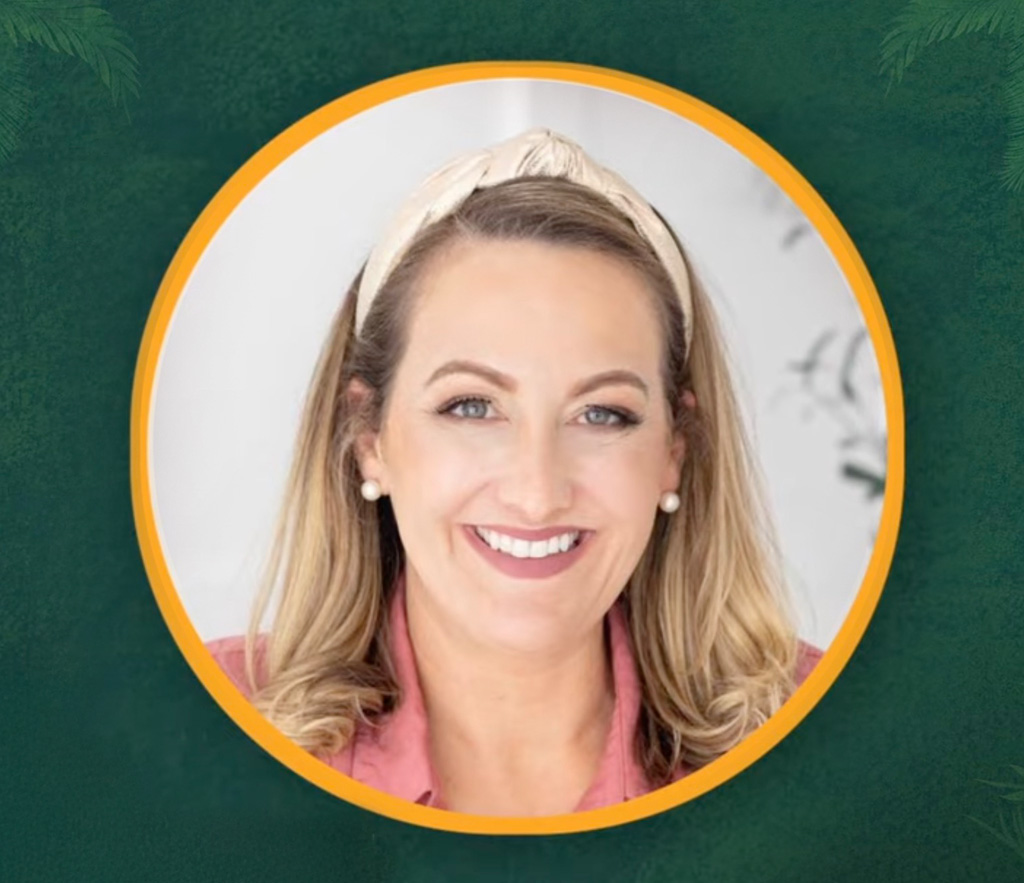
If you’re a parent with ADHD trying to hold it all together, this episode is for you. Kristen sits down with Amy Marie Hann, author of Master the Mundane, to talk about what it’s really like to run a home, raise kids, and manage your own ADHD brain — all at the same time. Amy was diagnosed back in the 80s (as a girl, no less!) and now has a family full of ADHD brains. She’s walked the walk, lived the chaos, and found systems that actually work.

You’ll hear:

  • Amy’s best tips for managing home life — including her simple “Daily Three” system that keeps laundry, meals, and clutter in check
  • How to support ADHD kids when you have ADHD
  • What perimenopause did to Amy’s brain (and how she’s adapting!)
  • The message behind her new book, Master the Mundane — and why thriving as an ADHD mom might just be the best gift you give your kids

This one’s warm, funny, real, and full of hope. Whether your house feels like a tornado zone or you’re just trying to get dinner on the table, you’ll feel seen, understood, and inspired.

Find Amy at @amymariehann or amymariehann.com
Episode Transcript

Kristen Carder 0:05
Chris, welcome to the I have ADHD podcast, where it’s all about education, encouragement and coaching for adults. With ADHD, I’m your host, Kristen Carter and I have ADHD, let’s chat about the frustrations, humor and challenges of adulting, relationships, working and achieving with this neurodevelopmental disorder, I’ll help you understand your unique brain, unlock your potential and move from point A to point B. Hey, what’s up? This is Kristen Carter, and you’ve tuned into the I have ADHD podcast. I am medicated, caffeinated, regulated and ready to roll. I am here today with Amy Marie Han. We are going to be talking about her new book and about motherhood with ADHD. I cannot wait to get into all of it. I wish I had had a resource like Amy when I was in the throes of motherhood and just trying to navigate ADHD and really not having the resources that I needed or the support. And so this one is for the mamas. And if you are a mother, if you want to become a mother someday, if you have a mother, if you love a mother, this episode is for you. We’re going to get into all of it. I cannot wait for you to join us and to just hear Amy’s perspective on life, on motherhood, and all of her helpful, helpful advice that can allow you to navigate the mundane parts of motherhood that are just difficult and even, shall we say, exacerbated just a teeny tiny bit with ADHD. So thanks for joining us today. Let me read Amy’s bio for you. So Amy is the author of the book master the mundane, how to manage your life, home and family as a mom with ADHD. ADHD has touched every area of her life. She herself was diagnosed at the age of five, and her three kids, husband, dad and sister are also ADHD. She’s also fostered, adopted and homeschooled kids with ADHD, and brings a wealth of personal experience, authenticity and relatability to everything she creates. Amy, thank you so much for being here. I appreciate you traveling all the way from Florida. Welcome to the show. Thank you for having me. I’m so glad to be here. This is so fun. I love being able to sit down and just Yes talk as colleagues and professionals, but mostly just like mom to mom, this journey is not for the faint of heart. Like this is not easy, and navigating ADHD within yourself is a chore and a job, but then helping those in your household to also navigate their own is just like turns up the volume a ton. What’s that been like for you? Complicated?

Amy Marie Hann 3:02
Yeah, really motivating, I think, for me. So my story is unique, because I was diagnosed as a child, but we really knew so little information then. So I was diagnosed at five. You know, I was really medicated most of my life. I consider that myself incredibly fortunate, but it was really kind of a school and work thing. I mean, that was my perception. I thought, like, Okay, if I take my medicine. And I also was a kind of kid that likes school, but if I took my medicine, I’m gonna do well in school. It got way more complicated when I, you know, became a professional, but still, there was still so much we didn’t understand. And I think for me, once my kids were diagnosed, it really motivated me to lean in and learn more, and there was also a lot more resources then. So I think, and I think a lot of moms with ADHD, at least my from my perspective, are some of, you know, the kindest, most generous, most giving, and really are it is a lot easier to motivate yourself to know these things when it’s about other people very service oriented. And so I think that motivation to figure out these things really, once my kids started having those struggles, it really helped me motivate to kind of figure them out for

Kristen Carder 4:18
myself. Okay, we’re gonna get to all of that, but I just want to understand how in the world you were diagnosed at age five as a girl in what the 80s

Amy Marie Hann 4:29
or 90s? Yeah, I’m 44 so like 86 Yeah, yeah. Okay.

Kristen Carder 4:33
So how, how is that possible?

Amy Marie Hann 4:35
It’s, I mean, it was a teacher. So, so I have an older sister. She’s three years older than me. We’re a lot different in terms of, we both have combined type ADHD, but I was more the like rule follower. But anyway, so I think a teacher had had their child from the teacher had some experience with ADHD. Okay, so my sister was kind of getting in trouble, mostly, I think for like, getting a. Up and talking a lot, and but so the teacher said to my mom. She was like, this child is not trying to get into trouble. There’s something else going on. I think you should have her tested and just in the, you know, the public school. So it was that teacher saying something. And so my mom had my sister tested, and then, as a result, I don’t know she was, I don’t know what size. I mean, I was still young. So I think my mom was like, well, let’s have you tested too. But it was definitely not common, you know, at all. I didn’t know anyone like me. I can remember going to, like, the nurse for, like, my medicine at lunch. And it was like, all that there was a couple of little boys, and they were the little boys that would, like, get in trouble, you know. And I was like, the goody two shoes, like teacher’s pet advocate. I mean, I talked a lot like there are signs I could see, but for the most part, I liked school, and I 100% I think if that teacher hadn’t said something, and my sister hadn’t gotten diagnosed, I probably would have gone under the radar and never have been identified, right? I

Kristen Carder 5:57
mean, I just look at that as a miracle. Absolutely, I didn’t know any girls with ADHD in in my like, school career, at least that I knew of like, that’s just absolutely wild to me. I love it. I’m so happy for you. That’s so awesome. What was it like you mentioned, like, becoming a mom is really what was the catalyst to understanding ADHD more and just like learning more about what it meant for you? Can you describe that a little bit?

Amy Marie Hann 6:31
Yes, yeah, I think, you know, I could. There were other like, in my 20s, I went through a phase where I, like, took myself off medicine and I went through counseling. There were a couple, you know, it’s a little more complicated. There were a couple other seasons where I, like, dug into understand it, and kind of accepted this about myself, but in terms of, I think, understanding that ADHD had a relevant implications on how I did life, and not just seeing it as like a limitation, but the like, I could actually needed to actually design life in a way that worked for me. I think I definitely lean into, like, the perfectionism side of ADHD. Like, my coping with ADC, even on medicine was, you know, because I think so many people, they hit the wall, and it’s like they’re realizing they have ADHD, well, I kind of have a unique perspective, because I was already diagnosed and I was already on medicine, and I’d already been in years of therapy, and then it was like life got really hard. So it was like I had all these tools and advantages, and yet, the way I was doing life still really wasn’t working. I needed more. And so part of it was just and then as I kind of dug into the research, so much of it, as I was reading these parenting books about ADHD, I was, like, all of these things apply to me, and I never knew that, like it was really kind of learning to reparent myself. But so in terms of hitting the wall. It was, you know, I think for a long time I coped with perfectionism of, like, being that Pinterest perfect mom and I had, you know, I would maybe from the outside, like I wasn’t, I wasn’t drowning yet, but I was had really unhealthy coping mechanisms. So I was drinking a lot, I was overspending, like, a lot of these kind of secret like, things that think a lot are very common with women with HD, especially the ones who are like the perfectionistic kind of bent like that weren’t healthy that had a lot of shame about. And then, as I kind of dug in, it was like those were kind of always there. And then kind of then I really started drowning. But my third kid, late 30s, perimenopause was like I the coping mechanisms were still unhealthy. They were still there, but they were still no longer enough, and I was kind of drowning with the expectation, my own personal expectations of myself, because I was trying to do life like I thought it was supposed to, like I was doing all the shoulds of like, what a neurotypical person should how they should design their life, how my mom life should look and and it was like I could know, like the the expectations and the demands, the executive functioning demands of my ongoing life are just, were just way too much, and I was just way over capacity. I’d been living over capacity for so long, and it was like massive ADHD burnout. So that was kind of way to help propel me to kind of not just think about managing my ADHD, not just taking medicine, but like, Okay, how do I design life in a way that works for me, where I am not so emotionally and mentally and physically depleted on an ongoing basis.

Kristen Carder 9:46
So what were some of the things that you tweaked in your life to make them more ADHD friendly or more just like custom to your brain?

Amy Marie Hann 9:58
Yeah, I. Kind of the only Well, I So, I tried so many things. I think the ADHD tendency is that we want this, like magic bullet. We’re like, Okay, here’s the 100 problems that we see in our life, and we need to find this one solution that addresses all these things. And it’s like, going to be the magic thing that we’re gonna implement. And then, like, once we kind of figure that out, everything’s gonna work, it makes sense. And I realized it was, like, I done that over and over and over again.

Kristen Carder 10:33
It’s just like, finding the right planner, the right system, the right like, all of those, like, this will be the thing.

Amy Marie Hann 10:39
Well, it’s all because it because I’m like, Okay, I’m gonna figure out how to get my kids off screens, and we’re gonna go paleo, gluten free, dairy free, and we’re, you know, and I’m gonna work out for two hours a day, and I’m going to, like, whatever, and I’m gonna start posting on Instagram three times a day to, like, blow up my business. And I’m gonna do all these things. I’m gonna start, like, cleaning the baseboards every like, all these, like thinking about every single need that could possibly exist in my family. And like, I need to come up with a solution that addresses all of that at once. And so instead, I kind of threw that all out the window. I’m like, that’s not working. I mean, I was so burnt out too that instead I was like, I need to design a life that is actually realistic, that I can actually stick to. So I kind of and from that, that’s why I’ve created this system to, like, help guide people through that. But I really started focusing first, like, on the daily chaos, like what or I gave myself permission. So that kind of the framework that I’ve developed is like expecting myself to only do six to seven boring things. And so I created this framework where, kind of like, my life expectations focus on that, but like the core thing is really limiting my executive functioning, expectations of myself, and then having kind of an ongoing revolving system where I’m really clear about what matters, and then kind of ignore everything else. So but I started really small. I started focusing first on, like, okay, what can I maintain? Like, the daily three plus, like, self care started there, and really focused on getting good at that before I kind of, you know, took that, the whole idea of like, that one solution that’s going to fit everything. I was like, I can’t that doesn’t work. So I threw that the window and started small.

Kristen Carder 12:30
I think that that’s so hard for us to start small, because just like you said, we want to, we want to do the opposite of that, we want to find like it’s not hard enough, yeah, it’s not hard enough. It’s also not flashy enough, it’s not fast enough. We want it we want it flashy. We want it fast. We want to feel like we’re, you know, really going to make a difference. And like, lowering expectations and starting small can be such a barrier for us.

Amy Marie Hann 13:03
The thing this is the other key part of that, is that when I say I decided six to seven boring things, I decided to let the boring things be boring and be really honest about what’s boring. Because I think the thing is one of the reasons why, why we do that thing where we, like, want this system that addresses everything, is because that’s like, big and challenging, and that’s like kind of dopamine, and that’s, you know, strategic thinking and all these things that we love. But instead, I was like, I still need those things. I still need the novelty, I still need the stimulation, I still need the challenge, but I’m gonna let the boring things be boring, but then make time for the those things that I need. So it’s like, if I have novelty and if I have stimulation and I have mental challenge of things that I actually really want to do, it made it easier to like, you know, start small with the boring things, because I wasn’t looking to, like, come up with this system, or the system was what I was getting, the dopamine and the stimulation from it’s like, laundry is boring, yeah, right, laundry is boring.

Kristen Carder 14:10
It’s gonna be boring. Yeah? There’s no way to make it flashy. If you tried to make it flashy, you’re gonna overdo it, and it’s not. You’re just not sustainable, right? Like, let laundry be

Amy Marie Hann 14:19
boring Well, and that’s what happens, is, we like the things and then, so I’m gonna do the boring thing, and then I’m gonna do something fun, you know, like the if you any parenting book you read about ADHD, it’s like, give your kids, you know, be very specific, specific tasks. Give them rewards, give them encouragement, like you need to praise and be the biggest cheerleader for the small things that they do, and focus on progress and not on you know that there’s this specific level that they should get to have these things that they should be able to do, but I’m like, That is not how we think about ourselves. Because we’re like, Okay, this is what it looks like to be a good mom, and I’m gonna get. These 10 Things Done a day, instead of, like, if you’re really focused on parenting yourself, like we should be parenting our HD kids, we’re like, so much kinder, so much gentler. And like, Hey, I’m gonna do the boring task, and then I’m gonna make a big deal about it, yeah, and I’m gonna celebrate that I did the boring task and, and that’s the part, I think, growing that muscle of like, I did the boring thing, and I’m gonna be proud of myself for doing this, even if it’s like, because there’s that other part that’s like, that’s not enough. Yep, that’s you should be doing more. That’s easy. Of course, you should be able to do the laundry instead. Because they think so many of us have this voice. You know, every mom I talk to, and I think this is so common with aged years general, they say like, they’re feel like such a failure, because there’s all these things they think they should be able to do, but where they’re actually really doing a lot already, but they kind of need to get better about, you know, praising themselves, or seeing what they do do, celebrating what they do do,

Kristen Carder 15:53
honoring the accomplishment. Right? I just put out an episode on this a couple weeks ago, and I think that, just like you said, what our brains do is they say, Well, yeah, you did it, but anyone can do it. Well, yeah, you did it, but you didn’t do it fast enough. It should have been easier. Why was it so hard for you? You’re so dumb. Like, that’s what our brain does. Instead of going like, just like a supportive mom would, oh my gosh, great job. You did it. You did the thing. You did the hard thing. I’m so proud of you for doing it. I now will talk out loud to myself and say things like that, and it is silly, but it works to be able to be like great job. I’m so glad you did that. That was not fun, but you still did it that like little bit of self encouragement. I know that it like is so cringy, but it makes such a big difference

Amy Marie Hann 16:53
what it makes the barrier lower. So even if the task is boring because you’re like, Okay, I did it, and then I can go do something fun, or then I can, you know, then I’m gonna reward myself. And I think that’s the other piece of it too, is it’s like a lot of times we think, Okay, well, if we don’t do, you know, all of these, like, 20 really boring tasks that we expect ourselves to do, we don’t earn the kind of fun or the challenge, or the, you know, this project that we really are excited about. And I think a big part of it is like, like, I think for me, it wasn’t just doing the daily three it was kind of then reframing it that like, I deserve, like, I’m going to do these basic tasks and they’re going to help my family and then, and as in time, I’m going to build a confidence. Because it’s rewiring that thought of, like, you know, when I see the dishes in the sink instead of, Oh, you’re such a bad mom, or, like, you’re such a mess. Or, you know, if someone came in here, they’d be so embarrassed. I’m like, No, I do this once a day. Once a day. I unload the dishwashers and do the dishes and I have a plan, and I’m, I’m confident in myself. Like, I’m you, you kind of build. You’re kind of changing that self talk and building, building trust in yourself that, like, I have a system that is good enough for me, and that works, and so I don’t feel bad. I did my tasks, and I’m going to sit and read this book for 45 minutes, and it’s going to be really fun. And I don’t which is part of, like, some of those things also help you be more regulated, yeah, and help you it. It kind of has multiple things that really helps you keep going and keep doing the

Kristen Carder 18:27
tasks. Yeah, it makes it more sustainable, right, so that you’re not in that burnout phase.

Amy Marie Hann 18:33
So I think about the ADHD burnout roller coaster, and it is so so common because we tried to do like 1000 things on one day. We have, like, a Saturday where we’re like, Okay, we’re gonna clean out the whole house, and we’re, you know, we’re gonna clean out every closet, and we’re gonna take the kids to the birthday party, and we’re gonna clean out the garage, and we’re gonna, like, make a month’s worth of meals or whatever, and we do like, all these things, even if it’s a high energy day, even if we like, do those things, and then, but then for like, the next week, we’re completely exhausted and we overdid it and we overspent well, then that next week is going to be super stressful and you’re going to be tired and you’re going to be cranky and you’re going to be dysregulated, and so like that. It’s not worth it, even if you end up doing less. But you do it for all seven days, and then also on those seven days, you do something fun for yourself. You’re you might be less productive, but you’re going to avoid that crash, that that massive crash. So I try to help, like, I think that is a huge part of it, but you have to learn to trust yourself. Because I think a big part of it is, is people like, hey, well, I have the energy now. I’ve got to, like, do everything, but it doesn’t help us kind of live consistently. And when you have ADHD kids, it’s like they need you to we have to have kind of juice left in the tank to help them regulate and to help support them. And so that ADHD roller coaster might have worked when you were single. Or before you had kids, but once you’re supporting ADHD kids, it like really gets complicated.

Kristen Carder 20:06
Yeah, and then we’re treating our kids in ways that we’re not proud of, and then that adds to the shame, and then that adds to the unhealthy coping mechanism, like the need for those coping mechanisms that are maybe not as healthy. It is just a whole cycle,

Amy Marie Hann 20:20
and also then their behavior, you know, if they’re not regulated and they’re not getting this help that they need, it just makes a hell of life harder, you know, makes us less regulated. It’s like, even we can’t, you know, we want to, like, hide in our room and recover, but if they need us and they’re not getting the support that they need, then it’s just gonna be messy.

Kristen Carder 20:46
It’s so interesting to think about how families have likely lived like this for generations, prior to our understanding of ADHD, prior to like, our ability to do this self development work, you know? And I think about, like, my ancestors and their families and how much generational trauma is passed down because of the exact cycle that you just explained. It’s a wild thought.

Amy Marie Hann 21:15
Oh, I think about all the time. Most of people are like, Oh, it’s just trauma. But I’m like, I mean, it just totally makes sense, like, if we’re just this new generation of adults getting diagnosed with ADHD, and it’s like your parents were neurodivergent in some way, and they weren’t getting their help that they need, and there, because, yeah, it’s like, it makes sense that there would be some kind of trauma, or even if It’s just chaos, you know, chaos or unpredictability, or financial instability, and like all of those things, 100% it’s complicated. There’s way more things which I’m like. That is why you need to talk to psychiatrists. It’s complicated. There’s a lot of things going on. You can’t just say it’s like, what the one thing

Kristen Carder 21:58
it’s so true, and we like growing up, you learn one way of being because you’re in this kind of chaotic family and so many people are undiagnosed, and then you come into your own, you know, adulthood and motherhood, and you’re like, Wait a second. I don’t really want to repeat that. I don’t really want to relive that. Like, how do I just make these adjustments so that we’re not just reliving the same patterns. I think we’re the, maybe the first generation that’s had that luxury of being able to do that. I’m really proud of us. Amy ditto, really proud of us before we move on. I just want to spend just a couple minutes talking about those unhealthy coping mechanisms that you, I mean, you just kind of breeze past them at the beginning. But I think that that is where so much of our pain and shame as mothers kind of lives is getting through the day kind of just like holding on, yeah, like barely making it, and then kind of secretly going into these unhealthy coping mechanisms. And I was also an over drinker, and definitely like indulging in different areas, like especially social media, in ways that, like, you know, it’s whatever it’s it’s whatever, but in ways that I knew I wasn’t proud of. And can you just speak to the moms who are like, wait a second, that’s me. Like, you know, maybe they’re maybe they’re using pot, or maybe they’re using alcohol or whatever, maybe they’re overeating or whatever the thing may be, and there’s no shame in that, like, it’s a tool that they’re using. And I have also used those tools because I didn’t have good coping like it like a toolkit. So can you just, like, give some encouragement to those mamas.

Amy Marie Hann 24:01
Yes, I would say, I mean, I’ve totally been there all the things I in my 20s. I went to Overeaters Anonymous, I had I was like, went through eating disorders. I’ve had an unhealthy relationship with food for a long time. And I think learning to eat with ADHD is tricky. I mean, especially, even when you’re on medicine and then, like the alcohol thing, I think it was also because I was, I was very disconnected from my feelings. I think for me, emotional dysregulation looked like avoidance, you know, I was very uncomfortable, you know, I would have these big feelings, and I didn’t have anything nowhere to do with them. And because I was more the perfectionist Good girl, I bottled them up. And I love There’s Dr Tamara Rozier, who I love. She did a webinar on attitude years ago, but she was talking about, you know, kind of emotional release and how we. Either kind of go outward with big emotions, or we go inward with big emotions. There’s like, I think she was like, fire breather, and I have some fire breathers my family. But then there’s the ones who are self destructive, and that was 100% me so and I think, and I would get more dysregulated, the fire breather would come out some but for many, many years, it was more the, you know, my way, my coping would, instead of lashing out to those around me, I would go internal with it. And so it’s kind of like the shame, the self, beating yourself up. And so like, I think alcohol is, I would use alcohol a lot to just quiet that and and also because it was like I didn’t feel like I could, and then, and at a certain point, it was like I was just so disconnected, because I just didn’t know how to express my emotions. So one of the things I like to tell people, too, is it’s like the healing and learning to grow and manage ADHD. It’s not a quick fix, you know, there’s different. There’s the layers. You know,

Kristen Carder 26:01
worse news, isn’t it? Yeah, and so I try

Amy Marie Hann 26:04
to help people. It’s like, the first layer is kind of like the getting out of burnout, getting out of chaos, and then it’s like, because I do think some of that deeper healing work, of like being in therapy and learning to manage your emotions, it’s like, and just like I was saying before, we want to find this one solution that that addresses all of the things, all of our scary parts at once. Instead of just giving yourself permission to, like, lean into one area at a time and like, I’m gonna, I know that this is something I need to address. And for me, I think part of it, it was like I knew that this, like drinking was like a thing. I had a shame about it, but I read so much like sober fiction and like addiction recovery and all these books, and I was like that never quite felt like what it was. It never really. I didn’t feel like, I mean, I know I had addictive tendencies, but I didn’t feel like. I just it didn’t seem quite right, but the more I lean into it, like understanding my ADHD brain, that was like, this is, it’s, it’s the root is my ADHD. The root is that I need to learn how to manage my like my brain and my body. And I think also part of it was just, I’m combined type ADHD. So I’m, if you can see, just watch me, you can probably tell that. You know, I so I need to move a lot. And I think for me, when I realized that these deeper issues that I really had to get serious about managing my ADHD and designing in a life, because it’s like, I couldn’t, it would be great to be able to, like, just do life like everyone else, but the byproduct of me trying to do that was these things that I had so much shame about and that I that impacted my life, and that wasn’t just, you know, these secret things, like I really didn’t want to be doing these things. So, yeah, so I think for me, that that was part of it. And I think so many people, I kind of assume that when I now, when I talk to moms, the HD that, like, when someone says, like, Oh, I didn’t if I think I’m HD or I am HD, that like, there’s other things going on. Because the more I talk to people, it’s pretty much shoot me comment, whether it’s, you know, overspending, over eating, over drinking, like, there’s just things that you don’t know about behind the service and so, yeah, but it’s, it’s it you don’t have to stay there. You know there is hope. You know there is 100% hope of like, learning to manage and thrive with ADHD, but you you have to bring it to the light too, you know, and take you know being because what happens is when we keep being ashamed, then it’s like we can’t get the help that we need.

Kristen Carder 28:56
This episode is sponsored by ag one, and you already know how I start every morning with ag one. It’s my one, non negotiable. Well, that and coffee, let’s be honest. But lately, I’ve been realizing that my morning routine is only half the story, because what I do at night, how I wind down or don’t wind down, hello, completely shapes how I feel tomorrow. So I’ve added something new to my nighttime ritual, a G, Z. It’s the new evening drink from the team behind ag one, and it’s gonna be a game changer for you. It’s gonna help you to transition out of the chaos of the day. You have ADHD. I have ADHD. We both know how winding down at night is so hard. I mean, it’s always been so tough for me. My brain just doesn’t know how or when to turn off. But a G Z helps me shift into rest mode. It’s a melatonin free formula made with clinically studied herbs, adaptogens and minerals. All which support sleep quality and cognitive function. Oh, I love it. It’s so good. I drink mine warm about an hour before bed, and it has this like subtle herb flavor that just feels part of a cozy nighttime ritual. No sugar, no artificial flavor is just calm and earthy. It’s like an earthy taste, and it signals to my brain, hey, it’s time to chill, time to rest, it’s time to turn off. If you’ve ever tried magnesium or sleep supplements before, this one’s different. It’s gentle, not groggy. I wake up feeling actually rested, not like I need three cups of coffee just to function. So now my routine feels complete. AG, one to start my day. AG, Z to end it. It’s like a full circle support for my body and brain, energy and focus when I need it, calm and recovery when I don’t. Because honestly, how I sleep is going to define how I show up, and that’s true for you too. So if you’re ready to turn down the stress and focus on the rest head to drink a G one.com/i, have ADHD. To get a free frother with your first purchase of a G Z, that’s drink a G one.com/i. Have ADHD. Go check it out. Well, I just really appreciate your willingness to share that and to to be able to name like, Okay, I was an overeater and I was an over drinker and like those kinds of things, the more that we can be forthcoming with that. I think it gives other people permission, like, Oh, she can say that she can own that maybe there are safe places where I can own that as well. And I just, I totally agree, bringing it to the light, and being able to name it and have other people be like, Yes, same me too. It is so so so important. There’s so much healing in that.

Amy Marie Hann 31:56
And also, I feel very called, especially because one of the things for me that was so like this huge light bulb moment was reading how much perfectionism was a part of ADHD and how it was I read this one study that said it was the number one comorbidity. And I think for me, one of the things that was always, it always kind of felt off, as is, you know, even as a kid being this, like, straight A student going to the office to get my medicine with like, these little boys who, like, had C’s and were always getting fights. It like, always felt off, you know, and then even you see these memes on social media, and it’s all like the mom who’s like, a total hot mess, and it’s like that wasn’t my story. Like I might have felt like the hot mess, but I was more than anything, the mom who was like, so, you know, tight fist clenched, like, with the Pinterest perfect party and the, you know, trying to, like, keep everything together and and, but the result was those secret behind the door things. And so it might have looked like I projected this image of having it all together, but behind, you know, closed doors, there was, like, just these things that I was dealing with that were a reflection of my ADHD and of my ADHD struggles. But it wasn’t, I didn’t identify with that, just, you know, kind of hot mess, yeah thing or

Kristen Carder 33:23
Yeah, I think that’s so important, because ADHD doesn’t look just one way, right. And so being able to show different sides of it and different images of what ADHD might look like, I think, is really important. And I always love to ask the question, at what cost like you were holding it together, but at what cost you were having the perfect, you know, kid’s birthday party, but at what cost? And that, I think, is just such an important question, because that’s when I think especially women can go, oh, because so many women aren’t diagnosed until so much later in life, and it’s because they’ve been able to hold it together, because they have those perfectionistic tendencies, because they’ve been socialized to be the good girl, and so they go through college and they get good grades, but then at what cost like? What does it look like behind the scenes? What does it look like when you’re alone? What does it look like when you’re when you are dysregulated and don’t know what to do with those big emotions? What are we reaching for in those moments? Right? It’s like, we always have to consider the cost of like, that picture perfect look well. And

Amy Marie Hann 34:37
it’s when it’s yourself. Like, I think that’s where it was, like, I think maybe the big difference was, okay, I was so used to going inward, that’s self damaging. But then at a certain point that began to impact my kids too. Yeah, well, it’s like, that’s where I’m not just it’s one thing when I’m thinking negative thoughts about myself. Sure, but when I’m, you know, turning to alcohol, like, waiting at five o’clock and then wanting to, like, go hide in my room with wine and just completely zone out and not be there, because I’m so overstimulated, I’m so dysregulated, they’re so loud, and there’s these big shout and I’m like, I just can’t anymore. So like, yes, that’s the thing that, you know. And then I was, like, began seeing these things on social media about, like, being regulated. They’re just regulated, but you have to be regulated. I’m like, I have no idea what in what in the heck that means? How do I be regulated? Because they’re just driving me crazy. Yes. And so it’s like, there’s so there was that. And then I think for me, the real country was like, when I had had my daughter, and it was like I was going deeper, understanding my HD story, understanding, like, unpacking the shame. And then it was, I think so many of us have this, this, you know, you’re too much thing, but I’m like, but also like, they’re too much. So I’m like, I don’t want to project that, but also, at the same time, they are a lot, you know, like, how do I get more like, I need more capacity if I want to be able to like, let my family be loved and seen, and not, you know, project that, you know, generational thing that so many of us had, like, how do I end that? I need more I need more capacity, emotional capacity, to be able to deal to love and support them. And so I so it was, it wasn’t just because I think the thing is, like, Oh, I just need to stop drinking as much, I had to really learn how to manage my ADHD, how how to not get to five o’clock and be completely depleted. Because it wasn’t just it will. And when I talk about, like, home and family management, I’m like, it’s not just about getting the stuff done. It’s about getting to, you know, the the end of the day and having the emotional and physical and mental energy to still be there, especially when the window, when I have three neurodivergent kids who need my support and help in that those that time, they

Kristen Carder 37:11
need homework help, they need regulation, they need to recover from their day, right, and they need your help to do it right, and you’re already depleted. So like, how?

Amy Marie Hann 37:21
Because the neurotypical way of like, doing life like everyone else, when I tried to do that, that’s was just the natural result of me getting to 5pm completely repeated with nothing more. And so the only tool that I had was going to alcohol numbing. Disengage,

Kristen Carder 37:36
yeah. Disengage from the family, yeah. With alcohol, yeah.

Amy Marie Hann 37:39
So it was like, How do I get to a place where I feel good? And then there’s also the shame, because it’s like, oh, I should be able to do this, or you should be able to make dinner and, like all the so it’s like, how, what? How can our How can we do life or design our data differently so that I can not be in that place? So that was kind of like, the biggest question. So it’s so it wasn’t just like, so how do I manage my ADHD and manage my home? And also, part of it is, like, the real thing, of like, the clutter and the stuff in the home and the meal. So it’s like, okay, if five o’clock I got to, like, make dinner, and then the how I want to hot eat it, because it’s not just the noise, it’s also the clutter and the stuff. And it’s like, so how do I deal with all of this in a way that like works, and not like getting it all done perfectly, but like me being emotionally and physically present and and getting in bed and feeling like proud of myself, instead of feeling like, Oh yeah, you did it again. You drank a bottle of wine, you numbed out. You yell at the kids, yeah, you, you know? Because I know that. So it’s like, what are you like, getting a benefit? Like, I showed up, I didn’t perfect, but like, I am doing enough. Yes, you know, I’m doing the best I can do.

Kristen Carder 38:56
So what are some of the tools that you use to make sure that you’re getting the most important things done, but still having capacity at the end of the day to be a person, to be a mother, to be a wife. What? What are some of the things that you can share with our listeners?

Amy Marie Hann 39:16
Well, I will say 100% this work. Is it personal? There’s no it requires introspection, because it has to be true for you. You know, we all are motivated by, you know, interest, passion, stimulation. So the kind of path that I lead people through both. So I, so I created this book, but it started with, I have a course in community where I developed this system to lead people through it. But it’s really like at the core, it’s this idea of limiting executive functioning by having an ongoing expectation. So it’s six to seven boring things a day, three daily tasks, and so these tasks repeat, so every single day. The three same daily tasks. So part of it is limiting prioritization, decision making, all that stuff. So like, we are starting each day with a blank planner, trying to decide what is important. So we start with, like the three daily tasks, and this is kind of for the boring side. So three daily tasks, two weekly tasks, one monthly task, and then kind of one extra. So this is kind of the way that we kind of budget the executive functioning, boring stuff, knowing that parenting is going to take a big piece of that, of our executive functioning. So it’s like, okay, I know that my kids, I’m planning to, like, be really intentional, and kind of have this budget and plan for what’s a priority. And so in that process usually takes time of like, you find your daily three, and then you kind of identify what are like the core, I think of it as from the chaos perspective of like, first we’re going to have, like, less chaotic days, and then weeks, and then months and then seasons. So we’re not trying to master it all. We’re kind of, like giving ourselves time. But then a big part of that, especially from the day, is understanding, okay, there’s, you know, that’s, that’s keeping, like, holding more in reserve. But then we also want to be getting energy. What are things? So there’s we want to be watching, like, what, what energy is going out. So we want to be intentional about that. We want to, like, hold that in reserve, so that we’re giving it to the things that really matter to our family. And you get to decide that. And I think that just that in itself is a big shift for a lot of people. You’re letting go of, like, the perfect standard, but like, what matters the most to you and to your family, and it’s gonna, like, just focusing on the I talk about, like the daily the basic tasks of daily life, like focusing on those things and then, so that’s like, what energy is going on? And then what are you doing to get energy? And I think this is more complicated depending there’s is could look a couple different ways. I think there’s a lot of moms who are who, especially if there’s maybe stay at home, moms who have a lot of guilt about doing anything that is energizing, but we’re interest driven, and so just like our kids, you know, we think of all these ways to like, help them have their own interests and have things that they’re good at, and put a spotlight on their natural talents. Like we have to do that with ourselves, too. And so then there are some moms for ADHD who have found what they like, and they maybe need help with a little bit of boundaries around it, so that they are really more strategic, so that they’re not trying to pursue like every you know, challenge or idea, so that they have so that, because even things that we like can, you know, is using our executive functioning, and is kind of sure gonna pleading, depleting us in some ways, so being really strategic. So so you’re and then in so I kind of think about you kind of have to look at both sides. We’re budging, and especially in the beginning, if you’re coming from a place of burnout, you’re going to go slower on the budgeting, you know, the going out, and you’re going to really focus on building up the things that are energizing and stimulating to you, because that’s how we get more energy, and that’s what makes it easier for us to stay consistent, because we’re not trying to, you know, meet our need for novelty through like systems and coming up with throwing it out the window And starting from scratch.

Kristen Carder 43:40
So would you mind sharing your daily three and like, your one weekly task? Like, give us examples of that.

Amy Marie Hann 43:48
Yeah. Okay, so for my daily three, these are my kind of three things in my family. This is kind of side note people the next people always ask, like, what does your spouse do? I In our family, I do a lot of the art. We have three neurodivergent kids, and so we there’s a lot of parenting. My husband doesn’t like my husband is incredibly supportive. Helps a lot. But for me, what was the most essential thing is to identify what I could just my capacity, what I could handle, and identifying what mattered the most to me. And so I’m going to ask you to kind of put that to the side, though that is is an important piece of it. Okay, so my daily three, my daily three is low, unload the dishwasher, load the dishwasher. It’s like clean sink, clean kitchen, wipe down the kitchen counters. So it’s kind of like that happens once a day. So my expectation isn’t that that’s happening all the time, like 10 times a day, once a day. Love it so like clear expectation once a day. So once that happens, I unload the dishwasher, load the dishwasher, like there might be, there’s gonna still be dishes there. And that’s okay, you only have five, right? So, yeah, so for like, 10 minutes, it’s like, all looks nice, but like, if I can maintain that, the level of chaos is much lower, you know. Okay, so that, and then one load of laundry, so I, like, wash and dry, and then it goes in a big basket. I don’t put it away. Okay, so wash and dry, and then think about all the meals. So what’s your breakfast? So I usually do this in the morning, like, what’s your breakfast? Pack lunches. What am I gonna eat for lunch? Is there something for me to eat? And then, like, what are we gonna have for dinner? So it’s usually, it’s not like cooking the thing, but and and I have very simple meals. So like, might be taking something out of the freezer, or we’re gonna have tacos tonight. We have cheese, we have tortillas, we have sour cream. Okay, good. So like, if we need to do a last minute Walmart order or something, I could, like, do that. So it’s those are kind of the three things. So if those three things are happening, it’s like 3030, minutes. If that usually, it’s like, why the kids are eating breakfast. So those kind of are my kind of daily three so, so in a different family, you know, you might already have a system for someone else’s loading the dishwasher or whatever. But for me, if those three things happen, like even on a low energy day where I like want to be in bed and watching 1000 Gilmore grow episodes, I can manage those three things. And if I stay on top of those three things my home, I avoid that place where it’s like chaos, overwhelmed. Because for me, the clutter, you know, if there’s like three days worth of dishes, that’s like, you know, 100%

Kristen Carder 46:29
100% and then what’s your one weekly

Amy Marie Hann 46:32
task? Okay, so the weekly, it’s actually a list, so it’s so the thing is, three daily, two weekly. So the weekly change. So I have a list of 14 weekly tasks. Oh my gosh. So that’s so what happened is, so it’s breaking it up. So like, fold laundry is one, sure, put laundry away is one. Okay, for a while, you know, if I was like, now I have a cleaning lady before I was like, Okay. Like, wash towels is one? Clean bathrooms. So depending on how much you’re outsourcing, like, it might be different, but so like, run, order groceries. So the idea is, you want it to be very specific, yes, so it might be So, for example, I talked to a lot of moms who are like, I have no rhythm with the groceries. It’s totally random. So it’s like, if they’re trying to go to the grocery store every week or every day, every three days, like, that’s you’re adding a lot more executive functioning. So let’s in there. So let’s just figure out that one. Yeah, okay, let’s just get because if you can do it fewer fewer tasks. So, so going to the grocery store is a task, you know, but if you’re like, hey, we’re just gonna order it and have it delivered, like, that’s one task. So how can we break things down and so that you have it? And then the plan is, is, I kind of assume 14 tasks that you were probably gonna have an off week a month. So like, say, clean the bathrooms is one of my thing. If I clean the bathrooms three weeks a month, that’s awesome. That’s great. Yeah, yeah. So, like, what are there so and so you you want to be specific to yourself, because you wanted to have it be very specific and clear, but also kind of flexible too, because I’m like, I say clean the bathrooms. Like, some weeks that looks like, wipe down the counters and wipe the mirrors. And that’s like, a five minute ordeal. Some days, that’s a 30 minute I’m getting on the bleach and scrubbing everything. And it’s like,

Kristen Carder 48:32
and does that, do you do you just base that on capacity. Like, how am I feeling this week? As far as like, whether or not it’s the five minute wipe down or the 30 minute

Amy Marie Hann 48:43
scrub, I kind of go with how I’m feeling that day. Yeah,

Kristen Carder 48:48
that’s what I’m saying. Yeah, that’s awesome. I love that. And I don’t think we do that enough. And I mean, with everything, and

Amy Marie Hann 48:53
it makes it easier to maintain it, because the whole sense, what can I maintain? So if I’m like, clean the bathroom equals, equals scrub. Yeah, I’m not gonna maintain that.

Kristen Carder 49:05
I can’t do that every week, right, but every once in a while, I’m gonna have a burst of energy exactly like, This place needs a good scrubbing. I’m gonna take care of exactly, but

Amy Marie Hann 49:15
that can always go up and do more. But I love that. And then I also kind of think, like, even the things like, so oftentimes. So I have those weekly, and then, because what happens is, then I’m like, when I’m in the bathroom, it’s clean the bathroom, and I have time, and I’m like, Oh man, that light bulb needs to get changed. I’m gonna go change a light bulb. Yeah. So it’s like, I might do more when I have the thing, right? But I’m also not gonna be totally derailed.

Kristen Carder 49:37
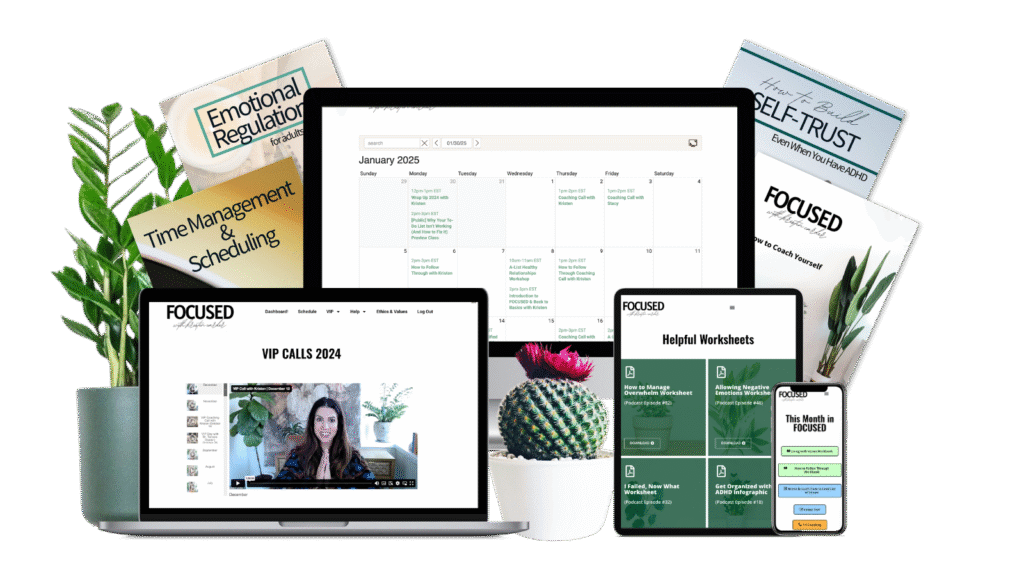
I love this. Everyone with ADHD knows what to do to improve their lives. You go to bed at a reasonable time, you wake up early, you make a list, you cross things off the list in order, blah, blah, blah, like, yeah, we know what to do, but ADHD is not a disorder of not knowing what to do. It’s a disorder of knowing exactly what to do but not being able to get yourself. To do it. That’s why I created focused. It’s an ADHD coaching membership for adults with ADHD. I’m a life coach with multiple certifications, and since 2019 I’ve coached over 4000 adults with ADHD from all over the world. I know what it takes to help an adult with ADHD go from hot mess, express to grounded and thriving. I’ll teach you how to understand your ADHD brain, regulate your emotions and your behavior and accept yourself flaws and all. And with this foundation, we’ll build the skills to improve your life with ADHD. And not only do you get skills and tools and focus, but you’re surrounded by a huge community of adults with ADHD who are also doing the work of self development right alongside of you. Dr Ned Hallowell says healing happens in community, and I have absolutely found this to be true. So if you’re an adult with ADHD who wants to figure out how to be motivated from the inside out and make real, lasting changes in your life. Join hundreds of others from around the world in focused go to I have adhd.com/focused to learn more. That’s I have adhd.com/focused to check it out. I think just knowing what the like, what is good enough

Amy Marie Hann 51:22
exactly for you, not anybody else. Yes, it’s like, if somebody, if I clean the bathroom once a week, and someone drops in my bathroom, is never disgusting, right? But it’s never also not perfect, but that’s okay, you know what I mean. So if

Kristen Carder 51:35
someone’s never gonna be sparkling every single day, right? Maybe once a month, it’s gonna be so sparkly. Yeah, yeah. I love, I love just knowing, like, what is the baseline? What like? Last night we had frozen chicken nuggets, perfect and frozen, like french fries that I made in the air fryer. And I was like, Okay. Number one, we’re not eating out. Number two, these are, like, the healthiest frozen chicken nuggets that I can find. So what these are the healthiest fries I can find. And that’s the baseline I’m still providing food for my family. We do eat out, but it wasn’t like a DoorDash meal. I’m happy about that, right? And like, I can sustain that, I can’t sustain cooking a real meal every night, it’s not gonna happen, and then I’m just gonna, like, if that’s the standard, I’m gonna be real sad. Yeah, I’m be real sad because I can’t maintain that standard

Amy Marie Hann 52:32
Absolutely. Well, it’s kind of knowing for me. It was like I had to realize, even with like meals, I need easy dinners. Like, I never I’m always low energy at night, so I’m like, especially during the week, during the weekend, I might do something more complicated, but like, I need dinner to be easy. I need to not have to think about it a lot. So like, the more kind of rotation of like having easy meals and knowing yourself. It’s really about self self awareness and self acceptance and not trying to like change everything. We can get better at certain things, but the more we kind of accept our limitations and learn to live within them, the happier we’re going to be.

Kristen Carder 53:16
That’s the hardest part, I think, for us as humans, I tell my community that is the work of our lives, because what we are constantly thinking is Amy. Give me the Quick Tips for Home management, yeah, so that I can do it well, so that I can accept myself, like, I’ll accept myself

Amy Marie Hann 53:36
once I do this thing, once I perfect what’s 100% level up, then I’m gonna, like, figure it

Kristen Carder 53:42
out. I’ll accept myself then, but I’m not gonna accept myself until I get to that point and it’s like, no, you’ve got it backwards. Like you’ve got to start with like, Okay, I am just fine, just the way I am, and I can accept that, and from that place I can make some productive changes,

Amy Marie Hann 54:01
and it’s okay that this is hard for me and I don’t like doing this, and that’s okay. Like, then, then it

Kristen Carder 54:07
should be hard. I have ADHD, yeah, this should be hard. Like, meal planning should be hard. Now I can, I can get better at it. I can work at it, but, like, it’s not I’m never gonna, I’m sorry. I’m never gonna love it

Amy Marie Hann 54:20
here, it’s like, and you also can only you can choose how many things you can kind of focus on and get better at. Yes, so true. And also, that’s already easier for you. Yes, that’s so easier for yourself.

Kristen Carder 54:34
Okay, so you’re an ADHD mom, parenting ADHD kids. Remind me how old your kids are, 1410, and six. What do you think are the most challenging things about motherhood as an ADHD or parenting? ADHD chaos,

Amy Marie Hann 54:55
the noise? Yes, well, I see about the noise. Well, I would be an issue. They would say the noise, it’s also kind of the diversity of needs, especially for stimulation. So to my husband and my oldest son, both have autism diagnosis too. I am definitely a sensory seeker. My husband is not. So like he would love classical he, if he his kind of ideal regulating environment would be, like classical music on, the lights down, dimmed down, adorable, like light, candle lit, like heat, where I’m like, I want every single light on. I want, like, fun, upbeat music, you know, like, yeah, like, I, you know, need the stimulation and and, you know, I need to move like he doesn’t, he doesn’t like for him sometimes, like having visual distractions is harder. So it’s just that balance of like meeting everyone’s kind of need for stimulation and downtime. And it’s not perfect, so part of it’s like learning to support each other and give each other grace when, and I think I can am a good advocate for my kids too, because it’s like, you know, sometimes, and we talk a lot about regulation and things that we need, try to advocate for ourselves. But it’s, it’s, it’s a tricky dance, you know, figuring out how to help everyone get what they need with especially, I mean, I would say the biggest like getting them exercise when we’re exhausted, things like that. Yeah, but we do a lot of trading off and thinking through, like, what people what, what everyone needs. But it’s it takes a lot of space, like mental space and energy and time, yeah, just getting everyone the stimulation that they need,

Kristen Carder 56:48
or the or the calm,

Amy Marie Hann 56:50
right, the downtime. Yes, summers are always hard trying to figure that out. It’s gotten easier, I think, especially as my oldest has gotten older, and each of the kids is different. Like, it’s funny, all my kids will be in high school alone, you know, because they’re all four years apart. But it’s like, I just feel like their experiences will all be very different, because their need for like, my youngest is 100% extrovert. She’s the night owl. She wants to be like with people all day long, and the rest of us need my recovery time, and so just balancing all that, it’s tricky, you know,

Kristen Carder 57:26
yes, what? As we wrap up here, what would you like to how would you like to end with encouragement for ADHD parents, ADHD moms, who are probably parenting ADHD, or at least neurodivergent kiddos. What do you think is the thing that they need to hear the most?

Amy Marie Hann 57:47
I think they need to hear to focus on themselves. I think the most important thing we can do for our kids is to model. And you can read all these things about parenting, how we parent, but if you’re parenting yourself like a like a neurotypical person, you know, if you’re chastising yourself, if you’re beating yourself up, if you’re if you’re self you know, talk, if you’re doing all these things to yourself like that’s what they’re going to take away, even if you’re telling them, you know, your brain is whatever. If you’re they’re gonna listen to what you do and so doing the work to learn to manage your ADHD and to reparent yourself, I think, is the most effective thing that you could do for them long term, and it makes you much more compassionate and patience. Because when you can see those things in yourself, and you’re like, it makes it when you see it’s not just a struggle you know your kid that’s like whatever, like their hyperactivity when, when you’re more attuned to what’s going on with yourself, in your body, in your brain, it is so much easier to identify, to have compassion and to have patience with your kids. So and I know it’s, I know it’s complicated with moms that like they’re trying to support their kids, and there’s only so much time and so much energy and in terms of investing in therapy and support and all those things. But you know, it doesn’t have to be for forever. But I would say, prioritize figuring out your managing your own ADHD, and it will the trickle down. Yes, absolutely. It’ll be so much more effective long term for you and for them,

Kristen Carder 59:24
I completely cosign that answer, not that you needed it, but I absolutely do. And I will say, anecdotally speaking, in my own life, I couldn’t hold space for my kids’ emotions because I didn’t know how to hold space for my own emotions. And so dysregulation was running rampant in my home because I was neglecting my my own needs. I was neglecting myself, my own emotional regulation, and so I had no idea how to be there for my kids, and it wasn’t until I turned inward, just like you’re saying and like made. That a priority, which I don’t think many people want to do. Like, yes, we’re busy, but I think, and sometimes it’s an access issue, like a privilege and access issue, but I think a lot of the times, we just feel really uncomfortable, like, with vulnerability and with our the squishy insides, you know, but being able to build that relationship with yourself and build the capacity to regulate then allows you, just like you said, to be there for your kids. And I don’t know any other way to do it.

Amy Marie Hann 1:00:36
I truly don’t, I don’t know. I don’t know how.

Kristen Carder 1:00:39
I don’t think it’s possible. You can’t, because if you’re like, you have to be

Amy Marie Hann 1:00:43
regulated to support them. If you don’t know how to be regulated, you don’t know what that feels like, then you’ll never be able to be there. So true. And the thing is, is it’s how ADHD brains work in terms, we don’t want to be told what to do. We want to see what other people are doing. So like, modeling for them is truly going to help them more. You know, they’re going to see what you do so and if you can, if you’re not, you know, prioritizing therapy or you’re not managing your own emotions like You’re like that that those are the things that are going to really teach them. Yeah, it’s not just, you know, do this and then do this. It’s like, do this, and that’s how you do that. That’s so good.

Kristen Carder 1:01:28
All right, tell us about your book. My friend, tell us about your book. Where, where can we find you? Give us all the Amy info, okay,

Amy Marie Hann 1:01:36
well, my book is called Master the mundane, and it is available everywhere books are sold. My website is www, dot Amy Marie han.com, I am on Instagram and Facebook as Amy Marie Han and yes. So it is really for anyone with executive functioning struggles. I mean, it’s going to help if you are wondering if you have ADHD or aren’t sure you if you should pursue a diagnosis, it’ll help bring clarity. But really, my system is really for anyone who has executive functioning struggles, it’ll kind of give you a framework for not just, you know, it’s not just hacks, it’s that framework to help you kind of live within your limitations, to build both build capacity, and then kind of manage your capacity on an ongoing basis, so that you aren’t depleted and going at ADHD burnout.

Kristen Carder 1:02:27
I love it. We’ll link all of that in the show notes. Go buy her book. Master the mundane, how to manage life, home and family. As a mom with ADHD Amy, thank you so much for being here. Thank you for having me. Yes, great. A few years ago, I went looking for help. I wanted to find someone to teach me how to feel better about myself and to help me improve my organization, productivity, time management, emotional regulation. You know, all the things that we adults with ADHD struggle with, I couldn’t find anything, so I researched and I studied and I hired coaches and I figured it out, and then I created focused for you. Focused is my monthly coaching membership where I teach educated professional adults how to accept their ADHD brain and hijack their ability to get stuff done. Hundreds of people from all over the world are already benefiting from this program, and I’m confident that you will too go to I have adhd.com/focus, for all details. You.


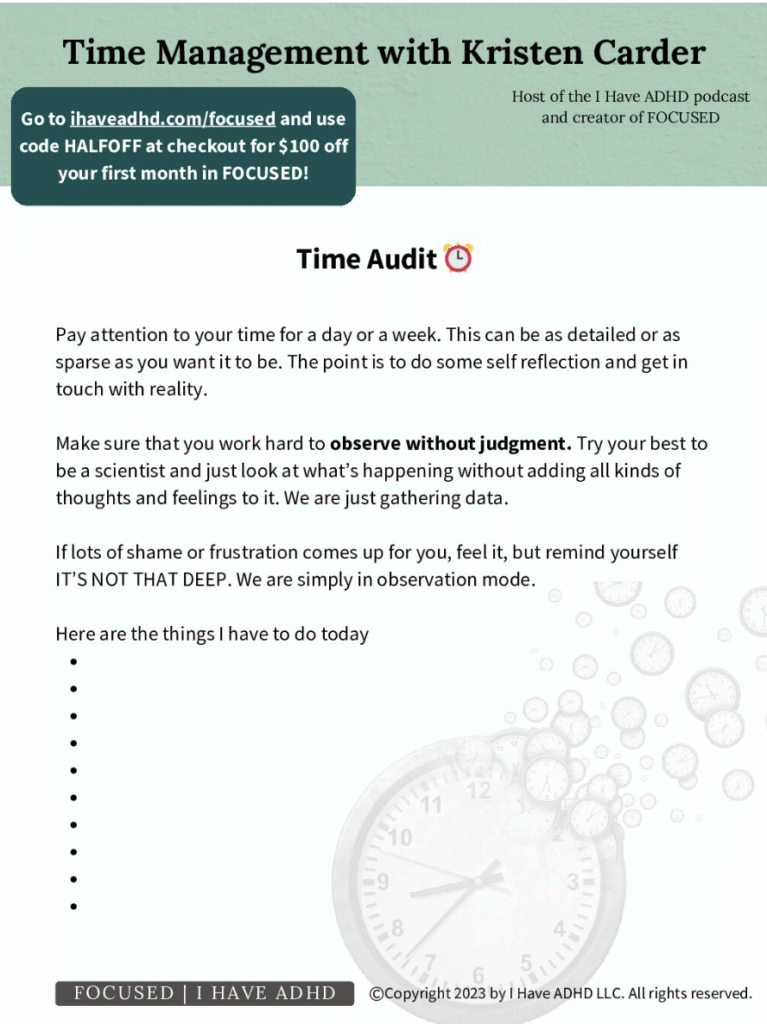
Free ADHD Time Management Download

Get a practical, ADHD-friendly resource to start managing your time today—and unlock access to Kristen’s live masterclass, too.

Related Episodes

Kristen Carder

Episode #390: Two Steps Forward, Three Steps Back (Why You Keep Self-Sabotaging and How to Finally Stop)

Kristen Carder

Episode #388: Money. Let’s Finally Deal With It.

Kristen Carder

Episode #386: A Very ADHD Episode: Deep Feelings and Random Reels

Stop Struggling Alone.
Start Thriving With FOCUSED.

A proven coaching program designed specifically for adults with ADHD who want to gain clarity, build confidence, and take control of their lives.

Join a community of hundreds of ADHDers

Learning About My Brain...

Changed Everything

Hi, I’m Kristen Carder—ADHD expert, podcast host, and certified coach who’s been exactly where you are. Diagnosed at 21, I spent years cycling through planners, courses, and systems that never quite worked. Everything changed when I discovered the power of understanding my ADHD brain and the transformative impact of community support.

Now, after 15+ years of research and experience, I’ve helped thousands of adults with ADHD thrive. I’m here to show you how understanding your brain can transform your life, just like it did for mine.

ADHD Tips That Actually Make Sense

Follow @i.have.adhd.podcast and join our Instagram community for daily strategies, relatable content, and real talk about ADHD

Click here to sign up for the FREE Class with Kristen on Wednesday, 4/1: Too Much & Not Enough: Why ADHD Adults Feel “In Trouble” in Relationships

  • 00Days
  • 00Hrs
  • 00Min
  • 00Sec