If you have ADHD, then you struggle with habits! Let’s figure out a way to do the things we want to do….
This episode is sponsored by Cure Hydration. You know that moment for me, it’s around like 2 or 3pm when my ADHD brain just decides we’re done for the day. We’re done here. The afternoon slump hits, the lights go off upstairs and suddenly answering an email or doing basically anything feels like climbing a mountain. That’s when I reach for Cure Energy. It’s a clean plant based energy drink mix made with 100 milligrams of natural caffeine and electrolytes so I get the focus and hydration boost I need without jitters, without a crash and without that like I drink battery acid. Vi vibe that some of the energy drinks have. The peach tea and akai berry flavors are my current go to’s crisp, refreshing. And they don’t taste fake, y’. All. They don’t taste fake. I’ll drink one before recording a session or when I need to get help through like that afternoon drag. And honestly I. I drink it anytime. My brain just needs to cooperate. What’s wild is that Cure Energy is only 25 calories and has zero added sugar. It actually helps me stay hydrated while giving me energy. Okay, I love coffee, but coffee could never. Staying hydrated isn’t just about water. You also need electrolytes. And that’s why I love Cure. It’s clean, it tastes great and it actually works. And remember, Cure is FSA HSA approved, which is amazing. You can use that money to pay for cure and for I have ADHD listeners, you can get 20% off your first order@curehydration.com I have ADHD with the code I have ADHD. And if you do get a post purchase survey, make sure to tell them that you heard about CURE right here on the podcast. It really helps to support the show. Don’t just drink more, upgrade it with cure. Welcome to the I have ADHD podcast where it’s all about education, encouragement and coaching for adults with adhd. I’m your host Kristen Carter and I have adhd. Let’s chat about the frustrations, humor and challenges of adulting relationships, working and achieving with this neurodevelopmental disorder. I’ll help you understand your unique brain, unlock your potential and move from point A to point B. Hey, what’s up? What’s up? This is Kristin Carter. I am so glad to be with you today. I am medicated, I am caffeinated. I am so ready to roll. Before we get started, I want to say thank you so much. So much for listening you guys. I hadn’t checked the podcast stats in a while and I went into my hosting site and checked this morning and there’s been over 40,000 downloads or like listens. That’s crazy to me because I’m just a normal, regular person and that feels like a whole lot. So thank you so much, so much for listening. I want to ask you, would you please subscribe to this podcast? And here’s why. This year I am giving myself the flexibility to release an episode whenever I can. Last year I really tried to release one every Tuesday. It worked for me because I had a couple days off and now that all three of my kids are in school, I have taken on a bunch of coaching clients, which is so, so fun. So all day Tuesdays, all day Thursdays, I am coaching on zoom calls, one on one ADHD coaching. It is so fulfilling. It makes me want to stop doing everything else in my life and just do that. It is the most fun thing that I get to do. But anyway, it means that I have a lot less time to plan and record the podcast and so I’m just giving myself the grace to release it whenever I can. So. So last week I released on a Wednesday. This week I’m gonna release on a Friday. And it just is gonna be what it is. So if you would do me a favor and subscribe that way, you will get the podcast automatically in your feed whenever I’m able to release an episode. And also, thank you for your patience and flexibility with me. Luckily, I’m talking to my people. That’s you. And so I know you totally understand this aspect of just like not being able to be super rigid and consistent. I could be super rigid and consistent, but then I think I would hate it and I would stop doing it. So with this podcast, I am going to try to keep it really fun for myself so that I never want to stop doing it. So I’m going to release it whenever it works and I’m not going to add stress to my life and beat myself up. And then I have this kind of hangover the next day. Like if I try to work on it all day long and then I release it late at night. Like it’s just the next day I have this hangover and I can’t really be productive. Someday we should talk about that on the podcast. Do you ever feel that way when you have expended so much energy in one day that the next day it’s just like gone? Your energy is completely depleted and then you have nothing to give for that day and you know as well as I do, that life does not stop. So whether you’re working in the house or outside, outside of the house, you have kids, you don’t have kids. It doesn’t matter. We’re all busy. We all have important things that we need to get done. And so that energy depletion hangover is not something that I want to embrace in my life. So I am going to be releasing podcasts whenever I can. I’m committed to doing it weekly, and other than that, it’s just going to be kind of like whenever it gets done. So please subscribe and if you haven’t subscribed, taken a second to leave a rating if you’re listening on itunes, that would mean so much to me. You guys, I am so impressed by all of you. You have been so incredible with your ratings and your reviews. Like, the reviews are off the hook. I’m going to read one for you today because it makes my heart so happy and I think that it will be exciting for all of you too. So this is from Elise kz and she says, I feel like I’m listening to my private journal on blast. Omg. Such an insightful podcast that has made me question my reaction to my diagnosis, how I wanted to live my life, and forced me to open my eyes and change the way I was living without feeling ashamed, embarrassed, or stupid. I’ve learned more from this podcast than any other therapist or doctor I’ve had and. And it’s helped me find my voice with specialists and those close to me. You guys, how kind is that? That blows my mind. Thank you so much, Elise. I wish I could hug you in person. Thank you, thank you, thank you. It means so much to me when you guys do that. It’s like the best thank you present ever. Ah, it means so much to me. Okay, today we are going to talk about habits. The reason why I wanted to talk about it today is because in doing more one on one coaching, I have had this topic come up a lot with my clients. So I work with women who want more out of their lives, right. And a lot of us have this perception that in order to be successful and thrive and be the best people that we can be, we have to create habits. Now this is such an interesting concept. Habits are something that it’s very often talked about. So I put habits in the Google search bar and guess how many results came up, you guys? 512 million results for habits. So it’s not just us. It’s like the general population feels like we need to create Good habits. Now, here’s the deal. I think that as an adult with adhd, you and I should let go of the term habit. Dun, dun, dun. That’s like the dramatic music in the background. Okay, here’s why a habit. The word habit implies that something that we want to do, something that’s good for us, will eventually become automatic. It’ll eventually become something that we don’t have to think about. It’ll eventually become easy. Right? Am I right? So the term habit is something that I think is a little tricky. It’s a little shifty. It kind of tricks us into thinking that the things that are hard for us to do now can eventually become easy, automatic, just part of our daily lives. Now, I remember as a teenager, my dad especially so he is a lot like me. He’s not a lot like me. I guess I’m a lot like him, right? I feel like, Oops, hit my mic again. Sorry. I feel like I am like Mike in a dress. I am just like my dad in so, so, so, so many ways. So he obviously looking at my teenage self, I was not diagnosed at the time, and he was kind of like trying to give me tips on how to be more productive. He knew I was smart. He knew I could do it. He knew I could be successful. How do you become productive? You create good habits. And so he would try to really coach me on creating good habits. And so he would say things like, okay, you just have to do it. Like, enough times in a row, you have to do it for a month, you have to do it. And it never really worked out, ever. And I’ve carried that into, like in college, if I could just exercise every day, if I could just floss every day. Like, in my adult life, if I could just get up early enough, if I could just have the habit of taking my medication or eating the right foods. We have this feeling or this implication that it’s going to eventually become easy. And today I want to smash that to pieces because I know that you haven’t been successful in forming the habits you want to form. If you had been, you probably wouldn’t be listening to this podcast, right? So think of all of the things that you wish you could do regularly, automatically, without thinking, without it being so gosh darn difficult. Listen, what if we just let go of the term habit? What if we just let go of the idea that it will eventually become automatic? Because here’s the deal. Like, I can’t even remember to eat when I’m needing to eat. I can’t remember to use the restroom without basically exploding on the inside and then being like, okay, it needs to happen right now or there’s going to be trouble. I can’t remember to pick my kids up from school at the right time. I cannot remember to do the things that I want to do. Okay? I can’t even remember to do the things that my body needs to do, like sleep. Sleep is not something that is easy for me. And it could be so late at night, and I don’t have the habit of going to bed, okay? So if I cannot even create habits for the things that biologically, physiologically my body needs, why would I ever think that I could create an automatic habit of something that I want to do, like saving money or flossing my teeth or, I don’t know, exercise? Do you know what I’m saying? Okay, so let’s let go of the word habit and let’s just embrace the fact that we are going to have to decide every day to do the things that we think are going to be good for us. Now, James Clear wrote the book Atomic Habits. I’ve actually mentioned that book on the podcast before, and I think that it’s an amazing book. And he defines habit as a small decision you make every day. So James Clear, expert on habits, doesn’t even define it as something that’s automatic, as something that requires no thought, as something that if you do it enough, eventually you won’t even have to struggle internally with doing it. He defines it as a small decision that you make every day. So if we let go of the tricky word habit, and we let go of the idea that something should be automatic, something should eventually become easy, then we can embrace the fact that we’re just going to have to make a decision every day to do the things that we want to do. I’m going to have to make a decision every day to get out of bed at a time that is reasonable for my family. And it’s never going to be easy ever. And guess what? That’s okay. It’s not supposed to be easy for me. And I think a lot of the times, what the tension that we feel is like we’re fighting against how hard things are. But what if we just kind of embraced it? What if this is just the human experience? What if nothing has gone wrong? What if it’s just supposed to be hard? What if getting out of bed every morning is just supposed to feel horrible, but once you do get out of bed and you get rolling and you get your coffee and you get moving. You’re really happy that you didn’t sleep in late. Okay. So I think a lot of times we just feel like, gosh, this should be easier and then that thought, the thought of this should be easier or this is easier for other people, why isn’t it easier for me? That thought is paralyzing. That thought does not serve us. That thought does not create habits. Do you know what is going to serve us? The idea that it’s just plain hard. Eating the right foods for my body is hard and that’s okay. Getting out of bed at the time that is right for my day is hard and that’s okay. Making sure that my kids have everything they need for their school day, it’s hard every morning. That’s okay. It’s supposed to be. The good things in life are not supposed to come super easily. They’re supposed to be hard. Nothing has gone wrong. The things that I’ve been trying to make progress in my life with recently have been taking my medicine regularly. So one of the great things about taking a non stimulant is that I can take it. I mean, I should take it every morning, but if I don’t remember to take it in the morning, I can take it at lunchtime, I can take it in the afternoon and it’s not going to mess with me. That has been a game changer for me because what used to happen is if I didn’t take my stimulant medication on time, I wouldn’t really be able to take it later in the day because it would totally mess with my sleep. So quote unquote habits that I’ve been trying to do is take my medicine daily, eat a smoothie each day, walk at some point and get up before seven. So let’s start with take my medicine. I have been medicated for nine months and I take it daily. Has it become a habit? No, it hasn’t. It’s not something I do automatically. It’s a decision that I make every morning. I put just like sits out on my counter where I can see it and I have a reminder on my phone that pops up at 7 7am every single day. So taking my medicine, even though I’ve been medicated for almost a year, it’s not a habit and that’s okay. I don’t think that I have the ability to form automatic habits with things that are not super fun and easy. Totally fine. I’m embracing that. It’s not a big deal. So I have the reminder in my phone, I set it out on my counter. And I take it almost every day. It’s not at the same time, but it does get done. Perfect. Totally fine with that. Another thing that I’m trying to do every day is eat a smoothie. And what’s cool about this is I can do it any time of the day. So it doesn’t matter if I do it for breakfast, for a snack, for a meal, it doesn’t matter. It just has to happen. And so I try to set reminders for that. I really do remember to eat a smoothie because I hate the process of making food for myself so much that a smoothie smoothies really easy. So that does get done every day. Another one is get up before 7. And with my family situation right now, that is something that is best for us. Last year I did not get up before 7. My kids left the house at 8:30. It was not a big deal. I could get up at 7, 7:30, no problem. This year my son leaves at 7, 7 o’. Clock. So I have an alarm set. I actually bought an alarm that lights up as well. So my room gets really bright. That’s been helpful. And I basically have allowed myself to stay in bed until I hear him pour his cereal and then that’s when I get up. So it’s not a habit. It doesn’t happen automatically. It feels horrible every single morning. But I make the decision to do it because I don’t want my 11 year old to like get up and leave without at least a hug and a snuggle. That’s important to me. That’s a priority for me. And so I make that happen. And then lastly, I really want to walk regularly. And so again, I don’t make myself do it at a certain time of day. I just schedule it in my calendar whenever I have a break. It works perfectly on days that I have coaching calls because I’m at my house and I usually have an hour break in between at least one of the calls. And so I’m able to go for a walk then. So these are not happening automatically. It is not just super easy, mindless, you know, unintentional, now that I’ve been doing it for a while. No. Every single time that it comes up, I have to make a decision to stop what I’m doing and do the thing that I have set out as the right thing. And I just want to encourage you that if you have struggled to set habits in your life, that’s okay. That’s actually normal. Nothing’s gone wrong, especially as an adult with adhd, I kind of feel like it’s a little bit impossible to set an actual habit where things just happen automatically. Unless we’re talking about social media and buffering. And what I mean by that is like avoiding hard work or biting your nails or picking your skin or hitting snooze on the alarm clock or munching on something while you watch tv, right? Those things we can do easily. Those happen automatically. We can stay on the computer accidentally or on our phones for four hours and not even realize it. Those are not the kind of habits I’m talking about friends. Okay? Those are the kinds of things that we’re trying to become more aware of, that when we do them, we say, oh, do I actually want to make the decision to do this right now? Just because it’s automatic doesn’t mean it’s good for us, right? So when I notice myself opening my phone, I’ll often ask myself, why? Why am I opening my phone right now? And a lot of times the answer is, because the work in front of me is really hard and I want to avoid it. And I’m really trying to bring awareness to that. Okay? So as an adult with adhd, my theory is that the things that we do mindlessly, those are actually habits. Those happen automatically, those we don’t even need to think about, those are things that we do without thinking, and we don’t even have a decision or a choice in the matter. They just kind of happen. But the things that we want to do, the things that actually propel our lives to move forward in a direction that is healthy and puts us on the road to being who we want to be, those things are not going to happen with habits. Those things are going to happen with small decisions that we make every day to do the thing that we have set out to do. So if you have things in your life that you wish would just become habits, I want to encourage you. They probably won’t. So do you feel encouraged? Does that feel really good? Did that just feel like a warm snuggle on a cold afternoon? No. Okay. But there is. It does release a lot of tension, I think when we realize, like, oh, okay, this is not actually supposed to be easy. Oh, this is never actually going to be automatic. I’ve been waiting around for. For exercise to become automatic for the last 25 years, I kid you not, since I was, like, 14, okay? So it still hasn’t. And no matter what I’ve tried, it hasn’t become automatic. Do you know why? Because it’s hard. I’VE never actually gotten to the point where I love it, and that’s okay. It’s still good for me. It still helps me to be the person that I want to be. I’m still going to do it, but what I need to do is shift my thinking on it. It’s not going to become automatic. It’s going to be a decision that I make daily. Am I willing to make the decision most of the time? Am I going to beat myself up when I’m not willing to make the decision? No. I’m done with beating myself up. That chapter in my life is closed. It wasn’t super fun. It did not lead me to be more productive. And so that’s not who I am anymore. I do not beat myself up. So here are a couple tips if there are things in your life that you want to do daily or weekly or whatever. Okay? First of all, let go of the idea of habit. Habit implies that it’s going to become easy, automatic, and you’ll be able to do it without thinking. I think that’s a fallacy. Not going to happen. You’re going to have to make a decision to do it every day, and that’s okay. Nothing has gone wrong. That’s just the way our brains are wired. No big deal. Second of all, start really, really small. A lot of times we adhders are all or nothing. We are either like all in or we’re not going to do it at all. Okay? So that is not helpful in life. Okay? So if you want to work out, if you want to incorporate exercise into your life, for example, I would encourage you to do it five minutes a day or once a week, or pick something so small that you absolutely cannot fail at it. Okay? That is how we incorporate things into our lives. Just like with this podcast. Like, I want to put it out weekly, but having a set day is just not going to work for me. So instead of beating myself up, making myself, you know, stick to the things that other podcasters do, which is every Tuesday, I’m going to have a podcast out and you can count on it. It’s super consist. Listen, that’s just not doable in my life right now. So the option would really become either be flexible with it or don’t do it at all. And I’m going to choose to be flexible with it. So incorporate that idea into the habits that you want to put into your life. Another thing is you’re going to miss a day. You’re going to fail. The decision this what are you going to make that mean. Because successful people who are, like, performing at the top of their field, they feel all the time, too. They make mistakes. They get off track just like you and I do. But the difference is they get right back on the horse, so to speak. I’m doing air quotes. You can’t see me, but I am. They get right back on the horse. They pick up right where they left off. They don’t make it mean that they’re a failure. They don’t go into an emotional shame spiral. They just are like, okay, yesterday I didn’t get it done. Today I really need to do it. One of the most powerful changes that I’ve made in my life in the last year has been to stop beating myself up for not doing the things that I want to do. And so that applies to so many aspects of my life, but just making sure that I’m not beating myself up. I was just talking to one of my clients today, and I said, you know what? The chapter of beating myself up has been closed. That chapter of my life is now complete. It’s done. I’m not doing that anymore. It’s just not a part of who I am. And that has helped me to be so much more productive. Because instead of going down the shame spiral and then avoiding the negative feelings with going on social media, I will just acknowledge that I didn’t do what I wanted to do. Okay, what’s my plan? How am I going to do it tomorrow? Or how am I going to do it in the next hour? It’s been really helpful. So I would really encourage you to start to build awareness around what you feel when you don’t do the thing that you wanted to do. So I didn’t take my medicine today. How do I feel about that? I didn’t exercise today. How do I feel about that? I didn’t go to the bank like I said I was going to. How do I feel about that? And notice if you go down the deep, dark hole of shame, regret, disappointment, all of those negative responses are just going to create more of the same results. So if you are realizing that your results are inconsistent, that you are not able to continuously make the small decisions in your life formerly known as habits that propel you forward. If those are your results, then you need to understand that there are some changes that need to be made. And I would suggest that the change could start with how you react when you miss a day, how you react when you don’t measure up, how you react when you don’t do the thing that you said you were going to do. So start observing that. Start becoming aware. Because remember, the most successful people mess up and start right back again with what they said they’re going to do. That is how we get it done. Okay, I hope this is really helpful. I hope it’s very freeing to you to let go of the idea of creating habits. I hope instead. Instead, you will acknowledge that the things in your life that you’re trying to do to propel you forward, they’re hard. And that’s okay. They’re supposed to be hard. Nothing’s gone wrong. Getting up early is never going to feel great for me, and I’ve embraced it. It’s fine. I’m still going to do it because I want to be the kind of mom that gets up with my kid when he goes to school. Eating the right foods when I’m hungry, not waiting until I crash and burn is never going to be easy for me. It’s never been easy for me. It’s never going to be. But that’s okay. I’m not going to try to wait around until it gets to be an automatic habit. That’s not going to happen. Instead, I’m going to make a decision every day to eat at the times that I’ve set to eat and to eat food that is good for my body. Exercising is never going to be something that happens automatically for me. It’s never going to be a habit. I’m never going to reach for my running shoes just because, like, that is just the kind of person I am. It’s just not. And that’s okay. I’m still going to make the decision to move my body as much as possible. It’s going to be an intentional decision, and I am totally fine with that. It’s really important that we externalize the things that we want to create habits out of. If you want to floss, leave your floss out on your bathroom counter. If you want to take your medication, leave your medication out on your kitchen counter. If you want to run every morning, make sure your running shoes are out, you know, in your room or wherever where you can see them. So externalize the habits. Make sure that there are visual cues. Do not rely on your memory, because you and I both know that it’s not going to work. Okay? Our memories are not going to. They’re not going to come through for us. And if you haven’t figured that out by now, then here I am to remind you to tell you to reveal that to you. Your memory’s not going to be reliable. It can’t be trusted. So make sure there are visual cues. Create a morning routine and put it up on the wall. Create an evening routine. Put it up on the wall. My routines, as you know, include things that basically just keep me alive. Don’t forget to eat. Like, why do I need to be reminded of that? Because it’s not a habit. Eating is not a habit even though it keeps me alive. Okay? So do not rely on your memory for the things that you want to do every day. Make sure there are visual cues and do not rely on your motivation. Your motivation will ebb and flow. Instead, make a decision every day, regardless of how you’re feeling, to do the thing, knowing that in the long run it’s going to serve you. It’s going to help you to become the person you want to become. This has been so fun. I have really enjoyed thinking through this whole concept and I hope that it was just as helpful for you as it has been for me. If you would like more resources, make sure to Visit my website, ihaveadhd.com on it you’ll find a psychologist approved list of symptoms and lots and lots of resources to help you move from point A to point B. I’d also love for you to come over to Instagram and visit me at. I have ADHD podcast. Just basically reach out and say hi. I absolutely love it. Thanks so much. Don’t forget to subscribe, rate and review the podcast and I will see you next week. Bye.
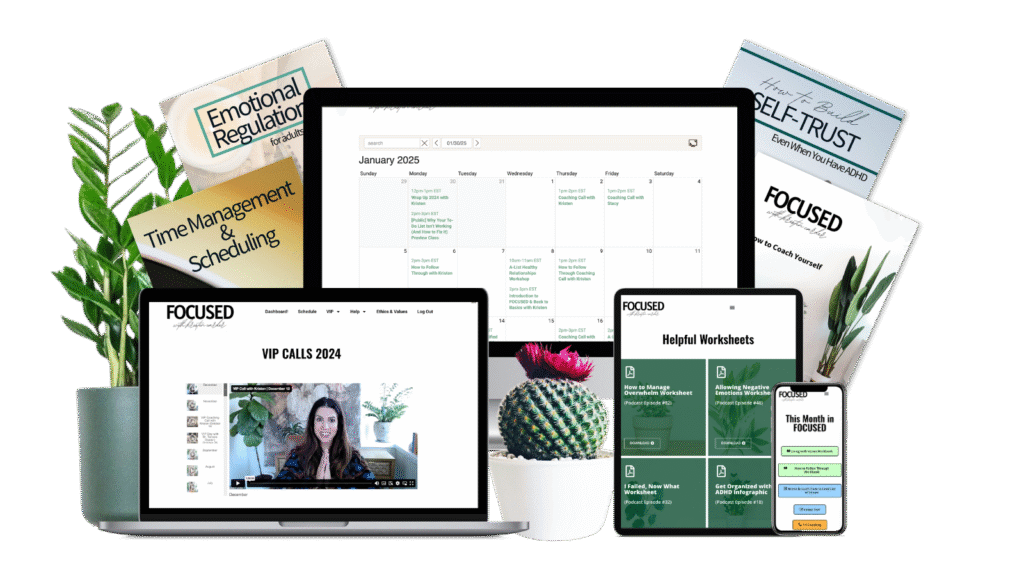
A proven coaching program designed specifically for adults with ADHD who want to gain clarity, build confidence, and take control of their lives.
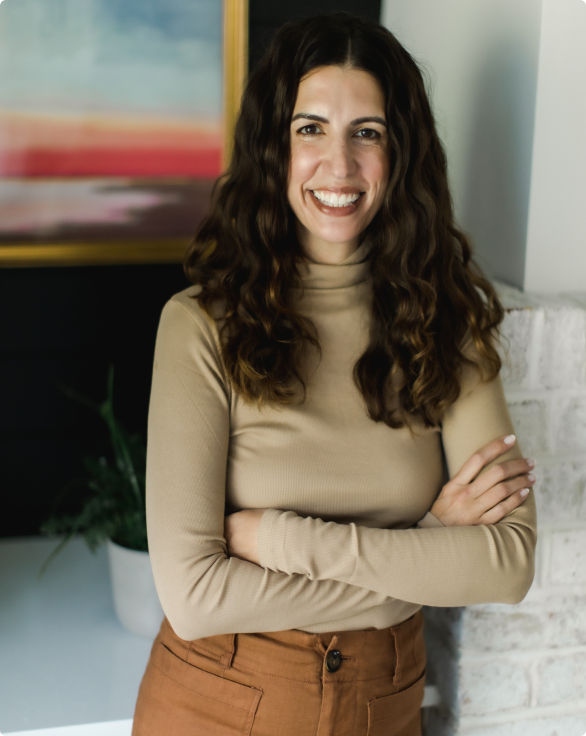
Hi, I’m Kristen Carder—ADHD expert, podcast host, and certified coach who’s been exactly where you are. Diagnosed at 21, I spent years cycling through planners, courses, and systems that never quite worked. Everything changed when I discovered the power of understanding my ADHD brain and the transformative impact of community support.
Now, after 15+ years of research and experience, I’ve helped thousands of adults with ADHD thrive. I’m here to show you how understanding your brain can transform your life, just like it did for mine.

Follow @i.have.adhd.podcast and join our Instagram community for daily strategies, relatable content, and real talk about ADHD