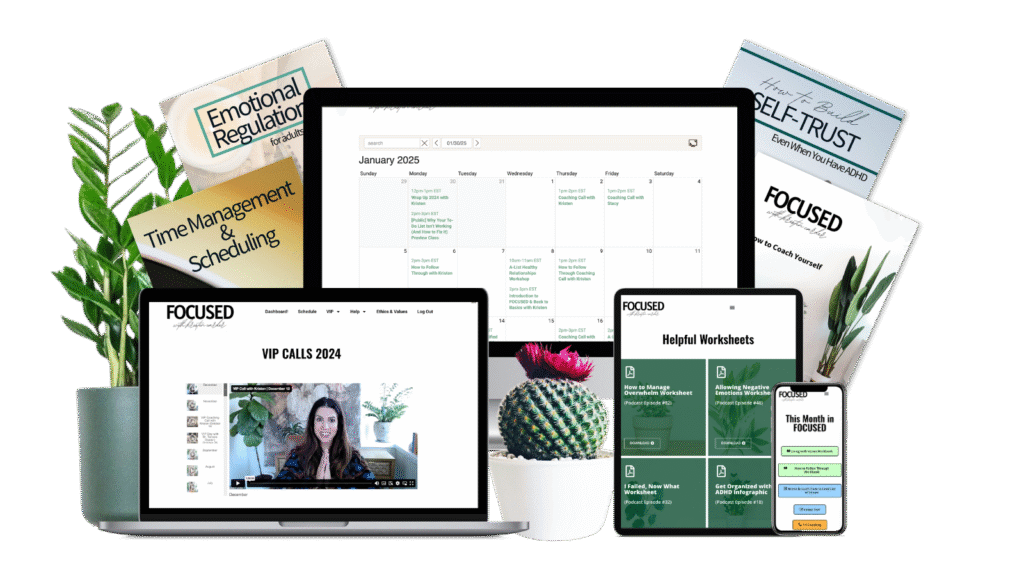
This episode is sponsored by CURE Hydration. All right, I’m going to be real with you. Drinking water is boring. My ADHD brain is like, wait, we have to do this again? Like every day, multiple times. What in the world? And because I’m running from meetings to coaching calls to kid chaos, staying hydrated is not something I’m naturally good at. It’s not something I naturally think about. That’s why I’ve been obsessed with Cure hydration packs lately. Cure is a plant based hydrating electrolyte mix with no added sugar, only 25 calories, and it actually tastes good. The watermelon and berry pomegranate have been on repeat for me. I’m actually like really running low on those flavors, which is so sad. They’re refreshing without being too sweet or artificial. It feels like my water finally has a little bit of personality, which I enjoy. I really do. What I love most is that CURE uses a science backed formula that hydrates as effectively as an IV drip. So when I’m scrambling through my day forgetting my water again, CURE helps me to catch up fast. I throw a few packs in my bag and it makes drinking enough water simple. Which for my ADHD brain is basically a miracle. So staying hydrated isn’t just about water. You also need electrolytes. And that’s why I love cure. It’s clean, tastes great, and it actually works. And bonus, CURE is FSA HSA approved so you can use those funds to stay hydrated. The smart way for I have ADHD Podcast listeners. You can get 20% off your first order@curehydration.com ihaveadhd with the code ihaveadhd and if you get a post purchase survey, make sure to tell them that you heard about Cure right here on the podcast. It really does help to support the show. Don’t just drink more water, Upgrade it with cure with stays under $250 a night. VRBO makes it easy to celebrate sweater weather. You could book a cabin, stay with leaf views for days, or a brownstone in a city where festivals are just a walk away. Or a lakeside home with a fire pit for cozy nights with friends. Or if you’re not a sweater person, we can call it Corduroy weather. More flexible and with stays under $250 a night, you can book a home that suits your exact needs. Book now@vrbo.com. Welcome to the I have ADHD podcast where it’s all about education, encouragement and coaching for adults with adhd. I’m your host Kristen Carter and I have adhd. Let’s chat about the frustrations, humor, and challenges of adulting relationships, working and achieving with this neurodevelopmental disorder. I’ll help you understand your unique brain, unlock your potential, and move from point A to point B. Hey, what’s up? This is Kristin Carter, and you’re listening to The I have ADHD podcast, episode number 121. I am medicated, I am caffeinated, and I am ready to roll. Today we’re talking about what it’s like to be diagnosed later in life. And I’m talking in your 50s, 60s, and 70s. This episode is really important to me because I know that ADHD is hereditary, which means that it’s likely been in my family for generations. However, my grandparents and great grandparents didn’t have the privilege or the luxury of obtaining a diagnosis like I did. And I’m guessing that your grandparents haven’t been diagnosed in either. Now think about that. All of the times that they were late or procrastinated or exploded on their family members, they were likely shamed and punished and felt like they were just bad people instead of understanding that they had a neurodevelopmental disorder that impairs their ability to inhibit those behaviors. When I imagine, especially my grandmother and my great grandmother feeling like, you know, they just never were going to reach their potential or feeling like they could just never get it together compared to their peers really makes me want to cry. So if you have a parent or grandparent in your life that you suspect might have adhd, I encourage you to send them this episode with maybe a sweet little love note from you. Or if you’re a senior adult who’s wondering if maybe you have adhd, please know that this episode was carefully crafted for you specifically because no matter what your age, you deserve to know about, treat and support your mental health. And that might include ADHD for you. If you listened to last week’s episode of the podcast, episode 120, you know that Dr. Barkley mentioned that many, many more senior adults are receiving ADHD diagnoses. And I got an email just this week from a woman in her 70s who was diagnosed, and she asked me, and I quote, is it too late for me to get help? So, wow. Like, this is something that I think the senior adult community is beginning to wake up to, and it’s something that I want to address. So here’s the first thing that I want to say, and this is just the most important part of it. It’s never too late. To improve your life. You’re never too old to seek a diagnosis or treatment or support for your adhd. I’ve had specific family members of mine say things to me like, well, I’m already old, so, like, what’s the point? This breaks my heart. I will never understand this way of thinking. Personally. I never want to get to a place in my life where I declare that I’m done growing or improving or evolving. I want to constantly be learning more about myself and about the world. And I reject the notion of that once we hit a certain age, we are no longer capable of making a contribution to the world around us. On the contrary, I think the world around us needs us, maybe even more so as we grow and age and mature and have a broader perspective on life. So here are my words of wisdom. Regardless of your age, it’s never too late. You still have so much life to live. You get to decide what you want your experience of that life to be like. No, you can’t control everything that happens to you. You can’t control that you’re getting older. You can’t control some of the health concerns that you’re facing. But you can gather all of the support possible to improve your experience of all of those things. And I want to say that I understand that this will require an immense amount of bravery. I understand that this will require you to see your past through a different lens. And. And I know that’s not comfortable. But if you’re willing to gather support around you, if you’re willing to be intentional, to foster safety in relationships with a therapist or a coach or your partner or your best friend, I fully believe that you have what it takes to get through this journey. And think about it. What might it be like for you if you were treated for your adhd? If you’re still working, you may end your career and retire with more success than you had when you started. And if you are already retired, I can personally guarantee that an ADHD treatment protocol will definitely improve your golf swing. Okay, that was a joke. Was it funny, though? Did you like it? I hope you did. But seriously, think about it. As a senior adult, do you have a vision for the next 20 or 30, 30 or 40 years of your life? If not, I encourage you to start crafting a vision. What do you want this season of your life to look like? What do you want your life to feel like? What do you want your experience of the next few decades to be like? It’s never too late. And if you’re an adult in your 50s or 60s, 70s or even 80s. I want to personally invite you to join my coaching program, Focused. Focused is a monthly membership where I coach and support adults with adhd and all are welcome. We do not discriminate. You will find like minded peers in our group, people of all ages. You’re not too old to change and improve your experience of life and I would love to support you in that. So I’d like to share with you an interview that I had with my client, Jane. Jane was diagnosed later in life at the age of 52 and I want to read for you before we get rolling here, I want to read for you what she sent to me because it is just profound. Jane said, I was not diagnosed until two years ago at the ripe old age of 52. Focused has unlocked a treasure trove of explanations for a million thoughts, feelings and actions from the last half century. It’s helped me to communicate with my husband about some of my quirks, like why I hate weekends. I’ve stopped feeling less than because I have to write down everything or I lost my keys or my productivity ebbs and flows. I’m an awesome person with a disorder, not a loser masquerading as a normal person. It’s been a barrage of aha moments sprinkled with regret for not figuring this out sooner. CS Lewis said companionship blossoms into friendship when one of you says what? You too? I thought I was the only one and that’s what Focused has been for me. So I can’t wait for you to hear from Jane. Please enjoy this interview. So we’re going to talk about being diagnosed later in life, right? And I’m so glad to have this episode out there because even though I was diagnosed technically as an adult, I mean 21 is like barely an adult. I’m so glad to have someone like yourself who’s willing to chat about what it’s like, like being diagnosed in their 50s. So like, tell me a little bit about that. You know, like I said, when I finally got diagnosed, it was such a relief because, you know, I was just one of those kids who totally will probably even still go under the radar. Like my daughter was going under the radar even today because, you know, I was straight A student. I didn’t cause problems. I love to read, you know, all of these things. It never occurred to anybody and you know, I can’t blame anybody because it wasn’t really a thing. Yeah. And the further I got along in school and the more I had to do, the harder things, got to focus and get Things done. And so things just took so much longer. And I never understood because I have a lot of bad qualities, but I’m pretty smart. So I never understood, like, why these dumb people could get stuff done, you know? Like, I’m like, I don’t get it. And I’d be like, oh, my God, it took me so long. My friends were like, really? I remember in college, I was writing a paper and the way the room was set up, the desks were right near the door, and my desk was further from the door. And a friend. It was like body doubling before we knew what body doubling was. I remember my friend Caroline came in and sat in the other chair and wrote her Christmas cards and blocked the door. So I had to sit in my chair and write my paper. That’s amazing. Yeah. So you were using, like implementing supports for yourself that you didn’t even realize. Tell me, what led you at the age of 52 to pursue a diagnosis? Like, what was that process like for you? I. I knew I was distracted. I knew I had trouble focusing. My last job, I was having issues with it, but I was under a lot of stress and I have anxiety and it kind of just like, oh, that’s what’s causing your lack of focus. Okay, that’s valid. And again, because I don’t present. Yes. You know, it’s like promiscuous. Do you do drugs or do you have. No, I’m like, no, I take care of personal finances. My last job for millionaires. I don’t have a problem with money. Like, that’s not the issue. So finally, at some, I guess I was talking to my psychiatrist and I said, you know, I don’t know, maybe I’m like a late night age teachers, we may just already had it. And I’m like, yeah. But she goes, well, I can test you. I’m like, well, what’s the point? She said, well, I can medicate you. And I’m like, then I’m like, I don’t want to be Taylor taking meds. And you know, and then she’s like, just take the thing. So I took the little evaluation thing. She said, I scored, like on my impulsiveness. And all that kind of stuff is. Is on the lower end. I think it’s a Catholic guilt. It just keeps it all on the lower end. But on the focus, the inattention, the lack of self esteem, all of that she said was off the charts. So she’s like, I’d like to try, you know, putting you on something. And so we fiddled around with it a little, just the dosage, and it made this huge difference. And, you know, you kind of like, well, what’s the point now? You know, I’m old, but I want to talk a lot about that because I think about my being old. Thanks, Kristen. Exactly. Yes. Let’s dive way deep into that. No, I want to talk about this line of thinking that is like, you know, after a certain age, whatever it is that we make up in our minds is that certain age, what’s the point? And, like, can you say more words about that, like, for yourself, you. That was your initial response. It’s always. It’s always there. The problem. Whatever the problem was, which I didn’t know what it was. The fact that, you know, I sucked. I was a bad human being. You know how it goes, right. Crazy, lazy and dumb. It was always there, and it was so frustrating. I couldn’t understand, like, you know, times going on. Like, well, maybe I’m 30. I’ll have my act together. Maybe I’m 40 when I’m, you know, when I get married, when I have a kid and. Right. I know. You know, and I love it when, like, someone, like a boss would be like, wouldn’t you just love to get that done, though, and be able to cross it off your list? I’m like, I never thought of that. Let me hop off and do that. Yeah, but it’s like, but why can’t I. My husband is the opposite. He is Mr. Instant Action. I said, I really don’t like our front walk. It’s like cement. It doesn’t go with how it looks crappy. The next day, I hear this noise. He’s out in the rain with a jackhammer. First of all, you got yourself an amazing man. Oh, yeah, kudos. And he’s like, about halfway through, I was just so tired of it. I really wasn’t, you know, but. And I’m like, see, we would just have half a walkway if that were. Yeah. Just not. So, like, that sort of made it even more glaring to me. And I’m like, can I do that? So when she mentioned it, I figured, well, what the hell do I have to lose? Like I said, I was. I was out one day and I was doing. Giving some errands, you know, And I realized, like, I powered through, like, three hours of crap. Just stuff, you know, all that little. What my grandmother called long of the doing and shorten the telling. Just like, all these little things. And I’m like, I wasn’t, like, stressed because I wasn’t. I Mean, not that. I mean, I. I have anxiety. I have some depression, anyway, but definitely the adhd. Just. It’s this vicious circle. Totally. Because you’re anxious to get it done. It’s not getting done, whatever it is. And then you feel sad and, you know, it’s just like, it never stops. Totally. So you were saying that you powered through, like, a couple hours of errands that was like, post medication, like, you were medicated. And then you started to notice, like, oh, my. So experience of the world is actually changing. Yes. Like, and I think then combined with kind of knowing that’s what it was, and then getting unfocused and seeing, like, you know, other people and. And you. And having, like, a similar thing, I. Then I could sort of, like, unpack it more. Yeah. Because one of my things, like, if the morning doesn’t go the way I have a hard time getting, I’m like, I’ll just sit here and watch Netflix. I don’t care. Or I’ll do something really, that I don’t need to do, but I want to do that’s sort of useful but not really the thing. The thing. I mean, I still beat myself up. I mean, having a reason for it makes such a difference because I don’t feel like a failure. I don’t feel so much like a failure. So 52 years old, your psychologist says, hey, I think ADHD might be a factor here. You are able to work through the drama of, like, what’s the point? Like, should I even bother? You are diagnosed, yes, 100% with ADHD. You start on a medication journey, you start to notice almost immediate improvement and don’t feel so much like a failure. How has not feeling so much like a failure impacted your life? It’s again, it’s kind of that relief, you know? And I don’t feel like. Especially with my husband, because, like, I’d be like, I know, I know. I didn’t get to this. And it. And he’s like, you’re projecting all these things on me. Like, I know, but I know you like it neat, blah, blah, blah. And now, like, I don’t do that. I either get it done or I don’t get it done. Yeah. So you joined Focused in December. I was thinking December 2019. But no, it’s December 2020. So you’ve been in for about six months. You’re like, the price is gonna go up. I’m like, I gotta get in now. Yes, that’s right. What has that experience been like for you? It’s been good. I. And it’s funny because like I, I have, I don’t know if you can see, but I have my B minus, work can change the world thing up there. Part of me is like, I don’t do, like, I don’t do the live calls that often. I, you know, I catch up and I, I find times when I can do it and I’m like, I’m not going to get upset. It’s not like I’m failing. I’m doing what I can do. I’m getting something out of it. I’m being persistent, not consistent. And so that, but it just, it really is that whole like, oh, I’m not the only one. Yeah. That’s like the biggest part of it. It’s common, but it’s not common to talk about it or totally. You know, and you know, especially for adults, like, I’m not, I mean, I’m 40, so I feel like this is very grown up. I feel like I’ve graduated. And I think especially people in the like 40, 50, 60, 70 age bracket, there’s either not a diagnosis or people are just really are not super open about it. Like, they’re just kind of like, why? This is my info. I wouldn’t share it with anybody else, but I’m like, let me just shout it from the rooftops. Because it is such a part of like who I am. Yeah. And I get, do you get this, like when you say something about adhd, like, oh, I do that too. I must have adhd. Shut up, you neurotypical weirdo. I know. I’m always like, oh, really? Are you clinically diagnosed? Yeah. And then I just let it hang. They’re like, oh, no, not okay. What medicine are you on? But there’s that and there’s also this, this sort of I think thing that people think that kids grow out of it. Yeah. There is no such a thing as adhd, that kids just grow out of it. Yeah. And many people like, well, how do you still have it? You didn’t have it when you were a kid. You had like, no, I had it. Just nobody knew I had it. Yeah. Because I was just, you know, I guess I’m good at compensating. You know, there are things that kids grow out of, but changes, it’s different, you know. Yeah. And I think that’s why so many of us who weren’t behavior issues in school were completely overlooked. And you know, my own son, who is not hyperactive at all, like the most compliant, gentle human, complete opposite of me. He is my Husband, not me, obviously. Every single teacher, I would, I would say to them, you know, I really think there’s something going on here. Like, he’s really spacey, he has no follow through. He can’t like follow multi step directions. And every single teacher that I talked to from kindergarten through fifth grade was like, what? No, he’s the best. And I’m like, yeah, I know he’s the best. That is actually nothing to do with it like that. That’s not the point. But are you noticing how much he’s struggling in these areas? And I think in their defense, and I’m interested to hear what you think about this. I think in a classroom setting when everyone is doing the same thing, it’s much easier for people who are rule followers and don’t struggle with that hyperactivity component. It’s like having a classroom full of body doubles. So of course your body, you’re looking around and you’re constantly reminded, oh, this is what I’m supposed to be doing. Oh, this is what I’m supposed to be doing. But when you’re hyperactive, your body doesn’t allow you to just like sit down. And again, it gets like with my nephew who is an amazing athlete, this guy’s like, oh, I taught Brian how to pitch. And you know, meanwhile, when Brian was little and hyper, he didn’t want him on his team. Oh my gosh. Yes. But now that he’s like fabulous man. Yeah. Star athlete. Yeah. Now he’s, you know, his mentor. But it’s that, it’s that, that stigma. Like, I. We’re on the waiting list for a magnet school right now. And I don’t know when, if she gets in, if I even tell them she has adhd. Fascinating, right? Because I almost think I’d wait and see like how things went. It’s not like she’s really had accommodations and stuff. And she’s always been, my mother calls it house devil, street angel. She’s good in public, like good in school. But it’s home where all the frustration comes out and trying to like, I mean, distance learning or whatever, the homeschooling thing, nightmare. Because she wasn’t, she wasn’t diagnosed yet, so she wasn’t medicated. I was, but. So you have two people who are, you know, of ADHD and the times they’ve had to be off. Luckily she’s been in school most of the time. The time she’s had to be off, they do it did it much better this year. It was much more schooly, but this was More like, here’s a bunch of work, good luck. Oh, my God. I mean, the temper tantrums and the. I don’t blame her. She was just frustrated. Totally. And now, like, she can kind of pull back from that frustration a little bit because she also. I think it’s having something to pin it on, not just like, why can’t I get this? I’m stupid. Yes. And that, I think is such a great point. Did you feel like when you were diagnosed with ADHD that you had something to then pin your struggles on? Yeah. And you weren’t necessarily attaching it to yourself or your self concept and like, I’m just a bad person. I just am obviously selfish because I can’t follow through on any of this for anyone else. Like, when you were diagnosed with adhd, did it give you something? Okay, blame is the wrong word. No, but it’s a reason. It’s not like, yeah, like, my husband has hearing loss. He was in. When he was young. He was in bands and stuff. And it just. He like, wow, right? And he’s also worked in like a lot of heavy, you know, machinery, loud stuff, whatever, over the years. So he’s always had trouble. I’m like, just go. He’s like, oh, they said couldn’t do anything because it’s like the tinnitus and all that stuff. So just go to the ear, nose and throat guy. Let’s see. So he went and he got tested, and even the doctor said, I’m shocked how extensive your hearing loss is. You compensated well for it. Like, he’s like, okay, really? I really can’t hear. I’m like, you know, you really can’t. It’s real. And someone said, like, trying to tell someone with ADHD to, you know, cross that off their list. It’s like if someone said to me, well, you should try to see better. I can’t. I’m 2800 without my glasses. I can’t do anything about that. I can function. I can be corrected and function perfectly well, but I can’t change. So I’m curious, what ways were you compensating? So pre diagnosis. So, like, you were talking about your husband compensating for his hearing loss. In what ways were you compensating for your adhd? Well, a lot of times, I mean, it would be. I would stay at work till midnight if I had to. I would go in on Saturdays if I had to get something finished. I would stay up till three in the morning packing before vacation. And then my husband at like, you know, 10 minutes before I leave the house, he grabs a duffel bag. Like, I don’t see why it’s such a big deal. And he doesn’t forget anything usually. We did go to a water park and he forgot his trunks, which my daughter never lets him forget. But, yeah, I just tried. I would do whatever I could, but it was like I said, at this personal cost, if you blow a tire on a big nail and you’re stuck on the side of the road, you’re like, call triple. Whatever happens if you run out of gas, I’m a stupid idiot. How could I be so dumb? Why didn’t I take care of this? Why didn’t I notice it? So it’s sort of the difference from going thinking that you’re running out of gas to the fact that, oh, my gas tank has a hole in it and it all came out and it’s not my fault. Like, deal with it, you know? Like, it’s not an excuse at all. And I tell my daughter that, too, but it is an explanation. It’s just, you have to find ways to make it work, to work around it. Definitely. Oh, my God, it’s so exhausting. I mean, so exhausting. I am so with you in that, like, the amount of effort that you have to expend in order to just function as an adult with ADHD who’s not being properly treated for it. Like, it is out of this world, how much effort it takes. And it’s hard if you are being treated, but you’re. You’re working at such a deficit, your brain just wants to work in its own way. But we live in a society where it’s like, that’s not possible. Like, I can’t just go, like, knowing I’m smart. Yeah. Then it was more. I was like, why can’t I do this? Yeah. Like, it just. I didn’t understand. I didn’t. I didn’t get it. I remember saying one of my friends, do you ever have one of those days at work you just, like, not productive, you know? And she’s like, not really. But, you know, the whole, like, ebbing and ebbing and flowing of. So the whole point of this episode, the whole point of our conversation, is just to highlight the diagnosis and treatment experience of someone who’s been diagnosed 50s or later. And I’m really wanting to hear from you. If I have a listener who’s in their 50s, 60s, 70s, whatever, who’s listening, who’s totally resonating with your story, but having that same thought of, like, what is the point. I’m 50 years old or I’m 60 years old or I’m 70 years old. What’s the point of getting diagnosed? What would you say to them? Got to get out of the idea that being that it’s weird that it’s a kid thing, that it’s a school thing. It affects every part of your life. It affects your relationships. I mean, unless you’re, like, on your deathbed and been given last rites, I think you should try it. Yes. You know, it’s not like. I mean, it’s fast. It’s not even like one of those meds where it has to build up in your system. Right. You know, and then just learning this stuff. It’s so freeing. It is. It really is. And like I said, I still get discouraged, I still get annoyed with myself, and I still want to do more than I do, but I can step back a little bit from that. So the point then of getting a diagnosis later in life is what kind of experience do you want for the rest of your life? Exactly. I mean, if this is bothering you, if you’re thinking about it and it’s bothering you on a daily basis, it doesn’t do anything to go to a doctor and have a test, you know, there’s no harm done in that. No harm done. There is a point. You’ve still got, like 50, potentially 50 years left on the earth. My dad’s turning 91 tomorrow, so you’ve got a lot of life to live. Yeah, exactly. And no matter. Even if you have a shorter time, it’s more reason to be able to enjoy it. But I hear, like, a lot of adults get diagnosed when their kids get diagnosed. Yeah. Because they’re going to doctor, like, well, that’s fine. That’s what I do. And the doctor’s like, yeah, let’s. Let’s unpack that. I mean, I think people think it’s weird when you say you have adhd. In some ways, I think it’s weird that they think it’s weird. Well, yes, but we’re very evolved human beings. We are so, so evolved. You’re absolutely right. It’s interesting to think about, like, when it’s appropriate to bring it into, like, random conversation. And I don’t usually do that because not everyone deserves to have the conversation with me. Right. About it. I ironically missed my son’s IEP meeting because I have adhd, of course. I’m like, shame spiraling. And it was. I’m a terrible mother. Yeah. And human and community member. And all the things but when I finally, like, got back in touch with them, I was like, listen, Charlie has ADHD for a reason. That’s it from me. And this is just one of the ways that it plays out in my life. And I’m so sorry. And I thought I put it on my calendar, but I didn’t. And, you know, I apologize profusely, but to be able to own up to it in those types of situations has been really powerful for me. Yeah, I’m not a mess. I’m, like, kind of a badass. I just didn’t put it on my calendar. And I was, like, on a coaching call because I’m amazing at my job. Like, those kinds exactly in my head, you know, now it’s like, no, I’m not a hot mess at all. I just, like, I’m not good at this part of life. Right. Yeah. I think it’s, you know, accepting. Like, I may never be packed and ready early. It may just never happen. What do you think is the thing that you’ve had to accept about yourself? What’s. What’s, like, the biggest thing that you’ve accepted about yourself? It’s knowing that, like, I’m not those things that I want to do that I have trouble doing. I’m not going to be able to hit those all the time. I’m going to be able to hit them some of the time. Yeah. But I’m not going to be able to hit them all the time. And it’s. It’s okay, you know, like, you have to choose your battles, pick your. All your stuff. And. And even if it’s a little bit better, it’s like, well, maybe I stayed up late packing, but it wasn’t because I was being indecisive. It was because I had other stuff to do during the day. So I’m up late, but that’s okay that I’m up late. I’m so thankful because, you know, whenever I have somebody on whose story is so different from mine, I just think there’s so much value in that, because I know there’s. We have so many listeners, thousands and thousands of listeners. There are people out there that while they connect with bits and pieces of my story, they’re not going to connect with all of it. And so I love having you on to be able to encourage a segment of the population that I’m just not really able to speak to. So thank you. And if you are an adult with ADHD who’s maybe over 40 or 45 or 50 or 55 or 60 or whatever. We just want to encourage you and we want you to know that we see you. And if you suspect you have adhd, it’s never too late to seek out a diagnosis. No, it’s worth it. You’ll only regret you didn’t do it earlier. I hope that you enjoyed this interview with my client, Jane. And I hope that you know deep down in your bones that it is never too late to get a diagnosis, to seek medical treatment, or to go find some support for your adhd. You have a lot of life left to live. No matter how much, how old you are, you still have breath. You still deserve to be treated for your adhd. All right, my friends, I can’t wait to talk to you next week. Bye. Bye. Hey, adhd’. Er. I see you. I know exactly what it’s like to feel lost, confused, frustrated, and like. No one out there really understands the way that your brain works. That’s why I created Focused. Focused is my monthly coaching program where I lead you through a step by step process of understanding yourself, feeling better, and creating the life that you know you’re meant for. You’ll study, be coached, grow, and make amazing changes alongside of other educated professional adults with ADHD from all over the world. Visit ihaveadhd.com focused to learn more.