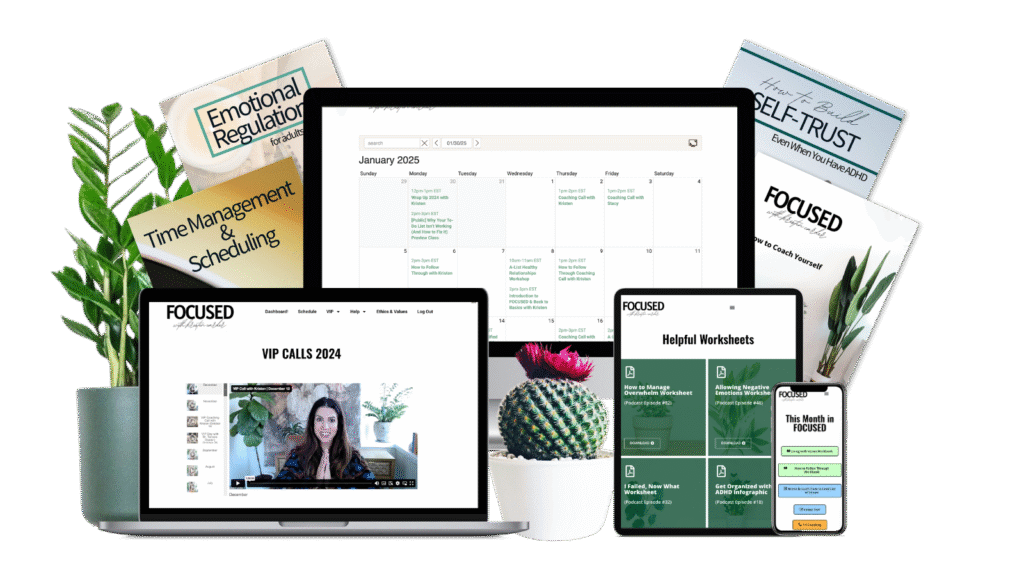
This episode is sponsored by CURE Hydration. All right, I’m going to be real with you. Drinking water is boring. My ADHD brain is like, wait, we have to do this again? Like every day, multiple times. What in the world? And because I’m running from meetings to coaching calls to kid chaos, staying hydrated is not something I’m naturally good at. It’s not something I naturally think about. That’s why I’ve been obsessed with Cure hydration packs lately. Cure is a plant based hydrating electrolyte mix with no added sugar, only 25 calories, and it actually tastes good. The watermelon and berry pomegranate have been on repeat for me. I’m actually like really running low on those flavors, which is so sad. They’re refreshing without being too sweet or artificial. It feels like my water finally has a little bit of personality, which I enjoy. I really do. What I love most is that CURE uses a science backed formula that hydrates as effectively as an IV drip. So when I’m scrambling through my day forgetting my water again, CURE helps me to catch up fast. I throw a few packs in my bag and it makes drinking enough water simple. Which for my ADHD brain is basically a miracle. So staying hydrated isn’t just about water. You also need electrolytes. And that’s why I love cure. It’s clean, tastes great, and it actually works. And bonus, CURE is FSA HSA approved so you can use those funds to stay hydrated. The smart way for I have ADHD Podcast listeners, you can get 20% off your first order@curehydration.com I have ADHD with the code I have ADHD. And if you get a post purchase survey, make sure to tell them that you heard about CURE right here on the podcast. It really does help to support the show. Don’t just drink more water, upgrade it with cure. Did you know you can opt out of winter with VRBO? Save up to $1,500 for booking a month long stay with thousands of sunny homes. Why subject yourself to the cold? Just filter your search by monthly stays and save up to $1,500. Book now at vrbo.com. Welcome to the I have ADHD Podcast where it’s all about education, encouragement and coaching for adults with adhd. I’m your host Kristin Carter and I have adhd. Let’s chat about the frustrations, humor and challenges of adulting relationships, working and achieving with this neurodevelopmental disorder. I’ll help you understand your unique brain, unlock your Potential and move from point A to point B. Hey, what’s up? This is Kristen Carter and you are listening to the I have a ADHD podcast episode number 125. I am medicated, I am caffeinated, and I am ready to roll. Hello, how are you? I am so glad you’re here with me today. I have got to tell you a couple things. Number one, I have 45 minutes to record this podcast and prepare for a class that I am teaching on pretty perfectionism. And I just have to say that I did not manage my time today. Your girl has just been in a funk this week. Totally in the ebb and not in the flow. The podcast that came out this past Tuesday on self sabotage is so ironic, of course, because I had the most intense vulnerability hangover after that podcast episode released. And then I just wanted to sabotage my whole entire life. It is so fascinating how I always, always, always, always, always have to do this work in real time as I am putting it out there for you. And so to think about how the episode on self sabotage gave me the most intense vulnerability hangover. And then I wanted to sabotage. I literally was like, maybe we should take it down. Maybe I shouldn’t leave it up. Like, I was going a little bit, like, not insane, but what’s the word? When you actually are sane but you feel like you’re going insane? I was doing that. So anyway, I just want you to understand that I am a real human. Like, I am just a human. And I experience all of the things that all of the people experience. And one of those things is vulnerability. And another one of those things is self sabotage. And so, you know, I was having all kinds of thoughts. And this week has just been a really interesting time of me trying to take care of myself. But then also, like, Kristen, you also have a job, so, like, don’t forget to do your job. So today was one of those days where I was like, oh, yeah, I have a job. I have to do my job. So here I am in front of my microphone doing my job. Part of what is happening right now, I think, is that we’ve transitioned from summer to, like, the fall school season. And I don’t know about you, but transitions are hard for me. We had a really laid back summer. I was still working full time, but, you know, my kids were just kind of hanging and we’d go to the pool and it was just like really laid back. And now I feel like we are off to the races. So, like, Owen’s in marching band and Charlie is playing water polo and Crosby is playing soccer and we are just like, go, go. So I work during the day. Well, most days. Today was not a productive day, but anyway, I digress. I work during the day and then I go home for what I call second shift. And second shift is mom life, where you’re just like, running your kids around like a crazy person. And I do have to say that running my kids around is pretty fun. So I don’t mind it. It’s way better than having to sit on the floor and, like, play with babies and toddlers. I would so much rather be, like, chatting with them in the car and like them to their practices and doing that kind of thing. But it’s not relaxing. It’s a fun season, but it’s just, I think there’s this shock of having such a huge transition and my entire body is adjusting to it. So I don’t know if that’s relatable to you. Those of you who aren’t parents maybe don’t experience that same seasonal transition, but maybe you do. Maybe things ramp up for for you during the fall season. So I’m just saying life’s been a little bit weird the last week since I spoke with you last. Life’s been a little weird, but we carry on. We just carry on. Today we’re gonna be talking about the importance of rest, and I’m gonna give you some of my strategies on how I’ve evolved into someone who can finally shut her brain off and rest. I’ve never been that way naturally, but it is something that I’m developing. And as with all of the topics I discuss in this podcast, y not something I’ve always been good at. It’s been an intentional transformation that I’ve made in my life over the last 3ish years. And I’m going to tell you how I did it. So it’s funny because I’m realizing, like, I speak with you a lot about my three year transformation, right. A few episodes ago, I shared the 10 major shifts I’ve made in the last three years. And as I’m chatting with my focus members, I notice that I speak in terms of three year transformation. And three years ago, I was a whole different human. I was broke, I was codependent. I was constantly agitated and explosive. I was always working and busy. I was never satisfied. I was always distracted by the next best thing. Don’t get me wrong, I was nice. I was fun. I was funny, of course, and loving. And I was lovable and worthy and valuable. I’m not a better person now than I was then, but to be able to make an impact on the world, it feels really major. I think this is a perfect place for an ad break, but I have to tell you a story before we take an ad break. I was driving to Baltimore to meet my former assistant Christina, who I love now, just like dear, dear friend. And I was listening to Oprah Winfrey’s podcast, Super Soul Sunday. And I pressed play on the first, first episode, which is an amazing episode. And you know what I heard? I heard a McDonald’s ad, and I literally. I was alone in my car. I was cracking up. Not because I hate ads or, like, think McDonald’s is stupid, but because I was like, okay, wait, Kristen Carter. If freaking Oprah can advertise McDonald’s on her podcast, then you can advertise your coaching program on your podcast. I’ve been in, like, so much drama about advertising lately because some of you will say things to me about advertising, and you’ll say things like, podcasts shouldn’t contain ads, and I advertise too much, and sometimes I make the mistake of believing you. But then I listen to Oprah and Oprah’s shamelessly advertising frickin McDonald’s. So anyway, podcasting isn’t easy. Podcasting isn’t free. Every podcast you listen to costs the podcaster money to produce. Nobody gets paid to podcast. I don’t get paid to podcast. So I’m not about to advertise McDonald’s or pasta sauce to you like Oprah does. But I am going to tell you about my ADHD coaching program that’s changing the lives of all of our members. So here we go. This episode is sponsored by Focused. Listen up, friend. If this podcast is changing your life, you’ve got to check out Focused. Focused is my ADHD coaching program where we take the concepts that I dabble in on this podcast and we go deep, we study them, we apply them to our lives, and we make huge changes. I’m a qualified, experienced life coach who has thousands of coaching hours under her belt. Here’s what Focus member Caitlin says about the program. She says, I’ve grown more in these last few months in Focus than in the last 20 years prior that I lived with this ADHD diagnosis. So fun Focused is the perfect complement to an ADHD treatment protocol. So if you’re being treated for your adhd, but you feel like there’s still something holding you back, I want you to know that it’s possible for you to take control of your Life. Go to ihaveadhd.comfocus to learn more. Okay, what do you think? You like that advoice? I mean, it’s not McDonald’s or anything, but, like, that was a good advice. Okay, y’, all. But seriously, if you want to go to the website and check it out, I think you’ll love it. All right, so let’s move on. As we get rolling here, we’re going to be talking about rest. And I want to acknowledge before we get started that there are two types of ADHDers. There’s the hyperactive type, which is what I am. People who are hyperactive have brains that are constantly moving. There’s lots of thoughts, lots of spinning, often, like, majorly agitated, really hard for us to slow down and just, like, stop. But on the ADHD spectrum, there’s also the type of adhder called inattentive. And inattentive adhders will often present as being, like, really tired and maybe even. Even a little too relaxed. They can be very calm. They want to rest and nap a lot. So this episode might be more relatable to those of you who are hyperactive like me, but we shall see. And I just invite you to take what’s useful and valuable to you and just leave the rest. Not everything I say has to be for you. If it’s not for you, no problem. So I want to start by saying that it’s often hard for us to even see the value in rest, especially if you’re living in America. We are all about the hustle culture. Resting doesn’t come naturally to most of us, and especially those of us who are hyperactive. Right? Those of us who are high energy, we struggle to see the value in rest. We think it’s dumb. Okay, I thought it was dumb or boring, right? It kind of seems pointless. It’s like, what in the world am I supposed to do just sitting here? For me, what this mindset led to was constantly depleting my energy and burning myself out to the point where I was. Or maybe I should talk about this in, like, present tense, because sometimes it still happens, like, completely hung over and incapacitated the day after. So you know the kind of hungover where you don’t have too much to drink but you accept expended. Is that a word? Like, you expelled too much energy, right? You just, like, did too much, and then you’re hung over the next day. So that’s what I’m talking about. I used to do this to myself all the damn time. And it’s such a Vicious, crazy cycle that’s so hard to get out of. So now I’ve decided to protect my energy. And I can’t even believe I’m saying this because it totally doesn’t sound like me. Like, who is this person speaking right now? It’s Kristin Carter. She’s just a different version of Kristin Carter. I lived in such an opposite way for most of my life. It’s hard to embody this identity. But now I do protect my energy. I’ll give you an example of how this can play out practically for me. Labor Day weekend was a couple of weekends ago and I just went back and checked the calendar. We had 13 events scheduled on the calendar for that four day weekend. Thirteen. It’s like crazy, right? I knew it was going to be like a really wild weekend with lots of peopling and I knew that on Tuesday I had a bunch of things scheduled for work, so I needed to be fresh. So before the weekend even happened, I spent some time planning my rest time, which is like so strange, right? I planned out when I was going to rest, when I was going to relax. Among all of the crazy stuff that we had planned, I made it a point to be alone. I took several walks, I read a book, I sat in silence, I got into my bed and I closed my eyes in the middle of the day. Now your girl can’t nap. But sometimes I do lay in my bed and close my eyes and I think that counts. I even went to the beach with my extended family and I even like decided to leave right at 5. And I did. I wanted to be home, showered, in bed at a normal decent time. And so we left the beach at 5, which usually I like to stay really late at the beach because I love the beach anyway. So I know this sounds like neurotypical bs, but I swear I didn’t do it because I’m neurotypical. I did it because I’ve decided to value rest. I’ve decided to see how it improves my productivity and how it improves my experience in life. I’ve decided to value my energy, so I want to conserve it. I value the energy impact that I’m able to have on the world. And so I know I can’t make that impact when I’m depleted. So I decided to conserve. Sometimes it’s hard to believe that we’re worthy of rest. So maybe you’re not resting because you don’t believe that you’re actually worthy of rest, right? A lot of us spend tons of time beating ourselves up or punishing ourselves for what we didn’t get done that day. We think that not resting and forcing ourselves to work far past our capacity is a way to hold ourselves accountable for the things that we didn’t cross off our list. But what we don’t realize is that we’re actually making it less likely that we’re going to get anything done tomorrow. Hear me on this. Punishing yourself and beating yourself up for not being productive, withholding rest from yourself is not the way to get yourself to produce. Now, that’s a whole different podcast. And I know I’ve touched on this in podcasts before, but what’s important to note here is that punishing yourself does not lead to productivity. So if it’s 10pm and you didn’t get your stuff done and you’re tempted to shame yourself into working until 2:00am, just don’t, okay? Just. Just really don’t. Because all you’re doing is stealing energy and productivity from yourself from tomorrow. Now, another reason why we don’t slow down and rest is because we’ve tied busyness to our worthiness. Okay? So, and this was 100% me. If I’m not moving or working or doing something, then I didn’t feel worthy. As if we need to produce in order to be lovable, valuable humans. Friends, we need to separate our production from our value. As Brene Brown says, and I’ve been on a Brene Brown kick lately. We are hustling for our worthiness. We’re hustling for our worthiness. When we don’t allow ourselves to rest, to unplug, to set boundaries on our time, it’s often because we’re hustling for our worthiness. We’re trying to prove that we have value. As if writing one more line of code or one more email is going to finally prove our worth to the world. We’re severely misguided here. Our worth doesn’t need to be proven. Our worth just is. It just exists. You are valuable because you are human. The end. You don’t need to produce in order to be worthy. All right, next up. Are you comfortable being alone with your thoughts? I think that we avoid rest so that we can avoid our thoughts. We’re afraid to hear ourselves think. We have so many intrusive, scattered thoughts swirling around our brains that we don’t like silence. We don’t like the space that we give ourselves when we rest. Because silence and space is where we hear the truth. I feel like that was important, so I’m going to say it again. Silence and space is where we hear the truth. And sometimes the truth doesn’t feel good. Sometimes there’s buried pain that’s asking to be dealt with, and we don’t want to deal with it. We’re afraid or we’re intimidated, so we should shove it way down. And we keep ourselves really, really busy so that we don’t have to deal with our thoughts. One of the ways that I have helped myself with this is having a routine practice. Now, by routine, I mean, like, completely inconsistent practice of journaling. And I do not mean journaling in a cute, fancy journal that I carry around with me and just, like, write everything down. That’s not what I mean. What I mean is a thought download. Grabbing a scrap, piece of paper, or, you know, if you have a journal, great. And just writing down everything that you’re thinking. Emptying out the contents of your brain is such a powerful practice. I’ve heard from a lot of you that you actually avoid thought downloads because you’re afraid of what you’re going to find in there. It’s like not cleaning out the closet because you’re afraid of what you’re going to find in there, or not cleaning out the fridge. Who am I talking to right now? Who am I preaching at right now? Who’s not cleaning out the fridge? Because you’re just, like, really afraid of what you’re gonna find in the back of the fridge. We do this to our brains, and when we do this to our brains, we do ourselves a huge disservice. Getting all of our thoughts out of our brain onto paper gives us the ability to. To have clear space in our mind. There is something magical about emptying the contents of your brain onto paper. And then fricking burn the paper, throw it out. You don’t need to keep it. But what I’m saying is, clear the clutter in your brain, it will be so helpful for you. Another thing that’s really important if we want to rest is the ability to feel. Guys, this is complicated. Like, resting isn’t just like, let me give you the 17 tips and tricks to rest, and you’re going to be an expert. Like, this is deep work. This is not simple stuff. Like, one of the reasons why we don’t rest is because we don’t want to feel. Yeah. When we let our bodies slow down, then our bodies finally have the freedom and the space to talk to us. And a lot of us don’t like what our bodies tell us. Right? So resting oftentimes means feeling. So we need to be willing to Feel. If we’re going to rest and most of us aren’t willing to feel, I know that this one might be a surprise considering that we’re talking about rest and most of us have this idea of rest that involves either not feeling or just feeling really, really happy. Right. But no, resting often means feeling all of the negative feelings. So I told you that this week was kind of like a crazy self sabotage week for me. Like if that’s a word, which. Let’s just pretend it’s a word. And I took a lot of time to just feel, to rest, to feel everything that was coming up for me. And I’m going to tell you, it was uncomfortable. I did not enjoy it, but it allowed me to process it. To be a full human who has the full spectrum of emotions, who feels all of the good feelings, but then also all of the bad feelings. Turning the noise off, putting the phone down, going out into nature, it’s going to bring up feelings for you. And I want to tell you that you have the capacity to feel. You do. Feeling is not going to, to harm you. Feeling negatively doesn’t mean that there’s something wrong with you. It means that there’s something right with you. It means that you are human. You’re doing it right. So will you make space in your body to feel? Are you willing to expand inside yourself so that you can feel? This is a hugely important component of rest. I highly, highly, highly recommend going back to the couple episodes I have from last year about feelings, about emotions, about processing emotion. They’re really important and they can help you for free. They can help you learn how to expand your capacity to feel so that you can prioritize rest. This last one, I think is way more fun. So don’t worry, this one’s not hard. We need to allow ourselves to have hobbies. My husband Greg taught me this. He has so many hobbies. When we got married, I was like, what is happening? I don’t understand. Like, I’m not a person with hobbies, but he’s got a lot. He plays men’s ice hockey. He plays Call of Duty online with his brother. He loves to fly fish. At one point he was playing in a softball league. Another point, he was playing in a soccer league. He does a lot of, like, extracurricular activities. I don’t understand but that. It looks like you’re having fun. So, okay. It took me years to realize that I actually don’t have any hobbies. Do you? I don’t know. I really don’t. So last Year around this time, I was like, I should get a hobby. I should start something. So I started riding horses. And I haven’t totally kept up with it, which I know is not shocking to you, but it was a beautiful step that I took toward having a hobby. I really love to walk, I love being outside, I love to hike. So I’m calling that a hobby that works in my mind, it’s a hobby. So it’s a hobby. Okay. I try to read interesting books. I try to keep them around in places where I sit, like next to my bed, next to my favorite spot on the couch. So I’ve recently made it a point to try to read, like, as I’m going to bed at night and as I’m waking up in the morning. And it doesn’t always happen, but sometimes it does. And what it does for me is it puts some space between the noise of Instagram and the noise of, like, work and life and me falling asleep or waking up. It just puts a little bit more space, a little bit more rest in between the grind. And it’s a small step, but I do feel more rested and I think it’s important. So finding a hobby, finding something outside of, like your normal work and family life is a. Especially if it doesn’t involve a screen, especially if it is involve something being outside that can be very therapeutic and very helpful for you to establish a practice of rest. So I just want to reiterate, like, learning how to rest is complicated, right? Like, with most things in life that we’re wanting to transform, it’s not just as easy as following like a simple couple step process. This is not like we can’t make an Instagram infographic out of this and be like, there you go. Now just apply these couple things and you’re good to go. Like, it’s not like that. This is a practice that might take some outside help for you. If you haven’t been to therapy, this might be the time to start. This might be your catalyst. You might want to find a therapist and say, hey, I noticed that I don’t ever rest. Can we dig into this and figure out why? A good therapist will help you to learn how to feel and process your emotions. They’ll help you connect your triggers to your childhood and give you insights on why you respond the way that you do. It’s so helpful. I am deep into therapy land right now, and it’s exhausting, but it is teaching me so much. And a good coach can help you with this too. And I’m a Good coach. So if you want to join focused, I can absolutely help you to learn to rest. Here are a couple steps that maybe you can try to implement. See if it makes a difference. First, become aware of why you don’t rest. Just start to observe yourself. Is it because you’re hustling for your worthiness? Is it because you don’t want to feel? Are you afraid of your own thoughts? Identifying why you’re not resting will begin to give you some insight and clarity and awareness, and that’s a really good place to start. So let’s just start there. Number two, let’s journal a little bit. Let’s get those thoughts out of your brain and onto paper. I call it a thought download. If you haven’t heard of this concept before, please go check out episode 16. It’s all about the thought download. Practice. It’s there for you, okay? And you can throw that thought download away or burn it or rip it up when you’re done writing. You don’t need to keep it, so don’t be overwhelmed by that part. That part is not the point. The point is clearing the clutter in your mind and getting it out of your brain and onto paper. Also, stop punishing yourself when you get nothing done or when you don’t finish your list, or when you don’t meet a deadline. Make a decision that you’re no longer going to punish yourself. Okay, enough. No more. No more punishments. Figure out a way to pardon yourself and rest. Number four, Begin to notice the ebb and flow of your energy and learn how to conserve it. I’m in an ebb right now, as I have said, like a major, major ebb. I can barely get anything done, but I know that this is gonna last for a couple days, maybe a week, and then I’m popping with energy real soon. Okay, so you’re not a robot. Your energy is going to ebb and flow, just like my energy ebbs and flows. I think it might be helpful to let you know that I wrote this podcast episode last week. If I had not written this podcast episode last week, I’m not sure it would have gotten done. I don’t know why I feel compelled to tell you that, because I think, like, I’m anticipating your thoughts that are like, well, Kristen, you said you barely got anything done, but here you are recording this podcast. Literally. It’s because I wrote it last week. Last week, me wrote this so that this week, me could have an ebb in energy. Okay, Anyway, your energy is going to ebb and flow. It’s the way that you’re designed. So instead of fighting against it, decide to work with it. All right, Go for a walk without your phone. Walks are free. Breathe the air. Feel the sunshine or the rain on your face. Walk without any noise. Allow yourself to open up and feel whatever comes up for you. Know that negative emotion does not mean that you’re broken or something is wrong with you. It simply means that you’re human. That is it. And lastly, and this is the fun one, find a hobby. Do something other than your job or run your kids around. Go bowling or play basketball or learn to knit or, I don’t know, do something that the people do. What do the people do? Oh, man, I’m not sure. Oh, that one’s not the last one. Here’s the last one. Ask for help. If you truly struggle to rest, if you try to implement some of these techniques and you’re like, this is not working, your body might be in a constant state of hyper awareness and that can be very hard on your health and it might be something that you need outside help with. I highly, highly recommend that you speak to a therapist about triggers and trauma and fight, flight, freeze or fawn. Highly recommend you talk to a therapist about processing emotion and digging through all of that. Or a highly effective coach can help with this too. Take advantage of any resources that might be available to you. Listen, you’ve got what it takes. You’re allowed to rest. Even if all you want to do is record this audio right here, you’re allowed to rest. You deserve to shut your brain off. You are allowed to make space for yourself, to sit and do nothing. You are worthy and valuable and you don’t have to hustle in order to prove that there. All you have to do is record that and replay it a million times and maybe start believing it. All right. I hope you have an amazing week. Maybe you could reach out to me on Instagram and tell me the ways that you are choosing to honor your ebb and flow, to conserve your energy, to find a hobby, to rest and relax. I can’t wait to hear from you. I’ll talk to you soon. Bye. Bye. A few years ago, I went looking for help. I wanted to find someone to teach me how to feel better about myself and to help me improve my organization, productivity, time management, emotional regulation. You know, all the things that we adults with ADHD struggle with. I couldn’t find anything. So I researched and I studied and I hired coaches and I figured it out. Then I created Focused for you. Focused is my monthly coaching membership where I teach educated professional adults how to accept their ADHD brain and hijack their ability to get stuff done. Hundreds of people from all over the world are already benefiting from this program, and I’m confident that you will too. Go to ihaveadhd.com focused for all the details.