

Podcast Episode #36: Emotional Dysregulation: What To Do When You’re Triggered

Listen or Watch this episode on:

About This Episode

5 Steps to feeling better when someone says or does something to set you off. 

See Privacy Policy at [https://art19.com/privacy](https://art19.com/privacy) and California Privacy Notice at [https://art19.com/privacy#do-not-sell-my-info](https://art19.com/privacy#do-not-sell-my-info).

Episode Transcript

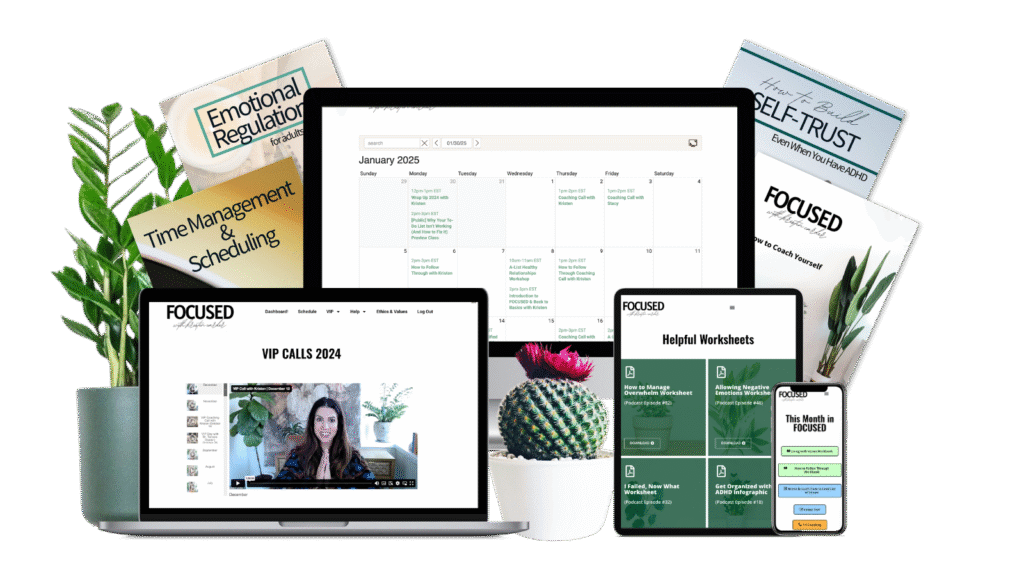
This episode is sponsored by Cure Hydration. You know that moment for me, it’s around like 2 or 3pm when my ADHD brain just decides we’re done for the day. We’re done here. The afternoon slump hits, the lights go off upstairs and suddenly answering an email or doing basically anything feels like climbing a mountain. That’s when I reach for Cure Energy. It’s a clean plant based energy drink mix made with 100 milligrams of natural caffeine and electrolytes so I get the focus and hydration boost I need without jitters, without a crash and without that like I drink battery acid Vi vibe that some of the energy drinks have. The peach tea and akai berry flavors are my current go to’s crisp, refreshing and they don’t taste fake, y’. All. They don’t taste fake. I’ll drink one before recording a session or when I need to get help through like that afternoon drag. And honestly I. I drink it anytime. My brain just needs to cooperate. What’s wild is that Cure Energy is only 25 calories and has zero added sugar. It actually helps me stay hydrated while giving me energy. Okay, I love coffee, but coffee could never Staying hydrated isn’t just about water. You also need electrolytes. And that’s why I love Cure. It’s clean, it tastes great and it actually works. And remember, Cure is FSA HSA approved which is amazing. You can use that money to pay for cure and for I have ADHD listeners, you can get 20% off your first order@curehydration.com I have ADHD with the code I have ADHD. And if you do get a post purchase survey, make sure to tell them that you heard about CURE right here on the podcast. It really helps to support the show. Don’t just drink more, upgrade it with cure. Welcome to the I have ADHD Podcast where it’s all about education, encouragement and coaching for adults with adhd. I’m your host Kristin Carter and I have adhd. Let’s chat about the frustrations, humor and challenges of adulting relationships, working and achieving with this neurodevelopmental disorder. I’ll help you understand your unique brain, unlock your potential and move from point A to point B. Hey, what’s up? This is Kristin Carter. You are listening to the I have ADHD podcast, episode number 36 I am medicated. I have recently been caffeinated and I am so ready to roll on this gorgeous winter morning. Two weeks until Christmas and I haven’t bought one gift not one. I’m totally fine with it guys. It is going to be fine. This is why God invented Amazon Prime. I am sure that many of you can totally relate. I’m not going to get stressed about it, but seriously haven’t purchased one gift for Christmas. Love all my people. We’ll make sure that it gets to done. But I’m just not the girl who prioritizes planning ahead in this area of my life. I just don’t got some other stuff going on. And Christmas is going to be magical. We have our tree up. It’s gorgeous. We opted for a fake tree this year and I really don’t know how I feel about that. Usually we get a real tree every year we cut it down ourselves. It’s magical. But this year it’s fake. So how do you feel about that? You judging me right now? I’m just not really sure this year it’s fake. But it really does look. It looks good. It really does. Today we’re going to be talking about emotional dysregulation, which is something that maybe we should be talking about every single day because it certainly affects our lives in a very big way and many people in the ADHD community do not talk about it very often. And so I think there is a very large section of adults with ADHD out there in the world not realizing that their roller coaster of explosive emotions are largely in part due to their inability to regulate themselves, which is a symptom of adhd. Did you know that? The inability to regulate your own emotions and is a symptom of ADHD. Now, my favorite ADHD guru, Dr. Russell Barkley, I am 100% Team Barkley. He really does try to get the word out about emotional dysregulation. He has written several articles and he even has a video series about the importance of emotional regulation for the person with adhd. But right now, the diagnostic criteria does not include anything regarding emotions. So when you were diagnosed with adhd, you are likely asked questions about your attention and your hyperactivity. Right. So inattention and hyperactivity are right now the two key components of the diagnostic criteria. However, Dr. Barclay is very influential, obviously in the ADHD community and I really hope that his influence allows the diagnostic criteria to change soon because I think that it should for sure include questions regarding the ability to regulate our emotions. So I want to read a little bit about what Dr. Barclay says regarding emotional dysregulation. So he says. Now this is a Psych Net article from the American Psychology. Wow. American psychological association so Dr. Barclay says he’s speaking of emotional regulation. This largely neglected element is a deficiency in both the executive or cognitive inhibition and the top down self control of emotion in general, and particularly those pertaining to the self regulation of frustration, impatience and anger. Can I get an amen? That was for me, not Dr. Barclay. Okay, I shall continue. This most noticeable and initial consequence of this deficiency in people with ADHD is a striking propensity for failure to inhibit emotions or emotional impulsivity, understanding the nature of ADHD or emotional impulsivity. It also seeks to explain why the explicit recognition of deficient emotional self regulation as a central feature to the disorder may prove useful in broadening our understanding of the emotional and social maladjustment evident in cases of the disorder. It’s so interesting because when I was diagnosed with ADHD 15 years ago, I was not told anything about ADHD. I’ve told this story several times. I was not given information about adhd. I was not told what to expect. I was not told anything about the symptoms. It was just like, yep, you have adhd. Here’s some Concerta, which I’m very thankful for. Concerta was amazing. It changed my life. Thank you for Concerta. However, it would have been very, very, very helpful to also understand that not only do I struggle to regulate my attention, not only do I struggle to regulate my impulses, but I also struggle to regulate my emotions. Do you know how we often think that everyone perceives the world just like we do? You know how we kind of walk around expecting everyone to interact with the world? Like, and then as we grow up and mature, we realize, like, oh, everyone is different. Wow, I didn’t realize that. Oh, everyone doesn’t explode when they can’t untie a knot in their shoe. Oh, everyone doesn’t totally freak out when they have something negative said about them. Oh, you know, all of these different things that I used to accept experience, I thought that was just normal. I thought this was just like the way that humans interact, but apparently it’s not. So I wanted to take a minute and kind of shine a light on this aspect of adult adhd. If you are someone who struggles to understand, process and regulate your emotions, you are not alone. You are not abnormal. There is nothing wrong with you. You need some tools and you need some understanding, and that is it. Okay? You need some treatment, you need some support, you need some tools, you need some understanding. But you don’t need a brain transplant and you don’t need to become a different person. You can become the best version of yourself and stay still, feel emotions intensely. So that’s what we’re going to talk about today. So I had two fantastic examples of this this past week, but I want to talk about one of them because it was very, very, very, very, very triggering. And I think a lot of people can relate to it. So things that often set us off would be people saying things that are negative about us. Right. That can often make us explode and trigger us. Other things that set us off, though, are like things that we read on the Internet, like political things that we don’t agree with somebody in our Facebook or Instagram feed who’s posting. Political things that are not in line with our worldview and can often set us off. Honestly, when the election cycle of 2016 was happening, I was a hot mess. I was someone who could not handle even being on social media because everyone’s opinion was so triggering for me. I did not know how to love and accept. Accept people and not judge them for their political opinion. How interesting is that? Is that something that you relate to? I would literally lose sleep over Facebook posts, which I now know is totally unhealthy. So the version of me from four years ago, I love her. She was doing the very best that she could. But I am so glad that I am continuing to grow and learn and evolve because that version of me was very preoccupied with other people’s stuff. And really, we call that codependency, which I want to do an entire podcast episode on, because codependency is something that I think many of us with ADHD are dealing with, and we don’t even realize it. We want other people to think like us, be like us, act like us, and if they don’t, we literally struggle so much emotionally, we think something’s gone wrong. We think there is a big problem in the world, when in reality, the big problem is our own inability to regulate what’s happening inside of us. So I really am looking forward to chatting with you about this today. So I want to tell you about the scenario that happened to me this week. I was totally triggered. I felt the emotions so intensely. And I also had the tools to calm down, to take care of myself, and to completely let it go and be free of it. What used to happen to me when something negative happened, if somebody said something negative or did something negative to me, I would be completely unable to deal with it in a healthy way because I just didn’t know how. Nobody really teaches you how to do this, right? Nobody teaches you how to read something negative about you on the Internet and, and regulate yourself. Nobody teaches you how to deal with someone who’s being rude and to let it go in a graceful and nonjudgmental way. Nobody teaches you how to let go of someone else’s judgments. Like, these are things that we have to learn as grownups. People out there who just know how to do this. I don’t understand, like, where is my roadmap? Where is my guidebook? Where is, like, the rulebook that I can follow? And that is something that is. I think a lot of us with ADHD feel that way. A lot of adults are kind of like, how does everyone else know how to grow up and become a fully functioning adult? And I don’t. And that side note, small, small rabbit trail here. That is my mission with the focused group that I have started. That is my mission to give a guidebook to say, hey, if you struggle with these, like, normal, quote, unquote, normal, adulting, grown up things, you’re not alone. Join our group because we are on a mission to evolve and grow and change and become the very best version of ourselves. Okay, side note, over. So here’s what happened. I posted in the Facebook group about the focused program. It’s a membership program. It’s all inclusive. It’s for adults with adhd. It is amazing. You get a workbook sent to your home. There’s three coaching calls a week that you can either join live and be coached on or watch the replay of in the site. Like, it’s just, I just am so excited about is going to be so valuable to the ADHD community and I’m very proud of it. And at the same time, of course, I’m also doubting myself and dealing with a ton of like, what if it fails? What if I fail? What if, what if, what if? Right? It’s just like normal stuff. I put it in my purse. I bring it along with me as I continue to create and grow this program. It’s wonderful. It’s fine. I’m willing to experience all the emotions in order to get the job done. However, what that also means is that I need to also be willing to experience criticism and being triggered. And that’s what happened this week. So I posted in the Facebook group about focused and I had an interaction with someone who thought I was doing a lot of things wrong. They were very direct. They said some things that I interpreted as being rude and I was immediately triggered. Immediately my chest started to burn. I could feel from the top of my head to the bottom of my feet, like, Emotions kind of charging through me and I was angry. I was so triggered. I felt intense, intense emotions. Now, the older version of me would have fired back a defense. I probably would have ripped this person a new one in the process. And then I would have been distracted by it all day long. I would have gone back to the post over and over. I would have checked in. I would have, like, who else commented? What else did people say? I would have probably talked to a lot of people in my life about it. I would have brought it up over and over. I would have been hyper focusing on it. I most likely would have lost sleep over it that night. And then my hope was always like, when I wake up in the morning, hopefully I’m like, basically over this, right? It took me the whole day and going to sleep. And then I would hope that I would be over it in the morning. But since I have learned and implemented tools for regulating myself and calming down in the last year or two, I knew exactly what to do in this moment. So it doesn’t mean that I wasn’t triggered. I was. I was totally triggered. I totally felt explosive emotions. I wanted to. To scream. I wanted to write back a very poignant, direct, rude response. I wanted to defend myself. I wanted to blast this everywhere. And instead I did five things, and I want to share these five things with you because you can also implement these five techniques and into your own life when you are triggered. Okay? When you feel that emotion just coursing through your body, when you feel like you’re going to explode, when you feel like your chest is burning, that is an indicator that there is work that needs to be done. That is an indicator that you need to take care of yourself. That is an indicator that there’s something, something going on inside of you that needs some attention. Okay? And I never used to view it that way. I always thought that the problem was on the outside of me. I didn’t realize that I needed to go internally and look within and really take care of myself. So here are the five things that we can do when we are dealing with emotional dysregulation. Number one, take care of yourself. And what I mean by that is, have you eaten? Have you had anything to drink? Have you taken your medication? Are you a fully formed human in that moment, or are you running on empty? So when I closed my computer and I took a breath and I asked myself, how are you? I checked in, I realized I was drinking my coffee, but I hadn’t eaten yet, I hadn’t showered, and I hadn’t taken my medication. And the unshowered, unmedicated, hungry version of me is not a good version. I mean, I’m great, but I’m not that great. You know what I’m saying? We all need some food. We all need our meds or supplements or whatever it is that you use to treat your adhd. And we all need a good shower. And so that’s what I did. I took care of myself. I stepped away and I really checked in with me and took care of my very basic physical needs. Remember, your basic physical needs matter. They really, really matter. They’re going to affect the way that you think and the way that you feel. So take care of your basic physical needs. That simple. Step number one. Number two, make sure you get very clear on the facts of what happened. So what I did was I forced myself to sit down with a pen and a piece of paper and write down the facts. And here’s why. We often create a elaborate story around the facts. We have our drama and our story and our version of what happened. And we often don’t look at the cold, hard facts. What was actually said, what actually went on here? So when you feel triggered when someone said something or done something that makes you want to explode, I want you to write it down. What are the facts? So and so said this and list out exact direct quotes of what they said. So and so did this. List out exactly what they did. So I sat down and I wrote out direct quotes of what this person said. And I will tell you that that was painful. What I would have done in the past is I would have probably not gone back to read what he said because it was very painful. I did not want to encounter that discomfort in my body again. And I would have resisted it. But the problem with resisting is that it stays with us for so much longer. When we resist the negativity, it stays with us because we’re not actually processing it. We have to process it in order to move through and let it go. So I wrote down direct quotes, the cold hard facts of what he said. And then I took full sheet of paper and I wrote down all of my drama. That’s step three. Write down your story, your perception, your judgments. This is called a thought download. So based on what he said, okay, what do I think? And I just wrote everything down. I judged him, I judged the interaction, I judged myself. I just like went to town and that’s really important. Get out all out onto paper so that you can see it. Remember, those of us with adhd do not have the luxury of the internal dialogue that lets us process these thoughts internally. We have to get them down onto paper so we can see what’s really going on. And so I got my whole story onto paper. All of my judgments, all of the things I was thinking and feeling. I just really wrote it down. A lot of us want to do this verbally. We want to have, like. We want to just, like, spew this verbally. Sometimes the target of our verbal diarrhea is the person that we’re interacting with and angry at. Sometimes it’s our partner or our spouse or our best friend. We just want to, like, dump all of this verbally. But I want to encourage you to evolve in this area area, and instead of dumping it out verbally, get it down onto paper so that you can really observe it, see it. And also you’re owning it. You’re not dumping it onto someone else. You’re not taking that negativity and putting it on someone else. You are just putting it on a piece of paper that’s not harmful at all. That is actually very, very helpful because then you can see. See exactly what your thoughts are. You can see exactly what you’re thinking and why you’re feeling the way that you’re feeling. The third step in calming down after being triggered is asking yourself three questions. What’s right about what they said? What can I agree with what is true here? Usually there is at least a little nugget of truth. And as much as we don’t want to see their point, it does relieve and eliminate a lot of our tension, a lot of our anger, a lot of the emotion that we’re feeling. If we can see their point of view. Okay, totally. These are the things that I agree with. So I did that in this scenario this past week. I wrote down the things that he had a point about. And you know what? There were a couple things. I didn’t agree with him per se, but I did see where he was coming from. I did see why he would be thinking that. And it did relieve some of my tension. Not all of it, but I was able to get on board with what he was saying. And like, okay, totally, I agree with some of this. The next question is what don’t I agree with? What is not factual about what they’re saying or what are they saying? That, like, it’s their opinion, but I’m still choosing not to agree with it. That’s really important. It’s very, very important that we understand that as adults, we are all entitled to our own opinions. Everyone in the world can do and say whatever they want. It’s really annoying, actually. Like, I totally wish that I could control people, make them think like me, make them love me, make them validate me, make them agree with me. That’s not the way the world works, okay? There are so many different perspectives, so many different worldviews, so many different values in the world that are not the same as mine. They’re not the same as yours. It doesn’t necessarily mean the person who’s disagreeing with you is even wrong or like a bad person. We don’t need to judge them. We can just accept that not everyone is on the same page as us. I think that’s one of the key components to emotional maturity is understanding that other people are different. Not only are they different, but they’re not necessarily wrong. This guy is allowed to think these things and I don’t agree with him. And it’s still okay. And that’s a very powerful exercise. What do I agree with? What don’t I agree with? What do I see here? That is just his opinion that I do not agree with. The third little question in this series. So what’s right about what he says? Like, what can I totally agree with? What’s wrong about what he says? What don’t I agree with? And then why am I triggered? Why am I triggered by what he said? Why do I care about a stranger’s opinion on Facebook? I have no idea who he is. I’ve never met him in real life. I am not planning to be like gal pals with him. Like, why do I care? Even if it’s someone that’s very, very close to, to you asking yourself what is true about what they said? What’s not true about what they said? And then why am I triggered by it? Most of the time the answer to that question is going to be because it plays into our insecurities. What they said or what they did hits a nerve with us because it targets one of our insecurities. And that was true of me in this situation. I was insecure about the things that he said completely. And I acknowledge that. Like, wow, it really hit on my insecurities. Like I said, I’m so excited about this program. I feel purposeful, I feel determined. I feel like it’s going to change people’s lives. And at the same time, I’m struggling with self doubt and I’m struggling with fear of failure. It’s both and it’s equal. It’s 50, 50. And so when someone says something that targets those insecurities of self doubt and fear of failure. And what if I’m not doing it the exact right way? As if there’s an exact right way to get it done. Which, by the way, there’s not. When someone targets that insecurity, my immediate reaction is to be triggered. Now that’s not the reaction that I want to stay with. It’s just the knee jerk reaction. And that’s okay. That’s normal. If you feel triggered, that’s normal. It’s not a big deal. The question is, what do you do when you feel triggered? Do you explode? Do you emotionally vomit on everyone that you love just to get that negativity out of you? Or do you have trigger tools to process the emotion? So what’s right about what they said? What can you agree with? What’s wrong about what they said? What are you going to decide to disagree with? And why are you triggered by what they said or did? Okay, those are the three questions. And then lastly, once you work all of that out. So step number one, take care of yourself. Step number two, make sure that you write down the cold hard facts. These facts could be agreed upon by everyone in the world. These could be proven in a court of law. They’re just the facts. Number three, write down your drama, your judgments, your thought download, get it all out onto paper so you can see it. Number four, ask yourself three simple questions. What’s right about what they said? What do I agree with? What’s wrong about what they said? What don’t I agree with? And why am I triggered by what they said or did? And then lastly, the very last step is check in with yourself and ask yourself, how do I want to feel? Did you know that you have the power to change your own emotion? You have the power to decide how you want to feel. I didn’t know that. I never knew that. Okay, so I get to tell you something that I have learned in the last year. And I am trying to give this gift to every single adult with ADHD that I interact with. You get to choose. Yes, of course, there’s the initial negative emotion, there’s that initial knee jerk reaction. But if you can learn to process it, you can then decide how you want to feel. So I want to feel three specific things. I decided this. I wrote it down while I was doing this self coaching. The first thing that I wanted to feel was sure of myself. So I wanted to be able to see someone’s criticism and still feel sure of myself. I still feel Like I’m doing the right thing. I see someone else’s opinion, I understand that they’re entitled to it. And yet I still feel sure of myself. The next thing I wanted to feel was that I could validate things for myself that I don’t need to run around and ask everyone else to validate it for. For me. I guess that’s confidence. I guess if that were an emotion, it would be confidence, but it’s more than confidence. It’s like self validating. Kristen, you’ve decided to do this and you’ve decided to do it this way, and that is good. And you know why it’s good? Because there’s no wrong way to do it. There really isn’t. If there was a rule book, the 10 Black and White Rules, the 10 Steps to Starting an Effective Membership for Adults with ADHD, sign me up, I would do it. I would follow the rules. Unfortunately, there is no rulebook. So right now it’s troubleshooting, it’s deciding what I think is best and doing it. And then if it works, that’s perfect. If it doesn’t, we tweak it and we just keep gathering information and adjusting until it is something that is the best, best thing in the whole world. And guess What? I am 100% committed to that process. The third thing that I decided that I wanted to feel was accepting. I want to be accepting of criticism. I don’t want to be someone who is defensive, who thinks that, you know, the way that she does things is the perfect way and there’s no other way. I want to be someone who, who is accepting. I want to be someone who validates what other people are saying and understands that everyone has a different perspective and understand that everyone is entitled to their opinion. So I want to be someone who is accepting of criticism. Not that that means that it will necessarily change things, but I don’t want to be someone who is deflecting. I don’t want to be someone who resists. I want to be someone who listens, who hears, who understands, who is looking to find common ground. And so in order to feel self assured and self validating and accepting, I really needed to change the way I was thinking. And that whole process really did lead me to changing my thoughts about this interaction. So here are some of the new thoughts. Instead of being defensive, instead of being triggered, instead of feeling emotionally overwhelmed and not in a good way, my new thoughts looked a lot more like this. I can totally see why he’s thinking what he’s thinking. That’s A really calming thought. Even though I don’t love what he said, I can totally see why he said it. Here’s another thought that I had. It’s okay for people not to agree with me. It doesn’t mean I’m doing it wrong. That is really powerful. Because the thing is, a lot of times where we are moving forward in our lives, people are gonna have opinions about that. People are not going to necessarily agree with us. It doesn’t mean that we are wrong. It just means everyone has a different viewpoint, and that’s totally fine. So if this person thinks that, like, he was mad that I’m doing consultation calls, so I’m just going to throw that out there. That’s what he’s angry about. He’s mad that I’m doing consultation calls, which is so interesting, because I actually think it’s amazing that I’m doing consultation calls. But I think I needed him to give me that pushback in order for me to feel very confident about doing the consultation calls. Does that make sense? So I needed that pushback. I needed that criticism. I needed for someone to really be like, this is so dumb. Why are you doing this? Why are you making people talk to you? It’s so pointless. It’s a waste of time. Literally. That’s what he said. It’s a waste of time. You’re going to scare people off. No one’s going to want to get on the phone with you. Isn’t that interesting? Which might be true. And that’s what played into my insecurities, is I was like, he could be totally right about this. It really could scare people off that they have to hop on a consultation call. For me, it really could scare people away that right now, the way that it’s set up is if you want to join the membership, you have to hop on a zoom call with me. You have to look me in the eye and tell me your story, and we have to start to build a relationship. What I realized, this interaction showed me was that the people who think that this is a waste of time are not going to be the people who will thrive in this group anyway. And so setting up a consultation call is the perfect way to do it. Like, he proved that to me. And when I realized that, I dropped all negative emotion, like, I was completely free. I was completely free of his criticism. I was completely free of the negativity. I was completely free of the emotion. Because what I realized was, wow, he’s really proving that the way that I have the membership set up, it’s very interactive. It’s not the kind of thing that like, it’s not like a course that you order that sits in your inbox for four years before you use it. Like, this is an interaction. This is a relationship. I am going to be coaching the people in focused. And if hopping on a zoom call to see if this is the right fit for you is like a quote unquote waste of time, then it’s not the right program for you. And when I realized that he totally proved that to me, it was like I was so free of all of it and I was like, thank you. I was actually very thankful for this process. Now, that was not my initial reaction, so I do want to go back to that. I was completely triggered. Initially I was wanting to explode. Initially I wanted to fire back and defend myself and totally set them straight and rip them a new one and just like be my enneagram8self, which would be very straightforward. But the thing is, this self coaching practice that I went through helped me to not only regulate myself, but understand that there is value in conflict, there is value in criticism. There is value in really owning the choices that you’re making and validating them for yourself. So now if anyone else were to say this to me, if anybody else would reach out and be like, hey, I don’t want to hop on a call with you. That’s such a waste of my time. I think you’re doing this wrong. This is totally stupid. That would not affect me at all because I’ve already worked through that. I’ve already had to come up against criticism and I’ve already been able to validate it for myself and my own reasons. And now I feel immune to that criticism. Does that make sense? So I want you to apply that to your own life. How can you work through your triggers so that you can understand how to process them and coach yourself through through them and then be more stable the next time that same criticism comes around or the next time that same trigger happens. So I want to review the five steps with you. Number one, make sure your basic needs are met. Have you eaten? Have you had anything to drink? Have you taken your medication? Are you showered? Are you a fully formed human? Meet your physical needs first. Number two, write down the facts. The cold hard facts of what happened. Do not let your drama play into this piece. Make sure that you’re just writing down the facts. Number three, make sure that you take time to get out all your drama. Write it down as a thought download. Get everything out onto paper. Do not Spew it onto someone that you love Instead, put your pen to the paper and write it all down. Get it out so that you can observe it. Number four, Ask yourself a series of questions. What can I agree with about what they said or did? Where can I find common ground? What am I going to consciously disagree with? What am I going to say that this is wrong because. And give a reason for it? And then the third question is, why am I triggered? Why am I looking for their approval, for their validation, for them to agree with me? Why am I triggered by what they said or what they did or what they posted on Instagram about the political candidate that I love or that I hate? Number five, the last thing. How do I want to feel? How do I want to show up in this moment? What kind of person do I want to be? That practice, that series of steps will help you to process the strong emotion that you feel. It will help you to understand your line of thinking and validate things for yourself. And it will also help you to drop the negativity toward the other human. So this took me about 15 minutes. And in 15 minutes, I was totally free of judgment of this person. I was no longer angry with him, and I was totally free of the interaction. And what I mean by that was, I responded like, hey, this is just the way it is. If you’re not into hopping on a call, it’s no problem. This program is not for you. It’s not a big deal. All the best. And I truly meant it. It was sincere. It was not a big deal. I did not feel any ill will or ill intent toward this person any longer. It was gone. And then, guess what I did. I went on with my life. I wasn’t distracted by it all day long. I didn’t talk to everyone about it. Now, I did use it as content, because I think that this applies to so many of us. But other than using it as content for, you know, for you, I really. I haven’t thought about it. It’s not plaguing me. I haven’t lost sleep over it. This is a new version of me. I have so much compassion for the old version of myself who just did not have these tools. She didn’t know she was doing her best. She was showing up the very best that she could, but she didn’t know how to process and get through the emotion. She thought she had to get it out of her body by firing back and defending herself and then talking about it and getting it out of her that way. And that’s just not the best way. The point of this is not to avoid being triggered. I don’t think we can. The point of this is not to avoid negative emotion. I am convinced that in order to live a full life, you have to be willing to experience negative emotion. So the point of it is to recognize when your emotions are not being regulated. It’s to recognize when you are triggered and then to have a of sense, step by step process so that you can walk yourself through and really take care of yourself in processing what’s going on. It does take being intentional. It does take 10 to 15 minutes of time to get it all out. And that’s okay. It’s worth it because think of all of the time that you lose being distracted by it throughout the day day. Think of all the time that you lose thinking about it, processing it, talking to people. If you would just take that intentional 15 minutes to sit down with pen and paper and really get it all out, walk yourself through these steps, you will let it go so much faster. I really hope this was helpful. I really hope that you find find this valuable. And if you want to take it deeper, join Focused. It’s my monthly membership where I teach you how to tame your wild thoughts and create the life that you’ve always wanted. Go To I have ADHD.com focused for more info to set up a consult with me. I promise I won’t waste your time. See you guys next week.

Related Episodes

Kristen Carder

Episode #390: Two Steps Forward, Three Steps Back (Why You Keep Self-Sabotaging and How to Finally Stop)

Kristen Carder

Episode #388: Money. Let’s Finally Deal With It.

Kristen Carder

Episode #386: A Very ADHD Episode: Deep Feelings and Random Reels

Stop Struggling Alone.
Start Thriving With FOCUSED.

A proven coaching program designed specifically for adults with ADHD who want to gain clarity, build confidence, and take control of their lives.

Join a community of hundreds of ADHDers

Learning About My Brain...

Changed Everything

Hi, I’m Kristen Carder—ADHD expert, podcast host, and certified coach who’s been exactly where you are. Diagnosed at 21, I spent years cycling through planners, courses, and systems that never quite worked. Everything changed when I discovered the power of understanding my ADHD brain and the transformative impact of community support.

Now, after 15+ years of research and experience, I’ve helped thousands of adults with ADHD thrive. I’m here to show you how understanding your brain can transform your life, just like it did for mine.

ADHD Tips That Actually Make Sense

Follow @i.have.adhd.podcast and join our Instagram community for daily strategies, relatable content, and real talk about ADHD

Click here to sign up for the FREE Class with Kristen on Wednesday, 4/1: Too Much & Not Enough: Why ADHD Adults Feel “In Trouble” in Relationships

  • 00Days
  • 00Hrs
  • 00Min
  • 00Sec