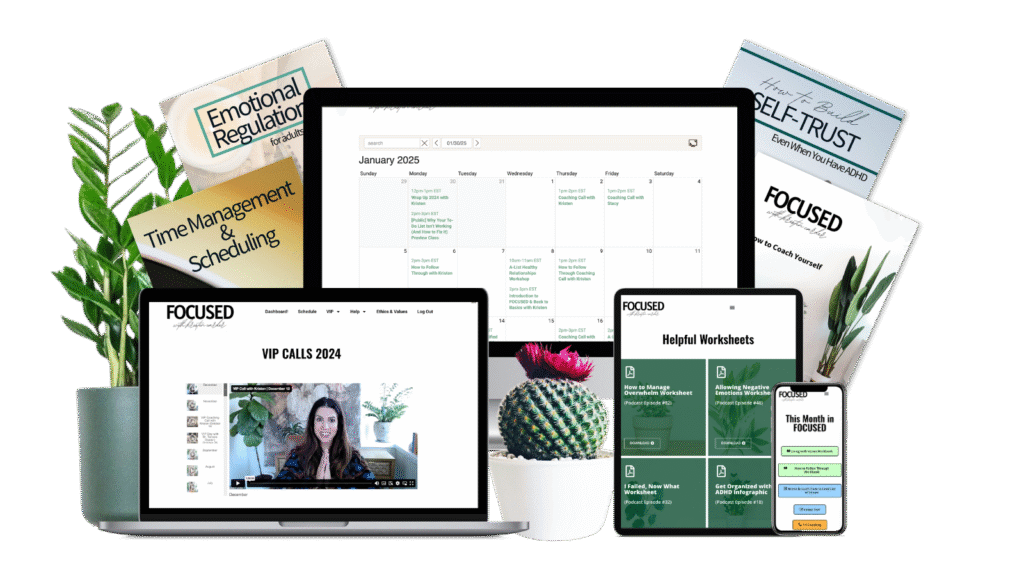
This episode is sponsored by Cure Hydration. All right, I’m going to be real with you. Drinking water is boring. My ADHD brain is like, wait, we have to do this again? Like every day, multiple times. What in the world? And because I’m running from meetings to coaching calls to kid chaos, staying hydrated is not something I’m naturally good at. It’s not something I naturally think about. That’s why I’ve been obsessed with Cure hydration packs lately. Cure is a plant based hydrating electrolyte mix with no added sugar, only 25 calories, and it actually tastes good. The watermelon and berry pomegranate have been on repeat for me. I’m actually like really running low on those flavors, which is so sad. They’re refreshing without being too sweet or artificial. It feels like my water finally has a little bit of personality, which I enjoy. I really do. What I love most is that CURE uses a science backed formula that hydrates as effectively as an IV drip. So when I’m scrambling through my day forgetting my water again, CURE helps me to catch up fast. I throw a few packs in my bag and it makes drinking enough water simple. Which for my ADHD brain is basically a miracle. So staying hydrated isn’t just about water. You also need electrolytes. And that’s why I love Cure. It’s clean, tastes great, and it actually works. And bonus, CURE is FSA HSA approved so you can use those funds to stay hydrated. The smart way for I have ADHD Podcast listeners. You can get 20% off your first order@curehydration.com ihaveadhd with the code ihaveadhd and if you get a post purchase survey, make sure to tell them that you heard about Cure right here on the podcast. It really does help to support the show. Don’t just drink more water up. Upgrade it with Cure. Shopify’s point of sale system helps you sell at every stage of your business. Need a fast and secure way to take payments in person? We’ve got you covered. How about card readers you can rely on anywhere you sell. Thanks. Have a good one. Yep, that too. Want one place to manage all your online and in person sales? That’s kind of our thing wherever you sell. Businesses that grow grow with Shopify. Sign up for your $1 a month trial@shopify.com listen shopify.com listen. Welcome to the I have ADHD podcast where it’s all about education, encouragement and coaching for adults with adhd. I’m your host Kristin Carter and I have adhd. Let’s chat about the frustrations, humor, and challenges of adulting relationships, working and achieving with this neurodevelopmental disorder. I’ll help you understand your unique brain, unlock your potential, and move from point A to point B. Hey, what’s up? This is Kristin Carter and you’re listening to The I have ADHD podcast, episode number 105. I am medicated, I am caffeinated, and I am ready to roll. Today we’re, we are talking about whether or not ADHD is an excuse. And this episode’s gonna be absolute fire. I’m so glad that you decided to press play today. Yay, you’re here. How are you? You taking care of yourself? Are you living your very best life? Are ya? You know, I was thinking about this. Like, sometimes living our very best lives feels like absolute crap. And if that’s your experience right now, I just want to normalize that for you and say, I totally understand. I had an experience this week that was really just kind of. I think meta is maybe the best way to describe it. I started this podcast two years ago, and since I started it, I always had the goal of being the number one ADHD podcast. I don’t even know how to measure that because nobody shares their monthly downloads or there’s not like, metrics that I can look at to assess. So I don’t even know how to, like compare popularity in any way other than ratings. Right? And so we broke a huge ceiling, y’, all, and crossed over the 800 ratings mark on itunes, which to my knowledge, no other ADHD podcast has done before. So cool. Yay. So fun. I felt so accomplished and so excited. But. You knew there was a but coming, right? The very same day that I crossed over that huge milestone, I received a one star podcast review saying that I was just another out of touch white lady. And like being called an out of touch white lady, especially kind of very publicly, it hurts, right? I’m a human. I would never want someone to think that I’m close minded or unaware of my privilege. And so. So my feelings and my brain, like spun out a bit, which is not the point. The point is that I thought this experience where I would achieve a goal and get some painful criticism at the same time on the same day was such a beautiful example of the paradox of success. And this is true on any level. Life is 50, 50 friends. Success is 50, 50 accomplishing goals. 50, 50. It’s good and it’s bad. It’s going to feel amazing. And it’s going to feel terrible. We have this perception that achieving goals is going to feel good, right? If I can just get this thing done, then I’ll feel good. If I can just accomplish this goal, then I’ll feel good all the time. And I’m telling you, that’s just not the case. It feels delicious to achieve a goal, and it also feels dreadful. Delicious and dreadful. So no matter what success looks like for you, no matter what goal is in front of you right now, just know that life is going to be 50, 50 no matter what. It’s going to be 50% amazing and great and lovely and 50% hard and painful and terrible. And none of us get to escape that. This doesn’t change at, like, the next level of your job or your income or relationship or whatever. Like, it’s the. The same. Life is 50, 50, no matter what. So I want to encourage you to make sure you have a reason for going after your goals that’s separate from how you want to feel. Right? If my goal was to feel good all the time, I. I couldn’t put myself out there on this podcast for thousands of listeners. I think we had 70,000 listeners last month. Like, what in the world is happening? Right? Like, I couldn’t put myself out there for the world to criticize me. It’s too scary. If I wanted to feel good, if I felt like I should be feeling good all of the time, I would never put myself out there. But because I know that achieving goals and quote, unquote, success, whatever that looks like for me, is not necessarily supposed to feel good, I’m willing to do it. I’m willing to feel bad, feel terrible, feel dreadful, and do it anyway. So if you have goals that you want to reach and you’d like some specialized support in learning how to expand your capacity to feel terrible, which I know sounds dreadfully awful, it sounds like a lot of fun, right? You should join focused. Like, join focused and I’ll teach you how to feel terrible. If that’s not a marketing pitch, if that’s not like a sales pitch, I do not know what is. But anyway, I have this coaching program. It’s for adults with adhd. It’s an all inclusive monthly membership. It was created by me, an adult with adhd, and it’s created, created for you, an adult with adhd. So it’s pretty freaking awesome. As soon as you join, you get three courses that you can binge if you want to with workbooks and video trainings, and you’ll get immediate access to our call schedule and you can join us on coaching calls, like, right away. I would love to coach you. And of course you will get included in our active, warm, welcoming, hilarious, supportive army of ADHDers on Slack. It’s so good. So, anyway, in my experience, there aren’t a whole lot of leaders out there talking about how terrible it feels to actually achieve your goals. And that’s a huge part of the focus program. So if you want help feeling terrible, go to my website, ived.com focused join in on the fun. We have a really good time. And just because I can, I would love to just say a few words about me being an out of touch white lady. I want to say that this is 100% true. 100%. I am white. Totally. And I’m out of touch with your experience. I know that I am. If I don’t know you in real life, I am definitely out of touch with your experience of the world. I’m in touch with my own experience with my past, with my upbringing, my culture, my area of the globe, with my perceptions and realities and interpretation of the world. Right. Like, and I am. I’m really having conversations with a lot of different people all over the world. So. So that I can be more in touch with different people and cultures and life experiences. But the truth is that unless you and I are having a conversation and we’re both telling the truth and we’re both speaking from the heart, I truly am out of touch with your experience. I own that. I acknowledge that I love you. I hope this podcast is really helpful to you. I want to know you, but I don’t know you personally. And I can’t possibly understand the intricacies of who you are and your culture and your background, your experience, your trauma, your desires, the deep longings of your heart. Right. Your experience, I want to acknowledge it is so different from mine. And I haven’t always done an amazing job of creating space for different experiences. And that’s something that I’m really becoming conscious of and wanting to really put forward as this podcast continues. So I want to let you know that it’s okay if not every single word of every single episode of this podcast resonates with you. Like, there might be times when you just are like, oh my gosh, Kristen Carter. And you roll your eyes and you skip to the next episode and I understand. Like, I think I’m annoying sometimes, too. Like, there is room for that in our lives, wouldn’t you say? Wouldn’t you say? I do. That’s what I think so, my friend. I love that we get to have these little chats because I consider it such a privilege to be able to be here and to say things that are on my mind. And the fact that you’re listening, I don’t take it for granted. Thank you. Thank you. Thank you. Thank you for being here with me. So let’s get to it. Is ADHD an excuse? Is it? Is ADHD an excuse? Over the last two years that I’ve been coaching, this topic has come up a lot. And it comes up in various ways. Sometimes the person with ADHD is concerned that they’re making an excuse, and so they beat themselves up for it. And other times, the person with ADHD is speaking to a friend or a partner or a boss, and that other person tells them or accuses them of making excuses. And what I’ve recognized as, like, a very common feeling that I’ve heard my clients express is confusion and also uncertainty. So there’s, like, questions, like, unanswered questions. Am I making excuses? I don’t think I am, but maybe I am. Maybe I am just kind of like using ADHD to my advantage. Maybe I am just trying to get out of the. Of doing xyz. Maybe I am just trying to, you know, make up excuses here. And so my goal today here on this episode is to help you to clear things up in your own mind so that you can feel empowered, first internally with an internal knowing. And then if you choose to, you may even want to externalize that empowerment by having conversations with other people around this topic. So I think that it would be really good for us to just start with some science. Like, scientifically speaking, ADHD is legitimate, and it’s 100% not an excuse, and that matters. Let’s start here with the basics of it. Right. ADHD is a clinical diagnosis widely recognized by doctors, psychologists, psychiatrists, the National Institute of Mental Health, the cdc, the World Health Organization, and is even recognized in America as a disability under the Americans with Disabilities Act. So, yeah, like, we could just close in prayer right there. Like, that’s just. That’s enough. Is that enough? Is that not enough that it is a widely recognized diagnosis? Okay, let us continue. So, sure, like, everyone feels distracted on some days or has trouble concentrating sometimes or has a poor memory sometimes. But as my bestie, Dr. Russell Barclay, says, what distinguishes adults with ADHD from other humans is the considerably greater frequency with which they display these characteristics. And he says, we display them to a level by which it impairs their lives to a Level by which it impairs their lives. Okay? ADHD is an impairment. And just like varying levels of abilities and impairments, we don’t tell people with diagnoses that they are making excuses, right? So we all know other people in our lives with varying levels of abilities. We all know people in our lives with varying levels of impairments. If you don’t, then, like, you’ve seen it in the news, on tv, whatever. Also, like, maybe make some friends with other people who have varying levels of abilities, because that could be really helpful. But I digress. So imagine telling a person who’s hard of hearing that they’re making an excuse. Or imagine telling a person who’s wearing glasses that they should try harder to see. Or imagine telling a person using a cane or a wheelchair that they’re making an excuse, that they’re using it to their advantage. You would never tell a person with different cognitive abilities or physical abilities that they’re making an excuse. Right. Like, would you? No, you wouldn’t. But still, some of my clients wonder, am I just making excuses? And I mean, truly, some of their partners or friends, family members are wondering the same thing. Is my spouse just making an excuse? Is this just them trying to get out of, you know, adulting? It can be confusing. The impairments in our brain are not on display for the world to see. The symptoms sure are on display for the world to see, but the actual problem that’s happening neurologically is not on display for the world to see, Right? And so also, like, the struggles that we have are struggles that all people have from time to time. And so this is why I think most people start off with this line of thinking that ADHD is just an excuse, because everyone struggles with memory, Everyone struggles with poor concentration, Everyone struggles with distractibility once in a while. But what is different about someone with ADHD is that we struggle with it to a debilitating degree. Right? So scientifically speaking, medically speaking, ADHD is not an excuse. But how do we know if we are making an excuse? How do you know, as the person with adhd, or are you making an excuse? And I think there are two ways that we can really check in with ourselves to determine whether or not we’re making excuses? But first, let’s chat about the definition of an excuse. Merriam Webster defines an excuse as a reason or explanation put forward to defend or justify a fault or offense. The key here is the energy of defense or justification. So if you are defending and justifying, it’s likely that you are making excuses. Now, I want to contrast that with the definition of an explanation. An explanation is a statement that makes something clear. Well, that’s very different energy, wouldn’t you say? So the first way to know if you are making an excuse is by checking in with the way that you feel at the time. To quote my friend and colleague, Jessica Heimsoth, she says excuses typically come from feeling defensive, unsettled, afraid, anxious. But explanations come from strength, openness, willingness, accountability, and acceptance. Oh, that is powerful. I’m going to read it again because, like, that is just too good. So Jessica says excuses typically come from feeling defensive, unsettled, afraid, and anxious. Okay. And remember the definition of excuse. It is an explanation put forward to defend or justify fault or offense. So if that is coming from the energy of defensiveness, unsettled, afraid, and anxious, you can bet you can pretty much make a very good guess that this is an excuse. But an explanation is simply a statement that makes something clear. And that is coming from strength and openness and willingness, accountability, and acceptance. An explanation and excuse. They might sound exactly the same. Same. But we need to check in with ourselves on the way that we’re feeling to find out whether or not we’re making an excuse or an explanation. So isn’t this interesting that an excuse and an explanation might sound exactly the same? And the only way to know the difference is with you yourself. You are the only one who knows whether or not you’re making an excuse. Your boyfriend or your best friend or whoever might tell you that you’re making an excuse. That doesn’t mean that you are. Oh, this is big. Just because someone says you’re making an excuse doesn’t mean that you are. It’s your work to check in with yourself to see, am I coming from a place of defensiveness or am I feeling empowered right now? The second way to know if you’re making an excuse is to check in to see if you are accepting responsibility or deflecting responsibility. An excuse deflects. An explanation accepts. I think that’s the most Instagramable quote I’ve ever said. It’s so good. When I wrote it this morning, I was actually sitting next to my husband. I was like, oh, babe, this is so, so good. He was not really that impressed, but I was super excited. An excuse deflects responsibility. It tries to push it off on the other person or onto ADHD. It’s not my fault. It’s ADHD’s fault. Right? But an explanation accepts responsibility. An excuse tries really hard not to accept any responsibility for A wrong or for an offense or for an inconvenience, it turns it around to the other person, it turns it around to adhd. It says, this is on you, it’s not on me. Right? An excuse will often come from a place of insecurity, from a place of unwillingness to figure out how to validate ourselves. An explanation, though, it accepts responsibility. It comes from a place of self validation and self understanding. And explanation tells the truth without dismissing the possible hurt or inconvenience caused. So I want to take a second here and say, if you’re listening to this and you’re like, oh, I have been making excuses. I have been coming from a place of defensiveness. I have been trying to deflect responsibility. That’s important information for you, right? I think that is, like amazing awareness for you. And what I would encourage you to do is to check in with why. Why are you feeling defensive? Why are you feeling afraid or unsettled or anxious? That’s a good place to start. If you are determining right now, like listening to this episode, you’re like, oh, shoot, I think I have been making excuses. I think I have been deflecting responsibility. Where I would start is, why do I feel defensive when someone talks to me about my ADHD symptoms? Why do I feel unsettled or afraid or anxious when someone brings up the inconvenience of adhd? Oftentimes, my friend, it’s because we haven’t done the work. To accept that ADHD is a thing and to accept the diagnosis and really kind of lean into the identity of having adhd, that’s not easy work. That is hard work. I get it. And you could be on varying points of your journey and that’s fine. So if you’re. Especially if you’re new to this podcast and you’re hearing me talk about, like, accepting the diagnosis and identifying with the diagnosis, that could be brand new to you. And I just want to take a second to tell you how powerful you become. Once you truly accept this diagnosis as a real thing in your life, once you fully understand what it means to have adhd, once you fully get how ADHD touches every single aspect of your life, that there’s not one area of your life that is not affected by it and you truly begin to treat it and take it seriously and accept responsibility for how pervasive it is, you know, that’s when your acceptance happens. And it’s pretty easy in those cases. Then to drop the defensiveness, to drop the fear. A lot of times we’re Afraid of being found out. We’re afraid of people like seeing our weaknesses and calling us an imposter and like, I want to just normalize our weaknesses. This is a part of ADHD and it’s a part of what it means to be human. With ADHD we are going to have our weaknesses on display in a lot of areas. And if we are constantly trying to excuse that away and deflect responsibility for it, that’s not going to be comfortable, it’s not going to be fun. In my experience, accepting responsibility, acknowledging the difficulty, acknowledging that the inconvenience or the hurt that it might cause me or someone else, that is a much more grounded way to be walking through life. So I just wanted to kind of have this little check in for any of you who are like, shoot, I think I might be making excuses. I would say that that is a very normal place to start. Start when you’re on this ADHD journey and especially if you haven’t had resources to help you develop self awareness, develop awareness of the disorder and of what it really means to have adhd. We really like our default setting is to make excuses. But then as we begin to be empowered through knowing more about this diagnosis, through accepting what it means in our lives, through, through understanding the effect it has on us and other people as we begin to be empowered, then we can make empowered explanations. Empowered people make empowered explanations. And so if you don’t feel that you are an empowered person, that’s where I would start. Okay, so to figure out if you’re making an excuse, check in with the way that you’re feeling. Are you feeling defensive, unsettled, afraid, anxious? Are you feeling strong and open and willing and accountable and accepting? That’s a very good indicator of whether you’re making an excuse or an explanation. And then check in with yourself. Are you accepting responsibility or are you trying to deflect responsibility? An excuse always is deflecting responsibility. It’s always trying to get it off of you and onto something else. Right. But an explanation, it tells the truth and it’s open. It accepts responsibility. I’m late because I have zero sense of time. And it can also be accompanied by an apology. I’m so sorry for this inconvenience. And maybe even you’d like to include what you’ll do to make it different next time I set an alarm for next time, I’m going to really do the work of trying to grow in this area. It’s the difference between my ADHD makes me time blind, end of sentence. I’m just resigned to this fate. I’m expecting a free pass versus here’s what I’ll do to manage that. Here’s what I’m doing to try to make it better. It doesn’t mean that it’s going to be better, but I’m taking responsibility. I know that I am. That I am flawed in this area and I’m doing my best. And here’s how I’m taking responsibility for that. One of my clients said this and I just absolutely loved it. They said you might be making excuses if you think other people need to deal with it and change. And it’s an excuse when I use it to avoid responsibility and accountability. And it’s an excuse when victim mentality takes over, over. But it’s an explanation when I take responsibility for being aware of its effects. And it’s an explanation when I need to tell someone that I trust why I’m late, why I’m forgetful, why I’m emotionally and socially dysfunctional, why I love to disappear into rabbit holes. Like there are explanations for it. I still take responsibility for the adverse consequences, but there are some very clear explanations. So my friends check in with you. Here’s what’s difficult about this, and we touched on it earlier. The person that you’re talking to, regardless of your energy, regardless of how confident you are that you are simply explaining, they may still label it as an excuse. And unfortunately, and this is so unfortunate, we can’t control them. Isn’t that unfortunate? Like, wouldn’t it be amazing if we could control the humans? It would. It would be so great to be able to control the humans, but we can’t. And so that means that if someone chooses to believe that you’re simply making excuses, this is the part where you practice letting someone be wrong about you. And that is not easy work. That is not for the faint of heart. But if you’ve truly checked in with yourself, if you’ve truly done the work of validating yourself and making sure that you’re accepting responsibility and not deflecting responsibility and making sure that you are feeling, you know, something along the lines of strong or open, willing, accountable, accepting. If you’ve done that work and someone stable still says you’re just making excuses, this is the part where we allow people to be wrong about us. And I have this podcast kind of brewing in my brain about internal authority. And we’re going to talk a lot about establishing and tapping into our own internal authority. Because the truth is that when people are wrong about us, it messes us up. And I want to teach you how to tap into your internal knowing and your internal authority so that you can do that work of just allowing people to be wrong. It doesn’t feel great, of course, but it’s not the end of the world. Your work is to make sure that you are confident that you are not making excuses. And the way that you do that is to work on accepting responsibility, making sure you’re not trying to deflect anything onto the other person or onto adhd. Making sure that you’re dealing with your emotions. If you’re feeling defensive or unsettled or scared and feeling like you have to explain things away, making sure that you’re able to come from a place of openness and willingness. And if those things are true, if you are able to do that and people still say you’re just making excuses, then allow them to be wrong about you. It is deep, deep work. And it is work worth doing. A few years ago, I went looking for help. I wanted to find someone to teach me how to feel better about myself and to help me improve my organization, productivity, time management, emotional regulation. You know, all the things that we adults with ADHD struggle with. I couldn’t find anything, so I researched and I studied and I hired coaches and I figured it out. Then I created Focused for you. Focused on is my monthly coaching membership where I teach educated professional adults how to accept their ADHD brain and hijack their ability to get stuff done. Hundreds of people from all over the world are already benefiting from this program, and I’m confident that you will too. Go to ihaveadhd.com focused for all the details.