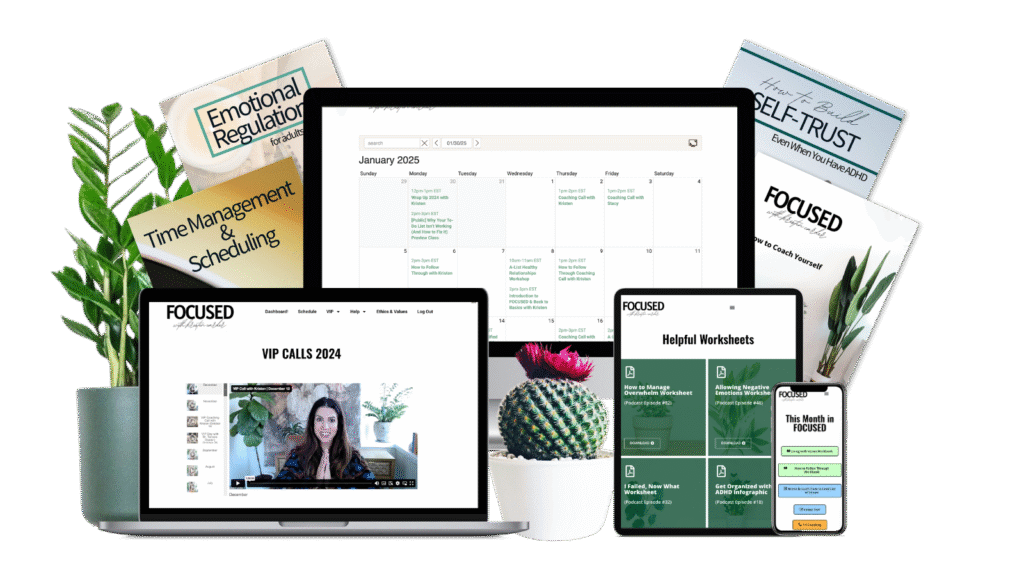


This episode is sponsored by Cure Hydration. All right, I’m going to be real with you. Drinking water is boring. My ADHD brain is like, wait, we have to do this again? Like every day, multiple times. What in the world? And because I’m running from meetings to coaching calls to kid chaos, staying hydrated is not something I’m naturally good at. It’s not something I naturally think about. That’s why I’ve been obsessed with Cure hydration packs lately. Cure is a plant based hydrating electrolyte mix with no added sugar, only 25 calories, and it actually tastes good. The watermelon and berry pomegranate have been on repeat for me. I’m actually like really running low on those flavors, which is so sad. They’re refreshing without being too sweet or artificial. It feels like my water finally has a little bit of personality, which I enjoy. I really do. What I love most is that CURE uses a science backed formula that hydrates as effectively as an IV drip. So when I’m scrambling through my day forgetting my water again, CURE helps me to catch up fast. I throw a few packs in my bag and it makes drinking enough water simple. Which for my ADHD brain is basically a miracle. So staying hydrated isn’t just about water. You also need electrolytes. And that’s why I love cure. It’s clean, tastes great, and it actually works. And bonus, CURE is FSA HSA approved so you can use those funds to stay hydrated. The smart way for I have ADHD Podcast listeners. You can get 20% off your first order@curehydration.com ihaveadhd with the code ihaveadhd and if you get a post purchase survey make sure to tell them that you heard about Cure right here on the podcast. It really does help to support the show. Don’t just drink more water, Upgrade it with Cure. Save over $200 when you book weekly stays with Vrbo this winter. If you need to work, why not work from a chalet? If you haven’t seen your college besties since, well, college, you need a week to fully catch up in a snowy cabin. And if you have to stay in a remote place with your in laws, you should save over $200 a week. That’s the least we can do. So you might as well start digging out the long johns because saving over $200 on a week long snowcation rental is in the cards book now@vrbo.com. Welcome to the I have ADHD podcast where it’s all about education, encouragement, and coaching for adults with adhd. I’m your host, Kristen Carter, and I have adhd. Let’s chat about the frustrations, humor, and challenges of adulting relationships, working and achieving with this neurodevelopmental disorder. I’ll help you understand your unique brain, unlock your potential, and move from point A to point B. Hey, what’s up? This is Kristen Carter, and you’re listening to The I have ADHD podcast, episode number 126. I am medicated, I am caffeinated, and I am ready to roll. What is up? What is up? How are you? How are you, my friend? I hope you are just great. I thank you for asking. I’m doing so much better this week than I have been in the last, even, like, month or so. I feel like some of the heaviness that I’ve been experiencing has lifted. For me, I’m in less of a fog. So I’m actually super pumped to be here with you today to chat about time management. It’s funny, I was thinking through this podcast and kind of sketching it out in my head, and I was like, surely I’ve done a podcast on time management. Could I remember? No, I couldn’t remember. Who writes and records these podcasts, y’? All. Me. I do. But I could not remember if I had a podcast episode on time management. So I had to go to my own website, type into my own search bar, and search my own podcast to see if I had a podcast on time management. I don’t. After I, like, realized it, and I was like, okay, great, I’m going to do this episode, I promptly spent an hour trying to get myself to start writing. I like to write it out first. It helps me, like, organize all of my thoughts. And I often go off script, but at least I have, like, a foundation for what I’m going to say. But here’s what I’m realizing. For those of us with adhd, and maybe this is for all humans, but for those of us with adhd, especially if we are, like, creative types who are having to pump out content, it seems like we have to have the work before the work. Like the Instagramming and the, I don’t know, like, doing stupid stuff to just kind of, like, convince myself to start writing, it looks like I’m wasting my time, right? So I used to really judge myself for this. I used to just tell myself, like, you should just be able to sit down and do the thing. But now I know better. This is just how I operate. I need the time before I get started to essentially get my brain and body into a mode where I am willing to get into flow and like, hyper focus on what needs to happen. I don’t know if that’s relatable. Maybe you’re like, oh, sorry, Kristen. I don’t relate to that at all. But for me, like, this is a weekly occurrence, especially with podcast recording, which you guys know, this is like the thing that I consider to be the hardest part of my job because so much creativity and thinking is required. And so I need to build in at least an hour of what looks like wasting time. But it’s like the prep work to get me in the zone, right? It’s the prep work. It’s the work before the deep work. I feel like this could be a whole podcast episode, but, you know, that’s for another time. Today’s episode is on time management, and I know it’s going to be really valuable to you because it’s an issue that is obviously so prevalent among ADHDers. We massively struggle to manage our time, and I know you’re ready for some understanding and some relief in this area, so I can’t wait to give it to you. But first, you know what time it is, right? It’s time for a quick ad break. This podcast is sponsored by Focused. Focused is my ADHD coaching program where we take the concepts that I dabble in on this podcast and we go deep, we study them, we apply them to our lives, and we make huge changes. I’m a certified life coach who has thousands of coaching hours under her belt. Thousands. Think about that. That’s crazy. Here’s what Focus member Erin says about the program. She says, through the Focus program, I’ve bettered my financial situation, I’ve improved my marriage, and I’ve learned how to get things done. Amazing. Congratulations, Erin. Focused is the perfect complement to an ADHD treatment protocol. So if you’re being treated for your adhd, but you feel like there’s still something missing, something holding you back, I want you to know that it is possible to take control of your life. So go to ihaveadhd.com focused to learn more. And this is so, so goofy. I literally wrote here, but wait, there’s more. If you’re a 90s kid, or if you maybe are not a 90s kid, but like, you know, infomercials, I think they’re a thing of the past, but when I was a kid and a teen, infomercials were everything. I’ve bought several things off of Infomercials because adhd, when I was in high school, I bought like an exercise contraption. Maybe two actually. Exercise contraptions. I had, like, terrible body image in high school school. And like, mild eating disorder type things, which again, we’re digressing. But I bought things off of infomercials. And then I convinced my husband to buy the magic bullet off of an infomercial because I think, like, the magic bullet was awesome, y’. All. A blender that does everything, like, incredible. So funny. So anyway, but wait, there’s more. As infomercial language so I’m going to use here. But wait, there’s more. I’m sending all of my Focused clients medicated, caffeinated, and ready to roll mugs in September. And we’ve got about 20 left over. So I want to let you know, thousands of podcast listeners, that the next 20 people who join focused in the next three days in September. So, like, Tuesday, Wednesday, Thursday, you’re gonna get a free mug sent to you. If you’ve been on my Instagram, you’ve seen how cute they are. You know, if you’re gonna join Focus anyway, now’s the time to do it. Cause you’re gonna get merch. Okay, let us move on. Raise your hand if you want help with time management. Let’s go. So we’re going to start first with some truth about adults with adhd. Adults with adhd, we pretty much suck at time management across the board. And the reason is that our frontal lobe is not fully developed. And the frontal lobe is what houses executive functions. And executive functions are 100% required for time management. Did you catch all that? Frontal lobe not fully functioning. It’s underdeveloped. It’s not quite perfect. Right. And that’s where our executive functions are. And the executive functions are what help us to manage our time. I want you to think about all of the skills that go into managing your time. You have to decide what to do. That’s prioritization. That’s an executive functioning skill. You have to remember what you were going to do in the first place. That’s working memory. Executive function. You have to get organized enough to do the thing again. Executive function. You have to resist the impulse to do something else. So you know you’ve made a plan, but you have to resist the impulse to do something else. That’s maybe more fun. That’s self regulation, which is an executive function. You need to follow through on your task no matter how you’re feeling in the moment, which is emotional regulation. And last but not least, you have to have some sort of sense of the passage of time, like knowing what time it is and knowing how much time you have left to complete a task. You guys, if you have adhd, many or all of these executive functions are likely impaired for you. Okay? So I hope your mind is totally blown right now. I hope that you feel so validated in your time management struggles. Like, this is freaking hard. There’s a lot that goes into managing time. It’s not not just as easy as deciding what to do and doing the thing or setting a timer or finding the right planner. There’s so many more layers to that. I taught a time management class in focus yesterday, and one of the things that came up for a lot of people is that they think that they should be able to manage time more easily. And I expect that you probably have a similar belief. Like you look at your partner or your coworker or even your kid and you’re like, oh my gosh, they’re so much better than me at this. What is wrong with me that I suck so badly at managing my time? It should be so much easier. How often are you beating yourselves up in the moment when you’re trying to complete a task and you’re noticing that you’re not managing your time and you’re just like, come on, get it together. This should be easy. This isn’t that hard. Look at your coworker who is able to do it. What is wrong with you? Okay, so I want to start off by telling you that no, it shouldn’t be easy for you. It should be hard. Your executive functioning is compromised. Your ability to remember, prioritize, organize, self regulate, control. Your emotions and sense the passage of time is all impaired. Time management should definitely not be easy for you. My dudes should be hard. Okay? Now this is a really fundamental thing to understand as you move toward improving in the area of time management. It’s not enough to just give you some tips and tricks. You already know that that’s not enough because I know that you’ve googled the tips and tricks. I know that you’ve asked experts for tips and tricks. I know you’ve read books on tips and tricks, and I know they’re not working. Okay? I just know. So it’s really important that, like, maybe you consider that there’s something deeper going on here. Maybe there’s something deeper. Okay? Time management shouldn’t be easy. It actually should be hard. And maybe there’s some healing that needs to be done here. There might be some leftover hurt some pain that you’ve caused for yourself because you thought that time management should be easy and you thought there was something wrong with you and you judged yourself like, hardcore. This is deep, but I highly recommend it because this work has many, many layers. We can’t just find a great system and snap our fingers and improve our time management skills, right? What we think we need is like the time tracking app, but what we actually need is some emotional healing from all of the shaming and judging that we’ve done to ourselves for decades. I think that’s a really great place to start. How have you been treating yourself when it comes to time management? Have you been shaming yourself, judging yourself? Have you been trying to beat yourself up and to beat yourself into behaving better? I promise you it doesn’t work. I promise you. And you already know that because it’s not working. Right? So this leads me to my next point, that time management often doesn’t have anything to do with time or the task. Okay? If you’re not managing your time, it might not have anything to do with time, it might not have anything to do with the task, but it does have everything to do with how you’re feeling in that moment. Not about the time, might not be about the task, probably has everything to do with your emotion. So think back to the last time that you were a hot mess when it came to time management. Maybe it was today at some point, maybe it’s right now, Maybe it was five minutes ago ago. Do you have that event in your head? Like, pick a time recently where you really struggled with managing your time. Okay, now tell me what you were feeling in that moment. I’m going to leave some silence here. Like, say it out loud. Go back to that moment you weren’t managing your time. Tell me what you were feeling now. My guess is it was something like shame, dread, boredom, anxiety, overwhelm, self, doubt. Something along those lines. Was I right? Did I call it? You likely mismanaged your time because you were mismanaging your emotions or not managing your emotions at all. So here’s another question or another way I can illustrate it. The last time you had a big fight with your friend or with your kid, how much work did you get done the next couple hours or even that whole day? How productive were you the last time you got really fired up about politics? How much work did you get done that day? Listen, you and I are the same, and I know that I am super distracted by my emotions. And so I am going to just call it and say, I know you’re super distracted by your emotions too. Sometimes. It’s not even a time management issue. We pin the blame on, like, I just can’t manage my time. But really it’s the emotion that we’re not able to manage. Because here’s the thing, we always take action from the way that we feel. So if you’re feeling boredom, anxiety, overwhelm, self doubt, you’re not going to be productive. Or if you’re looking at your action and your action is delaying, procrastinating, spinning out, or engaging in procrastivity tasks, you know, progressivity, like the things that are not really that important, but they are on the list, so you might as well just get them done. And that leads you to putting off the main thing over and over. It’s because of how you’re feeling. Time management is all about emotional management. Do you know how to regulate and self soothe? Do you know how to feel and process your emotions? Do you know how to coach yourself out of overwhelm and into willingness? If not, these are the skills that you need to learn in order to be good at time management. I coached two clients yesterday and focus on time management. I want to tell you about them because I think they’ll be really relatable. Scott owns a distillery and he has to write a gin label. So like, I guess gin is whiskey. I’m not sure. Oh my gosh. But anyway, the alcohol, gin, right? So he’s got to write a label for it and he’s got to write that and get it to his people so that they can do the thing so that his distillery can it flip flourish. Right? And he’s been putting it off for weeks. And so he’s pending it as a time management issue. I just can’t manage my time well enough to get this thing done. But what we figured out was that it was actually avoiding it because he was feeling dread every time he sat down to write. Why was he feeling dread? Because he wanted the label to be perfect so that it could prove that, you know, he was worthy of a distillery and that he’s actually doing a good job. Do you see how it wasn’t actually a time management issue. It was a thought and feeling management issue. And then another client, Ariel, he had this paperwork to fill out for his housing assistants. He wants to move out on his own, but he was engaging in procrastivity tasks. Again, the tasks that are like so much less important than the actual thing that we want to get done. Instead of filling out the Paperwork. He was doing things that don’t really matter, and he was pinning it as, like, time management. What we figured out together was that he was feeling extreme fear of being on his own. So of course he was procrastinating and avoiding and mismanaging his time. He was feeling tons of fear and not even recognizing it. Okay, so sometimes we are blaming the wrong thing. Sometimes we are pinning the blame on, oh, I’m just really bad at managing my time. When actually the issue is that we’re not good at managing our emotions. We’re feeling away a certain way. Whether it’s fear or dread or shame or whatever, we’re feeling away, and we don’t know how to manage that feeling and move through it. And so we just end up doing dumb things that we don’t want to do and putting off the real thing. Now, of course, sometimes we are genuinely accidentally mismanaging our time. Sometimes we totally lose track of time. Time blindness is a whole thing, for sure. That can absolutely happen. But most of the time, we’re feeling a feeling that we just don’t know how to tolerate, and so we do things that don’t even matter to avoid feeling that way. So here are some questions for you. Are you always late for work? If so, how do you feel about work? Do you struggle to get up and out of bed with your alarm? If so, how do you feel about getting up and out of bed? Do you take forever to cook dinner and get it on the table? If so, how do you feel about cooking dinner? Right. For me, now, I say this all the time. I’m sure you get sick of hearing it. But, like, what takes me the most time, where I have the most drama and where I see myself mismanaging or quote, unquote, wasting time is with this podcast, writing it and recording it. And it’s so clear to me that. That it’s because of the way that I feel about it. I love the podcast. I love you, listener, but dang, it’s intimidating. It’s a huge responsibility, and it often just feels really hard. I just have a lot of self doubt, like, I can’t do it. I have nothing to offer. Like, all of those normal thoughts that you also have, I have them too, right? And so the best thing to do when I notice myself wasting time and this is the tip that I want to give you, is stop and do a thought download. Just get clear. It can be so simple. But, like, what’s happening in the brain right now? What are we feeling right now? Empty the contents of your brain out. Get it out on paper and decide how you’re feeling. Recognize it, allow yourself to feel it, and then decide like, okay, this is how I’m feeling now. Is this going to be helpful for me if I keep feeling this way? What is it going to lead to? Am I going to be able to be productive or do I need to make a shift here? Right. How do I want to feel in the next hour of doing this task? Now, you’ll probably notice a lot of thoughts like, I don’t have time for this. I can’t get this done. I’m so busy. This is so stressful. I’m always late. I’m unreliable. I’m so rushed. This is going to take forever. Or our old favorite, old reliable, this shouldn’t be so hard for me. Right? Those thoughts are poison. They’re just not going to be helpful at all. So it’s important that you bring them to the forefront of your consciousness so that you can identify them and capture them so they don’t subconsciously rule you. They don’t subconsciously rule your behavior. They’re not in charge. They’re not driving the bus. You know, of course we have so many thoughts, and they’re going to be on the spectrum of, like, helpful and unhelpful. We just. We can allow the unhelpful thoughts to be there, but we don’t want them in the driver’s seat. They can be on the bus. They’re going to be on the bus whether we like it or not that we just don’t want them driving the bus. Right. We don’t want the emotion of dread to be driving the bus. We don’t want the emotion of shame or fear to be driving the bus. Can it be present while we do the thing? Sure. Of course. We can feel more than one thing at a time. But what we want is to make sure that the helpful thoughts and feelings are at the forefront and are what are driving the bus if you haven’t caught on, you’re the bus, I’m the bus. Okay, that was obvious, right? You didn’t need me to say that. Okay, let’s move on. The last thing that I want to say here is that a lot of us screw up our schedules and our plans around time because we don’t have good boundaries with other people. This layer goes back to the episode that I did called the ADHD penalty. And so if you notice yourself giving away a lot of your time and messing up your own schedule constantly, you might want to go check out that Episode the ADHD penalty, because I think that one is going to be really helpful for you. But essentially we allow interruptions and we put other people’s desires and, you know, quote unquote, urgent tasks ahead of our own. And a lot of times it’s because we feel like we need to make up for our own deficiency. Like we feel obligated to help someone and we don’t even take the time to check in with ourselves and see if it’s actually doable for us in the moment. And boundaries are something that I’ve been working on hardcore. I’m on my fourth book on boundaries. It’s big for me. I’m working with my therapist especially on boundaries. And if you notice that this is like a real big area of struggle for you, I highly recommend Nedra Tawab’s book. I don’t know if that’s how you say her last name, but it’s Nedra T A W W A B Nedra Tawab. Her book Set Boundaries, Find Peace. It’s a really good book. It’s an easy read and it’s very practical in learning how to set boundaries. If you notice that boundaries are just like a major issue for you and like no matter what you do, you can’t seem to say no to someone, or you can’t seem to seem to prioritize your own schedule above someone else’s desires, then I highly recommend going to therapy. I’m gonna shout it from the rooftops, probably over and over and over. But if you can find a good therapist to help you with that and help you discover why that’s your tendency and how to overcome it, it’ll change your life, my friend. Okay, I wanna kind of recap here and I also wanna give you some of like the tips and tricks that I’ve learned along the way. So we have covered some deep topics and I know that this probably is not what you were expecting from a time management podcast, unless you’re a long time listener and then you know me and you know that I am not someone who just operates on the surface because we going to go deep. I practice what is called causal coaching. I get to the bottom of the issue. We’re not going to put a band aid on a gushing, gaping wound, right? And for most of us, time management is a gushing gaping wound. We don’t need to put a band aid on that. It’s not going to help. It might relieve some of the issue for a brief moment, but it is not going to help long term. And so with Time management, we need to dig deep and see what is going on for us here. So the three things that we’ve touched on so far, I’m just going to recap those so that you remember. Number one, time management shouldn’t be easy for you. It should be hard because there are a lot of executive functions involved in managing your time and your executive functions are deficient. Okay? So the fact that it is hard for you makes sense. It’s totally understandable. Obviously, we don’t just want to be like, well, it’s hard for you. Okay, bye, see ya. Like, there’s more. The logical next question is like, okay, now what? But it’s important that we start with that validation of like, yeah, time management shouldn’t be easy. If time management was easy for you, if you did it perfectly and without anxiety. I do have to add in here because some of you do show up on time, you get the things done, but it’s because anxiety is the driving force. It’s not because you’re doing it from a place of freedom, it’s because you’re doing it from a place of anxiety. So I just want to throw that little caveat in here. If it was easy for you, you wouldn’t have adhd, you know what I’m saying? So, like, that would be weird. If it was easy for you, it should be hard. So that’s number one. Number two, how you feel is everything. It matters. It’s the most important thing. You need to pay attention to it. Let it be a signal to you. Your feelings never lie. They always tell you exactly what you’re thinking. And so if you are feeling fear, dread, overwhelm, boredom, anxiety, that is the warning signal to you to check in and say, okay, who’s driving the bus here? What is happening? What am I thinking? What is in charge of me right now? Because from fear, anxiety, dread, overwhelm, you’re never going to be able to take sustained, productive action over the long term that will help you to manage your time well. So knowing that how you feel is everything will allow you to check in with where you are, do a little thought download. How am I thinking? How am I feeling? And is this going to serve me? Is this going to be helpful? Is this going to lead me somewhere productive? If not, what do I want to think and feel? And I’m not talking about like mantras or affirmations. What I mean is like, what is actually believable in this moment? That would be more helpful. Number three, set boundaries. A lot of you are not Managing your time because you do not have good time boundaries, you’re overworking, you’re over helping, you’re over performing, you’re over trying to hustle for your worthiness. I’m going to use that phrase again. I know I used it on last week’s episode, but I think it bears repeating. Brene Brown points out that a lot of us are hustling for our worthiness, and some of you are doing that with your time. So you don’t view your own time as being worthy. You want to help someone else so that you can feel valuable and productive. And if that doesn’t shift for you, you will never have authority over your time. Ooh, that felt like a word. Didn’t that feel like a word? I just got a chill from that. If you don’t make a shift in this area, if you are someone who does not have time boundaries, and if you’re not willing to do the work to make a shift in this area, you will likely never have true authority over your own time. Oh, my word. Okay, so here are some just kind of like hacks that I’ve learned in addition to those three things. Those three things are the deep, important work that I implore you, I encourage you to do, and if you need the help of a professional, go get the help of a professional. My opinion is that all of us need the help of a professional. Like, we’ve been living this way for decades. Most of us are not going to be able to make these shifts on our own. It has taken me months in therapy and years in coaching to be able to evolve into the person who is most of the time, but not all of the time, but, like, some of the time, managing her time really, really well. Wow, that was like. I was not willing to commit to saying that I was good at managing my time. Did you notice that? I was like, I can say it partially because my husband once in a while will listen to this podcast and he knows. He knows the truth. He knows the truth about me, which is, like, often I’m not managing my time well, but I am learning, I am growing, and I have a lot of improvement to show for it, which I’m really proud of. Okay. In addition to those things, I would encourage you to make time visible. John Acuff says that time is fictional unless you can see it. And I just love that phrase, time is fictional unless you can see it. Make sure you have time in front of you. So that might mean a timer, that might mean a clock, that might mean a time timer. That you get off of Amazon. This episode is not sponsored by Time Timer and it might be whatever using some sort of time tracking app. But you need to make time time visible. You need to be able to see it. It is not something that we like comprehend naturally as adhders and so you need to be able to see it. I use alarms and timers all the time with myself, with my kids. We have them all over the house. They’re super, super helpful. I have a timer that counts up and counts down. Like it’s just really those kinds of things, they’re just small. But knowing that time management is hard, understanding that it should be hard allows you to put in this support for yourself and have the scaffolding that you need to make improvements. I highly recommend that you use a planner or a calendar and you choose one method and stick with it. Having multiple methods, it’s too confusing. Everything gets lost and scattered. I use Google Calendar. It is completely free. I block off my time using different colors and different calendars in Google Calendar and it’s been the easiest and most efficient way for me to manage my time. And. And it’s free. I highly recommend that you just take a brief moment and plan containers of time. What I mean by that is like, okay, I have an hour before I have to pick up the kids. What do I want to do with this one hour of time? Think of it like a container that you can put tasks or hobbies into. What do you want to put into that container of time? Be intentional, plan it out and also accept. Expect distractions and plan for them ahead of time. Make a plan for your distractions. Make a plan for interruptions. Make a plan for when you’re feeling terrible. Like thinking through those things in advance, just adding a little bit of intentionality into the process can change everything. I highly recommend that you get creative, that you switch it up, that you’re willing to try something new, that you never allow yourself the cop out. Thought of like, well, I’ve tried all of that and it hasn’t worked. Like, that’s just a cop out. Like, try something new. Set your brain to figure out a creative way that’s going to work for you. Believe that there is improvement to be had in this area. Believe that you can evolve into someone who manages their time better. And of course, ask for help. Ask for help. That’s coaching. Whether it’s therapy, whether it’s from a partner or a friend, ask for help. Above all, know that this is an area where you can constantly grow, learn, change, improve evolve. Even though it’s a struggle now, you can for sure develop some of these skills and make improvements. I cannot wait to talk to you next time. I’ll see ya. If you’re being treated for your adhd, but you still don’t feel like you’re reaching your potential, you’ve got to join Focused. It’s my monthly coaching membership where I teach you how to tame your wild thoughts and create the life that you’ve always wanted. No matter what season of life you’re in or where you are in the world, Focused is for you. All materials and call recordings are stored in the site for you to access at your convenience. Go to ihaveadhd.com focused for all the info.