

Podcast Episode #141: Ask Me Anything: ADHD Q&A Part 1

Listen or Watch this episode on:

About This Episode

As an ADHD expert, certified coach to hundreds of adults with ADHD, and an ADHDer myself, I am uniquely positioned to bring expertise, understanding, and relatability to all of your burning questions about ADHD. Today I’m answering all kinds of questions from my Instagram friends about ADHD and it’s going to be FUN!

Visit [www.ihaveadhd.com](https://ihaveadhd.com) for more resources

Hang out with me on Instagram @i.have.adhd.podcast

See Privacy Policy at [https://art19.com/privacy](https://art19.com/privacy) and California Privacy Notice at [https://art19.com/privacy#do-not-sell-my-info](https://art19.com/privacy#do-not-sell-my-info).
Episode Transcript

This episode is sponsored by CURE Hydration. All right, I’m going to be real with you. Drinking water is boring. My ADHD brain is like, wait, we have to do this again? Like every day, multiple times. What in the world? And because I’m running from meetings to coaching calls to kid chaos, staying hydrated is not something I’m naturally good at. It’s not something I naturally think about. That’s why I’ve been obsessed with Cure hydration packs lately. CURE is a plant based hydrating electrolyte mix with no added sugar, only 25 calories, and it actually tastes good. The watermelon and berry pomegranate have been on repeat for me. I’m actually like really running low on those flavors, which is so sad. They’re refreshing without being too sweet or artificial. It feels like my water finally has a little bit of personality, which I enjoy. I really do. What I love most is that CURE uses a science backed formula that hydrates as effectively as an IV drip. So when I’m scrambling through my day forgetting my water again, CURE helps me to catch up fast. I throw a few packs in my bag and it makes drinking enough water simple, which for my ADHD brain is basically a miracle. So staying hydrated isn’t just about water. You also need electrolytes. And that’s why I love Cure. It’s clean, tastes great, and it actually works. And bonus, CURE is FSA HSA approved. So you can use those funds to stay hydrated. The smart way for I have ADHD podcast listeners, you can get 20% off your first order@curehydration.com I have ADHD with the code I have ADHD. And if you get a post purchase survey, make sure to tell them that you heard about CURE right here on the podcast. It really does help to support the show. Don’t just drink more water, upgrade it with cure. Welcome to the I have ADHD podcast where it’s all about education, encouragement and coaching for adults with adhd. I’m your host Kristin Carter and I have adhd. Let’s chat about the frustrations, humor and challenges of adulting relationships, working and achieving with this neurodevelopmental disorder. I’ll help you understand your unique brain, unlock your potential and move from point A to point B. Hey, what’s up? This is Kristin Carter and you’re listening to the I have ADHD podcast, episode number 141. I am medicated, I am caffeinated, I am PMSing and procrastinating and positively distracted. But I am Indeed. Ready to roll. So let’s go. Happy New Year. Happy New Year to you. Welcome to the podcast. Whether this is your first time listening or maybe it’s your first time in a long time, welcome. So glad to have you here. I hope that all of you had a lovely holiday and that you’re ready for everything that 2022 will bring your way. I wish you health and wealth and the ability to hack your ADHD brain, the ability to feel your feelings and the ability to understand your mind and the ability to create the life that you want for yourself. Those are my New Year’s wishes for you today. I thought it would be really fun to do an ADHD Q&A question and answer. I’ve never done done something like this before, but I polled my Instagram audience for questions, and I’m going to read them and answer them here on the podcast. As the leader of a large group, I know that if one person has a question, usually a ton of other people in the group are wondering the same thing. So this podcast will be a mixture of questions and answers surrounding the topic of adhd, like diagnosis, treatment, medications, that kind of thing. And then also questions around, like, living with adhd, like what to do when someone doubts your diagnosis, or how to deal with imposter syndrome at work. So I’m actually really looking forward to this. Like, really, really. Because I like the idea of bouncing around to a million different topics within one podcast. That makes my brain happy this week. So I am here for it. And this actually might end up being a part one and a part two, depending on how long I have the stamina to answer questions. Because there were a lot we me, I received a lot of questions. But, you know, in true ADHD fashion, I’m just gonna roll the recording and we’re just gonna see what happens as we go along. And when I feel like stopping, I’m gonna stop. And if it turns into part two, great. How does that make you feel? She just, like, totally told the truth right there. That’s what’s happening. We’re just gonna see how it goes, and we’re gonna stop when we want to stop. And I can’t answer all the questions. We’re going to see how we do. I’m going to do my best, so hang tight. It’s going to be fun. I’m looking forward to it. But first, I’m going to ask a really quick favor of you. There are thousands of you that listen to this podcast, mostly on Apple podcasts. Not all. I understand. Not all. But mostly. And I’m wondering if you take one minute of your time today and tap that five star rating button, it makes such a big difference in boosting the show in the algorithms so that more people can find it and get the ADHD help that they need and deserve. I am not going to pretend to understand the podcasting algorithm within, like Spotify and Apple Podcasts. It’s confusing. There’s hardly any information out there on it. But what I do know is that ratings really matter and we have over 1,000 five star ratings, which I’m so grateful for. It would be so, so fun to bump that number up, up, up. Would you help me with that? Would you take just a minute to do that today? And ding, ding, ding. Spotify listeners, there’s now a rating button for you too, which I didn’t Even know, but 47 of you have figured out so far. Because I just went and looked. I was like, oh, my gosh, there’s 47 ratings already. It’s so fun. I didn’t even know it was a thing. But I think it’s brand new in 2022. So if you’re listening on Spotify, let me know by hitting that five star ra. I will send you so much love. I just. I really appreciate it. I know that it’s an inconvenience and I would be so grateful if you would take the time to give me a rating, give this show a rating so other people can find it and enjoy it just like you. Thank you. My gosh, thank you. Okay, let’s get started with our question and answer. So, like I said, I polled my Instagram audience. I answered some of these on my Instagram story. But you can only go into so much detail with writing. And I wanted to take a lot of time just to kind of chat through all these questions. They’re going to be kind of all over the place, which I think is really fun. Usually my podcasts are pretty concise and they follow, like, a direction, and this one’s just going to hop around. So we’re just going to have fun today. I’m not going to read who it’s from because I didn’t get permission to share handles. So I’m just going to read the questions and then I’m going to give my answer. So the first one that I’m going to read says, what would you tell someone who thinks they can perform at their highest level without medication? This is a really interesting question because I know that for some people, medication is kind of like a controversial Topic. And what I would say to this is if someone is really happy with their performance, if someone is happy with the way that they’re performing and their experience of the world as they’re kind of like going through life, I would not say anything to them about their choices with, you know, to medicate or not medicate. I think it’s a very personal decision. Very, very personal decision. And you know, what I think is the most important thing is that someone is happy and healthy and enjoying the experience that they’re having in life as much as possible. It’s very interesting because there are people who are able to function and let’s say, you know, go through grad school or have a high performing job, but they’re not enjoying their experience of it. So there’s a difference there. Like, yes, they’re able to perform and to function at a high level at work, but the behind the scenes is treacherous. The behind the scenes, there’s a lot of overwhelm. There’s a lot of being flustered and agitation and being late on deadlines and pulling all nighters and like those kinds of things. That would be the case when I would ask the person like, are you enjoying your experience of this? And if not, is it possible that maybe a medication could help with that? But if someone is just kind of, you know, coasting along and enjoying everything, there’s no reason for you or for me to come alongside of them and say like, hey, you might want to consider medication. So I think what’s most important to consider is the person’s experience of the world. If they are able to function, if they are able to perform, if they are able to get done what they want to get done, reach their potential and enjoy their experience of it. Great. Amazing. Another question that I think might be interesting to ask if they’ve never tried meds is like, how could you be sure that this is your highest level if you haven’t ever tried medication? That just might be an interesting topic to chat about. And you know, like I said, it’s a very personal decision. I’ve spent years of my life on medication. I’ve spent years of my life off medication. I think that everyone should have the personal agency and autonomy to be able to decide for themselves how they want to treat their adhd. Okay, next question. How do you deal with the feeling of boredom? Everything seems meh. My response to this is I really do my best to create an exciting dopamine filled life. I really am intentional to do things that I want to do, to have A job that I want to have, to work with clients that I want to work with, to spend my time with, friends that I want to be with. Like, I think that I don’t know anybody maybe like 35 and older might struggle to prioritize their desires, like, their wants. Maybe this is just a human characteristic, but I see it mostly in, like, people my age, which I am now 40 and like, older, which is, like, feeling like you have to do things and really having a lot of mind drama around, like, dreading doing the things that you have to do. And so, like, what I have decided to do for my life is create the most exciting life that I can. So I put myself in a lot of adrenaline situations. Like, I know it might seem stupid, but, like, even going live on Instagram, that gives me a shot of adrenaline sometimes. Creating a podcast that has maybe like a controversial topic in it. Adrenaline. Every time I get a new rating or a new review that says something kind. Dopamine. So, like, I put myself in a position with my work to have a lot of adrenaline and dopamine. And then I put myself in a position socially where I’m hanging out with people that I want to be around. Which, you know, curating your social space is. That could be a whole. That’s actually a beautiful podcast episode title. Wouldn’t that be curating how to curate your social circle? Ooh, we should totally do that. But that’s something that I’ve been working on for the last couple years is kind of curating the social interactions that I have. And any part of my job or like my home life or whatever that I find boring. I’m always asking the question, how can I make this more fun? How can this task of laundry be more fun? How can watching my kids basketball game be more fun? Like, I’m always asking that question because my brain will come up with the answer. So I love that question. You should totally borrow it if you want to. How can I make this more fun? Because your brain really does crave dopamine. We have lower levels of dopamine in our ADHD brains. So any way that you can give yourself that dopamine just by creating an exciting life is going to set you up for success in a lot of different ways. And then lastly, I understand that, like, boredom sometimes is just a part of life. And so I have spent or I spend a lot of time allowing boredom to just be in my body. Like, I have to do these taxes. There is nothing exciting about it. I can light a candle, I can have Like, a yummy snack while I do it. I can put on Grey’s Anatomy in the background, but, like, it’s taxes. Like, it’s not. This is never going to be exciting. It’s never going to be fun, and I’m never going to feel like I’m good at it. Like, this is all terrible. So just allowing that feeling of boredom to just be present, and I don’t make it a problem. It’s not bad, it’s not wrong. It’s just there, and that’s okay. All right. I hope that was helpful. Here’s the next question. How can I accept my diagnosis with others constantly doubting it? This is so, so, so important. And I had a lot of response to this question because I think so many people in my Instagram audience related to this. So, first of all, if that’s you, if you have an ADHD diagnosis and the people around you are kind of like, rolling their eyes and like, ugh. You’ trying to make an excuse for your own laziness or this doesn’t really mean anything. I just want to send you some very heartfelt love. Like, I am sorry that you are having to deal with that. It’s really, really annoying, and I. I’m sorry about that. What I would say is that I encourage you to focus solely on accepting your own adhd. Validate it for yourself. Really begin to become an expert in ADHD and what it means for you specifically, and understand that other people accepting it, your friends, your family, your parents, your siblings, whatever, other people accepting it, it doesn’t make it any more real, and it doesn’t make it any less real. Okay? Like, it is a clinical diagnosis. And the mental health professional or the primary care physician or the psychologist or the counselor, whoever diagnosed you, they gave you a diagnosis that you don’t need other people’s permission to accept. Listen, you don’t need anyone else’s permission to accept your own diagnosis. And there will be people who, even other ADHDers who are just like, oh, that’s great. I find it to be a superpower. And if that’s not your personal view, it’s okay. We don’t all need to be on the same page with it. And we don’t need other people to believe that ADHD is a real debilitating developmental disorder in order for us to accept it, validate it, and really own it for ourselves. So my advice is let people doubt it. Let people scoff and listen. You and I know the truth. You and your mental health professional know the truth. We don’t need other people to validate it for us because we know the truth, you and I, we know. I also want to let you know that I did record a podcast on this a hot minute ago, I think two years ago. It’s episode 60, so I believe it’s called Accepting youg adhd diagnosis, episode 60 of this podcast. So if this is you, if you are struggling to kind of manage accepting your own diagnosis within the context of your social community, I highly recommend you go and listen to that podcast episode. All right, loves, here’s another one. And actually this came up a couple times. So even though this is, whatever, I’m just going to read it. So they say I got diagnosed from a one hour psychiatrist session instead of the usual four hour screening. Is this reliable? This is really interesting. And I had a lot of people ask question like, oh my gosh, she can’t speak. Ask questions like this. And what this tells me is that as a community, as like a, as an ADHD kind of society, we really do struggle to accept diagnosis. We have been conditioned for so long to believe that we are the problem. Listen, listen, listen. We’ve been conditioned probably since toddlerhood to believe that we’re doing it wrong and we’re the problem and we just have these character flaws and these moral failings. And when someone comes along and says, hey, these are actually symptoms of a mental health diagnosis, there’s a lot of times when we struggle to accept that for ourselves because we have our brains are so used to thinking that we personally are the problem. And so to be able to look at ADHD as the problem, it’s a whole identity shift. Are you with me? And so whether you are diagnosed online, in a 30 minute conversation with an online person, whether you’re diagnosed in person in a full four hour session or like a couple days or a one hour psychiatrist appointment, or maybe your primary care doctor diagnosed you or maybe you are self diagnosed, which is also completely valid. I want you to know that I validate your diagnosis and I give you permission to validate the diagnosis that you received in from the mental health care professional or your doctor or maybe the 12 books that you’ve read on ADHD because you don’t have health care and so you’ve decided to self diagnose. That’s fine too. We in the ADHD community are accepting of self diagnoses. Now, of course, we have plenty of people in focus who come into the group self diagnosed and that’s totally valid. So I want you to know that if you believe that you match the criteria, which are very plainly readable in any book, like taking charge of adult adhd, or if you want to go on my website and look in the symptoms@ihaveadhd.com if you believe that you identify with most of those symptoms and they’ve been around since childhood and they affect you adversely, they hold you back in more than one area of your life, then just go ahead and validate that for yourself. So lots of ADHD diagnosis processes look different. Every doctor is going to do it differently. I mean, they should take you through the DSM 5, but some people will also have like a million other tests and some will just like. For me, I just, I saw my primary care physician, he read through the DSM 5, asked me a couple other questions and said, yep, you have adhd. I was also diagnosed by a psychiatrist about eight years later. I mean, it was a longer session, it was probably an hour and a half session, but it was very similar. So I feel like I’m being very long winded. I’m going to wrap this up, but I just want you to know that whether it is a one hour session or a four hour session, if they’ve asked you questions pertaining to the symptoms and if you identify with the symptoms and they’ve ruled out other causes for your symptoms. See, that’s. Here I go. I’m still going. It’s okay. I’m just going to keep going. That’s the big thing is that a doctor or mental health care professional, they will be able to rule out other issues. And so if they give you the ADHD diagnosis, it’s because they’ve ruled other things out. Okay. All right, she’s going to be done with that one. My goodness. My goodness. Okay, this is a really good question. This person asks, how does your personal faith influence the work that you do in Focused? So if you don’t know, I am an ADHD coach and Focused is my group coaching program for adults with adhd. And I am a person of faith. I am a Christian, my husband is a pastor, and my faith informs all of my identity. It’s at the core of my identity. And what I think it does the most as it pertains to my work and coaching is it helps me to love myself and it helps me to love other people unconditionally. It helps me to accept myself and it helps me to accept other people unconditionally. So when I coach, when like we’re just on a zoom call and like a class client’s face pops up. I am just, like, overwhelmed with how much I adore this human. It’s hard for me not to just like, gush and be like, oh my gosh, I just love you. I just, I feel like there is no limit to my capacity to love my clients. And I believe that that is a direct reflection of my Christian faith. So, yeah, I would say that that’s like the biggest impact that it has on the work that I do. In focus and then this person asked another question. So it does kind of center around faith, which is the question is, many Christians don’t like the phrase feel it in your body. How do you explain this to them? Let me read that again. Many Christians don’t like phrases like feel it in your body. How do you explain this to them? So in focus I do a lot of coaching on feeling our emotions. And I have to tell you that I think that most ADHDers in my experience are pretty. What’s the word? They’re not great at recognizing and feeling their own emotions. And for sure, those who come from a Christian faith of some sort struggle greatly with this. And you know, I think that some Christians are very, very confused. They forget that God made us with a body. They forget that God created our emotions. They think that verses like the heart is deceitful, like found in Jeremiah 17. They think that it means that you can’t trust yourself, you can’t trust your emotions, and that you should just like, put it in a closet and ignore it, as if that’s even a thing. But our emotions can be trusted. This is. It’s just so sad and it’s so damaging. And I think it’s one of the ways that abuse runs rampant in religious communities, which is a whole other topic. But when you are conditioned not to believe that your emotions can be trusted, then when you’re feeling unsafe, a lot of times you ignore that feeling, Right? When you’re feeling uncomfortable, you ignore that feeling. So you may allow things to happen to you or around you, even when you’re feeling uncomfortable, because you’re being told your emotions can’t be trusted. And so anyway, I could rant for a long time about the healing work that I am doing in therapy to get over this kind of trauma. But what I will say is that emotions never lie. They never lie. They always tell you exactly what you are thinking. So your emotions can be trusted. It doesn’t mean that you should necessarily act from your emotions. So hear me. It doesn’t mean that you may want to choose to act from that specific emotion. But know deep, deep down, I want you to really know that your emotions are very trustworthy. They indicate what you are thinking. Thinking. So if you’re angry, it’s because of something you were thinking. And so that’s really useful information. If you are feeling angry, you can check in with, okay, what’s going on here? If you’re feeling unsafe, you can check in with, okay, what’s going on here? What am I thinking? It’s really important that we don’t discount our emotions. Whether you are from a religious community or not, emotions are important. They are everything. I have a whole podcast series on it. I have no idea what number of podcasts it is, but I. I have at least three, I think actually four in a row, all about emotions. As I was discovering how important emotions were, I recorded several podcasts about it because it was blowing my mind. Okay, no more religious stuff. Moving on. This person asks, why did you switch from stimulant medication to non stimulant medication? The reason for this is I was on a stimulant right away when I got diagnosed. I was in college. I had no husband, no kids. I was just kind of, you know, living in an apartment with roommates. And it did affect my sleep, it did affect my eating, but not in a way that was contrary to my lifestyle. Like, I wasn’t really sleeping much at night anyway. I was in college. I was having a great time. The eating thing wasn’t really a big deal because, you know, by the time that midnight came, my medication had worn off and I would just eat, eat, you know, late at night, and it wasn’t a big deal. And I really enjoyed being on a stimulant. It changed my life. I’m so grateful for it. Then I took a break to have babies. So I had three kiddos and I, you know, was nursing forever and parenting toddlers. And I took a break from medication, which. Sidebar, I don’t necessarily recommend. It is my story. It doesn’t necessarily have to be your story. So talk to your doctor psychiatrist. It. If you are nursing and pregnant and maybe want to have a conversation about medication with them. Okay. So just. I don’t ever want my story to be like, you think that I’m saying that this is the way that you should do it, because for sure, that’s a no. Okay. So anyway, when I was ready to go back on medication, I went right back onto the stimulant that I was on originally. And by now, like, I had three kids. And so my youngest Was probably like two, two or three. And it made me super anxious. I was a whole different human. I was probably off medication for about seven to 10 years. I can’t really remember how long. It was a long time. It was too long, honestly, it was too long. But I went back onto the stimulant medication and I was extremely anxious. I had a ton of trouble sleeping. I couldn’t eat and because I, you know, had no appetite and yet I had humans I had to like keep alive. It just did not work for my lifestyle. And I could have tried another stimulant medication, but I had heard about this non stimulant and I was like, what do you think about giving this a try? Or maybe she suggested it. Actually, I don’t want to pretend that I knew more than my doctor. And after, you know, a couple rounds of upping the dosage of this non stimulant, I have found that it has helped me me a ton. At the time I had also just started life coaching. Not me personally, but I was like receiving coaching from people. And so that was actually another really helpful thing because, you know, I didn’t have the stimulant to give me that kind of like umph, the kick, the get up and go. But I did have a coach. I was actually in a group membership, a group coaching program and that was enough to get me up and moving. It taught me tools that I needed to get started. And so the combination of coaching and non stimulant was amazing. And so, yeah, I actually love being on the non stimulant now. But again, this just goes back to like, you got to do whatever makes sense for your brain and your body. I have no idea what is best for you. Only you do. Okay, I’m going to answer one more question and then we are going to take a break and I’m going to come back at you with a part to next week. So here’s the last question this person asks. How can I go to sleep easier? I’ve tried sleep routines, meditation, reading, melatonin, etc. I’m at a loss. Oh my gosh, I feel this so deeply. Don’t you feel this deeply? My gosh. At least my hyperactive friends totally get this with me. There are three types of adhd. There is hyperactive presentation or hyperactive type, which is usually indicates like physical hyperactivity. Your body is moving around a lot. Certainly your thoughts are racing, lots of impulsivity. There is inattentive type which is more you’re in your thoughts A lot. You’re spacing out a lot. It’s like your brain has left the building kind of a situation. And then there’s combined type, which is like a combination of hyperactive and inattentive. And for those that are hyperactive or combined, I would say that sleep is just extremely difficult. And this is very, very normal for us. I have two episodes that might be helpful to you. One is called going to bed, and one is called waking up or something like that. But one is all about, like, how to help yourself go to bed. And one is all about how to help yourself, yourself wake up. Because going to bed is hard. And also waking up is hard because adhd. So it’s frustrating. And I want to just be with you in that. Like, I validate it. It is so frustrating. I struggle to sleep. I’ve always struggled to sleep. I can remember being a child laying in my bed at night until so late the whole house was asleep and always being the last one to fall asleep at a sleepover, never falling asleep in a car or on a plane. And still that’s the. Yeah, it’s annoying. Okay, so here’s what works for me. But disclaimer like, I still suck at sleep. I’m not an expert at it, and I’m tired every single day. But the things that seem to help me are I try to wake up around 7 or before 7 every day, even weekends. If I sleep in until 8, 8:30, it just messes with me. And so if I’m in the mood and I have to discipline on the weekends, I will wake up around seven. And certainly during the week, because my kiddos are in school, I’m up around seven and that is helpful. So starting my day earlier helps me to end my day earlier. I do take melatonin. My son takes this thing called Calm, which is just like a branded magnesium powder. I don’t know. It’s like this fizzy drink that he takes that really helps him. But it makes my belly really rumbly. It just then is like rumbling all night long, which is a distraction and doesn’t let me sleep. So I don’t take that. But my son loves it. I drink a glass of red wine every night. This is the way it is. I love red wine. It’s very calming. I save it for usually like 9, 9:30. And that in combination with melatonin is really helpful. Stretching, practicing yoga during that time, really helpful. If there is anything on your mind at all, write it down, get it into a journal. I like to call it a thought Download, get it out of your brain and onto paper. That is really, really, really, really helpful. Because a lot of times when we are resisting sleep or when we’re not able to sleep, it’s because our minds are spinning, spinning, spinning, spinning, spinning. We’re having ruminating thoughts, we’re having intrusive thoughts. And if you can write those down and get it onto paper, that will be extremely helpful to you. And lastly, and this is the least fun of all of the options, is to intentionally feel your feelings. So if your mind is spinning, you’re likely having some feelings of anxiety or worry or overwhelm or dread. And those feelings will distract you and not allow you to sleep. And so if you can take some time to process those feelings, take some deep breaths, intentionally allow them to be in your body, open up and give them some space to process through your body, you will have a much higher likelihood of being able to go to sleep. I found for me personally, and also in my experience of coaching hundreds of ADHD clients, that when we are resisting sleep, it is because we are resisting an emotion that we don’t want to feel. And we know that when we turn the lights out and everything is quiet and everything is dark, all of those thoughts and all of those feelings are going to come up. So if you are resisting, you are not resting. Right? And I think it’s really important for all of us to understand and to even catch ourselves, like, oh, I’m on my phone hopping around from Facebook to Instagram to TikTok to Twitter, and it’s 2am it’s probably because you are resisting feeling. And so a great question to ask yourself is, hey, honey, what’s up? Just give yourself a little bit of affection and love and just check in. What’s up? What are we doing here? Everything okay? What do you need? Check in with yourself to see what you need and then meet those needs. That could be a whole nother episode in itself. Huh? Let me see if there’s any quick ones. Oh, yeah. Okay, one more, one more. I know I said the last one was the last one. I’ll just end here. How do you choose the right goal to focus on? This is so good for 2022. Like, the start where everybody’s like, I shouldn’t have a New Year’s resolution. I should create goals. Here’s what I want you to know. There is no such thing as a wrong goal. Any goal that requires you to evolve, any goal that requires you to grow is the right goal. Do not get hung up on choosing the Right goal or a wrong goal? There’s no right or wrong goal. Just choose something and allow yourself to grow and evolve. Because let’s say that you decide you want to write a book. And so you spend all of 20, 22 growing and evolving and writing and struggling. And at the end of 20, you’re like, I actually don’t want to write a book. That’s okay. Because you have learned patience, you have learned determination. You have learned how to break things down into small bites and, you know, work on a little bit at a time. You’ve learned how to be vulnerable. You’ve learned how to put yourself out there. There’s so many skills that you’ve taken away from that goal that you can then apply to the next thing and apply to so many areas of. Of your life. So don’t be concerned about setting the wrong goal. Just set a goal. Any goal that requires you to evolve is the right goal. Now go be great. All right, my friend, I am going to talk to you next week. We are going to do a part 2 of this Q and A. I can’t wait. I will talk to you then. See ya. A few years ago, I went looking for help. I wanted to find someone to teach me how to feel better about myself and to help me improve my organization, productivity, time management, emotional regulation, you know, all the things that we adults with ADHD struggle with. I couldn’t find anything, so I researched and I studied and I hired coaches and I figured it out. Then I created Focused for you. Focused is my monthly coaching membership where I teach educated professional adults how to accept their ADHD brain and hijack their ability to get stuff done. Hundreds of people from all over the world are already benefiting from this program, and I’m confident that you will, too. Go to ihaveadhd.com focused for all the details.

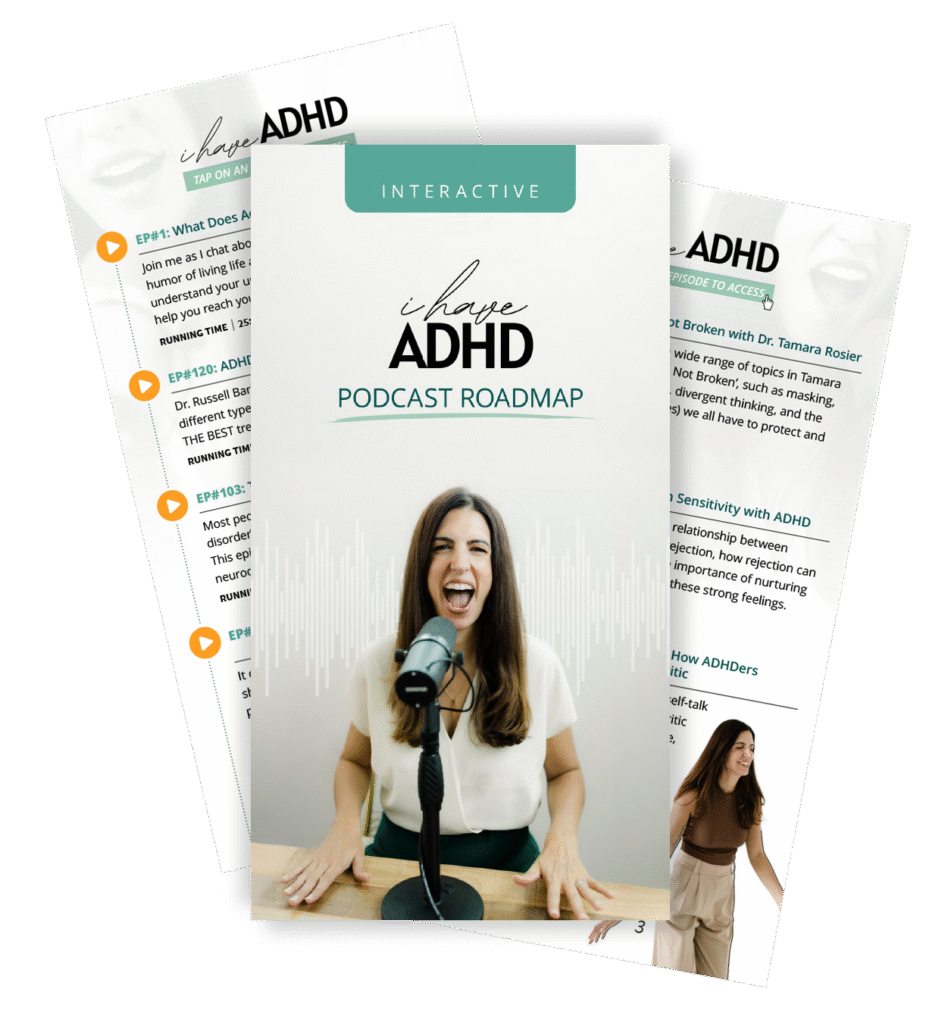
Get The Best of the podcast now with our Podcast Roadmap.

This is a clear and easy podcast roadmap so that you can know for SURE that you’re hearing the very best of the I Have ADHD podcast.

Related Episodes

Kristen Carder

Episode #390: Two Steps Forward, Three Steps Back (Why You Keep Self-Sabotaging and How to Finally Stop)

Kristen Carder

Episode #388: Money. Let’s Finally Deal With It.

Kristen Carder

Episode #386: A Very ADHD Episode: Deep Feelings and Random Reels

Stop Struggling Alone.
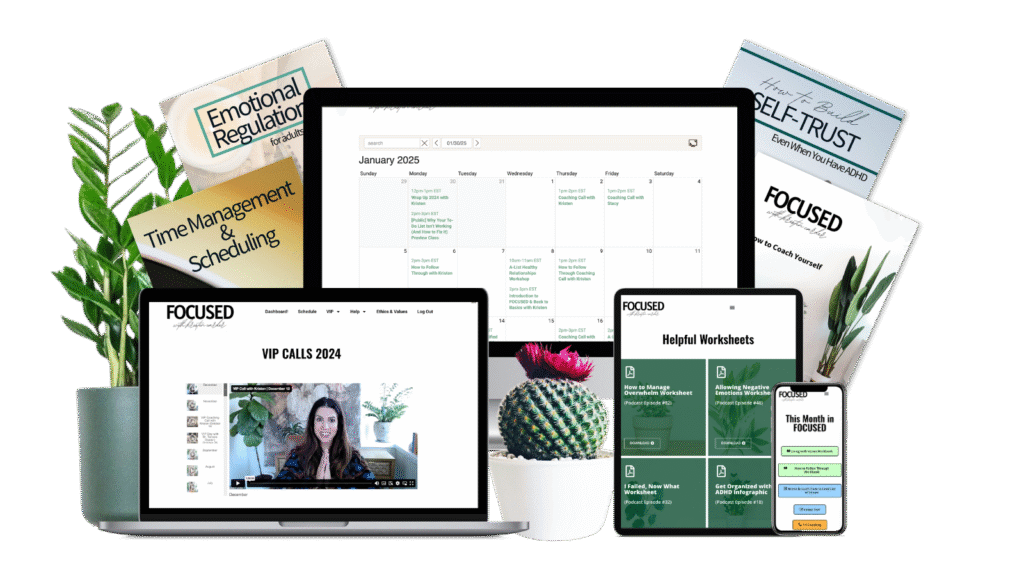
Start Thriving With FOCUSED.

A proven coaching program designed specifically for adults with ADHD who want to gain clarity, build confidence, and take control of their lives.

Join a community of hundreds of ADHDers

Learning About My Brain...

Changed Everything

Hi, I’m Kristen Carder—ADHD expert, podcast host, and certified coach who’s been exactly where you are. Diagnosed at 21, I spent years cycling through planners, courses, and systems that never quite worked. Everything changed when I discovered the power of understanding my ADHD brain and the transformative impact of community support.

Now, after 15+ years of research and experience, I’ve helped thousands of adults with ADHD thrive. I’m here to show you how understanding your brain can transform your life, just like it did for mine.

ADHD Tips That Actually Make Sense

Follow @i.have.adhd.podcast and join our Instagram community for daily strategies, relatable content, and real talk about ADHD

Click here to sign up for the FREE Class with Kristen on Wednesday, 4/1: Too Much & Not Enough: Why ADHD Adults Feel “In Trouble” in Relationships

  • 00Days
  • 00Hrs
  • 00Min
  • 00Sec