

Podcast Episode #146: 5 Reasons Coaching Works for Adults with ADHD

Listen or Watch this episode on:

About This Episode

If you’ve wondered if you should give coaching a try, or if it even works, this episode will give you all the clarity. Hear my hot take on coaching, and what type of coaching I feel is most effective for ADHDers. After coaching over 1,000 people with ADHD, I have lots of thoughts to share with you!

[Click here to sign up for my webinar on procrastination!](https://ihaveadhd.com/webinar) 

Visit [www.ihaveadhd.com](https://ihaveadhd.com) for more resources

Hang out with me on [Instagram](http://www.instagram.com/i.have.adhd.podcast)!

See Privacy Policy at [https://art19.com/privacy](https://art19.com/privacy) and California Privacy Notice at [https://art19.com/privacy#do-not-sell-my-info](https://art19.com/privacy#do-not-sell-my-info).
Episode Transcript

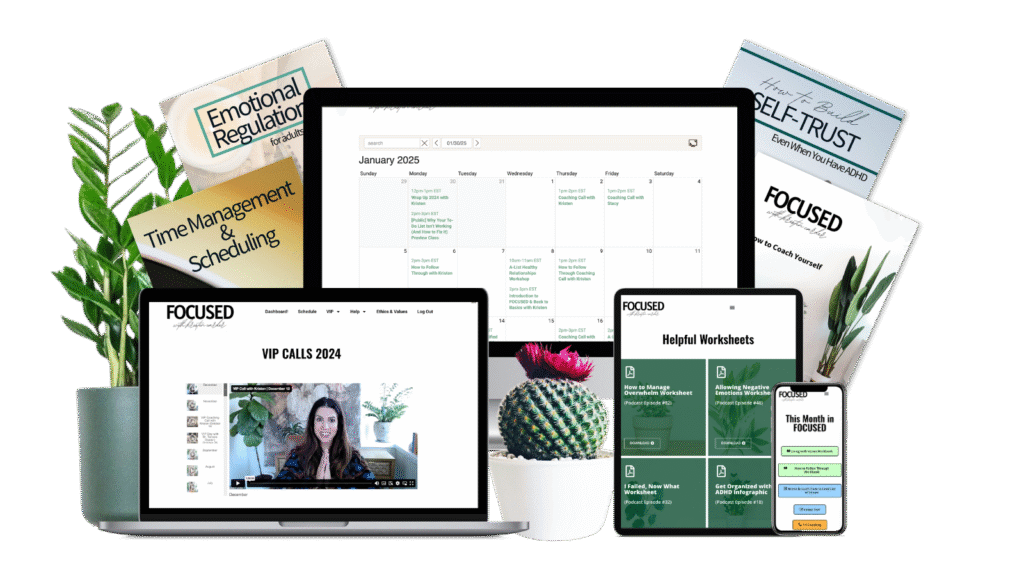
This episode is sponsored by Cure Hydration. All right, I’m going to be real with you. Drinking water is boring. My ADHD brain is like, wait, we have to do this again? Like every day, multiple times. What in the world? And because I’m running from meetings to coaching calls to kid chaos, staying hydrated is not something I’m naturally good at. It’s not something I naturally think about. That’s why I’ve been obsessed with Cure hydration packs lately. Cure is a plant based hydrating electrolyte mix with no added sugar, only 25 calories, and it actually tastes good. The watermelon and berry pomegranate have been on repeat for me. I’m actually like really running low on those flavors, which is so sad. They’re refreshing without being too sweet or artificial. It feels like my water finally has a little bit of personality, which I enjoy. I really do. What I love most is that CURE uses a science backed formula that hydrates as effectively as an IV drip. So when I’m scrambling through my day forgetting my water again, CURE helps me to catch up fast. I throw a few packs in my bag and it makes drinking enough water simple. Which for my ADHD brain is basically a miracle. So staying hydrated isn’t just about water. You also need electrolytes. And that’s why I love cure. It’s clean, tastes great, and it actually works. And bonus, CURE is FSA HSA approved so you can use those funds to stay hydrated. The smart way for I have ADHD Podcast listeners. You can get 20% off your first order@curehydration.com ihaveadhd with the code ihaveadhd and if you get a post purchase survey make sure to tell them that you heard about Cure right here on the podcast. It really does help to support the show. Don’t just drink more water, Upgrade it with Cure. Save over $200 when you book weekly stays with Vrbo this winter. If you need to work, why not work from a chalet? If you haven’t seen your college besties since, well, college, you need a week to fully catch up in a snowy cabin. And if you have to stay in a remote place with your in laws, you should save over $200 a week. That’s the least we can do. So you might as well start digging out the long johns because saving over $200 on a week long snowcation rental is in the cards book now@vrbo.com. Welcome to the I have ADHD podcast where it’s all about education, encouragement, and coaching for adults with adhd. I’m your host, Kristen Carter, and I have adhd. Let’s chat about the frustrations, humor, and challenges of adulting relationships, working and achieving with this neurodevelopmental disorder. I’ll help you understand your unique brain, unlock your potential, and move from point A to point B. Hey, what’s up? This is Kristen Carter, and you’re listening to The I have ADHD podcast, episode number 146. I am medicated, I am caffeinated, and I’m ready to roll. What is up? How are you? How are you? How are you? I’m doing great. Thank you so much for asking. I just went down a major distraction rabbit hole in preparation to switch into flow for this podcast. Whoo. It was a biggie. And I used to beat myself up and shame myself and judge myself for buffering and getting distracted and, like, doing all of the getting ready tasks before I sit down to do the hard thing, you know? But now I just totally see this as part of my process. Like, yeah, it takes me four hours to do this. It takes me two hours to get ready by chasing all the squirrels and doing all the distraction tasks, and then it takes me two hours to actually complete the task. Right. So four hours total. And that’s okay. It’s 100% okay. So I don’t sit here and tell myself, if you would just stay focused, you could get this done so much faster. You should be able to get this done so much faster. No, no, no, no, no, no, no, no, no, no, no, no. I never talk to myself that way because I like me, and I hope you like you, and I hope that you don’t talk to yourself like that either. So now I just watch myself be distracted. I’m like, okay, honey, what do you need? What do you need so that you can get ready to write? So instead of telling myself, well, it only takes me two hours to do my podcast because that’s how much active time it takes. I tell myself it takes me four hours. It takes me two hours to get ready and two hours to do it, and that’s okay. Four hours, five hours a week. No biggie. Not a big deal. So anyway, here I am. I’ve followed all the threads, all the rabbit trails. There’s literally nothing left for me to be distracted by. So I’m ready. I’m ready to roll. Let us do it. We’re just gonna normalize the distractions around here. You know, we got ADHD brains. Of course we’re Going to be distracted. I mean, dang. It would be weird if we weren’t. It would be super weird if we weren’t distracted. I think that would mean that we don’t have adhd, you know? So we’re just gonna drop the judgment, we’re gonna drop the drama, and we’re just gonna accept ourselves for who we are. I am someone who takes a long time to get ready to do the thing. And then once I’m in the flow, I was just gonna, like, rhyme and be like, I’m ready to go. But that would be really, really goofy. So I’m not gonna do that. I’m just gonna say, once I’m in the flow, it’s great. It’s just great. Okay. Anyway, anyway, let’s move on. Today we’re talking about coaching. My favorite topic, we’re talking about coaching for adhd. Does it work? If it does work, how can adults with ADHD really change? And what kind of coaching is the best coaching for ADHDers? Can’t wait. This episode, I just have so many thoughts. So I really have had to work on constraining down to what I think is the most important because I could talk about coaching all day, every day. I love to nerd out on this topic. Before we get rolling, if you’re listening in real time, perk up, because I want to let you know that I’m hosting a webinar tomorrow. Tomorrow, okay? And in this webinar, I’m going to be giving you an opportunity to be coached for free by me. Okay? So listen, turn up that volume. You’re going to want to hear this. Tomorrow, Wednesday, February 16th at 12:00pm Eastern, I am hosting a webinar on procrastination. I’m going to teach on the real reason why you procrastinate. And then I’m going to be doing hot seat coaching, which means you’ll be able to see exactly what it’s like to be coached by me. Right. So I’m also going to take some time and I’m going to explain my coaching program to you. I’m going to invite you to join, of course, but mostly I’m just going to coach your face off. So this is the perfect opportunity to see what it’s like to get coached by me and see if focus is a program that you might want to join. You guys, you should totally be come. Whether or not you choose to raise your hand for coaching, you will get so much out of this. So go to ihaveadhd.com webinar to sign up. That’s ihaveadhd.com webinar. You can do it right now as you listen to the rest of this episode. Do right now, go sign up. We’re gonna have so much fun. Find out if I’m the right coach for you, but by coming to this free webinar and seeing me in action, you know, be great. All right, so on this topic, let’s talk about coaching for adhd. I have a lot of thoughts. As I said, I’m gonna try not to go crazy sharing them with you today. I’m gonna constrain this episode down to just the five reasons why I think coaching works for adults with ADHD. And in the last three years, I’ve had the privilege of coaching over 1,000 ADHDers. That just blows my mind, mind. And I can solidly say that ADHD coaching works. Is it a replacement for medication or other mental health help? No, absolutely not. Is it a replacement for therapy? Debatable, but probably not. Is it a quick fix? Sorry to say, but no. But does it work? Yes. Can it change your life forever? Yes. Can it change how you experience yourself and the world? Absolutely. Okay, so we’re going to talk about why. Why the heck am I so passionate about this? Why does ADHD coaching work? Why does it work? So, number one, we’re going to start with some sciency stuff. Coaching works for adults with adhd because of one word, and that word is neuroplasticity. Your brain is actually willing and able to. And I don’t think most people understand the gravity, the weight of this. So listen, listen, listen. Your brain’s abilities are not fixed. They are not stagnant. They’re not stuck this way forever. If you want to make changes, you can. Okay, now I have an entire episode on neuroplasticity. If you’d like to go and listen to that one. It’s episode 30, which is way back in 2019, the very little baby days of this podcast. I studied neuroplasticity a lot in what I like to refer to as my previous life pre coaching, because I worked with students with learning differences, and I really had to figure out, are these students able to make changes? And so I read a bunch of books. I went down a bunch of research holes. Holes. I’m not sure sure. We’ll just call it a research hole, trying to figure out, can I help these students with learning differences really changes, and is there a spectrum for change? So I would work with people with gifted ability, and then I would work with People who really, really struggled with basic cognitive functioning. And so being able to understand neuroplasticity and the brain’s willingness to change, the brain’s ability to change was a huge part of this. And what I was able to see through my work in my, again, I like to call it my previous life, is that even students who were on the lower level of cognitive functioning, even students who had some very acute learning differences, were still able to make changes. Now, of course, the changes are relative to your starting point, right? And so we don’t promise the same results for every single student, but we do promise to move the needle. And so no matter where you are in your life, no matter where you are on the spectrum of adhd, no matter where you are and your cognitive functioning, you can move the needle a little bit further. Okay, so the two most, I don’t know, helpful, influential, and also easiest read books that I kind of devoured during this time period, which was about, like 10 years ago. The two best books that I would recommend if you were like, well, I mean, I know you could do a quick Google search, but like, also, are there any books on the topic of neuroplasticity? The Brain that Changes Itself by Norman Doidge is incredible. And I know I. Well, I don’t know because I haven’t listened to it, but I’m sure that I mentioned it on my neuroplasticity episode. And then another really good one that I read just a few years ago is called Moonwalking with Einstein by Joshua Foer. Both of these books document the brain’s ability to make changes and improvements. And now that it’s 2022, you guys, we have so much technology, we can prove that brains can adapt, grow, expand, change, make all kinds of improvements. So if are sitting there, maybe you’re listening in your car, in your home, on your couch, or maybe you’re taking a walk, like wherever you are listening from right now, and you’re wondering, could I ever really change? The answer is yes. Okay. Of course, we can’t predict the extent to which you’ll make changes. All of us start with different levels of capacity, which I mentioned earlier. So it depends on your brain’s starting point, and it depends on your willingness to tolerate the discomfort of the work. But I know that. I know that. I know that. I know that. I know that you can create new neural pathways, change your thinking, change your brain’s mapping, and make huge shifts in your life. Okay, we know this because of science. I also know it because when I look back on my own life 15 years ago, I was a traumatized non functioning human who spent her time in fight or flight. Total overwhelm, not getting hardly anything done in a day, but constantly feeling agitated, constantly feeling overwhelmed, constantly starting fights and really knowing that I had so much potential that I just did not know how to unlock. And one of the things that unlocked this for me, of course, course it was an ADHD treatment protocol, of course it was mental health help from my doctor and my therapist. And coaching was a gigantic part of it. And then I’ve had the privilege, as I said, of working with hundreds and actually over a thousand clients with ADHD and seeing people make changes and seeing the wins that they post and all of the amazing things that they share. My belief is so strong in humankind’s ability to change, no one will ever be able to convince me otherwise. So huge. Okay, that’s number one. The first reason why ADHD or just coaching in general works for adults with ADHD is because of the brain’s willingness and ability to change, which is called neuroplasticity. Shifting into a more coachy now reason number two, coaching gets to the root of the problem. Now, caveat here. You need to know that there are actually two types of coaching. There’s accountability coaching and there’s causal coaching. And I like to refer to causal coaching. Like an easier way to understand it is like mindset coaching. Now, accountability coaching is exactly as it sounds. The coach is positioned as someone who is responsible to hold you accountable to what you say you’re going to do. So presumably show up to a session. You talk about your goals. The coach helps you to break down the goals into small doable steps and then gives you assignments each week. Your job then is to show up by the next call with your homework done. And if you don’t, then the coach like troubleshoots this with you, tries to help you to come up with a new plan. And this goes on and on and on until hopefully you reach your goal. In general, accountability coaching is focused on the actions that the client takes or doesn’t take. So you spend time talking about your actions. Okay. And I found that most, not all, but in my experience, I found that most of the ADHD coaches that I’ve encountered are practicing some version of accountability coaching. Now, I practice what is called causal coaching. And like I said, we could also, I guess refer to this as like mindset coaching. But I love the word causal. Okay, so causal coaching is actually quite different from accountability coaching. In causal coaching, we don’t Focus as much on actions. Instead, we focus on the client’s thoughts and emotions. We peel back the layers of why they’re doing what they’re doing and figure out what’s stopping them from moving forward. So why are you procrastinating? Why aren’t you following your calendar? Why are you exploding at your partner? Why does it seem that you self destruct every time you begin to make progress? So we spend most of our time in a session on mindset, on thoughts and emotions, on the beliefs that you hold, and exploring how you feel in your body. So then clients apply these mindset tools to their actions in their day to day life and their entire world is transformed. So here’s the takeaway from here on out. I want you to understand that when I talk about coaching works for adults with adhd, what I am talking about specifically is causal coaching. I’m not saying that accountability coaching doesn’t work, but that’s not my expertise. That’s not my area of expertise. So I’m talking within the constraint or the confines of my own area of expertise, which is causal coaching. Okay, so causal coaching or mindset coaching works for adults with ADHD because it gets to the root cause of the problem. I’m not interested in putting a band aid over top of a gaping wound, which is why I don’t give out googleable tips and tricks. Okay, so if you approach a coach with a time management problem, my understanding of accountability coaching is we would troubleshoot. Okay, how are we going to solve this time management problem? Let’s set some timers, let’s make a calendar. Let me help you break this down. Like we’re going to do all of these actions. Okay, but in causal coaching, here’s how the conversation’s going to go. Why aren’t you following your calendar? What is happening when you look at your to do list and you’re just not doing it? And spoiler alert, the answer is some sort of emotion that you’re feeling. And so then we help you learn to process that emotion. And then we talk about your beliefs about time and how to create time producing thoughts. And that, my friend, is the real solution to every single time management problem. And then you can apply that whether you’re at home, you’re at work, you are, you know, with doing a hobby like it doesn’t matter. You can apply the techniques wherever you are in your life. All right. Oh, I just love this so much. Okay, so reason number one, why coaching works for adults with ADHD is neuroplasticity. Reason Number two is it gets to the root cause of the problem. Reason number three, why mindset or causal coaching works for adults with ADHD is because managing our thoughts is the key to living the life that we want. Now go. You’ve heard me talk about this, but I haven’t talked about it for a little while. So we’re gonna go there. Most ADHDers don’t even notice their thoughts. We just zoom around in our lives. We go, go, go, go, go. And we don’t take any time to consider what we’re thinking. In fact, many of you are actively avoiding paying attention to what you’re thinking because you’re afraid of what will come up. And this is one of the biggest mistakes that ADHDers make because mindset is actually everything. What you believe or don’t believe is everything. It impacts absolutely everything. Okay? So a coach helps the adhder to slow down and to recognize what’s happening in their mind. And a good coach will help you to realize that you don’t actually have to believe everything that you think. Your brain isn’t just reporting the facts when it says that you’re stupid or that you’ll never be good enough. A good life coach will teach you how to question your brain and think on purpose. This is one of the most useful skills that a human being can develop. And yes, you, my friend, can develop it. You can. Now maybe you’re sitting here listening or standing or running or whatever, and you’re worried that you won’t be able to develop this skill of mindfulness because your brain is just too distracted or your brain is just too hyperactive. And I totally get it. I totally, I totally get it. Let me just say that having a set time with a coach, whether it’s in a one on one session or a group coaching program, having that set time for you to take a moment to be mindful, to pay attention what’s happening in your mind and your body, that’s enough. That one session or two sessions or three sessions if you’re in my program, is enough for you to make progress. Okay? So that’s one of the best things about, like engaging a coach. And when I say engaging, I actually do mean paying. The paying part is actually really useful because it gives you a little bit of skin in the game of responsibility of being like, ooh, I better show up to this. And then when you do show up, you’re able to be held accountable to do this mindfulness work in a safe space, and you’ll be able to make changes because that little bit of time working on your mindset is enough to make amazing changes. All right, reason number four, why coaching works for adults with adhd, and we’re putting in parentheses here, mindset coaching is because one of the foundations of mindset coaching, or causal coaching, is teaching the client how to identify and process their emotions. And this, my friend, is the key to everything. Most of us are so deficient in the area of emotions, we haven’t been taught or even allowed to identify and name and feel and process our emotions. And a good coach is going to help you to understand exactly how to do this. This is one of the most important techniques that I teach my clients, and it’s kind of the linchpin. It change everything. Most of us adults with ADHD experience super explosive or big emotions, and it can be a deterrent and a distraction from what we need to do. So, for example, how often have you let your day be hijacked by your triggers? Like, you have a fight with your partner in the morning and then you can’t focus at work because you’re so distracted by that raging emotion in your body all day long, or your boss says something rude to you, and then you can’t sleep at night, you can’t relax, just turn your mind off because your body is just like. So, like, the emotion is just coursing through your body. So learning how to process your emotion, identify what’s going on, it’s one of the keys to being able to get anything done despite what’s happening in your personal life. That is a skill that a great mindset coach will teach you. A great coach will teach you to identify your emotions. They’ll help you process them. They’ll show you exactly how to feel them in your body and to make space for them so that you can really work through that emotion and get back to doing the thing that you want to do. This leads me to reason number five, why coaching 100% works for adults with ADHD is that. But when you begin to notice your thoughts and begin to settle them down and begin to manage them, and then you begin to understand your emotions and begin to process them, and you realize that there’s a connection between your thoughts and your emotions, you’ll be able to then regulate your actions. This is what we all want. We all want to be able to take the action that we know we should be taking. So many of you are feeling stuck. Like, why can’t I just make progress? Why can’t I just move forward? Why can’t I just do the thing that I know that I’m supposed to do, it is because you are not understanding your thoughts and your emotions. So I know this is kind of like a long way around to say it, but, like, first we start with thoughts. They’re so important. Then we talk about emotions. It’s everything. And then we talk about the connection between thoughts and emotions. And then you are able to to begin to self regulate. You learn to coach yourself. You learn how to self direct. My gosh. These are the important life skills that so many adhders simply do not possess. And as you work with a coach who helps you to notice your thoughts and process your emotions, you will begin to be able to self soothe, self regulate, self coach, self direct. Which means that when you’re triggered, when you’re feeling explosive, you’re going to learn how to calm yourself down. When you have a goal, you’ll learn how to coach yourself and self direct. When you notice yourself getting off course, you’ll learn how to pull yourself back. Now, it’s not a fast process. I’m not saying that I’m not like, just wave the magic wand and, you know, three sessions of coaching and you’re a whole new human. No, that’s not even the point. The point isn’t to become a whole new human. The point is to become the. The very best version of you. The most you version of you. These skills are freaking game changers. If we could help adhders to self regulate, to self coach, to self direct, that would change everything. Is it a perfect system? No. Am I an expert? Yes. Do I still spend two hours getting ready to get ready before I record this podcast every week? Yeah, I for sure do. Is that a problem? No, it’s not a problem. Guess what? You’re gonna get this podcast on time. Whether or not I spend two hours getting ready to get ready doesn’t matter because you are still hearing it. Right. Wow, that was a side trail. Getting back on topic here. All right, in my opinion, and this is just my opinion, okay? So I want you, as an autonomous adult, to take what I say, filter it through your own knowing, decide for yourself what you think. In my opinion, the best kind of coaching for adhders is not about holding us accountable. It’s just not. That’s my opinion. So if you’re afraid that you won’t be able to, like, do the homework or get the thing done or you won’t be able to follow through, like, totally, I would encourage you to look into mindset coaching or causal coaching for Adults with adhd, right? Again, you are a grown adult. You get to decide what’s for you and what’s not for you. And my opinion, it’s exactly that. It is just my opinion. But my opinion is that accountability coaching is not the most effective way to coach adults with adhd. Because. Because adults do. I want to say it. I think I do. I think I do want to say it. Adults with adhd, we don’t need like a babysitter. What we need is a way to learn to manage ourselves. We need to learn how to self regulate, how to self soothe, how to feel and process our emotions, how to become the best versions of us. Right, my friend, what would change in your life if you had the ability to manage your thoughts? What would change in your life if you had the ability to self soothe when your emotions got really, really big? What would change in your life if you could learn how to self direct when you notice that you’re off track? My guess is a lot would change. My guess is more of your strengths would be able to shine through. I would love to see that happen for you. I adore you. So I encourage you. Seek out coaching. I for sure, 100%, with all of my heart believe that ADHDers can make so much progress with the help of a very good coach. And again, it is never a replacement for your ADHD treatment and it is never a replacement for your doctor’s advice or for therapy or for anything else that you’re doing. But know that it’s just one additional piece of your scaffolding that could change everything. All right, I can’t wait to talk to you next week. Don’t forget to sign up for my webinar. If you’re listening in real time, I have ADHD.com webinar. I’m going to talk to you real soon. Bye. Bye. A few years ago, I went looking for help. I wanted to find someone to teach me how to feel better about myself and to help me improve my organization. Productivity, time management, emotional regulation, you know, all the things that we adults with ADHD struggle with. I couldn’t find anything, so I researched and I studied and I hired coaches and I figured it out. Then I created Focused for you. Focused is my monthly coaching membership where I teach educated professional adults how to accept their ADHD brain and hijack their ability to get stuff done. Hundreds of people, people from all over the world, are already benefiting from this program and I’m confident that you will too. Go to ihaveadhd.com focus for all the details.

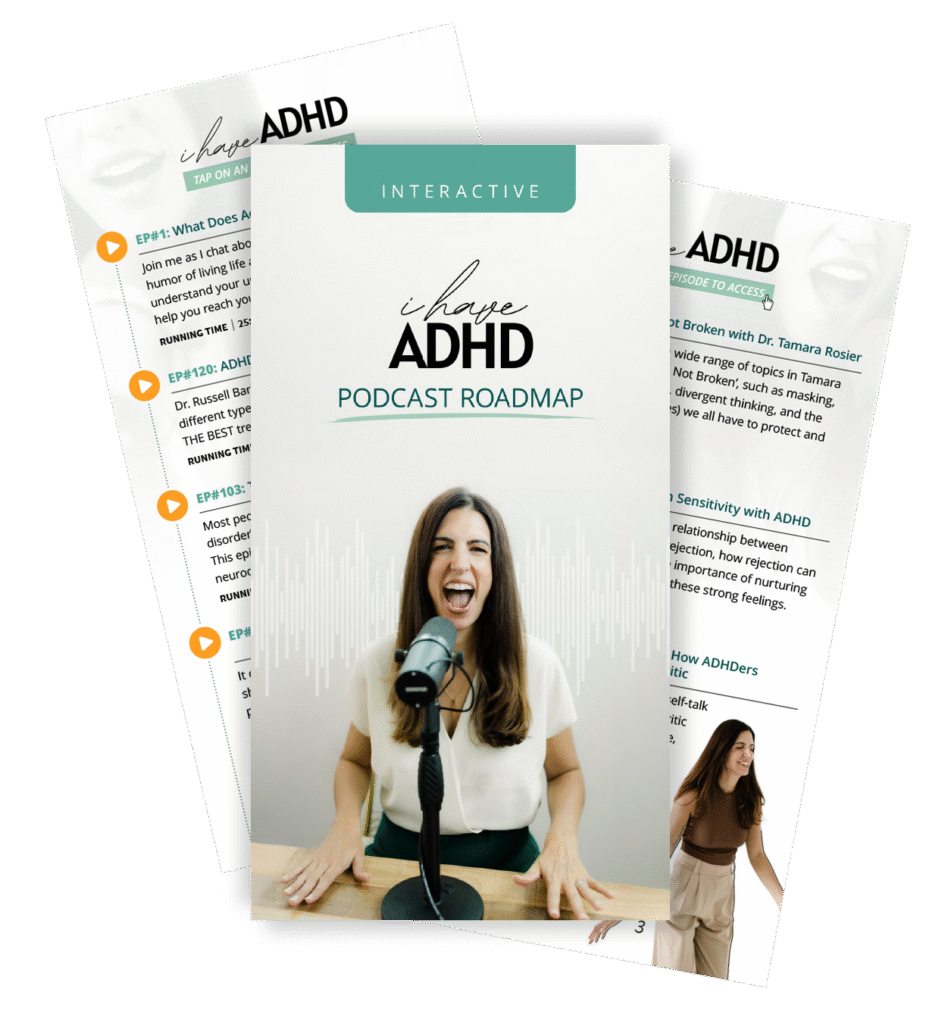
Get The Best of the podcast now with our Podcast Roadmap.

This is a clear and easy podcast roadmap so that you can know for SURE that you’re hearing the very best of the I Have ADHD podcast.

Related Episodes

Kristen Carder

Episode #390: Two Steps Forward, Three Steps Back (Why You Keep Self-Sabotaging and How to Finally Stop)

Kristen Carder

Episode #388: Money. Let’s Finally Deal With It.

Kristen Carder

Episode #386: A Very ADHD Episode: Deep Feelings and Random Reels

Stop Struggling Alone.
Start Thriving With FOCUSED.

A proven coaching program designed specifically for adults with ADHD who want to gain clarity, build confidence, and take control of their lives.

Join a community of hundreds of ADHDers

Learning About My Brain...

Changed Everything

Hi, I’m Kristen Carder—ADHD expert, podcast host, and certified coach who’s been exactly where you are. Diagnosed at 21, I spent years cycling through planners, courses, and systems that never quite worked. Everything changed when I discovered the power of understanding my ADHD brain and the transformative impact of community support.

Now, after 15+ years of research and experience, I’ve helped thousands of adults with ADHD thrive. I’m here to show you how understanding your brain can transform your life, just like it did for mine.

ADHD Tips That Actually Make Sense

Follow @i.have.adhd.podcast and join our Instagram community for daily strategies, relatable content, and real talk about ADHD

Click here to sign up for the FREE Class with Kristen on Wednesday, 4/1: Too Much & Not Enough: Why ADHD Adults Feel “In Trouble” in Relationships

  • 00Days
  • 00Hrs
  • 00Min
  • 00Sec