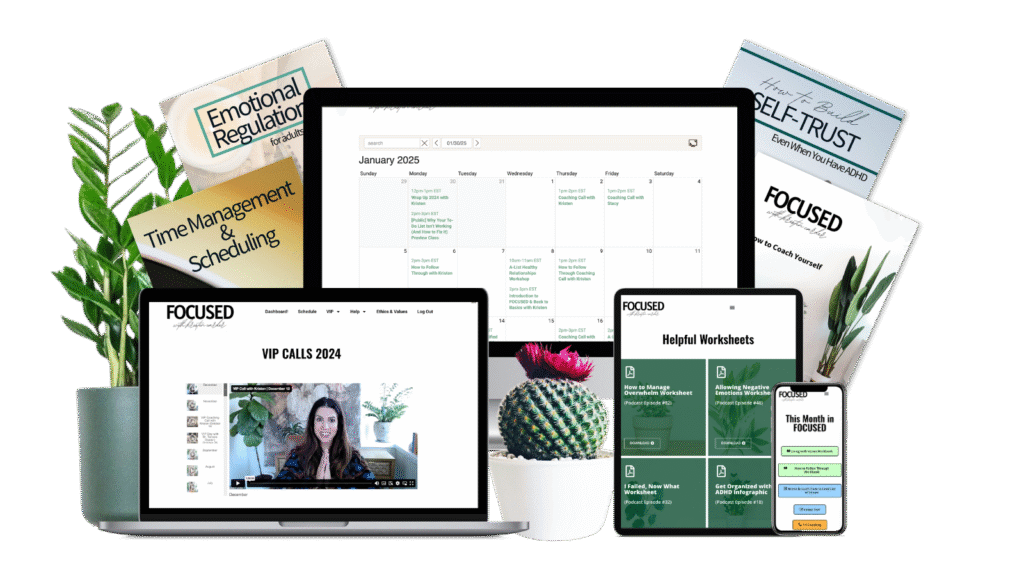
This episode is sponsored by Cure Hydration. All right, I’m going to be real with you. Drinking water is boring. My ADHD brain is like, wait, we have to do this again? Like every day, multiple times. What in the world? And because I’m running from meetings to coaching calls to kid chaos, staying hydrated is not something I’m naturally good at. It’s not something I naturally think about. That’s why I’ve been obsessed with Cure hydration packs lately. Cure is a plant based hydrating electrolyte mix with no added sugar, only 25 calories, and it actually tastes good. The watermelon and berry pomegranate have been on repeat for me. I’m actually like really running low on those flavors, which is so sad. They’re refreshing without being too sweet or artificial. It feels like my water finally has a little bit of personality, which I enjoy. I really do. What I love most is that CURE uses a science backed formula that hydrates as effectively as an IV drip. So when I’m scrambling through my day forgetting my water again, Cure helps me to catch up fast. I throw a few packs in my bag and it makes drinking enough water simple. Which for my ADHD brain is basically a miracle. So staying hydrated isn’t just about water. You also need electrolytes. And that’s why I love Cure. It’s clean, tastes great, and it actually works. And bonus, Cure is FSA HSA approved so you can use those funds to stay hydrated. The smart way for I have ADHD podcast listeners. You can get 20% off your first order@curehydration.com ihaveadhd with the code ihaveadhd and if you get a post purchase survey make sure to tell them that you heard about Cure right here on the podcast. It really does help to support the show. Don’t just drink more water, upgrade it with Cure. Vrbo Last minute deals make chasing fresh mountain powder incredibly easy. With thousands of homes close to the slopes, you can easily get epic Pow Freshies, first tracks and more. No need for months of planning. In fact, you can’t even plan Pow Pow is on its own schedule. Thankfully somewhere in the world it’s always snowing. All you have to do is use the last minute filter on the app to book a last minute deal on a sleep slopeside private rental home. Book now@vervo.com. Welcome to the I have ADHD podcast where it’s all about education, encouragement and coaching for adults with adhd. I’m your host Kristen Carter and I have adhd. Let’s chat about the frustrations, humor and challenges of adulting relationships, working and achieving with this neurodevelopmental disorder. I’ll help you understand your unique brain, unlock your potential, and move from point A to point B. Hey, what’s up? This is Kristen Carter and you’re listening to the I have ADHD podcast. I am medicated, I am caffeinated, and I am ready to roll. Today I have such a special treat. Dr. Patricia Quinn is here to talk about all things women and adhd. We’re going to talk about hormones and adhd. We’re going to talk about pms, pmdd, and all of the different life cycle changes that women go through and how our ADHD is affected in various ways. So I am so super excited for you to hear all of the amazing wisdom that Dr. Quinn has to share with us. And listen, even if you are not a woman who has adhd, you probably know a woman who has adhd. And all of this understanding will help you so much to have compassion and insight into what women go through when it comes to their life cycles and adhd. So let me introduce myself, special guest for today. Patricia Quinn is a developmental pediatrician and an ADHD specialist who has written over 20 innovative books on ADHD and other learning differences, such as Attention Girls, A Guide to Learn all about yout adhd, and a book that I have read this week, which I highly recommend, 100 Questions and Answers about ADHD in Women and Girls. Dr. Quinn is the co founder and director of the national center for Girls and Women with ADHD and has devoted a majority of her career to improving the awareness of the issues that women and girls with ADHD face. She’s also traveled nationwide conducting and teaching professional development workshops to facilitate a better understanding of how to successfully work with and empower children with adhd. She’s dedicated her life to improving the lives of both adults and children with adhd, as well as the lives of their family and friends. And she’s here with us Today. Today. Welcome, Dr. Quinn. Thank you so much for being here. Thank you. Thank you for that introduction too. I really love to talk about this topic. So many people have questions and not too many people have answers. And again, that’s why I wrote that book, 100 Questions and Answers about Women with ADHD. But I can’t wait to get started and be able to talk about this particular area for your listeners. Perfect. And you are so right that so many people have questions and myself included in that group of so many People. And it’s interesting. I have read so many books on adhd, I’ve studied, and I am living it. And yet I have found myself kind of avoiding the topic of hormones and ADHD stuff specifically. It would be interesting for me to explore the why behind that, but I find myself avoiding it. And so I feel like a conversation with someone as warm and engaging as you to be able to just kind of set the record straight about what happens in my body when I am going through hormonal changes and even just like discussing the difficulty of cycles and ADHD like it’s a real thing. And I think that’s probably why I’ve avoided it, is because it’s not super fun and I don’t really feel like dealing with it. And it complicates your treatment, it complicates interpersonal relationships, and it just makes things a lot messier. I think that’s kind of what you were describing. Let’s talk about not just what’s going on in your body, but what’s going on in your brain. For a really long time, we only thought that estrogen affected our gonads and our monthly cycles and all of that. And suddenly people started realizing, scientists started realizing that estrogen affected other areas. And one of the target organs for estrogen is the brain. And I see your mouth dropping open. Yes, I had no idea. And how it relates to ADHD and depression and all these other issues we’re going to talk about. But this is the foundation of what you need to understand. Okay, so when we’re talking about any of these mental health disorders, we are talking about neurobiochemicals in the brain that are released at the synapse, cross that little empty space and keep the reactions going. So it turns on the inhibitory areas of you, your brain, or turns on the emotional areas or turns on inhibition. So you can not just call out all the time or helps with executive functioning, et cetera, et cetera. Okay, so we know we’re talking about dopamine, serotonin, norepinephrine. Those are the neurobiochemicals. We know that estrogen enhances the release of these neurobiochemicals at the synapse, so that about 20% of these chemicals in your brain are the result of estrogen enhancing the release. Wow. Okay. So now logically follows, if there are states during the month during your lifespan where your estrogen levels go down, your dopamine is going to go down, your serotonin is going to go down, your norepinephrine is going to go down, and you’re going to see enhancement of your symptoms. Okay, so what are the times when estrogen goes down? I’m asking you that question. Oh, I’m like, yes, please tell us. Okay, Estrogen goes down. Premenstrual. Yes. Is that true? Yes. Let’s talk about that. Premenstrually, what we see in the monthly cycle, there’s a fluctuation of estrogen, starts out at a certain level, goes up, and then starts coming down. Every month before your period, you have lower levels of estrogen, lower levels of dopamine, lower levels of serotonin. Okay, so what happens when you see lower levels of serotonin? You have increase in PMS symptoms. Yeah. You have an increase in premenstrual mood disorder. So women get depressed and irritable before their period because their estrogen levels go down. It can become severe, which is pmdd, where you have a really significant mood disorder prior to your period. Okay. Then we also see that the dopamine goes down, too. And what does that mean for you if your dopamine goes down even more, your ADD symptoms go up? Yeah, I don’t want to get anything done, man. Yep. So what we see is just like premenstrual magnification of mood disorders. We can see premenstrual magnification of ADD symptoms. So a lot of women will tell you before and during my period, forget it. My symptoms are. I can’t hardly do anything. Some of them will say, so you see that? That’s a fluctuation that results in ADD symptoms getting worse. And a lot of people will go to their physicians and they’ll increase their. Let’s say they’re being treated with stimulants for their ADD symptoms. And when this happens, you say, my meds aren’t working. You know, the week before my period, my meds don’t work. So some people do increase. And I have treated a lot of women where what I have them do. And this is something your readers may want to do. I have them for two consecutive months, rate their symptoms every day. Just a brief little, you know, my attention spans. Good. It’s a one. My attention span’s four. My organization is four. It’s terrible. Whatever. Irritability. 1, 2, 3, 4. Forgetfulness. 1, 2, 3, four. Just pick some of your symptoms and then rate yourself. And what you do after two months, I will be able to talk with my patients about saying, okay. From mid cycle until five days afterwards, everything starts quick crashing and going down and getting worse. So we know that we may need to increase the meds during that time. Sometimes we replace hormones for those women and they don’t actually have periods. Sometimes we work with them on going on birth control during that time. So there’s a whole lot of things we do to try to both regulate the hormones and increase their meds to take care of the worsening of symptoms. They might not be on the same dose of meds all month long. They may have this dose for the first week and this dose for the second and third or fourth week, or this dose for two weeks and this dose for two weeks. That makes so much sense to me because, you know, when I look at the cycle of a month, my husband and I, you know, joke about this and we laugh so that we do not cry. But it’s like there are months when a good two weeks of those months, my brain is not functioning at its fullest capacity. And that’s, I mean, two out of four weeks, that’s half of the month. And it’s not consistently like that, but there can be months when it is like that. And it just feels like I just. I feel like I lose so much. It’s not that I lose time. I just lose so much of my own energy and joy and just like umph, you know, if that makes sense. Umph is a great scientific term. I think you need to do a little research with your own body. I mean, it’s good that you’re saying a couple weeks a month. See when they are document that. Look at that. Also another thing that another time when estrogen levels start going down. We’re going to talk briefly about pregnancy and post pregnancy. We again see a lot of postpartum depression in women for the same reason. First of all, during pregnancy, most women tell me, I stay pregnant all the time, except I don’t want that many kids. You know, I felt my best when I was pregnant as far as my ADD was concerned. And a lot of them do stop their meds for a period of time while they’re pregnant. Okay? So that’s one thing. Pregnancy is a high estrogen state, however, and when you keep breastfeeding after that, it’s a high estrogen state. But when you wean the baby or when you have the baby and don’t breastfeed, what happens? Your hormones come crashing down very suddenly, and you can have devastating postpartum depression. And you also can have a whopping increase in your ADD symptoms right away. So you need to again say, okay, I need to know this is coming. I need to start My meds again, I need to start work with my psychiatrist or whomever is treating me and say, this is going to be problematic for me because my estrogens are now changing dramatically. So there’s another period. Yeah. The third period that I think is really important to think about is perimenopause. Now, what is perimenopause? Have you ever heard the term. I don’t know how many of your podcast listeners have heard the term perimenopause? Because I have started hearing that term more from my own doctors. I’ve been doing some Googling, and it’s essentially the time period before menopause. Yes. At the time period before menopause when your estrogen levels start to decrease, and that can be in your mid to late 30s. That’s wild. Okay. Can be 10 years before you go into menopause. So your estrogen levels are slowly starting to decrease. It’s why for older women, it’s harder to get pregnant. You know, it’s the same reason that your. Your hormones are starting to go down. So one of the reasons why, you know, people were all kind of saying, well, why do we suddenly have all these women who were doing well on their meds or who were able to function with their ADHD by using a lot of coping mechanism? Why suddenly at 38, can they not function anymore? Why is it at 36, 37, 38, so hard for them? And what it is, is it’s perimenopause. And again, physicians who treat ADHD don’t think of this. You know, one of the people came to me once and said, you know, why is the meat. What’s the mean age of diagnosis for women? And it was like 36, 38. And why is that? Well, that’s because they’ve been able to cope up to that point. And now you add in lowering estrogen levels, they can’t cope anymore. So it’s another area that people need to know about and they need to address this. And one of the things we do at that time, you know, men have the same amount of estrogen in well into their 80s. Wow. Their body makes estrogen out of their male androgen hormones in their liver. So a man of 60 can have more estrogen than a woman of 60. That is completely unfair. I know. And the other thing is, and I used to say this, you know, men’s estrogen is the same every day, so they don’t have to deal with any of these hormonal fluctuations. So that’s why we see a steadier state of their ADHD symptoms versus women whose ADHD symptoms may go up and down. So if you’re seeing a therapist who has treated lots of men and hasn’t treated many women, or hasn’t addressed or thought about or listened to or read a book about, you know, you need to ask your physician, have you read a book, a book about women with atd, you know, what book have you read? Right? And if they say, I haven’t read any books about women with adhd, you know, well, I think maybe we shouldn’t talk about that and what we see. So anyway, but let’s get back to perimenopause. So what we again see is a worsening of ADD symptoms. So you may have been on meds for 10 years. Let’s say you went on in your 20s and things have been going really well and everything’s fine, and you had coaching, you had other stuff, and your life’s going pretty well. You have a good job, you know, you’re settled with your three kids or two kids or whatever it is. But suddenly things change, start getting worse, and you can’t figure it out. That’s when you probably should go and see your gynecologist and say, let’s see, am I starting in perimenopause right now? Now, they may tell you you still have estrogen levels and you’re not in menopause, but that’s not what we’re talking about. We’re talking about what were your estrogen levels before and what are they now and are they going down? So it’s a comparative study then to, like, what you were previously and what you are now. So it’s not across the board whether it’s low. It’s whether it’s low for you. For you. Yes. And that’s again, important because they’ll tell you, oh, you still have estrogen. You know, you’re not in menopause. Well, we’re not talking about being in menopause right now. We’re talking about things getting worse because I’m in perimenopause and my estrogen levels are starting to go down. And again, you look at your symptoms, you know, things are harder for me. Things are really getting worse. I’m a little foggier, I’m a little more depressed, you know, that kind of stuff. I’m a little more irritable, I’m more disorganized, those kinds of things. And what we do during that period is one of two things we do do. Hormone replacement therapy. Once you discuss it with your gynecologist, it may be birth control pills, but it actually may be hormone patches depending on your state. If you’ve had, there’s a lot of confounding factors here. If you’ve had breast cancer, obviously that’s going to be a confounding factor for you. If you have had blood clots, that may be a problem for you. But you need to individually discuss with your gynecologist at this point because you really do need hormone replacement for you to function optimally. So not just ADHD medication, hormone replacement because of what the estrogen does in the brain? Yes, because of what the estrogen is doing in the brain. And again, it just may be birth control pills. So you have steady estrogen levels and whatever, but you need to look at you again individually and treat that. Also, you might increase your ADHD medication at that point too, or switch medications. You may have been on one medication for a long time. And if you switch medication, it may be more effective just even switching teaching classes. Like, let’s say you’ve been on a methylphenidate and you go on a Dexedrine or amphetamine. You know, you say, oh, I feel a little different now with this one. So again, but this is important, this is an important period for women when they start saying, you know, things aren’t as sharp as they used to be, things aren’t as. And then you get into menopause, talking about sharp. Then you get into menopause and during that period your estrogen levels go down significantly. And again, menopause is the stage for the one year where you have no period, so, you know, your period stops and then one year later you’re in menopause. And is that, this is just really going to show my ignorance, but if I have this question, I’m assuming a lot of my listeners will have it too. Is menopause then just like you’re in menopause for the rest of your life? It’s not a, it’s not a short time period. It’s like that. That’s just kind of where you are moving forward. Your first year after your last period is called menopause. And then after that year you’re called postmenopausal. Oh, okay, okay. So there’s. We have terms for every. Doctors label everything. Okay, so perimenopausal are those years around menopause. And in perimenopause you may have a period, may not have a period for three months. Your periods get heavier. There’s a Lot of things that go on in perimenopause. We don’t need to talk about them here, talk about them with your gynecologist. But what’s going to happen is you’re going to see your period gradually eventually decreasing and then stopping. That’s your last period. You don’t have any more. And then you don’t have it for the next month and the next month. And after 12 months you’re considered in menopause and that’s that year. That year is your menopause. And then after that one year it’s post menopausal. And again, that’s when we do a lot of hormonal therapy for women, hormone replacement therapy for women who are in menopause because they have no estrogen and they’re really having a hard time. And that’s when we also see, you know, I don’t know if you’ve discussed with your listeners. A lot of people say I was doing okay until I was in my fifth, late 50s, 60s. And you say, now I think I have ADD. Well, is it late onset ADHD or is it menopausal symptoms? You know, I think I’m not so sure. There’s a big controversy now whether you can have ADHD as an adult. First rear its head. I think what happens is you’ve probably always had symptoms and for whatever reasons in your life, you’ve been able to cope. You know, part of ADD is being not functional. So you know, if you can, you, you can have ADHD and still be functional. You know, your brain still has add. But I’m functioning very well. Therefore I don’t get the night diagnosis or the treatment. When you take away all my estrogen as a woman, I may be completely non functional at that point. Certainly there are cognitive declines that we see with just menopause alone. Women who don’t have adhd, it’s been documented, they never had any symptoms, they don’t have adhd. They have trouble with word retrieval, with recalling information, with working memory, with a lot of these issues in menopause and depression. What we then look at, and there’s been two studies done by Tom Brown and his group actually taking women who do not have ADHD and treating them who have cognitive dysfunction and treating them with Vyvanse or another medication. And it does improve their symptoms. Wow. Okay. So what we’re talking about, it improves the menopausal symptoms that a lot of women have. That has nothing to do with adhd. But imagine if you had ADHD and are now in menopause. Yeah, that’s just doesn’t sound like a delightful time. So you need to address with hormone replacement therapy if it’s possible. And again, a lot of women who can’t do this will use bioequivalent hormones. They will use again for some of the symptoms. They will use cohash and they do other things like that, whatever they can do and then go on medication at that point. Maybe they haven’t been on before, but it does help them. Or maybe they need to switch meds or go on. But I think again, what we’re doing right now in this podcast is raising awareness and giving your audience the information that. And validating what they are personally experiencing is really happening to them. Yes, I totally agree with you. And I think that that is one of the like underlying features of ADHD is feeling invalidated because so many of our symptoms are just kind of obnoxious traits labeled by, you know, society. And so it is very invalidating to be told like, well, why don’t you just make a list? Or why don’t you just try harder? Why don’t. Have you ever thought of like writing it down and those types of things? Whereas to hear someone say, no, this is real. And not only are your ADHD symptoms real, but when you are in menopause or post menopausal, it will be even worse and you should expect it to be. So, like, what, what now? Let’s plan for that. Yes, let’s, you know, as part of looking, I don’t know if you look forward to it, but as far as saying, okay, in the next stage of life, this is what is going to be happening. In addition, so I need to, if I’m going to be the best I can be, if I’m going to have optimal functioning, I need to look at these areas as well. And unfortunately, men don’t have to do that. Fortunately for them, a lot of the therapists don’t think of this because they’ve been treating boys or men or they did. They don’t know through no fault of their own really. But you know, we need to educate. We need to educate. I always say this to women. You need to educate yourself first. So hooray that you’re here and hearing this maybe for the first time, you need to then read books, you need to educate yourself first. And then, and there’s lots of stuff online about hormones and all of that, what it does to your brain. And then you need to go from there to look at yourself and assess where are the areas that I am not functionally, optimally because of this. And then you need to seek help and seek treatment. And if you’re Charles Said, I mean, if your psychiatrist knows nothing about it, used to cheating kids, your psychiatrist knows nothing about it. You know, talk to your gynecologist. Most gynecologists, I feel, really listen to the women and say, this is where I am and this is what’s happening. And then you can work with your psychiatrist and your gynecologist on saying, let’s kind of fix what’s going on here in my body that’s creating, you know, things were much better before this happened or whatever. And now a word from our sponsor. This podcast is sponsored by Focused. Focused is the coaching program for adults with ADHD where you get access to binge worthy courses on topics like Living with Vision, real time coaching throughout the week on Zoom, and a community of ADHDers that is positive and welcoming. Listen to what my amazing client Catherine says about Focused. She says, I just wrapped up the closing reception for my first solo art show. I gave a talk and I didn’t die. I joined focused in December 2020, decided in January 2021 to pursue art as a career after doing the Living with Vision workbook. And then I hosted my first first art show a year later. Thank you Focus Community for being a huge part of how I am doing this career change that has allowed me to find my why again. Oh, that’s so amazing, Katherine. So listener, why not invest in yourself and your ADHD brain and join us in Focused? It will change your life. Go to I have ADHD.com focused to learn more. And now back to the show. So I think one of the struggles that we have as ADHDers and even specifically as women is feeling like we should be able to do it on our own or we should be able to do it better. Or we should. There’s a so many shoulds involved. We should be able to do it all. Hello. I should be able to run my house efficiently. I should be enjoying my time with my little kids who are crawling all over me and I’m having like a sensory explosion inside of my body. I should, should, should, should, should. What I hear you saying is this should be very hard for you. Estrogen levels should be affecting your brain’s ability to pay attention, to focus, to remember, to curb your impulsivities. So what we should. And I’m using quotes for the listener who can’t see me right now. What we should be doing is figuring out how to work with this low estrogen or fluctuating estrogen in our lives. Yes. And help deal with all of that. I think, again, the point you were just bringing up about, I should be able to do what everybody else can do. I think the important thing is for women to work with someone to understand who they are, what are their strengths and weaknesses, and how does ADHD affect them personally, Because ADHD affects everybody differently. I don’t think there are two people that are the same who have adhd. I mean, if I have three kids or four kids and you have one, or you’re a single woman who doesn’t have any children but has a very high powered career or, you know, again, our lives are very different and our ADHD is unaffected. You know, I might be very distractible, I might be very talkative, but I’m very organized. You know, I don’t have problems with forgetting things or being disorganized or I do make lists. You don’t have to even tell me to do that. You know, I have a little, you know, I don’t personally, but some women, I always liked it. Some women with ADHD have a little obsessive compulsive personality disorder. And they do really well with doing those kinds of things, sometimes to their detriment, but, you know, they can organize things really well. But I think that what you need to do is to look really work with someone either sometimes on a retreat. I know some people give ADHD retreats for women, those kinds of things. Or work with your therapist, but just try to outline or try to concentrate or meditate or work with someone to see who am I and how does my ADHD affect me personally. And then you look at all these other things that affect your adhd. You know, I know that at this time of the month, I’m affected by it. I know. You know, so many women feel that they have to do what everybody else does, particularly women with adhd. You know, they feel like failures. I’ve seen many people with ADHD who are very functional professionals. You know, they’re surgeons, they’re this, that, whatever, you know, I had a surgeon that was kicked out of three hospitals as a patient because she never did any of her reports. But she was a fabulous surgeon. You know, she never wrote anything up. Finally, one hospital gave her secretary to write everything up and follow her around. But, you know, she, she was always behind in her charts and you can’t stay at a hospital if you don’t fill out your charts. But she was a fabulous surgeon and really great with people. Now, again, that’s where you need to say, okay, what do I need personally in my life to help me with an AAD? ADHD? Dr. Nadeau has written a book, and some people talk about ADHD friendly lifestyles. And I think that’s an important concept with what we’re talking about here, Kristin, and that you need to say, maybe I can’t have three kids. You know, I might want five kids, but maybe I can’t even have three. Maybe we should stop at two because this is what I can manage. And, you know, maybe we shouldn’t buy an old farmhouse in Pennsylvania and refab, you know, redo the whole place. You know, if you have ADHD and you have three kids and you’re going to go buy an old farmhouse and redo it. Oh, it’s my worst nightmare. Yeah, I was going to say, I don’t think life is going to be very pleasant for you. So again, as I tell parents of kids, don’t set yourself up for failure. And if you know you’re really bad the week before your period, don’t plan a trip. Don’t do things. You know, again, start knowing yourself well enough. When I used to have issues or I was really stressed or something was going on, I used to wear a red bandana. And my kids knew that when I had on that red bandana, they didn’t come too near me. I think that is genius. Does that work for husbands, too? Maybe. I would think so. If I have that red bandana on. Don’t talk to me. Okay, So I think that, you know, that’s, again, knowing yourself, I mean, and knowing what you can and can’t do and making realistic decisions about your life that allows you to function to your best. Have a good time, enjoy life, you know, and go on. So it’s so interesting because it’s. I think it’s twofold. It’s knowing yourself and accepting yourself absolutely right. So it’s knowing your limitations but also accepting that and not shoulding on yourself, like, okay, I know that I’m bad like the week before my period, but really, like, I should be fine and it shouldn’t be a big deal. So we should just schedule this trip. It doesn’t really matter. But like, no, accepting, like, I am a human who has limitations and it’s not just because I have adhd. All humans have limitations. I think we want to shame ourselves for having ADHD and blame everything on it, where it’s just like, no, this is actually like human. Like, humans have limited Capacity. The end. I have four children. Three of them have adhd. Oh, my goodness. My husband does not. So one of the sons came to me once, and he said, you know, mom, it’s really. I’m so, you know, really awful, you know, that our family has adhd. And I didn’t give him very much sympathy at that point. I said, sure, you probably inherited ADHD from me, but you also inherited my intelligence, and you’re very smart. So there you go. You’re welcome. And everybody is different, you know, that’s it. You know, I really didn’t give him any sympathy. And he has a job now that every day he does something different. And he is so successful, and that’s what we need to know. He needs a stimulating job. He needs. He couldn’t sit at a desk, you know, he needs this and that and that to go out in the field, to do this and that. So. So that’s, again, where knowing yourself helps. Yes. Yes, for sure. Yep. And accepting that about yourself and then setting your life up accordingly. Right. I love it. I have a couple questions if you don’t mind circling back. I’m curious about pmdd. I don’t know much about it, and I was wondering if you could kind of distinguish for us, first of all, what does it stand for? And then distinguish between just regular premenstrual symptoms and pmdd. How do we know the difference between the two? Well, again, the one with more letters is more serious. That’s just another one. All right, so pms, you have some irritability. You usually have a lot of physical bloating, a lot of, like, lethargy, maybe some headaches, your breast may hurt. You know, there’s a whole lot of constellation of symptoms that, you know, you just kind of have some mild symptoms for pms. You also may get more depressed because, again, that’s serotonin, not some of the other things going on. So, you know, with the hormonal fluctuations, then you can have a major mood disorder, where I like to think of it as if you’ve ever seen. Seen the woman who goes in the grocery store and the carts are all stuck together, and the woman who grabs the cart and starts yanking and gets really angry. Seen her? I am her. Okay, that’s more up here. Did I just get diagnosed? So we’re not just talking about someone who’s irritable. We’re talking about someone who really loses it during this period of time. Time. And has significant mood and significant dysfunction during that time. And they get very depressed. Okay. And you Know, they can’t do anything. They may lie in their bed with a blanket over their head and, you know, that’s kind of it. That person really does need to be treated and seen and, you know, take medication and all of that. So I think. Not get into it very technically, but to think of it as kind of degree. Yeah, you both are irritable, you both have problems with depression, but one is dysfunctional. Okay, that’s a really good word. So dysfunctional. So it’s keeping you from functioning. Yes. So, like, PMS is like, I’m not really having that much fun. I’m not very comfortable. But I’m still generally going about my business. I’m going to work. You know, I’m doing everything. The person with pmdd, you know, as I said, they might crawl up in their bed with a blanket over their head or, you know, they go to the grocery store and they kill a few people on the way in. Oh, my gosh. That is amazing. That is amazing. I think looking at the whole thing, and one does need to be addressed. How is it treated? Is it treated with hormone replacement? There’s medications that you use specifically for pmdd, so I think that that’s something. If they feel they have pmdd, they should go see their therapist or get a therapist. I think that’s probably better. Yep. I love that. But really doesn’t have. You can have PMDD and not have adhd. Okay, so it’s not exclusive to adhd. Oh, no, not at all. Actually. Probably many. Most of the people who have PMDD don’t have adhd. I would say, just in general. Well, that kind of makes me feel better. It’s not just like another, you know, exclusive to ADHD thing. Like, okay, this is also a human thing that, you know, neurotypicals can get as well, right? Absolutely. And I would say it’s not particularly associated. You don’t have PMDD because you have adhd? Yeah, for sure. And then I have a question about pregnancy. We have a lot of listeners, people I hear from people via email or Instagram dm asking about pregnancy and whether or not they should go on medication, continue their medication, stay off medication. When Dr. Barclay was here on the podcast, he spoke about this a little bit. And I read in book, which again, I highly recommend 100 questions and answers about ADHD for women and Girls. Such an important resource, from what I can tell. Is your line of thinking that it is really a personal decision between the person and their doctor. Or do you have other thoughts on that as well? Okay. How I deal with it is. It is a personal decision. However, I believe, as in everything else we’ve talked about, that you need to get educated. You need to educate yourself and read about this first and try to get information. Okay. From people who know what’s going on. As with a lot of medications, antidepressants, for example, and pregnancy, it’s again, you look at what might happen if you come off your medicines versus the risk of staying on your medications while you’re pregnant. And for a lot of women who have adhd, who are very distractible or have short attention spans, who get into a lot of car accidents because of their adhd, it may be very important for them to stay on their medication during the pregnancy. If you’re a single mother and you’re pregnant and you’re going to lose your job if you come off your medicine again, the risk to the fetus and the risk to the mother and the risk to the mother may outweigh the risk to the fetus. Okay? So you need to look at what’s going on in your life. A lot of women say, I cannot function. I will not stop my meds. I cannot stop my meds. And that’s a pretty good indication that things are pretty bad if she stops her meds. That’s so interesting because what we want is a black and white hard and fast rule like, can I or can’t I? And. And that’s what everybody who asks me the question is looking for that can I or can’t I? And it’s so much more nuanced than that. There’s so many things. Absolutely. So that’s one. And again, as I said, a lot of women, as they get pregnant, their ADHD symptoms, ADD symptoms actually get better because of the hormone levels. And you have to, again, look at that. The second point that I think is really very important, the studies that have been done have not shown significant risk to the babies who are born during the mother to pregnant took medication during the entire pregnancy. So there haven’t been. There have been a few cases, very few of heart defects, very few, like five. Okay. But in general, there’s no indication that there’s a higher incidence of problems if you’re medicated during your pregnancy and you’ll talk to a lot of clinicians who have had a lot of patients on meds throughout their entire pregnancy. Now, if we talk about the defects that have been seen, they are usually seen, as I said, as heart defects. And those are usually the result of malformations during the first Trimester, I mean, the baby’s heart is formed very early. And, you know, if you’re talking about holes in the baby’s heart, well, that’s very early that that happens. So for some women, again, who are very nervous about all this, if you want to say, look, you know, once the first trimester is over, all your baby’s organs are formed, and by taking this medication, you’re not going to create any of these problems during the second and third trimester by taking this meds. So let’s just go off the meds for the first six weeks or let’s go off the meds for the first trimester or whatever. So again, it’s nuanced in what you’re afraid of, what you. What your risk might be. You know, it’s the same thing as far as caffeine is concerned. We know that caffeine can cause some of these things, and yet a lot of women say, I’m not giving up my iced lattes or whatever they’re having, it’s Starbucks just because I’m pregnant. So again, you know, you need to kind of weigh. And it’s, it’s. There’s no right or wrong answer for you. I can’t say, you know, the thalidomide or some of the other things that have happened. Absolutely not. We don’t use that in pregnancy. That’s not the case here with stimulant medication during pregnancy. And I’ve had some girls who’ve been on medication and, you know, the whole time, and then they come back and they’re already, you know, two months pregnant, and they say, I didn’t know I was pregnant, you know, kind of thing, and they’re on their meds. So, you know, at that point we say, well, you know, I don’t really think you need to come off at that point. But anyway, it’s something you discuss with the individual. And again, how is it going to affect your life if you come off? Would you give the same answer in regards to breastfeeding as well? Well, breastfeeding is very interesting. We know that the medications used to treat adhd, the methylphenidates in the amphetamines, do go into breast milk. However, they have looked at the amounts in which they go into breast milk, and there are. They are so small that it doesn’t affect the babies at all. And the American Academy of Pediatrics says that taking these medications is not contraindicated while you’re breastfeeding. I feel like we’re going to need to add some Applause soundtrack here in the background. That is so exciting to me. I had no idea. That’s. That is amazing. I wish I had known this 10 years ago. Tell your readers to look it up. It’s on. I am sure that that’s on. Google it. Yeah, do some Googles, guys, do a little Googling. So you don’t need to worry about taking meds and breastfeeding. And that’s probably, you know, as you’re breastfeeding, the longer you breastfeed, your hormones go down and down. So you probably do need to start your meds. If you stop them during pregnancy because you had a wonderful pregnancy, as you’re weaning, you may need to start your meds. Okay, that makes so much sense. I’m curious how estrogen levels affect depression and anxiety, if at all. And if that’s something that women. Is that as something that’s specific to women where, you know, a woman with ADHD who is also experiencing a dip in estrogen depending on the time or season of her life, or is depression and anxiety heightened during that time? Yes, depression again, through a different neurobiochemical. But serotonin is the one. We see more serotonin instead of the dopamine, Correct? Right. So we can see a worsening of ADD symptoms with a decrease in dopamine, and we can see an increase in depression with a decrease in the serotonin. So you can see. But not every woman, you know, some women have primary depression as a coexisting condition with their ADHD high percentage. So they already have ADHD and depression. So, you know, they may be treating both and they may see a little premenstrual, you know, increase in their depression. But a lot of women don’t have depression associated with their adhd. And there’s no reason to believe that they’re going to have depression when their hormone levels go down. It’s just not something that is affecting them. Not everybody has premenstrual depression. Some women who have depression have premenstrual magnification of their depressive symptoms. But not all women are going to get depression because their hormone levels start going down and they may not even go down. I mean, we’re not measuring any of these hormones. These studies haven’t been done in women with adhd. You know, we just kind of observed it. We’ve done. They’ve done some studies in women without ADHD to prove this and all of that. So we’re just kind of looking anecdotally at what happens to women. We know what happens in the brain so we can kind of put them together and sell women. This is what, you know, you’re going to see with what’s going on. So I think that that’s again, important to understand that not all women, now a lot of women with ADHD untreated, have demoralization because of their failures, because of their adhd, but that’s not depression. You know, they may be demoralized and all of that. And what you need to do is to help them become successful again. So that’s another issue that needs to be addressed with these women. Okay, last question. This has been such a treat. My goodness. My last question is, I find a lot of women come into my coaching program having been diagnosed later in life. It seems as though more women are diagnosed later in life than men. And I, you know, through all of the things that you’re saying here, I’m inferring that, that, you know, perimenopause and menopause, the dip in estrogen and the increase in ADHD symptoms makes it so that like all of the coping mechanisms that we’ve set up and, and we’re just kind of like we’re managing and then all of a sudden that dip in estrogen, it’s like, I can’t manage anymore. I’ve hit my limit. What do you have to say? What encouragement can you give to women in their 30s, 40s, 50s who are being diagnosed? I had a woman join not too long ago who was diagnosed in her 70s, which I think first of all is so amazing that that clinician identified adhd in a 70 year old woman. But what do you think is important to communicate to these women who are being diagnosed later in life? Well, I think the one thing that they need to realize is that the symptoms were always there. But they one thing that women. The reason I want to answer your question about why women get diagnosed later than men. Women work harder to overcome their ADHD symptoms. They don’t want anybody to know. So we always say women with ADHD stay in the closet longer. It’s a very messy closet, but they stay in there. Well, I have a closet of shame that my listeners know very well. So women stay in that closet of shame longer. So they, that, you know, if you don’t invite anybody in your house. I have a sister with ADHD that’s much worse than mine or anybody else’s that I know. And she couldn’t let anyone in her house for years because of the state of her house. And so, you know, if you don’t Let anyone know, or you work harder or you stay up later to get things done. I mean, women with ADHD get very little sleep, which also makes everything worse. But they get very little sleep because they stay up finishing everything, so it’s done. Young girls have this problem too. You know, they’ll recopy or rewrite or stay up till 2 o’ clock every morning. That was me when I was little. Yeah. And they were very successful. But at some point you reach the level where you don’t have more. You know, you only have 24 hours in a day. You can’t make any more time. And when you have one child, that might be okay. When you have two, it might get worse. And when you have three and you’re making three lunches and three this, and it’s just, you can’t do it anymore. And a lot of times what we see with the women who are retired or whatever is they had a structure in their life. Maybe she had a husband, all right, and she’s now a widow and she’s 70 and she doesn’t have a job that’ll organize her. She doesn’t have a husband, but that she has to get up for and make breakfast. She doesn’t have all the structures in her life. She’s moved to another place now where she doesn’t have her neighbors or this or that to do. So what you see is a lot of what we see in these women is depending on what’s happening in their lives, may become less functional or more depressed at that point. So again, it’s to look at where you are right now, and just because you functioned before and suddenly you’re not functioning functioning doesn’t even mean you might be worse. It might be that a lot of the things you use to cope are no longer there. You know, maybe this woman’s husband kept her on track enough or drove her places on time. You know, if you have a husband who has to be on time, well, that’s, you know, going to help you. If you’re already always 10 minutes late. Yeah, having that body double is super important, or, you know, we’ll do this together kind of thing so that, you know, so, you know, the woman now who is retired has left her big house and just has this smaller area to function in, doesn’t have any of her friends around her anymore or family, and it doesn’t have a job to keep her, you know, going through the day. You know, her symptoms may now really significantly impair her ability to function. It’s not that you Fail. You know, it’s that you now have different circumstances that you need to address differently, and you need help at those various points. You know, things may have been going well, but once her husband died, they weren’t going well anymore. Do you think that it’s ever too late to be diagnosed? Absolutely not. You know, I love what I have done. I have adored what I do, and I think everyone should pick that kind of a job. I mean, people with ADHD can do anything if they’re passionate about what they do. Amen. And this is the most hopeful diagnosis you could ever make. You know, people think, oh, this is the worst thing she’s going to tell me. I have adhd. Well, I can tell you your life will change if you address your ADHD symptoms. If you get the diagnosis, get treated, and start on a treatment plan and work at it, things will change and get better. And it’s such a hopeful diagnosis. You know, you can even. I can know that if people do these things, things are going to get better in their lives. And, you know, there aren’t too many other things you can say that about. That’s so true. ADHD is. Is one of those diagnoses that I’m. The medications we have are so effective, and that’s. I mean, it’s just fantastic to see. I really love. You know, and I still get calls from. I get calls from the grandchildren of some of my patients now. But, you know, I get calls. My son just graduated from law school. He’s 35 years old, you know, and I worked with him when he was 3, and they were throwing him out of nursery school. You know, oh, my goodness. And it’s really exciting to hear all those things that have changed in people’s lives because they were diagnosed. You know, having an ADHD diagnosis is not the worst thing that can happen. And I think it’s important to look at that relatively and have your listeners say, okay, you know, I can do this. There’s lots of help. There’s lots of information. There’s. I mean, now I can’t even keep up with the number of meds. I mean, they’re just new formulations, but they can help you whether you need it at night, whether you need to take it at night, whether you need sprinkles, whether you need that. I mean, there’s lots of different things right now that you can get that you couldn’t get before. And I won’t even tell you, when I started in the business, there were two drugs available. Oh, you’re kidding. Ritalin and Dexedrine, that was it. In short, acting medication, that was it. Four hours each. So watching this evolve and unfold has probably been so exciting for you to see all of the changes. Yes, it’s wonderful. So good luck to everybody. I think it’s more than luck. It’s hard work, as you know, but I think getting the right information, which is luck, and getting the right people to work with. But don’t give up. You know, you. If, if someone gives you an answer, this is how we’ll end. Someone gives you an answer and you don’t like that answer, and your gut’s telling you, no, I don’t think so. You know, you. What you need to do if you really think you have ADHD and someone says, well, I don’t know, it’s just kind of an excuse. Don’t take no for an answer in any way, shape or form. Be a good consumer, ask questions, read, educate yourself, get information and go for it, because things are only going to get better. Thank you so much. This has been such a joy. I appreciate you. I’m so glad that you are here. Thank you for all of the work that you have done over the last several decades to help so many people with ADHD and now thousands more as we listen to all of your words of wisdom. I just appreciate you so much, Dr. Quinn. Thank you. And you know what, it’s been a real pleasure for me, really, and I enjoy being able to give more information in podcasts like this to your listeners. A few years ago, I went looking for help. I wanted to find someone to teach me how to feel better about myself and to help me improve my organization, productivity, time management, emotional regulation, you know, all the things that we adults with ADHD struggle with. I couldn’t find anything, so I researched and I studied and I hired coaches and I figured it out. Then I created Focused for you. Focused is my monthly coaching membership where I teach educated professional adults how to accept their ADHD brain and hijack their ability to get get stuff done. Hundreds of people from all over the world are already benefiting from this program, and I’m confident that you will, too. Go to ihaveadhd.com focused for all details.