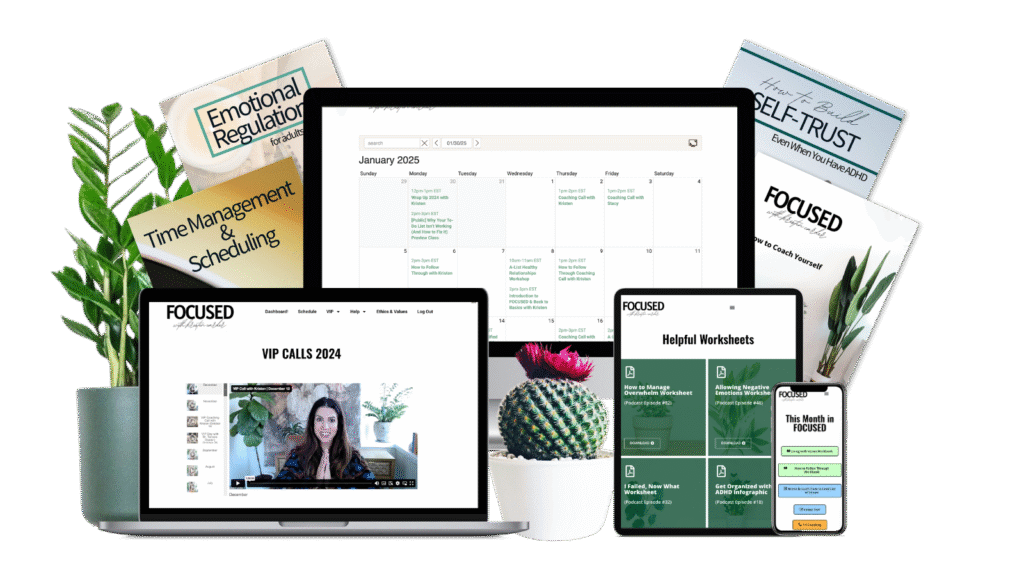
This episode is sponsored by CURE Hydration. All right, I’m going to be real with you. Drinking water is boring. My ADHD brain is like, wait, we have to do this again? Like every day, multiple times. What in the world? And because I’m running from meetings to coaching calls to kid chaos, staying hydrated is not something I’m naturally good at. It’s not something I naturally think about. That’s why I’ve been obsessed with Cure hydration packs lately. Cure is a plant based hydrating electrolyte mix with no added sugar, only 25 calories, and it actually tastes good. The watermelon and berry pomegranate have been on repeat for me. I’m actually like really running low on those flavors, which is so sad. They’re refreshing without being too sweet or artificial. It feels like my water finally has a little bit of personality, which I enjoy. I really do. What I love most is that CURE uses a science backed formula that hydrates as effectively as an IV drip. So when I’m scrambling through my day forgetting my water again, CURE helps me to catch up fast. I throw a few packs in my bag and it makes drinking enough water simple. Which for my ADHD brain is basically a miracle. So staying hydrated isn’t just about water. You also need electrolytes. And that’s why I love Cure. It’s clean, tastes great, and it actually works. And bonus, CURE is FSA HSA approved so you can use those funds to stay hydrated. The smart way for I have ADHD Podcast listeners, you can get 20% off your first order@curehydration.com I have ADHD with the code I have ADHD. And if you get a post purchase survey, make sure to tell them that you heard about Cure right here on the podcast. It really does help to support the show. Don’t just drink more water, upgrade it with Cure. The holidays are here and that means it’s the most wonderful time of the year. To Save with Rackadon. Use Rackadon to stack cash back at your favorite stores on top of holiday sales. That’s savings on savings. With Rackadden, you get cash back on gifts for everyone on your list. From toys for the kids to kitchen gear for the person who loves to cook, to electronics for everyone. You can even save on something for yourself. Just shop the stores you love and cash back is automatically added to your account and you you can get paid with gift cards, PayPal or check or eligible American Express card members can even choose to earn membership rewards points instead of cash back. It’s truly a no brainer. Join for free today and get a new member bonus after minimum qualifying purchases. Just go to rakuten.com, download the app or install the browser extension. That’s R A K U T E N. Terms and conditions apply. Welcome to the I have ADHD podcast where it’s all about education, encouragement and coaching for adults with adhd. I’m your host, Kristen Carter and I have adhd. Let’s chat about the frustrations, humor and challenges of adulting, relationships, working and achieving with this neurodevelopmental disorder disorder. I’ll help you understand your unique brain, unlock your potential and move from point A to point B. Hey, what’s up? This is Kristen Carter and you’re listening to The I have ADHD podcast episode number 159. I am medicated, I am caffeinated and I am ready to roll. Hello, hello, hello, hello. How are you? How are you? It is good to be here with you today. We’re talking about the top 10 tips for staying focused in your day. When you feel like you just cannot figure out how to get focused, here are 10 tips that you are really going to be able to apply like immediately. This is not some ethereal, like heady meta stuff. This is just all of these are very practical and you can apply them immediately. It’s going to be a very easy listening, fun, practical episode for you and I am ready to bring it. I’m so pumped. I just want to let you know that I am thinking about you. I am so glad that you are listening to this podcast. I’m so, so grateful. I’m just so grateful. It’s so fun to have listeners. It’s so fun to have a community. It’s so fun to think of you doing your dishes or out for a run or, you know, driving in your car listening to this. It’s just so great. I listen to podcasts all the time while I’m working around the house and it’s kind of like my guilty pleasure as I do the mundane, boring things throughout my day. And I like to think that you are the same way and that you use that this podcast in the same way that I use podcasts that I love. So thank you for being here, listening. So many of you have told me that this podcast is changing your life and that makes my heart sing. It makes my heart sing. But I do want to say that if you think that this podcast is life changing, which is just like 30 minutes to an hour once a week, you gotta check out my coaching program because that’s where the real magic is at. And if you are someone who is looking for a community, who’s looking for a guide to help you along your journey to learn how to accept yourself and reach your goals and even freaking set goals and understand like what you even want out of life, I would absolutely encourage you to join my ADHD coaching program, Focused. Focused is a place where you ADHD adults come together and they’re in community with one another relying on each other for validation and support. And there are so many courses in there for you to binge with workbooks and video classes. And then additionally we have at least 12 coaching calls every single month, which is wild. Like if you have a one on one coach, which is amazing and I totally co sign you having a one on one coach, that is usually going to be a once a week situation. And in Focused we have three to five calls every single week. It’s so much fun. And more than that, it’s really, really supportive. It’s really a place of true transformation. It’s really a place where people come together and they feel known. I actually wanted to read this for you because one of my clients, Briony, posted this recently in our community and I just thought it was such a beautiful description of what Focused is. So Briony says coaching has helped me understand myself better. And the coaching in Focused is different from other coaching that I’ve had in the past. I feel more seen and known here. I previously had an ADHD coach who told me to basically cancel all of my projects because I can’t do them and another one who spent nearly a whole call explaining that I should eat fish and leafy greens for lunch. These were not my people. I suspect they were not even ADHDers. Coaching and or advice from people who really get it is a whole different thing. And if that’s something you’re looking for, I have the perfect place for you. It’s my ADHD coaching membership Focus. You’ve got to check it out. Go to ihaveadhd.com/focused to learn all about it and I would love to welcome you in. Today you can hop right over into Slack where we have our community. Tag me in your introduction. I will give you a huge shout out. Would love to say hi to you. All right, we are going to talk about 10 tips for staying focused. How do you stay focused? As an ADHDer who has a wandering mind, who has the propensity to be very impulsive, how do you stay focused? Right. Are you Ready? I just want to get right into it because I want this to be the type of episode that you can just come back to over and over and over, especially when you’re feeling particularly scattered, particularly spinny, as I like to say. You can just come back to this episode and I’m going to walk you through a very practical, very easy, easy way to get yourself back on track. Okay? Tip number one, treat your adhd. However that looks for you. If you have adhd, then you deserve treatment and support. Now, everyone’s treatment protocol is going to look different, but none of us get away with not treating our ADHD and acting as if we are neurotypical. It’s not a thing. We don’t get to not treat it and just magically act as if we’re neurotypical. And so if you want to be able to pay attention, if you want to be able to curb your impulses, if you want to be able to manage your emotions and prioritize and plan and follow through and stop procrastinating, the number one thing you need to do is treat your adhd. That’s first and foremost. Okay, there you go. Number one. All right. Number two, Eat and drink. Meet your basic needs. So many of us struggle with this. If we just do, you know, Tip number one, treat your adhd. Tip number two, eat food and drink water. You will be well on your way to being able to focus today, which I didn’t mean for that to rhyme, but it does. And so you’re welcome. Eat and drink. Ask your body what it needs. Body, what do you need? Do you need food? Do you need water? Do you need a snack? Do we need to go to the restroom? Should we take a walk? Do I need to lay down for a minute? Like, what do you need? Treat your body with respect, honor it and meet your basic needs. Tip number three, to being focused. Feel good emotionally. Now, this is a tricky one because so many of us struggle, in addition to ADHD with depression and anxiety. And one of the components of ADHD is emotional dysregulation, which is a great difficulty in self regulating, self soothing and calming down our emotions. But if you’re going to be focused today, you’re going to have to figure out a way to shift into a better feeling. If you’re not already feeling great, maybe you’re already feeling great. Are you? I hope you are. But if you’re not already feeling great, then you need to figure out a way how to shift into a better emotional state. Now, when I ask my clients how do you want to feel? Most of the time they say things like motivated, inspired, excited, confident, and those are all beautiful, delicious emotions, but they’re not really easy to access, especially if we’re coming from, you know, frustrated, confused, or overwhelmed. That’s a really big shift to go from overwhelmed to inspired. Right. So if you think about a scale, if overwhelmed is like, let’s say negative 10 on the emotion scale and inspired is positive 10, like, let’s just get to zero. Zero is just kind of a relaxed, calm, grounded state. How can we get to a more balanced state? So motivated, inspired, confident, excited. While those are delicious, tasty emotions, they’re not usually super easy for us to access. Especially. Especially if we’re looking at a to do list that’s like a mile long. Real hard to be inspired. It’s like really, really hard. Maybe you can get inspired for five minutes, but it’s gonna dissipate pretty fast. Okay, so here are some other emotions that I suggest you try on. How about accepting? I accept what I have to do today. I accept that this is the path. Let’s go. Or how about willing? I see this list and I’m willing to tackle it. Or determined. I know this is probably going to be hard, but I’m going to get it done no matter what or certain. I know exactly what I need to do and I am on it. Let’s go. Right. So notice that even though we tell ourselves, like, well, I’m just not motivated or I just really want to be inspired and I’m not, those emotions are really high on the positive emotion scale, if there is such a thing. And they’re not very readily accessible. Very readily accessible. Really? Kristin Carter? Yeah, Sorry. Sometimes I say dumb things. Okay, let’s bring it back. So they’re not easily accessible, at least not in my body. Maybe they’re easily accessible to you, but they’re certainly not easily accessible to me. So. So try on things like acceptance or willingness or determination or certainty. So here are a couple things that help me to shift my emotional state. I do a thought download and get out all of the reasons why I hate all the people. And I hate all of the things that I have to do. And I hate all of the things in life. Okay. Getting all of that frustration out can be very, very helpful. Going for a walk or a hike or a bike ride or a run dance. Move your body, pump up the music. I almost said pump up the jams. We’re just going for it today. Totally fine. We’re just gonna go for it. Okay. So sometimes we need to feel the yucky feelings and, like, really process them so that we can wade through them and eventually get to the better feeling Emotions like acceptance, willingness, determination, certainty, self trust. Now, on some days, this is just not possible. And I want to acknowledge that and validate that. Like, sometimes, especially if you are prone to depression, shifting your body into a better feeling emotion is not going to be possible. And that’s okay. But most days, for most people, if we spend some time and effort really paying attention to how we’re feeling and really intentionally shifting, most of the time, that’s possible. Okay, so now we’re feeling a little bit better. Step number four is define your win. All right? And this is where we prioritize. Now, prioritizing and planning is really hard for those of us with adhd, but that’s okay. I want you to think about. Okay, in the next hour, what is my win? Or maybe you’re thinking about your whole day. What is my win for the day? Now, the way that I define a win is what’s the one thing I would really regret not getting done today? What’s the one thing that I would really beat myself up about tonight if I don’t get it done? And that’s the big thing that we want to make sure we prioritize as our win. Okay? It’s the one thing that if you left it undone, you’d be super sad about it. And I really encourage you to start with one thing, and then once you bang out that one thing, you can move on to the next thing. But what so many of us do is make a long list of 7,000 wins. Like, I need to do this and this and this and this and this. And then our brain is just like, I don’t even know where to start. If this is all important, I don’t know where to start. So define one win. So maybe it’s in the next hour, what’s the one thing I want to accomplish? Or at the end of the day, what’s the one thing I want to make sure I have done? Okay, that leads us into tip number five, which is define your why. Now, this is super, super important for the ADHD brain. Why do you want to get this thing done? So you have your when. You’ve defined what your when is now you need to define your why. Why do you want to make progress on your book or spend time organizing your closet or what, work on that report for a client? Why? What’s the reason behind it? If we don’t have a good reason, then our brains will resist it. Our brains will be like, nope, this is stupid. I don’t want to do it. Okay, now, if your first thought is, well, my why is because my boss is a complete jerk and he’s totally making me do this and I hate him so much, your brain’s going to rebel against that, right? Your brain’s going to be like, well, I hate him and I don’t want to do it. So I encourage you to find a reason that’s really true for you and feels better. For example, if your boss might be a jerk, but I want to serve this client well, even though I can’t stand my boss or I want to advance my career, and this is the only pathway to doing that today. And so I’m going to get this done, or I’m a person of integrity and I want to do what I say say I’m going to do. Do you see how, like, that doesn’t invalidate the fact that, like, it’s not really a task you want to do, but at least you’ve defined a why that feels really, really good. Okay, we’re halfway through, so I’m going to go back and review the first five. Tip number one, treat your adhd, however that looks for you. Tip number two, eat and drink and meet your basic needs. Tip number three, feel good ish, even if it’s just good ish, shift into a better feeling emotion. Tip number four, define your win. Tip number five, define your why. Okay, you with me? Now, all of that can be done in, like, six minutes. You don’t need a whole lot of time for all of that. It has taken me a long time to explain it, but you don’t need a lot of time to do it. Okay, Tip number six, you have your when you have your why. Now, I want you to make a doable schedule. Do not overload it. A good rule of thumb when you’re making a schedule is to try to estimate how long a task will take you and then double that time. So if you think, okay, writing this report is going to take me about an hour, give yourself two hours, because this is really important. Listen, we always overestimate what we can do in the short term, and we underestimate what we can do in the long term. Right? We overestimate what we can do in the short term. And we think, oh, I can get this done in an hour. That’s no problem. And then, you know, 30 minutes goes by and we’re like, I am nowhere near halfway done. So. Because we Know that humans consistently overestimate what they can do in the short term, which is actually a research based fact. If you read John Acuff’s book Finnish, he talks a lot about the research he did with this. If we know that, then your job is to actually increase the time that you estimate something’s going to take you. Okay, Just do yourself a huge favor, don’t should on yourself with this. Oh, it should, should only take me this long or it only takes my co worker that long, so it should take me the same. No, be realistic and then go above and beyond and just double what you assume it’s going to take you. Okay? So you’re going to make a doable schedule or plan. And doable means you’re going to give yourself plenty of time to get things done. And then tip number seven is you’re going to set time parameters. Meaning have you had a day where you’re just like, you have the whole day. And because you have the whole day, you don’t get anything done because there’s really no parameters on your time. One way to hack that is to set very clear time parameters. I’m gonna work on this project for two hours. I’m gonna work on this project for one hour. I’m gonna work on this project for four hours, whatever that means for you. Look at your when. Okay, here’s really what I wanna get accomplished today. Make sure, make a plan, estimate the time, and then set the time parameters. One of the things that’s really important is for you to make time visible. So that might look like countdown timers, it might look like schedule blocking. It might look like setting a timer on your iPhone or whatever the case may be. Okay? Set timers. Make sure that you understand the parameters of time. Because the ADHD brain does not process time the way a neurotypical brain does. All right? We have what Dr. Russell Barclay affectionately refers to as time blindness. Like, we just don’t understand it. It’s not really a thing. We don’t get it. Okay? And so we have to externalize time for ourselves so that we don’t just spend four hours researching why rabbit’s tails are an inch and a half long and not five inches. I just made that up. Okay, this is really, really important. Tip number eight, believe that this is what you should be doing. Okay, that sounds really strange, but repeat after me. This is what I should be doing, because this is what I planned to do. One of the sneakiest ways that our ADHD brain gets us off track is that it tells Us. I shouldn’t be doing this. I should be doing that, right? And after working with over a thousand ADHD clients, I know. No, no, no, no, no. This to be so true. I want you to begin to expect your brain to offer this thought to you, okay? And the thought is so sneaky. It’s like, oh, shoot, I probably shouldn’t be doing this right now. I should be doing that other thing. It’s your brain’s way of sneakily trying to. To get you not to do work. Because your brain’s job is to keep you safe and to make it so that you don’t exert too much energy, right? So it’s going to offer this thought up to you all the time, especially if it’s already a habit thought for you. It’s going to be like, on repeat. And I’m guessing if you’re like me, this thought produces confusion and overwhelm in your body, right? So confusion comes. You’re like, oh, shoot. You start to spin out and you’re like, maybe I should do this, maybe I should do that. And every time you hop into a task and start working, your brain tricks you into thinking you’re not actually doing the right thing, okay? And you start to spin and feel overwhelmed, and then the day is over and you feel like a failure because you didn’t accomplish this thing or that thing. Nothing got done, right? And so the way around this is, is to be intentional with defining your when and defining your why and then reminding yourself over and over, this is what I should be doing, because this is what I plan to do. Even when your brain offers up that thought that’s like, oh, why are you doing this? You should be doing that thing over there even when your brain offers that up. Nope, I can do that later. This is what I should be doing right now, because this is what I plan to do. Don’t forget that you did use your very brilliant executive brain to make this plan. And so you need to honor that by following through on the plan. This builds so much self trust. I know what I should be doing. I have already decided. I have used my executive brain to make this decision, and I’m following through on it. Okay? And let’s just say even if I find out that this is the wrong thing to be doing, I’m still really proud of myself for making a plan, defining my when, defining my why, and doing the thing that I said I was going to do. All right? So there can still be a measure of pride with that. The way that you originally intended all right, tip number nine, have fun. 8. Each year you lack dopamine. That means that creating fake dopamine for yourself is going to be really, really, really helpful. So how can you make this more fun? Ask yourself, how can I make this more fun? Should I put on some music? Should I do it while standing instead of sitting? Should I? What is it? What could make this more fun? Can I ask a friend to help me? Can I bring in a co worker to kind of be a body double for me? How can I make this more fun? Now, sometimes stuff is just stuff. But, like, if you ask yourself, how can I make dishes more fun? There’s a million ways to make doing dishes more fun. You can put on music, you can watch a movie, you can listen to a podcast. You can do the dishes naked. You could make it more fun in a million different ways. Okay? And if you begin to apply that to everything you’re doing, how can I make mowing the lawn more fun? How can I make this work project more fun? I don’t recommend doing work projects naked, by the way. How can I make this task more fun? There’s not always an easy answer, but sometimes there is. And when there is, take advantage of it. All right, how to stay focused. Tip number 10. Celebrate. Even if it’s only partially complete, celebrate. Allow yourself to see the good. Even if you only got through steps one through five, right? Even if you only treated your adhd, ate and drank, shifted your emotion, felt better, defined your win, defined your why, and then you got off track, you. You still completed five out of ten steps. Very, very good. Maybe tomorrow you’ll complete six. Maybe the next day you can complete seven. All right? You get to feel good about what you do. You don’t have to do a task or a project or your chores or whatever perfectly in order to be entitled to feel good. You just get to feel good. I really want you to hear me on this. You just get to feel good. Nobody can stop you from feeling good, right? Like, I don’t know if you believe me. I wish we were having a face to face conversation. You get to be in charge of your own thoughts and your own emotions. And if you want to feel good about partial completion, you get to. If you want to feel good about getting, getting two thirds of your work done and having only one third to complete for tomorrow, you get to feel really, really good about that. You get to feel proud. You get to honor the work that you put in. You get to honor the effort that you made. You get to celebrate well, Done. Oh, my gosh. Like, I’m honoring the fact that I’m recording this podcast. Even though it’s late, getting to my editor, even though I’m going home later than I originally planned to my family, I’m still getting the thing done. It’s not in a timely fashion. I did waste time today because I was totally triggered and stress eating and, like, staring at the wall for quite some time and on social media for quite some time because I’m just, like, not in a great place emotionally, and I was really having trouble shifting. But look at me getting this podcast done. I still get to feel good about it. I’m not going to minimize this accomplishment. I still get to feel good, and nobody is going to convince me otherwise. All right, let’s do a really, really quick review. Top 10 tips to staying focused today. Number one, treat your ADHD, however that looks for you. Number two, eat and drink and meet your basic needs. Honor your body. Tip number three, feel good. Prioritize feeling decent. Emotionally, I suggest trying to shift into emotions like accepting, willing, determined. Certain. Number four, define your win. Whether you’re looking at an hour or a whole day. What’s a win? Or two that you want to prioritize and then define your why. What’s the why behind your win? Then tip number six, make a doable schedule and make sure that you are overestimating how much you can get done in the short term. Then you want to set time parameters. You want to make time visible. Set alarms, set timers, and when the timers beep, stop. For the love of everything, stop. Okay, Tip number eight, Practice the belief that this is what I should be doing, because this is what I planned to do. This one is crucial, crucial, crucial. You can take this to the bank and cash it in today because I know it will change your life. This is what I should be doing, because this is what I plan to do. Tip number nine, have fun. Ask yourself, how can I make this more fun? One of the ways that I make recording this podcast more fun is I chit chat with my editor, who I’ve never met in real life, but I just totally chit chat with her, and I’m just, like, saying silly, ridiculous things that I know she’s going to have to cut out, but that’s one of the ways that I make this podcast more fun. Every task that you face, ask yourself, how can I make this more Fun? Tip number 10, celebrate what you got done. Even if it was only partially complete. You get to feel good about your accomplishments. I hope this was so helpful to you. Have an amazing, amazing day. I’m going to see you next time. Bye Bye. If you’re being treated for your adhd, but you still don’t feel like you’re reaching your potential, you’ve got to join Focused. It’s my monthly coaching membership where I teach you how to tame your wild thoughts and create the life that you’ve always wanted. No matter what season of life you’re in or where you are in the world, Focused is for you. All materials and call recordings are stored in the site for you to access at your convenience. Go to ihaveadhd.com focused for all the info.