

Podcast Episode #161: The Most Underrated ADHD Skill Ever (Constraint)

Listen or Watch this episode on:

About This Episode

I promise you, constraint is SEXY…let me convince you in this 30 min episode!! Stop cheating on your dreams with one-night-stand ideas, join me as I persuade you to become an essentialist: someone who knows exactly what’s important and is willing to go after it!

Visit [www.ihaveadhd.com/focused](https://ihaveadhd.com/focused) for more resources

Hang out with me on Instagram @i.have.adhd.podcast

See Privacy Policy at [https://art19.com/privacy](https://art19.com/privacy) and California Privacy Notice at [https://art19.com/privacy#do-not-sell-my-info](https://art19.com/privacy#do-not-sell-my-info).
Episode Transcript

This episode is sponsored by Cure Hydration. All right, I’m going to be real with you. Drinking water is boring. My ADHD brain is like, wait, we have to do this again? Like every day, multiple times. What in the world? And because I’m running from meetings to coaching calls to kid chaos, staying hydrated is not something I’m naturally good at. It’s not something I naturally think about. That’s why I’ve been obsessed with Cure hydration packs lately. Cure is a plant based hydrating electrolyte mix with no added sugar, only 25 calories, and it actually tastes good. The watermelon and berry pomegranate have been on repeat for me. I’m actually like really running low on those flavors, which is so sad. They’re refreshing without being too sweet or artificial. It feels like my water finally has a little bit of personality, which I enjoy. I really do. What I love most is that CURE uses a science backed formula that hydrates as effectively as an IV drip. So when I’m scrambling through my day forgetting my water again, CURE helps me to catch up fast. I throw a few packs in my bag and it makes drinking enough water simple. Which for my ADHD brain is basically a miracle. So staying hydrated isn’t just about water. You also need electrolytes. And that’s why I love Cure. It’s clean, tastes great, and it actually works. And bonus, CURE is FSA HSA approved so you can use those funds to stay hydrated. The smart way for I have ADHD Podcast listeners. You can get 20% off your first order@curehydration.com ihaveadhd with the code ihaveadhd and if you get a post purchase survey, make sure to tell them that you heard about Cure right here on the podcast. It really does help to support the show. Don’t just drink more water up. Upgrade it with Cure. Shopify’s point of sale system helps you sell at every stage of your business. Need a fast and secure way to take payments in person? We’ve got you covered. How about card readers you can rely on anywhere you sell. Thanks. Have a good one. Yep, that too. Want one place to manage all your online and in person sales? That’s kind of our thing wherever you sell. Businesses that grow grow with Shopify. Sign up for your $1 a month trial@shopify.com listen shopify.com listen. Welcome to the I have ADHD podcast where it’s all about education, encouragement and coaching for adults with adhd. I’m your host Kristen Carter and I have adhd. Let’s chat about the frustrations, humor and challenges of adulting, relationships, working and achieving with this neurodevelopmental disorder. Disorder. I’ll help you understand your unique brain, unlock your potential, and move from point A to point B. Hey, what’s up? This is Kristen Carter and you’re listening to the I have ADHD podcast. I am medicated, I am caffeinated, and I am ready to roll. Hello, how are you? Welcome, my love. Welcome to the podcast. This is going to be a really fun day together. It’s going to be super, super fun, I promise. We’re talking about the super sexy topic of constraint, which admittedly isn’t sexy at all. I’m so sorry, but I’ve got to keep your interest. And so I’m going to pretend that constraint is the sexiest thing ever so that you will be willing to to listen to me talk about it for 30 minutes. Okay? Because I truly believe that this concept is so important. It is one of the most useful skills that an ADHDER can develop. I hope and pray that you are willing to hang with me on this topic today, even though a lot of us want to run away from the concept of constraint because we think it’s just terrible. But please, just give me a couple minutes to make my case and hopefully I can bring you over to the dark side, which is my side, which is the side that believes that constraint is actually the most freeing, freeing, freeing thing ever. Oh my gosh. Okay. I personally can’t wait to talk about it. So are you on board? I hope so. Okay, as we get started here, I want to take a minute to tell you that there’s a big difference between hearing an amazing topic or concept and actually applying it to your life. There’s a big difference between inspiration and application. And I want you to understand that this podcast, this once weekly 30 to 60 minute podcast, it’s inspiration and my ADHD coaching program. Focused is the application part. Focused is where functional ish adults with ADHD get support and teaching and coaching on ADHD related topics and concepts like emotional regulation, prioritizing, productivity, procrastination, time management, and all of the things. And it’s way more impactful than just a simple podcast. It’s an all inclusive membership where we apply this work, these concepts that we dabble in on the podcast. We apply this work and make huge changes. Recently, my client Alexandra told me, she said, and this is a direct quote, I was really nervous about purchasing this membership because I thought it Was going to be just another one of my big ideas that costs money and doesn’t pan out. But focused is so worth it. This program is 100% legit and amazing. Ah, I love it. I love it. It’s so fun to hear it. I want to invite you, my dear listener, whether you’re doing the dishes or you’re out for a run or you’re in your car or you’re sitting on your couch, I want to invite you to come join Alexandra and me in focused today and find out for yourself how truly legit it is. Go to ihaveadhd.com focused to learn more and in focus. We talk about constraint all the dang time, so let’s get rolling with it today. This is the inspiration part. You can come join Focused for the application part. All right. Constraint. Super sexy. Gonna be super fun. Here we go. Constraint is defined as a limit or a restriction. Womp, womp, like, everybody’s like, okay, I’m tuning out. I’m going to go somewhere else. But listen, come on back. Come on back. Constraint is defined as a limit or restriction. And the type of constraint that we’re going to be talking about today is a self imposed constraint. It’s a self imposed limit. It’s a self imposed restriction. Okay? It’s a way of self saying and identifying. This is what’s important to me. I’m going to narrow it down. I’m going to zoom in. I’m going to zero in on the thing that is most important to me. Now, this is hard for Most of us ADHDers for a couple reasons. The biggest reason is that we really struggle to prioritize. That’s just a fact of having adhd. When you have adhd, your executive functions are deficient. And prioritization is one of the outworkings of executive function. Okay? So prioritization and planning, it’s real hard. And so when we can’t prioritize, it seems like everything is important. It seems like everything has the same level of importance. Now here’s the thing. It’s going to feel that way in your body, like, oh, everything’s important. I have to do everything. What I want you to do is begin to play with the concept of maybe not everything’s important. If you can logically think through, okay, maybe not everything is at the same importance level. If you can logically know that, then even though you’re feeling in your body, oh, my gosh, I have to do it all. I can’t choose. I can’t decide between all of this, even though you’re feeling that in your body, sometimes we can override that with our logical brain. And so that’s what I’m going to invite you to do now. Another reason why constraint can be really difficult for us is we’re really good at unconstrained thinking. Many of us ADHDers are super creative, outside the box thinkers. And in the right context, unconstrained thinking can be so amazing. There are many benefits of unconstrained thinking. Like, we tend to be really creative and inventive. We don’t see limits that other people see. So we just don’t see like the boundary lines that other people see. And that can be really, really great. In certain contexts, we are often more willing to take risks. We’re often really focused fast and we get things done quickly. Or we can think through problems quickly and we find solutions that other people don’t see. Okay, so those are some huge benefits of unconstrained thinking and adhd. You know, it’s not like a hard and fast rule, but many times ADHDers can be really, really good at unconstrained thinking. So the two reasons why constraint can be really hard is because we struggle to prioritize, which is because of our deficient executive functioning. And then also one of our strengths is unconstrained thinking. And so limiting that strength can feel really counterintuitive. I want to share a third thing. This isn’t in my notes, but I just remembered I follow this dude. I think his Instagram handle is therapy Jeff and. And he shared a video. Oh my gosh, how old do I sound? He shared a reel the other day that talked about how people who grew up with trauma really don’t like to limit their options because it actually doesn’t feel safe to have fewer options. And so I want to offer that as a potential third reason why constraint can be really hard for us. Adhd. Many of us grew up with trauma, whether like acute big trauma or like complex trauma, which is like the small, more like covert trauma that happens over time. And so people who have experienced trauma can often really struggle to limit their options because it feels unsafe to have fewer options. Okay, So I just want to say that might be a factor too, and that might be something that you might want to explore with a trauma informed therapist. Okay, like I said, there are some benefits to unconstrained thinking can be really inventive and creative. We don’t set limits for ourselves that other people set. We’re willing to take risks. We’re Often really fast thinkers, and we find. Find solutions to problems that other people don’t see. It’s great. We’re really outside the box sometimes, and it’s so amazing. But I want you to know there’s also a downside. And just like with most of our gifts, they can be curses too. If you’re married, you know that some of the things that really, really attracted you to your partner years ago are what, like, might drive you crazy now. And that’s kind of like the double side of the gift of, like, unconstrained thinking. It’s got a downside too. Okay, so in the wrong context, unconstrained thinking can be really detrimental. There’s often so many options. We are such outside the box thinkers that we create so many options for ourselves that it’s hard to choose one. It’s kind of like walking into. What’s coming to my mind is yogo crazy. I don’t know if you have a yogo crazy by you, but essentially it’s a frozen yogurt shop, and there’s like, there are so many toppings to choose from. And when I go in there, I shut down and I get like, vanilla frozen yogurt. Like, no toppings. Because there’s just so many options that it feels impossible to choose one. I’m also the worst at buffets. I don’t know the last time you’ve been to a buffet. I don’t even know if that’s still a thing post Covid. But going to a buffet and trying to choose from all of the options on display, it is so taxing for my brain. I usually come back with, like, one meatball, one piece of shrimp. I don’t even like shrimp. And like spaghetti. Like, it’s really terrible. Another pitfall of unconstrained thinking is that when we often bounce around from option to option to option and we never actually get anything done. So this falls right in line with prioritizing. If we have 10 things on our list today, but we don’t know which one is the priority, and we say, like, these are all important and I have to get them all done, we will likely jump around from option to option and never fully accomplish a task. Raise your hand if you struggle with this. If you just bounce and bounce and bounce and bounce and you’re kind of like in the spin cycle of the washing machine, and you’re just not really getting any task done. That is because you’re struggling to constrain. This is why constraint is so important. Okay. Another pitfall of Unconstrained thinking is very similar to the last one I shared. But it’s like you’re busy and you feel very full with your time and you’re just kind of like doing all of the things, but you’re not truly executing, you’re not truly finishing, you’re not really able to cross things off of your list. You’re just keeping yourself very, very busy. So here’s what’s important for you to know. When constraint not present, confusion and overwhelm are present. I don’t know how to make this part fun and sexy, guys, because this is just the truth. When we’re not constrained, we’re going to be confused and overwhelmed. And if you experience confusion and overwhelm on a regular basis, I promise you that constraint is a skill that you need to develop. If you’re feeling confused, the question you can ask yourself is how can I constrain? If you are feeling overwhelmed, the question to ask yourself is how can I constrain? How can I cut things off of my list? Where can I say no? Where can I set limits or restrictions for myself? So I’m only thinking about one thing instead of thinking about 15 things. Constraint is very grounding. This is really important. Someone who is constrained, someone who puts in limits for herself or himself, is very grounded. They know what they want and they’re moving forward with that. Now we do need to acknowledge loss. There is for sure loss when it comes to constraint because constraining means that we are making trade offs. Constraining means that we are saying no. Constraining means that maybe we’re going against some sort of social norm or social expectation. And that can be really difficult. Okay, So I want to acknowledge that. And if when you think about constraint, all you can think about is the loss that it will create for you, I totally understand it. That’s okay. That’s totally fine. And I want to honor that. Like there is loss involved with constraint, with saying no, with setting limits, with having boundaries, with deciding what’s most important to you and going after it. There’s loss there. But here’s the thing. The illusion that we can do it all doesn’t serve us because it’s actually not true. The illusion that we don’t have to prioritize that illusion doesn’t serve us. It’s not based in reality. The illusion that I can say yes to everyone and not put someone else at risk, even if it’s just, and there’s air quotes here happening, even if it’s just putting me at risk. That illusion doesn’t serve us. Every time we say yes to something, we’re saying no, that’s something else. So for example, if I say yes, I will volunteer for that class party. I’m saying no to having two hours of my own time on a Tuesday. If I say yes, I will bake cookies for your bake sale. I’m saying no to spending time with my kids after school. If I say yes to I will, you know, drive my kid three hours away to a soccer game. I’m saying no to my own free time on a Saturday. We are constantly making trade offs and we accept trade offs as a normal part of life. But I want you to be aware of them. There are some trade offs that are simply not worth it. And saying no is definitely difficult. I have a whole episode on it. Saying no is hard, but knowing what you are willing to do and not willing to do is going to change your life. And listen, constraint is actually everywhere. Like we accept so many areas of our lives in which we constrain and think about that. Like there are so many constraints that either are placed on us or that we place in ourselves that we don’t feel fight against. Like if you pursued higher education and you chose a college major, like everyone who goes to college understands that you’re going to have to pick something. You’re going to have to choose what your area of study is. And if you choose, you know, a certain major, but you spend your time taking classes for another major, you’re not going to graduate, right? And so we have those limits, that constraint on us. Even though it’s not really fun fun to choose. And you’re like, I want to do it all. We all know that we can’t do it all. When you have chosen a job or a career, like you might even have two or three jobs, but you’re still constrained. You don’t have limitless options. You’re constrained by your skills and by your time. But you can’t work everywhere, right? You have to choose one thing to focus on or if you have multiple jobs, several things to focus on. Okay, this is a really silly example, but like for you pet lovers out there, I want you to think about the constraint that you have when it comes to pets. We all have different limits here in this regard. For me, I have a no pet policy. Please don’t hate me, but that’s where I’m at. And I’m super constrained in this area. I cannot keep anything else alive. I have three kids. That’s all I can do. Right now, okay, but maybe you’ve got like six cats and five dogs, but like, why don’t you have a hundred? Right? It’s because you’ve placed a limit on yourself that says, this is what I can handle, this is what I want to focus on. Even if you’re obsessed with animals, you’re practicing constraint. You know your limits. When you purchased a car, you were constrained by like the money that you have and the type of car that you want, right? Or what’s available at the time when you bought. This is such a dumb example. When you bought a quilt for your bed or a rug for your living room, like, nobody goes out and buys 10 living room rugs. You put a constraint on yourself and you’re like, okay, there’s so many options that I like, I’m going to buy one rug, right? Okay. The very best example I can think of is if you’re in a marriage or committed partnership, like in my opinion, there’s absolutely nothing sexier than a partner who is totally committed to their person. Why don’t you think about that? I really want you to think about that. There is nothing sexier than a partner who is fully committed to their person. And there’s nothing skeevier, sorry, no offense, more off putting than a partner who’s like super uncommitted, cheating all the time. Like that’s not endearing, right? And that’s a constraint for many of us who choose to be in monogamous relationships. We are putting constraints on ourselves. Yes, yes. It’s a natural, normal, healthy part of life that our culture fights against. Listen. Because it’s profitable for them to do so. We hear so many messages that being unconstrained is the way to go. Because listen. It’s profitable for Nike to tell you, just do it. It’s profitable for Toyota to tell you, let’s go places, not to one place places. It’s profitable for Wrigley’s to tell you, double your pleasure, double your fun, and for Burger King to tell you, have it your way, you can have everything you want. Right? We live in a culture that glorifies an unconstrained lifestyle. And what I believe is that this really preys on the ADHD brain because we receive messages all day, every day that basically tell us, just do what you want, you can have it all. You don’t have to choose. There won’t be any consequences for not choosing. And that is simply not based in reality. There are are so many consequences when we don’t constrain most of all it’s confusion and overwhelm. Most of all, the consequences that happen when we don’t constrain is that we’re confused, we’re overwhelmed, and we don’t have the ability to fully execute a task. So we’re just like that spin cycle and we run around and around and around without fully executing. If you’re an entrepreneur and you don’t constrain in your business, what happens is your customers get really confused. They’re not really sure what you’re offering, and they don’t have the time to really commit to your one amazing offer because you’re offering all sorts of things to them and they’re just like, I’m not really sure what’s going on here. If you don’t constrain in your relationships and you’ve committed to monogamous relationships, then you’re gonna have partners who are pretty mad at you. If you don’t constrain in your eating, you get a stomach ache. When you don’t constrain with your spending, go into debt. Right. So many of us want to rebel against constraint, and that makes sense. We tend to be oppositional, we don’t like rules. We, we tend to have so much leftover childhood stuff that often makes constraining feel like we’re being suffocated. I get that. So if you’re like really struggling with this concept, I get it. You might want to just like think about it, come back to it, process it a little bit. Like, I totally get it. If you can remember this, it’s gonna change everything for you. Constraint is not the opposite of creativity. Constraint is not the opposite of freedom. Constraint is not from anyone else, but from you. You are in charge of constraint. You get to choose, you get to be the boss. It is actually giving you so much power because it is you deciding on what is most important to you. It is you deciding on where your brain power goes. It is you deciding what you’re going to say yes to and what you’re going to say no to. Constraint is actually the most freeing skill that you can learn. When you learn to constrain, you learn to move forward with your specific goals in mind and you’re not distracted by all of the other stuff calling for your attention. Now, the most powerful and most creative people that I know set up a lot of limits and constraints for themselves. Now here’s what I want you to really understand. The freedom and creativity that comes with constraint comes this way. I’m setting a limit, and then within that limit, I’M going to let my brain be unconstrained. So, for example, I, Kristen Carter, have constrained to one husband. There are billions of men in the world and I’m constraining myself to one husband. Now, within that relationship, I let my brain be unconstrained. I let my brain be creative. I let my brain have zero limits. So we’re always evolving our relationship. We’re always expanding and growing and it is so much fun. But I don’t allow myself to have multiple options of husbands. I have just one. And then within that constraint, I let myself get really creative and have a great time. Same thing with my three kids. I’ve constrained two. Three kids. Could I have had 12 kids? Yeah, I could have, but I limited myself to three. That was a self imposed constraint. And now with my three kids, I let my brain be unconstrained. So I set a limit and then I get creative. How can we have more fun together? How can I develop these relationships? What do they need from me? How can I really serve them? I let my brain be unconstrained within the limit of three kids. I’ve constrained within my business so much, and this is actually probably the hardest part for me. I have so many ideas and I want to sell all the things. I want to be all the things, but I am practicing so much constraint with being in my company. I’ve constrained to being a podcaster and a coach. That’s it. You know, when I interviewed Sari Soldan a couple months ago, which was such an honor, she said to me several times, you should really be a therapist. You should really consider being a therapist. And it was such a compliment. I was like, wow, thank you. But I had to put a limit on myself. No, I’m a coach, I’m a podcaster and I’m a coach. I could go get trained as a therapist, but that would change everything. And I’m not allowing myself to even explore that. I’m setting a limit for myself. I am absolutely loving being a coach, running a thriving coaching practice. So even though being a therapist is an option, I’m eliminating that option. I’m setting a limit. I’m setting a constraint in place. And I’m like, no, I’m a coach. And I have so many ideas for other podcasts, so many ideas. I would love to start other podcasts. But for now, I’m constrained to one podcast. It’s the I have ADHD podcast. I don’t know if you’ve heard of it, but within this one podcast, I let my brain Go crazy. I allow myself to have all the ideas I’m exploring all the different creative ways to grow it and to expand it. But I’ve constrained down to just one. I hope I’m making my point here. Are you getting it? Okay, so here’s the last example. I have so many ideas of things that I would love to sell within the coaching business, right? So I have a ADHD coaching program and I want to sell all kinds of things. But for the last two years, especially if you’re a longtime listener, if you’ve binged a lot of episodes, all you’ve heard me talk about is focused, my group coaching program focused. That’s it. I have constrained down my messaging to one single offer now. Spoiler alert. That’s going to be changing soon. That’s a little teaser. I’m very excited, but it is only because I have spoiled spent two and a half years constrained to one offer. If you’re an entrepreneur, I want you to think about that. How many offers are you selling right now? Now within that one offer, I am going wild. My brain gets to just explore and be creative and figure out how do we make it amazing, how do we sell it in a creative way, how do we improve it for our members, how do we deliver the most value in a really succinct, succinct way? Like I allow my brain to be really, really creative. But it’s within that constraint. Powerful and creative people set up limits and constraints for themselves so that they are not confused, they are not overwhelmed and they know exactly what their priorities are. The most successful people know exactly what they want to give their time and energy to. They know exactly what they want to give their attention to and they’re willing to decide on purpose what to prioritize and what to let go of. It’s important to understand that there are always trade offs. It’s important to honor the loss that comes with choosing. But if we can set those limits for ourselves, that’s where when the growth and the expansion and the creativity can really happen. I want to recommend an awesome book to you. It’s called Essentialism. I know I’ve mentioned it before. I’m reading it for the third time because it’s just that good. And I’m actually going to read to you from page 23. So this is by Greg McKeown I think is how you say his name. And this is Essentialism, page 23. Many of us say yes to things because we’re eager to please and make a difference. Yet the key to Making our highest contribution may well be saying no. As Peter Jecker said, people are effective because they say no. Because they say this isn’t for me to eliminate non essentials, it means saying no to someone. Often it means pushing against social expectations. To do it well takes courage and compassion. So eliminating the non essentials isn’t just about mental discipline. It’s about the emotional discipline necessary to say no to social pressure. Listen, listen, listen. That was so good. There is so much social pressure to say yes. There is so much societal pressure to not limit yourself. But knowing what your priorities are is what makes you so powerful. Allowing yourself to put constraints in place is what allows you to truly be creative. Focusing on what is essential in your life and eliminating everything else that is non essential is what is going to get you from point point A, whatever your point A is, to point B, whatever that point B is, faster and with more success. I hope this was really helpful. I hope I’ve convinced you to consider the concept of constraint and I can’t wait to talk to you next week. Goodbye, my dear. A few years ago I went looking for help. I wanted to find someone to teach me how to feel better about myself and to help me improve my organization, productivity, time management, emotional regulation, you know, all the things that we adults with ADHD struggle with. I couldn’t find anything, so I researched and I studied and I hired coaches and I figured it out. Then I created Focused for your. Focused is my monthly coaching membership where I teach educated professional adults how to accept their ADHD brain and hijack their ability to get stuff done. Hundreds of people from all over the world are already benefiting from this program and I’m confident that you will too. Go to ihaveadhd.com focus for all the details.

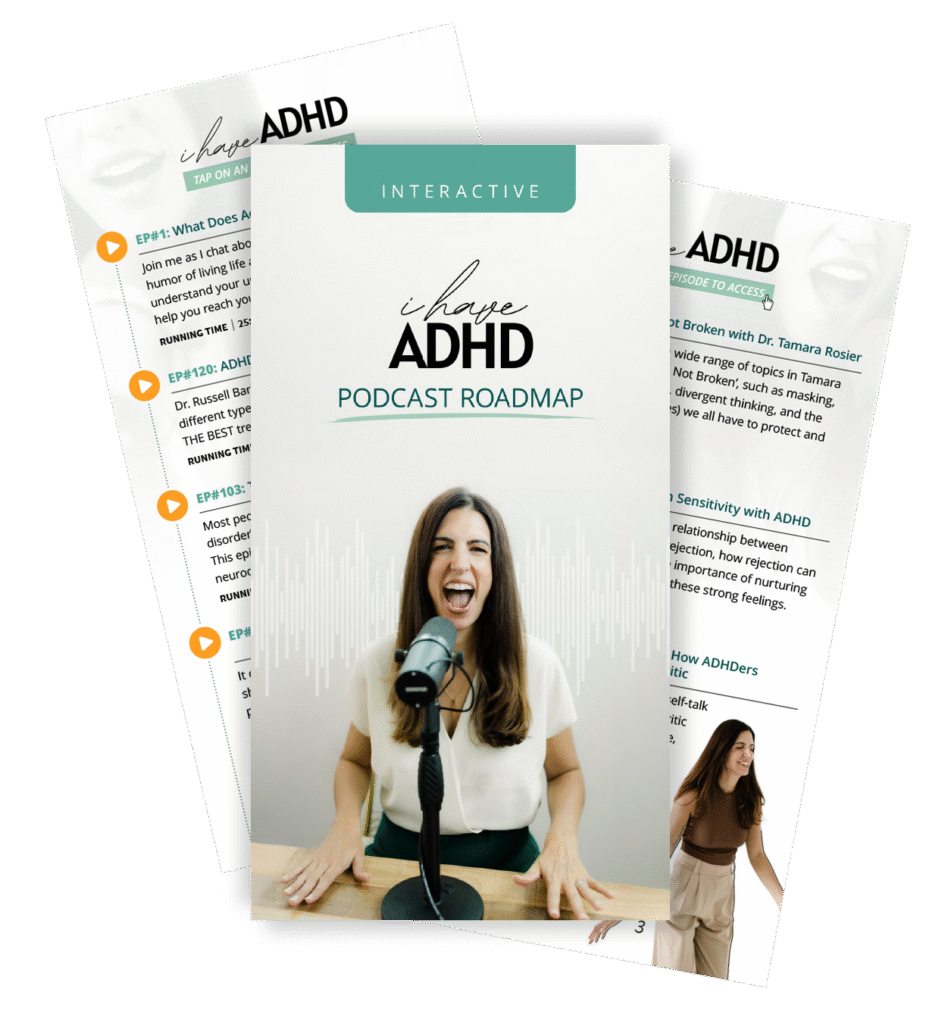
Get The Best of the podcast now with our Podcast Roadmap.

This is a clear and easy podcast roadmap so that you can know for SURE that you’re hearing the very best of the I Have ADHD podcast.

Related Episodes

Kristen Carder

Episode #390: Two Steps Forward, Three Steps Back (Why You Keep Self-Sabotaging and How to Finally Stop)

Kristen Carder

Episode #388: Money. Let’s Finally Deal With It.

Kristen Carder

Episode #386: A Very ADHD Episode: Deep Feelings and Random Reels

Stop Struggling Alone.
Start Thriving With FOCUSED.

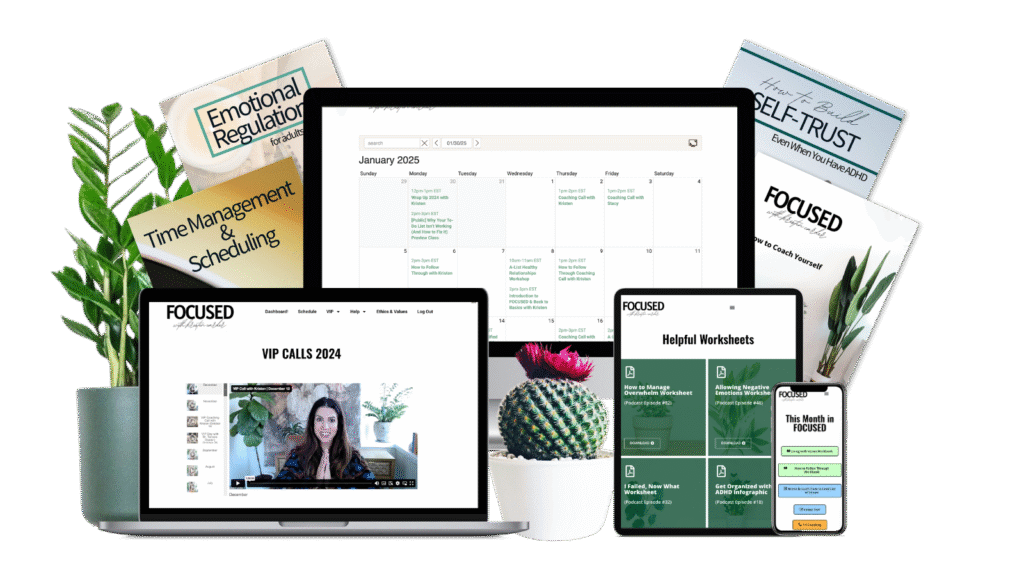
A proven coaching program designed specifically for adults with ADHD who want to gain clarity, build confidence, and take control of their lives.

Join a community of hundreds of ADHDers

Learning About My Brain...

Changed Everything

Hi, I’m Kristen Carder—ADHD expert, podcast host, and certified coach who’s been exactly where you are. Diagnosed at 21, I spent years cycling through planners, courses, and systems that never quite worked. Everything changed when I discovered the power of understanding my ADHD brain and the transformative impact of community support.

Now, after 15+ years of research and experience, I’ve helped thousands of adults with ADHD thrive. I’m here to show you how understanding your brain can transform your life, just like it did for mine.

ADHD Tips That Actually Make Sense

Follow @i.have.adhd.podcast and join our Instagram community for daily strategies, relatable content, and real talk about ADHD

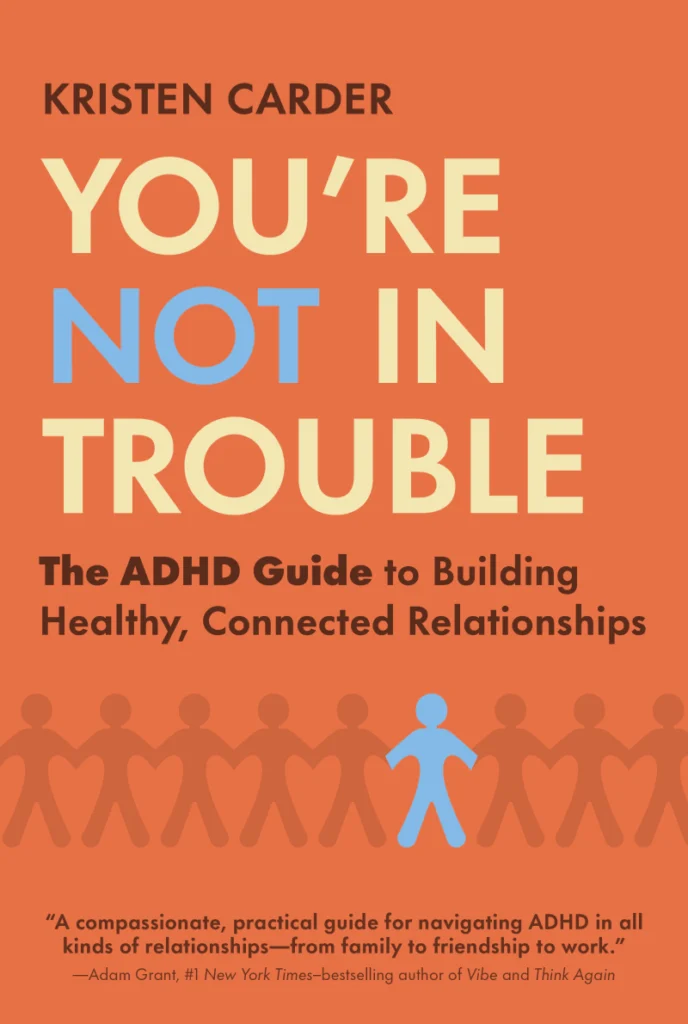
Click here to sign up for the FREE Class with Kristen on Wednesday, 4/1: Too Much & Not Enough: Why ADHD Adults Feel “In Trouble” in Relationships

  • 00Days
  • 00Hrs
  • 00Min
  • 00Sec