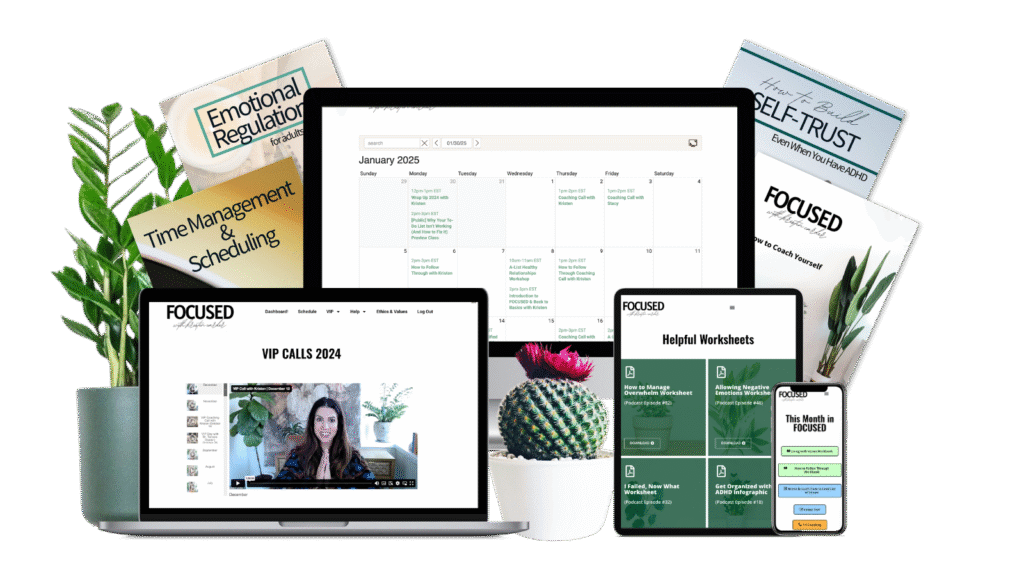


This episode is sponsored by CURE Hydration. All right, I’m going to be real with you. Drinking water is boring. My ADHD brain is like, wait, we have to do this again? Like every day, multiple times. What in the world? And because I’m running from meetings to coaching calls to kid chaos, staying hydrated is not something I’m naturally good at. It’s not something I naturally think about. That’s why I’ve been obsessed with Cure hydration packs lately. Cure is a plant based hydrating electrolyte mix with no added sugar, only 25 calories, and it actually tastes good. The watermelon and berry pomegranate have been on repeat for me. I’m actually like really running low on those flavors, which is so sad. They’re refreshing without being too sweet or artificial. It feels like my water finally has a little bit of personality, which I enjoy. I really do. What I love most is that CURE uses a science backed formula that hydrates as effectively as an IV drip. So when I’m scrambling through my day forgetting my water again, CURE helps me to catch up fast. I throw a few packs in my bag and it makes drinking enough water simple. Which for my ADHD brain is basically a miracle. So staying hydrated isn’t just about water. You also need electrolytes. And that’s why I love cure. It’s clean, tastes great, and it actually works. And bonus, CURE is FSA HSA approved so you can use those funds to stay hydrated. The smart way for I have ADHD Podcast listeners, you can get 20% off your first order@curehydration.com I have ADHD with the code I have ADHD. And if you get a post purchase survey, make sure to tell them that you heard about CURE right here on the podcast. It really does help to support the show. Don’t just drink more water, upgrade it with cure. Did you know you can opt out of winter with VRBO? Save up to $1,500 for booking a month long stay with thousands of sunny homes. Why subject yourself to the cold? Just filter your search by monthly stays and save up to $1,500. Book now at vrbo.com. Welcome to the I have ADHD Podcast where it’s all about education, encouragement and coaching for adults with with adhd. I’m your host Kristen Carter and I have adhd. Let’s chat about the frustrations, humor and challenges of adulting relationships, working and achieving with this neurodevelopmental disorder. I’ll help you understand your unique brain unlock your potential and move from point A to point B. Hey, what’s up? This is Kristin Carter and you are listening to The I have ADHD podcast and episode number 67. I am medicated, I am caffeinated, although I definitely feel like I could use some more. However, I’m still ready to roll. I’m so glad you decided to tune in today. Welcome, my friend, my friend, my friend. I’m so glad that you’re here. Listen, I did something completely new and different today, so I want to explain, explain it to you. I want to set it up for you and then I hope that you’re going to love it. So I have decided to begin interviewing my clients every once in a while because they are the example of what’s possible in the world for an educated professional adult with adhd. That’s what this podcast is all about, showing what is possible. Now, here’s the deal. With adhd, we hear from a lot of experts, and that’s good. We need to hear from experts. I’m so glad that there are doctors, psychologists, psychiatrists, researchers, all the people doing all the things to help those of us with adhd. But what often happens is that when we can read or listen to what the experts say, but there’s a disconnect because the experts don’t have adhd. At least none of the experts that I’ve run into. And so they are sharing their knowledge, which is extremely important and good and right, and I’m thankful for it. But then they’re not in the trenches with us. They’re not living with ADHD and doing the work. And so I thought it would be super amazing to take this podcast, the whole I have ADHD podcast, in the direction of hearing from experts. And those experts being educated professional adults just like you, just like me, who have ADHD and are making conscious, productive, smart, amazing changes and improvements in their lives, like, in real time. Now, keep in mind, this is my B minus attempt to change the world. It’s my very first time doing a group interview. So if I seem a little clunky, it’s because, yeah, like, it was a little bit of a new experience for me. For me. And we’re just going to allow for this not to be perfect so that you can hear from these amazing clients. So I want you. Like, we’re going to minimize Kristen Carter here. We’re going to maximize these clients that are going to help you to see that change is possible for you. If it’s possible for them, it’s possible for you. So you’re going to hear from Caitlin, Franzi, Rich, and Dani, and it’s going to be just a really, like, warm, kind, lovely conversation, and they’re going to share with you their ADHD story, a little bit of their journey, and then also, like, how they are making changes and how they are inconsistently moving toward their goals. It’s a really lovely conversation. I hope you enjoy every second of it. Here you go. So I saved the introductions for now because I just want you guys to, like, you know, have all the energy and all the fun with each other. All right, Dani, tell us about yourself. Tell us a little bit about, like, your ADHD story and then, like, how long you’ve been in focus. I feel like I have a very random, strange, like, kind of, like, ADHD story in the sense of, like, I feel like I’ve always knew I had ADHD growing up. I don’t think I ever knew what it was, though. I just kind of put it as, like, oh, I have just a lot of energy, so I never really got into it. And, well, one of the things I noticed is when I did start smoking was it kind of calmed down all the chatter in my head. And it was like one of the first times that I was like, whoa, is this, like, how other people feel? Because I feel like I’m constantly thinking things and you already know deal. And so. And so, like, during that time, I used to be, like, very to myself and very, like, wasn’t close to my family or anything. I wasn’t really telling people, like, how I felt internally, but I wasn’t really having a good time with myself because of the constant thinking and thoughts and just, like, nonsense. And so. Well, at the time, my dad used to be the only one that used to smoke. I don’t know. I don’t know what happened. I think it was just, like, the relaxation that it gives. It kind of like, put down those barriers that I put up and I was able to have, like, an honest conversation with my dad. And my dad was just like, you know, I strongly, strongly believe, number one, that you’re an empath and number two, that you have adhd. And I’m like, what does this mean? And so I was like, okay, so, you know, I have this. But, like, what is it? So I researched and I literally went a full year into it and I was just like, non stop researching on YouTube. So YouTube kind of really helped me with that and just like, learning a little bit more about myself. And I think I got very obsessive and I started just Going non stop and, like, looking at all these things and I’m like, it just makes sense. Oh, my God. My life is explained. And. Yeah, and then I think after that year, the excitement of knowing who I was kind of went down and I realized I was really struggling and, like, badly. And so, like, I married and luckily my husband’s very, you know, welcoming to, like, my energy and who I am because I really feel like my ADHD makes my personality. And yeah, I feel like that’s kind of like my story of, like, how I kind of found out. And I’ve just been doing more and more research and I think I was struggling so much that I was, like, fending for, like, any kind of help because I didn’t really understand what I could do. So I went to a therapist and everything. Didn’t really get much help there. And then, I don’t know, I was on TikTok. There’s this woman that I follow and, like, she does all these ADHD videos and, like, talks about it. Camden. Camden, yes, yes. And so I loved her videos because they’re so just like, welcoming and great energy. And one day I just go on and I’m literally like. I think it was. I don’t know, I get, like, getting really depressive over, like, how I’m able to handle my life. And so, yeah, like, on one Herbert post, I saw her like, oh, yeah, listen to this podcast if you have adhd. And I listened and I was like, okay, no, this is too, like, on the dot. And, yeah, and I kind of. I just. I joined, I think, like a week after listening to your podcast. And it was probably one of the best decisions I’ve personally made. I love that. It’s a long story, but. No, that’s such a great story. I did not know that you found out about the podcast through TikTok. I love that. That makes me love it. All right, Rich, how about you tell us who you are first of all. Wait, wait. First client in Focused ever shouted you out? Several times on the podcast. Now you’re here. I’m so glad. I think I had a very probably quintessential ADD discovery where I actually was diagnosed when I was little. And like, first, I think maybe first grade, second grade, something like that. And I took Ritalin for a while. My parents took me to behavior therapy to try and teach me how to focus, all that kind of stuff. And I guess I either did really well or didn’t because eventually they took me out of it. I don’t know either. It wasn’t working, so they didn’t want to pay for it or it was, and so they decided I didn’t need it anymore. But. And then I think back then, people just thought it was something you kind of grew out of, and so we never really talked about it ever again. I stopped taking Ritalin, and it just sort of, like, as things tend to do in my brain, just slithered away, and I never thought about it again. And then now I have kids of my own, and my oldest daughter was diagnosed, and so I was reading, driven to distraction because I was trying to just kind of learn about it for her and was like, like, holy moly. Like, I don’t know. I felt, like, very seen. And I felt like the whole, like, you know, last 20 to 25 years of my life, like, the struggles I’ve had made so much sense. And then it was like, I don’t know, like, oh, yeah, I had that. Like, it was like, after reading that, it was like, it came back in my head and was like, oh, my gosh, like, how did I not keep up on this for that, you know, that whole amount of time? Because I just think about, you know, in college and early in my career and just so many, like, I’m not. I’m not really hyperactive, like, physically, but I definitely am, like, mentally, where, like, my brain is just all over the place. And so it has. I’ve had a lot of struggles with just focus and persistence and just ruminating and just all those. Those types of things. Um, but, yeah, I. I started listening to your podcast, too. That’s how I found you. And it was like. I talked to my wife about it, and it was essentially the same thing, right? Like, spent a week listening to, like, 30 episodes or something, and then, oh, my God. That you were. You were doing the group thing. And I talked to my wife about it. She’s like, yeah, do it. And so here I am. That’s awesome. I love it. All right, Caitlin, your turn, my friend. Hello. Hi. Tell us about you. So I have a story, like, kind of more similar to Rich, I guess, except for I was also really, I guess fortunate in that I was a really classic case of ADHD as a child. So there was really no. I was kind of that kid that, like, could not be contained and drove everyone crazy and really struggled with school. Really was just, like, every. All my teachers saying, like, we know that she’s a really smart kid, but, man, she’s just distracting everyone. And, like, this is just a disaster. And so I was diagnosed when I was nine. I was in, I guess, fourth grade. And it’s funny though, because I guess like this was the 90s. There just wasn’t a ton of understanding about all of it. And so my memory of it was, it was like my parents saying, like, something is wrong with you. We’re going to take you somewhere to see what it is. I was furious about it. Didn’t understand, like, thought that I was like, defective. I literally didn’t speak with the therapist, like, didn’t say a word the whole time I was with them. And I’m a really chatty person. This was deeply out of character and even just, I guess from my mannerisms and what my parents had described of me. I was still diagnosed with ADHD with complete silence the whole time I was there. And so I, yeah, got on medication. And it was mostly just explained as like, okay, you have trouble, like not being a whirlwind in school and focusing on anything. Here’s drugs that will help the end. And really nothing was explained. I didn’t see anyone. I didn’t like, there was no follow up about anything. I didn’t read any books. Nobody talked about it. And my dad was diagnosed either right before me or right after me, but kind of in connection with this. And so there was at least a realization of like, oh, this kind of makes sense, like your dad does some of this stuff. But I feel like that’s sort of where it ended. And it was pretty much like, okay, now you’re on meds. And suddenly I was great in school, like doing all the things. And really it felt like, okay, your potential has been maximized. And that was the last that it was talked about. So I stayed on medication, like had a whole bunch of other stuff that kind of went on in my life. Other issues with mental health, anxiety, depression, a lot of like anger issues, like teen angst, like kind of problems with alcohol, like just a long list of other things. And so I’ve been in therapy for a couple years dealing with a lot of that stuff. And during that time, various points, my therapist would say, like, I’d be beating myself up about xyz. And my therapist would say, caitlin, you know that that’s an ADHD thing, right? And I’d kind of like laugh, like, oh, yeah, like I know that I have this, sure. But I kind of like laughed it off. And it wasn’t until she had mentioned it enough times and she was like, I feel like we’re getting into the depth of some of these things, but this is not my training. And like, you. You might want to just like, look into this. And so once then I finally listened to her, I got a book on. It’s like the really ugly cover that’s about women with adhd. And as soon as I read it, I was like, oh, this is like a whole lot more than me just being the hyperactive kid in class. Like, oh, this explains all the things that I’ve ever had problems with for the last 20 something years. And I just thought that that was like, me being a terrible person and that Adderall should have fixed it. And so since I was already on meds, it was like, well, all this other stuff must just be like, I’m bad. And so then once I really suddenly, like dove deep into learning about this, once I realized that there was so much more, I kind of looked for all the resources that I could find and I started listening to your podcast. It was a similar, like, I think I listened to the first however many episodes, like in a week, just binge listened to. Then you had just started focus. So I guess I joined the second month of it. So I’ve been in it for six months now. And you’re now a vip. Yeah. That’s awesome. I love it. So good. All right, Franzi. Hi. Tell us about you. So you are in Germany. I just want to tell everybody where your beautiful accent is from. I’m interested to hear if the diagnosis process is different. I don’t know if it is or not, but just curious. I don’t know either. I can only speak from my own. And that was really actually interesting or funny because I kind of similar to Danny. I always knew I’m different, but I was like, kind of like building my confidence on that. Like I’m different. So like, either you deal with it or like you like it or I don’t care. So. But I like kept stumbling over the same problems in like becoming an adult and like working life. And I needed to be somewhere at work for like, on time, like not being late or like getting up, going to bed on time and all that stuff. So I think I went to the doctor and said, like, I want to. I live in Munich, so big city. And so there is like a sleep laboratory. So I went to like my normal doctor and said like, I. I would like her to subscribe me that so I can figure out how to like go to bed and also get up and also go to work, because that is like main issues. And she said, okay, let’s first send you to like a psych psychiatry person neuro psychiatrist? Yeah. Yes, to that kind of person. And I went there and I explained to her my issues, and she kind of. I remember she started smiling because I was, like, interrupting her and like, all the textbook ADHD things, like, I interrupted her. I didn’t stop talking for, like 10 minutes and, like, telling her all my life story. And so she said, okay, we can do that sleep thing, but she actually thinks it’s a different thing. And she will give me, like, this sheet of paper where I needed to, like, go through some points and like, click how often I have problems in that area. And so I went home with it and I couldn’t wait until home to look at it. So I open it in, like, public transportation. And I was like, fuck, does anybody see me right now? Seeing what happening? So I was so. I felt so exposed to the world, and I was like, no, this can’t. Like, it’s. It like, all the. All the points got, like, checked. And then I was like, okay, shit, what does that mean? Do I even want that? I think I forgot about it maybe sometime. I also went on, like, my semester abroad, and then I was like, okay, no, I cannot deal with this right now. So I think about a year after I remembered and. Or like, I decided to, like, okay, I want to look into this. I also went on, like, YouTube and the Internet, and there’s not much. Yeah. Or there’s a lot of confusing info there. And I was very not interested in, like, how is all these medications, like, not good for your kids, blah, blah, information. So I wanted, like, some constructive info. I wanted to, like, how to deal with this. Yes. Or who I can look up to. And I think I remember finding your podcast about famous people who have adhd, like Justin Timberlake and stuff. And I was listening to that and I was. I’m not sure how honest I should be here, but I was like, there’s this American accent woman. She has, like, this kind of annoying voice. But what she says is so, like, relating to me, so I might as well just, like, keep listening. I love it. I don’t even, like, like. But that was, like, one of the first things I thought, like, this is interesting. There’s also some successful people and, like, amazing people who have. This is not. Not just stupid. Like, people who are not in control of their life. And I just wanted to find some. Some. Some, like, resources. And then I went on the podcast and then I think I joined the Emotions Month. I don’t remember this one, but I think it was during COVID Corona Corona hit And I was like, okay, I can only sit at home. There’s no semester going on right now, so I don’t have anything to do. I want to have something to do. I might as well just, like, go in a month. And it’s actually a topic what I want to work on. Like, emotional, like, breakdowns or, like, outbursts or, like, explosions is a thing I frequently. And some, like, people around me frequently, frequently deal with. So I said, like, okay, I just, like, give that to myself as, like, a thing to do during COVID And then I stayed. But, like, to like, retrospective. It makes so much sense that I have adhd because I. In the first period of my adulthood. That sounds weird, but, yeah, in the. In my. In my Chinese, I worked as, like, with kids, like, I think America’s called it preschool or like, daycare, you know, from. From like, baby until school. So I worked with them, and that worked really good with me because I have very similar, like, habits and patterns and stuff. Like, I forget stuff. I. I’m so, like, impulsive. I have, like, very easy, good understanding of kids who are, like, have, like, meltdowns or, like, freak out or, like, don’t behave because they simply don’t know how to. So I related to these kids. So I worked with these kids because I was good at it, because I understood them. And then I never, like. And then I came to the point of, like, okay, this doesn’t work out because I also have issues. So, yeah, that’s how I found out about PhD. Thank you. I really appreciate you sharing that. It sounds like your diagnosis experience is similar to what I think a lot of other. At least in America, you know, I think it would be similar to that. Go ahead. One more thing I think is probably different. In Germany with healthcare system, we, like, have the system of, like, the multimodal therapy. So, like, my health insurance pays for my medication. If I also go to therapy, as long as I go to, like, a behavioral therapy, like, my insurance also, like, supports that. So it’s kind of like, combined. And there was a whole process involved until, like, finding a therapist, because before I kind of get the subscription and. Yeah, but that is probably a thing. What is maybe different. Yeah, definitely. There’s laws because it is like a medication. What is, like, constricted was the thing I. Okay, yeah, sure. So, like, they can only prescribe, like, a small amount and only you can only, like, pick up the thing personally because there’s this, like, whole, like, selling. It’s a whole thing. First, thank you for sharing your story. With all of us. And then secondly, the reason why I want to have this podcast is because I want to highlight adults with ADHD who are making changes in their lives. And I know that all four of you are in the process of making changes, and you’ve seen some changes, and then, like, you’re also, like, in the trenches making other changes. And I think it’s really important to show the adult ADHD community that it’s possible, because I think for so many people, and I know for myself personally, before I started doing this work, it was kind of like, this is who I am. I don’t see any way out of being this way. I don’t love it, but I don’t see a pathway forward. So can any of you share with me changes, like, even just one change that you feel like you’ve really made in the last couple months through the Focus Program and, like, the support and coaching there? I think the biggest things for me have honestly been inside my brain, like, how to deal with things in a more neutral way. I think that I have always been somebody that’s very hard on myself, and I’ve always been somebody that every time I make a mistake, it’s, like, further proof of, you know, the fact that I’m never going to do anything that I want to do. And, you know, every time I yell at my kids, it’s further proof that I’m ruining them. And every time I forget to do something that my wife asked me to do, it’s like, you know, not being a good husband. Like, I mean, just the list goes on and on and on. But I also think that most of that stuff has always been in my head. Like, it’s. I’ve never really been outspoken about that stuff. It’s always like, I think that as I’ve been going through this and talking to my wife about it, she’s like, just didn’t even know that a lot of that stuff was going on because it’s just, I don’t know, an issue with asking for help, I guess, an issue for, like, feeling like I should be able to do it all myself. And the reason that I’m not doing these things is because I’m not trying hard enough or I’m not, you know, prioritizing correctly or, you know, any of that kind of stuff. So I think, um, the biggest difference that I’ve noticed is just a lot less anxiety and a lot less, I don’t know, just being able to work through things a lot more easily and a lot more, you know, for Instance, if I have a goal that I’m going after, you know, I used to be, like, go full bore at it, and then inevitably, when I miss a day or if I fall off the wagon, then it’s just like, well, screw it. I’m. I’m not. You know, if I can’t do it perfectly, then it’s not worth doing. And now I think that it’s a lot more easily for me to just like, well, life happens, and tomorrow I’ll, you know, I’ll do it, or just started telling myself more like, you know, it’s what I do most of the time. And if I, you know, if I’m not. If I don’t do it every time, that’s okay. As long as 60% of the time it’s good, then I feel like that’s still most of the time. And just being able to work through those things without just giving up or without freaking out or without, you know, if I go into a shame spiral, it’s like I’m a lot more able to notice it and pull myself out of it before it gets too crazy or before it, like, is debilitating. And I think it’s just made me lighter. It’s made me like, just. Life is. I don’t want to say it’s easier because it’s. It’s not easier, but it’s like. It’s just. I don’t know what the right word is for it, but it just. It’s like I’m able to just go through things and do things and not have everything, mean something that is ten times more significant than it really is. You know, it’s like, I’m able to look at things, and this happened. Okay, that happened. What do we do now as opposed to, like, this happened? Oh, no. Like, you know, the world is ending, so you’ve cut the drama. Yeah. And that goes to all areas of my life. It’s not. It’s not like one certain thing that I think has become better. I think it’s just in general, just dealing with everything has become better. I love it. That’s so awesome, right, Caitlin? Yeah. So it’s kind of interesting because, like, when I joined, I think the thing I was really wanting to focus on, or like, the thing that was causing the most immediate issues for me was I’m still. I’m a newlywed. I got married, I guess, eight months ago, and I was having a lot of problems with my husband in just our communication. I was. It was like a lot of victim mentality, a lot of like, it’s not fair and a lot of like, that kind of thing on my end. And then also I was having a lot of problems with interruption and getting really angry, like emotional dysregulation, like just this like, rage kind of situation. That’s some stuff for me in general. But that was kind of my like, initial thing that I was like, I got to nip this in the bud. Like, I really got to figure out how do I just like, lock it up, how do I, how do I shut up, like, stop being so difficult in conversations with my, my husband. Like, I. I just want to be. I just want to like, calm it down. And I didn’t totally realize that in thinking through the thoughts of how I end up in the situation that I’m in that it would help with that. But then also in all these other aspects of my life that I have kind of just like powered through up until this point, like, I had a pretty intense upbringing. I not succeeding was not really an option. And so I have worked really, really, really, really hard to be someone that is pretty high functioning. You wouldn’t like, know about me that, I mean, I went to college, I have a graduate degree. I like, I am doing different things. And so I was kind of like, whatever. I. I just work harder in the, all the other work areas of my life. Like, do more, stay up later, power through and I’ll handle that. I just need to like, stop being so angry. And it has helped me, yes, like, be. I mean, I’m still working on the stuff with interruption and like getting really frustrated about things, like still working on that. It’s not a perfect. I haven’t solved it, but I have a much better understanding of why I’m reaching those places and that it’s in my head that I remember you said when you talked about that you can’t control what anybody else does and that the only thing you can control is yourself. It was like, I mean, people have told me that forever, but I think something about understanding that it’s like, no, this is on me. Like, whatever situation is happening right now, it’s like, sure, I could try to like, oh, it’d be great if he understood better or if everybody else like, catered to me. But that’s not happening. So how can I, like, what can I do? And it felt like I have a lot more control over myself. Just like, this is my life. How do I want to live it? And then as a nice little bonus, it’s like, oh, I’m actually like dealing with Emails that I avoid or finally getting, like, under some issues with money. That’s been a big problem where I just avoid it because shame is my, like, really personal. That’s my thing that I always have had a lot of shame with so many things and understanding, like, why that’s coming from, where it’s coming from, how it’s impacting my inaction. It’s like I feel like I am now the controller of my own life instead of just sort of like the. Instead of it just happening to me. It’s like, I actually get to decide what do I want my life to look like. And, okay, most exciting thing, like, I have chills all over my body. That’s exactly what I want for every single human with ADHD is to feel like they have a choice. Like, there’s an option and you get to choose. And you can choose whatever you want. Like, it doesn’t have to look like, you know, the way that somebody tells you it should look or the way that, you know, you perceive that. Maybe I think it should look or whatever. It’s like, you get to choose, but it’s always a choice. It’s so fun. Yeah, I didn’t. I, like, honestly didn’t realize. I kind of thought it was just like, okay, work harder, work harder, push harder. And then however hard I can push is as much as I can get. Like, that’s as much as I can change my life. And it’s kind of like, if I’m really tired now, I’m burnt out. Well, then, okay, now where life’s just happening to me, and so it’s really refreshing to be, like, what about intention? Like, what do I want? These are questions I’ve never really asked. Oh, I love it. Thank you. That was amazing. All right, Franz, you got something for us? Yes. I would changed my, like, daily life a lot was like, to understand and acknowledge that there’s always, like, two sides, and I always, like, saw only one side and then, like, focused on that side and, like, spiraled in it and just like, yeah, everything about it. And to, like, find out that I can, like, trick myself or challenge my brain to, like, see if the other side could be true, too. Like, I think you. You told us that, like, that was a big thing and, like, combining it with something else. What I, like, started to do, like, some time ago, not, like, because of adhd, but because sometimes just words or labels I don’t like. Like, for example, I saw myself always as, like, I hate sports, so I don’t do sports. Right. But then I decided, okay, so if I say yoga isn’t a sport because I can label it as something what is nice and good, and in the end I get to relax. It is sportive. I’m not saying I’m not sweating, but it’s not like, in the drawer of sport. So I started doing it and I really liked it. And the same thing happened, I think about the same time when I joined Focus, like in April or something, when Covid hit, there was this like, you can only go outside if you go shopping or go to work. And I said, okay, or do sports outside. And I was like, I don’t do sports, but I want to have the ability to go outside when I want to. So I went, literally went to the store and bought running shoes. I said, like, just in case I would need them. So, like, I can tell a police officer, I’m like, on a run. I didn’t even plan to go running. I just, like, bought them because I wanted to have the possibility, you know? And if you believe it or not, like, I would not believe you if you would tell me like, half a year ago that I would be running or, like, jogging two to three times a week now. This is mind blowing. I mean, I need some help. I need to, like, call my sister or she calls me and we’re pushing each other like, like, let’s go to the shoes and just, like, put them on. Not, like, baby steps. Another big concept for me. Like, baby steps all the time. So I don’t want to go running, but I can manage to put my leggings on. I can manage to put my shoes on and go outside to see how cold it is or how warm it is. And already outside, like, I can put my leggings on and my shoes. Running shoes on and just, like, the trash out and see if it’s, like, nice. And I’m already outside and I might as well go, that’s brilliant. Like, you guys need to all rewind that and listen to it again. That is brilliant. Because that is, like, you have enough determination to, like, okay, I’m gonna put my leggings on. I’m going to put my shoes on. Let’s just go see what it’s like outside. And then it’s like, ah, I’m already here. That’s brilliant. I love it. So the baby steps come, like, combined with the, like, making my, like, my own brain. I know my brain can do a lot of stuff, so just, like, make my brain think of an option or, like, a different label or a different perspective. Or the other side and then just trying it and finding like accountability partners or share in our community. The win was a big difference. When I can share that I did a thing, it is much more interesting to do. That’s awesome. All right, Dani, do you have anything for us? So my big thing is physically I want things to. To change. You get me, like, my. How active I am with the things I need to do, which is for me, AK work. And so. Okay, well, I started this last month, so I think for me the biggest thing I started with self identity, which thank God I did because it’s actually something that I thought I tackled on already before. I think I fought a lot with Franzi with of like, oh, yeah, I’m accepting that I’m weird. I don’t care if anyone doesn’t accept me. Like, that was always my big thing of like, I’m loud, I’m weird, I’m crazy. You get me. And so what I realized doing the Notebook was a lot of things I say about myself or think of myself come from a lot. A lot of it stems from other people. So I think my biggest thing with my self identity is trying to disconnect how I disconnect what I think of myself when it comes to just people’s opinions of me. And most of it is opinions of like me growing up being a stereotypical ADHD hyperactive child with no guide. So that’s kind of. That was probably the biggest for me. I think I cried a lot. I cried a lot throughout last month. Just like realizing a lot of like, things that I guess I hated myself or I would put myself down about were just things on like my adhd. Like, that’s just. That’s just me. I can’t really do anything about it. So I think I’ve been. It’s really helped me be really more accepted of myself and my situation because also I’m understanding who I am a lot more. And I guess another huge thing is like, me knowing that a lot of what I feel I struggle with and the things I have a hard time with. Like I said before, I’m very like non vocal about it. And I think ever since joining Focus, I’ve been so vocal about it. So I feel like also a huge thing that’s changed for me is like, my relationships with people. I think my family’s a lot more understanding of me because I am vocal about it. And I’m like, oh, that’s a part of my adhd. Oh, that’s just my ADHD and like, things that probably would get annoyed or even when I’m like, upset set or I’m like in my thing, my spiral and all of that, I would just go, like, especially for my relationship with my husband, I’ll just look at him and I’ll be like, I just want to apologize because, like, I don’t want to be like this. But this is also my adhd. And so like, my husband’s so understanding. And I think, like, conclusion wise, that thing of like, feeling heard, I feel like I’m finally being heard and listened to. And I felt like my whole life that has never, ever, ever, ever, ever happened. Yeah. And I think that’s kind of the major thing. So. Yeah, I think for me those are like the biggest changes. I want to see more physical. Yeah, I know these are just the building blocks, so. Oh, I love that and I agree with you 100%. I just wanted to like, underline what Danny said, that like, one of the biggest impacts for me is like finding this community and like seeing that other people struggle with the same thing. Like I do. Like, I don’t see many other, like, people struggling with the same thing in like my, my normal life, let’s call it that. But like, to see also, like, see other people coach or like, talk about an issue and me thinking like, oh, I also do or did have that problem and that’s how I, like, think about it and that’s how I deal with it. And like listening to you, how to like, what you give as an advice or something, that has been so helpful. And like, I watch so many calls now, like, instead of just like stupid YouTube videos of like, I don’t know, because it’s. It’s actually fun to see some. No, that sounds weird. That sounds wrong. It’s not fun to see other people struggling, but it kind of is because it is fun that they struggle with the same thing than I do. So I feel like I have backup. So, like, does that make sense? Absolutely. And I agree with you. In the coaching membership that I’m in with my coach, I watch coaching videos all the time. All the time. And to see other humans struggling, of course you don’t relish in it, like, oh, I’m glad they’re struggling, but. But it just, it validates all of the things that you’re going through. And then if you are able to apply the advice to whatever situation you’re having. It’s like some of my biggest transformations have been on, like when I’ve watched coaching calls, not even when I’ve gotten coached it’s been when I’ve observed someone else’s brain and I’m able to look and be like, I totally do that. I see what they’re going through. And this advice is for me. It’s not just for them. It’s for me too. It’s like sometimes, like an overview of your own life, like, going to that other perspective of, like, sometimes you’re like, blind for your own problem, but seeing someone else struggle with a similar thing, that just makes you, like, have you a better view over it. Yeah. Like from a, like, elevated point or like. Yeah, agreed, 100%. Not in the meaning of, like, I’m better than them or something. Just like, you see it. You see the Eiffel Tower better from not being on the Eiffel Tower. Right. I want to just talk about inconsistency for a hot minute. And you guys, I want to know, have you been able to, like, make changes and feel like you are moving forward inconsistently, or are you guys in the workbook every single day and on every single call and doing all the things. Go ahead, Caitlin. Yeah, I definitely inconsistent. Like the months that we talked about organization, I forget what month that is. I never opened the workbook. Never love it. I basically. That month that was like, not my issue. That was. I was kind of like, organization is like a thing that, yes, is a struggle. But I’m still working on the, like, relationship workbook or whatever else was happening. And it was just kind of like I would go on calls, I would watch those. But the workbook, it was kind of like they’re. They’re all. You can pick them up when it’s useful and then put them down when it’s not. And that’s been really freeing because it doesn’t feel like I’m missing anything if I’m just like, this is not relevant to me right now, but this other thing is. So I’m going to focus on that. I love it. That’s so good. And I have tried to be better about thought downloads, though I’ve been a little more consistent about those. So good. And that is such a huge life changer, those thought down there. All right, Rich, what you got? I sort of building on that and I guess building on what everybody’s been saying, I think that for me, the self concept book was like, almost like a core thing that was very eye opening for me. And I’ve sort of been going back through previous workbooks with the knowledge that I have gotten from that one because I feel like I’m able to do those more effectively or, like, they make more sense to me now that I’m kind of looking through them, looking at them through a slightly different lens. And I think that by doing that and kind of what they were saying with, like, watching people’s calls, I think I’m a lot more able to accept those things about myself and so accept the inconsistency, but not let it break me. And then also by accepting those things about myself, I’ve noticed that I feel like a lot of people in my life that I was worried about accepting those things are accepting it, but I think it’s more just in my head that I thought they weren’t accepting it, but now that I accept it, it feels like they accept it, I guess. I don’t know if that makes sense. Yeah, I’m like, doing all sorts of cheerleader dances over here because I believe that to my core that most of the time when we don’t feel accepted by others, it’s us, we are not accepting ourselves. And so we are projecting that onto pretty much every human that we interact with. And it’s just made me more able to, like, if someone truly does not accept that, then that’s a them problem and not a me problem. 100%. I love that so much. I love that you. I didn’t think to even suggest doing that, but I love the idea of doing the identity and self concepts and then going back through the other workbooks through a different lens. All right, anybody else want to just, like, touch on inconsistency at all? Go ahead, Franzi. For me, inconsistency never has been such a big issue. Like, well, that’s amazing. I’m just like, hard believing that consistent. Being consistent for me looks like being inconsistent. So I’m maybe have the concept, like, all mixed up. But yes, for me, inconsistency means, like, it’s like ups and downs and it’s like waves and the ocean is waves, but the ocean also is very like, so. So, like, I’m consistently ups and downs. So I can relate. Like, I can relate, rely on it that, like, if there’s an up, there’s a down, and if there’s a down, there’s an up. So I will try hard sometimes and sometimes it’s easy. So I don’t really, like, think about it and everything everybody learns, like, watching kids grow up, they just like, they try and then they fall. And just like you said in the other podcast, and sometimes they don’t try for like a day or two. But that doesn’t mean they gave up, right? And we never look at them. I mean, of course, unless you don’t think that maybe they’re a typical human, like a typical child. But if you believe that your child is typical and you know, just this like little 12 month old kiddo, we never look at them and think like, well, they’re never gonna make it. Like, they’re just never gonna. The untypical ones, right? Because even at some point, right, they don’t have the concept of like giving up. And so. Oh, that’s so true. I think they, they don’t know that it’s a possibility. I think sometime we just get the info of like, okay, giving up is a possibility, but it’s just not. Like, what if it wasn’t even an option that was available to us? What if we just had to be inconsistent forever? Which by the way, we do because we have adhd. So be inconsistent forever and just don’t give up. But that’s more beautiful. To me, consistent sounds like boring. To me, inconsistent sounds like standing still and nothing changes anymore. And that is just like boring and also frightening. So I don’t want that. So inconsistency is the thing I like. And it’s like sometimes it’s gonna faster and sometimes it’s gonna be slower, but it’s never standing. That’s what I like. I don’t, I don’t ever want to like stand. I love that. So good, right? If you just are constantly doing the same thing every day, like, that’s, that’s not a life I want to live. Like, I want to have variety and I want to do different things. So what if the inconsistency is actually just like a, A, like a flavor in our life, right? Like not something that we have to shame ourselves with, but it’s like, oh, this is the part where I’m just like not gonna do this thing. I’m gonna go do that thing. Doesn’t mean anything bad. I’m gonna come back to this because it’s a goal of mine. Yeah. Love it. Yeah, that’s so true. Because I feel like I grew up where, like, there was so much pressure to be consistent, to do a certain, to like be really regimented. Like, this is how people are supposed to be. This is how successful people are. And it was like, since I wasn’t doing that, it was always just like, you’re a failure. Shame, shame, shame, shame, shame. And realizing like, oh, I don’t have to be ashamed about that. This isn’t like a shame thing. This is Just like, it’s fine. This is how I am. And sometimes it’s up, and sometimes it’s down, and sometimes it’s whatever, but you just keep going. And when you don’t have that shame, then you don’t feel like you’ve already failed. So then it’s easy to Then the next day be like, okay, today I’m doing it. Like. Like, it just. You don’t have that same, like, emotional weight with it, and so it’s a lot easier to just let it ebb and flow. Totally. It’s like it’s dropping the drama around it. It really is. Like, that is the best way that I can put it. Like, concisely, it’s like, there’s just no drama. Like, you just, like, sometimes you show up, do that hard thing, and sometimes you’re like, I’m gonna do that tomorrow. And it’s okay, because tomorrow, instead of beating yourself up and avoiding and procrastinating because you feel terrible about it, you just, like, you just do it. No problem. All right, thank you so much. I appreciate all of you. This is so fun. I could go on for hours. So maybe next time we’re gonna plan for, like, more time because this was super fun. All right, thank you. I will see you. Bye. All right, friends, there you have it. Isn’t it so great to know that there are people out there just like you who are on the path to making progress, on the path to their goals, on the path to their dreams? For me, it’s so validating to be surrounded by a community of people who think like me and act like me and are still able to make progress with their lives. So I just hope you feel extremely encouraged after listening to that interview. And I will see you next week. A few years ago, I went looking for help. I wanted to find someone to teach me how to feel better about myself and to help me improve my organization, productivity, time management, emotional regulation. You know, all the things that we adults with ADHD struggle with. I couldn’t find anything, so I researched and I studied, and I hired coaches, and I figured it out. Then I created Focused for you. Focused is my monthly coaching membership where I teach educated professional adults how to accept their ADHD brain and hijack their ability to get stuff done. Hundreds of people from all over the world are already benefiting from this program, and I’m confident that you will, too. Go to ihaveadhd.com focused for all the details.