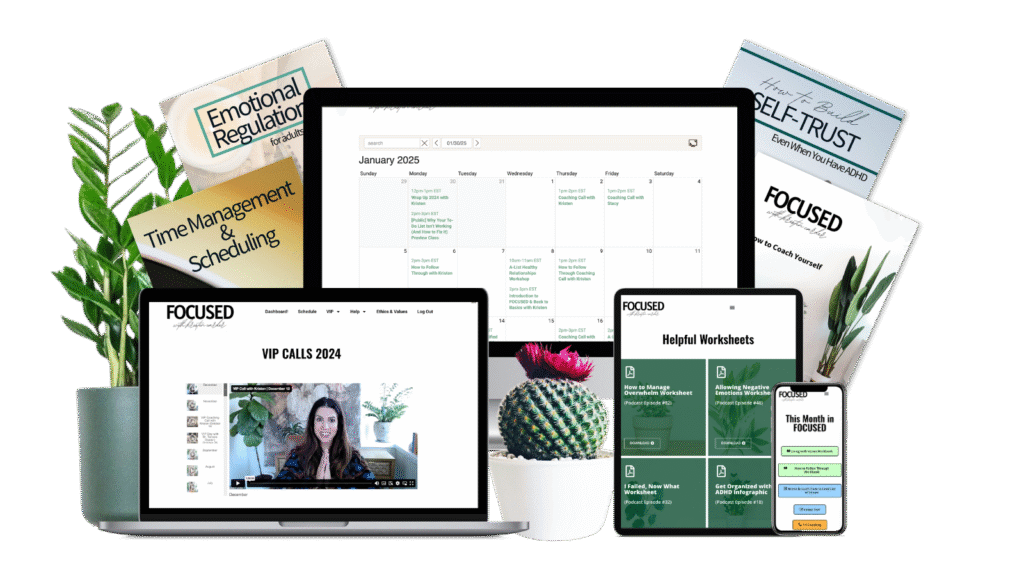
This episode is sponsored by CURE Hydration. All right, I’m going to be real with you. Drinking water is boring. My ADHD brain is like, wait, we have to do this again? Like every day, multiple times. What in the world? And because I’m running from meetings to coaching calls to kid chaos, staying hydrated is not something I’m naturally good at. It’s not something I naturally think about. That’s why I’ve been obsessed with Cure hydration packs lately. Cure is a plant based hydrating electrolyte mix with no added sugar, only 25 calories, and it actually tastes good. The watermelon and berry pomegranate have been on repeat for me. I’m actually like really running low on those flavors, which is so sad. They’re refreshing without being too sweet or artificial. It feels like my water finally has a little bit of personality, which I enjoy. I really do. What I love most is that CURE uses a science backed formula that hydrates as effectively as an IV drip. So when I’m scrambling through my day forgetting my water again, CURE helps me to catch up fast. I throw a few packs in my bag and it makes drinking enough water simple. Which for my ADHD brain is basically a miracle. So staying hydrated isn’t just about water. You also need electrolytes. And that’s why I love cure. It’s clean, tastes great, and it actually works. And bonus, CURE is FSA HSA approved so you can use those funds to stay hydrated. The smart way for I have ADHD Podcast listeners, you can get 20% off your first order@curehydration.com I have ADHD with the code I have ADHD and if you get a post purchase survey, make sure to tell them that you heard about CURE right here on the podcast. It really does help to support the show. Don’t just drink more water, upgrade it with Cure. With savings over $390 this shopping season, VRBO helps you swap gift wrap time for quality time with those you love most. From snow on the roof to sand between your toes, we have all the vacation rental options covered. Go to VRBO now and book a last minute week long stay. Save over $390 this holiday season and book your next vacation rental home on VRBO. Average savings $396. Select homes only. Welcome to the I have ADHD Podcast where it’s all about education, encouragement and coaching for adults with adhd. I’m your host Kristin Carter and I have adhd. Let’s chat about the frustrations, humor and Challenges of adulting relationships with, working and achieving with this neurodevelopmental disorder. I’ll help you understand your unique brain, unlock your potential, and move from point A to point B. Hey, what’s up? This is Kristen Carter, and you are listening to The I have ADHD podcast, episode number 82. I am medicated, I am caffeinated, and I am am ready to roll. Are you? Are you ready? Because we’re going to talk about Overwhelm today, which I think is one of our default settings. I can’t wait to chat with you about it because I have changed so much in this area. It is absolutely shocking. And if I can change, then you can change, because I am nothing special, just a girl with ADHD who’s learned some stuff, and I’m going to teach it to you today. I can’t wait. It is unbelievable for me to be able to say these words, but honestly, I do not struggle with Overwhelm anymore. It used to be such a part of my life, such a big part of my identity, and now it is very rare that it pays me a visit. And so I can’t wait to teach you these strategies. I can’t wait to share all of this info with you. And I also, for the first time in a long time, have a freebie for you. I haven’t done a freebie in forever, but I thought that there are so many of you struggling with Overwhelm, and this is such a pervasive issue in the ADHD community that this would be a great time to create a freebie. So if you would like to go through it as we are chatting about it today on the podcast, you can go to ihaveadhd.com overwhelm and download it. And you can have it forever. It’s yours forever. Okay, before we get rolling, I wanted to take a minute and tell you all about the changes that are coming up in focused in 2021. And buckle up, because it’s a lot. Now, I’m just going to be kind of telling you a little bit today. I’ll tell you a little bit next week, and I’ll tell you a little bit the week after that because I don’t want to overwhelm you because Relatable. That is exactly what we’re talking about today. And I know that my people get overwhelmed with too much info. So here’s what I want to tell you today. The way that Focused has worked over the last year is that we’ve studied one individual topic every single month. And what I’ve basically done is created a course. I’ve created a workbook and video classes around that specific topic. And when you’ve joined, you’ve only gotten access to that specific topic. So if you joined in February, we studied relationships, but you didn’t get access to Living with Vision, which was what we studied in January. Okay, does that make sense to you? So you are only getting access to the months that you were actually enrolled in the program, and now things are changing, my friend. When you join, you will have immediate access to three courses. Bam. I’m so pumped about this. So you will have access to the ADHD Identity and Self Concept course. You will have access to the Living with Vision course, which is basically like planning out how you want your life to go, which I think is amazing. And then you will also have access to the time management for the ADHD Brain course. And I am so excited to tell you this because it’s the most I’ve ever been able to give away at one time. Time. And I am pumped about it. So that is just one of the changes coming up in the Focus program in 2021. I don’t know if you know this, but I have adhd. And so I want to be constantly changing things, first of all, so that I’m still excited and engaged and loving it. And second of all, I’m always looking for ways to make it better, increase the value, and make it so that I can help more people in a shorter amount of time. The very last thing that I want to say about this, and then we will move on to Overwhelm, is that if you are listening in real time, November of 2020, and you’ve been wanting to get into Focus, but you’ve been putting it off for some reason, now is the time to join, because the price is increasing on December 1, and the price increase will never affect a member who’s enrolled. So once you enroll at a certain price, you’re locked in and your cost never goes up. That’s it. Now, let’s talk about overwhelm. Like I said, it is shocking to me that overwhelm is no longer a part of my identity or a part of my story because it was such a huge part of my life, all growing up, all through all of my schooling, career. It was such a big part of my vocabulary. I was constantly saying, I’m so overwhelmed. I can’t do this. I’m so overwhelmed. This is too much. I was constantly putting off decisions. I was constantly avoiding work and procrastinating because I was super overwhelmed and had no idea how. How to manage it. Now, ADHD and overwhelm seem to go hand in hand for most people. And what I want to say is that it doesn’t have to. Yes, we have adhd, but at the same time, it is possible to learn how to manage our minds and to develop the tools and the skills to tolerating and even overcoming overwhelm. So if you’re in, if you’re like, yes, let’s overcome overwhelm. Perfect. This podcast is for you. Now, I want to start off by reminding you that overwhelm is a feeling. It’s an emotion. And all of our feelings are caused by a thought, okay? We’ve been taught our whole lives that our feelings are caused by the things going on in our life. We’ve been taught our whole lives, whether, like, intentionally and with words or just kind of like the default of how our society operates is things happen and then I have a feeling, or someone says something, and then I have a feeling. But what I have learned in the last couple years and has completely changed my life is that the feeling that I have is always caused by a thought. Okay? And so overwhelm as a feeling is caused by a thought. All right? We think it’s caused by what’s happening in the world or what’s happening in our lives or what’s happening around us, but it’s not. Overwhelm is never caused by your to do list. It’s never caused by your. Your lack of time. It’s never caused by how much you wanna get done in a day. It’s always caused by your thought. All right, so how do we know this? How do we know that it’s caused by a thought? It’s because your to do list and my to do list look very different. You know, you might have 10 things on your list, I might have 20 things on my list. You might have, like, complete feelings of overwhelm. And I would be like, dude, that’s easy. Let’s just go do it, okay? Every person experiences their to do list or time or events happening in the world differently. So this is how we know. Like, we can’t say, like, oh, well, it’s a proven fact that 10 things on a to do list, plus the election, all of that combined is going to cause overwhelm. Like, there’s no provable facts here other than we have things to do, we have thoughts about those things, and then we have feelings. And often for those of us with adhd, that feeling is overwhelm. Now, for me, I wanted to go through and really try to remember how overwhelm was such a big part of my life. And I spent a lot of my planning time yesterday really trying to remember. I don’t know about you, but I don’t have a ton of memories from. From my childhood or my early adulthood. And so it was quite difficult for me to access this. And when I was able to, it was painful. It’s not super fun to think about the way that I was operating, the way that I was living, and the difficult parts of my childhood or my education, career, like, all of that. So I get to share these painful memories with you now. So I grew up in a family of ADHDers, and part of my family’s identity and vocabulary was overwhelmed. Okay. It was just like a super normal thing that we experienced. And in my family’s culture, so I’m talking about my family of origin in my family’s culture. It was also a very valid reason for just checking out and being done. So as. As soon, soon as I or one of my family members said that we were overwhelmed, it was kind of like the safe word, I think, in my family where it was like, oh, you’re overwhelmed, okay? You do not have to go any further. We don’t have to have this conversation anymore. You don’t have to do the thing. Like it was just this kind of buzzword or safe word where we allowed each other to get out of things. And, you know, we were all very sympathetic with one another. And at the time, I don’t think we really understood that it was ADHD related. It was just kind of a part of who we were. Now, looking back, it’s like, obvious that it was ADHD related, right? So in high school, I would often get overwhelmed. Now, remember, I wasn’t diagnosed with adhd until age 21. And even then, I didn’t know that overwhelm was a part of adhd. Right? So I would have never identified that as one of the ways that ADHD can manifest. Right. And so in high school, I would constantly start off really strong with a fresh excitement, you know, when a new marking period would start or a new year would start. And then inevitably, every single time, I would get behind, I would not know how to catch up, and I would pretend that I was fine. I would try to hide that I couldn’t keep up because I knew I was smart and I knew I should, quote, unquote, should be able to manage it all. I just wasn’t able to. And I had so Much shame about it. So I often just pretended it was fine, pretended that I wasn’t behind, and I would usually skirt by with like a B. The average of like F’s and A’s would be like a B or A or a C. And I would just like, often avoid things like overwhelm in high school looks like going really, really strong and then crashing and burning, and then going really, really strong and then crashing and burning. When I went to college, it was pretty much the exact same, except now I had zero accountability, right? So this looked like me staying up until 2 or 3 or 4 in the morning, skipping classes all the time. Eventually in my sophomore year, I got really depressed. By that time, it was obvious to me that everyone seemed to handle college life so much better than I did. And I would like really spiral and spin out a lot. And again, I would pretend that I was fine when I wasn’t. Okay? So in college, overwhelm for me looked like dropping a lot of classes. I failed a class or two or three because I couldn’t get myself to stay on top of the work consistently and because I was too ashamed to ask for help when I really needed it. Yeah, that really is painful to remember that. And I have so much compassion for that version of me because she really did mean well. Like, I never wanted to do poorly. I always wanted to do well. And I always knew that I was capable, I was smart enough, but I just didn’t have the tools to be able to manage it all. Now when I was 21, so I can’t remember if that was sophomore or junior year of college, I was medicated, and that helped with overwhelm a lot. It really, really did. So if you’re not medicated, you have an ADHD diagnosis and you’re choosing not to take medication, totally fine. But just know that there are tools that, you know, pharmacological tools out there that can be helpful. Yes, medication does help with overwhelm. It helps you to sort through your thoughts. It helps you to manage more than you are able to manage when you’re unmedicated. Okay. Now transitioning from college, I got married right after I graduated. And in my early marriage, before kids, I honestly think I had some like, so sort of PTSD type situation from college. I was so burnt out, I was completely depleted and unable to function. Now, overwhelm in this scenario looked like avoidance, like total avoidance. I don’t even know if I can say procrastination because it was mainly just avoidance. I knew I should be working. I Knew I should be making money. I knew I should be writing my wedding thank you notes like they were sitting in a basket next to the tv and I had nothing else to do. Honestly, I had nothing else to do with my time. And I could not write the gosh darn thank you notes. Like I could not do it. And I didn’t know how to make myself do it. And it took me a year to write them. And I know there are a ton of that I did not even send. So if you went to my wedding and you did not get a thank you note, please forgive me. I am so sorry, but I did not have the capacity to function like a fully formed human at that time. I had more time than I ever had in my life and I had no idea how to handle it. So Greg would go to work and I would just be home all day long watching daytime television. Like, I will never forget the routine. It was first Regis and Kelly, then it was Tony Danza. Remember? Does anybody remember that one year that he had a talk show? That was the year that I got married and had nothing to do with my life. So I’d watch the Tony Danza show, then I would watch the View. Then after the view, which was 12pm Eastern time, I would finally be like, I should shower and do something. And then I would just like go grocery shopping or go to TJ Maxx. Like, I just did not know how to be productive. So that memory of overwhelm, of complete avoidance of not knowing how to manage myself or my time or structure anything at all, so painful. After I kind of got myself together and recovered a little bit, we had kids. And overwhelm with little kids is a whole different ball game. So those of you who have kids understand the noise, the neediness, the constantly being touched, the constantly being needed, never being able to predict your schedule because you’re always at risk of being interrupted. So like, yeah, my baby might sleep at 1:00 clock or he might scream the whole time. We might sleep through the night or I might be up 17 times. Like, it just is so unpredictable and so overwhelm in that scenario in my life. Again, looking back, painful, painful, painful. I was able to focus on my kids and be there for them, but I wasn’t really able to do much more than that. Okay, so again, I’ve talked about under earning. This is one of the reasons why I was an under earner and one of the reasons why I think many people with ADHD are under earning is because they don’t have, have the Tools to process and manage overwhelm. Okay, so in the last few years, I’ve learned so much about my brain. I’ve learned so much about the feeling of overwhelm. I’ve learned so much about how to manage my mind. And I want to teach that to you today. Again, if you are looking for a freebie and someone to like literally walk you through this process, go to ihaveadhd.com overwhelm and download that. Okay, now I understand now that overwhelm is a feeling caused by a thought. Not caused by my kids, not caused by my wedding thank you notes. Not caused by the need to get a job. Not caused by anything other than my thoughts. Okay, I understand now that overwhelm is optional. Hear me, my friend, Overwhelm is optional. It might be our default setting, it might be our out of the box programming, but it is optional. There are other options available to you. And what is so cool is that we can literally expand our capacity for tolerating overwhelm. We can expand our capacity for feeling that feeling and still moving forward. And what this does is it helps us to get to way new levels of productivity, output, tolerance for just like life in general. Right? So I used to have to hide from my life because I couldn’t tolerate just what everybody else could. And now I’ve really expanded my capacity for it. It’s like going to the gym and adding just a little bit more weight on the barbell each week. Just like a quarter of a pound or a half a pound. But over time, you expand your capacity for managing the feeling of overwhelm. Okay, I know that ADHDers experience overwhelm much more easily than a neurotypical brain does. And I believe that this is because we do not have the same ability to have internal dialogue and process things internally. We don’t have the same ability to hear our own thoughts and kind of separate them out. We don’t have the same ability to look to the past and learn from our mistakes or look to the future future and decide what we want. There are so many reasons, you know, we’re paying attention to all of the stimulus around us rather than the most important stimulus. We have trouble prioritizing. And so it’s very difficult for us to send our brain to the one most important thing. Instead, it wants to focus on a million things, right? So of course we expect experience overwhelm more readily. But that doesn’t mean that we can’t change. That doesn’t mean that we can’t improve. It doesn’t mean that we can’t expand our capacity for tolerating it. We can. So I’m going to walk you through a step by step process for understanding what’s going on in your brain and managing overwhelm for yourself. Okay? So the first thing that I always recommend is, like, making sure that you have taken care of yourself. Have you eaten? Have you taken your medication today? When’s the last time you used the restroom? Grab a glass of water, okay? Like, all of those things are important and they do contribute to how well, I guess is the word. How well we can manage overwhelm. How readily we can manage overwhelm. Okay? Taking care of your basic physical needs first is. Needs to be priority. So the most important thing to do when you’re feeling overwhelmed is to get it all out of your head. All of the thoughts, all of the clutter, all of the drama out of your head and onto paper, right? So overwhelm is a feeling caused by a thought or a combination of thoughts or millions of thoughts. If you’re me, it’s like, okay, I just had 7,000 thoughts, right? We usually can’t say, think our way out of overwhelm. So once we’re in a state of overwhelm, it’s like, listen, I’m just kind of a zombie, and I can’t really talk myself out of this or think my way out of this. When we’re overwhelmed, like, we need to get it out of our head and onto paper. Now, this might be the first barrier for you because you’re like, excuse me, I have no time for that. Excuse me. I don’t feel. Feel like stopping and writing it down. And what I have to say to that is, too bad, do it anyway. This process works. So if you need me in your brain telling you, like, too bad, do it anyway, that’s a thought that you can borrow, right? So next time you’re overwhelmed and you’re like, oh, maybe I could go get that freebie and write everything down. And you’re like, I don’t have time for that. I don’t feel like it. That just sounds like a lot of work. I want you to think. Kristin Carter says, too bad, do it anyway. I’m telling you this works, okay? Because overwhelm is an indicator that our brain is a jumbled mess. Now, I like to visualize my brain as being like a big bowl of pasta. Each string. Wait, I’m going to stop here because I had a client who’s from. Where is he from? He’s from England, but Anyway, I said pasta to him the other day. We were talking about this concept, and he, like, laughed at me for the way that I pronounced it. And he said, you sound so posh when you say pasta that way. Except he says pasta, I think. I’m not sure. But anyway, if you’re in England and you think that I say pasta funny, I love you. You are my people, and I hope it makes you chuckle. Okay? So anyway, I like to visualize my brain as being a big bowl of pasta. Okay? Each string of spaghetti noodle is an individual thought. But think of that bowl of pasta. They’re all intertwined. Everything’s all jumbled together, mixed up. Every thought is intermingled with other thoughts, right? Think of those noodles all squiggled together. I can’t see the end of one thought before a new one starts. Plus, there’s marinara sauce and cheese and spices and sausage and, like, all of the yummy things all mixed up. So I want you to think that Is your brain on overwhelm. Okay? So the best way that I know how to get out of overwhelm is to write and just dump all of the contents of your brain onto a piece of paper. It’s like picking up each noodle of spaghetti individually out of the bowl, one noodle at a time, and making sense of it all. Okay? So the first. First thing that I encourage you to do is to do a major thought download. And it might take up, like, three or four pages. That’s fine. Get it out of your head and onto paper. Okay? And once you have everything dumped out and I’m talking, like, every single sentence that comes to your mind, you’re writing it down. So even if it’s just like, I hate my dog, I need to buy milk. I’m so stressed about work. I don’t know how to finish this project. I’m so ugly, I need a drink of water. Like, whatever sentence comes to your mind, write it down. Don’t censor yourself. Don’t think, like, oh, well, that doesn’t belong here. We’re just in the process right now of clearing out all of the cobwebs, of sweeping everything out, of finding all of the sneaky things in the back corner. Okay? So I want you to ask your brain what else, what else, what else? And just keep writing and writing and writing and writing. Don’t worry, you don’t have to save this, right? Like, I never save my crazy thought downloads like this. I just throw them in the trash. Or actually, I recycle them. Let’s be real, okay? So you don’t have to worry about keeping this. This is not for a keepsake. We’re not framing this. We’re not sleeping with it under our pillow. We’re just getting the junk out of our brain and onto paper. Okay? Then the first thing that I want you to do once everything is out, I want you to look it over and I want you to ask yourself, what needs to go on my calendar or my to do list? Like, from this huge thought download, what needs to be done? Where’s the to do list? Here. And I want you to make on a separate page, not the crazy overwhelm page. On a separate page or in your calendar. I. I want you to write your to dos. So, like, for example, buy milk, call the doctor, you know, call my mom back. Like, whatever it is that you need to get done, put it on either your list or your calendar. And then I want you to ask yourself a very important question. Is there anything on this list that I want to say no to that I don’t want to do or that I want to delegate? Right. So a lot of times we have a ton of stuff on our list that we don’t have to do or that we could just ask for help with. So that is very helpful to me is to be like, what do I not want to do? Or what do I want to delegate here? So, for example, I’m going to choose not to clean the house today. It’s not a priority. It’s not something I’m going to do. Or I’m going to ask my husband or my wife to stop for milk. Like, it needs to be done. I’m carrying it around in my brain. It’s one of the things causing me overwhelm. But I don’t actually have to do it. I can delegate that. Okay? Now, a huge reason why we experience overwhelm is because we have a lot of drama about time. Lots of drama about time. If you have time drama, you need to get into focus and take the time management course, because I will teach you how to not have drama about time. But this is one of the reasons why we experience overwhelm. Okay? So thoughts like, I never have enough time. I’m never going to get this all done. I can’t believe I only have two hours left, you know? And spin, spin, spin, spin, spin in the time drama. So I would encourage you to look at your thought download and ask yourself, like, what am I believing about time right now? What am I believing? A lot of you are going to uncover thoughts that are very scarcity minded when it comes to time. And that’s important for you to see. That’s really important for you to see. Okay. And then kind of flip it, like, what do I actually want to believe about time? Right? So one of the thoughts that I like to think is like, I have time for everything I want to do. I always make time for what’s important to me. Time is a mental construct. It’s totally made up. I like to think of my coach. Would she ever tell herself she doesn’t have enough time? No, never. So I’m not going to tell myself that I don’t have enough time either. 24 hours is plenty. I definitely have enough time. So work on that time. Drama. Another thing that I want you to look at is what are you believing about yourself? So a lot of you are believing things like, I can’t handle this. I’m not smart enough to get this done. I’m too slow, I’m too dumb, I’m too whatever you fill in the blank, right? So like, what would be more useful to believe about yourself? So something like, I always figure out how to get it done or well, it doesn’t always look pretty, but I always finish it. Things like that are much more helpful to keep in the forefront of your mind and not the thoughts that we like beat ourselves up and berate ourselves with. And then like, what’s the primary thought that’s causing me overwhelm right now? So for me, throughout my entire life, until about two years ago, the main thought that I like, it was like served up to me like on a platter of hors d’. Oeuvres. Like, literally there was this like adorable butler in my brain just serving up this thought over and over. Like, would you like some of this? And it was always this thought, this is too much, it’s too much, this is too much. And there were different versions of that, but that thought was the primary culprit of overwhelm in my life. And so I think that it would be very helpful to you to identify what is that thought for you? What is the main thought that you don’t really even realize is constantly there that’s causing you overwhelm? And then the most powerful thing is like, whatever that thought is. So for me it was like, this is too much. How is that not true? What is the evidence to the contrary, like actual real evidence that you can find? So I would ask myself, how is this not too much? Right? Like, what are all of the reasons why this is not too much. Like, I can totally do this. Where’s the evidence where I’ve done it in the past or other people have done it, or I have this plan to do it? Like, where’s the evidence that this is not too much? So for you, whatever that thought is, that’s always causing overwhelm for you, how can you prove something to the contrary? How is that thought not true? One of the things that I ask myself often, like, is, what do I want to feel? Right? What am I currently feeling? What do I want to feel? So if I’m currently feeling overwhelm, which I don’t really feel anymore, but let’s just say that I was. If I’m currently feeling overwhelmed, okay, overwhelm can stay. I can feel more than one thing at a time, right? We have 60,000 thoughts a day, and most of those are, like, connected to feelings. So maybe we have, like a range of emotion in a day. What else do I want to feel? So for me, some of my most useful emotions, especially considering an overwhelmed state, would be like, acceptance. I have adhd. This is harder for me than it is for someone else. And that’s okay. I accept it and I’m going to use the tools to move through it. Or willing, I’m willing to sit here and write out my thoughts and do this work so that I can be the person I want to be. To be committed is another really good one. I’m committed to figuring this out. Efficient that I want you to think about the energy that comes from efficiency, right? Like, yes, I have a lot on my list. Yes, I only have an hour and a half and only is a thought. So let’s take out the only part. Yes, I have an hour and a half to finish it. But if I can generate efficiency, if I can generate some sort of productivity emotion in my body, that is going to serve me so much better than overwhelm. Right? And then of course, the question of what would I need to think in order to feel that. You guys, this process, I’m telling you, it works. And then once you go through these questions and these steps, I recommend, like, doing another thought download. Like, where am I at right now? Kind of checking in with yourself. What’s the plan moving forward? What are you thinking? What are you feeling? What’s the plan to move forward? Kind of like circling back around to, like, is there anything left in my brain? Is there anything else that I need to deal with? Is there anything that I need to address? Okay. And like, where am I at? Where. Where am I moving forward here. This will take probably 10 or 15 minutes. It will save you hours. It will save you hours. It will save you hours of inaction, avoidance, procrastination, procrastivity. It will save you hours. I highly, highly recommend that you go through this process again. If you want a download you can go to ihaveadhd.com to grab that freebie and I cannot wait to hear how this has helped you have an amazing week. I will see you next time. If you’re being treated for your ADHD but you still don’t feel like you’re reaching your potential, you’ve got to join Focus. It’s my monthly coaching membership where I teach teach you how to tame your wild thoughts and create the life that you’ve always wanted. No matter what season of life you’re in or where you are in the world, Focused is for you. All materials and call recordings are stored in the site for you to access at your convenience. Go to ihaveadhd.com focused for all the info.