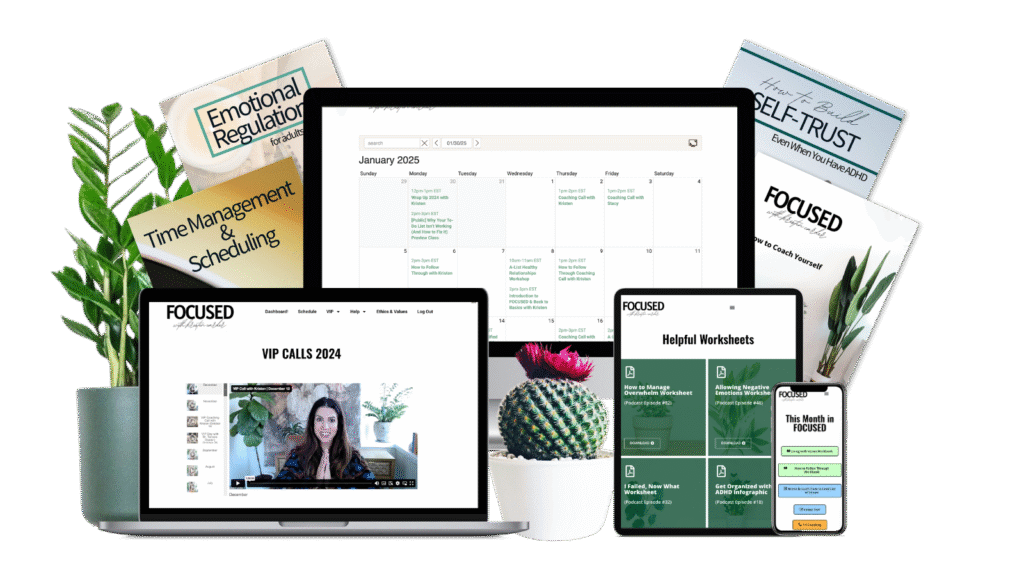


This episode is sponsored by Cure Hydration. You know that moment for me, it’s around like 2 or 3pm when my ADHD brain just decides we’re done for the day. We’re done here. The afternoon slump hits, the lights go off upstairs and suddenly answering an email or doing basically anything feels like climbing a mountain. That’s when I reach for Cure Energy. It’s a clean plant based energy drink mix made with 100 milligrams of natural caffeine and electrolytes so I get the focus and hydration boost I need without jitters, without a crash and without that like I drink battery acid vi that some of the energy drinks have. The peach tea and acai berry flavors are my current go tos. Crisp, refreshing and they don’t taste fake, y’. All. They don’t taste fake. I’ll drink one before recording a session or when I need to get help through like that afternoon drag. And honestly, I. I drink it anytime. My brain just needs to cooperate. What’s wild is that Cure Energy is only 25 calories and has zero added sugar. It actually helps me stay hydrated while giving me energy. Okay, I love coffee, but coffee could never Staying hydrated isn’t just about water. You also need electrolytes. And that’s why I love CUR Cure. It’s clean, it tastes great and it actually works. And remember, Cure is FSA HSA approved, which is amazing. You can use that money to pay for cure and for I have ADHD listeners, you can get 20% off your first order@curehydration.com I have ADHD with the code I have ADHD. And if you do get a post purchase survey, make sure to tell them that you heard about CURE right here on the podcast. It really helps to support the show. Don’t just drink more, Upgrade it with cure with stays under $250 a night. VRBO makes it easy to celebrate sweater weather. You could book a cabin, stay with leaf views for days, or a brownstone in a city where festivals are just a walk away. Or a lakeside home with a fire pit for cozy nights with friends. Or if you’re not a sweater person, we can call it corduroy weather. More flexible and with stays under $250 a night, you can book a home that suits your exact needs. Book now@vrbo.com. Welcome to the I have ADHD podcast where it’s all about education, encouragement and coaching for adults with adhd. I’m your host Kristen Carter and I have adhd. Let’s chat about the frustrations, humor and challenges of adulting relationships, working and achieving with this neurodevelopmental disorder. I’ll help you understand your unique brain, unlock your potential, and move from point A to point B. Hey, what’s up? This is Kristen Carter and you’re listening to the I have ADHD podcast, episode number 96. I am medicated, I am caffeinated, and I am ready to roll. How are you today, my friend? I’m so glad that you’ve decided to tune in. I’m grateful that so many of you are resonating with my story and my perspective on adhd. I feel so connected to each of you and I’m just thrilled that you decided to press play today and tune in for this episode. Now, I shared a few weeks ago that I spent some time and effort evaluating the podcast and my focused coaching program at the end of 2020, and I’ve come to a very deep knowing that one of the ways that I want to improve is making room for ADHD to be represented by people of color. I’m committed to to sharing and resharing the message that ADHD is not just for white people. So let me say it again. ADHD is not just for white people. It doesn’t discriminate. Today’s episode is deep and I’m so pumped for you to hear it. I interview my client Karima. She’s such a beautiful example of what’s possible for a woman of color with adhd. Karima speaks of her experience as a black girl growing up in an all white village in France, how she was labeled a problem child from a very early age, how she dealt with both racial bias and ADHD bias, and how an ADHD diagnosis later in life has helped her to understand and accept herself. Stay tuned for some major encouragement from Karima. I was literally covered in chills at so many different points in our conversation while she was talking. You guys are going to be so blessed and inspired by her words. But first, my friends, before we get to the gold that is this episode, I want to highlight for you one of my colleagues, an ADHD coach named Inger Shea. I mentioned in my recent apology that I will be highlighting black ADHD coaches on each of my upcoming ADHD is Not Just for White People episodes, and today is no exception. I’m happy to tell you about Ingershay. First of all, thank you. The tagline on her website is everything. Listen to this. Inger Shea shows what it looks like when women of color are leaders. You guys. Yes, so good. Inger is a public speaker who offers workshops on personal development and leadership training. She works with organizations as a corporate coach, coaching staff, and management one on one. And she also coaches individuals privately, both in person and remotely. If you’d like to connect with Inger, and I recommend that you do, Visit her website, Ingershay.com or find her on Instagram Ngershay. I will of course link her info in the show notes to make it nice and easy for you to find her. Okay, lean in. Listen up. My dear, dear friend, my people. This episode is for you. Think for a second about your childhood. Did you get in trouble because of your ADHD behaviors? Were you misunderstood? Listen and learn from my dear client, Karima. Hi. Hi. Well, I’ve been looking forward to it. I’m so glad I saw that you posted in Slack today that you’ve been having a hard day. I’m. I’m trying to get a grip on ADHD with my current life, but obviously with what we’re going to be talking about today, it relates to the childhood. It relates to. It’s still a raw nerve because I’m trying to be a better person now. Obviously, you can’t change what happened in the past. It’s all the emotions and the overwhelm and, and procrastination and. And everything that. That happened today. Yeah. You know, I think that makes so much sense, and I just want to honor that for a minute because in answering the questions that I sent you via email, I can imagine how much emotion that all broug and even memory of, like, trauma and all of that. And so I just want to say thank you so much for making room for that in your life and in your body to even just like, go back there. Thank you. I’m sure that has been difficult. We all have traumas, you know, from our ADHD childhoods, and then that added layer of being a woman of color, I’m sure has made it even that much more difficult for you. Yeah. Well, I would like to thank you as well for giving me the opportunity to talk about it today. I don’t want to be, and I’m not going to be the spokesperson of people of color, but it’s just my. My humble truth. And if that can help just one person out of millions out there, then that will have been worth it. And that then goes back to the burden of all of the negative emotion that you’ve been carrying today. Right. Because it’s like that burden of that negative emotion, even though it’s so difficult, you see the purpose in that. And you see the light that can be shined even from all of that negative emotion. There’s value in story. There’s value in you being willing to come on and tell your version of your ADHD story. Because my version is just one version and I want to highlight so many other versions of what ADHD looks like and feels like and how it presents itself so that people all over the world feel heard and feel seen. And you’re just. I just am so thankful that you’re willing to be a part of that. Well, as I said, I’m really thankful that I have the opportunity to take part. And being adhd, you hear, or at least I heard many times of what you’re saying is nonsense. You’re talking rubbish or you’re talking too much. You’re boring people. And especially in my childhood and talking about the childhood and writing about the childhood today was like, again, I’m gonna talk nonsense. And just like, I’ve always heard in my life that you’re different. People were saying you’re different because of your color and so you are weird because of your color. You talk too much, talk too loud, etc. Etc. And WR about that, I just like came back all. All at once. Yeah, yeah, I’ll just put my story out there and then. And then that’s it. I can’t change my story. This is my story. So yeah, I’m curious, like. And then, like. And then what? I’ll put my story out there and then what’s the rest of that sentence? I guess I’ll carry on. I’ll carry on. Imagine. Yeah, you know, I’ll put my story out there and I’ll continue being me. Yes. Tell me a little bit about yourself. Tell me a little bit about your life and who you are. So I’m Karima. I’m 33. I have a little boy. I’m French, as you can probably tell. I currently live in London, uk. So I was born and raised in France, but my parents are both Moroccan. Beautiful. So tell me a little bit about your racial identity. So you’re from Morocco. You lived in France though, in an all white village. So like, just tell me a little bit about all of that. Well, that’s very complex. I know it’s a loaded question. That’s very complex. I. So I was born and raised in France, raised in an all white village. So there is no mixity or anything. Is French France. Christmas, Easter is. That’s it. So I was born in late 80s, so I’m kind of late 80s, 90s kid. So no Internet at the time. You watch whatever’s on tv and what is on tv? French people. So you are raised like that. You are raised, you know, listening to Britney Spears and, you know, so I grew up being. Being white, being French. But then you come home and it’s all Moroccan. It’s Moroccan. Food is Moroccan. Parents, his Moroccan siblings. Is my mom not speaking French, but then all my friends are French. So I’m later in life when I met more people of color, more people who grew up in black communities. They were telling me, you’re black. How is it that you. How is it that you eat all those French food and you know, and you speak like a French person and you listen to white music, you don’t listen to hip hop. So is. In terms of identity, it’s a bit strange. I’m Moroccan, I’m proud. But I’m also French because that’s how I grew up. And it doesn’t mean that I’m ashamed of being black or from North Africa. Truly, this is how I grew up. There’s really 50, 50. And also because my. So my both parents are from Morocco, but my dad was from the south, so he was black, really dark skin, and my mom was from the north. So white, really white traits, white skin, white kind of hair. So it was really the two contrasts. You mentioned your dad. When we spoke about this podcast and we were emailing back and forth, you told me that you wanted to record this podcast in remembrance of him. What was that about? Tell me a little bit about that. So my. My parents broke up when I was three years old. And it wasn’t like. Like divorced parents having custody every other weekend or he left and he really left. We knew where he was geographically, but we had literally no contact with him. I grew up really with this sense of rejection and hating on him, really, because every time I was trying to make contact with him, all I remembered about him was this spoken face, not showing any emotion, not talking about things, being silent, but being literally silent, sitting in front of me and being silent. And I was trying to push to have answers about why. Why did you leave? Why are you not calling? Why this? And I remember one day starting to shout, really at him. And I remember him being seated on the sofa and no responding, not reacting. And I thought, what is this about? And my stepmom took me to the side because she saw where it was going. And she said, look, you seeing that he’s all silent and he’s not talking and you think that he doesn’t care, but is grinding in his head at the minute. And he’s gonna start overthinking over and over and over. And even after you’ve left the house, he will sit there and keep on thinking about what you said about the words, and he will have a fit because he was epileptic. And that sentence stayed with me. And it was so frustrating because he was the only one who could give me the answers, and he wouldn’t, and I wouldn’t be allowed to ask the sensitive questions. And that led me to tell him, I never want to speak to you again. And eight years after our last meeting, he passed away. He passed away one week before I gave birth to my son. And it was a few months before I had my diagnosis, my ADHD diagnosis. And since then, I started understanding about adhd. I started understanding that severe ADHD that is untreated can lead to having epilepsy. And then I started just putting the pieces together. And also the fact that if you have adhd, there is a chance that one of your parents has adhd. So all of these, plus the. The memories that I’ve had of him, plus the things that I was hearing about him, the anecdotes. Yeah, I am strongly convinced that he had adhd, and that has just changed my perspective about him and about adhd. So he. I heard many times that he was embarrassed at the way that he left and that he didn’t know how to tell us. But then at the same time, when we were trying to reach out to him, he was shutting the door. And I do believe now that he was shutting the door because he was struggling with his emotions. He was ashamed of that one action that he took many, many years ago. And he’s let his impairment, plus the weight of the culture to just consume him. So it’s sad because he had to pass away for me to start feeling closer to him. So that’s also a message that I would like to share today, is culture and ethnicity should be enriching. It should be an asset. It should be a value added. It shouldn’t be a burden. Don’t let your culture or your roots be a burden about not sharing emotions, about not seeking a diagnosis. ADHD doesn’t only happen amongst the white community. Everybody can have adhd, and you shouldn’t sit there in silence and suffer in silence. It’s not a weakness. To have ADHD is the beginning of your new life. I am covered in chills from head to toe. That is so profound and so important. Talk A little bit more about culture not being a burden or ethnicity not being a burden. What do you mean by that when you say that? Or how did you experience it as a burden? Or maybe you think your father experienced it as a burden? Well, the way that I. I can only guess or interpret how my dad would have felt it as a burden is he. He didn’t have a brother, and his dad passed away very early on, so he was the only man in the family. He was. He had to. He had to feed his family with his wife and kids, but also support his mother, his sisters. And I think that he just. He just couldn’t be weak. He had to be the man of the situation. And also, it’s. It’s. So we have to put in context that in the 70s, 80s, nobody knew about ADHD. So if you have a character flaw is because you’ve got a character flaw. If you are not finishing a task, it’s because you’re lazy. If you are always late is because you’re late, you don’t want to be on time. And people judge. People judge a lot. And particularly in northern African culture, people judge. A man should be this, should be that, and should portray in a certain way. And I remember my mom and relatives saying, oh, my God, you’re just like your dad. You can’t stop talking. Oh, my God, you’re so late all the time that you’ve inherited this from your dad. So they think that this is a trait of character. It’s like this. And also, we don’t talk emotions. We don’t stop until we drop. Yeah. We just. Yeah. We don’t talk about how we’re feeling because feelings are not important over there. What’s important is get up, work, get money, buy food, feed people. Emotions, they have no place. Right. Irrelevant. They just don’t even matter. Yeah, yeah, yeah. When you remember people saying, like, oh, my goodness, you’re just like your dad, and then now you are making the connection that I think my dad had adhd. What’s that like for you? I’m like, yes, yes, I am like my dad. Yeah. I love that I am like my dad. We have what we have, and it’s not our fault we were born like that. Does that make us bad? Does that make us half people? No. And it makes me. It makes me love my dad even more that, yes, I am like you. You sat and suffered in silence, and I will not do the same. That seems like that is just so honoring to him, to love him and to develop a new relationship. With him even after he’s passed away, and then to. In his honor, in his memory and, like, remembrance of him, like, learn to take care of yourself and learn to support yourself and learn to take the steps that he just wasn’t equipped. He. He just didn’t know to take or. Or didn’t, you know, wasn’t able to. For some reason. I think he. Yeah, I think he didn’t know because he probably never heard of that. Yeah. But even though he. I think he’s never gone to or considered getting help because he had so many people to look after that he didn’t have time to look after himself. And in the culture, if you’re the only man of the family, you’ve got the burden. You’ve got to look after your mom, you’ve got to look after your sisters, you’ve got to look after all the women of your family, and you don’t have time to look after yourself. You need to be a man first. You need to honor your parents. You need to honor your family. The way you honor your family is by being strong. Yeah. This is why I always come back to a thought that I think serves me very well, and I think it serves a lot of my clients, too, which is, like, it’s always a privilege to have a diagnosis. Always. Right. So even though some of us maybe get it later than we. Than we want to, I think of all of the people out there, like your dad, who just didn’t have that luxury of knowing and having a diagnosis or even having space in his life to be able to, you know, have the time and the money and the energy to seek out help or the support or. Yeah. So I just. I’m so thankful, Karima, that you received a diagnosis. Yeah, well, me too. Me, too. Tell me a little bit about that process. What was that process like for you? So I had my diagnosis in August 2019. Yeah, 2019. So that was a few months after I had my son. And I had always experienced those. What I know now of being adhd, but I was always trying to find rational reasons behind that, or at least the reasons that I was being given. You’re aggressive because you’re from the south, you are uncontrollable because you coming from a broken home, things like that, just fog that would divert you from looking at. Maybe it’s adhd. And then when I got pregnant, the ADHD plus all the hormones, it just became something else. And so forgetting about things, being late, being over emotional, and again, people were saying, oh, that’s baby Brain, that’s just you being pregnant and wait until you give birth and then you’ll get back to normal. But I never got back to normal. Yeah. So I thought, now, now I need to seek help because there’s. That’s actually ruining my life. I’m always crying and forgetting things and I can’t look after my son properly and I’m overwhelmed. But obviously I’m not the first person to be adhd. My nephew was the first person being diagnosed adhd, so it wasn’t. Me. Seeking help in the direction of ADHD was not coming out of the blue. Yeah. Tell me about your relationship with your sister and how she encouraged. Encouraged you for nine years. Right? Nine years, yeah, nine years. So that was maybe in 2010, around this time that my, My nephew. So my, my sister’s son started having problems at primary school and so we’ll probably get back to my story in primary, but his story in primary was similar to mine. He’s aggressive, he’s rude, he’s trouble because he’s got a funny name and he’s not really from here and he’s the only non white little boy in the school. So we were in a village, so people don’t try to dig any further when they can have excuses right in front of them. But funny that he wasn’t from a broken home. He had mum and dad together, they weren’t living in a council estate. So we’re still applying the stigma that you guys were applying to me like 12 years ago. But this is not the same situation here. Mom and dad are working, mom and dad are still married and they have a united home. And my sister just fought and battled to protect her son, really, from this stigma. And she took him literally everywhere to seek a diagnosis and to get support because the school just wanted to get rid of him, his. His trouble. So he changed schools. He. He had. I can’t even recall how many schools he had. And he got medicated. And my sister just kept telling me, you’ve got the same thing. You’ve got the same thing. You need to try Concerta. Nah, leave me alone. Leave me alone. I don’t have anything. You know, I don’t have any. I can take care of myself. You need to try Concerta. Go to your doctor and ask for Concerta. Oh, my goodness. Is that the med that you’re on right now? Yeah. Oh, my gosh, that’s great. Yeah, yeah, yeah. For nine long years, like I’m telling you, you’ve got the same thing look. You’ve Got the same behavior, you know, you’re acting the same. Yeah, no, no, I don’t, I don’t have anything. It’s just, it’s just who I am. That’s it. So tell us about your school experience because you were, you were in an all white village in France. Right. And you. So you were the only non white family. Yeah. And then also your parents were not together. And then also you were exhibiting adhd, what we know now as ADHD symptoms. I know it might be painful to revisit that, but would you tell us a little bit about it? Yeah, sure. So, yeah, I grew up in an old white village in the French Alps. There was no one that I could relate to because the only non white people I knew were my siblings. Wow. Yeah. Yeah. I’m the only one who is not white. I’m the only one who’s got a funny name. I’m the only one who’s got funny hair, who is a little bit more tanned than the others. I’ve got a lot of siblings, which in the 90s for the, for the typical French family is like they have two or three kids. We were six. Nice era. Six. And everybody had mom and dad. We only had mom. Yeah. But surely you see your dad even though they’re divorced. No. Okay. So it was just being like, I couldn’t be more different. Yeah. And also being raised by a white mum. So you have to, you have to navigate with all those comments, questions and you being a child and you going through. Yeah. My friend has asked me why I’m not seeing my dad and I want to know why I’m not seeing my dad. So that’s just again a slap in the face and nobody is there to reply to you and you and your ADHD and you’re having your emotions coming like a firework. Yes. You being a child is already challenging enough in terms of managing emotions, but you being a child with ADHD is like, what the hell’s happening? And you have no one to support and you have a family that is not used to talking emotions and you have no one that you can relate to. Because people like my classmates, they were in a certain way, but also they were white. So the immediate response was, but because, because they’re white, you know, so you need to be like them. But I can’t be like them. Yeah, but you are, you are different. You are the one in the wrong. Yeah. So you are letting your emotions take over. That shouldn’t be the way. And my mom was so insecure, she had the fear of being rejected. She had just been rejected by my dad and she didn’t want to be rejected by the community. She was already different. So she put in place. I think she’s communicated that fear in us, or at least in me of you need to be like your classmates. You are already disadvantaged because physically you don’t look like them. So nobody wants to hear about your emotions. Nobody wants you to stand out, be like them, be quiet. And if people are bullying you, don’t, don’t defend yourself because you’re already on the hotspot here. You are really close from being permanently, permanently banned. So if you make a wave, then you’ll be banned. So your only way to have friends, your only way to have a social life is to erase anything that makes you you. So that was from my home and from the neighborhood, from school. It was, you are loud, you are disruptive. You, you are, you talk too much. I was the, literally the black swan everywhere I was going. Did you spend a lot of time trying to be quieter, trying to be like invisible, try like. Or did you rebel against that and say like, I’m just gonna be, you know, who I want to be. Or even louder, like I’m curious which direction your, you know, little 10 year old brain took all of this feedback? A bit of both. Okay. I would say being, being told and being repeated that I was talking too much and what I was saying was not making any sense and people would mock me because I’m different. That taught me to be quiet and I guess that taught me to not be myself. So when I started to rebel, it was, I was rebelling. It was almost like I was putting on a show. It was not my true self because I always had this little voice of saying, people will mock you if they know who you really are. Yeah. I started portraying myself in a, in a different way, in an even more annoying way. Because when you are being repeated that you are disruptive and all that, you start being disruptive because you’re not getting your answers anyway. Everybody’s ignoring you anyway. So you’re being disruptive because inside, when you have, as an adhder, when you experience sadness, it can land as anger. Yes. It’s like there’s a miscommunication between how you feeling and how you express it. So it would was all entangled. I was feeling sad and then I was, I was looking like I was aggressive. And because you’re black then people say, ah, she is aggressive. Yeah, well, this is what we thought. And because you’re Feeling misunderstood and rejected. Then you become even more aggressive because it’s not. It’s not like being aggressive. It’s more being like, why? Why is nobody giving me a few minutes to express myself? Why is nobody wanting to help me? I remember of one. Instance at primary school where. So I was 10 years old, so that was already the end of my primary. And I had a classmate who was receiving tutoring lessons from the teacher, like help for homework because she had a lot of siblings at home and dad had left, so the teacher wanted to help her. She was white. Wow. Hello. My dad left when I was three, so he’s left. He’s been gone for the past seven years. Where have you been, teacher? Why? Why not me? Is it because you think I’m a lost cause? He knew I wasn’t doing my homework because he was taking my book and he was marking it and he made some comments and he said, funny, you only do your homework on Monday evening, the day before the test. Because every test, every Tuesday there was a test. I was only doing my reading on the Monday evening. At no point did he come to me and say, is there a problem at home and why are you not doing your reading every night? I would just probably manage to tell him that is because it takes me three days to read a page and that every time that I read a word I’ve got my imagination from flowing and flying. But he didn’t care. So I carried on not doing my homework because at home nobody was listening and at school nobody cared. Wow, that’s heavy. It’s just sad that I think that I’ve been stigmatized and people were looking at the quick answers rather than thinking, maybe she does need a bit of help with the homework. Maybe nothing wrong is going on at home, but it’s just that maybe she needs a bit more time to understand. And the questions in the homework, it was as simple as that. But I think people just put it into it’s a broken home. And you know, mom doesn’t speak French so she can’t help with the homework. So I’ve carried on with secondary school and same. And on my last day at secondary school, I was at the canteen and I have the headmaster coming to me discreetly and saying, at your new high school, if you’re being asked which secondary school you’re coming from, stay elusive. You are kidding me. Yeah. Why? He. He was. I mean, of course we can imply, but did he. Did he say anything other than that? No, but I think we. We understood why I was the Disruptive child. I was the stainless. I was disdained because in the secondary school as well, they weren’t a lot of non white. And I remember one, the other, the other students that were not white, they were in foster care. Oh, wow. What is it like for you now as you revisit these stories, these like memories of your childhood? What’s coming up for you now? Because this must be painful. It is. It is painful. It is what it is. I can’t change the past, but it is painful. But I’m also feeling so proud of myself. Yeah. For who I’ve become now. Because it’s already. Sadly, it shouldn’t be. But it is difficult to be a person of color living in an area of white majority. But when you have ADHD on top of it and you’re already trying to get a grip on your impairment and you’ve got these, all these things being thrown at you for that shouldn’t be. It shouldn’t be. I’m not implying that there is a link between me being a person of color growing up where I grew up and me having adhd. But what I’m thinking is it’s hard to be a person of color growing up amongst white people and it’s hard to be adhd. And when you’ve got both mixed up together, then it’s like, I may sound harsh, but it’s almost like you are drowning and you’re receiving stones on top of you. Yeah. So you’re trying to stay afloat and you’re receiving all these burdens that shouldn’t be. Tell me what you’re proud of. I’m proud of seeking the diagnosis. I’m proud of going out there and trying to change the perspective that people have about adhd. I’m proud of, of what I’ve achieved professionally and academically despite having this, this adhd. Tell us a little bit about that. So throughout my whole school life, I’ve always been. I’m trying to translate it in a American way, like kind of C grade. Okay. Yeah. I’ve always been kind of C grade. I got my, my diplomas and my exams with C grade. It was so frustrating because I knew I was capable of. Of more. But then the day before someone would rub me the wrong way. And you sit your exam and you keep thinking of that thing that happens. Yeah. Oh, my God. Oh, my God. And you can’t go to see that person say, it’s your fault, because truly it’s your fault that you set this exam and you had your, your mind drifting with the argument. And then you. You come home and you have your mom being obsessed with math and science. If you are not good with math and science. And again, I think this is a cultural thing. Math and science are the. They are. They are what makes you look clever or not. Yeah. She always wanted me to be an accountant for some reason. And before me, she was harassing my sisters to be an accountant. So I was rubbish at math and science. Super, super, super rubbish. My brain doesn’t work with everything that’s logical, as you know. So I struggled. I went to university, and when I was about to sit my first set of exams, I went to my doctor and I asked for a note, a sick note, because I was scared of failing. And I was failing ahead of time. Yes, as my amazing coach would say, I was failing ahead of time because I was so convinced that I was going to fail that I thought, I’m not going to sit this exam. And I reset the same set of exams. And I remember the night before having the worst nightmare. And this has happened 13 years ago, and today I can still tell you about the nightmare vividly. And it was all my teachers, all my neighbors, everybody that I had met in the past telling me that I was a failure. Wow. I. I so remember this nightmare because I had the same nightmare last night knowing that I was going to sit on that podcast with you today. Kidding me. It was same. And I didn’t. I don’t recall having that nightmare anytime between. Between point A and point B. Wow. Wow. Yeah. So I. I had my degree, but with C grades. Yeah. And my mom being like, well, you know, you’re so lazy. And then, you know, you’ve always. You’ve always kind of struggled at school. Yeah. Yeah, no kidding, Mom. Yeah. Well, thank you for being here. And when I went to seek my diagnosis, I was caring for a newborn. I was grieving my dad. I was doing a master’s degree. Then the global pandemic hit it, and I still graduated with a merit. Oh, wow. And my last dissertation that I wrote while being on lockdown and looking after my child. And there’s no child care, there’s no family around, and I had a blooming 73% grade. Oh, my goodness. This is the difference between undiagnosed and diagnosed adhd. When you have the right support, when you know that you’re not a failure, you’re not weird. That it’s not written in the stars because you’re black. It’s not a fate because you were born the wrong color. It’s just. I want to say, is just adhd. You just have adhd. Go out there, seek a diagnosis and be a good person. Be the best, best version that you want to be. It doesn’t matter which color you are. It doesn’t matter the. Which generation of immigrants you are. You’ve got adhd. You can help yourself. You can help. You can get the support. You won’t get the support straight away, but do not give up. You are preaching. I love it so much. It’s such an important message. It’s such a. An important message. You know, it is hard out there. It’s hard out there for people of color, but you are all great people. We are all great people. And we can have the same chances. We can all have the same chances. We can all get the right amount of support. We all. We all deserve. Yes, the support. We all deserve it. And you need to go out there and get what you deserve. Our parents didn’t know. Our parents had their own struggles, but we can make history as well. We can make our own history at any time. Any. Any time. Until. Until you’re dead. You’re still alive. Mm. Yes, I am adhd. Does that make me a weirdo? No. I am fun. I am still worthy of getting to know. And I want everybody to believe in themselves. Being ADHD doesn’t mean you’re a weirdo. Doesn’t mean that you are. Your life is ruined. Is getting that diagnosis. Is the switch that you need in your life. Is. You are. I was walking in a dark tunnel, and I was just tripping over the. The setbacks, and I was just knocking myself against the walls. Is it because I can’t walk? No. Is because I didn’t know where I was going. Now that I’ve got this diagnosis, I know who I am. And I can see the light outside out of that tunnel, but the tunnel itself is lit. I am walking at my own pace. Yeah, your. Your white friend is walking faster. Let him walk faster because you can still find gold where you are. You’re building your own life. So much gold. When I got this diagnosis and when I started listening to your podcast, I felt like I’m becoming myself. It took me 32 years to become myself. I am not. I’m still the same person. I’m still a person of color. I still have adhd. I still don’t make sense sometimes, but I’m not ashamed anymore. Yes. I’m not thinking I am like this because I’m coming from a broken home and because I’m not White and. Well, I just want to take this opportunity to thank you for. For everything that you’ve done, because I wouldn’t be sitting here making sense or trying to make sense today if I hadn’t met you about a year ago, because the work that I’ve done with you has been. Has been a game changer. Really. I feel so light. Wow. I mean, if feel. I feel like this is a rebirth. It is such a privilege. I never know what to say to that, but other than, like, it’s my honor, it’s my privilege, it’s the joy of my life. I wouldn’t want to be doing anything else, and I wouldn’t want to be working with anyone else. Like, I’m so glad it’s you. I’m so glad it’s every other, you know, person in focus. I just feel like we are meant to be together, and I. I really believe that. I just. I love it so much. Yeah. Well, I felt like the community, the group, is my family. I have something to say. I just go there, and I know that these people understand me, and we help each other and we talk about things, and it’s a place of. When nobody judge each other. I don’t even know what color these people are, you know, so irrelevant. I don’t know which country these people live in, because it just doesn’t matter. Is. What matters is we’re going through the same struggles, and we just are holding each other’s hands, and it’s all that should matter. Hmm. You have such a beautiful way of telling your story and encouraging people, and I just want to recognize that and honor that because you have a message to share, and I don’t know what that means, but I can tell when you get passionate about encouraging people, that’s all over your face. It’s all in your body language. It seems to really light you up. So I just want to acknowledge that you have a beautiful message to share. Thank you. I think that this episode is gold, and I am so, so thankful that you were willing to revisit the things in your past that bring up emotion that’s hard to sit with. And I’m so thankful that you were willing to have a nightmare last night and be distracted all day long today because your brain was just kind of spinning on this. Like, thank you for being willing to go through. Through all of that so that you could tell your story and say such powerful things that are better coming from you than they are from me. So much better coming from you than they are for me. And I just appreciate you so much. A few years ago, I went looking for help. I wanted to find someone to teach me how to feel better about myself and to help me improve my organization, productivity, time management, emotional regulation. You know, all the things that we adults with ADHD struggle with. I couldn’t find anything, so I researched and I studied and I hired coaches and I figured it out. Then I created Focused for you. Focused is my monthly coaching membership where I teach educated professional adults how to accept their ADHD brain and hijack their ability to get stuff done. Hundreds of people from all over the world are already benefiting from this program, and I’m confident that you will too. Go to ihaveadhd.com focused for all details.