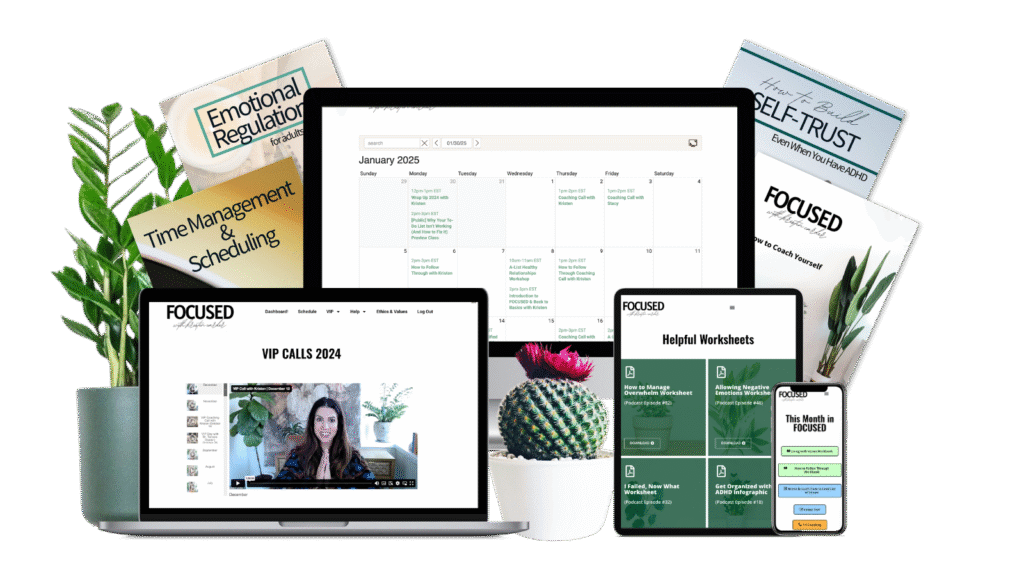


This episode is sponsored by Cure Hydration. You know that moment for me, it’s around like 2 or 3pm when my ADHD brain just decides we’re done for the day. We’re done here. The afternoon slump hits, the lights go off upstairs and suddenly answering an email or doing basically anything feels like climbing a mountain. That’s when I reach for Cure Energy. It’s a clean plant based energy drink mix made with 100 milligrams of natural caffeine and electrolytes so I get the focus and hydration boost I need without jitters, without a crash and without that like I drink battery acid vi that some of the energy drinks have. The peach tea and acai berry flavors are my current go tos. Crisp, refreshing and they don’t taste fake, y’. All. They don’t taste fake. I’ll drink one before recording a session or when I need to get help through like that afternoon drag. And honestly I I drink it anytime. My brain just needs to cooperate. What’s wild is that Cure Energy is only 25 calories and has zero added sugar. It actually helps me stay hydrated while giving me energy. Okay, I love coffee, but coffee could never Staying hydrated isn’t just about water. You also need electrolytes. And that’s why I love CUR Cure. It’s clean, it tastes great and it actually works. And remember, Cure is FSA HSA approved which is amazing. You can use that money to pay for cure and for I have ADHD listeners, you can get 20% off your first order@curehydration.com I have ADHD with the code I have ADHD. And if you do get a post purchase survey, make sure to tell them that you heard about Cure right here on the podcast. It really helps to support the show. Don’t just drink more, upgrade it with Cure. Holidays mean feasting. From cheddar biscuits to French toast bakes, Herobred has you covered with 0 to 5 grams net carb and high fiber options to ensure your holidays stay delicious and balanced. Like their 3 grams net carb pan au chocolat, Herobred is offering 10% off your order. Go to Hero Co and use code fall25 at checkout. That’s fall25hero co. All figures are per serving of Hero Bread contains up to 17 grams of fat per serving. See the product nutrition panels on Hero Co for more information. Welcome to the I have ADHD Podcast where it’s all about education, encouragement and coaching for adults with adhd. I’m your host Kristen Carter and I have adhd. Let’s chat about the frustrations, humor and challenges of adulting relationships, working and achieving with this neurodevelopmental dispute disorder. I’ll help you understand your unique brain, unlock your potential, and move from point A to point B. Hey, what’s up? This is Kristen Carter and you are listening to The I have ADHD podcast, episode number 142. I am medicated, I am caffeinated, I am pumped up to be here with you, and I am ready to roll. Welcome, welcome. Glad you’re here. Glad you pressed play on this podcast. I don’t take it for granted. I don’t take your attention for granted. I know that you’ve got a lot going on. I know that you have adhd. I know that you ain’t got time for bs. And I’m just really glad that you decided to press play that you decided to spend your time with me today. I feel so connected to this community, to, to those of you listening. I know you’re all over the world. I adore you. You are my people. I’m so glad that you’re here today. There’s not much to report. There’s really not. Especially since I am recording this like five minutes after I just recorded the last one and full disclosure of all of the podcasting things. I was on a roll and I was like, let’s just make it into a part two. And so here I am for the part. Here I am. I do have my winter jacket draped over my lap like an old lady. And I’m really looking forward to answering some more of your questions. I think it’s really fun when we can just hop around to different topics throughout the episode and have a brief discussion about things that affect all of us every single day. So if you didn’t listen to part one, it’s no problem. But essentially, I polled my Instagram audience on questions pertaining to ADHD or life coaching or whatever the case may be. And so I’m choosing some of the really relevant questions that I think would be helpful for all of us, all of you, to hear and engage with. We’re going to chat about some of those today, but first, I’m going to shout out one of my A list clients, Becky. And the reason why I’m doing this is a couple of reasons. First of all, I am an ADHD coach who has a large group coaching program called Focused. And in that program, I work with adults with ADHD who are looking to work on self development and move their lives from Point A to point B. So they know they. One of the things that we work on right away is like, you are fully worthy, fully valuable, fully loved, fully accepted, just as you are right now. But I know you have goals. Your goals don’t make you a better person. You know, if you accomplish your goals, you’re not any more worthy or valuable or lovable when that goal is accomplished. But it is really fun to accomplish goals. It is really fun to get things done. It is really fun to kind of supercharge your life. And I want to shout out Becky because she is someone that is accomplishing goals. And I’m seeing such a big change in her. I actually was able to coach her last week. So what we do is we have these essentially webinars and everyone shows up to the webinar and I’m leading the call. So I’m on the screen. Everybody else is like, not. They’re just like at home in jammies or at work listening or on the road or whatever. And if you want coaching, you raise your zoom hand. So you click the little raise hand button. And then I bring the person on to have a face to face, you know, essentially over zoom, a face to face conversation. So I get to meet and engage with so many people. And usually we get through three or four or five people per call who want coaching. And it’s so fun. And so last week when I was coaching Becky, I was just so enthralled. Is that the word? I was just like, so enamored by the changes that I’ve seen in her in the last year. So I’ve probably coached her five times in the last year and my gosh, I noticed such a huge difference in her. And then she even posted in our group, so I wanted to read it to you. So she wrote, well, okay, so like 6 sidebar here. The reason why I called her an A List member is because once you’re in focus for a year, you get a bunch of special privileges. And we call it the A List. So when you’re in focus for a year, consecutive, you know, 12 consecutive months, then you’re on the A list. You’re in that special group. And so this was her, I think this was one of her first posts in the A List channel in our Slack group. So she said, after a year in focus, I’m ready to change my handle to, to Becky 2.0. I responded to her. I said, tell us why we want to celebrate with you. So here’s what she wrote. She said, because I’m not in the dark anymore. I’m learning to coach myself through many situations. I’m not nearly as depressed anymore. I’m finding I have so much more space for my kids emotions because I am able to accept my own emotions. I’m ready to be the new me that is learning and is okay with it. Oh my gosh. Isn’t that just so beautiful. I’m so proud. I’m just so proud of her. So anyway, I wanted to shout you out Becky and tell you that I love you and I wanted to invite you listener to join Becky and me in Focus. If you are someone who wants coaching support, scaffolding a path way a map to get to your goals without feeling like you have to change your personality or who you are without feeling like you have to beat yourself up or shame yourself in order to get there. Focus is the place for you. It’s a monthly coaching membership. We have so much fun. You can go to my website. I have adhd.com focused to learn more. All right, let’s get rolling on these questions, shall we? Person asks how do I not feel guilty about taking medication? I’ve been told it levels the playing field, but I’m highly functional. So I think some of you will really relate to this. How to not feel guilty about taking medication. So here’s my response. Guilt is a feeling that is caused by a thought. Okay, so guilt is a feeling, it’s caused by a thought. And my guess is the thought is something like I don’t deserve medication or I shouldn’t take medication because I’m highly functional. Something along those lines. And I just want to remind you here that your feelings never lie. They just never lie. You can trust them. They always tell you exactly what you’re thinking. Thinking. And so if you’re feeling guilt, it’s because of something that you are thinking. And I think the important thing here to recognize is that these thoughts of like I don’t deserve meds or I shouldn’t take them because I’m highly functional. Those are just opinions. Those are just thoughts. And we so often think our brain is just giving us facts. It’s just reporting the news. It’s just telling us the truth. But those are just judgments and that your brain is making. Your brain isn’t reporting the news, it’s just doing what brains do. It’s just judging. Okay, so when you feel guilty, what I would encourage you to do is have the awareness of like, oh, okay, there’s guilt. I’m feeling guilty. What am I thinking? Okay, I’m Thinking that I shouldn’t do this. That’s just a thought. That’s just a judgment. I can choose to believe it, or I can choose to just kind of let it go. And my thought personally is that if you have adhd, you deserve to be medically treated for it if you want to. So I would encourage you to tolerate the feeling of guilt. It might continue to come up for you. That doesn’t mean that you make a different choice. Right? You don’t have to act from that feeling of guilt. You can just notice that feeling of guilt. You can just observe that feeling of guilt. Oh, that’s really interesting. I’m feeling guilty. I’m believing that I don’t deserve this. I’m believing that I shouldn’t do this. Let me check in with myself. Let me check in with my values. Let me check in with my doctor. Like, is this something that I should be doing? And I mean, if you have a diagnosis and you have a mental health care professional that’s prescribing, the answer is likely yes. And so then you can just notice the guilt and let it be there with you and kind of send it on its way. Make a choice that serves you and your goal. That’s what we want here, is to make a choice that serves you and your goal. So if you’re feeling guilty, that’s okay. Make sure that the actions that you’re taking, though, are actions that serve you and they serve your goal. Here’s a funny one that I think it will be relatable. Does your ADHD make reading anything impossible? So I would say that, yes, 100%. This used to be the case for sure. Especially in school when I just did not care about the content. Whether it was high school. I didn’t care about most of high school. Like, I. I didn’t. I just did not care about, like, the scientific method. And I don’t know, like, learning about all of the things that don’t pertain to me and my goals and what I want to do. And so when I had reading in high school, I would have to reread it over and over and over and over. And I hardly retained anything when I read in college. It just depended on the class. If I was interested in it, I would totally be able to read it, and if I wasn’t interested in it, forget about it. And now it’s really interesting because I get to read whatever I want to read. It’s so fun. So I go between. I kind of hop between, like, audible, which is like, audiobooks. And paper books. And a lot of times if I’m feeling fancy, I will buy the same book on Audible and paperback so that I can kind of like, if I want to listen in the car or if I want to listen while I’m cleaning, I can do that. But then also I can have a hard copy of it. I really do like to have paper copies. I can underline and kind of leave myself a trail of what’s important. But I will say that I’m extremely inconsistent in my reading. I go long periods of time without reading anything at all. And then I’ll go long periods of time where I read every day. And it is one of the things that helps me to rest and really feel relaxed. So especially when I’m in a time of stress. I do try to prioritize reading because it really does help me to relax. But I’m extremely inconsistent, as is my custom. This is an interesting one. I wonder if this is going to trigger anybody. So. So I’m just going to say, like, we’re going to talk about working out. I have a different perspective on it than most people. I invite you to just kind of open up to my ideas and if you don’t like them, it’s fine. You totally do not have to adopt my way of thinking. They say, I know I need to work out, I want to. But to actually do it is impossible. I have no motivation. And my response is, why do you need to work out? Like, actually, why? Why do you need to work out? I think that that thought, it’s not a fact, it’s a thought. That thought I need to work out is probably bringing up some feeling of resistance, dread, rebellion. It’s like, I don’t want to. She’s saying that she wants to. But like, if I was in a face to face coaching session with this person, I would dig at that like, I want to situation. Because if we actually want to do something, if we actually can develop the desire around it, then we will do it. I think what they’re referring to here is they want the outcome of it. They don’t actually want to work out. They want the result of working out. They want to, you know, they want to be finished with it. They don’t actually want to participate in the workout. Does that make sense? So I think it’s really important that we tell ourselves the truth. And if I was in a coaching session with this person, I would say I would really help them to understand. Like, if you have no motivation, then you don’t want to do it. There’s something there that you just, like, don’t want to do it. You want the outcome of it, you want the results of it. You want whatever, like, positive. I can’t think of any word about result. Positive result comes from working out. But you don’t actually want to work out or you would work out, right? So. And I would also question the need to work out. And I got coached on this a ton a couple of years ago because I also had the thinking or, like, the belief that successful people work out. And I do want to blame Rachel Hollis for this belief. I know I’ve mentioned her in, like, Throne Shade a couple times on this podcast, but I. I do want to say that she is one of the main reasons why I had this belief, because she had all of this, like, workout porn all over her Instagram. And it was like, you know, you need to wake up early if you’re ever going to accomplish your goals. You have to work out. You have to. Her two big things were wake up early and work out. The two things that I sucked at the most in life. And I eventually unfollowed her because I was like, this is nonsense. But it’s really hard not to believe a quote, unquote successful person when they’re telling you, like, this is the pathway. You have to wake up early, you have to work out. And I will tell you that I really don’t wake up early. I mean, seven is not early. She’s. Anyway, I don’t really wake up early and I work out, like, when I want to, and I do it on my terms, and. And I enjoy moving my body, but I don’t do the whole, like, successful people work out. That’s not true. There are some successful people who work out, of course. Of course. Then there’s also some successful people that don’t work out. And so I really want you to question. I just want you to question it. What does it mean to be successful? And if you want the result of working out, if you want the benefits of working out, okay, that’s fine. But be honest with yourself. I don’t actually want to work out. I want the benefit of it. I want the results of it. I want what it affords me down the road and tell yourself the truth and then build your desire for the actual thing, whatever it is. So, like, build your desire to go to the class. Build your desire to go on the hike. Build your desire to, you know, do squats in your bedroom. I don’t know what you people do. I do not. I Do not do this. For me, working out is like going for a great hike. That is so fun. Or like swimming with my kids. Super fun. That’s about it. That’s about it. Okay, let me go to the next question. This question was from a female and she asked, how do I run my business from home? With a three year old and a one year old, it’s impossible to create a schedule. And here’s what I said. Get some help. I want you to think of any man running a business. We would never expect a man to stay at home, run a business full time or even part time with little children constantly present. Sure. It happens sometimes in partnerships and marriages, like the wife goes to work, the husband stays home, and. Or whatever. Sure, sure, sure. But like in general, 99.9% of the time, we would not expect a man to work at home with a one year old and a three year old. Right. And so let’s not expect you to do it. Let’s either get help or let’s table the business idea. But I agree. 3 and 1. I have three kiddos. I did have a one year old and a three year old at one point and it was the wildest season of my life. So I would just say either get some help, and that might be, you know, from a friend, it might be free help from a friend, from a parent, from a partner, whatever, or it might be hiring help, but don’t expect yourself to function and have a schedule. With two toddlers at home and an ADHD brain, there will be people out there who say, who say you can totally do it. And they will probably also say, pay me money and follow my five step formula. And they will probably give you lots of great neurotypical advice. Um, but in my estimation, and I hope this doesn’t like fire you up, or maybe I do hope it fires you up in a good way. Like, yeah, we shouldn’t be expected to stay at home and parent kids and be interrupted a million times and keep these kiddos alive and run a business. Mm, mm. I said no. Okay, moving on. Okay, I got actually a lot of questions about imposter syndrome, so I think it’s gonna be really important to talk about and maybe we should dedicate an entire episode to it sometime. A lot of questions around imposter syndrome at work, but I’m going to answer this one specifically. So this person asks, imposter syndrome, changing career soon. And I’m feeling intimidated. And my response to this is, of course you’re feeling intimidated. You’re supposed to Feel intimidated. You’re doing something completely new. Nothing’s gone wrong here. Your brain is doing exactly what it’s supposed to be doing, which is freaking the hell out. Out. That’s exactly what should be happening, okay? So if you are in a position right now where you are changing careers or changing, maybe you’re moving or you’re changing social groups or whatever the case may be, anything that is new, your brain is going to freak out. Your brain is going to be like, nope, this is a bad idea. We shouldn’t do it. And the reason is that your brain, its whole job, is to keep you safe and to conserve your energy. And so to your brain, there’s nothing more dangerous than something you’ve never done before, right? And so your brain is literally like, hey, we could die. Let’s not do this, okay? Can we please not do this? And also, there’s nothing that takes our energy more than something that we’ve never done before, right? So your brain knows, like, this is going to be hard. This is going to deplete. This is going to be difficult. And so your brain is just really trying to protect you. Imposter syndrome is that feeling that you get when you’re like, I’m a fraud. They don’t know who I really am. If they really knew who I was, they wouldn’t accept me, or they wouldn’t believe me, or they wouldn’t think I’m a professional or whatever the case may be. And we all struggle with this. This is a natural human tendency. Please hear me. When you look around at corporate environments or in leadership or maybe even in politics, like, I promise you, every single person that you look to as a leader struggles or has struggled with imposter. Every celebrity, every athlete, everyone that you look up to has 100% struggled with imposter syndrome. This is normal. It is so normal. It’s so normal, actually, that you should actually expect it to happen. And if you’re not feeling imposter syndrome now and again, maybe your goals aren’t big enough, or maybe you want to consider expanding your goals to the point where maybe you do feel imposter syndrome. I don’t know. You totally don’t have to consent to that suggestion. But that has really helped me to grow and evolve, is to allow myself to feel like an imposter and to do the thing anyway. And I have had several instances in 2021 where I’ve really had to tolerate the feeling of being an imposter and feeling like a fraud. I’ve really had to Tolerate that in my body while holding the truth of like, I am an expert, I do have a place here. I am qualified to do this. I am expired, experienced. I have hundreds of case studies to show that I get people results like all of those things can be true and you can still feel like a straight up fraud. Oh my gosh. So it’s just the experience of tolerating that emotion and then just doing the thing. Tolerate the emotion and take the action that serves you and serves your goal. When we cannot tolerate the feeling of imposter syndrome, what we do is we self sabotage and we keep ourselves from moving forward, we keep ourselves from advancing, we keep ourselves from hitting our goals because imposter syndrome is so uncomfortable and we’re actually much more used to the feeling of failure and defeat. And so even though failure and defeat feels uncomfortable as well, it’s a familiar discomfort. She is preaching today. So if you notice that you are sabotaging yourself repeatedly, what I would encourage you to do is open up to negative emotion and begin to allow yourself to feel negative emotion like imposter syndrome or fear or anxiety and not take action from that feeling, from that emotion. Okay. Whew, it’s big. Okay. This is a question that came up a lot as well. Is there a way to get diagnosed without going through a psychiatrist? I can’t get an appointment. Okay, so the answer to the question is yes, but. So there’s a yes, and there’s also like a but. So if you live in the United States, my understanding and my experience is that a primary care physician can diagnose you if they feel comfortable. Your psychologist, if you go to a clinical psychologist, they can diagnose you if they feel comfortable, but sometimes they just don’t feel comfortable. And so they refer you out to a psychiatrist. If your specific doctor does not feel comfortable diagnosing you and you’re having trouble getting in with a psychiatrist. Excuse me. Then you might want to ask around, look around for a primary care physician who would be willing to diagnose you. If you Google online ADHD diagnosis, you will also be able to find online resources for diagnosis. Some of them are out of pocket, but from what I have heard, they are fairly reasonable. Of course, I’m only talking in context of the US Because I’m not sure how other countries handle it. But yeah, you don’t have to be diagnosed by a psychiatrist. Your straight up doctor can diagnose you if they feel comfortable with it. And so it never hurts to ask. And you know, let’s say you Go to your doctor and you say, I’m struggling to get in with a psychiatrist. Would you be willing to diagnose me? And they say, no, I’m sorry, I don’t feel comfortable with that. You know, see if they would refer you to any of their colleagues. You know, do you have any colleagues? Is there any other doctor in this practice that would feel comfortable? Because, you know, I’m having to wait so long for a psychiatrist appointment that I’d really like to get the ball rolling. And the worst they can say is no, right? Like, that’s the worst that can happen, is they can say, no, I’m sorry, I’m not comfortable with that. Or, I don’t know anybody. And then you just move on. Okay, best of luck. By the way, to those of you who are looking to get diagnosed, I know it can be really hard. This question is interesting. How did you process when you found out that you had adhd? How did you cope with getting diagnosed? For me personally, it was such a relief that there was a reason why I was struggling so badly. It was such a relief. I felt so validated, and I was just so happy to have some sort of a solution. And at the time, the only solution presented was medication. And now I know that it takes much more support than just medication in order to thrive. At the time, I didn’t read any books. I didn’t have. Well, podcasts weren’t even a thing, which is wild to think about. And so I really had very little knowledge about it. I did know that these little pills helped a lot. And the first full semester of college of me being medicated, my grades were better than they’d ever been before they went on the fridge. I was living on my own with roommates, and I put my grades on the fridge for the first time in my life. It really was just such an amazing experience for me. So, yeah, for me personally, I felt really, really relieved. But everyone experiences it differently. So if that’s not how you experience your diagnosis, if you are feeling regret or shame or frustration or anger or sadness or whatever the case may be, that’s okay. Like, we’re all going to experience it different, differently. I would encourage you to consider while you’re experiencing those other emotions, maybe bringing in some relief as well. Like, now I know now I have a pathway to support. Now I can start to build my scaffolding. Now I can put help in place. All of that can be really. It can give you some hope for what’s to come down the road. And let me tell you, you should feel. Not, you should let me take that back. I totally take it back. You are welcome to feel hopeful if you would like to, because the future can be bright. Knowing what you know now and having the ability to research and learn and grow, you can begin to make small changes over time that will totally alter the course of your life that maybe wouldn’t have happened if you hadn’t been diagnosed. I’m sending you so much love. All right, let’s see what is next. Oh, this is really interesting. Do you worry about the long term side effects of medication? Okay, so this is a great question and I will just tell you my opinion. From me personally. No, I don’t worry about it. I haven’t read any studies on adverse long term side effects of, of medication. I have read several studies on the adverse effects of not medically treating adhd. I’ve also seen the fallout of people in my life who’ve chosen not to medicate their adhd. And so for me, the benefits far outweigh the risks. And that again, personal decision. So I also don’t want to worry. I don’t enjoy worrying. It’s not something that I want to do. And so if I’m going to worry about anything, it’s going to be like, about my kids and like, are they okay? Honestly, even so now I have two kiddos who have been diagnosed and they are being medically treated, One with a stimulant, one with a non stimulant. And I am seeing the benefits of that in their lives as well, far outweighing any adverse side effects that we might see. So yeah, the medication that my family is taking has been around for a long time. It’s been studied a ton. So I feel pretty comfortable with it. Okay, so I’m going to read this one. How do I choose medication when my partner is against it and they want other options for me? That’s such a great question. And I know that so many of you are dealing with this very thing. You’ve been diagnosed and you are taking medication or you’ve been offered, you know, you’ve been written a prescription and maybe it’s your partner or it’s your parent or it’s, you know, someone in your life is like, oh, you know, those meds are really bad for you, you know, they’re going to be addictive, which they’re not addictive, you know, blah, blah, blah, blah. And they, they want to give you their layperson’s opinion of what you should do with your own body and your own mental health treatment. And so you know, if you’re asking me what you should do, which this person certainly is, what I would do is say thank you so much for sharing your opinion. I adore you, I love you, I appreciate you and I’m gonna follow my doctor’s advice when it comes to my mental health. Done boundary. Like I’m not here interested in non doctor or psychiatrist or psychologists opinion on my mental health. But thank you for your like. Thank you for loving me, thank you for caring about me. I so appreciate your concern, but I’m going to follow my doctor’s advice. Thank you so much. And I think that goes for everybody. Like anything you hear me say, you should always run everything by your doctor. Follow your doctor’s advice for your mental health, not your spouse’s advice, not your mom’s advice, not your friend’s advice. So then they said, okay, I’m going to reword this. How do I become confident in my own choice for my own body? And that’s a long road, but I think it starts with a decision that you are in charge of you. That’s a very simple answer and I know I’m just kind of like oversimplifying it, but I really do think it starts with the decision that you are an autonomous adult and you are in charge of you. Nobody else is. Nobody else is in charge of you. You are in charge of you. You get to decide how you treat your medical and your mental health things. Wow. That’s the only word that came. That’s the word we’re going with. You are in charge of you. Okay. And I think that’s really hard, especially for those of us who grew up with trauma, because we were often made to feel extremely powerless and we were put in positions where we actually were very powerless. And so we have a lot of trauma response like fight, flight, freeze or fawn. When it comes to people that we see see as authority in our lives, which might be like a best friend or a partner or even like a kid or whatever, we have these often have these trauma responses because we’re not used to feeling empowered. We’re so used to feeling powerless. And I would just really encourage you to do the hard work of feeling empowered, whatever that looks like for you. Maybe it’s therapy, maybe it is free resources online, maybe it is life coaching. Maybe it’s joining my group coaching program. Whatever the case may be, you deserve to be an empowered adult who feels the agency and the autonomy to make decisions for yourself. All right, this is a quick one. This person says, I’ve tried one medication, it seems to work. Any reason to check out another? My opinion is no. If it’s working for you, great. No reason to check anything else. Don’t have FOMO about your meds, guys. You don’t need to have, you don’t need to have fear of missing out. Like, what if there’s something better out there? Like if, if you find a medication that works, great, stick with it. All right, we’ll do just a couple more. This person says, I’m going in for a diagnosis appointment in a couple weeks. Any tips? So first of all, congratulations. This is a huge, huge step. My advice is always go in as prepared as possible. Go in with a symptoms list printed out. I highly recommend that you circle the symptoms that you identify with. I have a symptoms list on my website. I have adhd.com and then also there’s a bunch of symptoms lists in books, like Dr. Russell Barclay’s book Taking Charge of ADHD. That’s the most comprehensive one, I think. I think in Ari Techman’s book there’s a symptoms list as well. His book is More attention, less deficit. But grab a symptoms list. Circle the ones that you identify with. If you have relationship with your parents, chat with them about what they saw in your childhood. Chat with them about your grades. Like total bonus points if you’re able to take in your any report cards or anything like that. But in my opinion that is totally not necessary. But yeah, like any information that you can gather. Because here’s the thing, if you do have adhd, your memory really does suck. And you will likely feel some sort of feeling during the appointment, whether it’s like excited or anxious or like adrenaline. And it might make it so that it’s hard for you to express yourself during the diagnostic appointment. And so I always recommend that someone takes a symptoms list. Circle’s the one. Make notes like prepare ahead of time for that and if you need to ask for help with that, do so. Maybe you’re just like, I know I’m going to put this off, I know I’m not going to do it. So I’m going to ask my friend, my partner, my sister, my husband, whatever to help you with that. Do it. And like I said, I have a psychologist approved list of symptoms on my website that you can print out. Okay, this one is deep, y’. All. How do you communicate with a non ADHD partner? What kind of books, websites, Instagrams, whatever. And I am going to give an answer that I don’t think this person was really expecting, because in my experience, it’s the ADHDer, the person with ADHD that needs to become an expert on adhd. They’re the ones. You’re the one that needs to know how to fix you, how it manifests in your life every day. And then you can, like, gently begin to share those experiences with your partner. And this is the hard part. Share them matter of factly without looking for validation. You don’t need your partner’s validation of your diagnosis. You’ve already been diagnosed. You have a medical validation of your diagnosis. You don’t need your partner’s validation. Right. So I do have a bunch of podcast episodes on this topic. It is really, really hard. There was a shift in my marriage when I decided to really accept my own diagnosis and kind of point out certain things that I knew were annoyances but also symptoms of adhd. So, like me struggling with leaving the house in a timely fashion, or me kind of bouncing around and being distracted, and I would be like, listen, I know is frustrating, but also this is a symptom of adhd. And then there’s this, like, really difficult, awkward conversation about, like, well, are you just going to blame it on that? I’m like, well, I’m just giving you information about it. I’m not blaming it. I’m just saying this is actually a symptom. It’s a difficult dance to navigate, but I would really say that, like, you become the expert. Don’t worry about them becoming the expert if they want to read, like, some books on adhd, like Taking Charge of Adult ADHD or. I’m always saying that one, because that’s honestly my favorite one. Ned Hallowell just released ADHD 2.0, which I think is amazing. So all of those would be great. But this is your diagnosis, and so I would encourage you to own it. This is a good one. I’m excited to talk to you guys about this. So this person says, I’m feeling the wrath of whatever the hell is going on between ADHD and. And my cycle. Any tips? And my tips are like, I don’t really have any tips because I’m in the same boat. But I want to let you know that I’m already planning for podcast episode series for March, which is International Women’s Month. And so we’re gonna have ADHD women’s experts on the podcast to talk all about women and hormones and how ADHD affects our cycles and perimenopause and menopause and child rearing and all of that. Stuff. So I’m very excited about that. Yes, I am a woman. Yes, I have adhd. Yes, I’m an ADHD expert, but I do not assert myself as a women’s ADHD expert. I actually. I think I kind of resist learning about that because I think I feel so affected negatively by, like, PMS and my cycle and all of that that it’s actually been difficult for me to do the research and learn about it. And so I’m really looking forward to some experts on the podcast in March. So really, really excited about that, and so be looking out for that. All right, last question, and then we’re gonna be done. Here’s a great question. How do I get out of a rut or a phase of total avoidance? It feels like I’ve had zero motivation. So here’s what I want to say to this, because I think this is going to be really, really relatable. When you are in a rut or in a phase where you are just avoiding everything, you have no motivation. I want you to recognize we avoid because of how we feel. Avoidance is an action, or it’s actually like, in action, right? Avoidance is an action, and it’s caused by a feeling. So it’s very likely that you’ve got a ton of unprocessed emotion that you’re trying to ignore or escape or resist. So avoidance is always going to be caused by some sort of gross negative emotion that you don’t want to feel. So I avoid going on Instagram Live because I am afraid, afraid of what’s going to happen. I avoid engaging with my family because I feel like a failure as a mom. I avoid whatever you fill in the blank for you. And, like, the only reason why I know this is, first of all, I’ve been trained on it as a life coach, but also I experience it and I have observed it in my own life, and I see it in my clients. So being able to identify the emotion that you’re experiencing and wanting to avoid and then process that emotion and learn to live with it in your body is the solution to stopping the cycle of avoidance. And that that is a learned skill. So if you don’t feel like you have the skill to do that, you might want to add to your scaffolding. You might want to find a therapist or a coach or someone who can come alongside you and teach you the skill of identifying your negative emotion, processing it, and then being able to either shift into a better feeling emotion or be able to take action despite the emotion being there. So you know We’ve talked about imposter syndrome on this podcast, and, you know, imposter syndrome is one of those emotions that, like, sometimes we just have to tolerate it in our bodies and do the thing anyway. And so I like to think of it like, put it in your little fanny pack. Fanny packs are in. I actually got two for Christmas. I can’t even believe that my husband would be mortified if I told you, if he knew I told you that, which he probably won’t know because he doesn’t really listen to the podcast. Shouldn’t we judge him for that? Oh, my gosh. But I got two fanny packs for Christmas, and I want you to think about putting your emotion, your negative emotion into a little fanny pack and just kind of carrying it around with you. It’s not a. We don’t have to judge it, but we also don’t have to take action from it. We can just be like, okay, I am feeling shame right now. Shame feels terrible. If I allow shame to be the fuel that drives my actions, I’m just gonna lay here on the couch and not do anything. I’m gonna procrastinate, I’m gonna avoid, I’m gonna hide. But if I can open up to shame, put it in my little fanny pack, bring it with me on my journey, then I can take action that serves me and steers me toward my goal. I hope that was really helpful. I actually have several episodes on emotions, on processing emotions, on opening up to emotions, on learning about your emotions. So if you want a free resource for this skill, go find those episodes and listen to them. I know they will be very helpful to you. I had the best time today. This was really fun. I think we should do it. I think we should do it more often. I love this Q and A session. Let me know if you love it. I think it’s really fun. Okay, I’m going to talk to you so soon. Have a great day. See you next week. Bye. Bye. Hey, Adhder. I see you. I know exactly what it’s like to feel lost, confused, frustrated, and like, no one out there really understands the way that your brain works. That’s why I created Focused. Focused is my monthly coaching program where I lead you through a step by step process of understanding yourself, feeling better, and creating the life that you know you’re meant for. You’ll study, be coached, grow, and make amazing changes alongside of other educated professional adults with ADHD from all over the world. Visit ihaveadhd.com focused to learn more.