


Podcast Episode #144: Problematic Positive Thinking

Listen or Watch this episode on:

About This Episode

“This will just take me 5 minutes” or “It’ll be fine” or “It’ll be different this time” are examples of potentially problematic positive thoughts. Positive thinking isn’t always helpful, and maladaptive positive thoughts can get us into a lot of trouble. In today’s episode, I’m going to help you to identify your own problematic thinking and give you strategies on how to combat it. 

Visit [www.ihaveadhd.com](https://ihaveadhd.com) for more resources

Hang out with me on Instagram @i.have.adhd.podcast

See Privacy Policy at [https://art19.com/privacy](https://art19.com/privacy) and California Privacy Notice at [https://art19.com/privacy#do-not-sell-my-info](https://art19.com/privacy#do-not-sell-my-info).
Episode Transcript

This episode is sponsored by CURE Hydration. All right, I’m going to be real with you. Drinking water is boring. My ADHD brain is like, wait, we have to do this again? Like every day, multiple times. What in the world? And because I’m running from meetings to coaching calls to kid chaos, staying hydrated is not something I’m naturally good at. It’s not something I naturally think about. That’s why I’ve been obsessed with Cure hydration packs lately. CURE is a plant based hydrating electrolyte mix with no added sugar, only 25 calories, and it actually tastes good. The watermelon and berry pomegranate have been on repeat for me. I’m actually like really running low on those flavors, which is so sad. They’re refreshing without being too sweet or artificial. It feels like my water finally has a little bit of personality, which I enjoy. I really do. What I love most is that CURE uses a science backed formula that hydrates as effectively as an IV drip. So when I’m scrambling through my day forgetting my water again, CURE helps me to catch up fast. I throw a few packs in my bag and it makes drinking enough water simple, which for my ADHD brain is basically a miracle. So staying hydrated isn’t just about water. You also need electrolytes. And that’s why I love Cure. It’s clean, tastes great, and it actually works. And bonus, CURE is FSA HSA approved. So you can use those funds to stay hydrated. The smart way for I have ADHD podcast listeners, you can get 20% off your first order@curehydration.com I have ADHD with the code I have ADHD. And if you get a post purchase survey, make sure to tell them that you heard about CURE right here on the podcast. It really does help to support the show. Don’t just drink more water, upgrade it with cure. Welcome to the I have ADHD podcast where it’s all about education, encouragement and coaching for adults with adhd. I’m your host Kristen Carter and I have adhd. Let’s chat about the frustrations, humor and challenges of adulting relationships, working and achieving with this neurodevelopmental disorder disorder. I’ll help you understand your unique brain, unlock your potential and move from point A to point B. Hey, what’s up? This is Kristen Carter and you’re listening to The I have ADHD podcast, episode number 144. I am medicated, I am caffeinated and I am so ready to roll. How are you? How are you? Hello Are you medicated? Are you caffeinated? Are you hydrated? How’s it going? Have you eaten anything today? Just take a second as we get started here to tune into your body and see if there’s anything that you need while you’re listening to this episode is a great time to take care of you. I mean, you’re already taking care of you by listening. Another great way to do it is like checking in. Do you need a snack? Have you used the restroom lately? Like, what do you need right now? Take care of your needs while you listen to this episode. And I cannot wait to get started with you. Today we are chatting about problematic positive thinking, which is something that Dr. Russell Ramsey brought up in last week’s episode. And I’ve seen it in myself, I’ve seen it in my clients over and over, and I really wanted to address it with you here. I think it deserves its whole own episode to highlight the problematic positive thinking that we, you know, inadvertently buy into in our lives. So if you haven’t listened to last week’s episode, it is so good. Go and do that. It is a goodie. And I know that the audio was a little off. I’m sorry. We are working hard behind the scenes to correct the audio for interviews, but it’s taking some troubleshooting, it’s taking some brain power. So please be patient with me and my team as we work that out. But seriously, try not to let that distract you too much from all of the gems that Dr. Ramsey has to share with us because honestly, it’s such a rich episode. There are so many good takeaways from that episode, and one of the best parts of our conversation was his acknowledgement that positive thinking isn’t always helpful and that maladaptive positive thinking can get us into a lot of trouble. In today’s episode, I’m going to help you identify your own potentially problematic thinking and give you strategies for what to do when you notice it come up for you. But before we get started, dun dun dun, I’m going to tell you that this podcast is made possible by Focused. Focused is my ADHD coaching program where functional adults with ADHD get help with their self, self esteem, time management, prioritization, planning, and all of the things that go into allowing someone with ADHD to thrive. This month in Focus, we’re studying relationships now. I’m super pumped about this because usually members have to wait three months before they get the relationship content. But if you want access now and you want to be a part of me teaching brand new content on relationships totally live with within the program. Join Focus Today I’ll ship you my revamped, rewritten, redone workbook on relationships right to your home. This course includes four classes on ADHD relationships, four coaching calls led by me, concentrated solely on relationships as they pertain to adults with adhd, and the workbook which I’m going to send to your house, plus all of the other amazing content that’s available within the Focus membership will of course be yours as well. Well, once February is over, the relationships course will go back into the vault and it will be available to all brand new members. After three months in Focus, as is our usual don’t wait for it, go to ihaveadhd.comfocus to join me. That’s ihaveadhd.com focused and get started improving your relationships today. All right, let’s get to our content. Now we’re talking about problematic positive thinking, and this refers to the thoughts that sound positive and even feel positive in our bodies, but they don’t produce good results for us. These thoughts give us a little shot of dopamine or whatever the chemical might be, but they don’t actually do us any good. Here are some examples of problematic positive thoughts and how they might actually hold us back. So first, there’s some version of this won’t take me long, or it might sound like I’ll just do this real quick, or it might sound like this will only take me a second. Something like that. Some version of that. We use this thought, or whatever flavor of this thought. We use it a lot when we know that what we have to do is hard and we want to delay it. We know that the productive thing, the thing on our list, is hard, but we want to delay it. We want to delay the difficult task by getting into something easy or fun first. So we tell ourselves, oh, this easy little thing will just take me a second. And then two hours later, we’ve totally lost track of time and we’ve gotten ourselves off course. We’ve never gotten to the important priority that we were avoiding in the first place. Another problematic positive thought is this time it’s gonna be different. Now, we say this a lot at the start of a new job or a new semester or even a new relationship. This time it’ll be different. Now I understand this. I’ve done this a ton as a younger version of myself. This thought helps us to cope and it helps us to feel better and it helps us to, like, start another relationship because we tell ourselves it’s going to be different this time. It helps us to have the courage to start a new semester because we tell ourselves it’s going to be different this time. So there is good in that. It does give us courage to proceed because we’ve convinced ourselves that it’ll be different. But. But, but, but, but. But it’s also a fantasy in that unless we have different support, different scaffolding, different plan, different system, different help in place, nothing will actually be different. So this time will actually be exactly the same as last time. Now, if you go back and listen to episode 139 of this podcast where I coach one of my focused members who’s an architect, I work with him specifically on this kind positive thought. Now I just adore this dude so much. And he struggled at a few jobs and was in the process of looking for a new job. And he was telling himself, this time it’s going to be different. We had this really raw conversation about how the thought, this time it’s going to be different is just a fantasy. It’s really not helpful because it’s not prompting you to actually put anything into place to make this time different. We’re going to get to more on this later, so hang tight on that, all right? Another problematic positive thought is some version of, I’ll do better tomorrow. I’m going to do it better tomorrow. Now, this is something that I used to do almost every night. I would lay in bed, I would beat myself up for all of the things that I didn’t get done that day. I would feel so much shame, so much defeat, so much powerlessness. It really was paralyzing. And in order to combat those horrible, horrible feelings, I would tell myself that tomorrow will be better. I would fantasize about all of the things that I would get done tomorrow. And listen, it was a fantasy. I would imagine it. I would picture myself, let’s say, working out or finishing my paper for school, and I would soak up all of the good feelings from that fantasy, and then I would fall asleep. But what I was actually missing in those moments was the actual strategy, systems, scaffolding, support, and all of the awareness that I needed in order to actually make things different tomorrow. Fantasies aren’t enough, you know. Okay, another problematic positive thought that we use all the time is, it’ll be fine. I’ll be fine. This is fine. Gosh, did I hear this one a lot growing up? Yes. Yes, I did. And it’ll be fine. We’ll be fine. It’s fine. You’re fine. Everything’s fine. I have such an adverse reaction to the word fine now. I seriously never, ever, ever use it. It’s the worst F word in the whole effing world. It’s the worst. A Focus client expressed this to the group a few weeks ago. He said that he tells himself that everything is fine with his finances. Meanwhile, he’s overspending and he’s going into debt. So I want you to know that, like, telling yourself that everything is fine doesn’t actually make things fine again. This is fantasy, not reality. And for so many of us. Listen, I understand this. Like, reality is very painful. Many, I would even go so far as to say most of you likely grew up with a lot of pain in your childhood. The it’s fine way of thinking was likely a coping mechanism that you developed as a child so that you could function. I mean, bless our hearts, we did not have it easy. We had to tell ourselves it was fine so that we could move forward. But now that you grown and you’re an authoritative, autonomous adult, you don’t have to cope by telling yourself that you’re fine or that it’s fine. You can engage with reality and make an accurate assessment. If everything is not fine, you’re strong enough to notice, feel whatever emotion comes up and make some positive changes. Last thought we’re going to talk about today is a problematic positive thought. And that one sounds something like, I deserve a break. Now, of course, of course, sometimes you totally do deserve a break, 100%. But we often use this line of thinking to interrupt and sabotage our streak of positive results. For example, I’ve gone to the gym three times already this week. I deserve a break. And then, boom, you’ve interrupted your good streak and you’re no longer consistent. Or, I’ve been working on this project for an hour and a half. I really deserve a break. And boom, positive results are interrupted by distractions on social media. Again, breaks are not bad. Breaks are good. But notice when your brain wants to actually sabotage your forward motion by offering you a delicious distraction of a break. Okay, now, there may be other problematic positive thoughts that come up for you. This is by no means an exhaustive list, and I encourage you to begin to develop an awareness. But in order to do that, we need to answer the question, how do we know if a positive thought is problematic? Like, how do we know the difference between just like a good positive thought and a problematic positive thought? Because not all positive thoughts are a problem. How do we tell the difference between the two? So one big, huge tell is that a problematic positive Thought will take you out of reality, and it will pop you into a fantasy. So you know that little cartoon meme of the dog sitting in the middle of the fire? He’s, like, sitting at a table. He’s got a cup of coffee in front of him. The room is on fire. He’s wearing, like, a cute little hat, and the room’s on fire. And the caption, what he’s saying is, this is fine. I want you to ask yourself if that’s what you’re doing. A truly positive thought is based in reality. So if we picture that meme in our minds again and brainstorm some positive thoughts that might actually be helpful in that scenario of a dog sitting in a room that is on fire, what would some positive thoughts in that moment be? They would sound like a, I know exactly how to get out of here, or I know who I’m going to call for help, or I know where the fire extinguisher is, or, I’ve done this before, I’ve escaped from this before. I can do it again. Those thoughts will also produce a positive feeling, positive emotion in your body, but they’re based in reality. They’re based in the reality of the situation. Does that make sense? So a problematic positive thought will lead you to a fantasy. An actual positive thought will be based in reality. So in the case of my architect’s client that I mentioned earlier, who was starting a new job and telling himself, this time it’ll be different, that was a fantasy because there was no evidence to back it up. Just telling yourself that it’s going to be different doesn’t make it different. A few positive thoughts regarding his new job that also based in reality might be, this time is going to be the same as all the other times, but I will utilize different tools. Or when it gets hard, I know exactly how I’m going to stay focused, or I’m committed to excellence even when the dopamine wears off, or I will implement X, Y, Z, whatever supports to help me as my stress level grows. So he’s not telling himself it’s going to be different. He’s telling himself it’s going to be the same. But I’m going to implement different tools here. I’m going to do something different. I’m going to be different. All right. I’m not going to beat this to death, but I hope you get the picture. So another way to assess whether a positive thought is helpful or is problematic is to look at the behavior that it produces. So does telling yourself, this will just take me 5 minutes actually result in the thing only taking 5 minutes. It’s time to wake up and notice when you’re lying to yourself, my sweet, sweet friend. So does telling yourself it’s fine when your finances are a mess actually lead you to cleaning up your finances? If yes, great, then that thought works. But if not, then telling yourself it’s fine isn’t actually helpful. It doesn’t actually make it better. In fact, it might just distract you from taking action that will help you to clean up your finances. Right, so look at the results that come from your so called positive thoughts to assess whether or not they actually are positive and they actually are helpful to you. So noticing and being aware of the thoughts coming into your brain, that’s the tough part for those of us with adhd, adults with adhd, we just like to go, go, go, go, go without observing our thoughts. Most of us are not conscious to the thoughts that come into our brains. So this is where some mindfulness training would be really helpful. If you want to catch your problematic positive thinking, you’re going to need to be aware that your thoughts are, are going through your brain like you’re gonna be. You’re gonna need to develop some awareness. So this might come from some mindfulness, from meditation, from journaling, allowing for white space in the car or on a walk, or while you’re doing the dishes, just letting there be silence so that you can kind of see what’s happening in your mind. Now, developing awareness with your thoughts, it comes in three different stages. There’s like three different stages of mind management. First, you’ll notice that you did the thing that you didn’t want to do, right? And you’re like, dang, I did the thing again. I got lost in social media again, you know, for four hours or whatever. So you’ll notice that the behavior happened and you’ll have to kind of backtrack after the fact. Okay, what went wrong here? Oh, I told myself that this will just take me five minutes and I believed myself. Right? So you’ll begin to notice these problematic positive thoughts, but not when they’re happening in the moment. You’ll notice them after they’ve already kind of wreaked havoc on your life, right? So the first several times that you are able to recognize the problematic positive thinking, it’s going to happen after it’s already bit you in the butt. So maybe you’ve wasted an hour on your phone and you’ve asked yourself, shoot, why’d I just waste an hour? The answer is because you believed the thought, oh, checking TikTok is only gonna take me five minutes. Right? Does that make sense? So you’ll notice it after the fact after a couple times. And I would really encourage you, like, don’t be derailed by a shame spiral from like, oh, it happened again. I can’t believe it happened again. Of course it happened again. You’re just starting to be aware aware that these positive thoughts are a problem, right? So don’t expect yourself to be an expert right away. I want you to begin to think about developing the expertise of figuring out what went wrong and whether or not it was a problematic positive thought and really allowing yourself to bypass the self judgment that you’re so used to doing. Right? That’s just going to take you in a whole different direction that doesn’t need to be dealt with. Let’s just begin to notice. Okay. What went wrong. Okay. It was a problematic positive thought. Got it. After a while of being able to notice after the fact that you were derailed by a problematic positive thought, you’ll begin to be able to notice while it’s happening. So you’ve pinpointed the problematic positive thinking after the fact several times. Then you’ll begin to notice it while it’s happening. So you likely won’t have developed the skill to do anything about it yet, but you’ll just see the thought. You’ll notice it. You’ll be like, oh my gosh, I wonder if this is a problematic positive thought. And then you’ll have to go back later and be like, yep, it was like, I noticed it in the moment, but I didn’t do anything about it. And that’s okay because I haven’t developed that skill skill yet. So step one is you’re going to notice it after the fact and you’re going to go back and kind of problem solve and say, oh, I see what happened here. I was derailed by a problematic positive thought. The next phase of it is you’re going to notice it in the moment, but you’re not going to have the skill to do anything about it yet. So you’ll notice that. You’ll be like, I think that’s a problematic positive thought. I wonder. But you’re not going to have the skill yet to. To notice it, capture it, change your behavior, and then finally, after weeks or months of practicing it, you’ll notice it while it’s happening. And then you will be able to capture it in the moment, in real time and change the course of your behavior. Now here’s how you’re going to do that, you’re going to ask yourself a question. Like, really? It’s just like one or two questions. That’s all it needs to be. Okay, so you notice the problematic positive thought. You’re like, wait a second, here’s the question. Is it true? That’s the only question you need to ask yourself. Is this true? Is this what history tells me? Right. So if the thought is, it’s fine. Then the question you need to ask is, is that true? Or the thought might be, this will just take me five minutes. I’ll just hop on TikTok real quick. When you see that thought, you need to ask the question, is that true? Is it really true that it’s only going to take five minutes? Is that what history tells me? Is that my pattern? Right. Right. Because your brain’s gonna be like, yeah, in five minutes. I swear, I swear. It’s just gonna be five minutes. Then the follow up question needs to sound like, is that what history tells me is true? Or how do I know it will only take me five minutes? And maybe the answer to that question, because that’s a really good question. Maybe the answer to that question is, I’m going to set 15 alarms to bring me back into reality. Right. At least that question has an actionable answer. So, like, the thought I deserve a break comes into your head and then you ask yourself the question, is that true? How do I know that it’s true? Am I actually fatigued or am I just trying to get out of the discomfort of doing work? Do I really need a break or am I just sabotaging my progress? Do you see how just a little bit of mindfulness in this moment will potentially change the course of your day? Because remember, not all positive thinking is helpful. Not all positive thinking is helpful. Sometimes positive thinking keeps us stuck. Sometimes positive thinking brings us into a fantasy land and is not grounded in reality. Sometimes positive thinking is derails our progress. Sometimes positive thinking self sabotages our results. And so I highly recommend that you begin to develop awareness around your problematic positive thinking. And remember, you’re not going to catch it in the moment. Most likely, the first 10 times you catch it, it’s going to be after the fact. Your progress will be derailed and you’ll have to kind of backtrack and say, okay, how did this happen? And so journaling is a great way to kind of write down, okay, here are the steps of the day. Where did I go wrong? And figuring out, oh, it was this thought, where I thought, oh, I’ll just take A quick break and eat a snack. That little thought, even though I wasn’t hungry, I still went down the rabbit trail of that thought and it derailed my whole day. Right? And so I want you to see how backtracking is very, very helpful. And then eventually you’ll notice the thought while it’s happening, but you won’t have the skills to, you know, change your behavior yet. And then you’ll be able to notice that it’s happening and you’ll be able to stop and be like, oh, that is a positive thought. But I don’t think it’s going to be helpful. It needs to be like a little alarm bell that’s like warning, warning, warning, Right? Like anytime your brain says, we need to take a break, I need a break, I deserve a break. You just need to check in. Maybe you actually do need a break. Maybe you actually do deserve a break. But I would say six times out of 10, it’s just a thought that wants to derail you from doing the hard work of being uncomfortable. Right? And so if you can cut down on being derailed, you will be so much more productive. You will be so much farther along with your progress. So asking in, is that true? That inquiry of how do I know this is true? What does history tell me about this? Is it true? And then you can really determine. You have that stop and think. That’s like your breaks, where you can really determine, okay, what direction do I want to go in right now? Maybe I consciously decide, yes, a break is what I need. I’m going to take a nap. I’m going to set a timer, I’m going to wake up, whatever. But maybe you notice, oh, I think I’m just wanting to escape. I think I’m wanting to just go into fantasy land. So I’m going to ground myself in reality and stay the course, right? Ground yourself in reality. Check to see what actions and results the positive thinking prompts. My friend, if you begin to develop this skill, you will become unstoppable. There you go. Can’t wait to see you next week. Bye. Bye. If you’re being treated for your adhd, but you still don’t feel like you’re reaching your potential, you’ve got to join Focused. It’s my monthly coaching membership where I teach you how to tame your wild thoughts and create the life that you’ve always wanted. No matter what season of life you’re in or where you are in the world, Focust is for you. All materials and call recordings are stored in the site for you to access at your convenience, go to ihaveadhd.com focused for all the info.

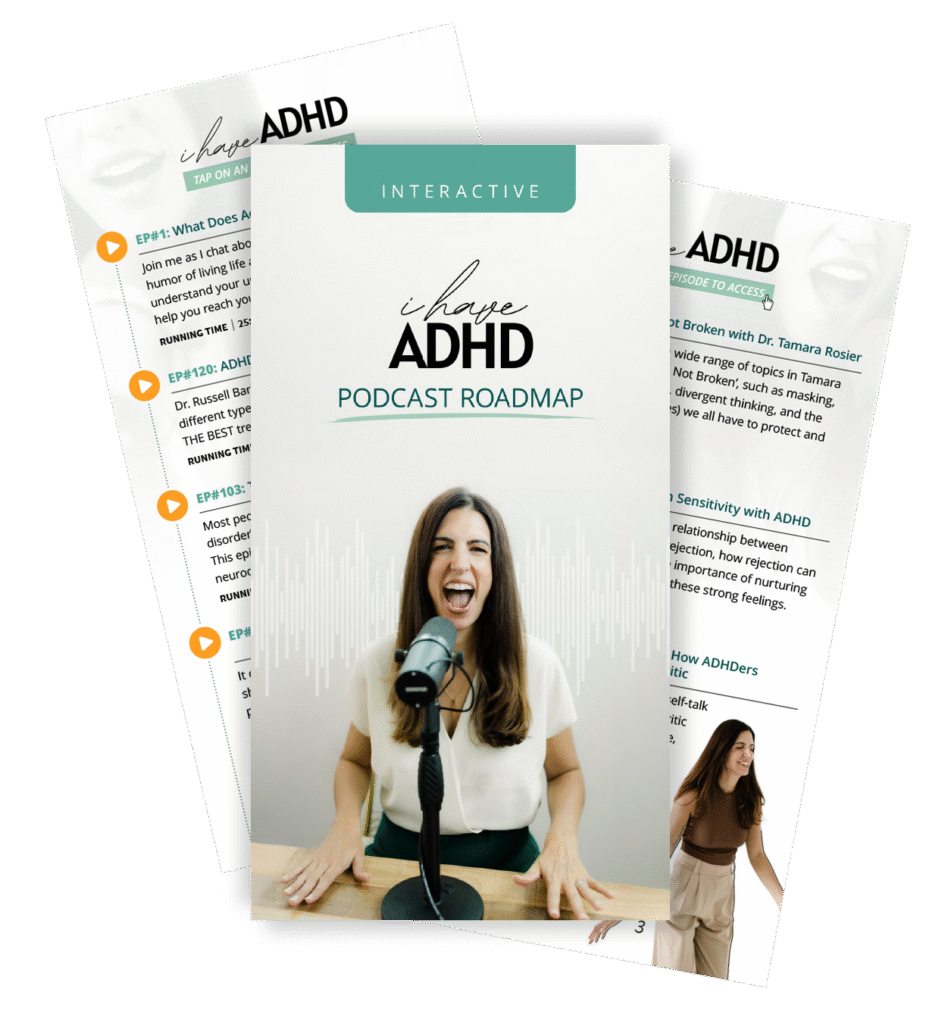
Get The Best of the podcast now with our Podcast Roadmap.

This is a clear and easy podcast roadmap so that you can know for SURE that you’re hearing the very best of the I Have ADHD podcast.

Related Episodes

Kristen Carder

Episode 418: Tired of Feeling Tired? How to Rest When You Have ADHD

Kristen Carder

Episode #416: ADHD and Money: In This Economy?!

Lindsay Gibson

Episode #414 Good Enough Parenting: What NOT to Do (with Dr. Lindsay Gibson)

Stop Struggling Alone.
Start Thriving With FOCUSED.

A proven coaching program designed specifically for adults with ADHD who want to gain clarity, build confidence, and take control of their lives.

Join a community of hundreds of ADHDers

Learning About My Brain...

Changed Everything

Hi, I’m Kristen Carder—ADHD expert, podcast host, and certified coach who’s been exactly where you are. Diagnosed at 21, I spent years cycling through planners, courses, and systems that never quite worked. Everything changed when I discovered the power of understanding my ADHD brain and the transformative impact of community support.

Now, after 15+ years of research and experience, I’ve helped thousands of adults with ADHD thrive. I’m here to show you how understanding your brain can transform your life, just like it did for mine.

ADHD Tips That Actually Make Sense

Follow @i.have.adhd.podcast and join our Instagram community for daily strategies, relatable content, and real talk about ADHD