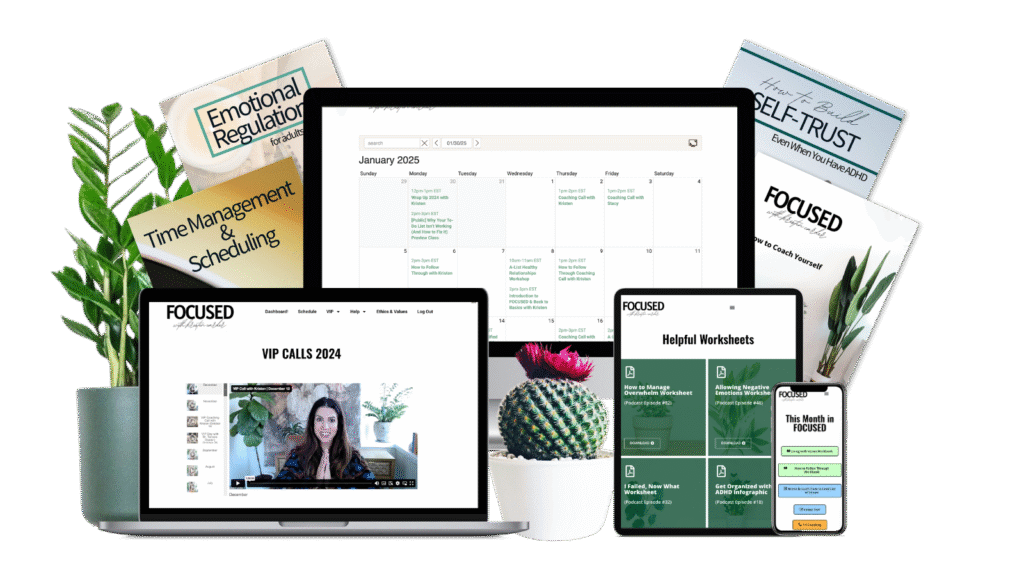


This episode is sponsored by Cure Hydration. All right, I’m going to be real with you. Drinking water is boring. My ADHD brain is like, wait, we have to do this again? Like every day, Multiple times. What in the world? And because I’m running from meetings to coaching calls to kid chaos, staying hydrated is not something I’m naturally good at. It’s not something I naturally think about. That’s why I’ve been obsessed with Cure hydration packs lately. Cure is a plant based hydrating electrolyte mix with no added sugar, only 25 calories, and it actually tastes good. The watermelon and berry pomegranate have been on repeat for me. I’m actually like really running low on those flavors, which is so sad. They’re refreshing without being too sweet or artificial. It feels like my water finally has a little bit of personality, which I enjoy. I really do. What I love most is that CURE uses a science backed formula that hydrates as effectively as an IV drip. So when I’m scrambling through my day forgetting my water again, CURE helps me to catch up fast. I throw a few packs in my bag and it makes drinking enough water simple. Which for my ADHD brain is basically a miracle. So staying hydrated isn’t just about water. You also need electrolytes. And that’s why I love cure. It’s clean, tastes great, and it actually works. And bonus, CURE is FSA HSA approved so you can use those funds to stay hydrated. The smart way for I have ADHD Podcast listeners, you can get 20% off your first order@curehydration.com I have ADHD with the code I have ADHD and if you get a post purchase survey, make sure to tell them that you heard about Cure right here on the podcast. It really does help to support the show. Don’t just drink more water, Upgrade it with Cure. The wait is over. Dive into Audible’s most anticipated collection, the Best of 2025. Featuring top audiobooks, podcasts and originals across all genres, our editors have carefully curated this year’s must listens. From brilliant hidden gems to the buzziest new releases, every title in this collection has earned its spot. This is your go to for the absolute best in 2025 audio entertainment. Whether you love thrillers, romance or non, your next favorite listen awaits. Discover why there’s more to imagine when you listen@audible.com BestOfTheYear. Welcome to the I have ADHD Podcast where it’s all about education, encouragement and coaching for adults with adhd. I’m your host, Kristen Carter and I have. Let’s chat about the frustrations, humor and challenges of adulting relationships, working and achieving with this neurodevelopmental disorder. I’ll help you understand your unique brain, unlock your potential, and move from point A to point B. Hey, what’s up? This is Kristen Carter and you’re listening to The I have ADHD podcast, episode number 154. I’m medicated, I am caffeinated, and I am ready to roll. Hello. How are you? How’s it going, my peeps? I hope you’re great. I hope you are doing so great. It is finally April. It is almost going to be warm weather. Let us all party and celebrate, shall we? Shall we? I’ve moved in and settled into my new home. I’ve processed all the feelings. Let me tell you, it wasn’t an easy month ish monthish for me, but it was good. Sometimes the best things are the hardest things, which is really annoying and really cliche and obnoxious. But I think it’s true. I really think it’s true. Today’s episode is going to be a goodie. But before we get started, I’m curious if you’re someone who deals with shame around money. Lots of US ADHDers have gathered volumes and volumes of evidence that we suck at all things money. And ironically, this leads us to do things like ignore our accounts, avoid paying bills, making impulse decisions, and put off investing in things that would actually serve us. This is why I’m hosting a webinar on April 26 on the topic of money, money and ADHD. Really, it’s going to be about releasing money shame. That’s really what it’s going to be about. Doesn’t that sound like fun? I mean, doesn’t it? Oh, I don’t know. But anyway, let me tell you, shame will only prompt us to avoid, hide and procrastinate. And if we want to move forward and make good financial decisions, we’ve got to identify and let go of all of the money shame that we carry around. Right? You want to join me? It’s gonna be fun. And it’s gonna be fun. It’s gonna be an entertaining hour of Kristin Carter oversharing about her own money journey and teaching you how you can release shame so that you can have as much money as you want to have. If you’re not already on my email list and you want to sign up, go to ihaveadhd.comwebinar. that’s ihaveadhd.comWebinar, which I know you can do right now because you are a master multitasker. Right? I have ADHD.com webinar to sign up for the webinar on releasing money Shame. The last webinar that I did, hundreds of people came. It was anxiety inducing but a lot of fun. So don’t miss out. It’s going to be great. Today’s episode is a very powerful coaching call that I hosted inside of my focused ADHD coaching program a few weeks ago. And as soon as the call ended, I. I knew immediately that I wanted to share it with you on this podcast so that you could benefit from the transformations that took place on this call. I want you to notice how the first client is puzzled by why she can’t seem to get things done and how we figure out together that she’s simply trying to get the wrong things done because she doesn’t actually even care about the things on her list. The second client can’t figure out why he’s not taking action on his long term goals. And the answer to this one and where the conversation goes is likely not what you’re expecting. And the last client, God bless her, I just wanted to give her the biggest hug. She shares a moment of mom guilt and shame like a big mom fail. We realize together she’s actually not the problem. She’s the solution. Be encouraged, listener. Even though we’re all from different locations, different socioeconomic statuses, different families and cultures, we are so, so, so, so, so much the same. Notice how the problems that these clients present are so relatable. They’re things that you deal with too. And the coaching that I offer to them can be applied to your own situation and to your own life. This is why coaching is so fun. And group coaching is actually so incredibly transformational. Oh, my gosh. So anyway, I adore you. I hope you find this next hour to be very encouraging. And if you love it, make sure to sign up for Focus today so that you can have daily access to this kind of coaching and support. All right? Please enjoy this coaching call and let it change your whole life. Hey, cutie. How are you? Hello. I’m very well. I’m a bit, bit nervous being on a, on a call and getting coached and things. I’m excited. Yes, very exciting. Where are you in the world? In England. You’re in England? Yeah. Yeah. That’s lovely. All right, my friends, how can I help you? Okay, so I was thinking about it and it’s quite. It’ll jumble. We’ll get to the point, hopefully. But basically, I think recently I’ve had a lot of, like, feeling like, I don’t know, like a bit useless. So, like, I have tons of ideas. I have all these ideas and I just never follow anything through. And it’s been made worse recently because my partner is like, brutally honest and he calls out all the, the flaws and whatever, and I’m like, but there’s a reason for a lot of it and I’m doing my best. And it’s like, but that doesn’t mean that, you know, it doesn’t make it better that I’ve not sorted this out or I’ve not done that, or I’ve not done that, like finishing things. So, yeah, I’m just, I’m very frustrated at myself because I want to be able to do these things. And like, he says, like, you know, you’ve been talking about this for ages and you never do anything about it. And I’m like, I know, I know. And so he’s very. Action, action, action. Like, today, I’m off work today and I did something with our son this morning, but then this afternoon I just thought I’m just having a, like a lazy afternoon and I could be doing so much stuff and I’m not. So I’m like, why? Why? Why? So anything, anything you can help me with here would be great. First of all, this is so relatable. You’re in the right place with the right people and everyone is like, yes, same. Me too. Here is my question for you. So today you were doing some things this morning and then it shifted to afternoon and you kind of stopped being productive? Yeah. Yeah. Okay, take me to that point where it shifted. But did you start to feel or think, Whichever one you can kind of remember before you stopped being productive, before you, like, halted. I think I just felt comfy. Maybe I am a bit lazy. Like, I felt cozy and comfy and it’s sunny here and I didn’t need to do the afternoon plans. Like, I had something booked at one o’, clock, but I just messaged them and said, can I move it to next week? And they were like, fine. So I was like, it felt like, like, yeah, I’ve got like a little afternoon to myself. And yeah, I don’t know, I just felt cozy, I think, love, yeah. So you’re feeling cozy and you have the thought, I don’t really need to do this. Here’s the question that I have for you. Is this actually a problem? Like, and here’s what I mean. So you have the thought, I don’t need to do it, you don’t do it. Is that a problem? Not for that, but the fact that I’m not doing any of the things that I know would be better to do, so. Like, simple things. Like, I redecorated our downstairs bathroom, our downstairs toilet, and it looks lovely. And I just didn’t order a blind yet for the. For the window. And that’s the only thing that needs finishing. I literally did the whole rest of it in October. I did it, blitzed it in one weekend, and I was really happy. And my partner just keeps saying, you’re not finished it. You’ve not finished it. And I’m like. So part of me is, like, being stubborn and, like, resisting finishing things because I don’t want to. I’m like, just accept me as I am, and I’m not a finisher and I’m not this. But just. Yeah. Some of it’s that I want him to appreciate me for the things I do do and not just focus on the things that I haven’t done yet. Have you said those words? Have I said it to him? Yes. Yeah. And he says he does, you know, like, he loves me, and he does appreciate the things that I do, and he wants me to be better. He wants me to finish things. Yeah, if you could just be a little bit different. Yes. That would be great. Yeah. Yeah. I want. I want all of the, you know, the creative, positive side, and I want you to finish things, and I want you to be this. And I want you to be super mum, and I want you to be, like, a domestic goddess, and I’m like, that’s not me. That’s not me. So, yeah, there’s a few things. Okay, let me just take a stop and think here. I think there’s a. There’s a lot of things happening. I do agree with you that there is some, like, your intuition of, like. I think I might be being stubborn. Mm. I think there’s something to that, and I think that that might just be really interesting for you to notice in your own brain, the tendency, which is not exclusive to adhd, but it’s extremely relatable for a lot of us with adhd, which is like, I was going to do it until you told me to do it, and now I don’t want to do it. Yeah. I heard you actually say something about this defiance thing. Yeah. Maybe it’s. Yeah, that did strike a chord. Yep. A lot of people with ADHD also have this, like, special sprinkled flavor on top of being oppositional. Meaning, like, we just want to resist anything that anyone tells us, even if we know it’s the right thing. Even if we know we want to do it. Okay. Right. So I think there is some of that going on. I think you need to decide. Do you want a blind in the bathroom? I don’t not want one. So you know, it will finish it nicely. I know it will. It doesn’t matter to me that there’s not one. Okay. But yeah. So what would be wrong with saying to partner blind? Actually doesn’t matter to me. If you want one, cool, get one. But that’s not. It’s not on my list. Yeah. What would that be like? I can say that. And he would probably go source it. And then I feel like he’s like, well, I did it anyway. You know, I finished it. And what’s wrong with that? It was my little project. Like, I wanted to do it. So I’ll feel. I’ll feel like a failure, I think, if he finishes it, because it’s as if it’s like proof that I couldn’t finish it and I can. All I need to do is go on a website and order it. I know, but you don’t really care about it. I don’t want to do it. I’m resisting doing it so much. I know. Okay, so here. You will only feel like a failure if you have some sort of thought attached to him doing it. Okay. He does the thing. He orders the blind, let’s say. And you can either have the thought, I’m so glad I have a partner who just feels like finishing it because I don’t feel like finishing it. Or you could have the thought, like, I’m glad he took care of it. Now he can stop bugging me about it. Or you can have the thought, like, well, that’s convenient. Awesome. Thanks. Or you could have the thought, I never finish anything, and now he has to finish it for me. Like, there’s a whole. I didn’t ever think I could choose those other three. Never thought of choosing from those. Yeah, yeah. I want you to think about in these kinds of situations. Okay. Sometimes our body has an immediate response, and we don’t have the time to think it through and make a plan of, like, what do I want to think, what do I want to feel? I get that. But right now we’re talking about something that, like, you know, is going to be a conversation, you know, is going to be a thing. You don’t care about the blind. You don’t Even want to do it. So just be like, I don’t care about the blind. I want to do it. If you want a blind, go get a blind. It’s all good. And then you can just make him feel like a big, strong man. Wow. So great. You’re so amazing for putting that blind up. Awesome. But I want you to think of thoughts when we’re in conversation like this, when we’re separated from the situation. I want you to think of thoughts as, like, an hors d’ oeuvre platter. And like, this little. I don’t mean little, but like this, like, waiter and like, a cute tuxedo that comes along. He’s got white gloves on. He’s got this silver platter, and he’s like, would you like some? Right? And you can choose, like, all the different fancy hors d’. Oeuvres. Like, which one are you going to choose? Right now? You’re like, I’m choose the one that makes me feel like a failure. If he orders the blind, then I’m a failure. Then I’m not a finisher. Yeah. You just told me that you redesigned your bathroom, that it looks very pretty, and you did it in a weekend. Done. Yeah. Yeah. Are you really creative and good at what you do? Do you even care about the blind? No. No, I really don’t. So don’t attach feelings of failure to that stinking blind. You know what I’m saying? Yeah. Now, partner, unfortunately, we don’t get to control him, which would be so fun if we could. Oh, yeah. I would be all in. Because partner might be like, you never finish anything. You. I can’t believe I have to do this. Blah, blah, blah, blah, blah. And you can just keep going back to, like, I actually did finish it. I don’t care about the blinds. It’s done in my head, it’s finished. Okay. Yeah. Like, it’s good enough. It’s done enough. Yeah. Is that true for you? Does that feel true? Yeah, I’m quite happy with it. I’m super happy with it. If you want to do more, do more, that’s great. Put up a blind. I love it. It’s great. But in my head, it’s done. Like, I’ve checked it off my list. If you want to contribute to it and do more. If you see things that like, oh, I think this would be good here. Blah, blah, blah. Awesome. So your work, Michelle, is not making that mean anything about you. That’s a him thing. He wants a blind, he can go get a blind. It’s all Good. I mean, he, like, he shows me things or says things, like one of his friends, partners. Like he said. He said, look what Charlotte’s done. You know, she’s made the house all beautiful and stuff. I’m like, stop comparing. That’s not me. So, yeah, it’s all this finishing touches and details. That’s not me. That’s not you, honey. All right, let me just give you a hug real quick. Just sending you so much love because you are a beautiful representation of so many of us with ADHD who are partnered with people who really think we should be different. And here’s the thing. I suspect that you’ve actually probably agreed with him a lot. Like, oh, yeah, like, I probably should be different. I guess this isn’t finishing. Blah, blah, blah. Not suggesting you cause marital strife, but I’m suggesting you work on accepting you and eventually he’ll catch up. Okay, so what does accepting you look like when it comes to the home? I think accepting that I need things to be easy and I need things to be comfy and relaxed and not. It’s never going to be maintainable as a show home. That’s not me. But, yeah, it’s. It’s clean. It’s. Yeah, it’s got everything we need. I’m quite happy here, and, you know, I think we are, you know, so for me, it’s nice. I’m not bothered about impressing other people with, like, how your home looks and whatever, you know, it’s nice for us, in my opinion. Sure. Yeah. It might be good to really communicate that just as you’re going throughout your conversations with him, and then encourage him, like, hey, if you. If you want to do it, go for it. This is not where my strengths are. It’s not where my desire is. But, like, I support you if you want to. That’s a tiny bit of a lie, though, because. Yeah, I support you if you want to, because he does. And he cracks on and gets stuff done. Like, he. He redid the living room the other week, and he’s done those in the garden, and he just does these things kind of on his own. He just gets on and does it, and then I have a go because I’m not. I don’t feel like I’ve been involved, so I want it both ways, but I can. I can distance myself from that. I can think, you know, it is good that he’s going to do all these things. Yeah. So wait, what did you say that you feel when. When you’re not involved? I missed that part. Like, Like, I suppose I feel like not consulted and it’s like it’s my, you know, it’s our home together. So I feel put out. I don’t know if that’s the right phrase, but you know, like a bit like, well, surely you want some ideas from me or something. But I don’t want to do the thing. I just want to plan it and then have him deliver it. Yes, ideally. So, oh my gosh, how relatable is that? Okay, so I do think that you are kind of wanting it both ways. Right. And so do some self coaching on that where it’s like, okay, I certainly don’t want to be involved in it and if it’s something that he wants to do, he can go and do it and I’ll kind of come back and put my touches on it later at my own pace, in my own time. In a way that feels good to me. Yeah, yeah, I can do that. Have you. You are just brand new here, right? Yeah, about a week or two. Okay. I just want to recommend that you start with the self concept workbook and course because I think that the more that you can begin to accept you and who you are and own the things that you want to own and hand back to your partner, the things that he’s owning but trying to get you to take care of. Right. Like divide that separation. It’s actually called boundary. Like make a boundary there between the two of you. I think that will help your partnership to be a lot smoother. Just. I’ve just seen somebody commenting there, change the battery in that smoke. Yes. That is another thing that hasn’t been done. Okay. You feel in order to change that battery taller. I need him to do it. But I could get a chair. I could get a chair. I could do it. I could do it. Maybe I could do that this afternoon. That could be my quick job. That’s a big tick. Because it’s needed doing for a while. And then you would wait. Have you been sleeping with it chirping? Yep. We are all going crazy. It’s like, what is happening right now? How have you collapsed with that chirping? I’m just very impressed. Okay. My ADHD brain would be counting the seconds between the intervals of the chirping. I want you to know that you are going to need to develop the desire to get things done. What’s happening now is you’re saying I should be getting things done, but you don’t have the desire. You’re putting things on your list that aren’t even things that you want to do. So you need to really be calculating. What do I actually want to do? How can I develop the desire to do that? Because desire for like, I really want that smoke detector changed. Mm. I can’t stop hearing it. That’s what’s gonna get your butt out of your bed. Grab the chair. Find the, you know, do the work of finding the batteries and all of that. So desire. Think about how much you get done when you have that drive, that desire. That’s what you want to cultivate, not opposition. I can do like three days worth of work in an afternoon. Exactly. Because you have the desire. So you have to look at your list and say, do I want to do this? Okay. Okay. Yeah. Okay. Love. Well, that was. Thank you very much. You’re welcome. Yeah, I’ve got to find my why. Find your why. Exactly. All right. Go change that battery, please, and check. Tell us when you’re done. Thank you so much. Oh, you’re welcome. That was incredible. Okay, let’s go. Let’s coach. Kisses. That was the funniest focused experience ever. It’s funny, I noticed it right away, but I was like, do not distract this woman from her first focused call. I did not want to be that person doing that. Hi. Hi. I say, that’s so relatable. I love that we’re all thinking the same thing of. I thought I just replaced that. I swear, all of us are like, wait, what’s going on? That’s so funny. What’s up? So I’ve been. I’ve been meaning to be coached for a long time and I have the same excuse that I’m sure everybody has is, you know, I don’t have my stuff together enough. I haven’t thought down a little download enough on this. I need to be more prepared. But I kind of just said, I don’t care. I’m just gonna do it. So the first thing that kind of came to came to mind was that I’m really big overall. Struggling with is that sort of small scale stuff that I want to be doing. I do pretty well with so exercise and food and pretty much staying on top of work stuff. You know, a bit of procrastination here and there, but nothing terrible. I kind of see the big issue that I have and I know a lot of adhders struggle with is the big picture thinking, long term planning stuff. And it just brings up. It’s always seems to, I think, is what it is. It brings up a lot of like shame and regret for me. I didn’t finish My post secondary education kind of fell backwards into type of job that I didn’t ever envision myself having. But I do like that, like express aspects of. But again when it comes to like, you know, I’m there and I’m also, I’m a little, little older, I’m 35 and I still haven’t finished that stuff. And I’m not on the career path that I really want to be on, I don’t think anyway. And anytime I try to go and think about, you know, where do I want to go and it’s been, it’s been just like this for ages. Like since I was in my even pre diagnosis when I got, I got when I was 30. It still always comes back to those same feelings like I should have done this, I should have got better help. And I’ve tried, I’ve tried to work through some of that. Like, you know, I did the best with the information I had at the time and like I asked for help, I went to counselors, I went to all these different people. And even with the job stuff too, like not necessarily just with school of like, oh, I could have, you know, done. It would have been easier six years ago to do this stuff. And I was in a province, I’m in Canada. You can tell by my accent. I don’t know if you can. I can. You know, if I had I been back in a province where it was cheaper to do education, I could have done it then it would have been like a third of the cop. You know, all these things come up and then it’s just, I just kind of, I press the ejector button and abort from those thoughts and just say, okay, well I’m just going to focus on, you know, exercising a lot and eating good food and like staying focused at work. And then I still have those regretty shame thoughts of like this I’m doing good in this like area that I can control this day by day, week by week thing. But I don’t think bigger. And it’s been kind of this cycle for the last, you know, why? At least, at least few years, like if not, if not longer than that. So I know that’s a lot, so I’ll stop. No, I think it’s perfect. Yeah. I have a question. Have you ever given yourself a chance to really grieve? No, not really. And I actually have talked to my therapist about this before. It’s funny that you say that where. And it’s related to the ADHD thing too where I beat myself up and I’m sure other people relate to this. I beat my own self up for like not being the type of person I think I should be or thought that I was, maybe, if that makes sense. So like, I still expect myself to be able to focus and be able to do whatever and it’s like to come up, to come back to your kind of point of grieving, you know, not being able to do what I should have done, should have done, could have done. I haven’t really. And I still think I’m stuck in that stage of like not letting that go so I can move on, you know? I wonder if you’re stuck in self judgment because you’re not wanting to just feel really sad that it didn’t go the way that you wish it had gone. That would make sense. That would make sense. Yeah. Like, self judgment feels like a more powerful position than just like laying down on the floor and having a good cry. Right. So if I can just kind of like take a deep breath and like pound myself, you know, beat myself up, that feels more powerful than just being like this. To just not go the way that I want it to go. And it’s so sad. Yeah. Because it’s not. The thing that I’m thinking of when I think about doing that is like, it’s not like a single event. You know what I mean? It’s not like, oh, I screwed up on that. It’s like a big. It’s a big thing. Right. Like, it’s not just not finishing school, it’s like also not making the decision to like get out of that job that I didn’t really like. It’s a. It’s multiple. Yeah, it’s a lot of stuff. I feel like. So that that’s probably part of the reason why I think. I don’t, I don’t really want. Don’t really want to do that. But I know that’s counterintuitive. Okay, let’s just stop here for a sec. So what would it look like? What if between where you are, let’s picture a river. You’re standing on one side of the river, taking action on the life that you really, really want is on the other bank of that river in order to get to that other side. Navigating grief seems to be like pathway. And I don’t know that for sure. That might be like a check in with the therapist kind of situation. Like, it doesn’t seem to me that taking action is going to be a thing like really planning, really like, you know, making a way for Yourself in the world, you know, like that kind of thing on this, like, new dream, new plan. I like new backpack, new like all the things. Right. That is like the action of someone who has really processed what has happened and really processed. Like this did not turn out the way that I thought that at 35, I would be doing XYZ. Yeah, yeah, that makes sense. It explains sort of what, like why I’m not able to take. Right. Big like you talk like big action. Right, right. It just, it just doesn’t happen because my, again, my brain just short circuits. It’s just like you can’t, there’s, there’s unprocessed stuff. Unprocessed stuff here that you, you know, it’s so big that you can’t, can’t get through it. And again, speaking, my therapist, like, she has talked about this stuff in, in parts, but usually what I do in therapy is I talk about, I don’t talk about that stuff that much. And we have talked about before and try to take it and get over some of this stuff. But I talk about work, I talk about relationships, I talk about plans I have. Because I think my brain knows, like, we don’t want to open that box. Like, it’s not, it’s, you know, this is not fixable in a 60 minute session. I can’t, I know what the answer is in some, in some way. You know what I mean? So we’ll just keep that, keep that closed. And these are the things that I can control. I can control my day to day. Right. I control my week to week, but still not feeling the same way. So I wonder if having a conversation with your therapist that sounds like, hey, I think I have a lot of grief and sadness to process and I don’t know how to do that at all. Can you give me, first of all, don’t let me get away with talking about my day to day because it’s actually not the most important thing. Like saying those words would probably be important. Like, I know I bring this stuff and like, it seems useful, but like there’s more going on. Yeah. Because it does feel useful when it’s happening. Right. Because there is elements, you know, so it feels good, but then you finish it and it’s like, you did it again. You didn’t. It wasn’t the real thing. Yeah. And of course, like you’re a human, right? So you’re going about your day and you’re having all these triggers and all these relationships. And so to be able to process that is great. But it’s more surface level rather than the deep stuff. And if they’re a good therapist, they’ll be able to navigate like, okay, here’s what it looks like to peel back layers of grief, and here’s what it looks like to, like, help someone process in a way that doesn’t wreck them for the rest of the day. Right, right, right. So when I was going through some big things this year, I had to change my therapy appointments from the morning to the afternoon because when I was deep in grief, it was. I couldn’t function the rest of the day. And so it was just like, well, I’ll just change it to the end of the day and then I’ll just go home and take a nap. And literally, for a couple weeks in a row, that’s what I did. I had an afternoon therapy appointment. I would call my husband, be like, I’m incapacitated. I got nothing. He’d be like, no problem. I would come home and sleep. It wasn’t, you know, it wasn’t a long time of that, but there were definitely periods of that. But I think that that is your pathway. I think that you’ve been trying to navigate that river by like, hopping in the canoe of self judgment and then hopping in the canoe of shame and then hopping in the canoe of like, let’s just make a plan and like, all of this, like, how can we navigate these waters? When really it’s just like, my life didn’t go the way I thought it should. I didn’t show up in a way that I thought I should. And I’m really sad about it. Right. Yeah, that makes sense. And the doing things as well, too. Right. To make yourself. But I’m going to do. I’m going to accomplish this thing. I’m going to check off this box as again, I can. These are things that are within my grasp, whereas the things that I thought I would have been doing or not. So, like, let me just do a different thing. Exactly. And that. Here’s the thing that solves it for a moment. Yes. Which is why we do it. Your brain is very smart. Like, well, if I can get this promotion at this job that I don’t even care about, or like, I mean, at least I got a promotion. Right. If I can get this raise, if I can have this relationship, it does work in the interim. But when you know there is something out there that you’re meant to do that you’re not doing, that’s the thing that you’re like, like, eventually you’re going to have to. In my opinion, I believe that, that, like, navigating grief is the pathway to that. And the thing is, once you’re released from grief, sadness, guilt, shame, regret, you know exactly what to do. Yeah, yeah. Which is why you’re probably actually using that as additional self judgment. I know exactly what to do. Why am I not just doing it right? Yeah, yeah, that makes a lot of sense. I just adore you and I’m so sorry that you have to go feel some feelings. Yeah, well, like you said, you know exactly what it’s like, because it sounds like, from reading between the lines, a lot of what you’ve said in the last number of months as you’re going through a similar. Similar ish thing. It is so not fun. And I don’t know how to make it sound pretty and put like a cute bow on it. But what I do know, and I would say, like, I am super close to the bank on the other side. Like, I can see it. And the waters are not as, like, tumultuous. When I look back at the river, I’m like, I cannot believe I crossed that river. I can’t believe I did it. But I’m not quite at the other side yet, you know? And so it’s like, in this really interesting place. But number one, only the bravest will do it. And I think that you fall into that category. And I know that you have what it takes to go and feel the depth of all of the things you need to feel because that will set you up to take the action that’s going to change the entire future. Yeah. I can’t remember when you were talking about. I don’t know if it was earlier this week, we talked about something about, like, sometimes you have to just, like, put your grief in your backpack and, like, carry it with you throughout the day. I thought that was a really good thing too, because I think one of the scary things for me is, like, it’s just gonna totally upend my life. I’m not gonna be able to do anything that’s gonna affect too, like, too much stuff. But, yeah, that. That is maybe a full perspective. Yeah. And I think that totally. And I think what’s really important with that is that, like, learning how to process deep emotions through, like, somatic experiences, you know, like, really feeling it in your body, breathing through it, having someone safe there with you. But then that encouragement of, like, okay, that was a really beautiful hour of, like, an ugly cry or whatever it looked like for you. And now I do have to carry on with My day. But I don’t have to shut off the faucet completely, right. I can, like, pop it into my fanny pack. Fanny packs are in. It’s really cute one. I’m popping in there to my fanny pack. It’ll be here with me and I can refer back to it. And so one of the things that my therapist suggested was, like, set timers throughout the day. This was when it was, like, really fresh, really new, really raw. I would set timers, like, every two hours. Like, take 10 minutes and feel. Right. I would, like, do the feelings, and then I would go back to my life. It’s not always like that, though. I promise that’s a short period of time. I know that sounds really intimidating, but. Yeah, it’s like being a human is so much messier than we are willing to really admit, and we want to just, like, be robotic and, like, you should just do the thing. But, like, there is so much connected to all of this. And if we can allow ourselves to feel and still even perform at work while we are feeling, then go back to more feeling, and then it’s just. It’s a beautiful thing. It’s a. And I’ve done it before, too. Like, I’ve had relationships not work and had to grieve. Like, oh, I moved. I moved to this town, living in with that girlfriend. Relationship didn’t work, and I ended up staying here. And so I do have, you know, not a perfect example, but a pretty good example of I would literally do that. I would be at work and just like. And having just broken up, like, two days before and be like, okay, I need to go to the bathroom now and have a quick cry. Yeah. And get it together. And then come back and still work and was still pretty pretty productive. So that was like, something that, like, I could not be contained. Whereas I feel like with this stuff I’ve been living with for so long, I’m very used to those neural pathways are really set, like, oh, you’re thinking about this. Go do these things. And that’s what’s. If you go exercise, you’ll feel so much better. Yeah. And you do, and you get those good vibes. And it’s just like, all right. Everybody’s like, good job, buddy. You did it again. You avoided feeling bad, and now you feel good, and you’ll feel good until next time. We’ll do it all again. Maybe with a different option, but, yeah, your brain really, really, really want. Wants you to not feel the things. It really does. The surf session on Monday, that made me Realize, like, I’m better at that, but, like. Oh, man. Surfing. Emotions. Nope, avoid the emotions. Right. All right, well, you know what you need to do, so just keep us posted. And I would really encourage you to have a very honest combo with your therapist. I think I’m going to even send her an email so I don’t get off track from the beginning of this idea. Same thing last session. I was like, I’m going to talk about it, and then we were off to talking about work, so. But yeah, thank you so much. You’re welcome, Katie. All right, thanks. That was really. That was really good. I just adore you guys so much. I can’t believe that I get to support you. I am so, so honored. Thank you for bringing. Thank you for bringing Leslie. All right, who we got? How do we even move on from these two beautiful sessions? Guys, I don’t think I’ve ever coached you, have I? Not recently. My list goes back to January. I think you are my Instagram friend that I see all the time. Oh, my goodness. Everyone, I would like to formally announce that changed the battery in her. In her smoke detector. Everyone cheer for. Well done. Hi. I think you’re muted, sweetheart. There you go. I’m, like, super nervous, and I feel like it’s really dark where I am. Oh, you look perfect. You look beautiful. I sound okay? Because I feel like it’s perfect. Okay. I’m, like, shaking. So I am your Instagram friend. I thought so. Have I ever live. I don’t feel like. No. Okay. I didn’t know. I mean, I joined Focused in February. Oh, you’re kind of a newbie. I’m very new, and I can’t believe I even raised my hand, but, yeah, so I feel like I am very new. And I. I mean, my diagnosis was. I know. I feel like I’m very. I don’t know if anyone else feels this way. I’m like, what else are you like? I feel like I’m like, I. You’re gonna be like, kate, I just heard this. That’s the thought that’s going through my head right now. Okay, so let me stop you. First of all, we are all. We are all you. We are all so similar. Which is why these coaching calls are so powerful, because we can get so much help just from hearing other people share their story and allow themselves to be vulnerable and be coached. And people are going to be so moved by your story and your vulnerability. And so don’t worry if this is something that sounds similar, it’s going to be helpful. To you, and it’s going to be helpful to the whole group. I don’t even know what to like, and I don’t even know what to say. Feeling in your body right now. Well, I’m shaking and I feel nervous. I feel inadequate. I feel like that’s one of the words that comes up. Like, I, yeah, I want. Okay. So on in Slack, which it’s so funny because I asked, like, a question. I think this is what. Because someone, even one of the wonderful people that works, like the community manager, and I can’t even think of her name right now, she was like, you probably should get coached on this. So I got diagnosed when I was 30. To my therapist, anxiety and depression was just a part of my life for a really long time. Motherhood is when, like, your podcast, Kristen, I’m not kidding. It changed my life. It really. It truly did, because it will. My son. And then having a son that, like, really needed help. That is when I started listening to your podcast. Then I finally read the book that. My sister Russell’s book that was still. I mean, so good. Yeah. Taking Charge of Adult adhd, y’. All. It was in. Actually, I had the kid version, the one for your kids. Oh, yeah. Taking charge. So I was reading it. Yeah. Yeah. I was reading for my son. And my sister and I, both our kids. One of our. Both of our boys were diagnosed with adhd, and her son is autistic. And so she was like, you should really read this book. Like, really read it. Like, read it for you. And I. As I was reading it, I was just like, I need. I need this. Yeah, he needs this. But I need this. Like, I. I need this. One of the things that I feel. I feel like I don’t function like a. Not even a normal adult. What’s the word? Like, a. Good adult or what’s the other word I’m looking for? Like, hold a group. Because my brain is blanking as well. I don’t. Responsible. Oh, my gosh. Responsible. Thank you, Jesus. Responsible. Functional. Very. Yeah. Like, one of the things. So my husband, he has a very. He was raised by a single mother. He has mental, like his sister. It. This is hard, too, because I’m like, oh, my gosh, some of this is not my story. And, like, knowing where. What to share, really trying to learn not to verbally throw up and, like, personal things that I don’t. Whatever. When you. When you have the thought, I don’t function like a responsible adult. How often do you have that thought during the day? Probably all the Time. It’s like it’s thrown in my face. I look at my life and it’s just thrown in my face. It’s thrown in my face. I love it. Is that what brings up the feeling of inadequacy? Yeah. Okay, that makes sense, right? Yeah. If you’re telling yourself I don’t function like a responsible adult, you’re going to feel inadequate. Okay, so we’re going to do a steer map, which is the tool that we use here. In focus, created by Dr. Sasha Hines, developmental psychologist and life coach. The situation here. Give me any situation. Maybe just the last time you had the thought, I don’t function like a responsible adult. Okay, here’s. Here’s one that like, well, let’s just go with this one. I. And I. I had, like, I messaged you on Instagram, which sometimes when you’re like, I don’t have, like, I feel like sometimes I will verbally throw up on you on my, like, voice messages. But I’m like, whatever, Kristen, she gets it. Okay. So there was like a mother, a mother son thing with my kids school. My son who has adhd, he’s in second grade. It was at this thing called Main Event, and it got rescheduled. And as it was coming up, they were like, get your tickets, you know, pre order your tickets, whatever. And of course I didn’t, because you just go to the place. And I was like, I’ll just pay for it then. Well, we didn’t, because I didn’t pre order. We weren’t plugged into the group, so we weren’t like our. My son’s school had, like an area like there was. They were all bowling and then they were gonna move to play laser tag, and then they were gonna move to, like, the arcade, and they were eating pizza and all the moms were eating pizza and drinking and, like, drinking Coke. But because I didn’t buy a ticket when I was supposed to, I. We couldn’t go. We couldn’t go, like, be a part of the group. And the mom I was talking to, she was like, I’m sorry. I’m sorry. Like, she did that face to me. And I was like, no, I get it. I messed up. Like, I didn’t buy the ticket. So what are my options? Like, can I just go. Can we just go sit and, like, hang out? And she’s like, well, I mean, we’re. She just did that face. Kristen. I started crying. I hate her. And I was like, do you know what I mean? This is what I did. I was like, I know I messed up. You really are not. I feel like, what did I say? I was. I, like, called her out. I was like. Because it was. It was all I could think of. You’re a neurotypical mom, and you aren’t. Like, why don’t. Just help me out. Just. My son is like. Is the kind of kid he. Like, I looked at him, Kristen, and I started crying. I lost my. I lost it. I started crying, and I was like, I’m gonna start crying again. Like, I let you down. I’m so sorry. This is fine. I let you down. Why? Like. And I think the thing, too, like, I’m like, medicine has changed my life, by the way. I’m on beds, y’. All. Don’t worry. I’m on meds. I’m not seeing a therapist right now. That’s in the works. It really is. I. I think the thing, too that’s really hard is, like, I want to change. Like, my friend. I was talking to a friend. Wait. My husband. Wait. Sorry. Yeah. I mean, I wish we had time, but we don’t have time. I know. Back to the moment where the mama was like, oh, I’m so sorry, but, like, you can’t come hang out with us. Can we just. Just for a moment. Do you think it would have been possible for her to be like, hey, it is no problem. I got you. Let me just. Let me just work it out. Like, what is. Would that have been in the realm of her possibility, do you think? Or was she truly. Were her hands truly tied there? So they had a certain amount of tickets, and she was. She was explaining it to me, but she was doing it in such a way that wasn’t. And so then I found out later that she really didn’t know what she was talking about. And she could have said, hey, I actually am not the person. That person’s kid got sick, and they had to stay home with the kid. And so she was like, I think there was. So I do think that I really did mess up. And there wasn’t, like, sure, there. They. She said, we already had blocked this amount of people. We can’t add any more. And I was like, you know, is there someone that maybe isn’t coming that I will either, you know, whatever. So I do think that her hands were tied, but also, it just was such a moment of, you don’t really care. Exactly. It was like, what if. What if. What if she let you down? Here’s the thing that we do as ADHDers, and I am really, really working on this in therapy, a lot is. We have been conditioned since the day we were born to think that we are the problem. And so I’ve heard you say, like, I messed up. I messed up. I know I messed up. And sure could have bought the ticket at the right time, but what if she was also a problem? And what if she let you down? What if you are not the only quote unquote problem here. If you were in that situation and the tables were turned and some mama came in and was like, I thought I could buy a ticket here. And my son is like, I know that you would have been like, don’t say another word. I will take care of it. I will move hell high water to make it happen so that you and your son can come in. Yeah, yeah, yeah. So I just want to show you that, like, I think a lot of this is your conditioning to think. Like, I mess up. I’m not a responsible adult. I’m inadequate. But also, like, some humans are jerks. Yeah. And some people make it harder for you in those moments. I’m not saying you showed up perfectly. Not saying you didn’t know about the ticket. We should have bought the ticket, blah, blah, blah. But also, if I was in that situation, no kid would have been excited. Excluded. I don’t care what the manager says. I don’t care. We would have had to shuffle. I would have paid for the tick. I mean, like, whatever it takes. No kid is being excluded from this. And that was not her attitude. Yeah. You are not the only problem. And you are not always the person who deserves the blame. Yeah. Let’s just go to fantasy land if in that moment you weren’t feeling inadequate. What’s the opposite of inadequate? I don’t even know. My brain is like, no, it’s just inadequate. That’s what we all are. We’re inadequate. That’s what my brain wants to do. Empowered. I love it. If in that moment you were feeling empowered. Yeah. Feeling like, yeah, I messed up. But, like, that’s not the biggest problem here. The biggest problem is you’re not, like, helping me. Yeah. What. What would you have done differently? I just now, looking back, I just like, okay, cool. Okay, that’s fine. And then I would have just gone and bought a stupid. I spent, like, I. I think I. It was like 50 or $75 on, like, a card that we still have money on to go play all the. I was literally like, so we didn’t want to. Want a mama Sunday? Let’s go for it. We’re going In Disney World. Seriously. We didn’t get the pizza, but we went and, like, hung out with the people playing bowling. I mean, in a bowl. It was. I felt really awkward and I felt really like, oh, what are you doing? And a lot of the moms had no idea what they were doing. Exactly. Also come to find out the whole. None of it was done well. So many moms were irritated and they weren’t told. Whatever. So then it really did. And honestly, Christian, I’ve never thought, like, honestly, they were really like, yes, I messed up, but they didn’t have their stuff together. This was not a well run event. Everyone clap. We are all. Exactly. And what we do as neurodivergent people is we assume all of the neurotypicals are doing it right. Yeah. And we are doing it wrong. Yeah. Instead of assessing the situation and being like, if I were in charge here, I would never explain. Exclude anybody. So, like, what’s going on? Yeah. Like, sure, I didn’t get my ticket. Okay. How can we fix the problem? What do we need to do? Yeah. Okay. I want to show you the difference between inadequacy and empowerment. And that is the difference. Inadequate inadequacy comes from the position of, I’m doing it wrong. I’m the problem. Clearly, this is my fault. Empowerment comes from the position of, I know I’m not perfect, but there’s always a solution. Let’s figure this out. I’m not a problem. We have a problem here. There’s a problem. Yeah. But the problem’s not me. Yeah. Okay. Yeah. The most important takeaway here is your thought. I don’t function like a responsible adult is leading you to feel inadequate. And that feeling of inadequacy is making it so that you’re showing up as like, I’m the problem. Yeah. Yeah. What if you’re not the problem? What if you’re the solution in that moment? If you were like, I’m not the problem. I. On the solution. Yeah. Yeah. I. Yeah. Okay. So I want you to look around your house and you’re saying that you’re smacked in the face with your inadequacy all day long. I want you to practice this thought. I’m not the problem. I’m the solution. And it’s going to feel like a fantasy. Yeah. Like, you look at the dishes and you’re like, oh, my gosh, I can only function like a responsible adult. You’re like, wait a second. I’m the solution here. Yeah. Do those effing dishes. Who cares? It’s gonna take me 10 minutes. Oh, my gosh. I forgot to sign that paper for my kid. I’m so embarrassed. Okay, I’m the solution. What do I need to do? Contact the teacher? Hey, I didn’t sign the paper. Can you send it home again? I had to do that this week. Like, I lost the swimming paper. I have no idea where it is. I’m not gonna find it. I’m not even gonna look for it. Can you please send it home? Exactly. Yep. Because I’m the solution. I’m not the problem. I’m actually the solution. Yeah. I’m not a victim. Yes. I had a friend tell me that I was placing too much importance on my ADHD identity, then my identity in Jesus, which. And it took me a second, and I went to my husband and it was one of those, like, that’s a whole nother thing. But when I was processing as a. Learning to coach myself, which is even that, like, whatever. I was like, wait, she. Like, she. And she was triggered. I really. As I was like, she was triggered because I am. And even, like, you talking about a solution, like, I very much want to break a lot of barriers and a lot of, like, crap that is thrown in with the church world, mental health, and even all of that. Like, But I was like, you know what? No, I know who I am. My adhd. Even you talking about the superhero thing, like, the superpower, as my son was crying his eyes out the other day about. He’s eight is hard. Yeah. By the way, I’m really looking forward to the thing on Friday about children that yucky. Who. I love her. That I love her too. Can’t wait to hear. Anyway, sorry, I know I’m like. But I was like, no, I am no victim of this. I’m not a victim of this. Like, yes, it is. Even what you were saying, like, life is hard. But, yeah, you’re the solution. Yeah. You and Jesus. Yes. Yeah. Solution. You’re not the problem. Every time you feel inadequate, it’s because you’re thinking you’re the problem. And that’s where you need to self coach. I’m not the problem. I’m the solution. Yeah. All right, I have a meeting at 11. I gotta go. Okay. I’m so glad I got to meet you. Me too. Thank you. Bye, guys. This was the best ever. I adore you. Sending you all kinds of love talk so soon. Bye. Hey, ADHD er. I see you. I know exactly what it’s like to feel lost, confused, frustrated, and like, no one out there really understands the way that your brain works. That’s why I created Focused. Focused is my monthly coaching program where I lead you through a step by step process of understanding yourself, feeling better, and creating the life that you know you’re meant for. You’ll study, be cool, grow, and make amazing changes alongside of other educated professional adults with ADHD from all over the world. Visit ihaveadhd.com focused to learn more.