

Podcast Episode #168: How to Organize with ADHD

Listen or Watch this episode on:

About This Episode

We all know that getting and staying organized is a MAJOR challenge for adults with ADHD. This is like saying the sky is blue or the grass is green. In this episode, you’ll learn exactly why organization is hard for us, why it’s so important we divorce our ability to organize from our self-worth, how our spaces are a direct reflection of our minds, and exactly HOW to organize.

Visit [www.ihaveadhd.com/focused](https://ihaveadhd.com/focused) for more resources.

Hang out with me on Instagram [here!](http://www.instagram.com/i.have.adhd.podcast)

See Privacy Policy at [https://art19.com/privacy](https://art19.com/privacy) and California Privacy Notice at [https://art19.com/privacy#do-not-sell-my-info](https://art19.com/privacy#do-not-sell-my-info).
Episode Transcript

This episode is sponsored by Cure Hydration. You know that moment for me, it’s around like 2 or 3pm when my ADHD brain just decides we’re done for the day. We’re done here. The afternoon slump hits, the lights go off upstairs and suddenly answering an email or doing basically anything feels like climbing a mountain. That’s when I reach for Cure Energy. It’s a clean plant based energy drink mix made with 100 milligrams of natural caffeine and electrolytes so I get the focus and hydration boost I need without jitters, without a crash and without that like I drink battery acid. Vi vibe that some of the energy drinks have. The peach tea and akai berry flavors are my current go to’s crisp, refreshing. And they don’t taste fake, y’. All. They don’t taste fake. I’ll drink one before recording a session or when I need to get help through like that afternoon drag. And honestly, I. I drink it anytime. My brain just needs to cooperate. What’s wild is that Cure Energy is only 25 calories and has zero added sugar. It actually helps me stay hydrated while giving me energy. Okay, I love coffee, but coffee could never Staying hydrated isn’t just about water. You also need electrolytes. And that’s why I love Cure. It’s clean, it tastes great and it actually works. And remember, Cure is FSA HSA approved which is amazing. You can use that money to pay for cure and for I have ADHD listeners, you can get 20% off your first order@curehydration.com I have ADHD with the code I have ADHD. And if you do get a post purchase survey, make sure to tell them that you heard about Cure right here on the podcast. It really helps to support the show. Don’t just drink more, upgrade it with Cure. Hey this is Sarah. Look, I’m standing out front of a.m. p.m. Right now and well, you’re sweet and all, but I found something more fulfilling, even kind of cheesy. But I like it. Sure you met some of my dietary needs, but they’ve just got it all. So farewell Oatmeal. So long you strange soggy. Break up with bland breakfast and taste AM PM’s bacon, egg and cheese biscuit made with cage free eggs, smoked bacon and melty cheese on a buttery biscuit. AMPM Too much good stuff. Welcome to the I have ADHD podcast where it’s all about education, encouragement and coaching for adults with adhd. I’m your host Kristen Carter and I Have adhd. Let’s chat about the frustrations, humor, and challenges of adulting relationships, working and achieving with this neurodevelopmental disorder. I’ll help you understand your unique brain, unlock your potential, and move from point A to point B. Hey, what’s up? This is Kristin Carter and you’re listening to The I have ADHD podcast, episode number 168. I am medicated, I am caffeinated, and I am ready to roll. How are you? How are you? How are you? I’m so pumped to hang out with you today here on this lovely podcast. What are you up to? We are going to be talking about how to organize and omg. This concept is, like, so crucial for the ADHD brain. Oh my gosh. We struggle with this so, so, so much. It is going to be a tasty episode, I’ll tell you that. I just got back from a hike. I know I mentioned hiking on my last episode too. So now I’m running the risk of becoming that annoying person who brags about working out. But if you really know me, like, if you know me, you know that I’m not that person, that working out is not a thing for me. I just really love being outside in the summertime. I used to use running and exercise and going to the gym and all of that as well. Self harm. I was thinking about that the other day. I really used to punish myself with exercise. I would yell at myself internally and beat myself up and just be like, I don’t care if you don’t like it. We’re doing it anyway. It’s really mean. And then for years, like, for years, I took a break from working out while I healed this part of me. And in the last few months, I’ve been loving hiking. The new house that we just moved into is about five minutes away from this gorgeous lake area that has a ton of hiking and biking trails. And I feel pretty safe there with my kids or by myself. So I’ve been going a lot. And recently I’ve been feeling some very intense rage, which is a whole other story that I wish I could tell you, but I can’t. But, like, intense rage and walking or like gentle hiking, it just has not been rigorous enough to get the rage out of my body. So I been running. I can’t believe you guys. Me running. I mean, I used to run all the time. Like, all the time. I like, ran a half marathon and I would do all these 5Ks and I was like the runner girl. But since I had my third kid eight Years ago. No running for me. None. No running. And what is so awesome about this is that it has not been about self harm. It’s been about self care. Like, I feel the rage in my body because people are ridiculous. I don’t know if you know that, but they are. But anyway, I. I feel the rage in my body and I notice that walking isn’t doing enough to get it out of my body. So I’ve been running. It’s helped me so much. It’s been such a beautiful way to care for myself. And I love that I am transitioning from someone who used to use movement and exercise as a way to harm themselves to now using movement and exercise as a way to heal myself. Like I’m using it to heal myself. It just. It feels so good. So if you feel rage and if you’re physically able, run. And when you’re feeling major intense rage because of people in your life who are particularly unsafe and manipulative, run up hills in the woods. I’m telling you, it has done wonders for my mental health and my emotional sanity. Wonders. Absolute wonders. Okay, enough about me. This is not about me. Today’s episode is for you. It’s all about organization. I go over why organization is so hard for ADHDers, why it’s important that we divorce our ability to organize from our self worth, how our spaces are a direct reflection of our minds, and exactly how to organize. This is a class that I taught in my ADHD coaching program focused last month. And listen, listen, listen, listen. Turn your volume way up. Lean in, focus in. I really want to say something important. I so appreciate you giving me some space this summer to not have the pressure of writing solo podcast episodes every single week so that I can spend time with my kids and so that I can spend time rage running, apparently. But I promise you that this class is so, so valuable. I’m never going to waste your time here on the I have ADHD podcast. I swear I’m never going to do it. I am always going to produce content for you that is interesting and valuable because I know your attention is so limited that I’m not going to mess around with it. I’m not gonna. Okay. Whew. I just got like, really intense. So if you love this podcast, I will always continue to give you content that matters to you. Even. Even if sometimes it’s content that I’m repurposing. I appreciate the space and grace to do that. And listen, if you love this class and you learn a lot from it and you dig the interactive nature of it. Come join me and my ADHD clients in Focused to get my support on all things living life with adhd. And now here is how to organize. Welcome to your class on organization. Everyone tune in. We’re going to kill it today. It’s gonna be so fun. We’re talking about organizing how to organize. We haven’t had a class like this in a little while. And so if you’re not familiar with how things work around here in Focused, we have the courses for you to binge and enjoy in your own time, at your own pace. But then also we take topics that are very important to those of us with ADHD and we kind of hit them regularly. So every once in a while, we’re going to have a class on organization. Every once in a while, we’re going to have a class on productivity, time management, relationships, all of those things. Kara says, well, that’s where I’ve gone wrong. No lip gloss. Exactly. It’s so true. So today’s class is on organization, and it’s going to be real interesting because before we get started, I’m going to be asking you a couple questions and then talking about why organization is hard for those of us with adhd. Does anyone know why is organization so difficult? Let’s pull the class. Do you all know type in the chat? Brain. Correct. Brain. That’s a great answer. Yes, Mia, thank you so much for that. There’s a lot of factors that contribute to it, but mostly our executive function is deficient. Your executive function is housed in your frontal lobe, and for an ADHD or the frontal lobe is underdeveloped. Executive function are the skills that allow you to prioritize, plan, organize, and then a bunch of others. Time management, emotional dysregulation, all those things. Okay. Memory, object permanence, non verbal working memory, verbal working memory, all the things. So those, all of those skills kind of work together or not to allow us to be organized or not, right? Yes. So someone who has very high executive functioning, they like organization comes very naturally to them. Just something that their brain really naturally does. For those of us with ADHD who have low executive functioning skills, which they range, they vary, they’re on a spectrum. We don’t all have the same skills that are deficient to the exact same extent. Right. So it really is a spectrum. But for those of us with executive function deficiencies, organization is very difficult. In addition to that, I’m going to talk about something today as I’ve been thinking about it as I was processing, like what I wanted to talk about with this class, how many of you would feel better about yourself as a person if you identified as being organized? How many of you are linking your self worth, your confidence, your like, value to how organized your stuff is, to how organized your closet is, to how organized your offices or your desk? It’s really interesting that so many yeses are coming in through the chat. So many yeses. This is the part where, where I say that society’s influence on us, our parents influence on us, our teachers influence on us, and maybe some trauma with that has really made it so that we are connecting our value, our self worth, our lovability to being organized. Now to other things too. But today we’re just talking about organization and I just think that’s important to notice. Like, if I were a better person, this countertop would be organized. If I were a better human, my fridge wouldn’t have old food in it. If I were better at my job, my desk would be organized. Like, sure, I’m. Like sure I’m good at my job, but like my desk isn’t clean. So I think it’s like really important to see that because I wonder if a lot of you are holding organization over your heads, like beating yourself up about it, making it a priority in your life so that you can feel like a good person. I have just like a fantastic suggestion here. Why don’t you just feel like a good person? Sometimes you’ll be organized and sometimes you won’t be organized. But like work on feeling like a good person. You want to do that work that’s in the self concept workbook, Self concept classes, like feeling like a good person is over here and being organized is over here. And let’s not marry them. Okay? All right. Anywho, shall we? I will say that the spaces in your life are a reflection of your brain. So when we have a messy brain, when we have an overwhelmed brain, when we have a spin cycle brain, that’s going to be reflected outward in our lives, when we have a brain that is very bouncy, going around to all the different things, not staying with one thing and moving forward with it exclusively and just very distracted and impulsive, that’s going to be reflected in your spaces, that is not good or bad. That’s just true. Hear me, hear me. Is that good or bad? It’s just true. Like when you’re overwhelmed and stressed, you will either be hyper vigilant on organization if you have that like dose of anxiety that goes with your adhd, or if you’re like me, you will just totally let everything go. It’s like, I don’t have room for this. I can’t even deal with it. I can’t even put my clothes away in the drawer. They go on top of the dresser. Right. Because my brain is so overwhelmed in all of these other areas. Who’s relating to that? So messy brain equals, like, disorganized. Disorganized space. That again, it’s not good. It’s not bad. It’s just like something to notice. Like, oh, my space is a reflection of my mind. And my mind is very disorganized right now. So of course my spaces are very disorganized. Okay. Yeah. It’s interesting. Jess points out a really good insight, which is like, then the space is disorganized, so it’s hard for our minds because, like, we’re getting that visual stimulation. So then it’s even harder for our minds to calm down. Right. And so it’s just like this perpetual cycle of like, my brain is disorganized, so my space is disorganized. But then my space is disorganized, so my brain starts freaking out and it’s just like, it’s just constant overwhelm. Yeah. Emily says my house is a reflection of how overwhelmed I am at any given time. Robbie says managing ADHD is like, really hard. When you have adhd. Who would have thought? Okay, I love it. So there’s a couple points that I’m going to touch on today. But I think these, like, deeper things are really important for us to gain awareness on. Number one, we often attach our self worth to how clean and tidy and organized our space is. And like, that’s just not. Has nothing to do with you, who you are and your worth as a human. And then number two, your space is a pretty true reflection of your mind. And so it’s very easy to see, like, how am I doing? By looking at your spaces now you might. There are of course, exceptions. Like sometimes I just don’t focus at home because I am just doing so much amazing stuff in my business that I’m just like, I don’t even. I don’t care. Right. But I have a place to point to where I’m like, I’m killing it over here. And it’s organized. It’s amazing. That’s no problem. It’s not a big deal. But just know that, like, if you’re in a space, it’s so unorganized and you’re just like, ugh. It’s often a reflection of what’s happening on the inside. Here are some solutions. Number one, don’t attach your worthiness to your organization. Understand that it is a natural part of having ADHD to be disorganized. Number two, start to self coach, start to declutter your brain. Start to really prioritize. Learning how to deal with overwhelm, learning how to deal with anxiety, learning how to deal with frustration. All of this work that we do in focused, even though it is not related necessarily to organization, it will help you to become more organized. Ok. All right. I want you to know that the more stuff you have, the harder time you will have organizing it. The more stuff you accumulate, the more you buy, the more you try to keep in your space, the harder it will be to clean and organize. And so I always recommend, like a more minimalistic lifestyle because I think it’s really compatible with those of us with adhd. How does that sit with you when I say that? Eva says I’m a minimalist. It’s amazing. Good. Yeah. Jess says yes, but my shoe collection. I know, I know, I know. So making. Making the brain shift to, I need all this stuff, and I feel safe with all the stuff versus my life is so much freer and easier when I don’t have so much stuff in my life, when I don’t have so many things to clean, when I don’t have so many things to put away, when there are not so many options for me. One of the things that has been so helpful to me is limiting options. It’s so much easier to clean and organize when there’s just like, very few options. I have the one spatula and I know exactly where it goes. Right. People are like, don’t take away my dopamine from shopping. I want you to know, though, like, you know, I can’t just teach a class on organization and like, give you three steps to organize. Like, that’s not the kind of person I am. We have to go deeper than that. One of the reasons why you struggle to organize is because you have too much GD stuff. You just got too much. Just have too much stuff. So it’s got to be like, there’s got to be. There’s got to be like a deeper look. It’s not just like, let me organize, but if I continue to buy, then I’m perpetuating the problem. When I buy, I love to shop. No, that is the biggest lie. It’s the biggest lie. Let me start again twice a year. I love to go shopping. And when I do it’s like, I’m going for it, right? So, like, if I think about clothes, twice a year, I go shopping. Once in the fall, once in the spring, call it done. But when I do, like, first I clean out my closet. I get rid of stuff. I make space. I know exactly what I want. I don’t just, like, go to go. I go with, like, the purpose. Same thing. Like when I’m at Target doing the things, but, like, I browse through what I call the fun zone. Anyone? What’s the fun zone for you at Target? I know some of you on here are like, I do not shop a Target for really, you know, like, what’s the word I’m looking for? Ethical reasons. But for those of you who do. Yeah, like the fun zone. Stationary, camping gear, office supplies. What? Robbie, come on. Organization. Like, yeah, the home section man. Just, like, browse through. I’ll tell my husband. Just go into the fun zone. Just going to look, right? But if I find something, I have to know, like, where is this going exactly? What am I doing with this exactly? How am I going to make room for it? What am I getting rid of to make space for this? Does that make sense? So, like, yes, we’ll talk about organization, but also, I want you to consider the amount that you buy and bring in to your home. And if you need dopamine, I want you to consider, like, your sources. Shopping, not a great source. Not a great source. Like, what other ways could we get dopamine? Dylan says I’ve gotten more purposeful with my shopping and spending. It’s been very helpful. Yeah. If you notice that shopping is one of the main sources of dopamine for you, bring that to Slack and let’s troubleshoot that, because that’s really, really important to think about. Like, if shopping is the main source, you will always have a clutter problem. You will always have an organization problem. Shopping as a main source of dopamine, you’re always going to have those organizational issues. Right? That makes sense. Okay, yeah. Emily says that’s the problem. This is a problem for me. Alexandra says I go to Target at least once a week. Totally fine. But if we’re bringing all the things home and then we’re like, I’m not sure what to do this. I just really like it, then we’re causing organizational issues for us. Here’s the thing I want to bring it back to. You have adhd, Your brain struggles to prioritize and plan and organize. That means that when you bring a lot of stuff into your home, that doesn’t really have a purpose. You just, like, really like it. You’re setting yourself up to have struggles with, what do I do with it? Is this thing more important than this other thing that I had? Do I donate it? Do I give it away? But my mom gave me this one. You’re setting yourself up for all of those decisions and all of that, like, difficulty with planning, prioritizing, and organizing. Is this, like, clicking? I know it’s probably not what you expected when you’re like, we’re going to talk about organization. Give me the three steps to getting organized. But does it make sense that it’s like, the more you bring into your home, if you’re not. If you’re not intentional with it, you’re setting yourself up for organization. Frustration. Case asking, like, yeah, it makes sense, but how do I stop? That is a different class, unfortunately. That is the class on dopamine. That’s the class on scarcity. That’s the class on spending. So that’s not really this class. What I want is to just give you awareness. I want you to be aware that the more you bring into your home, the more you bring into your office, the more you bring into your space, you will struggle with organization. Hold on, let me just take a step and think. The first thing I would say with how to stop is find a different source of dopamine. Try to figure out what you’re feeling right before you make that purchase. Jenny says, yes, Change your relationship with shopping 100%. That’s probably, like, the money class. Would that be helpful to talk about in the next money class? Like, changing, like, the urge. I think we’ll do that next time. We’ll talk about the urge of, like, the impulse buy and the dopamine. All right, I’m going to make a note. I have a money class scheduled in soon, I think. Okay, let’s just talk about the stuff that’s in your house. If you want to be an organized person, the first thing that I would do is decide what you absolutely love and want to keep and then, like, prioritize that stuff. Like, I love this. It gives me, like, all the goosebumps. I feel amazing. I adore it. But then have other criteria for things you’re willing to let go of. So, for example, if something is broken, it doesn’t belong in my house. I used to keep it. I used to keep broken stuff. I used to keep broken stuff. We had a lot of poverty, trauma. And so the broken stuff was like, it’s not that bad. I can probably still use it. Well, I still spend a lot of money on it. I can’t get rid of it even though it’s broken. Maybe I’ll get it fixed someday. Like, all of that stuff, all of those thoughts would hold me back from just getting rid of something that literally does not work. So while you’re listening to this, if you are at your house, it would just be so amazing if you would just walk around right now and put your eyeballs on things that don’t work and throw them away. Give yourself the gift of. Of getting rid of the broken shit, please. If you have clothes and they have holes or stains, get rid of them. You have permission. You’re never going to fix that blender, Ricky. You’re never going to fix it. Oh, Kara has a broken blender too. Guys, get rid of the broken blenders. Honey, you’re allowed to get rid of it. This is like the opposite. My chair feels really high and I want to sit differently. Just like the opposite of like the buying thing. This is like the keeping thing. It’s like I need to keep it. I need to fix it. I’ll learn to sew someday, and I’ll sew up this hole. It’s a waste if I get rid of it, honey. It’s a waste of your visual capacity. It’s a waste of your home space if you keep it because it’s broke, it’s broken. It’s a waste of space if it’s there. So the waste is the space. It’s actually not a resource anymore because it don’t work. You’re not going to need something that’s broken someday. You can purchase it eventually. You’re not going to need something that’s broken because it’s broken. Out the door. Okay? Some of you are hanging on to things that have sentimental value to someone else. So, for example, my mom gave me this blanket. It’s important to my mom. I don’t like it. It’s not important to me. It has no sentimental value to me, but I don’t want to get rid of it. That’s a whole other set of work. Right? But again, it’s taking up space. It’s making life harder for you to organize. It’s making it so that you cannot bring in the things that you truly love. So the first step to being organized, no matter what space you’re looking at, is to get rid of the trash. So if you’re in a room right now, a disorganized room, are you go to a disorganized room. Most of you, if you’re not at work, like, go to a disorganized room and look around and the first thing to do is get rid of the trash. Anything that’s broken, anything that isn’t working the way that you want it to work, anything that is literally just like actual trash, maybe just a space, maybe just like a section of your countertop and you’re looking at it and you’re just like, oh my gosh. I do this with. I actually intentionally have a very disorganized place in my house, which is like the mail bills, paper pile space. I refuse to try to keep it organized. I’m not going to do it because my self worth is not based in how organized my mail pile is. It will always be disorganized. But once or twice a month, I go through that, go through all of it. And so I like set aside time where it’s like, this is a huge mess and I’m going to tackle it. The first thing I do is get rid of all of the trash. Okay? And so that’s really just like a very important part. Some of you are keeping trash. Guys, no, please don’t. Don’t. Okay? The next thing is to start making decisions. So let’s say you’re in your closet and you get rid of anything that doesn’t fit, anything that has holes in it, anything that has a stain on it, and anything that you just hate, like, you just get rid of it. Anything that has holes or stains, you trash it. Nobody wants it. Anything that doesn’t fit or that you don’t like, put it in a giveaway pile. Okay? In order to keep something, here’s here. The qualifications. Ready. I love works. I’ve used it in the last year. I know exactly where to put it. Got it. Ready. I love it. It works. I’ve used it in the last year. I know exactly where to put it. If the thing that you want to keep does not meet all of those qualifications, get it out if you want to. You don’t have to do anything I say. Guess what? You’re an adult. You don’t have to do anything I say ever. But if you want to be organized, you gotta make room, pull stuff out. You got too much stuff in your house. It will never be organized. The easiest way to organize is to downsize and become a minimalist and have a spot for everything. If you have something and you’re like, oh, I really like this, I think I might use it, but it doesn’t have a place to go in Your home, get rid of it. Here’s something that I say on every organization call. Don’t give your trash to homeless shelters. They don’t want it. They really don’t want it. Okay. Don’t give your. Like, don’t make them throw your trash out for you. If something is trash, this is trash put in the trash. Something doesn’t work. Something has holes in it. If something has a stain, if something is from 1964, don’t, don’t. Just don’t. Okay? If you want to donate something, donate stuff that is, like, beautiful and useful and is not broken. Doesn’t have holes in it. Okay? Oh, there are fabric recycling programs. I didn’t know that. That’s really cool. Shani says look for fabric recycling programs. How do you feel when you say to yourself, all right, I’m going to get organized. Now, when I bring up, like, if you were going to organize, let’s say, your bedroom, what feeling happens? Hopeful and overwhelmed. Motivation and doubt. It’s so interesting. Like hybrid vehicles. What else? Excited. Dread. How do you feel when you go to organize is Overwhelm. Oh, confusion. It feels daunting. Frustrated. Overwhelm. Okay. One of the main reasons why we feel overwhelmed is because there we have some sort of thought like, this is too much. I’ll never get this done. Yeah, at least I just said that. Okay. And so what I want you to give yourself is the gift of just doing a tiny bit. Setting a timer for 20 minutes and saying, I’m only doing 20 minutes. Okay. Setting a timer for 20 minutes. I’m only doing 20 minutes. Or whatever you think your capacity is. Setting a timer for 30 minutes. Setting a timer for 5 minutes. What if you only organize for 5 minutes, how much do you think you could get done? Like, that could be a really fun game. I’m going to take this room, and I’d spend five minutes in it. I’m going to run around like a wild woman, and I’m going to organize like a mother. Effort. I’m going to get so much done in five minutes. Okay. Step one is to just allow for overwhelm, but pull in something else, like determination, like certainty, like a little bit of clarity. Okay. I am not amazing at organizing, but I know that I can get rid of the trash, and I know I can get rid of the things that I don’t want. Right. Like pulling a little bit of clarity into that. And then just with this space, I want you to get rid of trash. I want you to make a donate pile and then make a Keep pile. That’s it. It’s like super easy. Trash. Donate. Keep. Organizing is not that hard. But here’s where it gets hard. With all of the decisions that we have to make on, do I keep this or don’t I keep this? How do I know if I keep this? How do I know if I. How do I know if I get rid of this? Yeah, you guys are asking. I’m sorry, I didn’t ever say. This is the organization workbook. I think it’s in tier 2. You can go click on the courses and see if it’s available to you. And it’s just everything that we’re talking about right now, especially, it helps you work through the thoughts and feelings about giving. Oh, it’s in tier four. My goodness. Tier four. Stingy. I didn’t realize that we might need to do some reorganization. I want you to understand that the decision fatigue is so real because we’ve attached so many feelings to our stinking stuff. It’s just. It’s stuff. But it’s. It’s stuff we’ve attached feelings to. Tell me something in your house that you want to get rid of that you feel like you just can’t get rid of. Maybe it has sentimental value to someone else. Maybe you spend a lot of money on it. And so it’s got that, like, sunken cost fallacy thing attached to it. Like, when you’re looking around right now and you’re just like, I wish I could get rid of this stuff, but things that belong to my partner. Well, your partner’s not here. Can’t coach him. Books. Yeah. As if donating those books and giving someone else the opportunity to have them at a much lower cost would not be super fun. Super, super, super fun. My ex’s stuff. Oh, interesting. Burn that stuff. Just kidding. Kitchen stuff. Our dining table. It takes a too much space. Toys. Yep. Unused cookery books. Cookery. That’s a fun word. Cookery books. Unused cookery books. Oh, my gosh. I got rid of all of my cookbooks because I do not cook. And when I cook, I do not follow a cookbook. Now just Google something. I feel so guilty that I never get around to following any of the recipes. Okay, do you hear that? Guilt is a major emotion attached to keeping stuff that you actually don’t want. Anybody. Anybody. Guilt. Guilt. Here’s the thing with guilt. It doesn’t necessarily mean that you’ve done something wrong. It might be present for a reason other than you’ve crossed a value, one of your own personal boundaries or values. Sometimes it’s, I set a standard for myself, like, oh, I should cook out of this cookbook. But then I didn’t meet that standard. So now I’m beating myself up about the standard that I set for myself. I made my own rule. Made a rule. Totally just made up a rule. Then I didn’t follow my own rule, but nobody else told me about. Just me. Nobody else told me I didn’t follow my own rule, but now I feel guilty for not following my own rule. So now I’m going to keep the thing around that makes me feel guilty or that I have thoughts about that make me feel guilty. Yeah, we’re keeping stuff because we feel guilty getting rid of it, and we’re causing a disorganization problem for ourselves. Rather than saying, okay, it’s normal to feel guilty getting rid of things. Totally normal. And I can tolerate that guilt and make a logical decision even when guilt is present. Here’s what I’m going to include in the things that I keep. I love it. It isn’t broken. I’ve used it in the last year, and it has a place to go in my home. Anything that doesn’t meet those four qualifications gets out of here. Your stuff will be so much clearer, and you will have so many fewer decisions to make moving forward. If you were ruthless with what comes into your home and what’s allowed to stay in your home, everybody say, Ruth, ruthless. Ruthless. If I don’t love it, if it’s broken, if I haven’t used it in a year, if it doesn’t have anywhere to go in my house, get it out. It does not deserve to be in my home because my home is a sacred space. I want you to think about cultivating a sacred space for yourself in which you only have things that you love. This is even like, what if you only had things that you love and they weren’t really organized, they were just kind of like in places where you think they go, but you were surrounded by things that you love. Why y’ all holding on to papers? Jodi says, I hate that paper piles have so much control over me. Why do you guys have paper? Why are you keeping papers you don’t need? Tell me. Kids, artwork. Again with the guilt. Trash it. Take a picture and trash it. I keep a couple here and there. Loose notes. Why? Why do you have loose notes? Because they. They need to be shredded, and I don’t have a shredder. So tear them up yourself and get rid of them. Okay, Shani, what would it take to solve the I don’t have a shredder issue because now it’s like, well, people go through our trash, so I can’t just tear it up. Like, you can’t just like take the time to literally, like shred it. Or how do you solve the problem, quote unquote problem of not having a shredder? You’re putting yourself in a no win situation here. Well, I’m calling you out. I hope you feel special. I hope you feel special. My issue is that both my husband and I have these save it issues. Or I might use it, but I’m the only one who sees it as a problem. So I would just only think about you and your stuff and your issue and let your husband just go do his thing because he’s his own person. So if you are identifying in yourself that you have a save it and I might use it someday with your own stuff, start working on that. Start paring down your stuff, your clothes, your papers, your knickknacks, your cookbooks, whatever it is that you have. I wouldn’t worry about husband’s thing. We don’t need to get into husband’s business. But I’m talking about your stuff. Husband can be in charge of organizing or not organizing. Organizing his own stuff. My gosh. 23 Comments Ah, so Shani says the the solution is just taking it to staples. Lack of remembering to do it. Okay, so what’s the solution to your lack of remembering to do it? Do you see how our brain presents problems? Like, I can’t organize it because blah. So you solve that problem and then you solve the next problem and then you solve the next problem. So like, I can’t get rid of my papers because I need a shredder and I don’t have a shredder. Okay, what’s the solution to that? I. Okay, I take it to staples, but I never remember to take it to staples. Okay, what’s the solution to not remembering? Does that make sense? Put it on the calendar. Love it. That’s not everyone’s solution. Like, maybe somebody’s solution is different than that, but for Shani, that’s what they said. Okay, here’s a really interesting one. I don’t organize because I don’t want to have the pain of all the memories brought up by going through my stuff. Anyone else relate to that? I don’t have the pain of going through all the stuff. And so I think that’s really, really, really, really tender and important to realize that some of you are not organizing because there’s like true Pain attached. Maybe there was death, maybe there was loss, maybe there was divorce. Maybe there was some sort of trauma. Like, that’s real. That’s so real. And I totally, totally validate that. That’s super real. The question is, what’s the solution to the pain? I don’t want to feel the shame of unpaid bills. Right. Trying to organize makes me feel upset because I go down a spiral of I’ll never get out of this mouse hole. Yeah. Like, we need to acknowledge how painful and difficult this process is. It’s so much more than just, like, a simple just. Kristin, just give me, like, the five steps to simply organizing my space. Like, now. It’s not that you guys know that stuff doesn’t work, or you would have taken that neurotypical advice, you know, from some other, like, googleable free resource. Somewhere. There is pain involved, which is why so many of us don’t do it, which is why so many of us need to work on our tolerance for feeling pain. So many of us need to open up to the concept of, like, I can surf this emotion. So, for example, I look at the pile of bills, and I feel overwhelming shame. And immediately, I am willing to surf. Number one, I stop. Number two, I let that shame unfold. I let it happen. This feels terrible, and I feel shame. Eventually, after 30, 60, 90 seconds, that shame will recede. It’ll get really intense, then it’ll recede, and then I’ll figure out why it’s there. Okay, why is this shame here? It’s here because I’m telling myself, but I’m a bad person for not paying my bills. Okay, Makes sense why it’s here. How about I just pay my bills? Do you see how what we’re trying to do is avoid the yucky feelings? And so in an effort to avoid those yucky feelings, we’re avoiding organizing, we’re avoiding decluttering. We’re avoiding throwing out literal trash in our homes. What do you think about a decluttering specific body double where perhaps we have the option and encouragement to bring our maybe piles to body double and the folks can weigh in? I hired a personal organizer once, and that’s pretty much all she did. It was super helpful. Oh, my gosh. That is amazing. I think I love it. That would be something to reach out to Felicia about. How do you get organized when both of your parents are hoarders and you have hoarding tendencies? My advice for that is therapy. Hoarding is, like, a whole complex thing, and so I would really reach out for therapy about that. Honestly, any of you who have hoarding tendencies or you come from families that have hoarding tendencies, that’s a whole different complex situation that’s really outside the scope of coaching. Some of these tools and advice might still be useful to you, but it’s likely that it goes much better, much deeper for you. Passed on, like, probably generation after generation, if I’m guessing. I would really, really reach out for therapy about that. I don’t know anything really about the body double thing. It was just a suggestion that Maggie has to kind of use a body double once in a while for the maybe pile. So. So if you have, like, the trash pile where you’re like, I know I don’t want this, and you have the keep pile, I definitely want this. But, like, how do we decide with the maybe pile, bringing the maybe piles to the body double, and, like, coaching each other on that. I think that’s an awesome idea. What’s cool with that is, like, people on the body double who are there to, like, get their actual work done could still get their actual work done. Just, like, mute and still be there with everyone getting their work done. I think that’s an awesome idea. I mean, like, work, work, employment work. I’m really great at organizing and getting rid of stuff. How can I use my ADHD to help others without being rude or dismissive of somebody having a very difficult experience? That’s really, really awesome question. That’s a really beautiful question. You know, it would be so awesome. I don’t know exactly what you’re talking about. Anonymous, but, like, if you wanted to. To say that, like, hey, I’m actually really good at this, and I don’t have a lot of feelings attached, so if you want help with it, I’m here for you. I can easily be more logical with it because I don’t have all of the feelings attached to it. Oh, it’s the. It’s Eva. You sent it anonymously, so I didn’t know. That’s funny. So Eva is saying, guys, I’m actually really good at this, and I don’t, like, I don’t have the feelings attached to it. I would love to be helpful. I think that it’s like, empathy is so interesting because empathy is like, I’m not currently having this experience, but I totally understand that you are having the experience, and I totally see how, like, why. I totally see why you’re having the experience. So Eva is saying, like, well, I struggle with empathy, but, like, we can help each other by opening up and saying, like, hey, I totally get like, Eva, what I would encourage you to do is imagine how the person might be feeling and try to really make sense of it in your mind. Like, I’m not having that experience, but it makes sense that this person is. I’m going to kind of recap, but please let me know what questions you might have regarding organization. So here’s my one minute ish recap. Organization is fundamentally difficult for most ADHDers and it makes sense because we have deficient executive functioning skills. Again, it’s a spectrum and it’s not across the board. Some of you are amazing at it and that’s awesome. Number two, your space is a reflection of your brain. And so if your brain is agitated, disorganized, overwhelmed, your spaces will likely reflect that. That’s not good. It’s not bad. It just is. So just start to notice. Just start to notice when your stuff is more tidy and when it’s more messy and like, oh yeah, this makes sense. Sense. In order to organize, we’re going to have to face some real feelings. And many of you put off organizing and decluttering because of all of the feelings associated with it. The solution to that is learning how to process and feel your emotions. Learning how to feel guilt, like just letting it be there without keeping the stuff. Without keeping the broken stuff. I’m getting fired up. Learn how to just let guilt reside in your body without keeping broken stuff. Okay? Learn how to allow shame to just be present with you without avoiding your bills. Like, okay, shame can be here and it makes sense that it’s here, but I am going to pay these bills anyway, right? It’s important to understand that if, like, the more you bring into your home, the more you are setting yourself up to have to organize. And so I always love to talk about being as minimalistic as possible because I think it really sets ADHD up to have fewer decisions. Fewer decisions, Hear me? Fewer decisions and a much easier time organizing. When you go to organize, the first thing you want to do is pick either a location and it can be very small, or pick a time, set a timer, and you want to first get rid of anything that’s junk, anything that’s trash, anything that doesn’t work, anything that’s broken has holes in it that you haven’t yet use in a year. I might need it someday is a valid thought that you solve with. And when I do, I will purchase it. Like so many of you are keeping around, like things that cost $5 and you’re like, well, I might need it someday. I’M like, okay, I think you might have $5 to go buy it someday if you happen to need it. Shawnee’s like, this. Get me fired up. That’s the thing. Like, okay, I think I might need it someday. If it’s $1,000, okay, fine. Keep it if you think you might need it someday. But if it’s like a hundred dollars or less, get rid of it. If you need it someday, like, you’ll move some money around. You’ll make it happen. Okay, do not try to sell anything on ebay, ever. Get rid of it. You’re just creating more work for yourself. You’re just creating a job for yourself. Either do it right this second or get rid of it. It’s either I’m doing it right this second or it’s going in the donate pile right this second. You’re just creating executive functioning work for yourself. If you tell yourself you’re going to sell it. Stop it. It’s a fantasy. Yes. Eva says, I gave up on the ebay fantasy. Give up on the fantasy. And do you understand how much work that creates for you? It is not worth it. Spend that time figuring out how to make money. Like, that’s more fun. Like, how do I make money with my skill set? But selling it on Facebook, marketplace. It’s not your skill set. It’s not your ministry. It’s not your ministry. Okay, so when you have the thought, here’s. Here is a counter thought for you. When you have the thought, oh, my gosh, I should totally sell mess. I want your counter thought to be, that’s not my ministry. Dealing with the feelings so important. Deciding that your dopamine will come from a different place other than shopping. Okay. Kara says my wife would be ecstatic if I get rid of all of the broken things and ebay stuff. Oh, my gosh, Kara, just go do it right this second. I was going to end this call with a bang, and I was so close, but, like, now. Oh, my gosh. Oh, oh, oh. Kara is saying her wife’s going to send me flowers if she gets rid of all this stuff. All right, I’m glad this is helpful. I need to run. I love all of you. I’m going to work on that organization course. I hurt you so much. Goodbye. If you’re being treated for your adhd, but you still don’t feel like you’re reaching your potential, you’ve got to join Focused. It’s my monthly coaching membership where I teach. Teach you how to tame your wild thoughts and create the life that you’ve always wanted. No matter what season of life you’re in or where you are in the world, Focused is for you. All materials and call recordings are stored in the site for you to access at your convenience. Go to ihaveadhd.com focused for all the info.

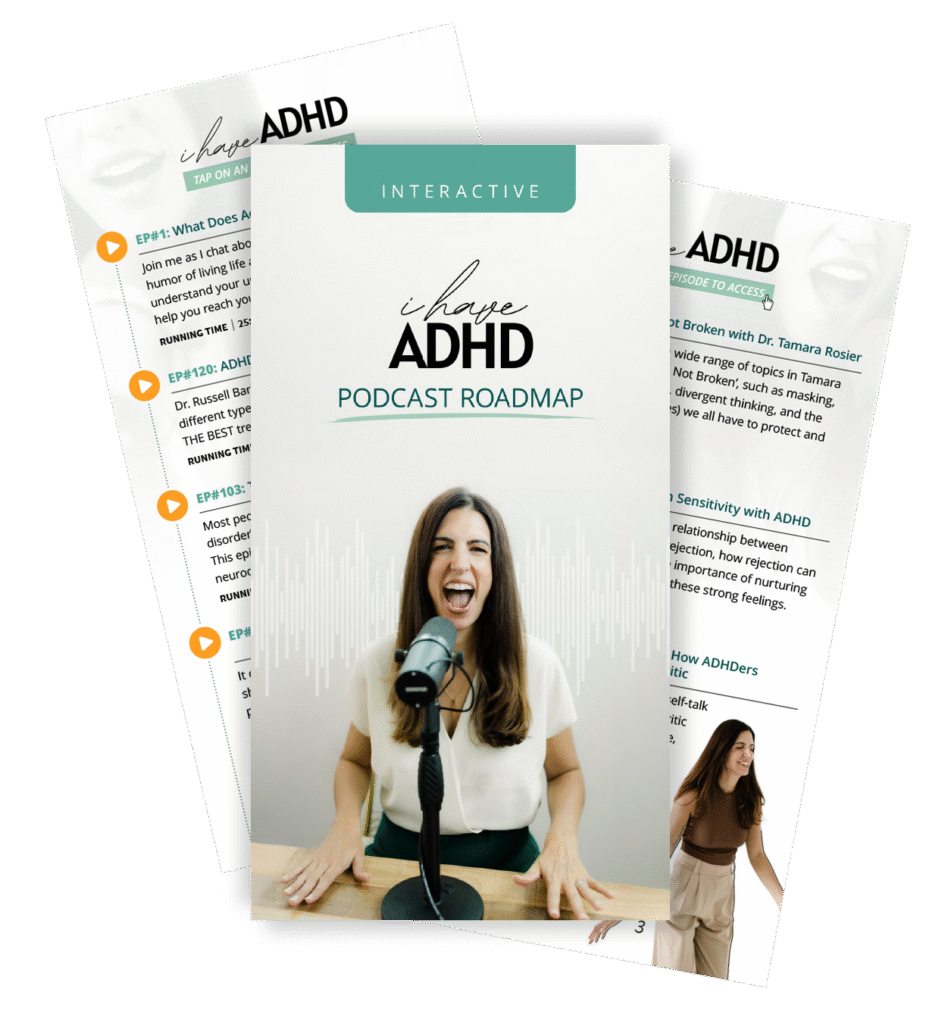
Get The Best of the podcast now with our Podcast Roadmap.

This is a clear and easy podcast roadmap so that you can know for SURE that you’re hearing the very best of the I Have ADHD podcast.

Related Episodes

Kristen Carder

Episode 418: Tired of Feeling Tired? How to Rest When You Have ADHD

Kristen Carder

Episode #416: ADHD and Money: In This Economy?!

Lindsay Gibson

Episode #414 Good Enough Parenting: What NOT to Do (with Dr. Lindsay Gibson)

Stop Struggling Alone.
Start Thriving With FOCUSED.

A proven coaching program designed specifically for adults with ADHD who want to gain clarity, build confidence, and take control of their lives.

Join a community of hundreds of ADHDers

Learning About My Brain...

Changed Everything

Hi, I’m Kristen Carder—ADHD expert, podcast host, and certified coach who’s been exactly where you are. Diagnosed at 21, I spent years cycling through planners, courses, and systems that never quite worked. Everything changed when I discovered the power of understanding my ADHD brain and the transformative impact of community support.

Now, after 15+ years of research and experience, I’ve helped thousands of adults with ADHD thrive. I’m here to show you how understanding your brain can transform your life, just like it did for mine.

ADHD Tips That Actually Make Sense

Follow @i.have.adhd.podcast and join our Instagram community for daily strategies, relatable content, and real talk about ADHD