Kristen Carder 0:05
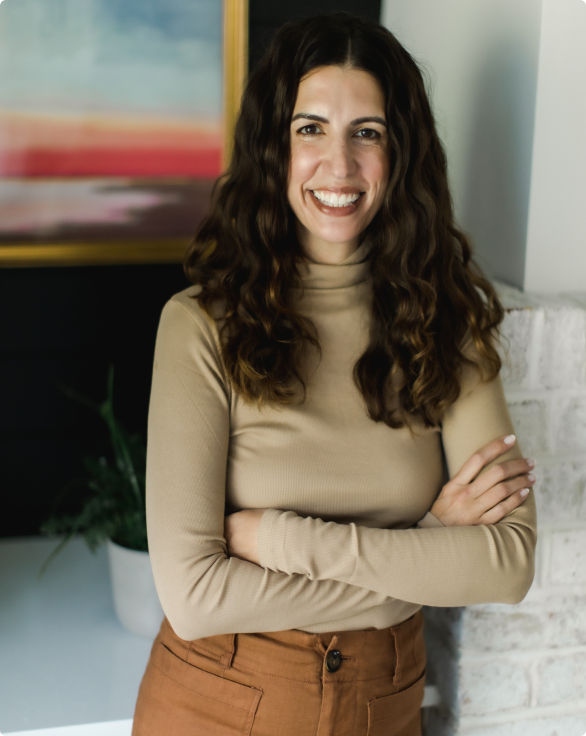
Welcome to the I have ADHD podcast, where it’s all about education, encouragement and coaching for adults. With ADHD, I’m your host, Kristen Carter and I have ADHD, let’s chat about the frustrations, humor and challenges of adulting, relationships, working and achieving with this neurodevelopmental disorder, I’ll help you understand your unique brain, unlock your potential and move from point A to point B. Hey, what’s up? This is Kristin Carter, and you’ve tuned into the I have ADHD podcast. I am medicated, caffeinated, regulated and ready to roll today, I have with me in the studio one of my most treasured clients, Sarah Ashraf, and I reached out to her so recently and was like, girl, you need to come on the podcast. And here’s why she is here with us today, because Sarah has evolved before my very eyes, I have watched her have a whole evolution, and I am so excited for her to share her story with you, because she really is an example of what is possible for those of us with ADHD, I have massive Mama Bear energy, which is kind of she doesn’t know. I’m gonna say this massive Mama Bear energy around just who Sarah is, because I feel like I’ve, I’ve watched you grow up right before me, and listen, you were a grown woman when you came into the focus program, but the amount of growth that you’ve made in the last couple years has been astronomical, and like, you’ve had your babies with us, like, I just feel like we have gotten to see this side of you that is just so special. So I’m so happy to have you here. Let me read your bio. It’s beautiful. Sarah is a certified life coach, offering one on one coaching for people with ADHD. She helps clients with goal setting, follow through and overcoming procrastination by working on emotional regulation, tuning into their bodies and aligning with their core values. Delicious. She lives with her husband, two kids, their nephew and German Shepherd, and in her free time, she enjoys diving into murder mysteries, and I want to hear like, what what is your number one? Go to, what is your favorite murder mystery.
Sarah 2:27
Absolute favorite is knives out. I think I’ve seen it at least 15 times, and I feel like every time I watch it, I pick up on, like, some new clue or something.
Kristen Carder 2:38
Is it a documentary? Like it’s a movie, amazing. Yeah, knives out. Ooh. Thank you so much for being here, and I I was being very genuine when I say that just watching your growth and your evolution is so inspiring, and it’s been so much fun to just have a small part in that.
Sarah 3:02
I mean, you had a huge part in that. Like, I, I’d be the same if I, if I never joined focus.
Kristen Carder 3:10
How long have you been in the program?
Sarah 3:12
I think I joined in the fall of 2021 so almost four years.
Kristen Carder 3:16
That’s not a short time. Yeah, that’s a pretty long time. What’s kept you in for so long?
Sarah 3:22
Um, I mean, I think the community is huge, the Slack community, and just like, anytime I need to, like, bounce something off, like people I trust, or get feedback, or just like, even just share something weird that happened, like ADHD moment, like the it’s just, like, very welcoming, and everyone’s so kind, yeah, and then I love listening to coaching calls, because, like, I always like, I don’t think I even get coached that much. But like, every time I listen, it’s like, I relate so much to everyone who’s getting coached. Yeah, and so I feel like I get so much out of that. And it’s like I can listen in the car, or when I’m walking my dog, it’s like, it’s so easy,
Kristen Carder 4:10
yes, it’s so good. We are going to talk eventually about you, your decision to become a coach, and all of that, but I just want to say I kind of clocked you early on, and was like, this girl’s got coach energy, the way that you showed up in the community, the way that you would respond to people, the questions that you would ask. And I just always had this inkling. And this doesn’t always happen, but I do have it about certain people, and they always do eventually become coaches. I love it so much, and I’m just so glad that you I remember you saying, like, I think I’m gonna start transitioning into coaching. And I was like, Yes, finally. So I don’t ever want to pressure anyone to do that. And it’s not for everyone you know, and it is as you’re like, learning is just like, nobody rolls out the red carpet for you. When you become a coach, you know, like, business is not guaranteed. So again, it’s not for everyone. But I was so happy when you made that choice. Because, my gosh, you’ve been supporting the community like a coach since, since you entered.
Sarah 5:13
Yeah, I just, I find it so rewarding to, like, chat with people and, like, share little bits of like, well, this worked for me. Or, like, reflecting back to them, like, because, like, a lot of the times, like, you just kind of word vomit in there, and then like to have somebody read it, and, like, reflect back to you, hey, this is something that stood out to me. This is what I noticed. Like to do that for other people. Like, it made me feel really good,
Kristen Carder 5:41
and you’re really good at it. Like, yeah, you’re really good at it. Okay, so before you found coaching, though, let’s like, back, way, way, way, way up. Can you tell me about your ADHD journey? So what? When were you diagnosed? How did you know that? Like, maybe you would want to be diagnosed sure
Sarah 5:59
it was actually, like, very, very weird story. I was like, Who was it? Maybe like, 2015, and I think adult ADHD hadn’t like, become like a thing, yeah, yep, yep. And I think autism was more like fuzzy on the internet, I guess. So I was like, kind of struggling at work. I was like, caught between, like, two, two people I was working with, and I’m just just having a really bad time. I was, like, getting really dysregulated all the time. And so I was like, Maybe I’m autistic because, like, I can’t deal with like, this social situation. So I went, I booked an assessment, and I got assessed, and Sorry, I keep clearing my throws. You’re good, yeah, you’re totally she was like, No, I don’t think you have autism. I think the people that you work with are just difficult. But she was like, I do think you have ADHD. And at the time, I was like, Okay, I mean, I my life other than that, my life seemed fine. So she was like, you seem like you’re dealing with it. Okay. Now, she’s like, when you have kids, if you have kids, you’re probably going
Kristen Carder 7:14
to want to get medicated. That’s so insightful.
Sarah 7:17
So yeah, so I just kind of put it in my back pocket and didn’t do anything with it.
Kristen Carder 7:23
How old were you at this time? I think I was 2015,
Sarah 7:28
like 3334 and then during the pandemic, I think I was using body doubling a lot. So when I would go into the office, like, everyone around me was doing work, so like, I do work, everyone’s going to the meeting, so I go to the meeting too. Like, I don’t need to be reminded. When I was home, just me in front of the computer. I had so much problems with procrastination. Like, it would take me, like, two hours to get started, I would forget about meetings. I would zoom. Meetings were so hard, so hard to pay attention, so draining. And yeah, so I, I remembered, oh, okay, this psychologist said you have ADHD. Let me look more into it. And I think I found a blog post, and then I was like, let me find some podcasts. And your podcast was on the list, so I subscribed to it. And I think I listened to one episode, and I was like, this lady gets it, like, I don’t know whatever she’s selling. Like, have to buy it. Wow. I think I signed up after one, one listening to one episode, because there’s, like, this is it? Like, this is what I need. That’s amazing. And then, like, after, I joined the community, like, everyone encouraged me to, like, get, like, more formally diagnosed. So I went to a psychiatrist. I got diagnosed. He prescribed me medication, and then I found out I was pregnant. So like, yeah, then I well, I stay, I stayed in the program. I worked with coaching, but I didn’t. I wasn’t medicated for like, three years, and then just finally, recently, I’ve been trying medication. So what’s that been like for you? Um, it’s been really interesting. Like, I didn’t quite know what to expect, but it’s been good. Um, it’s definitely not like, it doesn’t fix everything, like, it makes it easier to do things, it makes it easier to focus, but like, it also makes it easier to do the wrong things. Like it makes it really easy to get pulled into, like, some hyper focus that has nothing to do with what I need to do, or just it’s
Kristen Carder 9:55
still your responsibility to determine where do I want to. Don’t channel my attention, right? So it allows you to stay focused on one thing, but you have to decide, yeah, that one thing is and that can be a real it’s hard cruelty,
Sarah 10:10
because it’s like, I think it makes doing anything feel good. So it’s like, Oh, it feels good to wash the dishes. It feels good to make the beds and vacuum the house, but it’s like that those things need to get done, but like, I really need to work on
my work right now.
Kristen Carder 10:28
They’re not the essential things. Yes, you mentioned when we were chatting before that, prior to introducing coaching into your life, you felt pretty passive and maybe like a leaf tossed in the wind. Can you describe that a little bit? Yeah. I mean,
Sarah 10:49
it was difficult to say that I had a problem because, like, my life was actually really good, like, I had a really good job, I had a good relationship, I owned a home, like, on paper, nothing was wrong, but I felt like I wasn’t taking an active role in my life, like the job, like I just kind of fell in the whole career. I just kind of fell into. And I was like, this is fine. Like I can do this. Um, I mean buying the house. Like, sure, I was like, I want this and this and this in the house. But, like, it was my husband who drove it. He was the one who was like, we need to buy a car. Let’s go buy a car. And it’s not, not in, like, a controlling way, but just in a layer. Is like, okay, whatever. Like, this all seems fine,
Kristen Carder 11:41
yeah, and
Sarah 11:44
but it just always felt like something was off, like I could see my peers and like my colleagues being, like, very intentional about their careers, like switching jobs every couple years, or, you know, I want to work on this project, because it’s going to give me the skills which I want for this. And I was just like, I’ll work on whatever you want me to work on. It’s fine. And like, I could feel myself start to stagnate, I think in my career especially.
Kristen Carder 12:16
How did coaching change that? How did the introduction of coaching to you change that,
Sarah 12:23
I think. I mean, the reason why, looking back, the reason why I was like that, is because I wasn’t listening to my emotions. I wasn’t like, tapping into how I really felt about anything like it was, like, very scary for me to, like, feel anything. So I just push it all down and, like, try to ignore it and then do the right thing, do the thing I should do. So I had, like, no vision of, like, what I wanted, even, like, you know, this the let’s move to this town. It’s fine, like, sure, but I didn’t, yeah, I just didn’t have a vision of, like, this is my dream. Like this would make me really happy if I did this. And I think if things have been worse for me, it would have been easier, because I would have been something clearly to be unhappy about. But everything was just fine.
Kristen Carder 13:23
That’s so fascinating, because so much, so many times when we talk about ADHD, we have this narrative that, like everything is on fire and like everything’s going wrong, and we have these huge problems to solve. And sometimes it is like that that can be people’s experience, but also it can present as just like a passivity and an inability to really think clearly and have a map for the future, right, the ability to visualize and to envision what life could be like and like you’re saying, you know, you would watch your colleagues have like, this step by step process, and your brain just was not working in that way. So you were kind of led by, like, if a if a manager gave you a job, you’re like, Okay, fine, I’ll do that. Or if so, your husband’s like, let’s move you’re like, Okay, fine, we’ll do that. But instead of feeling like you’re really in charge and able to see clearly what you want,
Sarah 14:19
yeah, exactly. And it’s because I couldn’t, like, I would do those exercises, like, write your ideal day, like, right where you want to be in five years, and I would write it. It was like a fairy
Kristen Carder 14:30
tale, like it didn’t feel connected.
Sarah 14:32
Yeah, it didn’t. It was like, Is this my five year plan, or is this what I think it should be? And then the steps to get there were very opaque, yeah, so I would just like, write it, and then I’d be like, Oh, whatever,
Kristen Carder 14:50
yeah, talk to me about the process of becoming more connected to your emotions. First, when did you realize that you were avoiding your emotions?
Speaker 1 15:00
Yes, I think it was pretty early on after I joined focus, because maybe there was one of the calls with Paula where she was talking about buffering, and I was like, Yes, this is what I do. I’m avoiding my emotions. And you talk
Kristen Carder 15:18
about buffering, yeah. So how would you describe that?
Speaker 1 15:21
So buffering, I think, is when you do anything to distract yourself from feeling something. For me, it shows up a lot, like scrolling on Instagram. Also, like mine, like blends with procrastivity a lot. So like, doing the tasks that need to get done but aren’t important, like, very low stakes, things like washing the dishes, but yeah, it’s, it feels like a little compulsive. And there’s always like, the thought of like, okay, just five more minutes, 10 more minutes, and then I’m gonna go do the thing I’m supposed to do, and it’s like, but that’s extended, yeah. And then like, hours will go by and it’s not done. And then I had this idea that, like, I wanted to run by you, because I think there’s also there that’s, like, small buffering. I think there’s also like big buffering, because, like, at that time, I would work out so much, like, like, hour and a half, two hours a day, to the point where it’s like, not productive, like, you’re not getting you’re getting less fit by working out that much. And I’m like, thinking back was like that also buffering, like, keeping me busy, so I wasn’t, like, confronting, like those big questions, like, where do I want to go in my career? Or, like, do I want to have kids? What do I want to do? Because I was, like, exhausted.
Kristen Carder 16:50
I think that makes sense. I that just like, sparked in my head, like buffering on a micro level and then buffering on a macro level, like, what does it look like in our lives, like the micros, like those moments of avoidance in our phone or on the TV, or like eating or drinking or something like that, like the compulsive behavior that we take to avoid the emotions, or what, what it might take to do something hard. But then on a more macro level, exactly, yeah, that’s really an interesting concept. Whoo, this podcast is sponsored by a g1 if you’ve been here for a minute, you know that I absolutely love ag one. I was a happy, happy customer before they even became a sponsor of the podcast. AG, one makes such a huge difference in my life, and I kind of treat it like nutritional insurance, where, like, because of my ADHD, and just kind of the way that I’m wired, I hate to think about food. I hate to meal prep. I hate to plan my lunch. I’m not really good at that part of life. I’m getting better, but I’m not really good at it, and I truly lean on ag one to make sure that I’m getting what I need out of my day. And gosh, does it make a difference in the beginning of the summer, a couple months ago, went through a season where I was traveling, I was distracted. It was not something that I was prioritizing, and I felt the repercussions of that. And so in the last couple weeks, I’ve really gotten back into optimizing my mornings with ag one, and I feel so much better, so much more energized, so much more healthy, and I feel relieved to know that at least I’ve started my day with some good nutrition. I optimize my mornings with ag one, and now I’ve added it into my nighttime ritual, introducing a G, Z, the nightly drink that helps you wind down and rest. It’s a melatonin free formula with clinically studied herbs, adaptogens and minerals. For those of you 80 years who struggle to sleep, who struggle to relax, who struggle to shut off your brain at the end of the day, you are going to love this. I just taught a class and focused on opening and closing the day, and it’s wild how ag one fits into that for me, because ag one helps me to open my day and age. Z helps me to close my day. AG, Z helps your mind and body wind down before bed. It optimizes sleep quality during the night and it helps you to wake up feeling rested without grogginess. AgZ is one. The few sleep supplements that contains both magnet magnesium, lcnate and saffron, two high quality ingredients at amounts supported by research that together support the body’s need to calm and ease into natural sleep. Doesn’t it sound delightful calm and ease into natural sleep. Closing the day with a G Z is going to make a huge difference for you. Agencies. Magnetine Magnesium, lcnate is a clinically tested form of magnesium which has been shown to improve sleep quality and support cognitive function. Hello, don’t we need that? Don’t we need it? AG, z is an excellent source of magnesium. Each serving of AgZ delivers 250 milligrams of highly bioavailable magnesium, providing over half of your daily value. So open the day with ag one and close the day with a g z, if you’re ready to turn down the stress and focus on the rest, had to drink a G one.com/i. Have ADHD to get a free frother with your first purchase of a G Z, that’s drink a G one.com/i. Have ADHD. Go check it out. What? Okay, so walk me through the process. So you hear about buffering, yeah, through Paula. Shout out to Paula. And then what
Speaker 1 21:34
um I really, I mean, I bought into everything, like everything just resonated with me so much, so I started doing, like, thought downloads and doing surfing. So like, really getting into my body and like trying to feel, not even like trying to name the emotion, but like, okay, like, I feel a little tight in my throat. That’s what I feel almost all the time. When I’m feeling something, it’s always the same. I feel like little tight in my throat and just, um, even just the awareness that, because I think our subconscious will, like, just totally hijack what we’re doing without even realizing that’s happened like that still happens to me all the time. We’ll all be working and then, like, there’s not even a conscious thought, and I’m, like, looking at my phone, yes, so I think our subconscious is always trying to protect us from feeling those bad feelings in our body. So like, building up that awareness of like, Oh, I’m scrolling on Instagram again, and I’m telling myself, five more minutes, five more minutes. I there’s something going on here, like, and I need to stop and like, stop and just pause and try to at least, I don’t know even process, but just like, a knowledge that, like, I’m feeling an emotion.
Kristen Carder 22:59
Was there one specific emotion that you think was kind of like humming in the background most of the time when you’re buffering? Or does it vary when you started
Speaker 1 23:12
to notice a lot? For me, I mean, I think with work, a lot of the time it was boredom, oh, and then at that time, I was having to talk to customers on the phone a lot, which, like, I was not comfortable. Like, after I did it a bunch of times, I was fine, but like, when I was first doing that, like, I felt so uncomfortable. So just like that discomfort of I’m gonna have to call someone on the phone.
Kristen Carder 23:42
So many people can relate to that. So buffering, avoiding and delaying, it becomes procrastination.
Speaker 1 23:48
Yeah, exactly. It was showing up as procrastination. And so when I was like, when, okay, I’m procrastinating now I must be feeling something or trying to avoid feeling something.
Kristen Carder 23:58
Isn’t that so powerful when you can notice the procrastination and be like, oh, like, there’s a there’s something happening inside of me. Like, oh, it’s just ADHD. Like, it’s deeper than that, right? It’s deeper than that. Like, we’re so disconnected from our emotions that we’re not able to see that. Like I remember the first time that I made the connection between my phone and something that I was feeling I dropped off my big boys had gone to school. I dropped off the little one at preschool. I came home and I had a list, and I sat on the couch and I scrolled Instagram, and I remember Finally, and this was shortly into my, like, own personal development journey as well. Finally, like, pausing and saying, what’s going on, just asking myself, like, what’s going on here? And I was like, Oh, I’m afraid. I’m afraid to start my list. It had, I had. To do some, like, advertising. It was for my previous company, and it was like I had to put myself out there and to make the connection in the moment on my gray couch in my old house, like I can see myself there, just being like, Oh, I’m scared, yeah. And it felt so powerful, yeah.
Speaker 1 25:19
Like, I feel like our bodies are always trying to tell us something, but then it’s like your conscious brain is like, No, this is not like you shouldn’t feel afraid. You should just do it, but like you can’t.
Kristen Carder 25:34
There’s like a conflict, not a thing. I just love reminding myself and my clients that, like, the brain doesn’t differentiate between a perceived threat and an actual threat, right? So, like, you’re afraid to make that phone call, the your brain is like, okay, Dane, like we are in danger, we need to protect ourselves. We need to, like, go into the cave,
Speaker 2 25:57
right? And it’s not totally wrong. Like, I’ve been screamed out over the phone, like I was a telemarketer when I was in high school. Oh, God bless. I’ve gotten reamed out over the phone. So, like, yes, of course it makes sense. Like, I don’t want to cold call
Kristen Carder 26:12
people. There is actual evidence that it’s dangerous, yeah, yeah.
Speaker 1 26:16
And it’s like, psychological danger, like no one was coming after me, but, like, it wasn’t totally off base, but I think because it was so subconscious, like, I wasn’t, I wasn’t making the connection. Like, yeah, that’s why I keep looking at my phone. That’s why I keep, like, going on Wikipedia and just like reading random stuff.
Kristen Carder 26:38
How much Wikipedia knowledge you have in your head too much. I’m curious. Like, if somebody is listening and they’re like, oh my gosh, I think I do this or like, this sounds familiar. What would you say to them as like, a first step?
Speaker 1 26:54
I think a first step is it’s difficult, but just stop and like, breathe, like, maybe do some breathing exercises and feel the feelings in your body, those sensations, because emotions, it’s just sensations in your body. And just remind yourself, like, I’m safe, I’m physically safe, like I’m safe to feel this like nothing. If I allow myself to feel the sensation, nothing bad is going to happen. No one’s going to get hurt. And then just feel it. And you know, you let it expand, and then it’ll go away like it, yeah, I’m always surprised how fast things pass. Like, once, once you allow yourself to feel the sensation, they go very quickly, maybe, like, less than a minute. I’ve never, never been stuck in that feeling for very long. It just goes. It’ll come back. But like, at least you can, like, make some progress. It’s like, waves, yeah, like, waves.
Kristen Carder 28:03
It’s so interesting because the buffering is actually what keeps the emotion stuck. Yes, exactly, right. And so we work so hard to avoid the emotion, but it’s actually what is keeping whatever that is trapped in us. So if we’ll just take that 30 to 90 seconds to just like, okay, like, like, just surrender to it, yeah. Like, okay, what? You don’t even have to know what the emotion is, right, exactly, but just to, like, let it be in your body and process through then you can actually make some decisions and actually be in charge. Like, do I want to go back on my phone that
Speaker 1 28:39
could absolutely sometimes yes, right?
Kristen Carder 28:43
But then you’re you actually have the authority to say no, actually, I want to, yeah, get moving, or I want to do something else. I want to go for a walk. I want to do something more productive. Oh, it’s wild. Do you feel more connected to your emotions? I know the answer is yes. So like explain the evolution of become someone who, let me start again, explain the evolution of being someone who resisted and pushed away her emotions for decades. Would you say yeah, and then becoming someone who is more open and allowing. Are you just like, crying all the time? Are you just like, are you just like, Zen all the time? Like, what? What is that like?
Speaker 1 29:29
Like, I guess ironically, like, I’m much more in control, because I’m able to process my emotions in a way, instead of just like, trying to get out of the discomfort all the time, which like, can look like buffering, or like, for me, I’ll just, like, run away and like, leave a situation. I know for other people, like, it’s yelling, I’m getting really angry. It you don’t realize how out of. Control it is until, like, you really there’s, like, another way, like, once you learn to tolerate and like, obviously, it’s still a work in progress, um,
Sarah 30:14
but you can
Speaker 1 30:15
make much more clear headed decisions, or even, like, conscious decisions, instead of letting your subconscious, like, hijack what you’re doing, you can choose, like, how you’re gonna react and like, maybe sometimes I’m still like, yeah, I gotta go, like, I can’t be here. Yep, still have the same reaction, but at least I’m choosing it, and I’m not like, I’m gonna leave.
Kristen Carder 30:39
Is that just like a flight response, like an automatic response, it’s more you are again, it’s like authority, yeah, that you have. How else has that authority shown up in your life? So you described yourself as being someone who was more passive, kind of like a leaf in the wind. I loved that description. Like, what? How has that changed?
Speaker 1 31:03
I mean, I think the biggest thing is my career change. I was a software engineer for 20 years and changing to coaching, which I never would have thought like that, never would have occurred to me to do, or even, like, how do I do it. Like, what is,
Sarah 31:23
how do I do this, right? The
Kristen Carder 31:25
you mentioned earlier, like, I could maybe see some things for my future, but I never could see the pathway. And it seems like you have just been following a very clear pathway with this career change.
Speaker 1 31:38
Yeah, I think, like, um, like, the summer of self trust, like, learning to trust myself. And I think I was always like, what kept me kind of stuck and doing what I thought I should do. It was like, was very afraid to take any risks. Like, um, I come from an immigrant family, so it’s like, money is safety and more money is more safety. So I was always really afraid to leave, like, these really well compensated jobs, really, I don’t know if it’s a really lucrative industry, but it’s like a pretty solid industry, right? Yeah, it’s very scary to step out of that or even take any risks, because it’s like, you just, you need more money to be safe. And then I think from doing the money course, I realized, like, there’s no amount of money. That is, actually there was an amount. It was $8 million I was like, I
Kristen Carder 32:37
need to relax. I’m sorry. That’s so rude. It’s like, if I could just have $8 million real
Speaker 1 32:44
quick. If I had $8 million in the bank, I would feel safe, right to do what makes me feel good, wow, which is, I know where that number came from. It was like from a retirement like a person came to my work to talk about retirement presentation, and they gave us all these like calculators of like, okay, you know, figure out how much money you need was $8 million or something
Kristen Carder 33:11
like, If I could just real quick, pause, really, just pause for a second here. Do you think that if you got to that 8 million mark without doing the self development work that you would feel safe.
Speaker 1 33:25
Oh, I feel exactly this.
Kristen Carder 33:29
Is that wild?
Speaker 1 33:29
Yeah, that was, like, such a crazy realization for me, is that, like, No, I make myself feel safe. Look, the money is just, I don’t, I don’t even know what it’s a symbol of. It’s like, it’s just something to like, pin your anxiety on, because it’s like, okay, if I keep chasing this number, then the anxiety is going to go away. But it doesn’t like, right?
Kristen Carder 33:56
Because the hamster wheel does make us feel like we’re doing something, that we’re a part of something important, and that we’re making forward progress, but no amount of safety can come from that hamster wheel. Yeah, dang,
Speaker 3 34:14
everyone with ADHD knows what to do to improve their lives. You go to bed at a
Kristen Carder 34:18
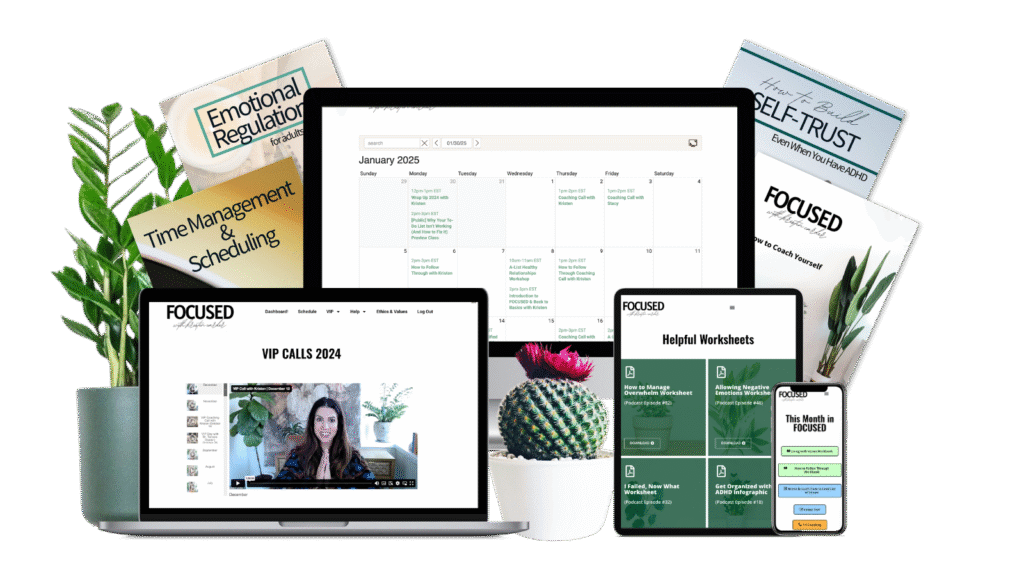
reasonable time, you wake up early, you make a list. You cross things off the list in order, blah, blah, blah. Like, yeah, we know what to do, but ADHD is not a disorder of not knowing what to do. It’s a disorder of knowing exactly what to do but not being able to get yourself to do it. That’s why I created focused. It’s an ADHD coaching membership for adults with ADHD. I’m a life coach with multiple certifications, and since 2019 I’ve coached over 4000 adults with ADHD from all over the world. I know what it takes to help an adult with ADHD go from Hot Mess express to grounded and thriving. I’ll teach you how to understand your age. ADHD brain regulate your emotions and your behavior and accept yourself, flaws and all. And with this foundation, we’ll build the skills to improve your life with ADHD. And not only do you get skills and tools and focus, but you’re surrounded by a huge community of adults with ADHD who are also doing the work of self development right alongside of you. Dr Ned Hallowell says healing happens in community, and I have absolutely found this to be true. So if you’re an adult with ADHD who wants to figure out how to be motivated from the inside out and make real, lasting changes in your life, join hundreds of others from around the world in focused go to I have adhd.com/focused to learn more. That’s I have adhd.com/focused to check it out. I just I relate so much to having to figure out how to trust yourself, even in the midst of some chaos or some uncertainty, and also realizing that, like, no matter what monetary number you get to, feeling safe is still an inside job. It just it always is going to be. And I think that you and I have an amount of privilege where we can pay our bills, yeah, where we have a stable home, right, where we have husbands who are kind to us, right? And so, of course, there is a level of safety that is objective, that some people have to work toward. But for I think the majority of listeners who you know are able to pay their bills, and who are in safe enough homes, the feeling of safety, then moving forward is about the internal work of how can I make sure that I am self soothing, that I’m trusting My decisions, that I’m working to build safety on the inside and not looking to pin it on something on the outside.
Sarah 37:07
Yeah, yeah, exactly. So what?
Kristen Carder 37:11
What was the process for you being someone previously who couldn’t see the path forward? Because I think this is going to really be helpful to ADHD ers, who are fuzzy. You described it as being like, the future is opaque, and I that’s such a perfect description, because I think there is a frustration and a feeling of stuckness for a lot of people in the community who are just like, okay, like, I have a job, but is this the job that I want? Like, I have a family? Is that but like, is it? Do I want more kids, or do I want to move and just making those decisions from a place of authority and agency? Tell me a little bit about that process for you.
Speaker 1 37:58
Yeah, well, I still don’t have a plan, just like making one decision at a time, like trying to do the next thing that makes sense, but trusting myself that no matter what happens, like we’re gonna be okay, like I’ve never let us down in the past, us, meaning, like my family haven’t let us down in the past. Like, I’ve always taken care of everything. If I need to go back to software engineering, I can, like, that’s always an option.
Sarah 38:30
Um,
Speaker 1 38:32
but yeah, I, I mean, I still don’t have a clear vision of, like, I kind of know where I’d like to be in a year, but it’s like, Now at least I can see, like, a couple weeks,
Kristen Carder 38:46
it’s so great that you’re saying this, though, because I think that it is a little bit unattainable. When someone comes in and they’re like, I know exactly where I’m going. I know exactly what I’m doing. I have the exact plan. I’m just gonna follow the steps. And that sounds great, and a lot of people want that, but I think for the average listener, it’s like, that’s feels out of reach,
Speaker 1 39:06
that sounds crazy to me, still like, how do you know? Like, how you can’t know what’s gonna happen?
Kristen Carder 39:13
Yep, I love that. You said, I’m just doing the next thing that makes sense and and I think that that could be really encouraging to the listener as well. Like, what is the next thing that makes sense? And then building your sense of safety, security and self trust around like, your ability to do that, your ability to, like, pivot if you need to, yeah.
Speaker 1 39:36
And I think it’s difficult to do that and not become completely reactive, doing it still with some kind of framework and some vision of where you need to be. So that’s like, definitely a balance. But yeah, I think you’re just trusting yourself. I guess even if I was just i. I mean, I’ve had this I’ve been starting this business for two months. I have just been reacting to things like, yeah, I booked my first client completely out of the blue. Didn’t think it was gonna happen, so like, I had to scramble to, like, get a contract, yes, and then, like, you reached out to me to do the podcast. And I was like, well, now I gotta make a website. Now you gotta do all this stuff, but it’s like, stuff I knew I had to do.
Kristen Carder 40:24
You said to me, like, now I have a deadline. Yeah, it’s really good for an ADHD. Or that’s perfect. It’s perfect. Yeah, so helpful. I think that what you’re describing is not reactive in a negative sense of, like, I’m just reacting to everything that’s coming my way, but what you’re doing is you’re navigating based on the information that you’re receiving, right? So you’re like, you’re making decisions, and you’re you’re like, steering in the direction, but you don’t get to steer without that forward momentum, right? Like, if you’re sitting in a car and it’s not going anywhere. The steering wheel doesn’t even turn right. And, like, what you’re doing is you’re you’re like, moving forward and noticing where the road is going, and you’re just, like, turning in those directions. But you’re doing that with, with forethought. You’re doing that, like, intentionally.
Speaker 1 41:20
Yeah, I really like that way. That feels much better than just like, I’m
Kristen Carder 41:25
like, Yeah, because I don’t get that reactive energy. I know what you are saying when you say reactive, but I think it’s more like you’re creating the momentum. You’re noticing where the path is going, and you’re steering in those different directions. Yeah, really, I like that too. Something that I really related to when we were prepping for the interview is you saying that there was a time when you were using coaching tools against yourself, and I have done the same. I think a lot of people in self development work as they’re just getting into it, will also do the same. So tell us what you meant by that. How have you used coaching tools against yourself? What was it like to notice that, how you navigated it? Well, we
Speaker 1 42:16
did touch on it already. It was around like money and security. I I use the thought, like, I need money for my family to keep me in working situations where it wasn’t, it wasn’t fulfilling to me. And like, like you said, this comes from a lot of privilege. Like, it’s a very privileged place to say, like, I making money isn’t the only thing that matters to me,
Sarah 42:48
um,
Speaker 1 42:50
but I think what had happened is that I let that value, that one value which is a good value, and it’s a true thought, like, I do need money, like we do have bills, like, we need to eat. Yes, um, I let that one thought take over all my other values, because it felt it was tied to the safety of like, if I have a million dollars, I’m gonna be safe. So let me stay wasn’t just one job, like it happened for years, whereas, like, I, you know, my, some of my other values are, like helping people, like justice, like making the world a more just place. Um, just improving the not making the world like worse, sure. Um, and those values, like, like work is so important, it’s what you do eight, nine hours a day at least. That’s a long time to be having a thought, I need money. The emotion that comes up is acceptance, and acceptance is not like a very energizing emotion, yeah, so it was so hard to do anything.
Kristen Carder 43:58
Okay? So you’re in a position where you’re not feeling fulfilled, but then you have the thought, well, I need money, and so then you accept the position that you’re in, even though it may not be your highest calling,
Speaker 1 44:12
right? And I would do a lot of surfing, like, let me surf all these other bad feelings that are coming up, because I’m gonna believe this thought, the true thought, I need money, and I’m gonna make that the most important thing, and I’m gonna push down. And I guess the way I was using the tools against myself is I was surfing a lot of things that I had the power to change.
Kristen Carder 44:38
Wow. Say more about that. I think that’s important.
Speaker 1 44:42
Like I could have gotten a different job that aligned more with my values.
Kristen Carder 44:51
You were surfing to allow yourself to tolerate an environment where. Maybe you weren’t meant to be exactly, yeah, instead. Okay, I relate to this so much. So I’ve done this with myself in relationships a lot
where
I’ve been like, well, I have coaching tools. I can I can process my emotion. I can feel and process my emotions. So when I’m angry and resentful, which are actually like indicators that something is wrong, but I’m like, Well, I can just surf that and process it through and move on and then not confront the person, not ask them to change their behavior, not set a boundary, because I can just, I’ll just process this emotion and not take any of the actually healthy steps, right? Not because emotions are actually information. And I’m like, let me just process the information right on out of me so I don’t have to do anything with
Speaker 1 45:55
it. Yeah. And it’s like, you get these tools, like, when you start being coached. It’s like, this is so cool. Like, now I know what to do with these feelings, but if you’re not careful, you can just make it another way to ignore. Because it’s not just feeling a feeling. It’s like your body’s trying to tell you something. So it’s like, if you don’t listen and keep not listening, then like you’re just gonna be in the same bad situation, the same unfulfilling situation that you were in before.
Kristen Carder 46:31
So how did you overcome that? Because the thought I need money for my family, that’s still a fact. Yeah. So how did you navigate that.
Sarah 46:41
Um,
Speaker 1 46:42
I it was so I left my last job and instead of just hopping to the next thing, because, like, I had been, like, doing the work for a really long time, and I was like, wait, I am going to do something different this time. I’m not going to be totally reactive and like, let this feeling of like, I need money to drive my actions, like, let me stop and have a think and really figure out, like, what I want to do. I think that was around the same time we were doing living with vision. So I was like, thinking about my values and like, I think coaching had always been in the back of my head, because you did reach out to me at one point and you’re like, I think you should do this. And I was like, Yes, I want to do it, but like, I’m not ready right now. So I think at that point, I was like, I really like doing this. I like talking to people. And I was like, I’m just gonna do it. Like I looked at my bank account. I was like, I think I have maybe about a year of runway, nice. I’m just gonna do it. If it doesn’t work out, like, I can always go back to software engineering.
Kristen Carder 47:50
Yep, to be clear, was there $8 million in your bank account? Oh, just checking. So you went through a coach certification. Yeah, that’s great. What was that experience?
Speaker 1 48:04
Like, um, it was really good. It was, like, it was like, really cool. Because, like, I would have class at night, and like, I would learn all these tools, and then, like, I listened to your coaching calls, and I was like, oh, that’s what she’s doing. Like, that’s how she’s doing that. And then so, like, having both, I think, was, like, really, really helpful. Because, like, I had so many, I had heard so many coaching calls, so I knew what it was like, and kind of what the framework, yeah, for it. And then, like, really, in class, I kind of practicing, like, you know, we would practice like little bits, like practice, like setting the agreement on what someone wants to be coached on, and we would just practice that so, like, going through practicing those pieces, understanding, like the underlying like psychology behind it, how it’s different from therapy, yeah, um, it was really fun. That’s so cool
Kristen Carder 49:04
when you think about yourself now compared to who you were prior to being coached and like entering this, like self development phase, I don’t want to call it a phase. It’s not that was not very nice self development, like iteration of your life. What are the biggest differences? Do you think
Speaker 1 49:26
it’s like, it’s so funny, because I think from the outside it doesn’t look that different. When I tell people, like, oh, coaching changed my life, and they’re like, What
Kristen Carder 49:33
changed your life looks on paper would be the same, almost
Speaker 1 49:38
exactly the same. It’s like, I I I feel like I’m an active participant. Now, even I’m not, like, making like, wildly different decisions, right? But I feel more in control and like I can it’s not up to the whims of other people, what I’m going to do or what’s going to happen to me. Like, I’m not dependent on like. Or my manager deciding like I’m ready for a promotion, or like they want me to work on this project, like I’m choosing what I want to do. Like, even if I did go back to software engineering, I think I would approach it with much more intentionality. Of like, where I wanted to do, what I wanted to work on, what I wanted my days to look like, and just like having the confidence to ask for things instead of just like, This is what we’re gonna give you.
Kristen Carder 50:29
Yeah, what’s the experience like in your own mind, like, your relationship with yourself, it’s so different, like, that’s the part, I think the internal experience?
Sarah 50:42
Yeah, I felt like, even in my own mind, I think because my subconscious was, like, always trying to distract me from feeling anything like I would, um, I’d be doing something, and then like a memory would come up, like there was a time I was, like, in a near miss of a really bad car accident. And like, We were fine. Everyone was fine. But like, I would play that over in my mind, over and over and like, when it would come up, like, I would have to stop what I was doing and, like, go buffer. Like I would I’d be, like, in a conversation, like, with my husband, and then I’d be like, I have to pull out my phone and, like, start looking at something, because, like, I can’t tolerate feeling this. And I mean, it still happens, like I still have, like, uncomfortable thoughts, but like I can just breathe, and like I can feel the feeling. And you know, it’s me making the decision of what I want to do. I’m not just like always running from something
Kristen Carder 51:43
Well, that’s powerful.
Did you have a negative self talk? And has that changed at all? Really something that I’ve heard you talk about, and I’m just curious
Sarah 51:54
about that was really interesting when we did the the inner critic, because I did, but it was so baked in, like, I didn’t realize it was there. But then once I started, like, it was over really quick. I don’t, I don’t know if other people have this experience, but like, once I, like, gave it a name and started, like, writing down the things it was saying. I was like, none of this is true. Like, and the thing I realized I was doing is I was making, I was giving my inner How do I say this? I was making other people’s thoughts my inner critic. So I would be like, This person is thinking this about me. Feels like there’s no evidence that they’re thinking that I’m thinking that about me. And then once I realized I was doing it, like it just stopped. I don’t know, it was kind of crazy. I think that’s like, one of the cool things about coaching is, like, some sometimes it takes like four years to do something, and then sometimes it takes like two weeks.
Kristen Carder 52:58
That’s incredible. It was nuts. That feels miraculous to me, because, I mean, and you’re absolutely right, and it’s, I think it’s different for all of us, like sometimes, you know, you work and you work and you work and you work at something, to try to just change your perspective, or change your self talk or whatever, but to have it just kind of dissipate, because you put a name to it, you understood what was going on, you had authority over it, and then you’re just like, Oh yeah, it’s like, not a thing anymore.
Sarah 53:28
And I think my inner critic would say such outlandish things, easy to be like, okay, whatever. That’s not true. That’s not gonna happen.
Kristen Carder 53:37
It’s so funny. As I was coming this morning, it always feels to me like just such a rigmarole to, like, get myself ready, get out the door, have all my stuff, and I pulled into the parking spot, then you have to, like, figure out how to pay for the parking and, like, what’s the, you know, the park mobile number, and all, like, all of that. And I, like, I was in my car, I had pressed all the parking buttons, and I was good. And then I was just automatically being like, you did a great job. You’re here, you did it, and now you’re just gonna go do a great job. And I was talking out loud to myself, and I was just like, so nice to myself. And I was like, Oh my God. And then I noticed myself being nice to myself. I was like, Look at you. You’re being so nice. And just to be able to have that relationship with self where you’re not just like, oh my gosh, you’re like, now you’re gonna do it, was just like, so it adds such ease.
Sarah 54:37
Yeah, I think for me, sometimes I feel like, oh, I should be feeling more self doubt. I should be scared to do this, but I’m not. And I’m like, oh, it’s because my inner critic’s gone. Like, it’s like, I remember putting in slack when it happened. I was like, I kind of miss it. Like, I feel like I’m all alone. There’s nobody else in my head. Like, tell. Telling me what to do. It was like, it was so spooky, how it just like it’s gone.
Kristen Carder 55:05
That is hilarious. I think I missed that post that is so funny. Do you did you replace it with a kinder voice, or is it just a little bit like peaceful and quiet and it’s
Sarah 55:18
just peaceful and quiet? Wow, that’s lovely. I know. I mean, knock on wood, yeah.
Kristen Carder 55:26
The truth is, though, like when the critic comes back and shows up again, you know exactly what to do. You know exactly what to do. You know exactly how to handle her and and how to talk to her to just like, okay, shush. Think you are just, yeah, that’s so good. So for people listening who are like, um, I want what she’s having, like, I feel like, you know, so passive in my life. I don’t really know how to move forward. Or maybe they feel stuck, or, like, afraid to invest in themselves, are afraid to, like, take an unclear next step. What would you want them to know about? Like, what’s possible?
Sarah 56:10
It’s work. It’s a lot of hard work and but you can do it like the tools are all there. You just join focused and everything is there for you. You just, you have to engage with it and be willing to feel uncomfortable a lot.
Kristen Carder 56:32
That’s the part, I think that’s, I honestly think that that is the biggest barrier. I know, for some money, is a barrier, but I think really the barrier is discomfort and knowing, like, we talk about feeling so much on the pod, and knowing, like, if I, if I engage in that, I’m going to have to confront some, some emotions.
Sarah 56:58
Yeah, I think it’s just reminding yourself that it’s just like, I think when we did the emotions course and like your definition of an emotion, it was like a reaction in your body to like a person or a situation, and it’s just a feeling in your body. It like it can’t actually hurt you. That’s when I was like, okay, can do this like I can sit here in my office and, like, take two minutes, like, let me experience this uncomfortable sensation, and I’m gonna be fine. Like, yeah, everything’s gonna be fine.
Kristen Carder 57:35
You are such proof of that that everything is gonna be fine. I just, I agree everyone should join focus, but also, like, there are people that would prefer one on one, and that’s why I am so glad that you are a coach. And I truly mean that I’m so sincere about it, because I don’t work in a one on one capacity. I think some people are intimidated by a group setting, and so to have thoughtful, aligned, heart centered, really smart coaches like yourself out there. Girl, I forgot that I had reached out to you and said, You should be a coach, but I’m so glad I did. And that was years ago, wasn’t
Sarah 58:15
it? Yeah, I think it was the first, the first time you offered coach training. Yeah, I remember I was like, I’m not done with software engineering. I think I still have some unfinished business here, which I guess I finished, whatever business that was
Kristen Carder 58:29
so great. It’s so great. Tell us how people can find you. So, like, if somebody is like, this girl got unstuck, I want her to teach me how to get unstuck. How can people find you.
Sarah 58:40
Um, so my website, it’s unblocked and aligned.com, um, I’m actually on Twitch the most. I’m probably like the oldest person twitch. Twitch is like streaming for gamers, but there’s also, like a whole body, body doubling, co working section. So I’m on Twitch, like, Tuesdays and Wednesdays most of the day. If you want a body double with me, I’m always there.
Kristen Carder 59:07
That’s awesome. And with just like, I’m sorry, I don’t even know what Twitch is. So like, how do they find you? Do they search your name?
Sarah 59:15
Yeah, I’m unblocked on a line on Twitch, nice and on Tiktok and Instagram, there’s nothing there yet, but I did claim those handles
Kristen Carder 59:25
unblocked and aligned. Oh, it’s so good. Okay, we’re gonna link everything in the show notes. I just really hope I know that somebody cannot listen to this episode and not be inspired and not at least have some hope for the future. And I am just so, so grateful to you for coming and for sharing your story. And I adore
Sarah 59:49
you. I’m so grateful to you for introducing me to coaching and like everything like it, nothing would be the same like if I hadn’t joined. Wow.
Kristen Carder 1:00:00
Yeah, that means a lot to me. I’m going to try to receive it, isn’t it hard to receive confidence. We’re going to link everything in the show notes and listener I do mean it that if you feel the pull to get coached and might want to work with someone, one on one, reach out to Sarah. All of her info is in the in the show notes, and we’re going to talk to you next week. We’ll see you then. That was a really fake smile. I don’t know if you can do it. It was really fake. I’ll say the whole ending. And listener, if you have a pull to get coached, and maybe a group setting is not the spot for you, reach out to Sarah. I know she can help you. All of her info is in the show notes, and I can’t wait to talk to you next week if you’re being treated for your ADHD, but you still don’t feel like you’re reaching your potential, you’ve got to join focus. It’s my monthly coaching membership where I teach you how to tame your wild thoughts and create the life that you’ve always wanted, no matter what season of life you’re in or where you are in the world. Focus is for you. All materials and call recordings are stored in the site for you to access at your convenience. Go to Ihaveadhd.com/focused for all the info you.