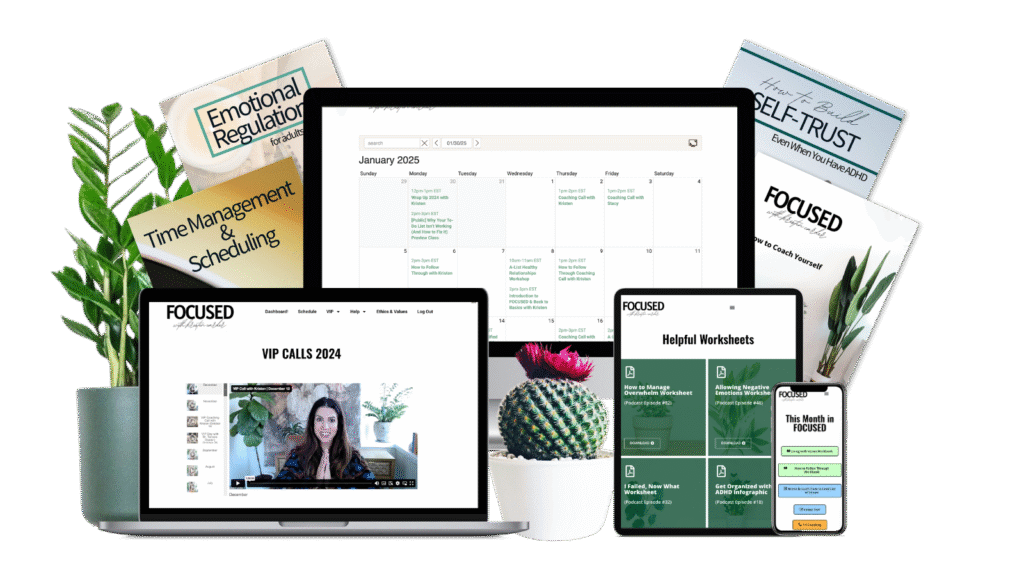


This episode is sponsored by CURE Hydration. All right, I’m going to be real with you. Drinking water is boring. My ADHD brain is like, wait, we have to do this again? Like every day, multiple times. What in the world? And because I’m running from meetings to coaching calls to kid chaos, staying hydrated is not something I’m naturally good at. It’s not something I naturally think about. That’s why I’ve been obsessed with Cure hydration packs lately. Cure is a plant based hydrating electrolyte mix with no added sugar, only 25 calories, and it actually tastes good. The watermelon and berry pomegranate have been on repeat for me. I’m actually like really running low on those flavors, which is so sad. They’re refreshing without being too sweet or artificial. It feels like my water finally has a little bit of personality, which I enjoy. I really do. What I love most is that CURE uses a science backed formula that hydrates as effectively as an IV drip. So when I’m scrambling through my day forgetting my water again, CURE helps me to catch up fast. I throw a few packs in my bag and it makes drinking enough water simple. Which for my ADHD brain is basically a miracle. So staying hydrated isn’t just about water. You also need electrolytes. And that’s why I love Cure. It’s clean, tastes great, and it actually works. And bonus, CURE is FSA HSA approved so you can use those funds to stay hydrated. The smart way for I have ADHD Podcast listeners. You can get 20% off your first order@curehydration.com ihaveadhd with the code ihaveadhd and if you get a post purchase survey, make sure to tell them that you heard about Cure right here on the podcast. It really does help to support the show. Don’t just drink more water, also upgrade it with cure. Did you know you can opt out of winter with VRBO? Save up to $1,500 for booking a month long stay. When thousands of sunny homes are waiting for you, why subject yourself to the cold? Put the snow shovel down, put the parka back in the closet and don’t you dare scrape another windshield. Slip into some flip flops, consider a sunless tan and use the monthly stays filter to save up to $1,500. Book your warm getaway at vrbo.com. Welcome to the I have ADHD podcast where it’s all about education, encouragement and coaching for adults with adhd. I’m your host Kristen Carter and I have adhd. Let’s chat about the frustrations, humor, and challenges of adulting relationships with, working and achieving with this neurodevelopmental disorder. I’ll help you understand your unique brain, unlock your potential, and move from point A to point B. Hey, what’s up? This is Kristen Carter and you are listening to The I have ADHD podcast, episode number 56. I am medicated, I am caffeinated, and I am ready to roll. The first thing that I want to do today is say to those of you who have recently left a rating or review, thank you so much. You’re so kind. There’s been, like a huge influx of you guys rating and reviewing this podcast in the last couple weeks, and I just appreciate you so much. Thank you. I see you. I read your reviews over and over because like I’ve said in previous episodes, it gives me so much satisfaction and so much love for you and then also, like incredible amounts of dopamine that just keep me going. So thank you so much. I appreciate you. I really, really do. If you guys are listening on itunes and you haven’t subscribed, that will make your life easier. So make sure to hit subscribe and subscribe so that it just pops up in your feed. I don’t know if other platforms allow you to subscribe. If they do make your life easier and subscribe. If not, no problem at all. But in any case, I appreciate you listening and if this is your first episode or your first episode in a while, glad to have you. You’re my peeps and I’m so glad that you’re here. Next, I really want to celebrate some of my own wins. And the reason why I do this is to be an example of what’s possible because it’s very hard for those of us with ADHD to celebrate our wins. There are a lot of reasons for that and we are gonna talk about them today. But before we do, I’m gonna celebrate some of mine. I’m gonna tell you what I am doing right, and I’m very excited about it and also I’m really excited to just, like, throw it out there. That celebrating wins is totally fine. There’s nothing gross about it. O in focused, we hit triple digits, which I don’t think that I have said yet out loud to the public. I’m so incredibly mind blown by this information. This means that There are over 100 adults with ADHD getting the coaching and the support and the community and the love and like, all of the resources that they need. And it is so much fun to be leading this group of people. So I just felt like that was a win worth celebrating. Even though it does make me want to throw up sometimes to like think about the responsibility of it. This is why I get coached regularly. So I’m also in a membership and I also have a one on one coach because in order to become the person who can handle over a hundred clients and now we’re going to go for 200 and 300, it’s just going to keep growing. And that’s amazing because I want to help as many people as possible, but. But I also need to make sure that I am evolving into the type of person who can handle this. Right? Like, oh my word. Incredible. So I want to let you know that the price is increasing next month. So if you’ve been thinking about joining, I really want you to listen for a minute. Okay? So if you’ve been thinking about joining, you’re like, oh, maybe I should, maybe I shouldn’t. I want you to know that the price is going to go from 119 to 149 next month. So everyone who’s currently in focus or everyone who’s joining this month, okay, that includes everybody joining. So if you’re listening in real time, it’s May 2020. Okay? So everyone who’s currently in, everyone who joins this month will be locked in at 119. Okay? And then anybody who joins next month, which is actually joining for July, after that, the price is going to go up to 149. Okay? So in the last six months, I’ve worked out the kinks, guys. It’s transformed from B minus work to, to a work. I’m telling you, I’ve tried and failed my way to making this program efficient and flow smoothly. And I’m constantly increasing the value of what I’m offering. So it did start out as B minus work and we’re going to talk about that on today’s podcast. But I’m telling you, I would promote it to an A. I really would. Which is also part of the win here. Like, it’s really exciting to be able to say, like, hey, we’ve added a business inside Hustle call for the entrepreneurs in the group. We’ve added a VIP call for those who have been in for six months. So the VIPs get an exclusive call with me and it’s just VIP. So anyone who’s been in six months or longer, everybody gets text reminders. I hired a shipping company to handle all the shipping, so that’s running really smoothly. I now have a virtual assistant, thank God, who is like uploading the calls and she’s doing it so quickly so people don’t have to wait around for the call recordings. And there are two other ADHD coaches now who are also coach within the group. So that is really good. Because listen, it is not just the Kristen Carter show, which I think is really adding to the value of the group. Sure, I’m nice, I’m great. I’m a really good coach. But also I think that we improve the quality of the group as we add in more perspective. So both of the coaches that I hired have ADHD and they are coaches. They have their own coaching practice. And so they’re also coaching in focused. And so we have all of these different perspectives now within the group. So I hope that me celebrating my wins and being able to say like, hey, this is growing and transforming and it’s really improving and it’s amazing. I hope that me saying that gives you permission to celebrate your wins. Like, it’s so fun. We should all just be able to celebrate each other’s wins and to encourage each other and be like, you’re doing a great job. Keep going. Okay. It is so fun. So next month in Focused, in the month of June, we will be studying self concept and identity, accepting your adhd, overcoming perfectionism, being able to get comfortable defining who, who you are. Not using other people’s opinions to define you, but to decide on purpose who you are and how you want to show up in the world. So if you want to join us, go to ihaveadhd.com focus for all the info. Today we’re going to be talking about perfectionism, which is extremely ironic because while I was recording the intro to this podcast, I got a text. Not a text, I got an email from, from one of my clients. I missed the session. Like, I totally, totally forgot about the session. This is the first time that this has ever happened. I’ve been coaching for a year and this is the first time that I’ve ever missed a session. And it’s so annoying because I want to be able to, to get onto this podcast and say, hey, guys, here’s what I’ve learned. And now I’m an expert and now I do everything perfectly. And you guys should just like totally learn how to do things perfectly too. But unfortunately, that’s not my role. My role is to try and fail and to fail in front of people. And it’s really obnoxious. But I have kind of been coming to terms with like, this is my calling. It’s to do things wrong, to do things like to not get it right and then to be an example of how to walk that out with Grace. And I wasn’t planning on saying these things just right this second, but honestly, in the middle of one of my takes, I checked my email and it was a message from my one on one client who I love. I love her and she is an amazing human who is growing her business to multiple six figures figures. And it’s incredible to be a part of that. But listen, I no showed on her. Totally forgot. First time it’s happened in a year. And while I kind of want to just like hide in shame and not tell anybody, I don’t think that’s helpful to you. And my job is to be helpful to you. So I spent some time coaching myself because I wanted to spiral. I wanted to hide in shame. I wanted to be like, I cannot believe I’m about to record a podcast going out to all of these adults with adhd. And, you know, here I am missing appointments now. Does it happen all the time? No, it’s actually never happened. But still, I just am so mad that this happened and also so freaking annoyed with the irony that, you know, I did it imperfectly and now I want to hide in shame, but instead I have to record this podcast on perfectionism. So annoying. Okay, so we’re going to talk about perfectionism and I’m going to get real raw. We’re going to get real raw because I think that is the most helpful and that is the most useful, and I might as well just be authentic and not pretend that I’m perfect because I’m not. I am. Just not. So last week on the podcast, in last week’s episode on procrastivity, I mentioned Dr. Russell Ramsey and his new book, which is is Rethinking Adult adhd. He said something that I found to be extremely interesting, which is that perfectionism is one of the most frequently endorsed distortions of adhd. So what does that mean? Obviously, it’s not a symptom of adhd. It’s not in the DSM as a diagnostic criteria, but it is something that adults with ADHD for frequently say that they struggle with. Okay, perfectionism is one of the most frequently endorsed distortions of adhd. It’s extremely common. What is perfectionism? Here’s my definition. I think perfectionism is holding yourself to unrealistically high standards and then beating yourself up when you inevitably do not meet those standards. It’s setting the bar too High and then shaming yourself for not reaching it. It’s unfair. It’s cruel. Many of us do this to ourselves constantly. Huge part of this is that it kills our productivity because we ADHDers struggle to start things because we know we won’t do them perfectly. We’ve gathered so much evidence over the course of our lives that we are late or that we miss appointments or that we, you know, are messy when we work or that we forget things. And so because of that evidence bank that we have, we really struggle to start something new. It kills our productivity because we know we won’t be able to do it perfectly, so we don’t want to do it at all. Perfection is also a contentment killer. We want things to be perfect, and they’re not. And so we spend a lot of our time arguing with reality. We think that we should be better than we are. We think that things should be easier than they are, and it keeps us in this, like, constant stage of agitation. Like, seriously, ask me how I know this is experience speaking right here, and I will tell you that, like, I am having such a flood of thoughts coming into my brain right now. Like, I cannot believe you didn’t even look at your calendar today. You’ve been wasting your time this morning, you know, avoiding recording this podcast, not even having your meeting with Megan in your brain. It was not even on my radar. And so the thought, like, you shouldn’t have done that. You should be different. You should have, you know, done xyz. It argues with reality, because guess what? I didn’t. I didn’t look at my calendar. I didn’t, like, efficiently record this podcast so that I would have the space to, like, think about what’s coming next. I just didn’t. And so when I think that I should, I’m like, ah, Kristen, why’d you do that? You should have done it differently. When I think that I should do it differently, then I’m not content with reality at all, okay? And so I’m agitated. I’m sitting here like, I cannot believe I did that. I cannot believe I did that. I cannot believe I did that. One of the things that we’re gonna talk about as we move through this podcast is accepting reality and accepting our flaws. And it’s so annoying that I have to do this work in front of you. And I always say that I want to be an example of what’s possible for adults with adhd, but what I would really prefer to do is just figure it all out and then come from a place of like, hey, guys, I’ve totally done it, and I’m totally perfect. And so now just look at my example of perfection instead of, hey, guys, I failed again. Here’s how I’m dealing with it. Here’s how I suggest you deal with it. I feel like option B would be a lot easier on my ego, but apparently that’s not the way that it’s going to work. So it’s okay. I will continue to show you that failure does not have to mean that you stop living your life. Failure does not have to mean that you stop moving forward or that you stop spiral out and hide in shame. It just doesn’t. Okay? So another thing that perfectionism keeps us from is celebrating our wins. A lot of times, myself and my clients struggle to really acknowledge and live in the celebration aspect of completing a goal. Because what we do instead is we’re like, well, yeah, like, I did finally finish that project, but it took me two years, so I don’t deserve to celebrate that. I did finally finish my taxes, but, you know, I needed a lot of help along the way, and I feel like I should be able to do it on my own. So I’m not gonna celebrate that. Or I did, you know, feed my family this week, but a lot of it was frozen food, so I shouldn’t celebrate it. Right? Like, we. We have this standard in our mind of what we quote, unquote, should be like. Like, oh, I should be able to do my taxes all by myself with no help. It shouldn’t be something that slows me down. So I’m not even going to celebrate when I do them. Or I wanted to complete that project in 18 months, but it took me two years. So I’m not going to celebrate the fact that I actually finished it, saw it through to the end and got it done right. Or, you know, feeding my family regularly is super, super hard, But I really should be able to cook every single meal from Scrat. I should be able to plan and grocery shop and just do everything, like, in a timely fashion and not forget everything. So since I’m, like, feeding them either frozen meals once in a while, or maybe somebody else cooks for me or we go out, I’m not going to celebrate the fact that I actually take care of my family because I didn’t do it to my own standards. Perfectionism is a killer. It kills celebration, it kills contentment, it kills productivity. We need to slow our roll. Okay? I think one of the biggest things that we can do to overcome our perfectionism is to understand Humans, and especially humans with adhd. So we have this picture in our mind about how things should be done perfectly, how humans should show up in the world. And because we know we can’t meet that same standard, a lot of times we don’t even bother try. Or when we do try, we still shame ourselves for it not being quote, unquote perfect or the right way or fast enough or smooth enough, right? But if we begin to really dive into understanding the human experience, I think that that could be extremely helpful for us. One of the things that we do is we look at our co workers or we look at our partners or we look at our friends and we think, ah, it’s so much easier for them. They just do it so much better than me. They’re just so much happier than I am and they just get this done so much faster. And we assume that they don’t experience pain, frustration, trial, failure, right? And so I think one of the things that we can do is kind of like check that off our list. Like, I’m not going to look at other people and assume that it’s easier for them. There may be aspects of their lives that are easier, but then there are other aspects that are harder that they might not be sharing with us. And I’m not going to assume, assume that it’s easy and perfect for them. So one of the things that I like to do is just remind myself about the human experience. Humans make mistakes. Every single human makes mistakes. No one is exempt from this, right? Even when humans have good intentions, they often screw up. It doesn’t matter. They don’t do it perfectly. Sometimes they’re mean on purpose, right? Sometimes humans are just like rude, mean. And not even by accident, like totally on purpose. The human brain is wired to protect themselves. It’s wired to look out for bad and see danger in everything. No human gets to escape this experience. This is how all of our brains are wired. I think so many of us with ADHD just assume that other people don’t experience anxiety. Assume other people don’t experience like the fear of failure or perfectionism. That’s just not the case because all human brains are wired to look for the bad to protect ourselves, right? They’re wired to look for danger. They’re wired to say like, hey, this could be terrible, don’t do it, don’t do it. All humans get tired, angry, sad, disappointed, frustrated, and all of those negative emotions lead to negative actions always, all the time. Okay? No human is exempt from that. We all experience the same thing. There’s never been a human who has lived a pain free life. Now, from our outside perspective, because we look at people on social media or we look at people like on TV and we’re like, oh my gosh, life is so much easier for them than it is for me. And I want to tell you that is not true. If you haven’t listened to my episode on life being 5050 and you’re struggling with this concept, I highly recommend you go back and listen to that episode. Because I think that there’s a ton of value there in just accepting that like everyone experiences good and everybody experiences bad. And like perfectionism and anxiety and fear of failure and shame are not exclusive to you. They’re not exclusive to adults with adhd. This is part of our human experience. Then another thing that I really like to do when I’m battling perfectionism is I like to remind myself what I know about adults with adhd. So sure, there’s the human experience, right? But then there’s the ADHD brain. And that does kind of separate us a little bit with like, our experience is not identical. So we all have different things that we struggle with. And an ADHDer has this like set of skills that are very difficult for us. So I borrowed all of these things from the work of Drs. Barclay Ramsey and Tuckman. So if you are interested in researching like the human adult brain with adhd, I think it would be really awesome for you to look up Dr. Barkley, Dr. Russell Barkley, Dr. Russell Ramsey, and Dr. Ari Tuckman. Those are my three faves. Okay, so here we go. ADHDers are time blind. We have no sense of time. We get lost in a podcast, don’t even think to look at our schedule and miss appointments. It happens. ADHD ADHD brains struggle to focus. Obviously we’re easily distracted. And when we are trying to accomplish something, you know, loud noises, somebody calling, somebody texting, all of that is so much harder for us to ignore. ADHD brains are impulsive and sometimes extremely impulsive. Our decision making can be sometimes a little bit bad. ADHD brains forget things quickly, easily, all the time. Look up working memory. It’s a whole thing. ADHD brains struggle to understand and control their emotional responses. We are not super amazing at this. It’s hard. We struggle to accomplish long term goals. It’s a whole researched symptom. It is for sure something that all of us struggle with. ADHD brains see everything as a priority. We have trouble distinguishing between what needs to happen now and what can wait. And so, so many times we Just spin out and we don’t accomplish what we need to accomplish. See Episode on Procrastivity for more information on that. We are not good at learning from past mistakes. We’re just not okay. We don’t have the ability to look at the past and learn from our mistakes over time. Now, a good coach, a good therapist can help us with this. But our brains don’t do it naturally. We have trouble starting and finishing tasks. We struggle to resist immediate pleasure in order to gain long term reward. Meaning we’re impulsive, we want to feel good. Now we are, as I like to say, gratification junkies. Okay? We have trouble following directions. We have all of these issues that are legitimate symptoms of adhd. So I wonder if you really, really understand humanity and how everyone messes up and everyone struggles and then you begin to really understand adhd. Maybe perfectionism could just like not be a thing anymore. Maybe when those thoughts come up of like, yeah, you better not, because it’s not gonna be perfect, you could be like, totally, I agree with you. It’s not going to be perfect. But I still want to do it anyway. And I’m comfortable putting out human work. It’s not going to be robot work, but it’s going to be human work, right? So like a robot might be able to be programmed to do it perfectly. I’m a human having a human experience in an ADHD brain, so for sure I’m not going to do it perfectly. But I’m not going to resist putting out my contribution to the world or I’m not gonna resist getting started on a project that I really wanna get started on. Like my closet of shame. Hot mess, right? Actually, it’s not anymore. It’s beautiful. But I really struggled to even go in there and like tidy it up because I was like, well, if I can’t like finish it and make it perfect, then I might as well not even start. That is not productive. That’s not helpful. A little bit every day makes a huge difference. Huge difference. So here’s what I want to ask you. Are your standards for yourself too high? In light of what you know about humans, all humans make mistakes. All humans experience pain. All humans, no matter how good their intentions are, mess up. And in light of what you know about humans with adhd, we’re time blind. We forget things. We have trouble making decisions, we have trouble focusing, you know, on and on and on. In light of what you know about humans, and also humans with adhd, are your standards for yourself too high? So I will Give you my opinion, My standard for myself is I will never, ever miss an appointment ever in my whole life. That’s my standard. How do I know that? Because I got real mad at myself when I did. Right. It wasn’t just like, oh, right, yes, I miss appointments sometimes. I’m not perfect. It was like, how could you do this? Kristin Carter, you’re a terrible human being. Right. So I would have to admit then that my standards for myself are too high. I don’t like to admit this, and I was not planning on admitting this on this podcast, to be perfectly honest, but it is pretty obvious that that’s what’s happening here. Right? So if I’m experiencing all of this blame and shame about the fact that I did not show up perfectly in the world, that’s a very clear indicator that I have not accepted that I cannot do this perfectly. I have not accepted that. Sure. Even though I’m a coach and I am helping over 100 people thrive with ADHD, which is completely mind blowing, even though that is happening, I’m still going to have those moments when I slip up and I show up as a human with adhd. And I just don’t really love that. But it is reality. And if I want to reject reality, I’m just going to cause pain for myself. Kristen, you should know better. Kristen, you’re the leader of this community and you shouldn’t be showing up imperfectly. What kind of example does that set? Do you hear what I’m saying? That’s my self talk right now, and I don’t think it’s true. I totally acknowledge the thoughts that are coming into my brain, but I don’t think they’re helpful. Showing up as a human with adhd, showing up just exclusively as a human, let’s even take out ADHD means that I’m going to show up imperfectly. And I really would love for you to begin to process whether or not you are setting standards for yourself that are unrealistically high and then beating yourself up or shaming yourself when you don’t meet those standards. Perfectionism is a productivity killer. Perfectionism is a contentment killer. Perfectionism argues with reality and keeps us from celebrating our wins. I think that at the end of this day, I’m going to have to work very, very hard to celebrate the fact that I did record a podcast. I got it done. It’s up. I totally killed it because my brain’s going to want to say, yeah, but you missed that coaching call with Megan. You see how it does that to us. And so obviously, you know, I’ve apologized and I have, like, rescheduled and made it right, and it’s all good. She might be mad at me, and that’s totally fine. I would be completely, completely understanding if she was mad at me. But the thing is, I can acknowledge that mistake and also still celebrate the win of, like, hey, record a podcast. Huge. That’s big for me, right? So I want you to begin to consider, are you setting your standards too high for yourself? How is perfectionism affecting your self concept? The way that you think about yourself, the way that you feel about yourself? I. How is perfectionism affecting your productivity? How is perfectionism affecting just your overall experience in this world? And is there anything about that that you would want to change? Would you maybe want to drop perfectionism? Okay, now here are a couple thoughts that I absolutely love that have helped me to overcome perfectionism and continue to help me put my work out into the world. The first one that I’ve borrowed from my coach, Brooke, shout out to Brooke Castillo. Thank you for changing my life is B minus. Work can change the world, but work that never gets done doesn’t help anybody. That has changed everything for me. B minus. Work can change the world, but work that never gets done doesn’t help anybody. This is what I kept telling myself when I was creating the focused program. And I will tell you that I definitely put B minus work out into the world 100%. But it did help people and it did change lives. And if I had not done that, I would not be able to say that. Now I’m helping over 100 educated professional adults with ADHD and the number is just growing. It’s so amazing, and I’m proud of myself for putting that B minus work out There was not easy. It did not always look pretty. And I really had to combat my perfectionism because I absolutely have perfectionistic tendencies. Is that a word? Perfectionistic? I don’t know. We’re gonna go with it. Okay. Another thought that I love is done is better than perfect. I borrowed this from my friend and now client, Charisse. Shout out to you, Charisse, I love you. And it changed my life. This was like 10 years ago that she told me this done is better than perfect. I have often coached myself with that phrase, girl, just get it done. Getting it done is better than not getting it done and wanting to make it perfect. Because guess what? It’s not going to be perfect. Right? If it’s coming from a human brain, it’s not going to be perfect. So just get it done. Those are the two most powerful thoughts that I use to combat perfectionism. I really would love you to consider how perfectionism might be hindering you from enjoying your experience in this world. I want you to consider how might perfectionism be affecting your self concept, the way that you think about yourself, the way that you feel about yourself. It could be holding you back in a very real way. And the only person that can change that, unfortunately, is you. Only person that can change my perfectionism is me. So here’s your imperfect podcast. I hope that it was so helpful. I hope you have a great week and I will see you next time. Goodbye. If you’re being treated for your adhd, but you still don’t feel like you’re reaching your potential, you’ve got to join Focused. It’s my monthly coaching membership where I teach you how to tame your wild thoughts and create the life that you’ve always wanted. No matter what season of life you’re in or where you are in the world, Focused is for you. All materials and call recordings are stored in the site for you to access at your convenience. Go to ihaveadhd.com focused for all the info. Sa.