

Podcast Episode #59: Adult ADHD + Self Confidence

Listen or Watch this episode on:

About This Episode

Raise your hand if you struggle with self-confidence. Today’s episode is a class that I taught in Focused on Self-Concept & Identity, which are the building blocks for self-confidence. I wanted to share this with all of you because whether you’re a client of mine or not, you deserve the tools to feel better about yourself and create results that you WANT in your life.

[www.ihaveadhd.com](https://ihaveadhd.com) for more adult ADHD resources.

See Privacy Policy at [https://art19.com/privacy](https://art19.com/privacy) and California Privacy Notice at [https://art19.com/privacy#do-not-sell-my-info](https://art19.com/privacy#do-not-sell-my-info).

Episode Transcript

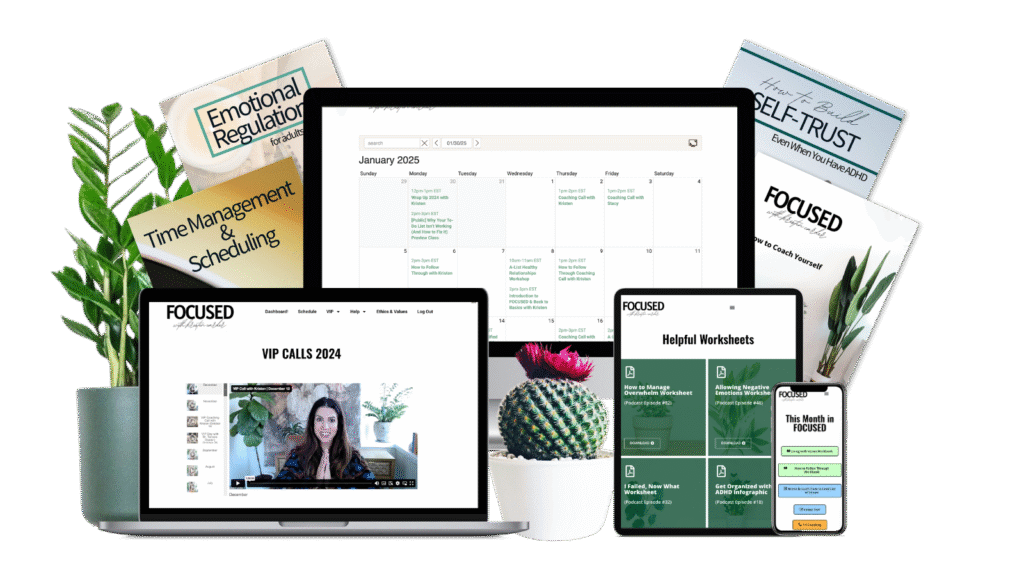
This episode is sponsored by Cure Hydration. You know that moment for me, it’s around like 2 or 3pm when my ADHD brain just decides we’re done for the day. We’re done here. The afternoon slump hits, the lights go off upstairs and suddenly answering an email or doing basically anything feels like climbing a mountain. That’s when I reach for Cure Energy. It’s a clean plant based energy drink mix made with 100 milligrams of natural caffeine and electrolytes so I get the focus and hydration boost I need without jitters, without a crash and without that like I drink battery acid vi that some of the energy drinks have. The peach tea and acai berry flavors are my current go tos. Crisp, refreshing and they don’t taste fake, y’. All. They don’t taste fake. I’ll drink one before recording a session or when I need to get help through like that afternoon drag. And honestly I. I drink it anytime. My brain just needs to cooperate. What’s wild is that Cure Energy is only 25 calories and has zero added sugar. It actually helps me stay hydrated while giving me energy. Okay, I love coffee, but coffee could never Staying hydrated isn’t just about water. You also need electrolytes. And that’s why I love CUR Cure. It’s clean, it tastes great and it actually works. And remember, Cure is FSA HSA approved which is amazing. You can use that money to pay for cure and for I have ADHD listeners. You can get 20% off your first order@curehydration.com I have ADHD with the code I have ADHD. And if you do get a post purchase survey, make sure to tell them that you heard about CURE right here on the podcast. It really helps to support the show. Don’t just drink more, upgrade it with cure. VRBO helps you swap gift wrap time for quality time. Go to VRBO now and book a last minute week long stay and save over $390 this holiday season. Book your next vacation rental home on VRBO. Average savings $396.00 select homes only. Welcome to the I have ADHD Podcast where it’s all about education, encouragement and coaching for adults with AD adhd. I’m your host Kristin Carter and I have adhd. Let’s chat about the frustrations, humor and challenges of adulting, relationships, working and achieving with this neurodevelopmental disorder. I’ll help you understand your unique brain, unlock your potential and move from point A to point B. Hey, what’s Up. This is Kristen Carter and you are listening to The I have ADHD podcast, episode number 59. I am medicated, I am caffeinated, and I am ready to roll. Today I’m sharing with you a class that I taught this week in Focused. We’re studying self concept and identity, which is really just a fancy term for self confidence. It’s how we think and feel about ourselves. Now this is something that all humans struggle with from time to time, but I believe it’s more intense for those of us with adhd. We receive so many negative messages throughout our lives and we’ve messed up so many times that we often adopt a super low self concept. We have all kinds of negative thoughts about ourselves and we are filled with shame and self loathing. So we struggle to define our identity outside of what we do or what we don’t do. So I’m so excited to share this class with you because how you think about yourself matters, how you feel about yourself matters. And it’s something that I really want to communicate to you. Whether you’re in Focused or not, I want to be a part of helping you to raise your self concept so that you can improve the way that you think and feel about yourself. Now listen, this course is going to be added to Focused as a bonus. We’re studying it right now, and the workbook and call recordings are going to be stored in the Start Here tab for all of our new members from now on. This is the first time that I’ve ever offered an entire course as a free bonus and I really just cannot wait. So no matter what day or month you join Focused, you will have access to this work on self concept immediately and you will be able to get started right away on improving how you think and feel about yourself. So here you go. Here’s the class on self concept and identity for adults with adhd. I hope that you enjoy it. Hello? Hello. When I realized that my self concept was something that I had control over, it blew my mind and it changed everything for me. And so I am so excited to offer this to you because you guys know that I am just like a little bit ahead on the journey. Like, I do not have all of this figured out. I am learning and then teaching you guys in real time as I am working on these things and doing the hard work of working it out for myself and all of the self coaching and the crying and the things. So I’m like right there with you and I’m just so excited to give these tools, these concepts, and these strategies to you. It’s going to be so wonderful. So the first thing that I want to start off by saying, your self concept is everything. Your self concept informs everything that you do. And it informs the way that you feel in your own body. It informs the way that you feel whenever interacting with something like a failure or a hard task that you have to accomplish or a project at work that you’re not sure how to manage or one of your kids who’s giving you a lot of back talk, shall we say? Your self concept informs exactly how you show up in the world. And I never understood that. Self concept is something that we have control over. We actually have control over the way that we think about ourselves. Now we are never taught this, so we don’t know, right? But now we get to learn these tools and we begin to understand that we are able to to decide what we want to think about ourselves. And it’s going to change everything for you. And I can’t wait. Let’s do it. Ok, so here’s what I really need you all to know about the way the world works. Now those of you who have been in here for a while, you know. But those of you who are new, here’s what you need to know. We have a thought. That thought creates a feeling of vibration in our bodies. From that feeling, we take action or inaction. How many of you know that sometimes our best or worst actions are inactions? They are not doing the thing that we want to do or they are not doing the thing that we know we shouldn’t do, right? So like inaction isn’t always bad. Sometimes inaction is really, really good. Like I want to spend $2,000 on clothes right now. Inaction in that is real good, right? Like let’s not do that. But I also want to accomplish xyz and inaction toward that goal is not helpful. It’s not good. So all of our action or inaction comes from the way that we feel. So in this focus program, we’re going to spend a lot of time talking about thoughts and feelings because thoughts and feelings are what drive our actions and we all want to improve our actions. That’s why you’re here. It’s exactly why you’re here. Because you want to improve the action that you’re taking in the world, right? So in order to do that, we have to kind of start back up at the top with our thoughts and our feelings. So I am curious if you would mind sharing what are some of the most common thoughts that you think about Yourself. So your self concept is just the collection of thoughts that you have about you. It’s the collection of thoughts that you have about yourself. So what are the thoughts that kind of breeze through your brain as you’re going throughout your day? I’m too slow. That’s such a good one because I bet you apply that to a lot of different scenarios. Why bother? Oh, I’m unreliable. So good. I’m not doing enough. I take forever to do things. I’m not very smart. I don’t do anything right. Yep, you didn’t do enough. You didn’t get enough done. I love it. So good. So what’s so interesting is, first of all, thank you for sharing. And second of all, we can all relate to this. All of us, we are all the same. We all think we are like super unique and different. But guys, we are all the same. We all have these thoughts about ourselves. I can’t finish anything. I can’t get anything done. I wonder if I am adding any value to this conversation. I can’t finish anything. I don’t follow through on things. This is so good. I shouldn’t be getting so distracted. I’m too emotional. I’m not doing enough or am I doing too much? I love that one. That’s so good, Andrea. That’s so good. It’s my fault. I’m lazy, I’m annoying, I even annoy myself. Oh, that’s good. I’m inadequate. I’m unreliable. You guys, this is so good. This is so good. I know that it can be painful to think through all of these negative things that kind of just appear in our brain. They’ve just become. Most of them have just become habits. Right? And we really think that it’s true. We really truly believe that this is the truth about us. And what I’m here to do in this class is to say, no, that’s not the truth. The truth about you is so much broader and deeper than those thoughts. Like, I’m always late. I never finish anything. I’m too much. I can’t get anything done. Lazy. I’m unreliable. No, that’s not what we’re going to go with. And so what usually happens is that we’ve collected these thoughts from our experience in our lives. So most of us grow up in families. Most of us grow up with our biological parents. And most of us grow up in imperfect homes. Okay? All of us, we grow up in families that are not perfect, with parents that are not perfect. Right? Human parents. So we are human people born to human parents. Which means that our parents have likely said things to us that have caused us hurt, they’ve caused us pain, and we’ve likely adopted their thoughts about us as our own thoughts about us. Do you know what I’m saying? As a child growing up in a family, parents say things like, why are you, why do you always take so long? Why are you always late? Can’t you be more reliable? Can’t you be more responsible? And it’s okay. They’re parents, they’re humans. It’s fine. It’s their job to screw us up. It’s our job to screw our kids up. It’s just the way the world works. But what happens is we adopt those thoughts about ourselves and we take them on as our own. Now, maybe it’s a teacher that said something to you, maybe it was a coach that said something to you, maybe it was a friend that said something to you, right? And so now that thought is just in your mind. It’s like, oh yeah, I don’t finish anything, finish anything. We don’t really know why that thought’s there. It’s just kind of there. It just appears and it’s like, oh yeah, I guess that’s the truth. We think that our brain is reporting the news. It’s not reporting the news. Okay? So what we’re going to do through this work and through this study is to rewire the way that our brains are thinking. Now it doesn’t mean that we eliminate all negative thinking. That’s not possible. It’s not even the point. Because if you eliminated all negative thinking, then you wouldn’t be a human person with a human brain, right? So that’s not the point. The point is to notice those thoughts and to understand that they are not the news. It’s not reporting the news. The news is not that you’re always late or that you’re lazy, right? You get to decide who you are. Here’s what you’re going to be doing this month. You’re going to be. You’re going to start recording your self concept thoughts. You’re going to start recording the thoughts that kind of naturally come into your brain about yourself. And those thoughts make up your self concept. Okay? What’s so interesting is that the way the human brain works is that it is designed to prove itself, right? I want you to lean in. I want you to really hear me. Your brain is designed to prove itself, right? So if you think I’m lazy, your brain is going to go to work proving that thought true. What? I know it’s so wild. If you think I’m never on time to anything, your brain is going to go to work to prove that thought true. If you think I don’t finish anything, you’re gonna prove it true. That’s the way a self concept works. This is why it is so important to notice the thoughts that you’re currently thinking about yourself and then raise your self concept so that you can be proving other thoughts true. Proving helpful thoughts true. Like I’m growing, I’m learning, I’m getting it right, I am working towards a goal. I can do this. And it sounds, it can sound a little like trite, right? Like, oh, I’m just gonna think these positive thoughts and then like everything’s gonna be great. That’s not at all what I mean. What I mean is identifying and living as someone who is working towards a goal. Identifying and living as someone who is learning to be on time. Identifying and living as someone who is not lazy, right? There’s a difference between like oh, let’s just do some magical affirmations or actually beginning to believe that you are someone who can show up on time. You see the difference? Okay, so your current self concept is creating your current reality. Okay? So if you take a look at what you’re believing about yourself, you will see how you’re proving that true. You’ll see how your thoughts are creating feelings which are creating actions which are creating results. And it’s like, I believe I’m always late and so I show up to things late and my result is I’m always late, right? I believe I’m always late, so I don’t think that I’ll be able to get there on time so I don’t bother try and then I’m late, right? So it is really important that you consider right now, like, here is my self concept, here is what I believe about myself. How’s it working out for me? Is it working out good? Am I getting the results that I want to get in the world? Am I showing up as the person who I want to be in the world? Or are there some adjustments that I want to make? Are there some things that I want to tweak about the way I think about myself? What’s so amazing about this work is that you have the power to do it all, nobody else. Like, we don’t need to rely on anyone to raise our self concept. That’s our job. We have the ability to do it and we can totally master it without anyone else changing at all. And we get to that later. On in the workbook and we will cover this. This will probably be an entire class of its own own, which is basically allowing other people to think and say whatever they want about us and still believing what we want to about ourselves. All right. Andrew asked a really great question that I want to address now. He says, how do I avoid feeling bad when I write all the things down? That is such a good question. And here’s your answer. You’re not going to love it. You don’t avoid feeling bad. You allow yourself to feel bad while you write all the things down. How could you possibly. If you’re writing things down that are that you believe to be, you know, not great, then there’s no way that you’re going to feel good. And that’s okay. It’s totally fine. Emotion is just a vibration in our body. So if you can set the timer maybe for 10 minutes and say for 10 minutes, I’m going to allow myself to feel bad so that I can get all of these thoughts out of my brain and onto paper, then you will be able to really have a good look at what you’re believing about yourself. My guess is that you’re feeling bad either way, right? So the thoughts are in there. You want to avoid bringing them up to the forefront because like, oh, that’ll be painful. But they’re causing pain for you anyway because they’re there. And so what I would really encourage you to do is allow the negative emotion. Make sure you stay in focus long enough to circle around to when we work on emotions next year, because I think that class will be really helpful for you. But suffice it to say that really, you guys are going to have to accept some negative emotion with this if you have a lot of negative thoughts about yourself, right? So if you have awesome thoughts about yourself, then you’re going to feel great. You’re going to be like, I’m amazing. I’m a badass. I do everything right. And you’re going to feel. Feel amazing. And you’re going to take action from that amazing feeling and you’re going to get great results. But if currently you’re feeling pretty crappy about yourself, then putting those thoughts onto paper might feel painful. But I encourage you to allow that negative emotion for a certain period of time so that you can really observe what you’re thinking thinking. And we will work toward you feeling much better about yourself. Know that this is just the beginning. It’s not always going to feel this bad, but allow for it to feel bad at first. After you get all of your thoughts out about yourself and you become aware of your current self concept. The next thing that we’re going to talk about and is here in the workbook for you to do is working on discovering and determining your identity. So the way that I define identity is like, who are you? If we strip away all of your titles, if you’re not a mom or you’re not a son, you’re not a father, you’re not an IT professional, you’re not a nurse, your job description cannot be included in your identity. Who are you at your core? Do you guys have any thoughts? Anything come to your mind as I say that? So what’s so interesting is like a lot of us parents, let’s start with this. A lot of us parents identify as parents. Like, oh, I’m, you know, oh, I’m married and I have three kids, right? That’s my identity, which is great. That is a part of my identity. I am a mother, I will always be a mother. But if my kids were taken away and I no longer had them in my life or once they grow up and they are in college, they get married, they have their own families, who am I without them? I want to be able to define myself before I add in these extra things as part of my identity. So I am also a coach, more than a coach. My identity is I am a truth teller, right? So I have always been a truth teller. I cannot help but discern truth and say it out loud. It is one of the best and worst things about me is this who I am, right? It is the thing about me that defines me at my very core. I see truth, I read it in other people. I’ve always been very perceptive of it. And since I was a kid, I’ve been a truth teller. Now that shows up, me coaching. If you were to take all of my titles away, if I closed my coaching practice today, if I went and worked at McDonald’s, I didn’t have kids, I didn’t have a husband, I didn’t have a home or anything. I would still show up as a truth teller and I would get to know people and then I would tell them the truth. Like it is just me. So what I want you to do is figure out what that is for you. What is it that burns in your belly that you would do for free or that you have done for free, like happily all the time, right? So like if I could coach all day, every day, all my friends, all my family members, like, I’m in, I want to do it, I have to hold myself back from being that because like, that’s kind of annoying if you show up that way all the time. But do you know what I’m saying? Like, what is that for you? If we stripped away all of your titles, who are you at your core? This is going to really help you with your self concept because then you can begin to notice that, like, who you are, what your real true secret sauce is, and then you can build your self concept around it. So for example, Sandy says, I’m a helper. That is an awesome, like, that is an awesome identity. Because what she can do then is she could have a profession as a nurse, she could have a profession as a teacher, she could have a profession as a child care professional, right? But either it doesn’t matter what the profession is because she’s always going to show up as a helper. She could have kids or not have kids. She could have a husband or not have a husband, right? It doesn’t matter. She’s going to show up in the world a helper. So really begin to think through and try to kind of suss out what is that for you? What’s one or two things that can really define your identity for yourself? It doesn’t have to be perfect, it doesn’t have to be permanent, but like, what comes up for you? And if you’re not sure, then start to ask, like the people who are the closest, closest, closest to you, hey, what do you think my main gifting is? What do you think my secret sauce is? Not so that they can validate you, not so that they can define it for you. But sometimes people see things in us that we don’t even realize. A couple years ago, I was really wanting to transition out of my day job company, and I asked one of my best friends, what do you think I should do with the rest of my life? And she said, life coach. And I like, giggled. It was nothing I had ever considered before. I was like, ha, ha. But she saw in me before I realized that that was like going to be my future and my, my profession like the rest of my life. So if there are people that you trust, I want you to make sure to feel like you can definitely reach out to them and say, like, hey, is there anything about me that you think is like the thing? And then you get to decide if that’s the truth about you. Not so. Jamie said that to me and like two years later I was like, I think I’m a life coach. And she’s like, oh, no kidding. Like, it took me that long to, like, embrace it for myself, but it was amazing. Oh, Caitlin asks a great question here. Can you have more than one identity or does it have to be just one thing? So, for example, I’m a creator and a truth seeker. Love it. The answer to that question, Caitlin, is you get to decide you can have five things in your identity. Isn’t that awesome? That’s so fun. So at my core, I. I am a truth teller, right? But I’m. I’m more than that. But that’s the one that I can go to. That’s like, yes, that is me. If I had three things. Great. No problem at all. Does who you are have to be a part of your career or what you do with your life? Okay, Shivani, good question. Not necessarily. Again, you get to decide. You totally get to decide. For a long time, I was a truth teller who owned a brick and mortar business in my town. And I used my truth telling in those scenarios, but it wasn’t like it was my profession to coach them. I would sometimes coach them unsolicited, which is never advised. But no, it doesn’t necessarily have to be. If you choose for things to be a part of your career, that’s fine. And if they’re not, that’s fine too. So if you are in a place where you’re like, I’m really not sure what my identity is, do not make that a problem. That’s not a problem. Don’t tell yourself this story. That it’s like, oh, now I’m totally screwed because I don’t know what my identity is. No, no, no, no, no, no, no, no, no. This is just your opportunity to begin to dig in and question who you are. It’s your opportunity to spend some time thinking. Thinking and talking and getting coached on what you feel like is that thing that’s at your core in your belly that is like, this is who I am. So the way that I figured this out was I went. I always thought that I was going to be a professional worship leader for a church. Interesting. And I went to a, like, kind of like exclusive worship leading, small group thing. And the leader there, who’s a famous worship leader, but you guys, whatever. She asked the question, like, if music, like, music isn’t your gift. So if you take music away, what is your gift? And it took me so long to boil it down to, oh, my gosh, it’s exhortation. It’s telling the truth. It’s calling people to go from point A to Point B. But I always had it in my brain. Music. Music’s my gift. Music. Music. No, music’s not my gift. It’s one of the ways that I express who I am. But it’s not my secret sauce. Your secret sauce is something that can be applied to every area of your life. So music is just one area of my life. Right. But the secret sauce, the inside, the main identity, can be applied to parenting. It can be applied to your job. It can be applied to your hobbies, your talents. Okay, here’s the last concept we’re going to talk about tonight. And if you have questions, you can continue to add them into the Q and A. Here’s the last concept we’re going to talk about tonight. You define you. Bring it in close. Turn the volume up. I’m going to say it again. You ready? Let’s say it real slow. You define you. So you have collected thoughts about yourself that were likely passed down from parents, teachers, coaches, bosses, partners, boyfriends, girlfriends, spouses. Okay? Even your kids, maybe, right? And what I want you to see is that those thoughts, like, you’re too much, never get anything right. You’re the worst mom ever. Those thoughts you’ve just decided to believe. And so this whole workbook and study is centered around you deciding whether or not you want to keep believing those things about you. You get to decide. Do you want to believe that you’re lazy? You get to decide. Do you want to believe that you’re always late? You get to decide. Do you want to believe that you never finish anything? You get to decide. You get to decide. Okay, you guys, I know it doesn’t seem right now like you get to decide, but I am telling you, it is the truth. It is totally the truth. You define you. One of the thoughts that people said to me a lot, whether it was directly or indirectly. Most of the time it was indirectly, was like, you are too much. You are too loud. You ask too many questions. Your presence is too big. You just are too much. Ok? And I got that message a lot. And on one hand, like, let’s be real. They are right? I am a lot. Ok? So now, looking back, I can totally have compassion for my parents because raising me was no picnic. I was the kind of person that wanted to ask all the questions, debate everything. Never took yes or no for, you know, just face value. I always needed to fight about it. I still need to fight about everything in order to really learn it. So I was the girl in the college class that was always like, well, ba, ba, ba, Ba, ba ba ba ba. Because that’s how I learn. I learn by doing this. It’s not super convenient. It’s just like, it’s not super convenient, but it’s the way that I am wired. It’s the way that God created me. So am I too much? Well, kind of, but it’s something that I’ve totally accepted about myself and now I show up and I’m just like, I’m a lot and it’s totally fine. And if you love me, that’s great because I love me. And if you don’t love me, it’s totally fine because I love me. Okay? And so whatever message that you received as a child or as a spouse or as whatever, a parent, it’s very similar where you get to see the truth in it. There’s probably some truth in it and accept it about you. And then you’re just like, totally, totally, like, this is who I am. It’s all good. You get to either agree with it or be like, no, that’s actually not who I am. I’m actually not lazy. I always thought I was lazy, but I’m actually not. Just never had the support that I needed to follow through on my dreams. But now I do, and so I’m turning over a new leaf and here we go. You see the difference in that. So understanding what people have said about you and how that’s informed your self concept is very important. So that’s on page nine of the workbook. I really encourage you to dive into that. It is human tendency for all of us to look outside of ourselves, to define who we are. So we want to look at what other people say about us in order to feel validated for who we are. We do this, whether positive or negative. I want you to really think about how you do that for yourself. You look for outside criticism to validate. Like, I knew I was lazy. I knew I couldn’t finish this. I knew that I wouldn’t get this right. Right. Some of you use this program against yourself to validate the things about yourself that you believe are wrong. I want to prove that to you. A little itch there. Okay, so I’ve been thinking about this because your self concepts applies to everything, even this program. So I want to show you now this is just like a really dumb example, but I want you to see how it can apply to everything Kelly says. This is mind blowing. I am so sensitive at times to criticism and yet, yes, I do look for it. Isn’t that fascinating, Kelly? Isn’t that Fascinating. Ok, peeps. So for those of you who are not familiar with the self coaching model, it is no problem. I am going to teach it to you right now. So a circumstance is a fact. The only thing that we can put in the circumstance line is a fact that can be proven in a court of law. Okay, so all of you have this shared circumstance. I joined Focused. Right. All y’ all are in Focused. So circumstance. I joined Focused. Now, a lot of you have the thought about yourself that you never finish anything. Like, give me a shout out if you’ve ever had that thought or if that comes into your mind regularly. I never finish anything. Never finish anything. Tasha. Yes, Rafa. Oh my gosh. So many people. I can’t even. That was really fast and there were a lot of you. Okay, so circumstance. I joined Focus Thought. Just one. We could pick any of the self concept thoughts, but I thought this one would be really interesting to dive into. I never finished anything. Now, for me, that thought causes the feeling of defeated. Okay, can you relate to that? So when you think the thought I never finished anything, what do you define that feeling as in your body? So Andrew says shame. Anybody else have a feeling? Shame. Interesting. Sad and then angry is what Tara says. Shame. Shame, Shame. Everybody’s feeling shame. Okay. Self, annoyed, Disappointed. Embarrassed. Frustrating. Loathing. Sad. Incapable. Oh my God. So good. So good. Okay, so we can model this out for defeated, because that was mine. But I would also like to model it out for shame because wow. So if my feeling is defeated, here’s how I show up. I shame myself. Now that’s an action. So I shame myself. I’m like, ugh. For not participating. You should have participated. You didn’t make that call. I can’t believe you haven’t logged into Focus this week. Right. Action. I compare myself to people that I perceive are doing it right. Oh, so and so has been coached live and I haven’t. She’s doing it right and I’m not. Make sense or like, oh, so and so is really active in the Slack channel. He’s doing it right and I’m not right. Another action that would come from this feeling of defeated. I convinced myself I’m not doing it right. You’re not doing it right. You’re doing it wrong. Gosh, you can’t do anything right. Comparing yourself. Why aren’t you doing it right? Why can’t you do the workbook every day like you said you were going to? You said you were going to follow through on this and you’re not following through right Anybody? Okay. Another action that I would take if I were defeated would be like, I wouldn’t let myself participate in classes. Like, if I was late to a class, I would be like, it’s not worth it, I’m not even going to join. Or if I knew I had to leave a class early because I had to work, I’d be like, I’m not even going to bother, right? Because I’m feeling defeated. I’m feeling like this doesn’t matter anyway, so why am I even going to bother, right? So I don’t let myself join the classes. And then here’s the, here’s the final. Here’s the final action. Well, I might as well cancel my membership then because I’m not doing it right. And I never finish anything. And then here’s my result, I don’t finish. Okay, so we start with the thought I never finish anything. It causes a feeling. Those that feeling drives the action. And then the action is the result of like proving the thought true. Now if this thought makes you feel shame, I will tell you exactly what your action will be. Ready? It’s going to be in action. If you feel shame, you will always hide, avoid, procrastinate, always. There is no way that shame will ever drive a positive action. Okay? So I just want to really make sure that you know that if you begin to think the thought about anything, it doesn’t have to be focused about anything. I never finish. I’m not someone who finishes. And that causes the feeling of shame for you. You will avoid, procrastinate and hide. Okay? I love it. Okay. This is why self concept matters. This is why it matters. Because whether it’s focused or your new job or the side hustle that you want to start, or even like a new relationship or a friendship, if you’re having the thought I never finish anything or I’m unreliable, those are going to create feelings that will drive actions that will give you the result of proving it true. So our job as we work together is going to be to build up your self confidence so that you have the option of positive thoughts about yourself. You have the option of like, what would be some thoughts that would be helpful? Do we want to do a positive model? Because that would kind of be fun to leave on a positive note, wouldn’t it? So we’re going to keep the circumstance the same. I joined focused. Now here’s the thing. If we talk about that, let’s start with a feeling. How do you want to feel about your experience in this program? There’s Going to be a ton of content. There’s going to be a ton of things coming at you. There’s like, a lot of things to kind of learn and join. How do you want to feel accomplished? Love it. Empowered. Ooh, love that. Productive, Optimistic, Motivated. Enthusiastic. Let’s do empowered. Yeah, let’s do empowered. Let’s do that. So I want you all, if you’re able to, to do this, like, in front of you, if you can. So the feeling that we’re going for, I always like to jump to a feeling first. Oh, gosh. Empowered. I think I spelled that right. I like to jump to the feeling first because it’s easier for me to access a feeling than it is to find a thought because my thoughts are just going. I’m sure you cannot relate to that, Simone. The C stands for circumstance. For the C stands for circumstance. Then thought, feeling, action. We’ll put a couple actions in there and then result. You’re welcome, sweetheart. Okay, I want you all to give suggestions of thoughts. Remember, we’re talking about focus in this instance. Thoughts that would help you to feel empowered. What kind of thought would help you to feel empowered? I am making progress. I can show up. I made the decision to join Heather. I see you and your decisions, girl, and I am sending you so much love. Step by step. I can stick to a program. I choose to be better. This is scary and exciting. I am going to try it today. I know this will help me. I’ve got the control over my actions. I love it. I have the energy to do this. Oh, that is a good one. I’m capable of change. Caitlin, that is really good, too. Okay. It’s worth it. Okay. All of these are so good. Let me just pick one. I’m a human becoming. Oh, my gosh, you guys are amazing. Okay, how about let’s take this. I’m capable of change. Okay, we’ll just take that one. I will just pretend that that’s m capable of change. Okay. So you guys can insert any thought that works best for you. Okay. So a thought that’s going to feel so good for me or so good for someone else might not be the thought for you. It’s totally fine. So you choose one that helps you to empowered. Okay. But this is a pretty simple one. And I think that most of us could relate. I’m capable of change. That feels pretty empowering in my body. I’m like, you are right. I am capable of change. It makes me feel so good. Ok. So if I believe that I am capable of change and I am feeling empowered. Now what do I do? Remember, this is pertaining to focused. What are my actions? Okay, so my actions, you guys can list some and I’ll write them down, but my actions would be like, show up when I can. Right. I would probably resist beating myself up. Do one thing a day. Great. Do one thing. Let’s just say that, like, even if you just do one thing a month, like what if you just did one thing a month and that was enough. Communicate. I love that. So good. Talk to myself nicely. Tasha, you’re working on that, aren’t you? Right? Because if you know you’re capable of change and you’re feeling empowered, you’re like, self talk is so much kinder. Ok, so good. Okay. And so if you show up whenever you can, you resist beating yourself up. You do one thing a day or one thing a week or one thing a month. You communicate and you talk to yourself nicely. What do you think your result will be? You will change. You will change. Change will happen. Exactly. So I change is your result. It’s exactly right. You prove the thought true. Not only are you changing, but you’re actually like happier doing it. I love it. Our self concept is so important. The thoughts that you think regularly about yourself will create your experience in this world. And I implore you to begin to uncover what’s really going on in the background of your brain so that you can decide, is this helpful? Is this giving me a result that I want or should I make some changes to what I’m thinking? All right, my friend. I hope that you found that to be super insightful and very, very helpful. And I also hope that it gave you some perspective on why it’s so important to improve the way you think and feel about yourself. It is so, so important. I hope you have a great week and I will talk to you next time. Bye. Bye. If you’re being treated for your adhd, but you still don’t feel like you’re reaching your potential, you’ve got to join Focused. It’s my monthly coaching membership where I teach you how to tame your wild thoughts and create the life that you’ve always wanted. No matter what season of life you’re in or where you are in the world, Focused is for you. All materials and call recordings are stored in the site for you to access at your convenience. Go to ihaveadhd.com focused for all the info.

Related Episodes

Kristen Carder

Episode 418: Tired of Feeling Tired? How to Rest When You Have ADHD

Kristen Carder

Episode #416: ADHD and Money: In This Economy?!

Lindsay Gibson

Episode #414 Good Enough Parenting: What NOT to Do (with Dr. Lindsay Gibson)

Stop Struggling Alone.
Start Thriving With FOCUSED.

A proven coaching program designed specifically for adults with ADHD who want to gain clarity, build confidence, and take control of their lives.

Join a community of hundreds of ADHDers

Learning About My Brain...

Changed Everything

Hi, I’m Kristen Carder—ADHD expert, podcast host, and certified coach who’s been exactly where you are. Diagnosed at 21, I spent years cycling through planners, courses, and systems that never quite worked. Everything changed when I discovered the power of understanding my ADHD brain and the transformative impact of community support.

Now, after 15+ years of research and experience, I’ve helped thousands of adults with ADHD thrive. I’m here to show you how understanding your brain can transform your life, just like it did for mine.

ADHD Tips That Actually Make Sense

Follow @i.have.adhd.podcast and join our Instagram community for daily strategies, relatable content, and real talk about ADHD