

Podcast Episode #74: Taking Massive Action

Listen or Watch this episode on:

About This Episode

Massive action is the type of action that produces an actual RESULT. It’s the opposite of passive action (researching, learning, asking for help) which doesn’t actually PRODUCE anything. Tune in to learn more!

www.ihaveadhd.com for more adult ADHD resources. 

See Privacy Policy at [https://art19.com/privacy](https://art19.com/privacy) and California Privacy Notice at [https://art19.com/privacy#do-not-sell-my-info](https://art19.com/privacy#do-not-sell-my-info).

Episode Transcript

This episode is sponsored by Cure Hydration. All right, I’m going to be real with you. Drinking water is boring. My ADHD brain is like, wait, we have to do this again? Like every day, multiple times. What in the world? And because I’m running from meetings to coaching calls to kid chaos, staying hydrated is not something I’m naturally good at. It’s not something I naturally think about. That’s why I’ve been obsessed with Cure hydration packs lately. Cure is a plant based hydrating electrolyte mix with no added sugar, only 25 calories, and it actually tastes good. The watermelon and berry pomegranate have been on repeat for me. I’m actually like really running low on those flavors, which is so sad. They’re refreshing without being too sweet or artificial. It feels like my water finally has a little bit of personality, which I enjoy. I really do. What I love most is that CURE uses a science backed formula that hydrates as effectively as an IV drip. So when I’m scrambling through my day forgetting my water again, CURE helps me to catch up fast. I throw a few packs in my bag and it makes drinking enough water simple. Which for my ADHD brain is basically a miracle. So staying hydrated isn’t just about water. You also need electrolytes. And that’s why I love Cure. It’s clean, tastes great, and it actually works. And bonus, CURE is FSA HSA approved so you can use those funds to stay hydrated the smart way for I have ADHD podcast listeners. You can get 20% off your first order@curehydration.com ihaveadhd with the code ihaveadhd and if you get a post purchase survey, make sure to tell them that you heard about Cure right here on the podcast. It really does help to support the show. Don’t just drink more water up. Upgrade it with cure. With the state of today’s economy, it’s more important than ever to invest in products that last for years to come. As a season shift and get cooler, make sure your closet is stocked with durable layers that stand the test of time. From American Giant. American Giant’s clothes work harder and are wearable season after season. Their greatest hoodie ever made is made from the highest quality materials that are cut and sewn right here in the United States. So you’re investing right back in your local community. Choosing American Giant means taking a stand for American manufacturing and hard working Americans. Something other mega corporations don’t care about. From fleece to knit, all in A range of colors for versatile daily wear. American Giant delivers everyday pieces designed for everyday life. Feel the difference of quality made to last clothes from American Giant. Get 20% off your first order with code STAPLE20@ameran-giant.com that’s 20% off your first order at american-giant.com with code STAPLE20. Welcome to the I have ADHD podcast where it’s all about education, encouragement and coaching for adults with adhd. I’m your host, Kristin Carter, and I have adhd. Let’s chat about the frustrations, humor and challenges of adulting, relationships, working and achieving with this neurodevelopmental disorder disorder. I’ll help you understand your unique brain, unlock your potential, and move from point A to point B. Hey, what’s up? This is Kristen Carter and you are listening to The I have ADHD podcast, episode number 74. I am medicated, I am caffeinated, and I am ready to roll. It is a gorgeous day in Pennsylvania. 4. Fall has seemed to come early this year, which I do not approve of. If anybody wants to know, I do not approve. That means winter is coming and I’m very sad about that. However, it has been so gorgeous. Cool evenings, warm afternoons. Like, it has just been absolutely lovely. I was at the barn this morning. I can’t remember if I told you or not, but I started taking riding lessons. It is one of the things that I’m trying to do because I have no hobbies. I don’t know if you are like me if you’re listening to this podcast. Actually, side note, I think that you probably are a lot like me. That’s my assumption is that, like, we would totally be friends. And so if you are like me, which I assume that you are, and you have no hobbies, I recommend starting to add one or two into your life. So this is something that I’ve wanted to do since I was a tiny, tiny human, is take riding lessons and be around horses and just kind of be a barn rat. And I’ve always wanted to. And now at the ripe old age of 39, this is one of the things that I am making possible for myself. It’s one of the results that I’m creating in my life on purpose. And it has many benefits. One of the benefits is I do not think about work or people or my family or money. It takes a lot of brain power to learn how to ride a horse. And you’re literally like you. I don’t know, it’s like, scary too. So there’s a lot of adrenaline going and it’s dopamine and it’s lovely. And also just being around horses for me is very, very relaxing. And so this is just like a really fun thing that I’m adding into my life to have a hobby, have something besides thinking about people, work, money, all the things. And then also to. I don’t know, I just feel like it’s like another version of therapy. It is lovely. I would love to hear what your hobbies are, if you have any. And if you don’t have any, what could you do? What could you do to make a hobby for yourself? I am super excited to let you know that I am hosting a webinar this week. So if you’re listening in real time, it’s going to be Thursday, September 24th at 11am Eastern Time. I’m near Philadelphia, so if you need to plug that into the Google and figure out what time it would be for you, that is totally fine. It’s going to be all about what I wish my doctor had told me when I was diagnosed with adhd. So it’s everything my doctor never told me about adhd. And I have been working on it for a couple days now. I have all of my, like slides ready and I am just excited. I’ve been researching, I’ve been brushing up on Barclay’s book and Ramsey’s book and Tuckman’s book. And I just have so much to say. I’m going to keep it to an hour class, but then I’m going to take questions after. So if you have specific questions that you want to ask me, come. I will answer your questions. I will stay as long as we need in order to get your questions answered. So I’m very pumped about it. So sign up, go to ihaveadhd.comwebinar to register for it and then you’ll get some emails like with the zoom link and reminders and all the things. Okay, so today’s episode is actually a class that I taught in focus. It was such a fun class. It was all on productivity and taking massive action. And I really wanted to share it with you too. I had so much fun. I think there was a lot of extremely valuable content shared in this class. And so I wanted to make it available to you. So what’s going to happen is, uh, you know, it’s gonna flip over to the class. You’re gonna hear me welcome everybody. Usually we have, you know, like 30 to 60 people on a call at one time. When I ask questions, you’re also gonna hear me read People’s answers. So when we have a strategy class, which happens once a week in Focus, it’s me, you know, on the Zoom webinar, chatting and teaching from the workbook. But then also when I ask questions, everyone participates and gives in answers. And then I read them for everybody who watches the replay or for you, my friend, who is listening on this podcast. One of the main themes and takeaways from today’s class is trying to build up the ability to take action even when you don’t feel good. And if you feel like you’re the only person in your, you know, life that just can’t seem to take action when they’re feeling sad or feeling lonely or feeling vulnerable or insecure, you’re gonna feel really validated today listening to this, because you’ll hear me read answers from people who are going through the same stuff. And I just love to help you realize how similar you are to all the other adults with ADHD out there and how you are so not alone. You are so not weird. You are so not like this, like, alien who just can’t seem to get stuff done. You fit right in. You’re one of us. And I just love that about adhd. It’s very connecting. It really, really is. So anyway, getting a little sappy here, Kristen. Pull it together. I’m going to share the class with you now, and then I’m going to check back in with you at the end. Here we go. Welcome to your strategy class. This is our class on productivity, and it’s going to be good. I hope that you guys are all loving the work that you’re doing this month. And by loving, I mean strugg through it like a real human, because that is what real humans do. We grow and we learn. And it hurts. It’s so painful. And I am right there with you 100% on this journey with you struggling and growing and figuring it out right alongside you. So I am so happy to be in community with all of you. So I wanted to start with the massive action section. So I think we kind of wrapped up here last class and I wanted to start here today. So we are on page 34. If you have your workbook, great. If you don’t, no problem. Not an issue. Not a big deal at all. Okay, so on page 34, we talk about the step where we’re finally taking action. The three steps prior have been all about thoughts, all about managing our minds, and it’s been creating some space between the goal and the action, which I think is very Important, because that’s not something that we do naturally. And I think I said that last class. Usually we get an idea and boom, we’re taking action on it immediately. And then we’re kind of zigzagging and we’re burning out, and we’re not following it through to the end. And so a big way to combat that tendency is to have specific steps that you’re taking yourself through. And the steps are right here. Okay, so step number one, you’re going to constrain down to one goal at a time. This could be one goal for the month, one goal for the week, one goal for the next hour. Right. So if your goal right now is to do the dishes, watch your kids, and be here in this productivity class, like, learning, you’re not going to be able to reach all three of those goals. Well, you’re going to be jumping around, you’re going to be scattered, and you’re not going to be able to do any of those three things very well. So it’s always best for you to pick one thing for your brain to focus on at a time and then to see that through until it’s complete and then move on to the next thing. Okay, so this is the part where we take action. Okay. So I want to just make sure that you’re not, like, waiting around to feel good about taking action on your goal. So the thing is, it probably won’t feel super good. It will probably feel something like maybe a little daunting or maybe a little scary or difficult. Right. When you first start taking that action. Now, you can coach yourself through that and try to find the good fuzzy feelings and sometimes short. But I think that the more valuable thing to do is to just accept that there’s negative emotion involved in. In taking action. I kind of love what I wrote here. Do you want to get stuff done? Well, you must be willing to feel bored, agitated, frustrated, defeated, confused, and tired. There’s really no way to take massive action on a goal. I’m not talking about, like, well, yeah, even finish the dishes. Like, I have to feel bored and agitated. Right, Right. So it’s like, a lot of times we’re like, okay, I’m definitely going to take action on that as soon as I feel motivated or as soon as I feel compelled or as soon as I feel confident. But what if the secret to productivity is the ability to take action when you feel insecure or when you feel bored or when you feel unmotivated? I really believe that it is. I truly believe that it is. So Some of you are saying, like, yeah, I really want that. And I think that the first step in that is just acknowledging that it is normal. Like it is so normal. It is normal. A lot of us stay in inaction because we’re waiting around to feel good. Good about taking action. Taking action doesn’t feel good. I did write a workbook today. This whole weekend actually, and ironically. And if you read my email, you know this. I procrastinated for three weeks. Three weeks I procrastinated. I was in confusion, I was in indecision, I was in self doubt, I was in spinning and spiraling. Ok. And I finally got there, coached myself like the boss coach that I am. And then when I started to take action, it didn’t feel good. All day Saturday I did the workbook. It was great. I was feeling purposeful and I was feeling committed and I was feeling dedicated. But I was also at the same exact time feeling fomo. I was missing out on a Saturday, right? I was at the same time feeling like that, like trying to get yourself in deep work, but it really hurts to get yourself there, you know, like trying to get into flow. Trying to get into flow. I woke up and I knew that today was like finish the workbook day. And I wasn’t like yay, I get to like finish the work. I was like, ok, it’s on, it’s on, it’s on. So if I had waited around to feel good, if I had waited around to feel motivated, if I had waited around to feel confident, I wouldn’t have finished it. And just let you know your girl got it into the printer at 2:35 today. Very proud. Thank you. OK. So do you notice yourself waiting to feel good before you take action? Is that a thing? Is that something that you do all the time? 100%, most definitely. Yes. Okay. Everybody is saying yes. Like could you not wait to feel good? What would it be like if you were willing to take action feeling bad? So I am not saying beat yourself up, tell yourself you are stupid, tell yourself you can’t do it, tell yourself you are lazy and then take action. No, what I mean is do the work of self coaching and get yourself as far as possible with like what you want to think and how you want to feel. But then don’t expect for it to just be like rainbows and magical ponies. Like it’s just not going to be. There are a lot of times when it’s just going to be hard and you’re never going to feel this like certainty of like I know this is the right thing. A lot of times we don’t get to know until we do it. Got to do it first. Ooh. A lot more on that next month, my peeps. A lot more on that next month. Okay, so if you are willing to feel negative emotion, if you’re willing to feel bored and still do the thing, or if you’re willing to feel agitated and still do the thing, if you’re willing to feel insecure and still do the thing, you will be unstoppable. Un freaking stoppable. I wish I could scream right now, but, like, my whole family’s home and I feel like I’m being listened to. You will be so freaking unstoppable. There will be nothing that can stop you from accomplishing your goals. Nothing. So that’s my work, is to do it, be the example of what’s possible, and then teach you how to do it, encourage you, and just, like, cheerlead you. Like, totally, totally normal to feel gross. No problem. I wrote a workbook today, Feeling Gross. It’s probably my best one yet. It’s so good. I can’t wait for you to have it in your hands. And the COVID is a big. It’s a risk, but I think it’s cool. It’s a whole vibe. All right, so we talked about this. We touched on this last week. I want to touch on it again. A lot of times, in order to avoid negative emotion, we spend our energy in passive action, which is. Let me research. Let me figure this out first. Let me think about it. Let me decide. Let me take six months to decide. Let me ask around. Let me get validation from outside of me. And I want you to notice if you’re doing that, your brain has the answers. Just start taking action. Productive people produce. So if you want to be productive, make sure that you are producing. So one of the questions I think is very useful to ask is this. When you sit down to produce, you need to ask yourself, am I consuming or am I creating? Am I consuming information right now and just making my brain, like, big obese? Or am I creating? Am I doing? Am I, like, output? Right? Because if we are unbalanced in our consuming to creating ratio, we will be very unproductive. So the only way to even it out is to start producing, start creating. Start taking the risk of putting your work out into the world, whatever your work is, Right? I don’t want you to think that I’m only talking about, like, an entrepreneur. I’m talking about anybody. Your work is the value that you have to offer the world. So like, if you’re a teacher, are you consuming or are you creating? Are you letting others lead or are you leading? So, like, I’m not sure what the exact questions would be if you’re a teacher, but ask yourself questions to try to figure out. Am I consuming or am I creating? What? When I say, like, okay, tomorrow we’re going to take massive action on your goal. What thoughts or what feelings? Let’s start there. What feeling comes up for you tomorrow? Whatever your goal is, you’re going to start taking massive action. That means that things are going to start getting done. Panic, fear, intimidation, overwhelm. Good thoughts, like, I don’t have the time. Ok, so I want you to then ask yourself, am I willing to feel panic in order to take action? Am I willing to feel nervous or intimidated in order to take action? Am I ordered to change my mind about my time? Order to take action? I think that’s a really important question to answer and I think you can ask yourself that question like 20 times a day. Am I willing to feel fear in order to take action? Because if the answer is no, then you’re not going to take the action because you’re going to wait around until you don’t feel afraid. And that’s not ever going to happen. You’re always gonna feel afraid. Yeah. I think it’s that willingness that you can grow and that has been a really useful emotion to me. Like the acceptance of the negative emotion, like, it’s here. I see it. Okay. And then the willingness to feel it instead of, I’m gonna do everything I can not to feel it. It’s like, I’m open, I’m willing, let’s go. So the emotion that I’m working on, if you would like to know, is my least favorite emotion. Does anyone know what that is? Does anyone know what my least favorite emotion is? Who wants to guess? This could be a fun game. Yes. You all know vulnerability. There it is. I have no secrets. So my coach actually coached me on this today and she said that once a month I am to take the week off of any creation. Like any work. Like no workbook. No. Like do all my work in advance, all my emails, all my posts, everything in advance. And other than coaching that week is just for feeling vulnerable. And then I went and vomited because that is disgusting. I was like, abso freaking lutely not. It’s so terrible. So I’m in this pattern right now where I set a goal, I meet the goal. Amazing. You would Think I would feel great. I feel terrible. And then I have two weeks of like feeling terrible, self sabotage and just like not getting anything done. And so she’s like, during that week, your job is to just feel vulnerable, allow yourself to feel it. So that’s where I’m at. So if anybody wants to like, send me a sympathy card, that would be great because it’s like not fun, right? It’s so scary. But the question that I have to answer is like, am I willing to experience the feeling of vulnerability in order to order to help as many people as possible? Yes or no? If the answer is no, then I can just stay where we are, no problem. That’s absolutely no problem. But is that going to be like life giving? No. I know it’s not because I know me. So I want to invite you to be willing to feel. To be willing to feel gross. I think it’s worth it. In the last two years, it’s been some of my deepest work and it hasn’t been fun, but it has been productive in a lot of ways. And so I know that it will be for you too. All right, I’m going to take some questions before we go to step five. So what Gillian is asking is how do I make something important that’s really only important to me? Nobody else cares. So the question for you, Jillian, and everyone else is, who cares if it’s not important to other people? Why do our brains make other people’s stuff at a higher priority than ours? We are told to put others before ourselves. That is great and I think that that is absolutely lovely, but I don’t think that it plays out well long term. So when we start serving others at the detriment of our own mental health, our wellbeing, our goals, we then start serving from a place of resentment. And we’re not in integrity and we’re people pleasing and we’re secretly hating the people that we’re serving. And that’s really just like kind of gross, right? So what I would encourage you to do, Jillian, and anybody else who’s struggling with this is just decide it’s important and make time for it and notice the drama that comes up and be sweet and gentle with yourself and just do it anyway. Decide it’s important just because it’s not important to like, my 6 year old has very different opinions of what’s important than I do. So does my 10 year old, so does my 12 year old. So does my husband sometimes, right? And so to go to him and be like, hey, listen, this is really important to me. I’m going to take three, 30 minutes a day. I’m going to practice this. Sometimes it might be annoying, but like this is something that I’m going to stick to. And then I just do it because I’m a grown up and I get to do what I want. It’s really fun to be a grown up. We get to do whatever we want. Okay, Caitlin asks. A problem I have with this is when I’m anxious, I get insecure about my creative skills. And so finishing projects involves being sure and decisive. Finishing projects does not involve being sure and decisive, Caitlin. That’s where you’re tripping up here. Finishing projects involves deciding the project is done. So that’s just a adorable thought error. Okay, so your thought here, finishing projects involves being sure and decisive. No, absolutely not. Because what we’ll do is we will keep trying to perfect it, keep going back to it, keep trying to edit it and make it better and better and better so that we feel sure, so that we feel decided. So what’s happening there, my sweet vip, my little six or seven monther? Ok, listen, listen. Is you’re trying to make the circumstance, your project create your feeling of sure or decisive. And you’re missing a step there. And everyone put in the chat box, what is she missing? What little step is she missing? She’s missing her thought. Yes, 100%. Your thought is, I am sure that this is done. I am sure that I’ve offered the value that I promised. I have decided to finish this project at six and it’s six, so I’m done. So today when I was finishing up the workbook, I finished it, I went for a walk around the block, I came back, I read it through one more time to make sure and then I was like, it’s done. I have to be done. I could, I could spend 10 more hours on it. I literally could. Right? I could make it better and better and I could be like, oh, what if they don’t like it? I’m insecure. I’m insecure. They might not like it, but I never, ever consider you guys not liking it. I’m like, they’re gonna love this. Oh my gosh, just wait until they read this. They’re gonna love it every time. Because guess what? My people love it. My people love it. So, Caitlin, I would decide that you are done and I would squeeze it and I would send it on its way and then I would. Let yourself feel insecure. That’s the feeling that you need to tolerate is insecurity. And guess what? It’s totally normal. You’re putting your art out into the world. You should definitely feel insecure about it 100%. And as you develop evidence and work on your thoughts and like, you’re going to feel better and better, but then you’ll change something. You’ll be like, oh, I want to try this. And then you’ll start from the beginning again and feel insecure. It’s super fun. You should totally try it. Okay, Katie. I try to take action on my big goal, but my issue is I put everything off. So when I sit down to do the action, something that is also important comes up and I have to decide which is more important. There’s your problem right there, sweetheart. So everybody notice this. I’m going to read it again. And I want you to try to figure out. I want you to be the coach. I want you to try to figure out where her problem is here. So she says, I try to take action on my big goal, but my issue is I put everything off. So when I sit down to do the action, something else that is also important comes up and I have to decide which is more important. Now you’ve already decided. You already decided it was the most important. So once you’ve decided. Whoever said that so true. Once you’ve decided, there’s nothing else that’s more important. So something can come up. It will. Something always will come up. Especially when you are so used to being in this reactive mode which most of you guys are in right now, which is totally fine. You won’t always be here. But when you are used to being in reactionary mode, you’re going to constantly be like, oh, okay, this came up. No problem, I’ll do that. And you’re letting yourself decide where you think it’s actually a decision to be made, but it’s not. You’ve already decided. There’s no decision to be made. So I want you to be really cautious to. Once the decision’s been made, nothing else comes up. No bloody, no stoppy. Just barreling through. If someone’s in a car accident, like you’re in your immediate family and they need your help, drop everything and go. No problem at all. But if something just happens to come up that your brain is like, oh, this is super important. That’s just your brain trying to get you out of doing the hard, scary thing. Love you, Skyler. I’ve been really struggling to keep up with my time sheets. I have to a day that need to be done within 24 hours and I just don’t have the motivation to do it. Skylar, motivation is a feeling caused by a thought. So what you need to do is get clear on the thoughts that you’re having about your timesheet. My guess is it’s something like, these are really stupid. This takes so long. I shouldn’t have to do this. This is just busy work. Whatever. I would invite you to change your mind. This is literally the way I get paid. I love getting paid. Getting paid is fun. I can’t wait to do my timesheets because I can’t wait to get paid. Okay, Verity, how do I balance consumption and production when I’m starting something new that I need to learn a lot about? That is such a good question. So I would be really intentional, Verity, to block off specific times in your work time for. For, like, research and consumption, which is necessary, and then output creation and when. And get specific. So when you’re doing your calendaring, I would get specific on what you’re researching so that you don’t get kind of, like, lost down the rabbit hole, but either specific questions that you want to find answers to or specific books that you want to read or whatever the case may be. And then I would also get very specific about your creation or your output. So, you know, create one Instagram post, create one freebie, create one email so that you are balancing your time equally and, yeah, doing both, because it’s totally fine to do both. I think what a lot of us do is, though, we get, like, imbalance. So just make sure that you’re not. You’re welcome, love. Okay, Courtney. I can strain, and I’m focused to one thing, and I’m still not producing what I set out to do in the estimated time. I’m wondering if this is an efficiency issue or if I need to accept that it takes me longer to do the things in my business. Okay, that is a good question, Courtney. And I think that the only way to really figure that out is to do an audit, which feels so hard sometimes, but to do, like, an audit of your time to see, like, okay, how am I really using my time? Am I as effective as I. As I think that I am? Like, you know how at the end of the day, you’re like, I worked hard, but I’m not really sure what I did. So what I would do is spend maybe, like, one day each week, or, I don’t know, you can kind of play with it, how it works for you, but literally write down everything you do and for how long. So that’s Called like a time audit. All right? And so what you’re going to do is like, you know, wake up, you’re getting ready portion this much time buffering on Instagram, this much time writing an email, this much time, like evaluate exactly what you’re doing and for how long. And you only need to do that for a day or two. And I think you’ll figure out like, okay, I am really working hard and I just need to give myself more time or whoo. I have like a lot of time that I’m wasting and I didn’t even realize it, so I just really need to buckle down. I hope that was helpful. Let me know if you have any other questions. Okay. Nick V. Is it possible to train with an emotion using lower stakes? Example, discomfort taking cold showers. Nick, that’s a good question that I don’t have an answer to. I don’t know. You should try it. All right, Rich. Whenever I start working on something that requires additional skills, I tell myself that I need to learn the ins and outs and become the friggin pro at that skill set. Even if there are perfectly viable shortcuts available. Like if I don’t, it’s cheating. But then I invariably get stuck in that process and abandon the goal. Interesting. Rich, why would you ever tell yourself that you need to learn the ins and outs and become the pro at that skill set? I wonder, is it because you’re curious and just like, want to? Is it because you need to like, prove that you’re capable? Are you trying to combat insecurity? Like, I’m interested to hear. Usually you’re super interested. So I wonder if it’s not really your brain trying to like, hey, we really need to get good at this. I wonder if it’s really just like your brain being like, this is fun, this could be fun. This could be really cool. What do you think about that? I wonder if, if it’s more about that and then you could be like, yeah, it would be cool for after hours. What thoughts do you think would combat that? So your toddler brain comes up and it’s like, oh my gosh, we should learn all the things. We should totally, totally learn this. And I wonder if you could combat it with like, am I willing to spend two hours on that? Is it worth me abandoning my goal in order to enjoy this moment with this skill? I think you could dig a little bit there and I think you could see some real change. Okay. Brittany, I’m having trouble picking one thing to produce and focus on. Oh, this is good. I have so many things to focus on that I feel I will leave behind something more important. Take the goal I wrote this month, which was, lose five pounds this month. Great. But there are other things I need to produce that are more urgent. Then thinking about that just overwhelms me, and so I’m not getting anything done. This is so good. And I think we can all relate to this. Brittany, part of this, I think, is your brain trying to keep you out of the hard work of producing. I think our brains really do. They’re like, you know, we dream or we fantasize about the goal. Like, oh, my gosh, that would be so great. But then when we’re like, okay, now I’m actually going to, like, plan my meals and I’m going to start exercising more. I’m going to, you know, buy different foods. Then our brain’s like, whoa, there’s a lot more that we need to focus on. Like, don’t forget this one over here. Don’t forget this one over here. And then we’re like, oh. And we just spin out and we don’t accomplish anything. So, Brittany, I would really encourage you to stick to that one goal and just decide that it is the most important just right now. It’s not the most important forever. It’s just the most important right now. And if you want to. If you want to, maybe make a list, like a goal graveyard or a goal parking lot. Not a graveyard. Wrong word, friends. Wrong word. A goal parking lot where you’re just going to, like, park the other goals neatly into their sweet little cute spots, right? A little goal parking lot for you to park the other goals. And then you just focus all of your brain’s attention and energy on this one goal. You still have two weeks. That’s plenty of time to lose four pounds. Do not abandon that goal. That’s a super fun goal. It’s super doable. And now you get to play. Just playing. We’re just playing here. You get to play with, like, what do I need to think? What do I need to feel? What do I need to do? Right, you’re just going to play with your model. So if lose five pounds goes in the R line, work your way back up the model. What action do I need to take? What feelings do I want to feel? What thoughts are going to create those feelings? I’ll tell you what, thought is not going to be useful. Oh, I have so many other goals, I’m probably going to abandon them. That thought is not going to be helpful. So, like, you can Create a little goal parking lot. Park your other goals there. Go and like, give them hugs once in a while and be like, I love you. Don’t worry, I’m coming back to you. But focus your time and your energy on one goal, on the goal that you already chose. I really got passionate about that. Okay, friends, that’s it. I hope you enjoyed that class. I sure had a great time teaching it. I’ve watched it a couple times since getting it out there and I really hope that you had some major takeaways from it. One of my favorite takeaways from this class was the last question that I answered with Brittany. Finding a little parking lot for all of your goals and then bringing out one at a time to focus on and see it through to the end. Remember, adults with ADHD really do not have a deficit of attention. What our issue is is that we don’t have the ability to sustain our attention for long enough to accomplish a goal. So our attention bounces around from thing to thing, from goal to goal, from dream to dream, from different tasks on the list to the other task on the list. And we have to purposefully learn this skill of constraining our attention down to one thing at a time. And so having one goal that you’re working on and then a little parking lot for your other goals where you can go and visit them, you can tell them you love them, that you’ll be back to visit later, and then get to work on that one thing. See it through to completion. Get it done. Finish it. You got this. I will see you next week. If you’re being treated for your ADHD but you still don’t feel like you’re reaching your potential, you’ve got to join Focused. It’s my monthly coaching membership where I teach you how to tame your wild thoughts and create the life that you’ve always wanted. No matter what season of life you’re in or where you are in the world, Focused is for you. All materials and call recordings are stored in in the site for you to access at your convenience. Go to ihaveadhd.com focused for all the info.

Related Episodes

Kristen Carder

Episode 418: Tired of Feeling Tired? How to Rest When You Have ADHD

Kristen Carder

Episode #416: ADHD and Money: In This Economy?!

Lindsay Gibson

Episode #414 Good Enough Parenting: What NOT to Do (with Dr. Lindsay Gibson)

Stop Struggling Alone.
Start Thriving With FOCUSED.

A proven coaching program designed specifically for adults with ADHD who want to gain clarity, build confidence, and take control of their lives.

Join a community of hundreds of ADHDers

Learning About My Brain...

Changed Everything

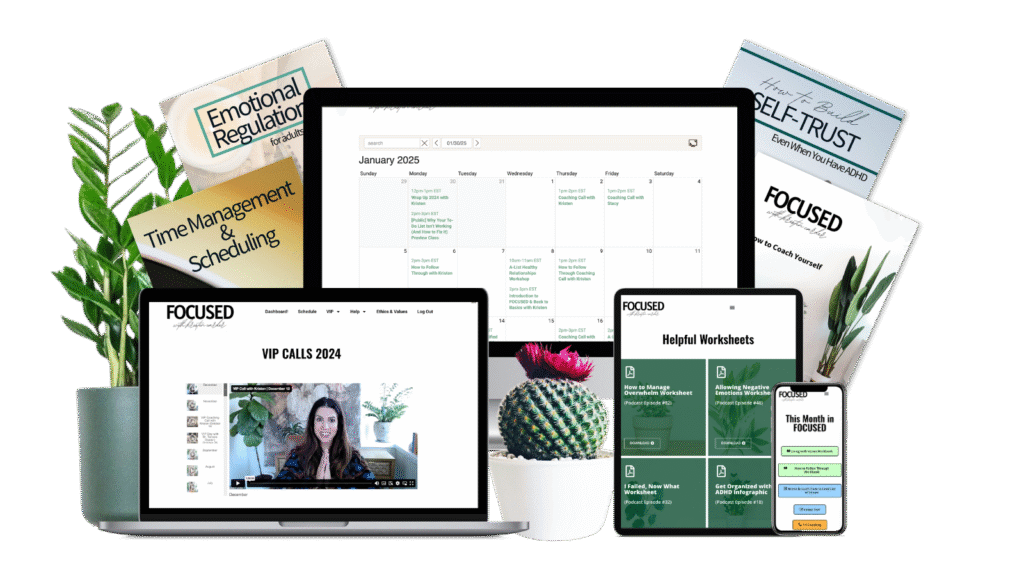
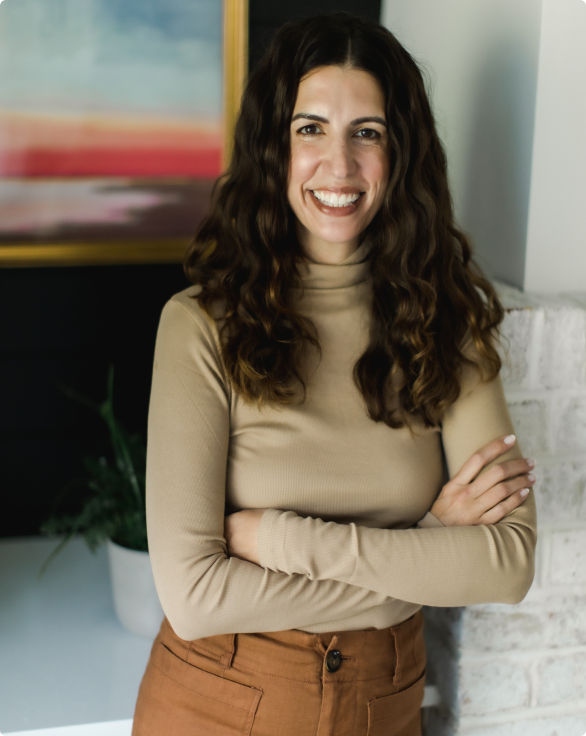
Hi, I’m Kristen Carder—ADHD expert, podcast host, and certified coach who’s been exactly where you are. Diagnosed at 21, I spent years cycling through planners, courses, and systems that never quite worked. Everything changed when I discovered the power of understanding my ADHD brain and the transformative impact of community support.

Now, after 15+ years of research and experience, I’ve helped thousands of adults with ADHD thrive. I’m here to show you how understanding your brain can transform your life, just like it did for mine.

ADHD Tips That Actually Make Sense

Follow @i.have.adhd.podcast and join our Instagram community for daily strategies, relatable content, and real talk about ADHD