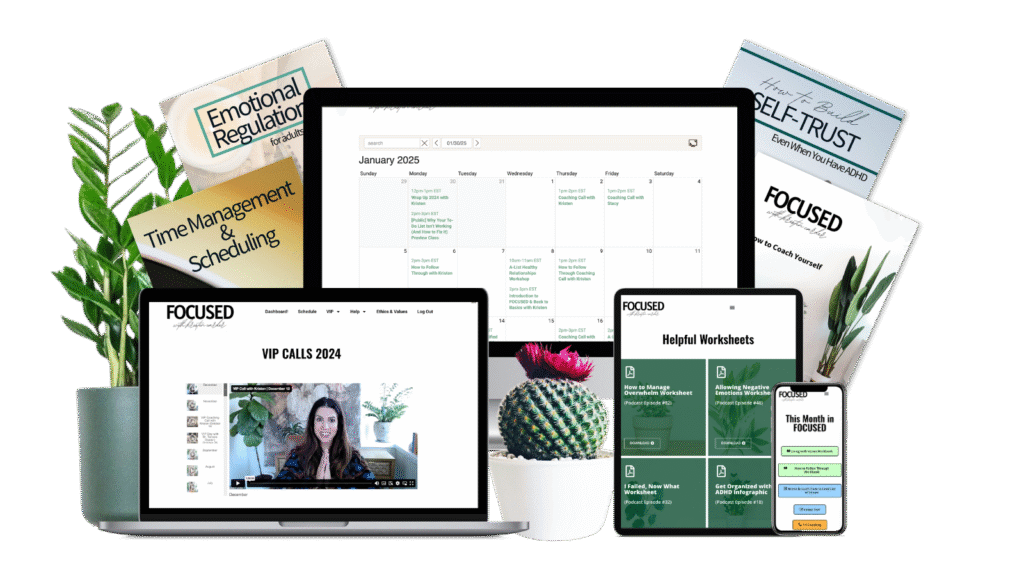


This episode is sponsored by CURE Hydration. You know that moment for me, it’s around like 2 or 3pm when my ADHD brain just decides we’re done for the day. We’re done here. The afternoon slump hits, the lights go off upstairs and suddenly answering an email or doing basically anything feels like climbing a mountain. That’s when I reach for Cure Energy. It’s a clean plant based energy drink mix made with 100 milligrams of natural caffeine and electrolytes. So I get the focus and hydration boost I need without jitters, without a crash and without that like I drink battery acid vi that some of the energy drinks have. The peach tea and acai berry flavors are my current go tos. Crisp, refreshing and they don’t taste fake, y’. All. They don’t taste fake. I’ll drink one before recording a session or when I need to get help through like that afternoon drag. And honestly, I. I drink it anytime. My brain just needs to cooperate. What’s wild is that Cure Energy is only 25 calories and has zero added sugar. It actually helps me stay hydrated while giving me energy. Okay, I love coffee, but coffee could never. Staying hydrated isn’t just about water. You also need electrolytes. And that’s why I love CUR Cure. It’s clean, it tastes great and it actually works. And remember, Cure is FSA HSA approved, which is amazing. You can use that money to pay for cure and for I have ADHD listeners, you can get 20% off your first order@curehydration.com I have ADHD with the code I have ADHD. And if you do get a post purchase survey, make sure to tell them that you heard about CURE right here on the podcast. It really helps to support the show. Don’t just drink more, upgrade it with cure. Welcome to the I have ADHD Podcast where it’s all about education, encouragement and coaching for adults with adhd. I’m your host Kristen Carter and I have adhd. Let’s chat about the frustrations, humor and challenges of adulting relationships, working and achieving with this neurodevelopmental disorder. I’ll help you understand your unique brain, unlock your potential and move from point A to point B. Hey, what’s up? This is Kristen Carter and you are listening to the I have the ADHD podcast, episode number 85. I am medicated, I am caffeinated and I am ready to roll. I’m so so glad that you are here with me today. Welcome, welcome, welcome. If you Hear craziness in the background. It is because I have three boys at home doing school. They are on the zooms or they are in the Google Meets or whatever it is that they do to connect to their classes. And we are just going to try to make it through this episode without any crazy interruptions. Let’s cross our fingers. I hope that it works. I have no idea, but I hope that it works. Normally they are in school full time, but our district took off a week after Thanksgiving, which I think is so smart and wonderful. My kids love to be in school. They thrive in the classroom and so I’m really thankful that on Monday they go back. They go back in. You guys, it is getting dark so early. If you suffer from seasonal affect disorder like I do, I just want to give you a hug and say like I get it. It is not easy right now. There’s like no sunlight. If you’re in the us if you’re on the east coast, I’m not sure what happens on the west coast, but on the east coast like my goodness, it is getting dark around 4:30 and that’s just no fun. My favorite, favorite, favorite, favorite thing to do is to sit out on my back porch in the summertime from like 7 to 9pm when it’s just light forever and ever. But now, you know, obviously not an option. So it’s cold, it’s dark. We are going to make it through this winter. I have so much on my brain today. I feel like my head is swimming. I did a thought download before recording this episode and hopefully I can stay focused on our conversation. We are going to be talking about minimum baseline, which is a concept that I learned from one of my coaches and I want to pass along to you because I’ve noticed in the Focused program when I’m coaching you, you are all striving for the ideal and missing the minimum. And so we’re going to be chatting about that today. But first I want to welcome all of you who are new Focused members. Oh my word. We have onboarded so many people recently. Lawyers, teachers, sales reps, entrepreneurs, students, stay at home, parents, like all the industries. It is so fun to welcome you in, to get to know you and to coach you. We have added so many amazing new features to the program. There’s a private podcast feed meaning that like all of the call recordings just magic magically appear in your podcast app. You get immediate access to three courses which is like workbook plus video trainings. And now moving forward, anytime you want to join, you can just Join and you get immediate access to the program. So, like, if you want to join today, I could coach you tomorrow, which is so freaking fun. So I am really excited about this past year and what I’ve been able to accomplish to. To think that exactly a year ago I was creating this program. I had no idea if it would work. It didn’t exist. And I was just like, this is probably going to be a huge flop, but, hey, let’s see what happens. My impossible goal for 2020 was to enroll 100 people into the focused program. 100. That was like, in my mind, that was impossible. That was literally. And I have. I should post it to Instagram. I have it written down from last December. Impossible goal. Enroll a hundred people into Focus. And I’ve blown that out of the water, which just shows me what the human brain is capable of. And if my brain is capable of it, so is yours. Again, not a magical unicorn, my friends. Not a magical unicorn. So next week’s podcast is going to be all about this idea of the impossible goal, because I want you to set one too, you guys. I want you to set an impossible goal for yourself for 2021, and then see what you are capable of. So fun. Okay, let’s get back to the minimum baseline. I’ve been interrupted. You don’t know this, but I’ve been interrupted, like, 14 times by my kids. So let’s just pray that I can get through this without losing my sanity, because, oh, my goodness, interruptions make me want to scream. Okay, bring it back, Kristen Carter. Here we go. The concept of the minimum baseline is a very important concept because for those of us with adhd, we are very black and white. We are very all or nothing. It is just the way our brains work. We are wired to think in an all or nothing capacity. So when we set a goal for ourselves, it is usually a very idealistic goal. It is usually a goal that is like the perfect, preferred, 100%. Everything goes the right way. And this is exactly what I want to do. And what I’ve noticed in coaching a lot of you is that that idealistic goal is very much unreachable because you’re not even practiced at reaching a minimum baseline. So a minimum baseline is the minimum amount that you need to do in order to do it successfully. Now, it can apply to a million things, but let’s talk about it in the context of waking up on time, okay? And hopefully this example is going to translate to everything else as well. So I was coaching one of my clients in focused A couple days ago, and she was struggling with waking up on time and getting to work on time. Now, when we finally got to the bottom of it, we realized that she was wanting to wake up an hour and a half before work so that she could do her ideal morning routine, the ideal amount of things that she wants to do. But what was happening is that she was staying in bed and hitting snooz until after even the minimum amount that it would take her to get ready and arrive at school on time. She’s a teacher. Okay, so what we worked on then was talking about allowing herself to wake up at the minimum time, starting there. Instead of shooting for the ideal, shoot for the minimum baseline. So many of us with ADHD especially are shooting for the ideal and not realizing that we’re not even hitting the target of the minimum baseline. So I want to encourage you to, in all areas of your life, figure out what the minimum baseline is. Okay? So for example, if you are someone who works out, or if you’re someone who’s like, in 2021, I’m going to work out, Set a minimum baseline for yourself. Do not say to yourself, I’m going to work out five times a week for an hour each time. Instead, set a minimum baseline. Minimum baseline is twice a week, 30 minutes each time. That alone is a small enough amount that you can totally be successful that is doable. So five days, a week, an hour each time is ideal and likely not something that you’re going to be able to get yourself to do. Okay? If you notice that you’re getting to work late every day, every day, every day, stop shooting. To leave, you know, with 30 extra minutes, just start leaving with 10 extra minutes. Okay? If you want to lose weight, stop telling yourself that you’re going to lose fat 50 pounds. Instead, start with five. Start with a minimum baseline. That is totally doable. Because what happens when we tell ourselves, oh, I’m going to lose 50 pounds? Our brain is like, I don’t know how to do that. And so instead of losing even just five, we lose zero. Does that make sense? Because our brain doesn’t know how to do 50. We tell ourselves we want to lose the ideal amount of weight, but we miss the minimum baseline. If you are someone who stays up until one or two o’clock in the morning and you’d like to go to bed earlier, don’t shoot for 10pm okay, that might be the ideal, but your brain is not even going to receive that goal as doable. Right? Instead, shoot for like 12, 30. Set a minimum baseline for yourself. Sure, it would be great if I went to bed at 10, but my minimum baseline absolutely have to, like, do this is 12:30 and get really good at going to bed at 12:30. Even that is going to be hard. Trust me. Any kind of movement, any kind of change is going to be hard. Don’t shoot for the ideal yet. Shoot for the minimum baseline. One of my earlier podcasts is on Habits, and if I were a neurotypical, I would probably have the podcast episode number for you right now, but I totally don’t. So I have a podcast on Habits, and in that podcast I mention the book Atomic Habits by James Clear. It’s an amazing book. I highly, highly recommend it. And he talks about this concept of this very small incremental changes. They are important. They matter. Now, those of us with ADHD don’t actually believe that small incremental changes matter. Okay? I know that this is true because it was true for me and I know it’s true of most of my clients. It’s very hard to believe that small incremental changes matter. Let me tell you why it is really hard for us to believe that. It is because we do not have the ability, ability to evaluate our behavior across time. All right? That’s why it’s an executive functioning deficiency where we just don’t have the ability to evaluate our behavior across time. So we don’t really think that small incremental changes matter. We think we have to go for gold. We think we have to go for the ideal. And I am telling you, I promise you, we do not. In any area of your life where you are not able to make change, if you would just set a minimum baseline for yourself, that will make a difference. I promise you it will. Whether it is going to bed on time, waking up on time, arriving at work on time, or like something like losing weight or exercising or eating healthy. Instead of setting the ideal as your goal, set a minimum baseline. So there’s a couple areas in my life where I’m currently working to improve. Number one, I would like to eat a little bit healthier. And instead of telling myself what I used to do, oh, my gosh, I used to be like, I’m going to eat salads all week long. Or I would say something like, I’m going to cut out all carbs or something crazy like that, I’m never gonna drink wine again. Like, things like that. Which is like the ideal, the extreme, okay, Relatable, right? Instead of doing that, I bought some, like, organic, non gmo, like Green powdery stuff. And every day I like, drink vegetables. It’s so gross. But it’s not grosser or more gross. I’m not sure which one is correct than actually eating vegetables, which I think is like the texture. I just cannot with that. So anyway, every day, my minimum baseline for eating healthy is in the mornings. I like mix water, aloe vera juice and this like greens, I don’t know, green powdery stuff. And that’s my minimum baseline. I’m also trying to incorporate other things during the day, but my minimum baseline is I have this like healthy serving of organic greens mixed with aloe juice. And it is, it’s the minimum. Right? So I could tell myself, here’s what I need to do. I need to eat a salad every day, I need to make a smoothie every day, blah, blah, blah, like all of this stuff. But what will happen? And the reason why I know is because I’ve played it out many times. What will happen is I will like go grocery shopping, buy a million things one time, and then never do it again. I just, I just, it just becomes too much or like half of the vegetables go bad or whatever. Right. So the minimum, I’ve made it super easy for myself and I’m accomplishing it. And I’m very proud of myself. That scoop of greens vegetables is way better than what I was doing before, which was nothing plus no vegetables. Right. Like, it’s way better. It’s a huge win. Another way that I’m doing this is I would. Well, I go back and forth, but I would like to be someone who exercises. And the way that I have worked this in the past is I will set an exercise regimen for myself that is just not doable. It is the ideal. Okay, I’m going to work out three times a week, an hour each time. I’m going to like, you know, I’m going to run or I’m going to. I joined a yoga studio like a while ago actually, like right before COVID hit, which is so sad. But anyhow, I joined an ADHD yoga class membership thing. It is so great. If you want to follow her on Instagram, it’s have ADHD yoga. She’s amazing. And once a week I go to her Wednesday night class. That’s it. That’s it. Once a week. That is my minimum baseline. Would I like to work out five days a week? Yes. Is that going to be possible for me? Certainly not today, certainly not this week. So instead of striving for the perfection, for the ideal, I set the Minimum. Minimum is one yoga class a week, Wednesday nights, 7 to 8. Not a big deal. Just show up and do the yoga once a week. And what happens when we set a minimum baseline is that our brain says, well, that’s not enough. That’s stupid. Why are you even doing that? That doesn’t even matter. Why are you bothering with that? Like, Kristen, why are you bothering to go to yoga once a week? You know, it’s not going to make a difference. But I actually don’t believe that anymore. I’m, like, done with believing that BS because here’s why. If I do yoga 52 times in a year, I know that I will be stronger, more flexible and healthier. It’s just a fact. Like, I can’t not be. If I do it once a week, I will be stronger, healthier, more flexible. Would I be, you know, even more strong, even more flexible, even more healthy If I did it, what would that be? 104 times? Like, if I did it twice a week or three times a week? Sure. Okay, great. It’s not that I don’t want to ever do it that often, but my minimum is once a week. So expect your brain to assault you and to be like, that doesn’t matter. That’s stupid. For those of you in focus, maybe you missed 10 calls and your brain’s like, okay, well, now, like, this is. This is shot. You know, like, there’s no point. Or there’s three calls a week and I can’t keep up with them. So, you know, like, whatever, I should just leave. But the thing is, if you set a minimum baseline for yourself, if you say, I’m listening to one call a week, that’s it. That’s enough. It is enough. Because every time you show up, you change your life. It’s just like with working out. Every time you show up, you change your life. It’s just like with me with that green powder. Every time I drink it, I introduce vegetables into my body and I change my life. So even the bare minimum can change your life. The minimum baseline is what we should be shooting for. Not the ideal, not the perfection. Remember, Dr. Russell Ramsey says that perfectionism is the most commonly endorsed distortion of ADHD. I say, like, 100%. Yes, I cosign that it is true. So when we set goals, we often set these very perfectionistic, idealistic goals. And then our brains are like, we’re never going to be able to do that. That’s completely impossible. And so let me sabotage it, because this is ridiculous. And then we are not able to do it. And then we prove to ourselves or like, we gather more evidence that we’re just not someone who follows through. We’re just not someone who can reach goals. But really, it’s probably the goal’s fault, right? Let’s set smaller goals. Let’s achieve minimum baseline. So 2021 is coming, and I know that a lot of you are thinking about what that’s going to look like for you. And I want to say, as you’re setting goals, think about setting a minimum baseline. If you are someone who wants to lose weight. Perfect. Set a minimum baseline for yourself. If you are someone who wants to exercise. Amazing. Set a minimum baseline. It doesn’t mean that you can’t blow your own freaking mind and blow that goal out of the water. You for sure can. But set the idealistic goal and then set yourself a minimum baseline, okay? That will make a big difference. Once you get really good at reaching that minimum baseline, then you up it. You up it to the next level. So, for example, if you want to lose 50 pounds in 2021, you say, okay, I’m going to lose 50 pounds, but I’m not going to even think about 50 pounds. I’m going to think about five. What’s it going to take to lose five pounds? Then once you lose five pounds, you’re like, great, I’m going to think about another five. How am I going to lose five pounds? That’s the minimum baseline. So we’re not thinking about the 50, but we’re going to get to the £55 at a time. If you’re someone that wants to work out and you’re like, okay, I want to be someone who works out three times a week, Great. Start with once a week. That’s what I’m doing. I want to be someone who works out three times a week. I’m not. I am not that person. But could I be someone who works out once a week? Yeah, I think I could. I bet I could be someone who works out once a week. And so that’s what I’m doing now. Right. If you are someone who wants to wake up earlier, great. Start with five. 15 minutes, your brain’s going to tell you, no, actually, 15 minutes doesn’t matter. We need a whole hour. But don’t listen to it. Just start with 15 minutes. Right? Eventually, we’ll work our way up to an hour, but right now we’re going to start at 15 minutes. So start with getting up 15 minutes earlier. Set that as your minimum baseline. Once you’ve accomplished that once you’ve gotten pretty used to that and good at it, perfect. Now we’re going to go for another 15 minutes. We’re going to get 15 minutes earlier. All of a sudden you’re waking up 30, 30 minutes earlier than you were before. That is a huge win. Okay, my friends, I hope that this concept makes sense to you. As an ADHDer, you are wanting to set huge, idealistic, perfectionistic goals for yourself. And what I want to say is, yes, we are capable of accomplishing huge goals. 100% we are. We are capable of blowing our minds and going way beyond what we ever thought possible. But it has to start incrementally. Okay, so circling back to my impossible goal from last year. My impossible goal was to enroll 100 members total in focused in 2020. Now, I never thought about 100 members. I only ever thought to myself, how do I enroll 20? So for me, 20 was the minimum baseline. My impossible goal was 100, but 20 was my minimum baseline. So every month I asked myself, how can I enroll 20 members this month? And I worked at that and worked at that until I accomplished it. And then I raised it and I said, okay, how can I enroll 50 members this month? And that took a while to accomplish. And this last one, I’ve been working on this goal for so long. How can I enroll 100 members in one month? I never started with that. I never expected to enroll 100 members in one month, but I worked my way up to that incrementally. If you are willing to set a minimum baseline for yourself, you can incrementally reach your goals and blow your own freaking minds. Can’t wait to see what is possible for you. Let’s go. If you’re being treated for your ADHD but you still don’t feel like you’re reaching your potential, you’ve got to join Focus. It’s my monthly coaching membership where I teach you how to tame your wild thoughts and create the life that you’ve always wanted. No matter what season of life you’re in or where you are in the world, Focus Focused is for you. All materials and call recordings are stored in the site for you to access at your convenience. Go to ihaveadhd.com focused for all the info.