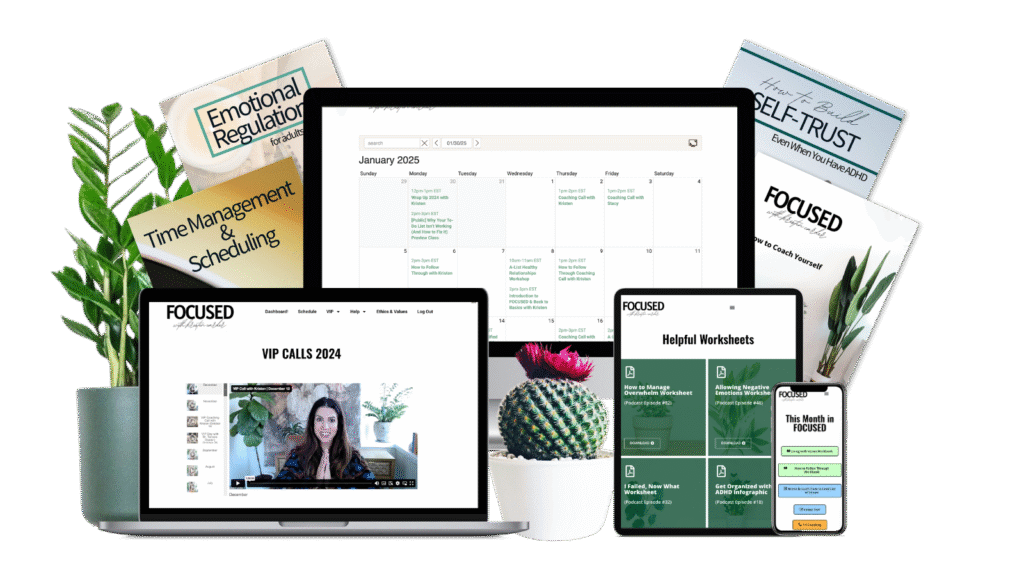


This episode is sponsored by Cure Hydration. You know that moment for me, it’s around like 2 or 3pm when my ADHD brain just decides we’re done for the day. We’re done here. The afternoon slump hits, the lights go off upstairs and suddenly answering an email or doing basically anything feels like climbing a mountain. That’s when I reach for Cure Energy. It’s a clean plant based energy drink mix made with 100 milligrams of natural caffeine and electrolytes so I get the focus and hydration boost I need without jitters, without a crash and without that like I drink battery acid vi that some of the energy drinks have. The peach tea and acai berry flavors are my current go tos. Crisp, refreshing and they don’t taste fake y’. All. They don’t taste fake. I’ll drink one before recording a session or when I need to get help through like that afternoon drag. And honestly I I drink it anytime. My brain just needs to cooperate. What’s wild is that Cure Energy is only 25 calories and has zero added sugar. It actually helps me stay hydrated while giving me energy. Okay, I love coffee, but coffee could never Staying hydrated isn’t just about water. You also need electrolytes. And that’s why I love CUR Cure. It’s clean, it tastes great and it actually works. And remember, Cure is FSA HSA approved which is amazing. You can use that money to pay for cure and for I have ADHD listeners you can get 20% off your first order@curehydration.com I have ADHD with the code I have ADHD and if you do get a post purchase survey, make sure to tell them that you heard about CURE right here on the podcast. It really helps to support the show. Don’t just drink more, Upgrade it with Cure. Save over $200 when you book weekly. Stays with VRBO this winter if you need to work, why not work from a chalet? If you haven’t seen your college besties since, well, college. You need a week to fully catch up in a snowy cabin. And if you have to stay in a remote place with your in laws, you should save over $200 a week. That’s the least we can do. So you might as well start digging out the long johns because saving over $200 on a week long snowcation rental is in the cards book now@verbo.com. Welcome to the I have ADHD podcast where it’s all about education, encouragement and coaching for adults with ADHD I’m your host, Kristin Carter, and I have adhd. Let’s chat about the frustrations, humor, and challenges of adulting relationships, working and achieving with this neurodevelopmental disorder. I’ll help you understand your unique brain, unlock your potential, and move from point A to point B. Hey, what’s up? This is Kristen Carter, and you are listening to The I have ADHD podcast, episode number 98. I am medicated, I am caffeinated, and I am ready to roll. I am so happy because it is going to be 70 degrees today and I am ready to party. Like, bring it on. We’re changing our clocks. Finally. I am craving sunlight and warmth and spring and summer give me all of the heat. I cannot wait. Let’s go. I can’t wait. I saw this really funny meme on Instagram that was like, seasonal depression. Seems fake until all of a sudden it’s like 70 degrees in March and you feel like a brand new person. I was like, yes, exactly. There is really something to be said. I think it’s called seasonal affect disorder. Like, yes, 100%. So I have some exciting news for you, and that is that a couple of episodes ago, I told you that my goal was to be the top rated or most rated, I’m not sure how to say it. ADHD podcast on iTunes. Before I get to 100 episodes, y’, all, you showed up. We blew past that goal. And here we are at episode 98, and I have the top ADHD podcast. It sits at the top. Yay. I can’t believe it. I’m so happy. I’m so grateful to you. Thank you for listening. Thank you for rating. Thank you for your kind words when you review. It’s just so amazing to have you as a part of my life. And. And this is great because it fits in perfectly with today’s episode, All About Community. Because I truly feel so much less alone because you are a part of my community. I am so thankful. Thank you so much. So today we are talking about the importance of community when it comes to managing and treating our ADHD and making positive changes in our lives. And my hope is, is that as you are listening to this and nearing the end of this episode, you are inspired to seek out a community for yourself, a community of ADHD adults. Because what I’m learning and what I’m noticing with my clients is that this is vital. This is a huge important part of our growth as humans. Not just community, not just a church community or a family community or a friend group, but A community of like minded ADHD adults. So the idea for this episode came to me recently as I was thumbing through Dr. Ned Hallowell’s book, delivered from distraction for the one millionth time. And something that he said really stuck out to me. So Dr. Hallowell writes that one of the best ways to relieve the pain of ADHD is through human connections, through friendships, memberships, involvement in relationship and groups where you are deeply valued. And this is the most important word, I think, understood. Deeply valued and understood. He continues, and he says that fellowship is the best and safest drug that we have. Fellowship is the best and safest drug that we have. I love that so much. So as I’ve been thinking about this and talking to my clients and just really kind of evaluating the things that Focus members have said over the last year, it’s become so evident to me that most adults with ADHD feel very misunderstood. They feel very isolated in many ways. Now, we may be surrounded by people who we love and we may be surrounded by people who love us, but if they don’t understand the way that our brains work, if they don’t have adhd, they don’t fully get us, right? So, like even your partner, your spouse, your kids, your parents, like your very best friends, they may love you, they may accept you, but they likely don’t fully understand you. They don’t fully get you. Not because they’re bad people, not because they don’t care, but because they just don’t struggle with the same issues. They just don’t have the same brain. They just don’t have the same awareness. So this usually means, and at least this is my experience, that we have to explain ourselves a lot. Like a lot, lot, lot. To our bosses, to our kids, to our spouses, our friends, to every new relationship that we start, we have to explain ourselves, right? So people ask us questions like, why are you forgetful? Why is this so overwhelming? Why can’t you just remember this thing? What’s going on, that you’re exploding emotionally? And well meaning questions, of course people have the right to ask them. And they’re curious. They’re curious about us, they’re curious about our brains work, no problem. It’s totally great. But doesn’t it get tiring? Isn’t it kind of draining to have to answer questions like that frequently? And doesn’t it just remind us of how different we are? Now, I want to pause here and say that we get to make those kinds of questions mean whatever we want. So what I mean by that is when someone asks us, like, hey, why’d you emotionally explode? We can make that mean that they hate us and that we did something wrong and that we’re not accepted, or we can just make it mean that they’re curious and they want to get to know us better. Right? So, like, we have a choice in that moment. What am I going to make this question mean? But even if we’re making questions mean something, lovely. Even if I’m making a question mean they just want to get to know me, they just want to understand me, it still doesn’t take away from the exhaustion that those questions create. Does that make sense to you? So we can do the thoughtwork, the brain work of, like, okay, I’m not going to make these questions mean anything about the other person. I’m not going to make these questions mean anything about me other than, like, they’re curious and I have an opportunity to educate them. That’s great. That’s lovely. But at the same time, it gets tiresome. Yeah, yeah, okay, me too. It gets tiresome because every question that is asked is just a reminder of how different we are. Right. It’s just a reminder of the potential misunderstanding. And that’s okay. That’s our reality. But it is tiring. Our brains are different. They’re not like everyone else’s brains. And so this can cause us to feel, like, othered, isolated, alone. Right. So I’m just wondering, like, is this something that you relate to and do you have the safety of ADHD relationships? Do you have the security of being in a group of people who just totally get the way your brain works now? I’m lucky to have two sisters with adhd, so I’ve always been able to relate to them and not have to explain myself when it comes to my ADHD quirks. And in preparing for this episode, I’ve just been so overcome with the realization that, like, wow, to have both of them get me. Since the day that we, like, became sisters, right? Like, we were all born with adhd, and so we just understand this, this part about each other. And I feel so lucky. It’s been so reassuring to me. I don’t have to explain myself when I’m late. I don’t have to explain myself when I interrupt them. I don’t have to explain myself when I’m forgetful. I don’t have to explain myself when I go three weeks or three months without texting them. Like, as I’m thinking about that now, it’s just such a gift that I’ve had Them growing up and even now in adulthood. Now, I want to say, like, caveat here. I don’t try to act rude. I don’t try to interrupt them. I’m not, like, obnoxious on purpose. But when I am impulsive and I’m like, oh, my gosh, I’m so sorry, they’re like, yeah, no problem. It’s like, it’s not a big deal. When I’m like, oh, my gosh, I missed your text and it’s been a month. I’m so sorry. They’re like, yeah, I forgot I sent it. It’s fine. So, like, those types of things are so reassuring. And I wonder if that’s really helped me in my acceptance journey, because having them has been so helpful. And, you know, one of the reasons why I started this podcast, as I was saying earlier, is because I was so thirsty, so hungry, thirsty. I don’t know, I just really wanted ADHD community, right? And having you listen and reach out to me via Instagram or email, it’s just so validating and reassuring. Like, not just as the podcast host, but like, as a woman with adhd, as a human being, as an imperfect adult with adhd, it is so reassuring to know that all of you are out there relating to my experience. Side note, if you’re not hanging out on Instagram, you should totally come. You can find me at I have ADHD podcast if you’re on Instagram. If you’re not, it’s no problem. I have been thinking about joining Clubhouse because I guess that’s what all, like, the kids are doing now. But I’m just too scared, so I haven’t done it yet. If I can’t even do a TikTok dance, then I probably can’t do Clubhouse, right? Let’s just stick with Instagram. Instagram is my place. Okay, I digress. Let’s continue. As I was doing research for this episode, I came across several studies on the effect that ADHD has on children in their peer groups. I couldn’t find any research on the effect of ADHD and the community of adults, which just goes to show how much more research we need to do, how much more we need to learn, how much more we need to study adhd. Right? So that sucks that there’s really. At least I couldn’t find it. Maybe some of you enneagram fives can go dig deep and find it, but to my knowledge, there’s no such study, you know, done on adults with adhd. So we can still chat about it, though, in terms of children. Okay? So, like, it’s totally fine because we were all children with ADHD once, right? So I’m not talking about your kids. I’m talking about you. Right? So listen, Research has found that children with ADHD are four times more likely to be rejected than their peers. Ouch. Does that bring up emotion for you? Because it does for me. Like, thinking back to my childhood, thinking back about the rejection, about the friendships that I had, and just like the whole scenario, it just wasn’t very pretty until I got to high school, and then I had a group of friends that were just amazing. But that was the first, first time in my life that I had a group of friends that for the most part, accepted me. So, anyway, let me read this again. Research has found that children with ADHD are four times more likely to be rejected than their peers. Now, if you think about it, it really does make sense, right? We’re impulsive, we can lack empathy. We’re distracted, we’re forgetful, we struggle to stay on task. We externalize our thoughts. So we, like, say everything out loud. And because we are different, we’re rejected. Now, here’s something really interesting. Most of the studies done, maybe all of the studies have been and why are ADHD children rejected. But I did find one study that made me so happy because they rightly noted that the research on ADHD and social skills has been on the ADHD child exclusively instead of also looking at the peer group. Right. So instead of just asking what’s wrong with ADHD kids that they’re getting rejected by their peers. Right. Instead, this one research group asked basically, what’s wrong with peer groups that they’re rejecting kids with adhd? Do you see the difference? I think in a neurotypical society, you know, as researchers are doing their, they’re naturally going to ask the question, and of course they don’t say what’s wrong? But essentially that’s what they’re asking, like, what’s wrong with kids with ADHD that they are rejected so often? And that just goes to show how society is set up for neurotypicals and not for us. Right. And so the question of, hey, let’s look at the peer group. Why is the peer group itself rejecting kids with adhd? I love that question. And so I want to share with you some of the findings. So I’ll link this up in the show notes for you so that you can read it. It’s a research study and it’s amazing. I’m going to be taking excerpts of it here. But I’ll link it for you in the show notes. Okay, so there’s three reasons why peer groups reject kiddos with adhd. But before I go there, I just want to remind you that this is relevant. Yes, I’m talking about kids, but I’m not talking about your children or your nieces or your nephews or your friends kids. I’m talking about you. I’m talking about me. I’m talking about why an understanding community is so vitally important to our growth right now. Okay? We suffered so much rejection as kids, and a lot of us still have poor social skills and face rejection for the way that our brains work now in the office place, now in our family groups, now in our friends, friend groups or churches now. Okay? So I want you to think of this research study and then relate it to, like, what might be happening for you now in terms of your community. Okay? So basically the question is, like, why do peer groups reject kids with adhd? And there are three reasons. The three reasons are social devaluation, exclusionary behaviors, and reputation bias. So I’m going to, like, read excerpts from the research study here. Okay, so number one, social devaluation. Peers socially devalue classmates whom they perceive as dissimilar from themselves. So basically, this is saying, naturally in a community, we devalue people who we perceive as being different. Hopefully, as we mature, as our view of the world expands, as we grow and learn and meet new people and just are exposed to so many more things. Hopefully we do not continue this pattern into adulthood. But basically, naturally, peers are going to socially devalue people whom they perceive to be as different from themselves. Okay, Number two, exclusionary behaviors. Being on the receiving end of exclusionary behaviors intensifies the problems in peer groups. So exclusionary behaviors means, like, because you are different, you’re not invited to my birthday party. Because you are different, we don’t want to play with you at recess. You’re impulsive and you say weird stuff. We don’t want to play uno with you. I just made that up. I don’t know why I said uno. But, like, we just don’t really want you around, right? So exclusionary behaviors. Being on the receiving end of exclusionary behaviors intensifies the problems. Being the recipient of exclusionary peer behavior can then exacerbate the dislike child’s original levels of peer rejection because such peer behavior broadcasts that the child is low status and it discourages other children who might have included the child from doing so. So here’s. Let me, like, unpack this, you’re excluded, right? From like whatever one group of people because of the way that you show up and because you’re excluded by this group, the other group looks at you and says, oh well, if that group is excluding them, then I guess I should exclude them too. I guess we can’t include them either. All right, so there’s a lot of exclusion going on. And then this one is really interesting. Reputation bias. Once peers become inclined to view a child negatively, it is difficult to revise their impressions. Like, how relevant is this to you right now? Right. Once peers become inclined to view a child, or I would just say like a person negatively, it is difficult to revise their impressions. Studies about the persistence of negative reputations find that peers interpret the ambiguous behaviors of children they dislike as hostile in intent, selectively remember their unskilled behavior and make internal, global and stable attributions for their poor behaviors. Meanwhile, similar actions performed by will well liked children are perceived benignly. So the kids who are disliked, like the ADHD type kiddos, anything that they do is perceived as hostile. But the well liked popular kids, anything that they do similar actions, they are perceived benignly as harmless. Right? So it says. Note that these studies have taken place using community samples. So this process is not specific to diseases disliked children with adhd. It’s not just ADHD where this is represented. And obviously we can see that. Like we remember the other kids in school who were excluded, they didn’t all have adhd. We know of adults now who are excluded, they don’t all have adhd. But these types of behaviors from the community are affecting us now. I am sure, I’m sure of it, right? There’s social devaluation. So maybe you move from job to job to job to job, right? Like you have ADHD and one of the ways that it presents itself is that you change jobs often. And so somebody may look at that and be like, that’s really weird. And they socially devalue you. Not understanding that this is one of the ways that ADHD is presenting itself, right? Exclusionary behaviors. Because of the way that you show up with adhd, maybe you’re excluded from communities. Reputation bias. And I find that this is true in a lot of families. Like once your family dynamic is established, it is very difficult to change your reputation within that community structure. Can I get an A? Men. Right. So once we see you in one way, it’s very hard to change our perception of you. Even if you’re growing, even if now you are diagnosed medicated, you’re in therapy, you’re in coaching like you’re doing all the things. It’s still hard for the community to change their perception of you. So do you see how even though these studies are done on children, they totally relate to us as adults? My guess is that whatever social systems were happening in grade school are still totally happening now, right? There may be social devaluation, exclusionary behaviors, and reputation bias happening for you, whether it’s in the workplace, your extended family, your church, within your group of mom friends, or your running club or your biking club, like whatever it might be. Now, Dr. Hallowell says in Delivered from Distraction that most people who have ADHD share secret feelings of unworthiness, shame, and a fatalistic, nihilistic foreboding that leads them to withdraw from others when they are in distress. And some kind of program, like a 12 step program or group therapy or a membership in a close organization offers the best antidote to these feelings. The shame, unworthiness, the. The foreboding feeling that you just have that’s like it’s never going to get better, it’s never going to improve. For me, it makes it so that we withdraw and we exclude ourselves sometime from our own community. Right? But I mean, that’s really saying something. The best antidote to toxic feelings of shame and unworthiness is some kind of ADHD program with a community aspect. Hello. That is huge. Now, I’m going to list some resources for you in the show notes. I asked one of my assistants to do some research since I totally suck at research. And so we’re going to gather some resources for you and link them in the show notes so that you can have a variety of options. You know, it could be as simple as joining a Facebook group for adults with adhd. I had a Facebook group for about a year, year and a half. I don’t have it anymore. Frankly, it was exhausting. But I know there are a lot of ADHD Facebook groups out there. Maybe you want to join a group therapy program for adults with adhd. Or maybe you are ready to join my coaching program. Focused. I would love that so much. Much. If Dr. Halliwell is right and fellowship is the best and safest drug that we have, my guess is that a lot of us are missing out on it. I want to encourage you today to find a community where social devaluation, exclusionary behaviors, and reputation bias are not a thing. A place where you’re understood, where the ground zero. Everyone just gets it. Like everyone has adhd. They totally, totally get it. They see you for who you are. They accept you fully, and it’s just not a big deal. Do you have a place, a place where you can go where people just understand, where you can say, hey, I slept through my alarm, I was totally late for work, and I’m a hot mess today. And everyone’s just, like, being been there and know exactly what that’s like. And no one judges your character for those things. I think that’s the most important thing is that when you are in a group of adults with adhd, or, for example, me with my sisters, they don’t judge my character when I totally show up imperfectly. They separate the behavior from the character, and they’re just like, oh, yeah, I’ve totally been there. I. I’ve totally done that. Right? And I think that that is the difference, because a neurotypical person, like, for them, it is a character issue. Like, if they’re late, it’s because they’ve chosen to be late. If they forget, it’s because they really don’t care. Like, most of the time, right? But for us, it’s like, no, these are things that are impaired in our frontal lobe with our executive functioning. And it is not a character flaw to be able to be honest and show up imperfectly and to just kind of lay it all out there and then have other people say, I totally get it. I have so been there. There’s nothing wrong with you and just offer you acceptance and love in those moments that gives us so much strength to carry on and to show up in those neurotypical environments. So, like, for example, if I can share with my sisters or, like, with my friend Verity, if I can share, like, oh, my gosh, I’m such a mess. And just, like, go on and on about how ADHD is presenting itself, itself for me in that day. And they can be like, oh, my gosh, I totally get it. It’s. You know, this happens to me, too, and it’s no problem. That gives me a level of acceptance and understanding so that then I can go show up in other environments where the understanding and acceptance is just not there. It gives me more of, like, a shield or an armor. It makes it so that I can show up in those environments and not feel so raw and isolated. Okay. I’ve asked my podcast editor, Karen, who I love, to add in some beautiful, heartwarming music to this next part because I think it will really be lovely and soothing and helpful. I want to read for you some of the things that focused members say about being in a community and this is just for you to understand what it’s like to be in a community of ADHDers. And whether you choose my program or any other program, I encourage you to join a program where you are surrounded by a group of people with the same brain. So I want to start out with my clients. Franzifia she’s from Germany and I think she said it best when she said the best part of the focus community is the fact that I can share struggles and I don’t need to explain in depth because the community gets me. We have the same brains. I am safe to just be me and not get weird looks. Instead, I get input, help and understanding while discussing discovering alongside of other people how ADHD shows up in our lives from people I’ve never met who live on different continents in a different generation. This was and still is mind blowing and heartwarming. Kelly says, I always thought ADHD was a thing kids got. Even the therapist who diagnosed me didn’t seem like it was that big of a deal, so I just kind of filed it away. But in Focused I’m learning so much. Being in community is making a positive impact by bringing clarity and understanding to me for a very complex issue. Adam says, the inspiration and support of the focus community and the different strategies and perspectives from different people here has been something I can easily say is more than worth its weight in gold. Paul says, sharing coping ideas and strategies and knowing you’re not the only one who’s going through this is incredible. Fellow ADHDers can totally relate to each other’s challenges and Kelly Falconberry says, just knowing that there are other people who are experiencing similar things and being being able to express those things without feeling the burden of needing to explain that you have ADHD and all that it entails because everyone here just knows and understands. It feels so good to not have to explain myself. You guys, I want to encourage you to find and ADHD community for yourself. Make sure to check the resources in the show notes. Maybe Google some in person or Zoom communities near you. Or come join Focused. We would love to welcome you in. All right, that’s it for today. I will see you next week. I cannot wait. SA.