

Podcast Episode #106: Internal Authority

Listen or Watch this episode on:

About This Episode

Do you struggle to identify and meet your own needs? Do you struggle to self-validate? Do you melt when someone disapproves of you or a decision you make? On today’s episode, we’re talking about how to establish an internal knowing so that you can be empowered, grounded, and live to your fullest potential. 

[www.ihaveadhd.com](https://ihaveadhd.com) for more adult ADHD resources.

[Click here](https://www.instagram.com/i.have.adhd.podcast/) to hang out with me on Instagram.

See Privacy Policy at [https://art19.com/privacy](https://art19.com/privacy) and California Privacy Notice at [https://art19.com/privacy#do-not-sell-my-info](https://art19.com/privacy#do-not-sell-my-info).

Episode Transcript

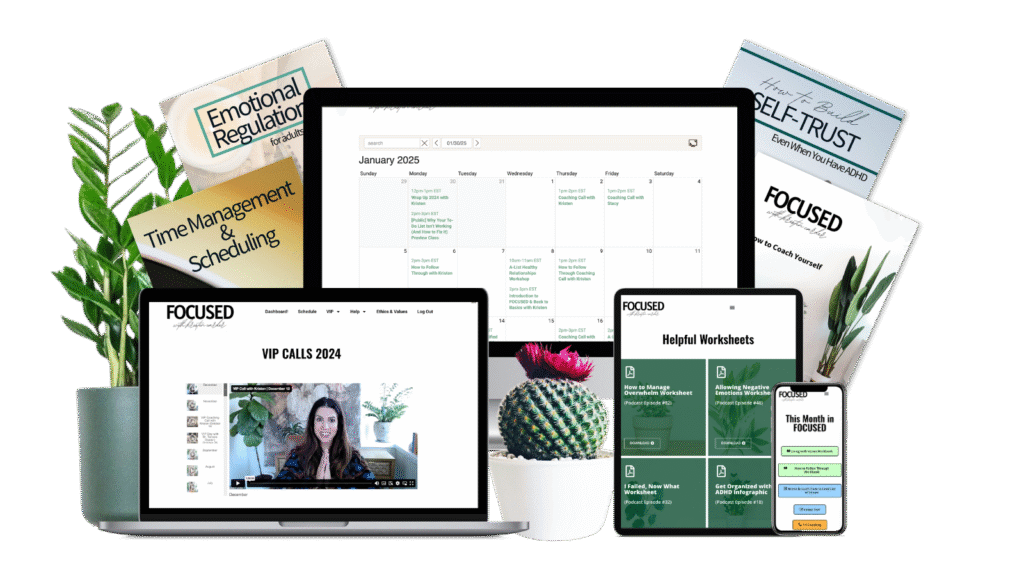
This episode is sponsored by CURE Hydration. All right, I’m going to be real with you. Drinking water is boring. My ADHD brain is like, wait, we have to do this again? Like every day, multiple times. What in the world? And because I’m running from meetings to coaching calls to kid chaos, staying hydrated is not something I’m naturally good at. It’s not something I naturally think about. That’s why I’ve been obsessed with Cure hydration packs lately. CURE is a plant based hydrating electrolyte mix with no added sugar, only 25 calories, and it actually tastes good. The watermelon and berry pomegranate have been on repeat for me. I’m actually like really running low on those flavors, which is so sad. They’re refreshing without being too sweet or artificial. It feels like my water finally has a little bit of personality, which I enjoy. I really do. What I love most is that CURE uses a science backed formula that hydrates as effectively as an IV drip. So when I’m scrambling through my day forgetting my water again, CURE helps me to catch up fast. I throw a few packs in my bag and it makes drinking enough water simple. Which for my ADHD brain is basically a miracle. So staying hydrated isn’t just about water. You also need electrolytes. And that’s why I love cure. It’s clean, tastes great, and it actually works. And bonus, CURE is FSA HSA approved so you can use those funds to stay hydrated the smart way for I have ADHD Podcast listeners. You can get 20% off your first order@curehydration.com ihaveadhd with the code ihaveadhd. And if you get a post purchase survey, make sure to tell them that you heard about CURE right here on the podcast. It really does help to support the show. Don’t just drink more water up, upgrade it with Cure. Hey, this is Sarah. Look, I’m standing out front of a.m. p.m. Right now and well, you’re sweet and all, but I found something more fulfilling, even kind of cheesy. But I like it. Sure you met some of my dietary needs, but they’ve just got it all. So farewell. Oatmeal. So long you strange soggy. Break up with bland breakfast and taste AM PM’s bacon, egg and cheese biscuit made with cage free eggs, smoked bacon and melty cheese on a buttery biscuit. AMPM Too much good stuff. Welcome to the I have ADHD podcast where it’s all about education, encouragement and coaching for adults with ADHD I’m your host, Kristen Carter, and I have adhd. Let’s chat about the frustrations, humor and challenges of adulting relationships, working and achieving with this neurodevelopmental disorder. I’ll help you understand your unique brain, unlock your potential, and move from point A to point B. Hey, what’s up? This is Kristen Carter and you’re listening to the I have the ADHD podcast, episode number 106. I am medicated, I am caffeinated, and I am ready to roll. I almost didn’t record this podcast this week, you guys. I almost talked myself out of it. Isn’t it so crazy how persuasive our brains are? It was like, girl, you don’t need to do this. You’ve got so much on your plate. But what got me here, what got me sitting in front of this mic in front of my computer is knowing that I’ve got so much to update you all on. Like so, so, so, so much so. First of all, this is the most exciting piece of News. I turned 40 on Saturday. Saturday May 1st was my 40th birthday. I am a whole grown woman, a fully grown, grown up. I don’t know why, for me, like 40 is the number, but it is. I’ve been looking Forward to turning 40 for so long. I’ve heard from other women that there’s just like something magical about being in your 40s and I’m just like here for it, super excited about it. To celebrate, my husband and I took a trip together to the Caribbean. We just got back yesterday. We spent the last six days very safely distancing and relaxing in the sunshine. It was incredible. We had such a good time. My dear friend Nicole got married on the beach. Greg actually performed the ceremony. It was beautiful. He looked gorgeous in his suit. Nicole obviously looked gorgeous in her dress. It was so much fun to be a part of all of it. And then we just, we stayed, we stayed longer. We relaxed without kids, we laughed, we cried, we talked. We’ve been through a lot in the last three months and it was just really amazing to be able to get away together and kind of just like process and let go of a lot. And we just came away feeling so much lighter. So good. Now I say this every time I go on vacation, but I need to say it again. I am struck by the fact that I bring my human brain along with me onto the vacation. Right? Like this happened to me. If you remember, we went to the Grand Canyon and Sedona, Arizona last summer. And I’m pretty sure I shared it with you here. I know. I definitely shared it on Instagram. Like, it was the most beautiful place on earth. Actually, I’d rather be in Sedona, Arizona than the Caribbean. Like, it was just so beautiful. And yet there I was, still struggling with all of my same triggers and annoyances and things that got me frustrated. Because, spoiler alert. It’s not circumstances like a vacation that create feelings, it’s thoughts, right? And so I had the same exact experience this time around, right? We. We were in one of the most beautiful. I’ve actually never been to a more beautiful beach. And y’, all, I grew up on an island in the Pacific. Like, I know beautiful beaches, but this Caribbean beach was so gorgeous. And yet I was still dealing with all of my same brain drama that I deal with here in Reading, Pennsylvania. I had a really hard encounter and a few subsequent difficult conversations the week before we left. And I’m telling you, even though we were in, like, a beautiful location, sitting on the beach in front of turquoise blue water, I was still upset, distracted, anxious, and I had to seriously work on and coach myself into letting it go and processing it and feeling it so that I could properly relax. So I’m just gonna keep shouting this from the rooftops until the day that I die. That it’s not our stuff or places or money or people or locations that make us feel happy or sad or mad. It’s our thoughts. It’s our thoughts. It’s our brain. It’s the same brain that we bring along with us into every situation, right? Like, that’s the thing about being human. And so if you want to improve your experience, you gotta work on your brain. Because it’s not the money or the vacation or the relationship that’s going to improve your experience long term. It’s your brain. It’s your brain, dude. If you’re anxious or annoyed, acquiring more money or going on vacation or getting into a relationship isn’t going to solve for it. This is not. So anyway, wow. I’m just gonna. I’m just gonna say, like, every time that I go away, this is just what I’m gonna bring back with me, because it is so shocking every time. Like, oh, yeah, I’m still human. This is still my human brain still here with me. Okay? So I want to tell you something else that’s amazing. In anticipation of turning 40, one of the things that I’ve really been working on, like, very actively recently, and this ties in perfectly with what we’re talking about today with internal authority. One of the things I’ve been working on is making sure that every part of my life feels like me. I’m not sure if this makes sense to you, but, like, try to track with me if you’re like, what? Okay, so for example, like, does my house feel like me? Is it truly an expression of who I am? I think especially for those of us with adhd, this can be really hard. Like, who is me and how do I accurately express myself to the world? Right. Like, this is deep work and after a lot of therapy and coaching in the last few years, I’m really gaining clarity in this area. And I love helping my students with this as well. Like, my house feels more like me. My clothes feel more like me. Even the dishes we use in our home, which are just like super simple, utilitarian white corral just from Target, like, nothing fancy. Even those, though, feel more like me than what we were using before. And this new grown up expression of expressing me myself has naturally bled over into the focused program. And so one huge change that we’ve been making is designing the inside of the Focus membership portal so that it’s an accurate expression of me. It’s taken almost six months. It’s been a much longer process than we anticipated. But dude, we launched it last week and it is gorgeous. Like, it is so nice. All of the content is the same. It’s the same valuable ADHD friendly coaching and teaching content, but the user interface is simple. Simple and minimalist and organized. It’s black and white and has plants everywhere, just like my house. It’s so beautiful. It’s drool worthy. So I’m super excited. We dropped it in the middle of the night, like two weekends ago for our members, just as a fun surprise, like a happy birthday to me. No extra charge, just added value because I wanted to make it prettier and more functional. Just because I wanted it to have a vibe. I wanted it to be an expression of who I really am. Listen, I’m finding out that it’s so much more fun to just be who you are. So much more fun. And today that’s what we’re talking about. We’re talking about being who you are and developing an internal authority. But before we get started, you might be wondering, why are we talking about internal authority on an ADHD podcast? What does this even have to do with adhd? Well, the reason why is that I’ve noticed that most, if not all of my clients struggle greatly in this area. So I’ve struggled, and I noticed that my clients struggle as well, they struggle to identify and meet their own needs. They struggle to self validate. I’ve not had one single client that came to me saying, listen, I know who I am, I know what I want, no problem making decisions, and I don’t care when someone disagrees with my choices. That just doesn’t happen in my world. Right. So if you’re anything like me and all of my clients, then you likely struggle in this area too. I don’t know if that’s ADHD specific or an outcome, you know, a manifestation of adhd. I’m not sure. I’m not even sure that it matters, but it’s certainly something that we experience. It’s pervasive among the ADHD community. And so I wanted to address it today. I tried to do some research, but the Google really didn’t have much to offer me. So this means that what you’re getting today is like straight up Kristin Carter’s insights and opinions, which ironically, ironically allows me to tune into my own internal authority as I write out and plan this podcast. Isn’t it interesting how this is all working? Right, so the way that I define internal authority is simply an internal and inside knowing. It’s basic, it’s not fancy, it’s just the ability to say, I know, I know who I am, I know what I need, I know what’s right, I know what I want, I know that I’m okay. Now, it can be as trivial as like, I know what I want to eat today or I know it looks good on my body, like what clothes to wear. But it can also be as deep as like, I know that this job change is the right path for me, or I know that the purpose of my life is xyz. Right. I personally believe that the first step in developing an internal authority is first taking full responsibility for yourself. And this was my first step anyway. And this is a process. It’s not a quick once and done, but it’s essentially understanding that you are responsible to meet your own needs. You are responsible for your own feelings, you are responsible for your own life and for your own results. Now, I know I’m just kind of like breezing over this part, but like, this is some of the deepest work of our lives. It’s hard. And if you do have like resistance to these ideas, I totally get it. I’m here for it. Because our default programming is definitely not self responsibility. Our culture does not set us up for self responsibility. Right. Our default programming is to delegate responsibility to other people. And our culture co signs that for us. Right? So we want to blame other people. We want to delegate things outside of ourselves. And if you want to do that, you will be able to find a lot of people around who will co sign that for you. And I get it, because sometimes delegating my authority is really nice. And I did it for most of my life because if I can delegate responsibility for my emotions to you, then I don’t have to own it when I’m upset. I can blame it on you. It’s not my fault, it’s your fault. I don’t have to take a look at me. I don’t have to see where my weaknesses are. I don’t need to see, like, where I need to grow or where I’m maybe missing something. Right. Because that’s uncomfortable. I don’t want to do that. My focus is on you. No, you’re doing it wrong. I’m going to blame you for the way that I feel. Now. That is for most of us, the way that we operate. But the downside of delegating responsibility like this to others is that we don’t ever develop the security, ease, and peace of an internal authority. And throughout this podcast episode, that’s what I kind of want to be like. The only word that’s coming to mind is selling. I want to be selling you on this that, yes, you will have to give up some things if you’re going to develop an internal authority. But it is so worth it. It’s worth it because if you don’t have an internal authority, then you’re constantly feeling insecure and you’re looking for validation outside of yourself. It’s like, we don’t know that we’re okay unless someone tells us we’re okay. We don’t believe we’re doing it right unless someone tells us we’re doing it right. And God forbid, if someone ever gets upset with us, it throws us completely off kilter. Side note here, I just googled off kilter because is a phrase that my mom uses or used a lot. She’s got all of these phrases. Someday I’ll just make a compilation of them because they’re so funny. But like, all of these different phrases that she uses that I really have never known what they mean. But anyway, off kilter actually is a real thing, and it means not in the usual expected or correct condition. Not in the usual expected or correct condition. So, you know, when someone gets upset with us, it throws us off, off kilter. Now, this means that as a grown human adult, we often don’t feel grounded. We don’t feel authoritative or empowered. We don’t think that we know the difference between right and wrong or what’s good and bad. And there’s so much confusion and uncertainty and anxiety involved with this. Right? Right. We struggle to make decisions. We struggle to tell the truth. We struggle to communicate or even identify our true wants and needs and desires. Those of us who don’t have an established internal authority are people pleasers. I’m the first to raise my hand. I am in recovery. It is not easy, it is not fun. But I am seeing this as some of the most important work of my life. So when we don’t have an established internal knowing or internal authority, we are constantly trying to keep everyone around us happy with us so that they will validate us, so that we can feel secure and good about ourselves. And my friends. It’s exhausting. It is freaking exhausting. And a huge, huge thing. A huge part of this is like, as soon as someone says that we’re doing it wrong or implies that maybe we’re not doing it perfectly, we believe them. We believe them so quickly because we’ve delegated our authority outside of ourselves. Remember, this is one of the consequences of not taking responsibility for ourselves. We delegate our authority outside of ourselves, and then we believe others more than we believe ourselves. This is crazy to me, but I’ve watched myself do it all my life, and I am waking up to it. It’s like, oh, my goodness. Instead of checking in to see if we approve of ourselves and we like the way we’re doing things, we automatically assume that the other person must be right about us. Now, why in the world do we assume that other people know more about us and our experiences than we do? It’s so shocking to watch my brain do it. I’ve even let strangers on the Internet, people who don’t even know me, affect the way that I feel because I’ve delegated my okayness, my internal authority to them instead of owning it for myself. So for me personally, this has had so many consequences. I’m just going to list a couple of them here. Like, it’s resulted in me purchasing and wearing clothes that I don’t even like because someone else said that it looked good on me. It’s resulted in me spending money that I don’t have because a friend told me, oh, it’s fine. It’s resulted in me canceling appointments that I knew I should keep because someone else wanted my time and told me to cancel the appointment. It’s resulted in me Dating men that I didn’t even want to date just because someone else told me that they thought it was a good idea. And most recently, it’s resulted in me ending client relationships sooner than I knew that I wanted to, just because my coach told me to. And I delegated my authority to her instead of tuning in to what I knew was right for me and my clients at the time. And side note, here, I’ve found a new coach since then. Side note, Side note, okay, so when we make these decisions that are totally out of alignment with who we are, what we want, what we need, when we make these decisions based on what other people think we should do and not based on what we think we should do, it feels terrible, it’s confusing, it’s very conflicting on the inside, and it usually doesn’t get us the result that we want or a result that we like. Now, I am still working on this area of my life, but as usual, I am bringing you along with me for the ride. Okay? It’s not easy. I still have far to go. But I’m committed to strengthening my own internal authority and helping you to develop and strengthen yours. So, of course, I created five steps to developing an internal authority. Are you ready for them? If so, say yes. Like, I just feel like you are here with me. Are you ready for them? Here we go. Five steps to developing an internal authority. Step number one, Notice. So in this step, it’s just about trying to gain awareness. Maybe you’ll want to talk to, like, a trusted friend, a therapist. Maybe you’ll want to write it down on a piece of paper. Maybe you’ll just put a sticky note in your car to think about it on your commute to work. But where in your life now do you really know for sure that you have that internal authority? There’s probably an area in your life. Even if you’re someone who struggles with internal authority, there’s probably one area in your life, at least, that you are like, oh, no, I know I’ve got it in this area. Area. I know that I know the best for me in this area. And even if someone tells me that I’m doing it wrong, it doesn’t bother me because I know that this area is my jam. So what is that area for you? And my question is, why? What are you believing about that area of your life? What are the thoughts that come up for you that really affirm your authority in this area? That’s really important to see, because eventually you’re going to want to apply those same thoughts to a lot of different areas and then bring your awareness to one or two areas in which you know you do not have an internal authority. You do not have a knowing. You’ve delegated responsibility. You’ve either been blaming or shifting or just really not wanting to take self responsibility in this area. It’s maybe an area where you’re really insecure and you’re constantly seeking validation outside of yourself. So my question there is why? What are you believing about yourself in that area? How might those beliefs not even be true? Like, just begin to notice, where do I already have an internal knowing and where am I really lacking in this area? And just allow the awareness to come without judging yourself. Okay, just. Just be curious about it. Just be really curious. I wonder where I already have an established internal authority. And I wonder where I am really kind of shaky and I delegate my responsibility and I don’t identify and meet my own needs. Like, where is that? Okay, step number two, in developing an internal authority, I would highly recommend that you partner with a professional. If this is an area of your life where you really struggle, you might want to find a therapist to work on this with you. Or if you have a therapist already, you might want to bring up the topic of establishing an internal authority with them. And coaching is another great option. As soon as you join Focused, you get access to the identity and self concept course that all of my clients are using to change their own freaking lives. And a huge part of that is developing an identity around who are you really? Not what people say about you, who do you decide that you are, who do you know that you are and developing that authority, establishing it in your own life. One of the things that is helping me right now is working with a therapist and a coach together. Like, not in the same room. My coach is actually in England. My therapist is in my town. So I go see my therapist in person and I see my coach once a week virtually. And it is transformational. And maybe you’re noticing that. Maybe, you know, if you’re a longtime listener of this podcast, maybe if you’re a longtime Focus member, you’re noticing change. That’s because I’m doing this hard work and it is not always fun. It really does take some bravery. But if I can do it, I know you can do it, because I am nothing special. Okay, moving on. Five steps to developing an internal authority. Step number three, Determine on purpose two to five people whose opinions you actually do ask for and want will listen to people that you know, love you and have your best interest in mind, people who have a history of prioritizing you, your mental health and honoring your needs, people whose lives you admire, who you want to emulate. You’re still the final authority that it doesn’t take away from that. But of course, we need people in our lives. We’re not meant to. To walk this journey alone. We’re meant to be in community. And so I highly recommend that you decide on purpose. Like, these are the two or three or four or five people whose opinion matters a lot to me. And if someone’s not on this list, then it doesn’t mean you don’t love them. It doesn’t mean that you don’t take what they say under consideration, but you’re not going to change your mind because of them. Does that make sense? So for me, those people are my husband, my sister, my best friend, my therapist, and my coach. Five people. Three people are in my real life and two are professionals. And their job is to hold space for me and look at my brain. Their job is to have my best interest in mind. Their job is to notice my blind spots. And I literally pay them to point out my blind spots. Right. Like, that’s literally what I paid them to do. I love it. So good. Okay, so who are those people for you? Who are the people in your life? Just a couple. Who are the handful of people in your life that you want to prioritize their opinion? Okay, how to develop an internal authority. Step number four. This one is mind blowing. I’ve said it before, but I’m going to keep saying it. You just get to decide. You get to decide that you are right. You get to decide that this is what you want. You get to decide to take care of your own needs. You get to decide to validate your own existence. You get to decide who you are, what you stand for, what you will and will not consent to. You get to decide. I grew up thinking that I didn’t get to decide that other people determined this for me, that other people set my identity, that decisions had to be made with, you know, so much prayer and so much consultation and that I couldn’t just decide because there had to be a black and white, a right or wrong. And black and white thinking is something that I have brewing in my brain to do a podcast on soon. Because I know that those of us with ADHD really do fall into the trap of black and white thinking. And, you know, I’m not one of those life coaches that says, like, truth is all relative and there is no black and white and there is no right or wrong. I definitely believe that there is right and wrong. That’s my personal belief. But only about like five things. The rest of it is gray area. The rest of it is gray area. Okay, so if you come from kind of a. I don’t know if I’m saying this right, like a puritanical background, like maybe, whatever. What? I don’t know. I don’t know what to say because I don’t want to make it weird. But if you come from a background that was anything like mine, you probably have this thought process that like, there is a right way to do things and there’s a wrong way to do things. And so you need to go kind of like look at the authorities to see the right way. And it’s not just an internal knowing. And I just want to say that for most things it just is. You just get to decide. Of course there are a handful of things that are black and white and maybe you want to write those things out. I did. Here are the things that I’m not going to tune into my own internal knowing about. Like for example, and I always use this example, like murder. I’m not going to tune in to my own internal knowing about murder. Like, murder is wrong and I’m not going to murder people. So even if someday my thought feeling combination is like, hey, I’m filled with rage and this murder is justified, I’m not going to listen to it, okay? Like, I, I’m not going to because that’s on my list of things that like, okay, this is a hard no, but there aren’t many things on that list for me, like being faithful to my spouse. Okay? So like, no matter what comes into my brain about like, you know, the crazy stuff that comes into our brains, we have crazy stuff that comes into our brains, right? I’m not going to, like, oh, maybe this thought is really important and I need to tune into it. Like, no, I’m going to be faithful to my spouse. So like, those are my top two things where my internal knowing does not count. Does that make sense to you? Are you tracking with me? So like, but, but most of my decisions on a day to day do not have to do with murder or adultery, okay? They just don’t. Most of my decisions, most of the things that I’m faced with day to day have nothing to do with those things. And yet I never gave myself the authority, authority to just know, to just decide. And so now I am empowering myself and through that I want to empower you. You get to decide. You get to decide that you’re right. You get to decide that XYZ is what you want. You get to decide to take care of your own needs above someone else’s needs. You get to decide to validate your own existence. You get to. You get to decide who you are. You get to decide what you stand for and what you will and will not consent to. You get to decide. Whoo. She’s. That was just. That’s just good. I want to read that whole thing again. Okay. Lastly, in developing your own internal authority, have a plan for when people disagree with you and or don’t like your decisions. Because remember, number four is you get to decide. You get to decide what’s right and wrong. You get to decide what you want. You get to decide what you do. You’re a grown person. You. You have the authority. If you need a co signature, here it is. I co sign it. You get to decide. However, number five, when people disagree with you and they will have a plan, you’re actually going to experience way more disagreement. Because, like, think about it. One of the reasons why we dismiss our own needs and our own internal knowing is so that we don’t have to ruffle any feathers, right? So that we can keep the peace. So that we can people please and tell everyone what they want to hear from so that they will be happy with us, so that we can feel good about us, right? So when you start to tap into what’s actually true for you deep down, and when you decide to honor your own needs and your own desires, when you understand that you can just decide something is right just because you want to do that, other people will not always be happy. They’re not going to be happy. So you’ll need to have a plan. And I highly, highly recommend my podcast, episode number three, 36 on emotional dysregulation. What to do when you’re triggered. And in it, I walk you through my process of regulating myself. Because, you know, in developing my own internal authority, I have had to deal with a lot of people being unhappy with what I decide, right? And in those times, I still have my fight or flight trauma response, right? And so in order for me to be able to function, in order for me to calm down, my brain and my body when they’re freaking out, you have to have a process. So my process looks like thought downloading, noticing what’s true, noticing the thoughts, telling myself I’m safe, putting my hand on my chest and reminding myself that I am a grownup. I’M okay. I’m okay. It’s okay that someone is disagreeing with me. It’s okay. Then I always tune into what do I know to be true about me and how do I want to feel moving forward. So that’s just like a really short snapshot. It doesn’t do the whole process justice. I would totally recommend you checking out that podcast again. It’s number 36 and it’s to going called emotional dysregulation. What to do when you are triggered. All right, so to review five steps to developing an internal authority. Notice where you already have authority, where you already acknowledge and own your own authority. And notice where you don’t. Notice where you’re insecure, where you’re delegating your authority outside of you, where you’re looking for validation and kind of seeking that assurance from someone or something outside of yourself. And just be curious about it. Ask yourself why. Ask yourself what you’re believing. Just try to bring that awareness to light so that you know what you’re dealing with. Okay. And again, don’t judge yourself. Just be curious. Number two, partner with a professional, a therapist, a coach, whoever it might be, someone who is a professional in noticing what’s coming up for you and helping you to establish an internal authority for yourself. Number three, determine two to five people whose opinion you really value. And of course, of course go to them for insight, for advice. Knowing still though, that you get to decide and make the final call. Number four, make a list of the things that are very black and white to you where you don’t think that you deserve to have an internal knowing. Or maybe your internal knowing doesn’t count. So I shared two of mine with with you. Like murder and adultery. For me personally, my internal knowing is not going to count in those areas. And so maybe you want to make a list of those things where you know your internal knowing is not what you’re going to be leaning on. However, then notice the other millions of decisions that you’re going to make throughout your life. Those can be established on your internal authority. Number five, have a plan for what to do. How to take care of yourself when someone inevitably disapproves or disagrees with you. This is the deep work of our lives. Knowing who we are, validating ourselves, identifying our needs and learning how to meet those needs on our own. Like taking responsibility, full responsibility for meeting those needs, determining what’s right and what’s wrong, making decisions, practicing making decisions on our own and holding space for ourselves when the decision doesn’t work. Out the way that we wanted it to and when you feel triggered when someone disapproves, learning how to calm yourself down and recalibrate. And one of my very favorites, allowing people to be wrong about you. Gosh, this work is so important and the whole purpose is so that you can say, I know who I am, I know what I need, I know what’s right, I know what I want and I know that I’m okay. All right, my friends, that’s all I have for you this week. I cannot wait to chat with you again next time. If you’re being treated for your adhd, but you still don’t feel like you’re reaching your potential, you’ve got to join Focused, it’s my monthly coaching membership where I teach you how to tame your wild thoughts and create the life that you’ve always wanted. No matter what season of life you’re in or where you are in the world, Focused is for you. All materials and call recordings are stored in the site for you to access at your convenience. Go to ihaveadhd.com focused for all the info.

Related Episodes

Kristen Carder

Episode 418: Tired of Feeling Tired? How to Rest When You Have ADHD

Kristen Carder

Episode #416: ADHD and Money: In This Economy?!

Lindsay Gibson

Episode #414 Good Enough Parenting: What NOT to Do (with Dr. Lindsay Gibson)

Stop Struggling Alone.
Start Thriving With FOCUSED.

A proven coaching program designed specifically for adults with ADHD who want to gain clarity, build confidence, and take control of their lives.

Join a community of hundreds of ADHDers

Learning About My Brain...

Changed Everything

Hi, I’m Kristen Carder—ADHD expert, podcast host, and certified coach who’s been exactly where you are. Diagnosed at 21, I spent years cycling through planners, courses, and systems that never quite worked. Everything changed when I discovered the power of understanding my ADHD brain and the transformative impact of community support.

Now, after 15+ years of research and experience, I’ve helped thousands of adults with ADHD thrive. I’m here to show you how understanding your brain can transform your life, just like it did for mine.

ADHD Tips That Actually Make Sense

Follow @i.have.adhd.podcast and join our Instagram community for daily strategies, relatable content, and real talk about ADHD