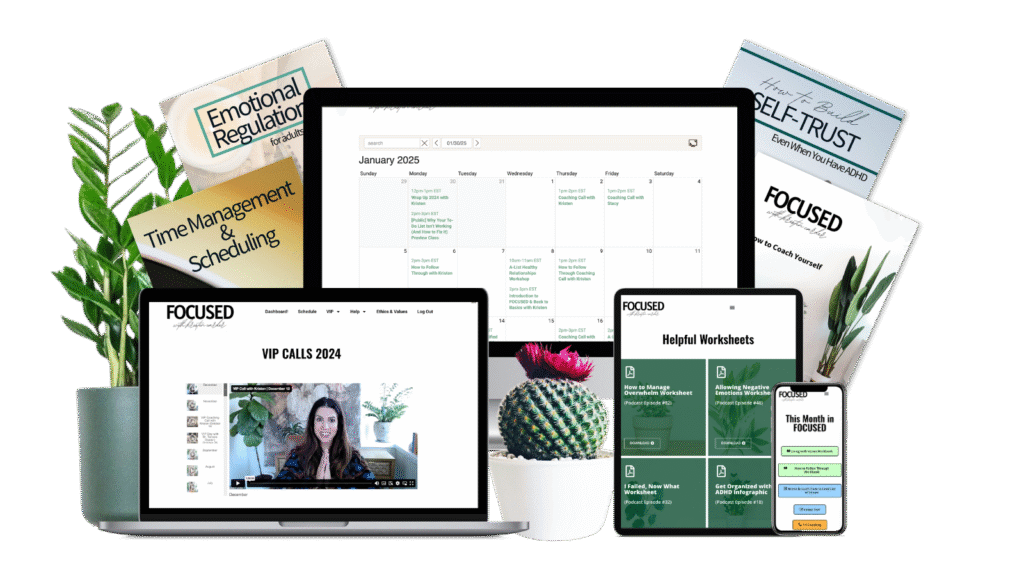


This episode is sponsored by CURE Hydration. All right, I’m going to be real with you. Drinking water is boring. My ADHD brain is like, wait, we have to do this again? Like every day, multiple times. What in the world? And because I’m running from meetings to coaching calls to kid chaos, staying hydrated is not something I’m naturally good at. It’s not something I naturally think about. That’s why I’ve been obsessed with Cure hydration packs lately. Cure is a plant based hydrating electrolyte mix with no added sugar, only 25 calories, and it actually tastes good. The watermelon and berry pomegranate have been on repeat for me. I’m actually like really running low on those flavors, which is so sad. They’re refreshing without being too sweet or artificial. It feels like my water finally has a little bit of personality, which I enjoy. I really do. What I love most is that CURE uses a science backed formula that hydrates as effectively as an IV drip. So when I’m scrambling through my day forgetting my water again, CURE helps me to catch up fast. I throw a few packs in my bag and it makes drinking enough water simple, which for my ADHD brain is basically a miracle. So staying hydrated isn’t just about water. You also need electrolytes. And that’s why I love Cure. It’s clean, tastes great, and it actually works. And bonus, CURE is FSA HSA approved. So you can use those funds to stay hydrated. The smart way for I have ADHD podcast listeners, you can get 20% off your first order@curehydration.com I have ADHD with the code I have ADHD. And if you get a post purchase survey, make sure to tell them that you heard about Cure right here on the podcast. It really does help to support the show. Don’t just drink more water, upgrade it with cure. You. Welcome to the I have ADHD podcast where it’s all about education, encouragement and coaching for adults with adhd. I’m your host Kristin Carter and I have adhd. Let’s chat about the frustrations, humor and challenges of adulting relationships, working and achieving with this neurodevelopmental disorder. I’ll help you understand your unique brain, unlock your potential and move from point A to point B. Hey, what’s up? This is Kristin Carter and you’re listening to the I have ADHD podcast. I am medicated, I am caffeinated and I am ready to roll. The sun is shining, the birds are chirping, I’m in A sundress. I have no shoes on my feet. I’m so happy. Summer is coming, spring has sprung, the warm weather is here, and I could not be happier. I’m so glad to be with you today. Thank you for pressing play on this podcast. I’m so glad that you’re here with me. Super, super happy about it. A few weeks ago, I published an episode on establishing your internal authority. I think it was episode number 106, and it had 6,000 listens, streams, downloads, whatever in one day. Like, the first day I published it, 6,000 people listened to it. So here’s what that tells me. My gut feeling about this topic was correct. This is clearly something that adults with ADHD really struggle with. Like, we totally struggle with establishing, identifying, and stepping into our internal authority. And because of this, I wanted to add in a part two so that we could go even deeper and I could give you even more help in this area. Now, if you haven’t listened to part one, please, please, please, please press pause on this episode right now and go Back to episode 106 and listen to part one. 1. I think that will really help you to understand what I’m talking about in this episode. What internal authority is, why it’s important, what happens when we don’t have it. Like, that’s. That’s going to be a really good precursor to this episode. So if you haven’t listened to that one yet, go back and listen to 106 first and then hop back over to this one. Because today, what we’re going to be talking about in this episode is some practical ways of establishing and connecting with our internal authority, and mostly in the area of, like, uncovering our values and our ethics. And this episode is going to serve as a space for me to help you define your own ethics and values, as well as me kind of pulling back the curtain and letting you into what some of my core ethics and values are. I’m already living from those ethics and values, but I have been working with my coach to really articulate them, make them very clear, have them visible. And so I thought it would be cool to share some of that with you today. So it’s going to be super fun. Could I say super one more time? I think it’s like the 12th time that I’ve said super in this episode. No more super for today. I’m done with it. Okay. Before we get rolling, though, I want to give you something for free. Like, besides this free podcast, I want to give you something else for free, which I’m Excited About a while ago I taught a three day course in focused on perfectionism. Most of us ADHDers are huge perfectionists. Most us are completely paralyzed by our perfectionistic tendencies. And actually recent research shows that perfectionism is one of the most frequently. I always struggle saying that word. Frequently endorsed distortions of adult adhd. Meaning that, yeah, like we all struggle with it. Perfectionism is a whole thing. So I taught this course within focus. It’s really good. I’ve heard from so many members, so many of my clients that the course was life changing for them and I’m giving it away to you. I’m so excited. So all you have to do is go to my website. I have adhd.com perfect and you will get this three day class series. Actually it’s three classes plus a bonus. So in total it’s four videos of me teaching and coaching. It’s wow. Here in my notes. I wrote the word super three times. But since I vowed to you that I will not be using that word on this episode again, I’m not going to use it. So it’s going to be very fun, very free and very transformative. I mean, I think super would have fit in better there, but since I made a pact, I’m sticking to my word. So Anyway, I have ADHD.com perfect to sign up for the free course on perfectionism. Okay. And if you’re on Instagram, it’s in my link tree so you can find it there in my bio as well. And listen, I know that you can multitask, so head over to my website, iofadhd.com perfect and sign up for that course right now while you’re listening to this episode because we both know that you can do 12 things at one time. Okay, so let’s get on with it. As I said in part one of this conversation on internal authority, most of us ADHDers really do struggle to know and stand firm in who we are, what we want, what we stand for. And we totally struggle with trusting ourselves to make the quote unquote right decision. And so this is, this is not so good. It’s no bueno. Okay, so it makes sense though, because from childhood we’ve been gathering evidence that we mess up, we do things wrong. Everyone else has the right way of doing things, but we have the wrong way of doing it. And I’ve really been thinking lately and considering how influences like teachers and parents and coaches and friends, they’ve really affected these negative stories for us. You know, I’m back in therapy working through my own story, my own childhood, my own stuff. And therapy is so amazing in helping you make sense of the past and process your childhood and your traumas and your story. And it’s been fascinating for me to gain more awareness of why, why I don’t trust myself, why I dismiss my needs, why I’ve been people pleasing for so many years, years. So if this piques your interest and you’re curious as to why you don’t have an internal authority and you don’t really understand your past and you haven’t made sense of it yet, I would highly recommend you reach out to a therapist, a good therapist, and start the excruciating but really important process of unpacking all of that. And this is where I make a really clear distinction between therapy and coaching. Coaching is not therapy. And again, that work of unpacking and making sense of your past and processing your traumas and all of that, that’s really reserved for a therapist. But here I am. Hi, I’m a life coach. And life coaches help you to unpack the present and make plans for the future. And that’s exactly what we’re going to be working on today. I think one of the most important things to consider as you begin this work of establishing your own, own authority is to really identify your ethics and your values. What do you stand for? What do you care about? How do you define right and wrong? Like, seriously think about this. One of the reasons why we struggle so much in decision making and sticking to our. I don’t. Again, here’s these, here’s this expression. Is it called an idiom? These expressions, like sticking to our guns, like, what does that even mean? But anyway, like standing firm in our own decisions is that we haven’t clearly defined right and wrong. And I know these are deep questions, right? But if we don’t know what we stand for, we will be easily swayed. And being easily swayed is the opposite of having an internal authority. So do you know yourself and what you care about and what you stand for? Maybe this is the first step for you in really establishing your own internal authority. So I want to encourage you to sit down and journal. And by journal, like, that could look like grabbing a scrap piece of paper on the back of an envelope and just jotting down, like, take five minutes while I’m talking you through this. I will lead you through the questions. You can press pause and just write down your answers. Okay, so we’re going to start with ethics. What are your top 5 to 10 ish ethics? Now what Is an ethic. An ethic is a principled stance that helps you distinguish right from wrong. Okay? The purpose of an ethic is to confine your behavior. Now, this part is really important, so I want you to hear it again. The purpose of an ethic is to confine your behavior, to limit your behavior under a moral obligation. Okay? So, for example, if I have an urge to steal, so inside of my body, my thought, feeling combination is like giving me this urge to steal. I’m not going to validate and tap into my quote unquote internal authority in this stance, right? Because it goes against my ethics. One of my ethics is integrity. And so no matter what my urge tells me to do, I’m going to adhere to my ethics. It’s like, who’s going to win in the moment? Is it my urge or is it my ethic? For me, my ethics are always going to win. Now, your human brain is just like my human brain, so it’s going to come up with all of these weird things, and it’s going to offer you things to do right, like, you should steal, you should cheat on your spouse, you should smack that person. Like. But having your ethics very clear and visible, knowing them will help you to confine your behavior under that moral obligation. Okay? I worked through all of this with my coach, and I cannot even begin to describe the freedom, the relief and the power that has come from putting all of this down onto paper. My ethics were already there. I was already living by them and working out, like, working it out in my business, like, I was already reflecting them into the world. But in making them very simple and clear and visible, I feel that I now have a very, very firm foundation to stand on. Especially when a stranger or someone random that doesn’t even know me accuses me of something which happens in my line of work from time to time. I mean, it just does. Like, that is a part of the job. I am learning that if you’re going to be a podcaster who has thousands of people that listen to your podcast, if you’re going to be on Instagram and have thousands of people in your Instagram audience, if you’re going to have a coaching program that’s very visible, people are going to start to accuse you of things. And so, like, some of the negative reviews on the podcast are just essential, astounding to me, right? They just blow my mind. But now that I have my ethics established and I can see how I truly run this podcast and my company and everything I put out into the world through My ethics, I feel so much more empowered and able to withstand criticism from strangers, from people I’ve never actually interacted with, face to face, people who don’t even know me. I feel so much more authoritative and able to stand in the truth of who I am, what my ethics are, and how I am reflecting them into the world. So this kind of authority, that’s what I want for you too, right? So that’s the point of all of this, is that I am learning how to establish my own authority. I’m bringing you along for the journey and I want to teach you how to establish your authority. Authority. And I believe that a great place to start is with your ethics. So I wonder, I’m curious, what are your ethics? What are the principled stances that confine your behavior under moral obligation? The ethics that I’m sharing with you are pertaining to who I am as a human, a podcast host, a coach, and like, how I show up in the world as a company leader, an entrepreneur. I’m just going to read for you, like, what the ethics are, but I’m not going to go into a lot of detail. So if you’re curious, if you want more information about, you know, how I define each of these words, you can head to my website and in the menu bar there’s a spot for ethics and go check it out, because I do go into an explanation of each of these, but for the purpose of this podcast, I’m just going to list them briefly. So here are my ethics people first, truth, integrity, trustworthiness, respect, responsibility, equity, and inclusion. So no matter what urges or thoughts or feeling combinations I have, I’m always going to be checking that against my ethics. Remember, the point of an ethic is to confine your behavior to keep you in check. And what I found is that as I share all of this with my team, Instagram, you know, on my website right now with you, that it does keep me in check, right? I mean, I am already living these ethics out, but also being transparent, telling people what I stand for. It’s really amazing accountability, and I am so glad about that. So I want to ask you again, what are your ethics? What are the clear lines that you’ve drawn that will confine and limit your behavior and help you to scale, stay in alignment with what you believe is right? Now we’re going to talk about values. And values are a little bit different from ethics. A value is a perspective by which someone determines the importance of anything. Okay? Values help with figuring out what’s important, and values can Change with time. So an ethic remains the same, but a value can kind of change with time. So in coaching my clients, this is what I’ve found to be the hardest exercise for my clients. Because as soon as you join Focus, you get an awesome binge worthy course called Living with Vision. And I take you through a process of establishing your values. What’s important to you, what’s essential. And what I find is that a lot of my clients really overthink this part. So I want to encourage you to not to. Let me just encourage you to not to. Okay, let’s not overthink it. Could we just please not over think? All right. When you look around your life, the different aspects of it, what do you value most? What do you want to prioritize? What’s important to you? I want to give you an example. Okay. So when I started doing this mindset work a few years ago, I realized that connection with my family was deeply important to me. So my husband and my three boys, I wrote it down, connection. Like just the word as a value. And I was like, oh, my gosh, yes. Like, this feels so true. So right. So in alignment with who I am. So me, 100%, yes. Except there was a problem. And the problem was that because I had not made this value clear to myself, I hadn’t really brought it into my consciousness. I really wasn’t living out of this value. I wasn’t living as if this was something that was very, very valuable to me. The way that I was living and parenting and thinking was that my children obeying me was my top value. Now, I think all of you parents can understand the difference here, right? So this is why I want to encourage you to really take a minute and sit down and write out, like, get clear on what you want to prioritize as your values. Because when I got clear that I valued connection, but I was living and acting like all I cared about was obedience, I had a huge mind shift. It changed everything for me. It changed the way that I showed up in every single interaction with my kids. Because I would ask myself the question, do I want to prioritize obedience or connection in this moment? Do I want to prioritize my comfort or connection? And slowly but surely, I’ve been living from this value of connection over the last probably 2ish years. And I can tell you now that I feel so much more connected to my kids. And I can point to things that are examples of our deep connection. I feel more connected to them than I ever have before. It’s so amazing. So this is why it’s so important as we talk about authority for you to take a minute and really establish for yourself, what do you value? Is it self care? Is it connection? Is it financial freedom? What is most important to you? Now I have a set of values for myself as like the non business person of myself, like the mom, the wife, the friend version of me. But for the purposes of this podcast, I want to share my values with you as they pertain to me as a podcast host and a company owner. How I show up in the world. Remember, values help you to make decisions and they can change. They don’t have to be permanent, they don’t have to be perfect, but they should be defined. I’m going to share my values with you as they pertain to me as a podcast host and a coach and how I show up in the world as a company owner. Remember, values help you to make decisions. They can change. They don’t have to be permanent, they don’t have to be perfect, but they should be clearly defined. So here are open minded thinking, diversity, gray area, fun and humor, community and self responsibility. So like I said before, if you want more information or curious about how I define these specific things, head to my website, I have ADHD.com and and get more info on that. But listen, these values guide me as I make decisions on how to show up and focus, how to treat people, who to work with, what topics to cover on this podcast, who to follow on Instagram, et cetera, et cetera, et cetera. Okay, speaking of that side note, story time with Kristin Carter. I had someone slide into my DMs on Instagram and like, I swear this is, this is relevant. Okay, so this person slid into my DMs to accuse me and question me based on some random person that my business account was following. Remember, this is a business account, right? And at first, of course I had that initial trauma, fight, flight, freeze moment of like, oh my gosh, I did something wrong. I must have done something wrong, right? Because this person is very accusatory. And so I started to like do this mental, I don’t know, like what’s going on? What did I do? I need to fix this. I need to like, I need to make this okay. And then I realized, wait, I had just defined my ethics and my values and one of my values is diversity of thought and another one of my values is gray area. This is who I am, this is what I prioritize. I value differing perspectives. I even value perspectives that I Don’t agree with. Hear me again. I even value perspectives that I don’t agree with. I’m not swayed by different opinions. I learn from them. I take the good, I leave. What goes against my own ethics or values. I’m not afraid of words that people say or type. I’m not afraid or intimidated or influenced by 1 inch by 1 inch squares on my phone. And it feels so freaking good and so authoritative to be able to communicate that. And so I did, I did, I did. And it felt so good. And I actually have this desire to read what I wrote to you. So hang on, I’m going to go find it on Instagram. So what I want to remind you of first is that I initially assumed that I had done something wrong. Because remember, whenever someone is upset with us, it usually is our tendency to just assume that we did something wrong, that we’re in the wrong. But I took a moment to breathe and I took a moment to remember, who am I? Oh, yeah, I have already established who I am. I’ve already established my values and my ethics, and I’ve been living by them for the last however many years. And so I was to. Able, able to formulate a response, even though what I think this person wanted was for me to be like, oh my gosh, like, you’re so right, I’m so wrong. No, blah, blah, blah, like, they just wanted. They wanted something that I was not willing to give. And so here’s what I said to them. I said, my ethics and values are apparent in everything I say and do. My podcast, my emails, my Instagram, my coaching. If you don’t align with who I am and what I reflect into the world, I invite you not to, to participate in my space. I’m going to quote, unquote, follow many, many people on Instagram and social media from across all platforms and viewpoints. Because I have the ability to observe, sort, filter, learn, and deduce my own opinions and perspectives. I’m not threatened by information, words, or squares on my phone. Like, that’s a badass response. I’m just gonna, I’m just gonna go ahead and say it, but I would not have been able to stand in that authority and express that had I not just recently established these values and ethics. I had really seen how I was aligning with them. Like, yes, this is who I am. This really is who I am. So I was able to communicate that in a very authoritative way. This is why this work is so important, right? I had just written out my values. I could look at Them and say, actually following someone with a different perspective, you know, on the world, on life, fits perfectly into my values. And I’m okay with this, even if you are not. So if someone slides into your DMs or messages you, or even looks you in the face and accuses you of being someone that you’re not, or holding to values that you don’t align with, do you have the essential established authority to first take care of your trauma response and then second respond to them with your truth? Or maybe not even respond to them. Like, not everyone deserves a response, but if you want to respond to them, to respond to them with what’s true for you. So, my friends, I encourage you to write out what are your ethics, which are like the clear cut right and wrongs. What are your values, which are the things you want to prioritize and have them set somewhere visible in front of you. It doesn’t have to be pretty, it doesn’t have to be perfect, but it does have to be yours. And once you’ve established them, start living by them. And here’s the thing, this is kind of a two parter because like, you already are living by them, most likely, right? Like, if you value integrity, you’re probably living as someone who is full of integrity. But when you actually see it written down, it gives you a compass. If you struggle to decide what’s important in an hour or in a day, or in a week, check in and make sure you’re connected to your values. Are you living them? Are you breathing them? Here’s what I mean. The person who DM’d me and accused me of doing something wrong and supporting things I actually don’t support, and essentially just being like, hey, you’re a terrible person if you are like, quote unquote, following this person, which, I mean, we have, like, we’re putting way too much stock in what a follow means. But I digress. I chose not to. People, please her. I chose not to say I’m sorry because I knew that based on my ethics and values that I’d done nothing wrong. I chose not to be afraid of what she might think or say or do. Because when I look at my ethics and my values and I see my track record of aligning with them, I am steadfast. Just because someone is mad at you doesn’t mean you’ve done something wrong. Let me say it again. Just because someone is mad at you doesn’t mean you’ve done something wrong. But if you’re not connected to your ethics and your Values, you might tend to agree with the other person just because they sound smart, just because you love them, just because they’re coming on really, really strong. Right? So helpful in decision making too, like what to do with your time or what boundaries you want to set with people. A lot of us are constantly swayed by that internal should. I should do this because someone else wants me to. I should say yes because they need help. I should allow this person to do this thing, even though it makes me uncomfortable, just because I want to be nice. Right? But having a set of ethics and values to lean on allows you to really decide. I can say no. The other person can be upset, and I can still be in alignment with my own ethics and values. How powerful is that? So incredibly powerful. Think about it, especially for those of you who’ve grown up in, like, really moralistic households, we tend to think that the right thing to do is the nice thing to do. And the nice thing to do is. Is whatever makes the other person feel good. Right? The thing that makes it so that they don’t get mad at us. And here’s the thing. That’s not always the case. Remember, a huge part of internal authority is that you get to decide. You get to decide what’s right. But you can’t really decide what’s right unless you have that set of ethics and values that you’re leaning on. And we all do have them. So just like, make them really, really clear. Make them recognizable, make them visible. Once they are clear and visible, you can refer to them when making a decision. And if a decision doesn’t fall outside of your ethics and your values, then you just get to decide what’s right. It’s so powerful. It’s allowed me to step up and really take responsibility for who I am and what I want and what I need. What I need. And make powerful decisions. And I want the same for you. Live from your ethics and your values. Make decisions based on what you believe is right or wrong. Make decisions based on what you value and the kind of person that you want to show up as in the world. Make decisions based on what you want to do. And if you want help, my friend, join focused. Start on the Living With Vision workbook immediately. This has been so much fun. I have a fire in my belly about this topic. I’m so glad to be sharing it with you today. I will see you next time. If you’re being treated for your adhd, but you still don’t feel like you’re reaching your potential, you’ve got to Join Focused. It’s my monthly coaching membership where I teach you how to tame your wild thoughts and create the life that you’ve always wanted. No matter what season of life you’re in or where you are in the world, Focused is for you. All materials and call recordings are stored in the site for you to access at your convenience. Go to ihaveadhd.com focused for all the info.