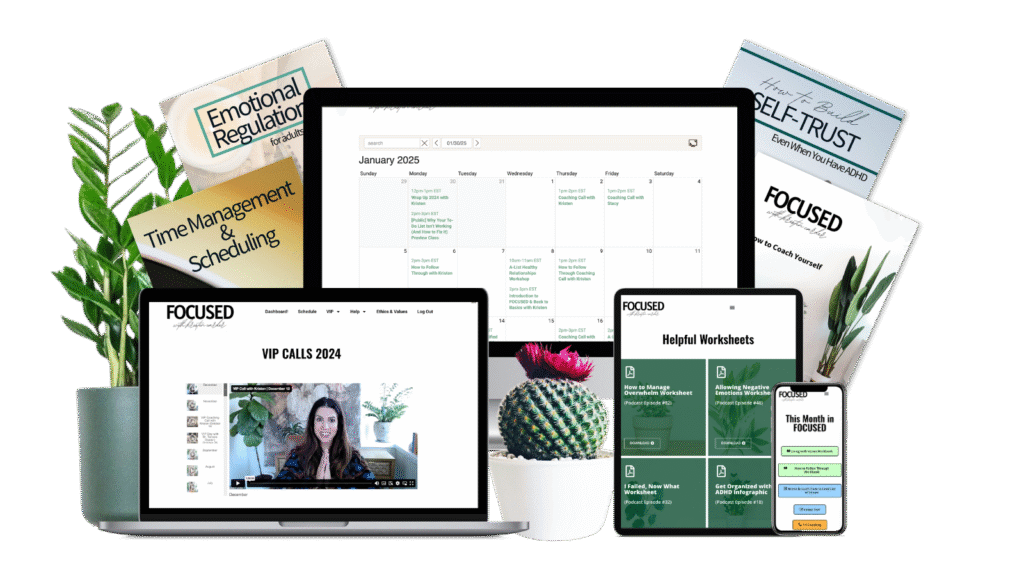


This episode is sponsored by Cure Hydration. All right, I’m going to be real with you. Drinking water is boring. My ADHD brain is like, wait, we have to do this again? Like every day, multiple times. What in the world? And because I’m running from meetings to coaching calls to kid chaos, staying hydrated is not something I’m naturally good at. It’s not something I naturally think about. That’s why I’ve been obsessed with Cure hydration packs lately. Cure is a plant based hydrating electrolyte mix with no added sugar, only 25 calories, and it actually tastes good. The watermelon and berry pomegranate have been on repeat for me. I’m actually like really running low on those flavors, which is so sad. They’re refreshing without being too sweet or artificial. It feels like my water finally has a little bit of personality, which I enjoy. I really do. What I love most is that CURE uses a science backed formula that hydrates as effectively as an IV drip. So when I’m scrambling through my day forgetting my water again, Cure helps me to catch up fast. I throw a few packs in my bag and it makes drinking enough water simple. Which for my ADHD brain is basically a miracle. So staying hydrated isn’t just about water. You also need electrolytes. And that’s why I love Cure. It’s clean, tastes great, and it actually works. And bonus, CURE is FSA HSA approved so you can use those funds to stay hydrated. The smart way for I have ADHD podcast listeners. You can get 20% off your first order@curehydration.com ihaveadhd with the code ihaveadhd and if you get a post purchase survey make sure to tell them that you heard about Cure right here on the podcast. It really does help to support the show. Don’t just drink more water, upgrade it with Cure. Vrbo Last minute deals make chasing fresh mountain powder incredibly easy. With thousands of homes close to the slopes, you can easily get epic Pow Freshies, first tracks and more. No need for months of planning. In fact, you can’t even plan Pow Pow is on its own schedule. Thankfully somewhere in the world it’s always snowing. All you have to do is use the last minute filter on the app to book a last minute deal on a sloped side private rental home. Book now@vervo.com. Welcome to the I have ADHD podcast where it’s all about education, encouragement and coaching for adults with adhd. I’m your host Kristen Carter and I have adhd. Let’s chat about the frustrations, humor and challenges of adulting relationships, working and achieving with this neurodevelopmental disorder. I’ll help you understand your unique brain, unlock your potential, and move from point A to point B. Hey, what’s up? This is Kristen Carter and you’re listening to the I have ADHD podcast, episode number 110. I am medicated, I am caffeinated and I am ready to roll. Today’s episode is an awesome conversation that I have with my client Tasha. I adore Tasha, you guys. She’s been in focus since its inception. She’s made radical changes in her life since joining. She now teaches yoga online and I’m in her membership. I actually practiced yoga with her last night. I just love it so much. I know you’re going to get so much value out of the next hour as we chat about major career changes, the importance of movement for ad, how yoga can change your life, and all the other ADHD stuff. But before we get started, I have a couple of very quick questions for you. I am curious. Do you procrastinate to avoid starting something that’s difficult or unclear? I’m curious. Do you make a to do list that no human could really ever accomplish and then beat yourself up for not accomplishing everything on your to do list? Do you quit when things don’t go well or before you even get started? Do you beat yourself up for like normal human mistakes? Do you find yourself editing or polishing something for far too long, really? A lot of times like past its due date and you spend so long trying to make it great but then it’s overdue and there’s consequences for that? Do you spiral in shame and self loathing when things go wrong? Do you find yourself staying small and not taking risks and not growing into your full potential in order to avoid potential failure? If so, you’re probably a perfectionist. My dudes, you’ve got to grab my free course on perfectionism. It’s a four part video training on how to untangle yourself from the clutches of this debilitating ADHD distortion which research shows affects pretty much all of us. Perfectionism can be crippling if you don’t know how to recognize it and overcome it. I’m telling you, this course is life changing. Go to ihaveadhd.com perfect. It’s free. Go grab it. Go grab it. Like right now. Multitask. Head over iofadhd.com perfect. Grab the course while you’re listening to this I will send you one email every day with the classes. You’re going to love them. Okay? All right. I hope you do. I hope you love it. I hope it changes your life forever. All right, now here is my conversation with my dear client, Tasha. Tasha, thank you for being here. I am so glad to have you here with me. I’m so excited to be here. Good. That’s great. So you are on the podcast today for so many reasons, and I want to start out by saying that you are Tasha of ADHD Yoga and you are on Instagram, your website, all of the things. I am in your yoga membership. I love doing yoga with you. Yogi extraordinaire for the messy people. So tell me just a tiny bit about how a yoga instructor can have ADHD and be, like, crazy messy and still a badass yoga teacher. Honestly, I feel like there was probably a disproportionate amount of ADHD yoga teachers, like, 100%. I really think so. I think a lot of people in fitness and in movement in general are probably a lot of ADHD years because it’s just such good. It’s just such good treatment for adhd, even if you don’t really realize you have it. And that was kind of like a realization that I had after I was diagnosed. It suddenly made so much sense why yoga, out of all the things that I have started and quit in my life, was still one of the things that was sticking around for, like, it’s been a part of my life for, like, 16 or 17 years now. I haven’t stuck with anything for that long. I started yoga as, like, a way to cope with my stress in the second year of my undergrad. And it wasn’t even my idea. It was my dad’s idea because I really thought it was super fluffy and ridiculous, like, because I didn’t understand it that well. Right. So I thought the idea of, like, mindfulness and, you know, self awareness was, like, very, like, fluffy, and I was, like, very sciency person, and that seemed really fluffy to me. Starting yoga was, like, the first time I ever purposefully prioritized time for myself, ever. Wow. Yeah. And that alone made a big difference. And this is prior to your diagnosis? Way before. Way before. Yeah. So I was only diagnosed about four years ago. So four years ago I was 31. So I was, like, done all of my school. I was well into my career as a speech therapist. That’s what I was doing, like, prior to teaching yoga online. Well into all of that stuff and doing yoga the whole way along so like, yoga was there from the very beginning of all of that. So second year of my undergrad, so then I did, after my undergrad I did two years of a diploma in applied linguistics and then I did a two year master’s and then I was doing seven years of speech therapy as a clinician. And yoga was like the consistent piece throughout the whole thing. And of course, because I have adhd, like I did it irregularly, like there’d be times where I did it like every day super intensely. And I would do like those 40 day yoga challenges and stuff. And there was no way, like anything would make me not accomplish that. Right. Because it was super motivating to do something like challenging and novel and competitive to me. Uh, so. But I found like, you know, like as I feel like a lot of ADHD years, like we think of doing something every day consistently sounds like an impossibility. And it sounds like, well, we’d have to give up so much other stuff in our life to make room for it. But when I reflected back on that time in my life when I was doing like those 40 day challenges, that’s when I was actually the healthiest. Not just in terms of like my physical body, but like emotionally balanced. That’s when I was the most on top of my work at school. School. That’s when I got, you know, I went to bed at a more decent time, got up at a more regular time because I had to and had like the structure forced into my life. And then it was like physical activity, it was mental activity. And. And so it was really interesting to notice that pattern between like, how my mood and my organization and my, I don’t know, my just general messiness and distress and anxiety would like elevate in the times of my life when I was not going to yog Yoga. What is it about yoga that calms everything down? What do you, what are your thoughts on that? Well, it’s being. It’s turning away from like the future and the past and like coming into the present moment, like having something like very physical, like helping you get out of your head. Because I think, like, I know, I do, personally, I think a lot of ADHDers just get really stuck in our head. Like we just spin and spin and spin on, you know, stuff that’s coming up that we’re putting off on things in the past that we messed up that people are mad at us for and, you know, things that we’re worrying about things all the time. Like there were just all the stories we repeat to Ourselves, I think we get stuck in our head a lot. And going to yoga was an opportunity for me to just kind of like, you know, like, feel the muscles contracting in my back and downward dog and, you know, like, paying attention to my breath for the first time, like all day and just sitting still a little bit, not having to feel like I had to do anything else because they already decided ahead of time that this hour was what, this is what I was spending my hour doing. That decision was made. We’re here. Then just stay here. And that was a. That was a big change because if I was at home trying to relax, I’d be on my couch stressing about the million things I should be doing instead. You know, even if I was trying to relax, even if I was just like, tasha, you need to just chill. I would have a book in my lap and I’d be like, you shouldn’t be doing this. You should be doing the dishes that you put off all week. Shouldn’t be doing this. You should do your laundry. You shouldn’t do this. You should call your mom. Shouldn’t do this. You should go do the homework for the paper that you have due on next Thursday. You know, like, there was just. There was no escaping all of those thoughts and all of that worry, like, in my own home. And it felt like going to yoga felt like a break. And it started to mean more and more to me the more I did it and the more I understood it. At first, it was really just about exercise. And I actually did my master’s in speech therapy on mindfulness and stuttering. Wow. I didn’t know that. Yeah, I did my graduating research project on mindfulness and stuttering, and I did not choose the topic. Like, when my supervisor told me that’s what we were doing, I’m like, this is so dumb. Like, this is the most west coast frickin like, thesis I’ve ever heard of. Because I was in Vancouver, it’s like the yoga capital of Canada. And I thought that that topic was really stupid. I thought it was so fluffy because I knew nothing about it. Even though I had been in yoga, like when I first started yoga, like I said, it was just about exercise initially. And. But even so, because of the nature of yoga, like, I still benefited from all of those things. From, like, making my own time, turning my attention to my breath, all of that, all that stuff was still beneficial. Even if my internally, like, my stories about it were negative, I still benefited. So then when I had to do that research topic and I was actually Reading papers and research on mindfulness. And I come from like my bachelor, I did a bachelor of science in psychology and neuroscience. So like I’m very into the brain and changes in the brain. And I very briefly did like a PhD in neuroscience like for like three months. And then I like quit and then I’m like, academia is not my thing. Holy crap, run. But I was like, yeah, but that was, that was my interest. So then when I was reading on mindfulness and saw like, wow, it changes the way the brain works. Like when you do it consistently and even if you don’t do it consistently, like there are small, little, tiny little changes and chemical balances and stuff like that. Just like from like sitting and doing it one time. Like there are benefits either way. The benefits last longer the more you do it more consistently you do it. But doing it once every once in a while, still beneficial. So seeing that like made me kind of buy into more of the other aspects of yoga because beforehand like I would pretty much just sit on the floor and roll my eyes until the teacher was done talking at the beginning and be like, oh my God, could you get onto the exercise? Like Jesus. Oh that’s amazing. Yeah. So my thesis was how I got into really believing in that aspect of it and start like I stopped rolling my eyes at it so much, paid more attention to more of the other practices that come with yoga because it, the actual physical practices that we know about it here in the west are just a teeny tiny, tiny, tiny, tiny piece of yoga altogether. And my understanding of it is just like barely scratches the surface. It’s really a whole lifestyle. So I try to respect that as much as I can. So then when I got diagnosed with adhd, I was doing research on, on ADHD and like medicinal and non medicinal ways to manage it because like you can’t just do one thing with ADHD and be fixed. It’s like it’s a million different things. It affects a million different parts of our life and it changes depending on, you know, for women with our hormones, with different stages of our life, with different expectations on our time, you know, as you know it just changes all the time. Plus we get bored so things that used to work don’t work anymore and blah blah, blah. So as I was like learning strategies on how to manage adhd, like mindfulness came up a lot, exercise came up a lot, breathing came up a lot. And like in yoga, that’s pranayam, like those are breathing techniques and breathing exercises, that’s a whole other piece of the branches of yoga. And I just kind of saw all of these parallels over and over again about, like, ways to manage ADHD that align with the different branches in yoga. So I started paying more attention to those. And then I decided to do my yoga teacher training, which was, like, mind blowing. Holy crap. I got so much more out of my yoga teacher training than I ever could have thought, because I thought it was really just going to be about how to cue people into poses and stuff like that. But I had, like, an amazing teacher in Vancouver. My training was like, Friday night, all day Saturday, and all day Sunday. And then I was also working full time, so I was, like, tired. But I, like, described it. The process of my yoga teacher training is like, Friday I’d be there and I’d be super excited. Saturday, it would crack me open and it would make me face parts of myself that I didn’t want to look at and didn’t want to acknowledge existed. And then Sunday, I taped all those broken pieces together and tried to be a human the rest of the week. And, like, that’s just how it felt like every week. And it felt like the process became more refined as I came, became closer to graduation. Like, you know, like, it wasn’t when I cracked open on Saturday, like, it was shocking, but it’s like, okay, like, these are things I need to face and I’ll be better for it kind of thing. And then when I put myself back together, like, the cracks were like, you know, you couldn’t notice them as much. And, you know, it just felt like a more refining kind of exercise. So my yoga teacher training was really great. What you’re describing to me really reminds me of coaching. Yeah, totally. 100%. Yeah. Can you draw some connections there for us? Because the idea of being cracked open and facing things that you maybe don’t want to face and then kind of putting the pieces back together in a way that makes sense for you. Like, that, I feel like, is the coaching process. And you’ve been in focus since day one. So, like, what are your thoughts about that? Relating. Yeah, like, you’re. You’re totally right because, like, the. I think about those two parts of my life in parallel a lot because, like, my yoga teacher training was a big turning point. And then also, like, deciding to get more help from my ADHD than I could help myself with was also a really big turning point. And it was the same kind of process. Like, it was like understanding that I would have to see myself the way I really am and not all of it would Be pretty. And not all of it would be fun, but if I faced it and accepted would. I’d be better off for it. And I would be like a. I would be more true to myself. I would be a more authentic self. And overall, like, I can be a healthier person. I can be a more helpful person. I can be a kinder person. I can be more of the things that I want to be and all of the things that I feel are deep down in there were all covered up by other garbage I wasn’t willing to face first. You know, did knowing how to drop into your body because of all of your yoga experience and practice, did that actually help you with your emotions and your, like, the experience of recognizing the parts of you that you maybe don’t. You’re not proud of or you don’t love? Like, I think for a lot of us, we are so inexperienced in feeling the things that our body is doing, and I feel like you’ve got a leg up on that because you’ve spent so much time inside of your body, if that makes. Of course, we’re all inside of our body. But what I am saying. I know what you’re saying. And you know what? I’m not. I think about this a lot because I’m not sure. You know what? It probably put me at an advantage for who I am. If I had not spent, like, those 15 years in yoga before coaching, I would have had a lot further to go then. I had to go when I first started because I feel like in practice, there are some things I am good at, but there is still a whole lot of stories that really got in the way from me, like, really getting into my body or, you know, knowing the difference between, like, my thoughts and actual truth. So I feel like when I started coaching, I knew about a lot of the concepts you were talking about, like, in theory, so at least they weren’t foreign. But I think I spent a lot of time telling myself I was doing them, and then not really because I was still afraid. Fascinating. Yeah. And I feel like that still kind of happens. But, you know, that’s. I’m just being really honest. But I feel like. Because I spent a whole lot of time as a kid being told I was too dramatic, being told I was too sensitive, being told that I was very selfish because I, you know, I was late for stuff a lot. So, like, I feel like those stories about myself are, like, so deeply ingrained and, like, made up such an identity that I learned that I can’t trust my feelings. Like, that was basically the story. My. My feelings are lies and I cannot trust them. Like, that was actually a really and still is a very challenging piece to me as like the feelings and the emotions. And I’m also just like this kind of person that just. I get worried that if I give myself time to feel my feelings, that I’ll just waste time in general because I need to get done, you know, and so I kind of just push through. And like, I just, I just push through. I’m just like, I don’t have time to deal with this right now. I need to get X, Y and Z done. And then what would happen, of course, is that eventually that would catch up. Like, it doesn’t go anywhere if I don’t deal with it. It just builds up. Right. And that’s what was happening with me at work when I was a speech therapist is like everything was building up. Like all of my insecurity, all of the stuff, all my doubt, all of my overwhelm was building up because I never gave myself time to feel it. I just ignored it and got on with my day. And then over time, it was really wearing me down. So I think yoga gave me an advantage in that I knew what all that stuff was in theory. And then like my yoga teacher training gave me extra understanding of that because like in a yoga class you get such a teeny tiny piece of like what yoga is. And it also depends on the teachers. Some people are just fitness focused because I am the way I am. Those are also the teachers I was attracted to. So I had a very superficial understanding of yoga as a whole before my actual training. Like, I was blown away with my training because I thought after, you know, like 15 years of doing yoga, I understood it, you know, like didn’t at all. I was still at an advantage for myself and my own way of thinking. I got there at my own level, at my own pace, and I’m still getting there. And that’s like all we need. Right. Like, I wouldn’t have been ready years ago for any of that other stuff. Totally. I love it. So I want to hear about. You talked about how you were ignoring your feelings and self doubt was building up and just like overwhelm and really probably because I’ve heard your story before, like overworking and just really struggling in your job. Yeah. At what point did the discomfort get so strong that you were willing to trust yourself to stop that job? Oh, man. Yeah, there was. What point was it? I think it was God. So I worked at this particular job and Like I said, it was a great job. It was a good fit for me in terms of like an ADHDer who did not understand her brain, who did not have good enough supports. It was the best place I could have ended up. And then unfortunately, because I’m such a perfectionist and I don’t like to let people know when I’m struggling, I’m also not good at hiding when I’m struggling. You know, people caught on when I was not doing well and it was just getting to a point where I really couldn’t hide it anymore. And you know, like I’d be at like, I’d be working from like 8:30 to 7:30 at night, trying to keep up on my paperwork and still not keeping up to date on my paperwork, trying, still having trouble keeping up with emails, still having trouble keeping up with follow up appointments and, and all this. And I did home visits and a lot of my clients were like up to an hour away. So that was a lot of driving as well, which is again a good part for adhd because I would have gone freaking nuts in an office all freaking day. Yes, that was good. But I wasn’t good at like strategically planning my day around my travel so that, you know, everyone was clustered in the same area. Like I schedule people like an hour and a half away from each other and it was not a good way to structure my day. So I had my diagnosis. I was going to like this CBT group and listening to a bunch of podcasts and I was starting to read. I think it was my second book. I think it was driven to distraction. And there was like this quote in the book from Hallowell and I think he said that the two most important things are most therapeutic things for ADHDers are a good partner and a good job. And I was like, that really stuck with me because I chose my career in a very random way. It wasn’t like it was a passion my whole life. Shocker. Yeah, right. Like it was super. It wasn’t my lifelong dream. It had a lot of the pieces that I knew were a good fit for me. You know, like I like working with people. I like helping others. I love. Like I worked with a lot of people who had like deteriorating brain conditions. So like I got to use all of that, all of that knowledge and I liked that. And I’m, I have very good interpersonal skills and the. I had to work with people in very vulnerable situations and I feel like I made them very comfortable and like I knew I had a lot of a Lot of the good things. It was a good fit. It wasn’t a great fit. Yeah. And so what was happening is like I was, you know, having nightmares about like clients I was having trouble helping or help having trouble figuring out. And just like could not, could not sleep. I could not sleep. I’d like had like low grade nausea all the time. And my brain was always thinking, like, if I just get education in this area, if I just read a book on this thing, if I just do a workshop on this, if I just get certified in this, then I’ll get better. Yes. And then at one, like, I always had to do something and that never made me feel better. I had trouble following through on those things. Plus it was a frigging long list. I still had a fricking full time job to do. Right. Like, it was just basically, it’s like if I was a different person, this wouldn’t be so hard. It was basically what I was saying. And then one day, because I had that quote stuck in my head, I’m like, maybe I just don’t do this anymore. Like, maybe this isn’t my fit. And that was the first time I had like a thought and a solution that felt good in my body. Like it didn’t create tension in my throat and my chest. I wasn’t nauseous when I thought that. Like, it felt like relief. And that was a very different feeling for someone who has been conditioned not to trust her body and not to trust her feelings. What was the process like for you to really move toward that feeling of relief and not dismiss it as, as you’ve been conditioned to dismiss what with that? I think what happened in that situation is then I realized, I thought back on any of every other time in my life where I had had the same, that same feeling and look back on it and realize, like, this is a feeling I can trust. Like, this is something I’ve. Whenever I felt this and followed through with this, it turned out well because the same thing happened. Like, I’m Canadian. I was born in Ontario. I moved to Vancouver for grad school to do a PhD in neuroscience. And I very quickly realized that was not a good fit for me. But once I was there, everyone’s just like, well, you just moved across the country. Like, you know, your boyfriend came with you, like, you can’t stop now. And like there was all this kind of pressure, but that it was like the day before my midterm, my neuroscience midterm, and I was just like, I don’t want to live like this like. Like, the other thing, too is like, I was kind of realizing, like, not only do I, like, I there, I’m very interested in neuroscience. Brain is an awesome thing. There are other ways to work with the brain or understand the brain than being, you know, a professor. Yeah. And I was in my. In the lab, and I was the youngest one there by, like, 10 years. And I saw, like, the postdocs with their kids sleeping under their desks. I’m like, this is not the life I want. I don’t want this. And. And I. And I quit. Like, I became an unclassified student. I was still there at the school, and I quit. And a lot of people were like, you know, like, it was the bravest thing I ever did. Honestly, it was like. Because I could have been there for, like, a PhD. It’s like, that’s like five to ten years of school. That is not a short chunk of time. And it was, like, one of the bravest things I ever did. Yeah. I had picked up my whole life and moved across the country, and I quit, like, a pretty prestigious, like, program at a. With a very prestigious professor. And it was the total right thing for me to do. And that felt. When I did that, like, that was again, like, a time where I felt like, that. That relief and that freedom. And I could just, like, enjoy being in Vancouver for a while because, like, I just moved there and then just, like, launched into this program that was, like, felt very, very wrong. And. And I never looked back on that decision and thought it was a mistake, you know? And so when I decided that speech therapy might not be the thing I meant to do, even though I’d already spent, like, seven years doing it and so much money, like, in school, I knew that I’ve had that feeling before, and I never regretted that choice so I could do it again. So what you’re telling me is that there is bravery in quitting? Yeah, totally. And. Yeah. And I think there’s so much shame surrounded around quitting that you, like, failed and you couldn’t cut it and you weren’t good enough. And all those other stories that come with quitting, sometimes it’s the best choice you can make. If it’s not a good fit, it’s not a good fit. It is not wrong to know that about yourself. That is so beautiful. And so the authority that you developed by listening to your body in the PhD program when you were like, this is not for me. And I know that regardless of what anybody else around me is saying, regardless of, like, what I’ve done to alter my life to get to this point. Like, I know that this is not the future I want. And so quitting, leaning into that feeling of relief and that internal knowing of, like, this is the right thing, regardless of consequences that for sure will happen. Right. Like, you’re going to leave without a PhD. So, like, that’s a consequence. Right. And that’s fine. And then again, that internal knowing, that internal authority that you tapped into when you decided that speech pathology was not for you as well, how did you then use that knowing instead of to quit something to start something? Because then you started yoga, Yoga teacher training, you know, teaching yoga in studio and then even starting an online business. So was it a similar experience of just kind of following your body basically, like, where your body felt comfortable? What was that like? Yeah, that was like, that was. It was a guiding point for a lot of it. I think the thing that could be very misleading with that is any big change also comes with, like, negative emotions. So having to tell the difference between, you know, when that means it’s the wrong direction and when it’s just a part of making big shifts. Yeah. Like, helping to distinguish between the two. That’s been a process. The transition from, like, quitting my PhD and starting the master’s in speech therapy was a lot shorter than the transition of being a speech therapist to a yoga teacher. Because at that point, like, I had more responsibilities. Right. That was like, years later, you know, I was making a pretty good income. I was paying rent at that point. Before I was a student, I was living in residence. I had, like, scholarship, blah, blah. You know, like, I had, like, other ways of, you know, feeding myself. Surviving. Surviving. Yeah. So I had to be a little bit more strategic about it. And. And I didn’t really have, like, the full picture. Like, when I was like, speech therapy isn’t for me, I did not have a clear picture and still don’t really of what was for me. I knew, like, the pieces. I knew that I loved yoga. I knew that now that I knew I was understanding ADHD and as understanding myself, that I wanted and that I knew that, you know, my interpersonal skills and my clinical skills were still good. That was like, you know, being a speech therapist. It was not a waste of time. It just helped me understand what pieces of it really did fit and what pieces of it really didn’t. And so beautiful. Yeah, like, it’s. It’s nice to think back on it because I think sometimes, too. Again, another thing that comes with quitting is we Think what a waste. What a waste that was. This is so many years. Could have done something else, blah, blah, blah. No, I couldn’t have. I wouldn’t have gotten diagnosed if I hadn’t been a speech therapist. I just. I wouldn’t have. I wouldn’t have gotten to a point where I had to break to figure out how to fix myself. Oh, it’s so beautiful. Thanks. So, like, it was all really important, and I learned, really, I still learned very valuable things about, like, me as a clinician and interacting with people, what I do really well. Because there’s a lot of stuff I do do well. Yeah, for sure. Imagine that. I’m good at stuff. Oh, my God, That is so amazing. So you were just saying how, you know, you learn so much about yourself, about your adhd, about how your brain works. How do you incorporate that into your yoga practice and into, like, what you do with your membership? Yeah. So, like, now. So again, like I said, I don’t have a complete picture yet. I did do the shift from being a speech therapist to a yoga teacher, and that took, you know, years because I had to, like, do the training and still work. And then my husband and I moved here across the country, and we decided, because I was so burnt out, that we would use the move as an opportunity for me to actually start teaching. So I’d done my training but not taught. Yeah, I was working full time. So now incorporating, like, my knowledge of ADHD with yoga, a lot of that was, like, understanding again how yoga had helped me, even though I wasn’t aware of it. The whole time, I was struggling with my lack of a diagnosis, you know, like, making sense of myself. Like, using. Not even making sense of myself, but just, like, being able to manage my mind a little bit better by, like, doing something that got me back into the present moment. Like, understanding also from my research on with my masters, like, understanding mindfulness, that mindfulness does not have to be about sitting still. It’s not actually about sitting still and clearing your head. It’s not at all. It’s about taking objective observation and knowing what’s going on in there or just turning back to the present moment and your senses or moving. Because I used to also, as a kid, I used to horseback ride, and that was. That was my yoga at the time. Like, I would go and ride my horse, and it was just me and him for, like, that hour, and I was just with him. I wasn’t worrying about school. I wasn’t worrying about that embarrassing moment in the past. Like, that’s still mindfulness. Mindfulness does not have to be sitting on a cushion under a tree clearing your head. Yeah. Because I’m so glad you’re saying this because mindfulness has never appealed to me for that very reason. Like, I just can’t get on board with like clearing my head or sitting still. And especially you want me to put those two together. Like, that’s not going to happen. No, thank you. Yeah, it, it’s a practice and I had to do it little bits at a time and sometimes I do hate it. And you know, that’s actually a whole normal part of mindfulness. Like, it’s not always. It’s not about being calm all the time. It’s not about. It’s. You don’t. If you’re feeling stressed or if you’re feeling bored or, or if you’re feeling frustrated, that doesn’t mean you’re doing it wrong. It just means you’re sitting there with those feelings. And what I was doing before is ignoring those feelings. Yeah, I think that can be really almost alarming because a lot of us spend so much energy trying not to feel totally 100% so like we want to scroll and watch TV and eat and drink at the same time while we’re talking to like, I. It’s almost like we want to keep the machine going and going and going with no, you know, and then just like crash to sleep so that there’s not even a chance for a thought or a feeling. And I think that like the, the mindfulness piece of yoga can be a little bit intimidating because we almost have to allow for that pause and allow for like what is actually happening. And I think coaching is very similar. I love the similarities. Right. It’s like, oh, you, you want me to like actually download my thoughts and observe them and like see what’s in this crazy mess of a head like that Judge them and not judge them. Like, not make it mean anything about you. Like, just because the thought is there doesn’t mean it means anything about you. That’s like such a big part of mindfulness is like the non judgment and we spend so much automatic thought and in judgment, like we don’t even realize it. And again, again, that’s like that lack of mindfulness. We’re not mindful of how much we are judging ourselves all the time. I want to know how you incorporate like ADHD kind of like messiness into your yoga membership. Understanding myself and understanding, like also recognizing that like, just because we have the same diagnosis doesn’t mean we’re the same people, like people are still individuals. But understanding that I could benefit from yoga and still do it inconsistently, benefit from mindfulness and still do it inconsistently, deciding ahead of time that it’s going to benefit me no matter what. And as long as I don’t make drama and cause create shame out of all of those things, I’ll still keep coming back. The shame is what always kept me from doing things as regularly as I wanted to. Because as soon as I, you know, didn’t make it to a class or didn’t practice mindfulness in a day, like my thoughts are like, look at you. Look at how you’re failing at even helping yourself. Like, how are you going to get better at anything if you keep showing up like this? Now I’m just like, well, I’m just gonna, because I’m just going to show up tomorrow. So it’s not a big deal. So I try to encourage, like, I try to create an environment where like that, that kind of showing up like that is totally, totally welcome. Like I my classes in because they’re all zoom because of COVID So people are still allowed to come even if they show late. Like the camera is off, the microphone’s off, you can come late, you can leave early, you can show up for half the class. Like I have one client who shows up and will eat pizza for like the first 15 minutes and then join and like I’m just so thrilled they came because that meant the difference between not showing up at all and like probably having a shame spiral. And a lot of self talk about telling them how incapable they are of like showing up for themselves and reaching these goals for themselves. That meant that they overcame that and showed up anyway and decided ahead of time that that’s enough. That showing up a little bit instead of perfectly like we always want to is still beneficial. Yeah. So I encourage people to come to class for as long as makes sense for them. And I also, and I’m also creating, I also recognize, you know, because it’s all, it’s all online. Right. So they have an account and they have to remember passwords and they have to remember like logins. So now in when people sign up for memberships, I send them the links to everything ahead of time so they can bypass logging in. Like I send them the links to the calendar so they can set their reminders for the classes because they’re all over the world, different time zones and all that kind of stuff. And we’re just forgetful. We have adhd. So, so like sending like, giving them as much support in as many areas that I understand we have trouble with and just having no shame around that, you know, still allowing yourselves to show up however you’re gonna and giving them whatever supports that, you know, that I know consist pretty consistently work for ADHD years. Yeah. I also theme my classes around a lot of, like, common ADHD struggles. Like, I try to integrate a lot of yoga teaching, but related to us in terms of, like, you know, understanding, like, our ego, like that. That was like, I think a thing that a parallel with coaching and yoga is like, in yoga, we have our two different selves that we have, and one is capitalized. And in my yoga teacher training, we called it our big S self. That is like our true self, our authentic self. That is the person we are created to be and represent and show up as consistently in the world. But because of our interactions in the world and the stories we tell ourselves and the people we interact with and the things that we believe, we have an identity or an ego instead. And that’s our little S self, and that is the person that we believe we are. And, like, that was the person. And so, like, our job as humans. And it’s like. And then yoga is to, like, pull back all the layers of like and. And distinguishing between, like, the stories we told ourselves and the experiences that we have and, like, getting more in touch with the person we’re meant to be and the person we’re created to be. Yeah. So I try to, like, incorporate teachings like that into. Into my classes, little bits at a time, and try to make it as digestible and relatable as possible, because I don’t want people sitting in my class rolling their eyes like I did all the time. And I realized it’ll still probably happen. But I think the thing is, like, the more you’re exposed and as long as there’s, like, nuggets of relatability in there, like, people take away from it whatever they’re ready to take away from it. And in yoga, that’s called adikara. It’s like a studentship. Your brain takes in what it’s ready to take in. Oh, I love that. I want to say something about shame and about how that has impacted my yoga practice. Yoga is something that I’ve been doing on and off since my early 20s. So, like, maybe 15 years, but, like, very, very, very inconsistently. And in the winter of 2020, so, like, right before COVID happened, I joined a yoga studio, and I really enjoyed going. I bought it, like, a 10 pass. Like, little card thingy. And I probably went fairly consistently, like six times. And I really, like, I was seeing progress and I was really, really enjoying it. But I, you know, was. I don’t manage my time perfectly. And there was one time where it was like, I really had to coach myself to even get out the door and go. It’s like wintertime is freezing. And I, like, I got there. Like, I, like, I did it. I left. And I knew I was late. I was like rushing to get there. And I finally, like, arrived. I was maybe like a minute or two late. And the door was locked. I think I remember you sharing this. Yeah, I remember this. Yep, the door was locked. And it was so fascinating as I look back, because I did did experience a wave of shame. There are 15 cars in the parking lot. Fifteen people had no trouble getting here on time. Kristen, you’re the one that’s late. And the doors locked. Like, it was. It was dual experience of shame and also rejection. Like, we don’t want you here. If you are going to show up late, you are not welcome. And I never went back. That makes a lot of sense to me. You know, I never went back. And I actually, now that you bring it up, because you said you think you remember the story. Like, I think that I shared this story with you, but prior to sharing the story with you, I think I remember telling you, like, hey, I’ve been secretly doing yoga. And like, when I get to X amount of sessions, like, I can’t wait to share it on the podcast. Like, guess what, guys? Like, I’ve been. I’ve been doing this thing and. And I never went back. Now, luckily, Covid happened. I mean, not luckily, guys, sorry, I take it back. I take that back 100%. But literally, like, just weeks later, you know, Covid happened. But so I didn’t have to wrestle with, like, am I going to go back or not. Like, it wasn’t an option. Right. But it was a good several weeks where Covid wasn’t happening, where I did have the option to go back. And I was just like, I can’t alter. So part of it was like this shame and the rejection that those. That was real. But then also, I cannot interrupt my day and alter my life to go to this thing where, like, if I. If I show up imperfectly, I don’t get to participate. Yeah, like, that was such an interruption in my day. And now I’m, like, going to drive back home and you know how hard it is to, like, start. Get your brain started again on work. Or whatever it is. So what I love about your membership is I show up late all the time, almost every time. And it’s not a big deal. I have to leave early to, like, pick up my kids. It’s not a big deal. I’m not disrupting anybody. There are times when, like, life is happening and it doesn’t matter because I’m. My videos off, my. My mic is on mute. And, like, if a kid interrupts, it’s not. It’s fine. And, like, there have been times when at, like, 6:55, I’m like, oh, my gosh, I’m not dressed. Should I go? I shouldn’t even bother. And then I’m like, no, I’ll just go and I’ll show up, like, in my work clothes. Yeah. And then be like, okay, while you’re doing the intro, like, I’m gonna go change and I’ll be back. And it’s. It doesn’t matter. Like, that. The freedom to show up imperfectly has allowed me to be persistent with it. And so, like, what you’re doing is really important. Thank you. Thanks. You’re welcome. Thanks. It means a lot. Yeah. Like. Yeah, like, it was really important to me because, you know, when I first started teaching yoga, I had a lot of insecurity about not really fitting into the, like, the image of a yoga teacher. I really didn’t meet, like, this image of what a yoga teacher is. But at the same time, I also knew that I benefited from it so much and that it made such a difference and that, you know, and it also made me realize, like, there are other people out there, like, who are like, me. Feel like they don’t fit. Know that they could benefit from it, but are too intimidated to come because they don’t think they can do it as consistently as they want or they won’t be able to be there on time, or they don’t have, you know, the right clothes or whatever. You know, like, whatever stories we tell ourselves. Totally, totally. It’s a thing. And. Or the right equipment. So. And that’s the other thing is, like, in my classes, like, I don’t teach with yoga props. I teach with stuff I have in my house. I know. I love that. I love it. Do you do that on purpose? Oh, yeah, totally. I apologize. Model here. Oh, you have all the stuff. Oh, yeah. But you just choose not to use it. Yeah. So that you can model. Oh, my goodness. I love it. Yeah. Because you use books for blocks and a belt for a strap and. Yeah, I love it. Yeah. Cause I don’t want people to feel like if they don’t have all the gear, all the right stuff, or if they don’t, you know, I don’t want them to feel like it’s not for them, it’s for them. I don’t care who you are, it’s for you, you know? And like, I, that’s what, that’s how I want people to feel. And because that was also another thing as a clinician that I learned that I’m good at. I’m. I’m good at making people feel comfortable. Yes. So I need to use that power, my big s self. That’s what I was supposed to do. I’m here to make people feel good about themselves in one way or another. So like that’s, that’s my job. So I want to tie this back around to the work that you’re doing through focus in your self concept. How are you making yourself feel comfortable? Yeah, I am making myself feel comfortable by trying to give myself as much encouragement as I give other people by actually acknowledging the things that I’m good at. I have like a cousin and I had like a really, really rough couple months, really. And I was talking to her and I was having like this full out tantrum. And she, she’s like, tasha, you don’t need to be like this. You’re like the most optimistic person I know. And it’s funny because, like, as a kid growing up, everyone has told me I’m such a pessimist. Like, so I laughed at her and I was like, no one has ever called me an optimist before. And she’s like, tasha, you’re the biggest optimist for other people. You just need to apply it for yourself. And I was like, oh, that’s so right. Like, I’m like, I am a big cheerleader for other people. And I, I love pointing out to other people what they’re good at and I love pointing out to people the things that I think that they’re capable of doing. And I like. Like what? Like, I, I just love supporting people. It’s. And I’m, I’m good at it and I need to do thing the same thing for myself. Part of that is being very honest about, you know, things that I’m bad at. I’m super good at acknowledging that because I spent so many years beating myself up about all the crap I can’t do. Right. But it distracted from all the things that I’m good at. And then when you do that, you distract yourself from like what you’re meant to be doing with your life and you get stuck and you get paralyzed and you always feel like you’re not reaching your potential. You know, you literally feel small. Yes. And you feel just like, just so small. And so in my self concept work, like, really understand, it was like allowing myself to like give myself a pat on the back. Like allowing myself to be honest about things I’m good at and not feel like I’m being conceited or shallow. Just honest. Like these are things. Like, could you imagine if like a whole world spent all of its time just focusing? Every individual just focused on what they’re crappy at? The whole world would lack so much good. Yeah. If we just didn’t acknowledge what we’re good at and go do it. Yes. Because nobody benefits from that. Like, I wouldn’t benefit from not doing the things I’m good at. Like, you wouldn’t be my coach because you would be doing something else because you didn’t acknowledge that you’re good at coaching. You know, like, it’s important to be okay with acknowledging your skills and knowledge, acknowledging your gifts, and not making that mean anything about you as like a shallow, conceited individual. Right. That’s been a big piece. And like self acceptance has been like, I keep saying, like, like acceptance is my superpower. Because again, like anytime I’ve acknowledged that a situation has been difficult, usually because I’m resisting accepting something about it. Yeah. About like the situation or myself, you know, Accepting the things I’m bad at has also been a super powerful thing because when I was first diagnosed with adhd, I gave myself a really hard time when it wasn’t like, better overnight, you know, Like, I’d still be late for stuff and I’d be like, why am I late for stuff? Like, I know that I’m time blind, so I should just stop being time blind now. You know, if only it were that simple. Right? I know, but I thought that because I understood it. I just. All I have to do is do the opposite of all the things that my ADHD is, but doesn’t work like that, you know, Like, I can’t just. I’m not just neurotypical because I know that my brain works different than a neurotypical person. Like, just because I know about it now doesn’t mean it’s any easier now. I just know I have to go about it differently. Yes. There’s nothing wrong with having to use timers to get out of the house on time. Something wrong with that in seeing you grow and Step into who you are, who you decide you are. Like establishing your authority, creating this business that is reflective of you and that works for, for you. Right. And then it also works for other people too, but. But first it had to work for you. And I just love that like you created something that worked for you and then invited people to join in. And I just think that’s so beautiful. Thank you. And it wasn’t like that right away, like when I first started. So like, I got into teaching online because obviously Covid, I was literally the day before everything shut down here in Ontario, I was talking to one of the studios I taught yoga in because there were a wellness center. So they had massage therapists and counselors and chiropractors and stuff there. And we were talking about a contract for me working there as a part time speech therapist. The day before everything shut down forever. Yeah. So we were talking about that. They were like, okay, well we’ll talk about, like, we’ll talk about this together and we’ll contact you tomorrow. And then everything shut down and then never opened again. And that studio is gone now forever. Like that location is gone. Like they lost everything because of COVID I started teaching online originally just out of necessity, needed to do something. And because I had just moved to this area, like I had no connections in like public health for speech therapy. I had, I did none of my education here. I did none of my any work here. We had just moved to this area. So I, like, I had no starting point really. And again, like, I was not excited about speech therapy. I was only talking about that contract because Daniel and I need money. And that was it. Right? It was like, I’ll, you know, like I’ll, I’ll do it. I have to. And it wasn’t. But I was not excited about it. Had a lot of anxiety about it. But I’m like, okay, like if this is temporary, we’ll just, it’ll be temporary and it’s okay. Like it’s just for now. Yeah. So then when I started decided to like teach online, I didn’t know how to do that. Like, I didn’t know, you know, like, whom. Who I was for. I didn’t know how, how to do anything. Like, you know, like, and for somebody who sees herself as like a non techie, like technologically illiterate person, to have a business that was all online was horrifying, scary. But I was like, whatever. It’s like all my only option right now. Didn’t know what I was doing. I didn’t know who I was for. So I was trying to be for everybody. And that did not work out because, like, I was being so vague about everything. I was, like, trying to be. So I was trying to. People, please. Because I wasn’t even for, like, ADHD years. Like, it wasn’t even about, like, fascinating yoga for adhd. It was just like, I’m a yoga teacher. Come do yoga with me. That was. And I happen to have adhd. Like, they were like, very separate things. I remembered. Like, this isn’t why I got into it. Like, I literally started my yoga teacher training because I knew it would be good for people with adhd. So why am I not leaning into this? Like, love. Yeah. And like, some people in the chat during my coaching, because I was like, I don’t know, like, you know, I’m not, I’m not like, the expert on yoga and like, I’ve only been teaching for a short time and blah, blah, blah. And a lot of the people on, in the chat were like, tasha, like, I know you think that Instagram is saturated with yoga teachers, but you’re literally the only yoga teacher I follow. I remember this. That is funny because I usually don’t look at the chat, but I remember people being like, I don’t follow any. I don’t follow any. I don’t. Yeah, yeah. But I guess it’s, it’s funny because, like, you know, we create our own reality. Right? And like, I, I, I’m interested in yoga, so I follow lots of yoga accounts. So to me, when I look at my feed, it’s full of yoga, So I assume everybody’s account is full of yoga. Right. And that’s not true. And also just like deciding like, you know, I don’t need to show up in any particular way, I need to show up as myself. And that’s. And then the people who are interested in working with someone like me are my people. What if, what would happen if we all just applied that to our, to our lives, whether we’re in business or not. But it was just, what if we had just applied that? Like, I’m going to show up as me. Yeah. And if that’s something that resonates with you, amazing. And if it’s not, that’s okay. You’re not my person. Imagine it takes so much pressure off and like, I, I can’t tell if I’m just been isolated for a really, really long time and I just don’t see enough people anymore, but I really do feel like I’m like that in life. A Lot more than I’ve ever been. And because it’s just, like. It’s just. It’s so less. So much less exhausting to just be yourself instead of being, like, who you think people want you to be. Yeah. Because everybody wants a little something different from you. So then you have to have all of these different versions of yourself. And I think that that could be the same in business, too. Like, you have all of these clients that come to you with all of these different expectations, desires, needs. And then as the business owner, you get to just show up and be like, here’s who I am. Here’s what I do. Here’s, like, how it’s gonna play out. And if that resonates with you, if that meets your needs, and, like, you are happy with that, amazing. Like, there’s a value exchange then. Or, like a want match. And if not, like, that’s okay. There is another yoga teacher out there for you, and there are more clients out there for me. I think, like, both of those need to be at the forefront, you know, as business owners. Like, there are other coaches. Like, if I don’t resonate with someone, there are other coaches out there for them, but also there are other clients out there for me who are just, like, dying to work with somebody like me. Yeah. Yeah. And I think that a lot. And, like, sometimes I have to remind myself of that, too. Like, I won’t be for everybody, but that’s okay. Because I don’t want to try and change who I am to. To make someone happy. And there are other teachers out there who will be a better fit for them. Yeah. Just like, you know, there are other careers out there that are a better fit for me. There were, like, other partners out there that were a better fit for me. You know, like, that was just, like, not everybody fits everything perfectly. That’s not the way we’re built. Like, we’re just supposed to be who we are. And then we find the people we match with and the. And the things that we match with, and that’s it. And that’s why it’s so important to know who you are. Like, to actually, like, understand yourself as authentically and being honest in terms of your weaknesses and your strengths. Because if you’re not honest with yourself about those things, you’re not going to find your match in anything because you have no idea what you’re trying to match with. And it’s really important. But it’s also an ongoing process, as we have agreed. Yeah. Like, it’s not easy. It’s not comfortable. And it’s not overnight, it’s forever. What’s so fascinating, though, is that, like you say, it’s not comfortable and in the moment it’s not. But when you have it established and you are reflecting your true self to the world and like, and participating with people who, like, enjoy that. Right. Like, I feel so comfortable. Yeah. In so many areas of my life. Not every area. And there are, like, there’s growth that’s happening in some areas, in transition, all of that. But in the areas where I feel like I really have established who I am, I’ve never been more comfortable. Yeah. Starting to think of myself as an entrepreneur and having to learn how to, like, use social media as a way to find my people. In the process, I had a whole lot of drama about, like, how I appeared on my social media and stuff like that. And the more drama had, it was more because I was like, more worried about how people would perceive me and how people would interpret this. And now, now, really all I ask myself is like, is it authentic? Yeah. Right. Then what do I care? Somebody attacks me on it, I can defend it. Like, it’s true for me. You can’t change what’s true for me. Yeah. You know, like, we might not agree and that’s fine. We don’t have to. We’re individuals. But this is true for me. So there’s nothing you can change about this. I adore, I love it. I could talk to you for hours, but I’m going to wrap it up here. How can people find you if they want to get in touch with you, if they want to check out your membership or just say, hi, drop into your DMs. Where can people find you? Sure, you can find my membership and my classes and all of that stuff on my website, ADHD Yoga. So if you want to join me for classes or join my email list, find it all there. And if you want to just, I don’t know, follow an ADHDer and her ADHD life and yoga and everything like that. I share a lot of information and stuff I’m learning there in terms of yoga and ADHD and strategy. So on Instagram is ADHD Yoga perfect. Love it. Thank you for being here. Thank you for showing up authentically and really taking us along the journey because I think that’s really valuable for everyone to see. The journey is what matters so much. Thanks. Thanks for having me. It was really, really fun. Hey, adhder, I see you. I know exactly what it’s like to feel lost, confused, frustrated and like no out there really understands the way that your brain works. That’s why I created Focused. Focused is my monthly coaching program where I lead you through a step by step process of understanding yourself, feeling better, and creating the life that you know you’re meant for. You’ll study, be coached, grow, and make amazing changes alongside of other educated professional adults with ADHD from all over the world. Visit ihaveadhd.com focused to learn more.