

Podcast Episode #116: When you question your diagnosis

Listen or Watch this episode on:

About This Episode

Today’s episode is for those of you who question your diagnosis. My client, Emma Strong shares her journey of getting diagnosed and then questioning whether or not she “deserved” support…this is deep work! I know you are going to be so encouraged by this conversation. 

Visit [www.ihaveadhd.com](https://ihaveadhd.com) for more resources

Hang out with me on Instagram [here](http://www.instagram.com/i.have.adhd.podcast)!

See Privacy Policy at [https://art19.com/privacy](https://art19.com/privacy) and California Privacy Notice at [https://art19.com/privacy#do-not-sell-my-info](https://art19.com/privacy#do-not-sell-my-info).

Episode Transcript

This episode is sponsored by Cure Hydration. You know that moment for me, it’s around like 2 or 3pm when my ADHD brain just decides we’re done for the day. We’re done here. The afternoon slump hits, the lights go off upstairs and suddenly answering an email or doing basically anything feels like climbing a mountain. That’s when I reach for Cure Energy. It’s a clean plant based energy drink mix made with 100 milligrams of natural caffeine and electrolytes so I get the focus and hydration boost I need without jitters, without a crash and without that like I drink battery acid. Vi vibe that some of the energy drinks have. The peach tea and akai berry flavors are my current go to’s crisp, refreshing. And they don’t taste fake, y’. All. They don’t taste fake. I’ll drink one before recording a session or when I need to get help through like that afternoon drag. And honestly I. I drink it anytime. My brain just needs to cooperate. What’s wild is that Cure Energy is only 25 calories and has zero added sugar. It actually helps me stay hydrated while giving me energy. Okay, I love coffee, but coffee could never Staying hydrated isn’t just about water. You also need electrolytes. And that’s why I love Cure. It’s clean, it tastes great and it actually works. And remember, Cure is FSA HSA approved which is amazing. You can use that money to pay for CURE and for I have ADHD listeners, you can get 20% off your first order@cure hydration.com I have ADHD with the code I have ADHD. And if you do get a post purchase survey, make sure to tell them that you heard about Cure right here on the podcast. It really helps to support the show. Don’t just drink more, upgrade it with Cure. Shopify’s point of Sale system helps you sell at every stage of your business. Need a fast and secure way to take payments in person? We’ve got you covered. How about card readers you can rely on anywhere you sell? Thanks. Have a good one. Yep, that too. Want one place to manage all your online and in person sales? That’s kind of our thing wherever you sell. Businesses that grow grow with Shopify. Sign up for your $1 a month trial@shopify.com listen shopify.com listen. Welcome to the I have ADHD podcast where it’s all about education, encouragement and coaching for adults with adhd. I’m your host Kristin Carter and I have adhd. Let’s chat about the frustrations, humor, and challenges of adulting relationships, working and achieving with this neurodevelopmental disorder. I’ll help you understand your unique brain, unlock your potential, and move from point A to point B. Hey, what’s up? This is Kristen Carter, and you’re listening to The I have ADHD podcast, episode number 116. I am medicated, I am caffeinated, and I am ready to roll. It is so good to be here with you today on this gorgeous, July, hot, sunny, muggy, beautiful day. I’m actually totally exhausted because I’ve been teaching the inconsistent entrepreneur course all week long. And even though, I mean, it’s been fun, been having a great time, did a lot of prep work with my team in advance. Like my typical ADHD self, I didn’t account for how depleting teaching all week would be. Like, I just didn’t even think about it. I. That the thought did not even cross my mind that it would deplete my energy, which is adorable. It’s adorable, right? And, like, we leave for Indiana tomorrow to visit family, and so we’re like, just. It’s just been a week, you know, so last night I ate some jalapeno poppers in bed at 11pm I may have also been drinking a beer as well. A beautiful local microbrewery ipa. So delicious. Sierra Nevada ipa. Oh, my gosh, so good. But anyway, I’m tired, people. I’m tired. Sometimes you just have to drink beer and eat jalapeno poppers in bed at night and, like, not make it a problem. It’s not a problem. It’s not a problem. It’s just where we’re at right now Anyway, should we move on? Okay, let’s move on. Today’s episode is for those of you who question your diagnosis. Maybe you’re really successful and smart and so you’ve been told by other people, like, there’s no way that you could have ADHD because of how far you’ve come in life. Or maybe you’ve been diagnosed by, like, three different professionals and yet you still struggle to validate the diagnosis and really own that diagnosis for yourself. Wherever you fall on that spectrum, this episode is really going to speak to you. And I do want to take a second and say something here if you’ve been wanting to join my ADHD coaching program focused, but you’re holding back because you’re not sure you have ADHD or you do have a diagnosis, but, like, you don’t struggle as much as other people do or whatever. I want you to know that we’re going to welcome you warmly regardless. There are people in our group without a diagnosis or questioning their diagnosis or still investigating their diagnosis. And wherever you are, you’re one of us. So you don’t have to, like, show your ADHD badge or credentials at the door in order to be warmly welcomed and become a valuable member of our community. I just, I really want everyone to know that today’s episode is just a really beautiful conversation that I have with my client, Emma. Emma’s been in focus for about a year now. And I remember especially, especially in the first few months, she was coached several times in the Slack community and on at least one coaching call about whether or not she deserved to be in our group because she is higher functioning and she doesn’t struggle necessarily with some of the things that the rest of us do. And it took a lot of inner work for her to really validate her own diagnosis. And now she’s here to encourage and to inspire you. I love having people on the podcast come and talk about different facets, different aspects of ADHD that I just, they don’t relate to me. Right. Like, I just don’t struggle with this. And what is so good about this is that someone who’s actually been through it, who’s, who understands, she’s going to be the one encouraging you. You’re going to get so much out of this conversation. I cannot wait for you to hear it. Enjoy. Hi, Emma, thank you for being here with me. How are you? I’m great. How are you? I’m so triggered right now. Real talk. I’m so triggered because the Internet was out at my office and. And nobody told me and it made it so I had to come home and record and I just was late and all the things. So you’re getting, you’re getting the real talk. Yes, I love it. Oh, my goodness. Tell us a little bit about yourself, who you are, where you are in the world, what you do. Like, tell me all about Emma. Yeah, so I’m emma. I am 29 years old, almost 30, which I’m very excited for because I’ve heard that the 30s are better than the 20s. 100%, yes. I think, especially for ADHD years. Yeah, I’m very excited. I live in Oakland, California, but I’m originally from Seattle and I. What I do, I just changed careers kind of. So I used to work as an academic advisor for, like, college students at a university, and now I work in learning and development, working with staff training and development programs for a Company. So. And that’s a very exciting thing that you’ve changed careers, just briefly, it’s not the point of the episode, but, like, give people a window into how difficult that was and, like, what went into that. Yeah, so I was job searching for over a year. My original goal was to leave my former job before last summer, as you may remember from a coaching call. And then that’s happening in advance of this summer, which I’m very grateful for, because summer in my old job is like the worst around admin tasks, which you can imagine is great for me. Oh, my gosh. So, yeah, it was definitely hard. I had two different job search coaches at different points in time. Yeah, it was a long process, but I’m very happy that it worked out so good. So good. I remember coaching you on leaving your job, the job search, applying for jobs that you weren’t sure you were qualified for. And that kind of is a perfect segue into our conversation today because in my opinion, you would downplay your strengths and you would downplay your capabilities and how much you would be able to do and how well you would be able to perform at the job. And that’s kind of going to be a common theme in this episode, is this episode is for the down players, the people who like to, or maybe not like to, but just naturally downplay their strengths, but also their weaknesses and their need to reach out for help. So tell me a little bit about, I don’t know, downplaying as it relates to you in your life. Like, where do you see that quality in your life? Yeah, so definitely around my strengths, like you mentioned. That was. That became abundantly clear during my job search. That definitely downplay my strengths, but also around my mental health. So I have, at different points in time, been diagnosed with depression, anxiety, and adhd. And then there’s a little bit of a question mark whether the depression and anxiety might actually be bipolar, but that’s like, a little unclear. So it’s a little murky right now, but definitely different diagnoses at different points in time. And along the way from that journey, I’ve downplayed my symptoms, but also I’ve experienced, like medical professionals downplaying my symptoms at the same time, which just reinforces it, which makes it really challenging. So both of those things have happened in the past, for sure. Tell me a little bit about your mental health journey. When did you receive. When did you start to reach out for help and when did you receive your diagnoses? Yeah, so I’ll actually start a little Bit even before that with the fact that throughout my late teens and early 20s, every, like, six months to a year, I was googling, what are the symptoms of depression? Because I just felt like something was off. But every time I would do that, I would come up with the symptoms for, like, major depressive disorder. Which one of the symptoms for that that is key, is that, like, quote unquote, like, nothing makes you happy. Which has never been the case for me. There’s always been, like, at least one thing in my life that could, like, pull me out of it temporarily for, like, a short period of time. Um, and so I didn’t meet that definition. And so that I like, well, I guess it must just be me. I must just be, like, worse at life than other people because things are, like, harder for me. And it wasn’t until I saw an article, I think, on Facebook that somebody posted where someone was talking about what they were calling, like, high functioning depression, which I’m pretty sure is not an actual medical diagnosis. I think it was just somebody’s framing of this concept. But basically, people who are really good at hiding their depression from other people and are able to function in their lives, but still have depression going on, and it still is, like a diagnosable condition that they’re dealing with. And that was like a like, mind blown moment for me. And then I started searching all things related to that. And that was when I, like, first sort of sought out treatment for mental health in general. Yeah. And I can’t actually remember when that was. It was definitely maybe. Maybe like four years ago or so. I would say like mid-20s. Yeah. Then from there, depression and anxiety oftentimes go hand in hand. And so I think the anxiety diagnosis just kind of came along for the ride with that one. Awesome. Like a bonus diagnosis. Yeah, bonus. Like, surprise. And then the ADHD diagnosis was interesting because at the time I was really struggling keeping my home space in order. That was, like, the main way that my ADHD was presenting was in, like, a very, very, very messy home environment that was, like, very out of control. And I was working with a therapist, and she knew that I was really struggling with that. And we kept trying all these different things and it just wasn’t helping. And then there was one day when she just called me out of the blue, which she never did that. And she was like, I was just thinking about another one of my patients who has adhd. And then I was thinking about you, and like, I wonder if that’s a thing. And she was not an ADHD specialist by any means. But she just like had this moment, I guess, where she was kind of connecting some dots and thought about that for me and she was like, would you be open to exploring that? And my exact words, I was very surprised. But what I said to her was, I work with students. At the time, I worked with college students all the time and a lot of them were starting college and sometimes were getting diagnosed with different, like learning differences and getting accommodations at school for it. And so I was always encouraging other people to seek out help and support for things. And I was like, well, I’d be pretty hypocritical if I didn’t at least consider this as a possibility. So I guess I’m going to look into this now. Wow, I love that like you almost didn’t have a choice, like morally within yourself, like you had to go for it. Exactly. And then so the journey to get the ADHD diagnosis sort of took some twists and turns because the first doctor that I saw basically said to me that because I didn’t struggle in school, I couldn’t have adhd. Can you stop there for a second? So like, tell me more like what was your school journey like and what was it like hearing that from him? So start out by telling us like, what does it mean that you didn’t struggle in school? Yeah, I mean I always like got good grades in school. I always got good report cards. Like even when I was younger, I’m very much a rule follower. It’s like deeply part of my personality to be a rule follower. And so I think because school, school has a lot of rules, I just like stuck within those guidelines and didn’t like step out of that. And so I was never labeled as like, you know, a kid that was like causing problems or being disruptive or anything like that because that was against the rules. And so, yeah. And then even in college, like in college I would definitely procrastinate my work and, and do a lot of things at the very, very, very last minute. But I basically discovered that I was able to do that and still do really well on my assignments because I think I now recognize that as like moments of hyper focus of like just having the deadline like right there and being like, okay, I get a sending to write this eight page paper now. Yeah, you know, the morning before it’s doom. Get it? But you had the mental capacity like you had the intelligence to make that happen. Like you were able to just then sit down, stay up all night. Like the behind the scenes was a little treacherous, but you were still able to make it happen and get good grades. Right? Exactly. And I always felt like a little bit of, like, a fraud, especially in college, because I wasn’t reading all my readings and I wasn’t putting in as much, like, effort, it seems like, as other people were to get the good grades. So that was something that I wasn’t sure really how to process at the time. But, yeah, I now kind of recognize those as, like, undiagnosed ADHD characteristics. Definitely. And do you also give yourself credit for your intelligence? Like, I’m actually not a fraud. I’m actually just brilliant, and I don’t need as much time as everybody else. Yeah, here we go with the downplaying again. I thought so. We’ll work on it. We’ll keep working on it. Yeah, yeah. It’s an ongoing process. So. Okay, so you go to see your first doctor who is assessing you for adhd, and they say you did so well in school. There’s no way that you can have ADHD or something along that line. I just want to stop here and say that I’ve heard from a lot of people who have gotten that response from some sort of, like, psychiatrist or psychologist who just does not have a full picture of ADHD because it is so tied, like, you can see in what they said to you that it’s still so tied to the stigma of, like, probably a little white boy struggling in school, like, bouncing off the walls. And, like, if that. If you don’t fit that picture, then clearly you don’t fit. Fit the descriptor for adhd. But. And I’ve heard from people whose doctors have said, like, you’re a lawyer. There’s no way, like, there’s no way you would have been able to go to law school. Or, you know, you’re. You’re an electrician, and an electrician would never be, like, if you had adhd, you’d never be able to, like, understand everything that you’re doing. But, like, really, it has nothing to do with your position or your intelligence or anything like that. And there’s just still so much that we have to learn and so much education that needs to be done in the mental health professional field so that they’re not excluding people who, like, we’re able to keep it together in school. Like, school was actually the perfect framework for you because you needed that structure and you needed those rules. And having that deadline, albeit, like, last minute, it still worked out in your favor. It’s just really frustrating that people are still being told, like, no, you’re too smart. You couldn’t have adhd. As if intelligence and ADHD were connected. Yeah. What was your response like, emotionally, mentally, like, how did you process that initial doctor’s appointment? Yeah, well, emotionally, I probably cried because I cried everything. I can confirm that. Yeah, that was probably my emotional response. But I already knew that that was incorrect because of the research I had done prior to going into the appointment. Say that again. I already knew that that was incorrect because I had done research prior to my appointment. So, like, a layperson, just like a normal human being, can go on the Googles or read a book and know more about ADHD than the person who was offering you the assessment. That’s really important to note. Yeah. Yeah. And pretty early on, I don’t know how I got onto this, but pretty early on in my research, I started searching specifically for women and adhd, which also led me in that direction of knowing that that was incorrect, because as we know, ADHD can present really differently in girls and women than it does in boys and men. And then I’m sure there’s a spectrum in between. Yeah, yeah. But just in general, that can happen. And so I already knew that was incorrect. Then I went to. I called a different ADHD assessment place, and they told me that because I was diagnosed with depression, we had to treat the depression first before they would evaluate me for adhd because they thought that my, like, disorganization and lack of focus and stuff could be symptoms of depression. Wow. Which it could be. Right. But, like, also. But I was like, I feel like the causal relationship is going the other direction. Yes. You know, and. Or at the very least, it’s all mixed together. It’s not like I can just, like, treat one in isolation. And that’s not really how mental health works, in my experience, is that you just treat one condition in isolation and then be like, okay, moving on. Now we’ll go to the next one. We’ve checked that off our list, and you don’t struggle with it anymore. So let’s move on to the next. Done. Now, adhd, like, did not make sense to me. So that was my second attempt. Yeah. And then. So I was very fortunate that in addition to my medical insurance, my employer was providing me with mental health insurance through, like, a different network. And there’s a lot of reasons for that, but at first, I kind of, like, almost gave up because I was not having success through my medical system. And then I was like, wait, I have this other coverage. Let me see what’s up with those providers. So then I looked for somebody who specifically focused on ADHD and found a psychiatrist who worked for, like, a private practice who had in her bio that she was interested in ADHD. And possibly it might have even said ADHD in adults specifically. Nice, nice. I don’t remember 100%, but I got the impression that she worked with ADHD in adults. And she diagnosed me in, like, the first appointment. Shut up. Yeah. So what was that like? So I basically just went into her office, she just asked me a bunch of questions and was like, yeah, you meet the criteria. It’s not that hard. It’s pretty simple. And then I’ve gone back to her. Speaking of the downplaying, I’ve gone back to her, like, a couple of times over the course of my time working with her and been like, are you, like, sure I meet the criteria? Like, can we just. Can you just confirm for me again? And she’s like, yeah, no, you do. Like, this is the real thing. Like, okay, cool. Just checking. Okay, so this is perfect. So tell me more about that. So you have this ADHD diagnosis, one of the first things I remember coaching you on. And you’ve been in focus for a long time. How long have you been in focus? Quite a while. Literally since the week that quarantine started, which I’ll tell you why later if you’re interested. Absolutely. That is so funny. I think I have coached you and I’ve heard Jessica also coach you on this. That almost every time we’ve had a conversation, you bring up, like, I’m not really sure if I belong here. Not really sure. Like, not really convinced. Because, like, I am pretty high functioning. I am like, yes, I have adhd, but. And then you have, like, this list. Like, but list. Yeah. Tell me what’s on your butt list. I just made that up, but I think it’s pretty catchy. I have adhd, but, like, tell me the ways that your brain offers downplaying in the area of adhd. Yeah. Hearing other people talk about the symptoms that they experience and then kind of comparing that to my experience is where that list comes from. Like, I don’t really struggle with hyperactivity too much. And I know that’s part of, like, what a combined diagnosis is, is that that’s not as prevalent, but, like, some of the kind of, like, agitation or, like, feeling really unsettled all the time. Like, I don’t necessarily, necessarily identify with that particularly except in maybe certain situations. I don’t struggle with making, like, forming relationships with people. I struggle with maintaining relationships. A little bit, because I just forget to call people and text back. Totally. So it’s kind of, like, a little bit mixed, but I guess, like, overall, I would say that. And this is probably me downplaying again, but my impression of other people is that they’re struggling more maybe, than I am. And so maybe I don’t deserve, like, a place. Not that I’m, like, taking a spot away from somebody, because it’s not like there’s a cap on how many people can be in focus. Right. But maybe I don’t deserve to be taking up, like, the coaching time or the space in the conversation, because I might not be struggling as profoundly as somebody else. As if only the people who are struggling the most deserve to get help. Right. And so when you coached me on this in particular, you gave the example of, like, would you wear corrective lenses if you had a mild glasses prescription? And I literally have a mild glasses prescription, and I’m wearing glasses as we speak, and I wear glasses or contact every day. And, like, I technically could get through my day without them. Like, I’m not going to run into things when I’m walking around. But, like, is that worth it? Would it be so much harder to just do my day, particularly my work? Like, absolutely. So that analogy plays in my head, like, all the time now. I am so glad. I’m so glad because it’s true, like, for those of you who downplay your symptoms or your diagnoses, like, there are so many people that don’t reach out for help, whether it’s, you know, like, coaching, but also even just medication. Like, I don’t really need to take this medication because my symptoms aren’t that bad, or I know this other person who. Who struggles so much more than I do. And so, like, as if, like you said, as if taking the medication somehow negates that other person’s help. It doesn’t. Right. Or as if, like, investing in yourself for support negates someone else being able to receive that support. It’s like, everyone deserves support, no matter what area of the spectrum you fall on. And I think that that is so important because I know that there’s a bunch of you listening who are also downplaying, whether it’s depression or ADHD or anxiety. Like, yeah, I mean, it’s hard for me, but I’m fine. Or, but I don’t need, you know, I don’t need to make a big deal about it. Emma, what would you say to someone who’s kind of like a natural down player? I would say, say. I would reiterate part of what you just said, which is that everyone deserves support regardless of the severity of their conditions. Yeah. And also that you don’t have to go through life with struggling to whatever degree it is that you’re struggling with these things. Like, there is a possibility to go through life with support. That makes things better and that makes your life better. And even if it’s a subtle change, that still is, like, totally worth it. Yeah. It would be like. And let’s go back to that corrective lenses analogy. Like, my son, we had his eyes examined, and the doctor was like, you know, it’s just in this one eye, and it’s very, very mild. And I wasn’t like, well, forget it then. I’m not paying $200 for glasses if it’s just in the one eye and it’s really mild. Right, right. And she wasn’t like, I mean, you don’t need to spend the money on this. Like, it’s not worth it. It’s just super mild. She was like, you know, it’s very mild. It’s in this one eye. But obviously we want to correct it. And really, it’s just leveling the playing field. Yeah, it doesn’t give him a superpower. It doesn’t make his eyesight any better than anyone else’s. It just brings him up to be baseline. It just brings him up to, what is it, 2020, right? Yeah, like, it just brings him up to the starting point. And I think we have this idea that, like, if I take medication for depression, for example, and you can let me know what you think about this, because I’ve never been medicated for depression, but I think there’s maybe this erroneous line of thinking where it’s like, if I take this, they’re my quote unquote, happy pills, and I’m going to be happier than everyone else, and that’s going to give me, like, this unfair edge, as if you get this superpower. But it’s like, I mean, this is my. This is my line of thinking. So tell me what you think. In my way of thinking, it’s like, no, it’s just leveling the playing field. It’s just bringing you up to, like, baseline. Like, what do you think about that? Yeah, no, I totally agree. I think it’s definitely leveling the playing field. And I think with ADHD medications, it’s tough. Like, I’m not on a stimulant medication for adhd. I’m on a different type of medication, but I think it’s tough because there is this, like, lay people’s understanding of what those medications are and do for people who are not diagnosed with adhd, because people who are not prescribed them sometimes take them. Right. You know, which is problematic. It’s a whole other episode. Totally. But, like, I think people have that in their mind of, like, well, if I took this medication, it would do this for me. So, like, that would give me an unfair. Right. Maybe. But for someone else, it is just leveling the playing field. So I think it’s hard to, like, for people to understand if they haven’t been there, what that experience is like. The other thing I was thinking of as you were talking was, I’m pretty sure. I’m pretty sure this is true about eyesight, that if you don’t correct it, it can get worse over time. Yes. And I think that’s the same with ADHD symptoms, the same with mental health. If it’s not properly treated over time, it can get worse. So even if at the beginning it was manageable, like, it might become unmanageable, which is what actually happened to me with my depression at a certain point in time, it became not well managed because I was downplaying it so much to myself and to other people. Can you tell us a little bit about that? Yeah. So it was like. This was like the end of 2019, early 2020. Well, it started at the end of 2019, and it was really the. My. My home space being disorganized was like, the outward expression of what was going on internally. Can I just stop you? This is pre. Are these pre diagnosis? Is this pre diagnosis? I had all my diagnoses at this point, working with my provider. I was working with my psychiatrist who had diagnosed me with ADHD at this point. Okay. But I was really struggling with my depression and, like, struggling to get up in the morning, struggling to get to work on time, struggling to be at work. But I wasn’t really sharing that necessarily with my providers, and I wasn’t purposefully trying to hide it. I just was like, well, I’m late sometimes, but it’s not that big of a deal. Or like, you know, downplaying. Downplaying again. And the one person who knew what was really going on was my boyfriend. And he was really concerned, but I didn’t even really know how concerned he was about me at the time. And what finally happened was my psychiatrist, the one who diagnosed me with adhd. I mentioned to her at one point, I did tell her that I was, like, missing work as a result of this. And she asked me, like, how frequently and things. And that was pretty much the sign that she needed to say, like, we need to do more. And she referred me to this program, which was an intensive outpatient mental health care program, which I love telling people about this because I had no idea that this existed. All I was aware of prior to this was that there was, like, fully outpatient therapy where you talk to somebody once a week for an hour, or there was, like, a psychiatric hospital. Like, those are the only two things that I knew existed. I didn’t know. There was this third option where I was going in. At first, I was going in five days a week for almost an entire day, and then it switched to three days a week. And so that was throughout the end of 2019 and early 2020. I was doing that program. I wasn’t working. I was, like, fully immersed in this treatment program, and it was the most helpful thing I’ve ever done for my mental health. Wow. So can you tell us a little bit about it? So how many hours a day were you there and did you have to take off of work? Obviously. Right. So what was that? Like, I took leave from work, Medical leave. Luckily, my employer at the time, I was working for a university, so we had really good benefits and coverage for stuff like that. And so I took leave from work. I was there from, like, at first, from, like, 9:00am until 3:00pm Five days a week, I think. Wow. And then it switched at a certain point to, like, 9:00am to 1:00pm, three days a week, I think. And it was all, like, pretty much mostly group therapy and group activities, which was actually really amazing to be in a group with other people who were struggling with similar things. Yeah. And like, no one ever asked you, like, how. How are you, like, in this program? Because it was like, we’re all here, so you didn’t have to lie about that, which was really nice. I’m great. Thanks. Yeah. I’m just like, I’m just taking off work and in this program, like, for no reason whatever. So just little things like that were really nice, and all the providers were, for the most part, really great. I saw a psychiatrist through the program while I was in it who switched up some of my medications. Yeah. It was just really great. So what happened was I was winding down that program and kind of transitioning slowly out of it and transitioning slowly back to work right when the pandemic hit. Oh, wow. And so I actually cut my last couple of days off because the program was in A hospital. Like, that’s where we were meeting. And so I was like, it doesn’t really make sense for me to be going to a hospital right now. That doesn’t seem smart, especially if I don’t have to be going in and out of it. Like, I don’t want to do that for other people’s safety, whatever. So I actually cut my end of the program off a little bit short and joined Focus, like the next day because I was like, I’m losing this support that I’ve had. I want to like add in something additional to kind of help Bridge this time. Yeah. And then I just stayed because Focus is awesome. But that was my reasoning for joining in the first place, was because I was transitioning out of that program and like transitioning back into work and wanted like a little bit of additional support during that time. And what was that transition like for you? Like, when you joined Focus, did you. Did it meet your expectations support wise? Because I’m sure going from like at that time, it was probably three days a week, nine to one. Right. So. But still like an immersive program into something that’s all online and just a very different setup. Like, were you able to get what you needed? Question mark. And then also. And how. I mean, I think in combination with other circumstances that yes, it met my needs. I was doing a lot better by the time I was leaving the program than when I had started. So that’s the first thing is that I had made like a lot of improvements during that time and like my house is actually clean and you know, like there were different things that were going a lot better. And what I. What really appealed to me about Focus and still appeals to me about focus is the group aspect. Because even though you can’t see the other people in the group when you’re on like a coaching call. Yeah. You know, the other people are there and they’re there in the chat. And so that kind of kept. That was the sort of similar thread I feel I was doing before. And Focus was the group aspect. You know, I’m kind of inconsistent in the Slack community. I don’t always. I’m not always in there, but I know that it’s there if I ever like want to go to it. Yeah. And so just knowing that and knowing that I had something additionally with the coaching calls that I could get, like another outside perspective, another approach to what I was dealing with was really helpful. It’s so funny because there are some people who are like, like have heard feedback that’s like Man, I, I wish that you were doing one on one coaching. Like, I don’t really want to do a group and I’m always like, why? Like, it’s so fun to be in a group. Group. Like, it is so fun. I, Even as the leader, I feel so much camaraderie and so much validation being surrounded. Like showing up to a call and knowing there are 50 other humans with ADHD, like functioning adults with ADHD on this call, like, hanging out with me, that feels the best ever. I just love the camaraderie in that. And then finding your place in the group, I think has been a thing for you, as we’ve discussed. Right. Like, not downplaying. I’m interested to hear where you are now as far as the downplay soundtrack. In your mind, are you able to recognize it for what it is? Like, oh, you’re just downplaying this or do you still kind of fall into that? I’m talking just kind of like, generally with your mental health, I think, I think I’m more aware of my tendency to downplay, which I feel like is the first step to doing something about it is just being aware of it. Yeah. I said this before we started recording, but like during that time in 2019 when I was really struggling, like, I was hiding it from other people, but I was also hiding it from myself. Yes. Tell us all the things about that. So not only do you downplay to the outside world, but your brain is so experienced in this downplaying scenario that you also downplay things to yourself. Tell us what that’s like. You know, right now my kitchen is a big mess and I’m like, oh, that’s just me being messy. It’s not a symptom or whatever. I think a lot of it is, like, taking it as like a personal responsibility. Yeah. Not recognizing it as like, no, that’s related to this aspect of your mental health. And like, there’s a logical explanation for this and like, this is the reason why this is happening. So it’s taking the personal responsibility and then thinking like, well, if I was just like, better at stuff, then I would be able to do this and it wouldn’t be a problem. So I just need to be better at stuff and which. What does that mean? What does that even mean? If I was just better at life, if I was just better at organization. Yeah. And I think I know a lot of my listeners do that. Like, if I was just like, sure, I have adhd, but if I was just better with my time, then it wouldn’t be an issue. But, like, no, no. Like, the fact that you’re not good with your time is literally connected to your mental health issues. So it’s not even like, oh, if I was just better at this, then it would be fine. It’s like, no, the reason why you are continuously not getting better at it is because of your ADHD or. And for you, it’s like, because it’s like, adhd. Or maybe it’s depression or maybe it’s anxiety or a combination of all of it. Like, who really knows and who really cares? Yeah, that’s the other thing, too, that I’ve kind of come to is like, yes, I care about the specific diagnoses because each one has its own implications of, like, what treatment and medication and different, like, therapy is going to be effective for it. Like, that definitely makes sense. But I’m actually in a place now where I’ve found a treatment plan that is actually working pretty well for me. And so I care less now about, like, trying to parse out, like, what depression, what’s adhd? Is this actually bipolar and not depression and anxiety altogether, like, that whole deal? I’m a little less concerned with that now and more concerned with, like, what’s working, what’s helping. Let’s just, like, keep doing that and not be too tied up in specific diagnoses, which I think is also me, in a way, accepting these diagnoses at the same time and, like, owning it a little bit more of, like, yep, these are things. But, like, we’re just going to continue on with this treatment plan, and when it needs to be adjusted, it’ll be adjusted. So that’s kind of where I’m at with it now. I love that. That to me, your energy feels very authoritative there. Do you feel, like, a lot of ownership over these diagnoses now? Like, you don’t seem to be questioning, you don’t seem to be downplaying. You just seem to be. Be very matter of fact and, like, stepping into authority of, like, I’m someone who struggles with mental health. Here’s my treatment plan. Here’s what I do. It’s not really a problem. Yeah, I think I definitely have moments of that. And then I also have moments where I go back to my old tendencies of, like, downplaying or discounting or taking too much personal responsibility for things. Yeah. When it really should be, the responsibility should be assigned to the condition. So I think I go back and forth, but I’m definitely, like, in this moment talking to you and at different points in time, I am feeling more kind of authoritative over it. I think you make a really good point that it’s not like we are in authority 100% of the time, but do we have a. Do we have. Do we know how to access our authority? Right. So, like, naturally we slip into our old tendencies, but do we know how to, like, coach ourselves out of that? Back into, like, oh, no, no, no, wait. I’ve just forgotten that, like, this is why I struggle. And I’ve just forgotten that these are the supports that I need to take advantage of. Okay. So, like, we. We have these moments where we just have to, like, remind ourselves of the truth. You think? Does that resonate? It does. And I think as we get better, that sometimes actually gets harder, because if we’re getting better or like, seeing improvements, then it’s easy to forget. At least for me, it’s easy to forget, like, why that was a problem in the first place. So, like, for instance, I used to have to use my timer every time I did dishes because I just hate doing dishes more than anything in the world. And so I was like, set my timer for 15 minutes. Be like, I can do dishes for 15 minutes. I have one of those time timers that turns red in the little quadrant when you turn it to 15 minutes, which I’m, like, obsessed with. This episode sponsored by time. Hey, I’m not opposed to it. I don’t have to do that anymore because I learned, like, how long 15 minutes of dishes actually is. Because my time blindness, that’s one of the symptoms I identify with the most, is the time blindness. Like, it felt like it was just going on for an eternity previously. Totally. And so I actually learned, like, no, this is how much time dishes actually take. So I don’t have to use my timer anymore. But that doesn’t mean that, like, sometimes it wouldn’t still be useful for me to use my timer when I’m really procrastinating on that task. And sometimes I forget now to use it because I don’t have to use it every time. So I think it’s also like reminding yourself what supports are there for you and, like, continuing to use them as needed, even if you don’t have to use them every time or all the time. I love that. And I totally co sign that, like, I experienced that as well. And I have this question for you. As you see yourself improve, does your brain start to downplay then, like, oh, look, you’re fine. You don’t need the supports, or are you going the opposite way? Like, look at how much support I’ve needed. Look at how much better I’m doing with the support. That’s a good question. I don’t know that I’ve necessarily thought of it in exactly those terms before, but I think, I think there definitely was like. I’ll say there was definitely, like a moment in time when I got coached about this downplaying thing where I think I was feeling kind of the way you described initially that, like, maybe you’re fine and you don’t need this anymore. The other perspective is equally as logical. So as we kind of lay it out like that, that’s actually helpful for me to hear it in that way because it is equally as logical that, like, no, no, you’re doing well because of all these supports. So, like, keep doing what you’re doing. Don’t, like, exactly. Don’t take any of the scaffolding away. Right. Because. And I think that we, a lot of people probably identify this with their mental health, where it’s like, you take the ADHD medication, so the ADHD symptoms, they don’t go away, but they do subside. And so then you’re not presenting with them. And so you’re like, oh, I don’t need this anymore. Because, like, look, I’ve got a hold on my time management or I’ve got a hold on my emotional dysregulation. But really the reason why you have a hold on it is because you’re taking the medication and you’re, like, being really vigilant about it. And so when you let go of that, then it all just kind of comes crashing back. And this is just like, I’ve said this so many times and I say it in focus a lot. Like, we never graduate out of needing support. Like, I’m going to be taking medication for the rest of my life. Maybe not the same medication, but I’m not ever going to grow out of adhd. I’m never going to, like, mindset work myself out of, like, needing medication because the symptoms are the symptoms. Like, no matter how much mindset work you do or how much you learn about mental health or how much, like, how many psychology books I read, like, it doesn’t matter. Like, I still have this brain that works in this certain way. And it’s really interesting to think about it as a lifelong diagnosis. Psych. It doesn’t just. It’s not like a seasonal thing. It’s not just a, like, once in a while thing. It’s like, this is something that we have, and if we only say like, okay, well, I’m in school now, so I’m gonna take medication so that I can get through school. But, like, once I’m done with school, then, like, I’m good. It’s like, well, what happens when you enter the workforce? What happens if you choose to, like, have kids and you’re, like, screaming at them or day drinking? Like, this is not a good idea. Right. Like, we have all of these different aspects of our life. And, like, when I am 90 years old, I hope that I’m still amazing and, like, producing and. And offering value to the world. And I want to be nice to my great grandkids. They’re gonna be loud and annoying. Yeah. Right. And, like, I’m gonna need some support with that because they’re okay. Yeah, no, totally. Well, and I just think, like, recognizing the different needs at different seasons of life is very interesting because I actually did okay in school, like we were talking about, and I had a lot of structure, and then I went into the workforce and was living by myself for the first time and working full time for the first time, and everything just, like, slowly and then a little bit more rapidly fell apart. Yeah. You know, and now I’m sort of, like, piecing back together, like, how to be somebody who lives alone and works full time and manage these conditions at the same time in, like, a different way than what I had to do in different parts of my life earlier. Hmm. I want to read one of the things you wrote, and I’m going to invite you to say more words about it, because I thought it was really profound. So you said, I want other people to know that it’s okay to seek out help and treatment, even if they don’t feel like they meet the quote, unquote, textbook definition of someone with ADHD or someone with depression or other mental illness. So to wrap it up, can you say more words about that? Because I thought that was really profound. Yeah. I mean, I think it goes back to, like, a lot of what we’ve been talking about, of just saying, you know, It’s okay, and you deserve to, like, seek out those supports and to get the support. And if you’re feeling like you might need some support and you don’t get it on the first few doors that you knock on, metaphorically speaking, like, that doesn’t mean you’re wrong either. And that doesn’t mean that the support that you need isn’t out there, like, waiting for you somewhere. Yeah. And, yeah, I just think, like, I’m very grateful for, like, where I’m at now. And I also think about, like, what would have happened if I would have sought treatment for depression, like, back when I was a teenager. Like, who knows how this trajectory would have gone? But I just felt like I didn’t meet the definition of it. And so I didn’t. I was like, well, this must not be the thing. This must not be what’s happening. And so I think, like, you know, online symptom lists are great, and at the same time, like, you might not totally fit all of those things. And it doesn’t mean that you’re not struggling. It doesn’t mean that you’re not deserving of support for whatever it is that you’re struggling with, is what I would say about that. That’s beautiful. What I found is that most people who have a hunch, this, like, little nagging thought that there’s something. There’s just something going on if you stop downplaying that and if you choose not to, like, not. I don’t know how to say this, but I’m just going to say it. If you choose not to listen to the clinicians who are also downplaying it. Right. But if you just kind of, like, follow that hunch and keep digging and keep digging and being willing to just go on a journey, most people will find that there probably is something there and there probably is some sort of support that they can access in order to improve their experience in life. Yeah, no, I 100% agree. And, like, there’s so many different types of support as well that, like, whether it’s, like, focused or unfair, something else or medication or something else, like, there’s going to be something out there that makes sense for each person. I believe that. Yeah. And so it’s just a matter of, like, being willing to. I know you like the. You like the feeling of willingness. Yes, we talk about that a lot, don’t we? Yeah. But being willing to, like, go through the journey of, like, trying to figure out what that thing is that’s going to be helpful to you, I think is really, like, important. And that’s what can keep you going when you do run into people or structures or systems that are not helpful. So, yeah. To make that happen for yourself. So stop downplaying and start being willing to take yourself seriously. Yeah. Is that the moral of the story? Yes, I think so. And it’s moral of the story that I need to continue to internalize more than I have. So you’ve recorded this episode for you, is what you’re saying to go back and listen to it. This is just one long therapy session for me. I love it. Thank you for being here. Thank you for sharing your story. There’s so much value in you being vulnerable enough to come on and kind of bare your soul to everyone. I know that so many people will be resonating with this. Like I don’t make all of the criteria and I’m just not sure and kind of struggling and not getting the support that could really change the trajectory of their lives. And they and so I think that your words are going to be so impactful. And I just want to say thank you so much for being here. Thanks for having me. A few years ago, I went looking for help. I wanted to find someone to teach me how to feel better about myself and to help me improve my organization, productivity, time management, emotional regulation. You know, all the things that we adults with ADHD struggle with. I couldn’t find anything, so I researched and I studied and I hired coaches and I figured it out. Then I created Focused for you. Focused is my monthly coaching membership where I teach educated professional adults how to accept their ADHD brain and hijack their ability to get stuff done. Hundreds of people from all over the world are already benefiting from this program, and I’m confident that you will too. Go to ihhaveadhd.com focused for all the details.

Related Episodes

Kristen Carder

Episode 418: Tired of Feeling Tired? How to Rest When You Have ADHD

Kristen Carder

Episode #416: ADHD and Money: In This Economy?!

Lindsay Gibson

Episode #414 Good Enough Parenting: What NOT to Do (with Dr. Lindsay Gibson)

Stop Struggling Alone.
Start Thriving With FOCUSED.

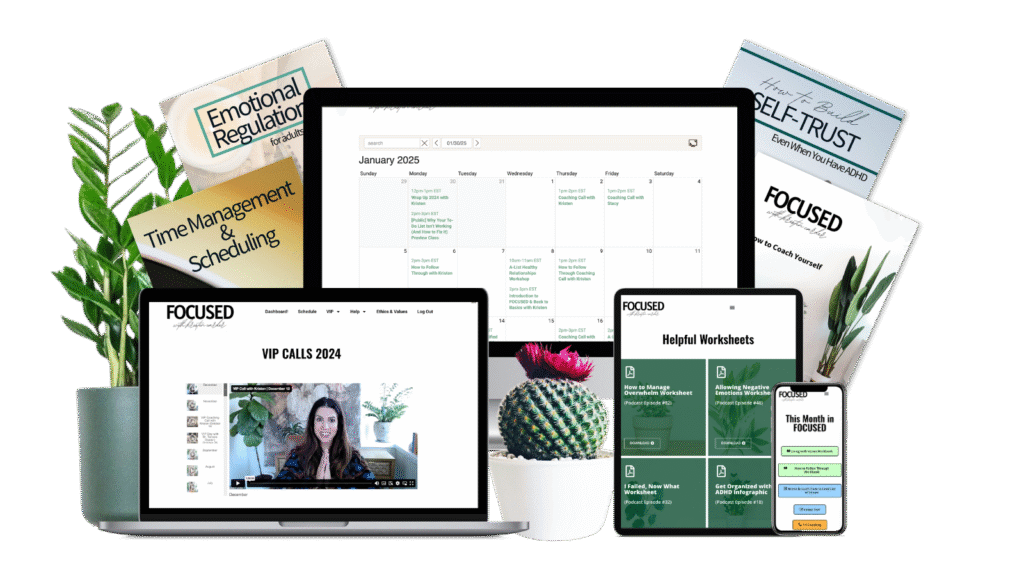
A proven coaching program designed specifically for adults with ADHD who want to gain clarity, build confidence, and take control of their lives.

Join a community of hundreds of ADHDers

Learning About My Brain...

Changed Everything

Hi, I’m Kristen Carder—ADHD expert, podcast host, and certified coach who’s been exactly where you are. Diagnosed at 21, I spent years cycling through planners, courses, and systems that never quite worked. Everything changed when I discovered the power of understanding my ADHD brain and the transformative impact of community support.

Now, after 15+ years of research and experience, I’ve helped thousands of adults with ADHD thrive. I’m here to show you how understanding your brain can transform your life, just like it did for mine.

ADHD Tips That Actually Make Sense

Follow @i.have.adhd.podcast and join our Instagram community for daily strategies, relatable content, and real talk about ADHD