


Episode #362: The Science of ADHD Sleep: Circadian Rhythms, Sunlight, and Why You’re So Tired

Listen or Watch this episode on:
Kristen Carder

About This Episode

If you have ADHD and sleep feels like a constant struggle, you’re not imagining it—and you’re definitely not alone. Research shows that 70–80% of adults with ADHD have chronic sleep problems, most commonly falling asleep too late and being unable to shift earlier, no matter how hard they try. For many of us, this pattern starts in childhood and is deeply tied to our biology.

In this solo episode, I explain why ADHD brains are wired for later sleep, how “social jetlag” (early school and work schedules) creates ongoing sleep debt, and why so many ADHD adults are surviving on 5–6 hours of sleep when our brains actually need more. The tricky part? The symptoms of sleep deprivation—poor focus, low motivation, memory issues, irritability, and emotional dysregulation—look almost identical to ADHD itself.

We dive into chronotherapy, a science-based approach that works with your circadian rhythm instead of fighting it. I break down how light exposure, strategic timing, and gentle sleep-wake adjustments can help regulate your internal clock without perfectionism or rigid routines.

And yes—we talk about sunlight. Morning light is one of the most powerful (and overlooked) tools for ADHD regulation. I share how light therapy glasses, sun lamps, melatonin, and intentional light exposure can support better sleep, better focus, and a calmer nervous system overall.

If you’ve been blaming yourself for sleep issues your brain never signed up for, this episode offers clarity, compassion, and a much more realistic path forward.

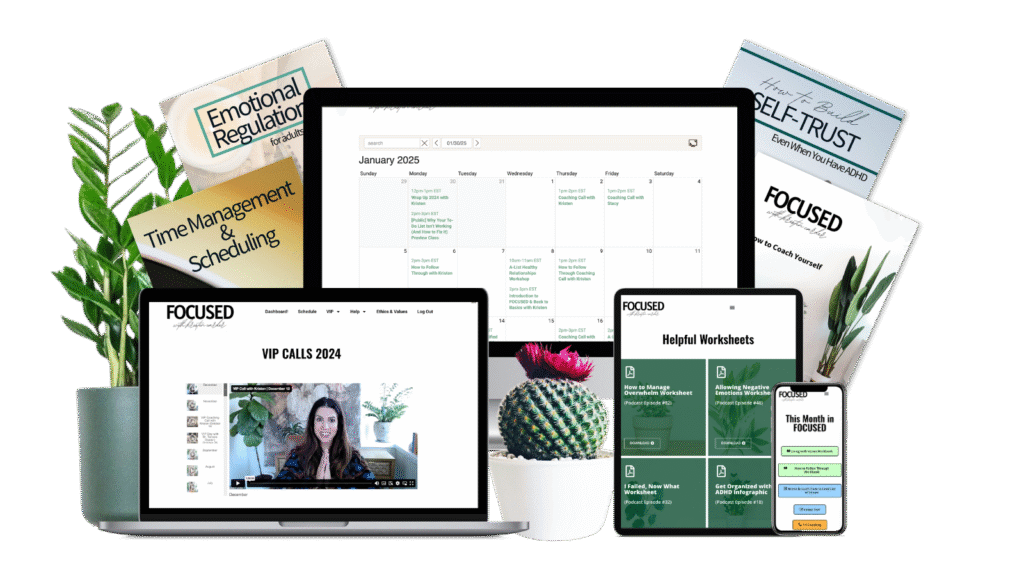
Want help with your ADHD? Join FOCUSED!

Have questions for Kristen? Call 1.833.281.2343
Episode Transcript

Kristen Carder 0:05
Welcome to the I have ADHD podcast where it’s all about education, encouragement and coaching for adults. With ADHD, I’m your host, Kristen Carter and I have ADHD, let’s chat about the frustrations, humor and challenges of adulting, relationships, working and achieving with this neurodevelopmental disorder, I’ll help you understand your unique brain, unlock your potential and move from point A to point B.

Hey, what’s up? This is Kristin Carter, and you’ve tuned into the I have ADHD podcast. I am medicated, caffeinated, regulated and ready to roll. Hello, hello. Come in. How are you what are you up to? What are you doing? Are you multitasking? Are you out for a run? Are you walking the dog? Maybe you’re doing the dishes or the laundry, or you’re driving in your car, whatever it is that you’re doing. I am so glad to be your body double for this short period of time. I’m glad we’re hanging out today. You know, living life with ADHD is not for the faint of heart. It is not easy. It can improve. We’re going to be talking about one of the ways that we can improve our ADHD symptoms today. But listen, this is just hard, and sometimes, like existing just feels exhausting. And if that is the space that you’re in right now, I am with you. I am you. I feel you, and we’re just gonna talk about it together. It is officially winter. It is officially so dark all the time there is hardly any daylight. And for those of you who are like me, who are solar powered reptiles, that’s exactly what I am. I am reptilian. I am solar powered. I am so much happier when the sun is shining and when I am hot. And neither of those things are happening right now because it is December, and we are in the trenches of winter, and what I have found over the years, and we’re going to talk about research that backs this up today, is that my ADHD symptoms really worsen this time of year, when it is cold, when I am not going outside, very often, when it is dark, and when my body just feels so depressed because the sun is just not doing what the sun should be doing, which is tanning my skin and keeping me very, very warm. And so we’re talking about that today, because in the wintertime, it can be really hard to thrive. It can make things that are already challenging and take them up a notch. It can just make life so much, so much, so much harder. I believe that I have suffered from seasonal affect disorder for many years, and every time that we have moved homes. Let me tell you about the homes that we’ve lived in. The first home that we lived in was an apartment above a three car garage, and it did not it did not have one window. It had two skylights, and that’s it. Two skylights and that’s it. And that is where I spent my first year of marriage. I’ve spoken about this first year of marriage many times because I was also recovering from severe burnout, or maybe I was in burnout in this year, recovering from college and wedding planning and a big move, and that was one of the toughest years of my whole life again, an apartment above a three car garage with two skylights, no actual windows.

Then we moved to a row home in West Reading, and it was great. Loved being there, but like it was a city ish, urban ish environment, and the sun just did not do what the sun needs to do. The only room that got direct sunlight was our bedroom. But other than that, it was very, very dim. And as you know, in a row home, there are no windows on the sides of the home, so it was just the front and the back that had windows, and it was dark all the time. And we were there for 11 years, and every winter I would get so sad and so depressed. And Greg, my husband, who notices patterns, would be like, this is just what happens to you every year. And I’d be like, This is the worst thing. Winter’s never gonna end. I’m not gonna be okay. Then we moved to a little home in a neighborhood, and it had windows on both sides of the house, and it didn’t have a ton of light, but it certainly had more light than the row home, and I felt like my seasonal affect disorder truly improved because we got a little bit more natural light. And we were there for six years, and that was lovely, but when we moved to the home that. We’re in now, I have never, ever experienced winter this way, where I have had so much light. We have big windows on the one side of our house, and the sun sets directly into those windows, and from 12pm until the sun sets, we get direct sunlight on the back of the house, and it is the best thing that has ever happened to me. And I did not realize until recently how impactful the sun is, not just in our mood, but also with our ADHD symptoms. And so we’re going to be talking all about this today. It is absolutely fascinating before we get there, though, I do want to listen to one of your voicemails, and I do want to offer some encouragement to a listener who really needs a pep talk. So let’s hear from Alex.

Caller 6:10
Every little decision he wasn’t really lost and like really behind working this, like job that doesn’t matter well, and I just feel so confused and encouragement or a suggestion on what the next step would be. I just want to say thanks for this. Want to say thanks for the show.

Kristen Carder 6:48
Alex. Oh gosh. Do you hear in his voice like my heart breaks when I listen to this message. I’ve listened to it several times in the last couple days, just kind of prepping for this podcast. And also he’s so compelling, you know, with his emotion and just what he’s expressing, that I have found myself listening to this several times. I just want to offer you so much encouragement and support. Alex, I’m so glad you called in. This is exactly why we have the voicemail line, so I can be directly connected to you, my listener, and so that you can just tell me, like, where you’re at and how you’re doing, and I can just offer some perspective for you. So I just want to say that I hear the emotion in your voice. I hear like the desperation that you need, like encouragement. And I just want to say something here, you sound like you don’t have someone who’s offering you nurture and support in your life. Obviously, I don’t know your story. I don’t know anything about you, but to me, you come across as someone who is severely under nurtured. And I don’t I don’t know if that’s true, but that’s just my sense, and I am here to step in to do that. I don’t know what your relationship is like with your parents, but I I’m here to step in and say like you’re a great kid and you’re not broken.

There’s nothing wrong with you, Alex, and the self loathing that you’re feeling is not appropriate, and we need to be done with that. You don’t deserve the harsh treatment that you are giving yourself you are. You are not deserving of that. And I again, I don’t know your story. You just really sound to me like someone who has navigated life without a lot of support. And I am so sorry if that is your story, I’m so sorry. I don’t know what your real life looks like. I don’t know if you have parents or friends or relatives or anyone in your life that can offer you encouragement and care and support, but if you don’t, I beg you to start paying for it. I know this sounds weird, I know this sounds weird, but you can join me and a long list of people, including many, many listeners of this podcast, who have had to hire people to support them, to nurture them, because there was such a void in their real life. If I could just put my tin foil hat on for a second and this, again, is like related to the research that I’ve done for the book, the writing that I’ve done for the book, The 1000s of hours that I have spent face to face coaching adults with ADHD. We are a group of people who are severely under nurtured, severely under nurtured. Right? And that sucks. That’s not okay. That’s not our fault, but it’s not okay. And for myself and for so many other ADHD ers, the only way that we’re able to make progress and succeed is if we fill that nurture void we can’t survive without love and support and nurture. We can’t even though you’re 25 so you’re like, I’m a grown man. I don’t need to be nurtured like, maybe that’s your perspective. But if you lacked it in your childhood and adolescence, you actually severely need it right now. You you need an excess of it right now to kind of heal those parts of you that never got it as a child or adolescent again. I’m making so many assumptions, I know, but also, this is not my first rodeo. Y’all so, like, if you’re listening to this, maybe you’re like, a first time listener, and you’re like, who does this woman think she is? What I think I am is someone who has had 1000s of conversations with people with ADHD and many, many conversations with men with ADHD. And so many men with ADHD specifically have been severely under nurtured, have not received the love, the support, the care, the nurture. I’m going to say nurture a million times I don’t care. You can turn it into a drinking game. Turn it into a drinking game. I don’t even care the nurture that you need to really fully develop a sense of self, a sense of worth, a sense of internal support so that you can go out and do the things that you want to do in your life. If you did not receive that which many of us, I would say most of us, did not, that’s a problem that needs to be solved. Now is a problem that needs to be solved. That is the problem that needs to be solved is that you’re feeling this deep sense of loathing that’s not okay. You’re not going to be able to move forward without solving that first. And so I would not even worry about the fact that you’re 25 and you’re in a job that you don’t love like I don’t know any 25 year old people with ADHD, any neurodivergent 25 year olds who feel like they had it figured out at 25 it’s not a thing. It’s not a thing. And I’m not saying that to diminish or demean what you’re feeling now. What I am saying is that’s not the primary problem that needs to be solved here. That’s not the primary issue. It will be solved eventually, naturally, once you solve the issue of the of the self loathing and the agonizing over decisions and feeling confused, that part the agonizing over decisions that’s very much connected to the self loathing that’s very much connected to not feeling like you have stability and a groundedness and a self worth to just try a bunch of shit and figure it out.

That’s the only way that a neurodivergent person is able to move forward in their life is if they have the courage and the support to try a bunch of stuff and just kind of figure out where you land.

This podcast is sponsored by ag one listen. It’s December, which means my life looks like a snow globe that someone has shaken way too aggressively. And I wonder, if you relate to that. We’ve got the holiday concerts, all of the kids events, parties, travel family trying to remember which kid needs what for, like Secret Santa, and the days at school where they have to wear the different things, like it’s too much, and my routines are out the window. They’re on vacation without me. So if you’re anything like me, the first thing to go when life gets busy is nutrition, and suddenly I’m like, Did I eat a vegetable today? Have I even had any water? Am I just running on peppermint mochas and adrenaline? That’s where AG, one saves me every single year, and you know, they’ve been sponsoring this podcast for years. It’s because they’re my consistency anchor when the rest of my routine is, well, we can call it festive, but really it’s just crazy. I love ag one because it is so easy, and especially when I’m traveling, I can throw it in my suitcase, which I just did last week when I was in Kansas City. It’s so easy to pack and take along with you, I’m always mixing it up right when I wake up. And it’s super, super simple. It’s one small thing that helps me feel proactive instead of reactive. Like, yeah, I did do something good for my body. Today that feels good to me as someone with ADHD, anything that reduces decision fatigue, gets a gold star from me, gold star from Kristen Carter. And this is easy, one scoop in water, shake it up. All done, not 47 bottles and trying to remember when I last took what it’s just one daily ritual that helps me feel good, even when everything else is absolutely chaotic. Here’s the best part in December. AG, one has their best offer ever when you head to drink. AG, one.com/i have ADHD, you’ll get the welcome kit, a morning person hat, which I know it’s ironic and hilarious. A bottle of vitamin d3, k2, an A g1 flavor sampler, and you’ll get to try their new sleep supplement, a G Z for free, which has been a game changer for my nightly routine. That’s drink a G one.com/i, have ADHD for $126 free gifts for new subscribers. And I have to say, one of the things you’ll get in the welcome kit is this, like metal canister and metal scoop. And I have been using the same one for years. It’s really high quality. Every time I finish a you know, package of ag one, I’ll throw it in the dishwasher. It’s clean and ready for the next package, and I absolutely love it. I know that’s a random thing to talk about, but like, the quality of the canister reflects, I think, the quality of the product. I’ve been using it for years. I absolutely love it. So don’t forget to head to drink. AG, one.com/i have ADHD for $126 in free gifts for new subscribers. You’re definitely going to want to check it out.

I’m currently parenting a 17 year old male who is neuro divergent, and while we are kind of making steps forward in his like, you know, like what he’s going to do after college, which is not easy, by the way, and it is not a fun process. I also know that, like, he’s probably going to try whatever it is that he decides, and it, it’s, it’s very unlikely that it’s going to be a good fit. It is very unlikely, and that’s fine, as his mom, it’s my job to just be here as a support to say, Yeah, you’re gonna have to try a bunch of stuff. That’s fine. I’m here for you. I will be your soft place to land as you figure this out. And Alex, what it sounds like to me is that you do not have a soft place to land. That’s what it sounds like to me. It’s, I mean, it’s screaming at me, it is like jumping out of your voicemail and into my soul that you do not have a soft place to land. And so that’s the problem that we need to solve here. And so what I’m asking you to do, I know you’re in a job that you don’t love, I know you’re not making the money you want to make, but I’m asking you to pay for some support. So that would look like a trauma informed therapist, somebody that maybe uses some type of modality, like EMDR, somatic experiencing, internal family systems, emotional focus therapy, something like that. Or you can just pop into chat, GBT, like, what are? What are trauma informed modalities? But you need a trauma informed modality, somebody that is able to work with you in a very trauma informed way. It might look like hiring a trauma informed coach, if that is more accessible to you, and that would be totally fine. It might. Let’s say that I’m misreading this whole thing. I don’t think I am, but let’s just say I am. Let’s just pretend. Let’s just say that I’m misreading this whole thing. And you have a million supportive people in your life, amazing. You need to lean on them. You need to tell them what you told me. You need to allow people to support you, to take care of you, to speak into your life, to encourage you, because you do not deserve to feel like you are not enough, or that you are a bad person, or that you just need to you know whatever pull yourself up by your bootstraps or Whatever like enough, no more of that. You are struggling, and you deserve support. You’re the encouragement that I have to offer you is twofold. Number one, you need support, honey. You need support. You need a mama.

And if you don’t have and when I say a mama, I mean someone who’s going to nurture you. I mean someone who is going to hold space for you, someone who is going to allow you to experience your life and be a mirror to you so that you can make sense of it, because we cannot make sense of it on our own, and if that’s something that you just have to pay for, do it. Join me. Me in doing that, because I’ve had to pay for that. I do pay for it. I pay coaches. I pay therapists to be that consistent, warm, trauma, informed, mirrored support for me, I’ve had to pay for it, even just like I told you last week, that I get massages, even that is like me paying for nurture and for care like that is a way that I nurture myself, that I pay someone else 100 bucks for a massage so that my body can feel relaxed and nurtured and cared for. This is just a way that I’ve had to accommodate myself as someone who comes from a lot of dysfunction and trauma. I just have this sense that, like that’s a lot of what’s behind what you’re saying. And so I want to encourage you in that way. And then the other thing is, I swear to you you are not behind you said you’re feeling behind. You’re feeling lost and behind, I promise you, I promise you. You might be in a job that you don’t love, and you might not be able to have a map for the future right now, but you are not behind. Feeling lost at 25 is normal. You should not have it figured out. Okay, you shouldn’t. I There are so many people and like, I know that every listener is like nodding along, like every listener in their 40s and 50s and 60s is like, totally nodding along. Like, it’s true, if we can all think back to like, who we were and what we were doing at 25 like, Lord, help me not. It was not pretty for me personally, okay? But the thing is, just because it’s normal doesn’t mean it’s fun. I’m not again. I’m not demeaning the position you’re in. What I am saying is I want to take the pressure off of you. I want to take the pressure off your job right now is to try a bunch of shit and figure out what you want to do. And that sounds to like, maybe the listening, you’re like, oh yeah, that’s so easy. Just go do that. It’s not easy when you’re not supported. It’s not easy when you have a ton of self loathing. It’s not easy when you don’t have a soft place to land. So those are the problems that we need to solve. Get yourself a soft place to land. You got. You have to get someone who’s going to look at you in the eyes like I am right now and say you are worth investing in. You have so much to offer the world, but you just existing is enough. Who you are is enough. You’re a wonderful human being. The fact that you were compelled to reach out means that there is so much in you that is ready for change and for evolvement, but you’re not going to be able to do that alone. You’re going to need support.

Okay? So your job is to find one or two or preferably three people in your life who are safe, supportive, trauma, informed people, right, honey, you are going to be okay. You’re going to be okay. I know you are. Call me in a year and tell me about your progress, because I know you’re going to be okay. Oh, listeners, thank you for holding space for that. I feel like we can all relate to that feeling of just like I don’t even know what to do, I don’t even know who I am, I don’t even know how to proceed. And I just want to offer so much compassion, of course, to Alex, but also to like our former selves, the versions of us that just didn’t know, that didn’t have direction, that didn’t know how to proceed, that were really under supported, that didn’t even realize that we lacked the nurture and the care and the soft place to land to get the things done. If we can solve that problem, for all of us, like this is for every listener, including myself here as the speaker, if we can solve the problem of being under nurtured, under supported and like under cared for not having the safety in relationship. If we can solve that problem, we can do anything, because then we’re going to have the support, the groundedness, the courage, the ability to take risks and move forward. It’s a big part of why I’m writing this book, is that if we can heal our relationships, that’s a huge, huge, huge issue for us that will then allow us to have the support and the safety to go out and do the things that we want to do. My goodness. All right, if you want your question answered on the podcast, you can call 833-281-2343, Thank. Again, Alex.

All right, my friends, I alluded to this at the beginning of the show, but we’re going to talk about chronotherapy today. Chrono therapy, what the heck is it? How does it impact us? What does it have anything to do with ADHD? What in the world are we talking about? All right, so let me take you back several years ago, I recorded a couple podcasts on sleep, how to go to sleep, how to wake up, et cetera, et cetera. And one person that kept appearing in the research that I was doing was Dr Sandra coy now, at the time, I didn’t know how to pronounce her name. It’s spelled K, O, O, i, j, and I remember spelling it for you. If you’re a longtime listener, you’ll remember, and I would be like, I don’t know how to pronounce your name. Ma’am. I am so sorry. K, O, O, I, J, I now know that the way that we pronounce that is coy. She is a psychologist from Amsterdam, and again, she kept appearing in this sleep research. So I actually invited Dr coy to come into my focused ADHD coaching program this past October to offer a presentation to our VIP members. So a VIP er is someone who has been in focused for six months or more, and every year I host a really exciting event for them. I’ve had Dr Hallowell come speak. I’ve had Dr Tamara Rozier come speak, and this year we had Dr Sandra, excuse me, Sandra coy speak, and she talked to us all about sleep and how sunlight affects our sleep, and how our ADHD symptoms are impacted by our sleep, et cetera, et cetera, et cetera. I learned so much. It blew my mind. It confirmed a lot of things that I was already experiencing, and it gave language to like what was already happening for me. But I also learned a ton, and I’m gonna share it with you today. Everyone with ADHD knows what to do to improve their lives.

You go to bed at a reasonable time, you wake up early, you make a list, you cross things off the list in order, blah, blah, blah. Like, yeah, we know what to do, but ADHD is not a disorder of not knowing what to do. It’s a disorder of knowing exactly what to do but not being able to get yourself to do it. That’s why I created focused. It’s an ADHD coaching membership for adults with ADHD. I’m a life coach with multiple certifications, and since 2019 I’ve coached over 4000 adults with ADHD from all over the world. I know what it takes to help an adult with ADHD go from Hot Mess express to grounded and thriving. I’ll teach you how to understand your ADHD brain, regulate your emotions and your behavior and accept yourself, flaws and all. And with this foundation, we’ll build the skills to improve your life with ADHD. And not only do you get skills and tools and focus, but you’re surrounded by a huge community of adults with ADHD who are also doing the work of self development right alongside of you. Dr Ned Hallowell says healing happens in community, and I have absolutely found this to be true. So if you’re an adult with ADHD who wants to figure out how to be motivated from the inside out and make real, lasting changes in your life, join hundreds of others from around the world in focused go to I have adhd.com/focused to learn more. That’s I have adhd.com/focused to check it out. The first thing that Dr coy shared with the group that I’m going to share with you is that so many people with ADHD struggle to sleep, and so if this is you, I hope you feel extremely validated. 70 to 80% of adults with ADHD has one or more sleep problems, 70 to 80% so 20% of us are doing great. 20% of us are doing great with our sleep. The other 70 to 80% of us not so much. 78% of ADHD are sleep too late and cannot sleep at an earlier time. This is called delayed diurnal rhythm, meaning that we just naturally our body clock is set a couple hours later than a neurotypical human. So we go to bed later, which means that we wake up later as well. This is started in childhood, and it’s inheritable. It’s a chronotype. It’s a inheritable pattern. What happens when we struggle to sleep is that we have what is called, what Dr coy calls social jet lag, like, Oh my gosh. I love that she describes as describes it as jet lag, because that’s how it feels like when you get up at the time that society tells you to get up after staying up until. 12am 1am 2am because that’s just when your body naturally wants to go to sleep, and then you’re expected to get up at six or 7am and just like start functioning, you can feel extremely out of it. And I love the term jet lagged. This re this results in sleep debt. So the sleep duration, the average sleep duration for somebody with ADHD is about five or six hours, according to Dr coy, and what is optimal for most people is seven to nine hours. Okay, so five to six hours in adults with ADHD, I’ve heard from a lot of you that it’s less than that, okay, I’ve heard from a lot of you that it’s less than that, but from her research, about five to six hours is typical for adults with ADHD. The problem is that there’s a lot of consequences with not sleeping enough. Okay, so obviously we’re sleepy, we feel jet lagged, but also we have less folk focus and lower cognitive functioning, raise your hand if you experience lower cognitive functioning when you are hella tired. I knew I know that I do also impaired memory, irritable and sad mood and binge eating. All of this is associated with sleep issues, and sleep issues are associated with ADHD. What I found so interesting about Dr COys presentation, when she came into focus to talk to us about it, is that she has this perspective of like which is coming first. Here, is it the chicken, or is it the egg? Does ADHD cause sleep problems, or do sleep problems cause ADHD symptoms? And I remember reading this in her research years ago when I was studying for the podcast that I recorded back then. And I remember being like, what like?

I feel like this is taking it a little too far. But what’s so interesting is that ADHD and sleep problems do interact with reciprocal causation. Is what she calls it, reciprocal causation. So because I have ADHD, I sleep less. Because I sleep less, my ADHD symptoms are exacerbated. It is like, it’s so frustrating. This is something that has caused me so much anxiety and angst over the years. It’s something that I’ve worked hard, and I am talking hard. I’ve worked hard on this in the last three years, and I’ve really, really improved, which I’m very happy about. We’ll talk about that in a minute. But this is something that I have had to channel all of my energy to to figure out how to sleep, how to go to sleep at a reasonable time, and how to like, really function in the area of sleep, sleep hygiene, I think, is what the experts call it. I read a book this summer called good energy. And in that book, it was just talking about, like, healthy living and what it means to like, actually be a healthy person. And so much of that book, I was surprised, was focused on your circadian rhythm, and I didn’t realize what a big deal your circadian rhythm is so circadian rhythm is like your sleep wake cycle, and it is matched with the sunlight and the darkness of, you know, the world. I didn’t realize what a big deal your circadian rhythm is and how much it impacts your overall health and, of course, your ADHD symptoms. What’s interesting about circadian rhythm is that many people with ADHD have what is called delayed sleep phase type. And so delayed sleep phase is what I was referring to earlier when I said delayed diurnal rhythm. I guess you’d call it either way, but it’s like your circadian rhythm is off with the rest of the world. Who here feels like your rhythm is off with the rest of the world’s rhythm. Like, yeah, that is putting language to something that we are all experiencing. So what is happening is our bodies are naturally going to sleep later, much later than like a typical person, because of that, we’re wanting to sleep in later, which is not conducive to like our society, which is really annoying, and so this causes a huge, huge problem for us.

The factors that set our circadian rhythm are really important, and so much of it, I did not realize this until I read the book, good energy, and then Dr coy came into focus, and I was like blown away by how much sunlight, the one thing that can change everything is sunlight. Who knew i. Didn’t know. I didn’t know that I was a reptile, as I explained to you earlier, but I didn’t realize how much sunlight impacts your your sleep. And so if we can get sunlight into our eyes in the mornings and continue to have sunlight throughout the day, the probability of us having a healthy circadian rhythm and going to sleep, whatever on time is, but like at a reasonable time, is much, much, much higher. So what I started to do after I read this book good energy is, luckily at the time it was, I think, the spring, I would just whenever I woke up, I would go spend the first 15 minutes of my wake up time on the front porch. So instead of like going to the couch, I would go to the front porch. I would be outside. The sun rises in the front of my house and sets in the back of my house. And so I would just sit in the direct sunlight for the first 15 minutes of being awake, maybe a little bit longer, and I really began to notice, wow, this is making it so that I’m going to sleep earlier, which was wild, because at the time the sun was setting later, and usually when the sun sets later, I set later. Does that make sense to you? But I was noticing, because I was getting sunlight early, early in the day, and experiencing it, then throughout the day, that I was actually able to go to sleep earlier. Now, one of the things that Dr coy taught us is that when we wear sunglasses, we’re kind of confusing our system, and we’re we’re creating the darkness that actually should be reserved for nighttime. I did not realize this. It’s really important for our eyes to be exposed to light throughout the day, and so what she encouraged us to do was not even wear sunglasses, which is difficult because a lot of us have, like, high sensitivity to light. So I understand that can be difficult, but if you can, like, make it through and and function without sunglasses, what that allows your system to do is continue to receive the sunlight and process and, like, understand it’s daytime. It’s daytime, it’s daytime, it’s daytime. What she suggested for us is that in order to really set up a good circadian rhythm, you want to be exposed to a lot of sunlight during the day and then have a pretty stark contrast at night. So we’re going to be keeping the lights very dim. We’re going to be wearing blue light blocking glasses at night. We’re going to be buying those light bulbs that are like orange. I’ve wanted to do it.

I’ve put them in my cart, but I haven’t actually made the purchase because I don’t think my family is going to consent to having the entire home be orange. Do you know I’m saying? I just don’t think they’re gonna do it. Speaking of we changed our dishes recently. We always have these, like Karel white dishes. They’re just like the cheapo Corel dishes. We are not fancy people, and we’ve had the square set of dishes for the last probably 10 years, and we were running out of dishes. They were like, breaking. They hardly ever break, but they were breaking. You know, kids have kind of like taken them in their car, not naming any names. Kid taking them in their car. Dishes have been misplaced. So my husband was like, We need new dishes. They don’t make the square kind anymore. And I said to him, if you change our dishes, our kids are going to freak out. Our kids are our kids are not going to be happy. And he was like, I don’t know what to tell you, we need new dishes. So he bought Karel dishes. They’re white Karel, but let me tell you, they’re circles. They are circular, not square. And the entire neuro divergent family was like, What the hell have you done? No one is happy. The kids, it’s been days, and they are still. Every time they go into the cabinet to get a plate or a bowl, they’re like, why are the dishes in this shape? They’re not right. This is anyway. I don’t know if your neurodivergent family enjoys change, but mine doesn’t, so I probably can’t buy the orange lights, but that is an option that’s available to us. So understanding how much sunlight impacts our ability to sleep and how important it is to have a contrast between daytime and nighttime, that can change a lot for you, if you are someone who wants to improve your sleep hygiene. Okay, so if sleep is an issue for you, if you are like, I suck at sleeping. I’ve never been able to sleep. I definitely have this, like, delayed sleep phase syndrome, or whatever we want to call it, this delayed circadian rhythm, this like, inability to really tell the difference between daytime and nighttime. Time, and my body just really does not feel tired until 12am or 1am here are some things that you can do. And again, this is from Dr Sandra Koi.

She is the expert in this area. The first thing that you’re going to want to do is really make sure that you are thinking through your sleep hygiene. So you want to make sure that your days and nights are very contrasted. Let your day be bright and your nighttime be as dark as possible. So we’re talking like 6pm 7pm even if it’s in the summertime, like for me, this summer, what I tried to do was just like, not have the house lights on, and just let the home get darker and darker and darker as the sun set until we like, really needed the home lights, and then I kept them really dim. Now it gets dark at like, 5pm which is the saddest thing ever, and I just try to keep the home lights very, very dim. Another suggestion that she made was to limit your drinks after 8pm to prevent visits to the bathroom while in the middle of the night. And if you do have to use the bathroom in the middle of the night, don’t turn the light on, which I don’t I literally will wear my sleep mask and like, like, feel my way to the bathroom. And I think that that is the right way to do it. However, my neurotypical husband will turn the light on and wash his hands after using the restroom in the middle of the night like, I’m sorry, I am a very clean person, but in the middle of the night, no, it is wild to me. So what I’m saying here is limiting your light in the middle of the night as much as possible. Block out all light sources, even if you have like a little button on, maybe like your Alexa or something like that, that is showing light in your room. You want to block it all out. I do sleep with the sleep mask, I absolutely love to do it. It is I can’t. I wouldn’t sleep without it. I just really wouldn’t sleep without it. Now she suggests no screens after 930 I, you know, take it or leave it, but at least maybe wearing some blue light, like blocking glasses, like orange goggles, is what she says, which are very sexy, very, very sexy. So that’s your sleep hygiene. You’re also going to want to consider taking melatonin.

Now this is a really interesting thing that she presented to our focused group is that Melatonin is a naturally occurring hormone that it like signals your body to be tired and go to sleep. But for most people with ADHD, melatonin doesn’t kick in till about two hours later than when is actually needed. And so what she suggests is a half of a milligram to a full milligram, so point five to one milligrams of melatonin at 10pm using a timer. So timer goes off and you just take that melatonin same time every single night. I didn’t realize that we needed so little I’m a little bit embarrassed to say that I was taking well above the recommended dosage of melatonin, and I have since paired it back, and I’m still able to sleep with her recommended dose she is. She says that, like three milligrams is too high of a dose, and it will make you sleepy during the day. And I was taking six Milli, six milligrams, six. I didn’t know it was bad. I didn’t know. I didn’t know there’s also a long, lasting, or long acting melatonin that you can get. So maybe some of you don’t struggle to go to sleep, but you struggle to stay asleep so long acting melatonin has like, a delayed release component to it, so it doesn’t kick in until later on, which is pretty cool. There are a lot of questions right now about like, is melatonin like, do the benefit out? Do the benefits outweigh the cost? And in hearing Dr coy speak about it, she was very clear that like, melatonin is an important part of an effective ADHD treatment. Like that was her conclusion. She studied it. She studied people

ADHD ers and their sleep and from all of the research that she has done over the last 30 years, this is her like bottom line conclusion is that melatonin is actually a really important part of effective ADHD sleep treatment. And personally, I would tend to agree you get to make. Your decision with that another and like the third thing, this is the third thing that she suggests, and this is what has been hugely impactful for me, is light therapy. Light Therapy. So this is like getting as much sunlight as is humanly possible and as early as possible. So here’s the thing, when you wake up, your eyes are going to need that sunlight to signal we are awake. It is daytime. Let’s get ready to roll. But here’s the problem, it is December. It’s winter. The sun doesn’t even rise until 7am and it’s not even bright. It’s like, barely there. It’s like, you’re not really even doing your job.

Son, like, Come on, do you know what I’m saying? It’s like, not really even there. So what she suggests, what Dr koi suggests, are light therapy glasses and light therapy lamps. Okay? And I purchased a pair of light therapy glasses. It is, it is a wild site. It is a wild site. So I purchased these glasses. We’ll put a little banner here from propik. And they are they are blue. I look like an alien, but I use them every morning, when I wake up for 30 minutes, sometimes I feel too weird to use them because I have teenage boys in my home, and they’re just like, Mom, what are you doing? I do look like such a weirdo, but when I am able to use them consistently, I notice a big difference in my energy when we changed the clocks a couple months ago, which rest in peace that one hour of daylight when we saved the daylight and we changed our clocks back, I used these light therapy glasses in the transition from, you know, whatever regular time to daylight savings time, and I did not even notice the hangover that I usually get, I was able to transition pretty seamlessly. Usually, it takes me about a month to for my body to figure it out and to adjust to the new time, and that did not happen at all. So we’re going to put a link for you@propik.com and I mean, check it out. I think that it’s a really interesting concept.

You can also find similar glasses on Amazon. So there are some Amazon stores that sell light therapy glasses as well. The thing with the lamps is that they have to be really close to your face. What Dr coy said is that they need to be eight inches away from your face. So, like you’re not like, just having a lamp on near your face isn’t enough. It has to be eight inches or closer to your eyes. And so that’s that’s kind of like the problem that we’re needing to solve here is that we’re we need to get that sunlight into our eyes, and just having a light therapy lamp on just kind of close to us isn’t enough. I didn’t realize that, because for a couple years, I did use a lamp, a light therapy lamp, and I didn’t notice any difference. And I was like, This thing doesn’t work. But I now know that it simply was not close enough to my eyes to make a difference. So that is a that’s a big deal. Okay, so the three things if you are struggling to sleep, the three things that you can do is work on your sleep hygiene. You can add melatonin at the same time every night, set a timer, take melatonin, point five milligrams to one milligram of melatonin, and use light therapy. Do not underestimate the power of the sun. Do not underestimate how much you need sunlight in order to set your circadian rhythm, in order to give you energy and good vibes. Like, seriously, on the days when I’m feeling pretty down, or if it’s really rainy and just like dull and dark, I will use the light therapy glasses in the afternoon as well. So I will not only look like a sexy alien in the morning when I wake up, I will also look like a sexy alien in the afternoons as well. I’m telling you, they do look weird, but I don’t care, because I notice a big difference. Sleep matters. Your sleep matters. And so many people with ADHD struggle to sleep. We it’s just it’s scientifically proven that this is a thing, that we have a delayed circadian rhythm, that this affects our. Ability to show up in the world that this exacerbates our ADHD symptoms. This is a problem worth solving. I understand that for some of you, maybe you’re new to ADHD. Maybe you’re new to this podcast, you’re like sleep is the last thing on my list, because I can’t even function at work, or I can’t even get out the door on time, or I can’t stop yelling at my kids like you may have squeakier wheels, so to speak, that you want to solve. And that was the case for me. I did a lot of work in the other areas of my life before I committed to tackling this sleep issue. And I will tell you now that I when, while I used to have this like revenge bedtime procrastination thing where I would stay up late, avoid going to bed, let the whole house, house fall asleep so I could finally get some alone time and not be perceived and just do the things that I wanted to do, and stay up super, super late and then be resentful and tired and angry in the morning when I had to parent my kids and go to my work and then my ADHD symptoms would be totally off the hook. Now, your girl’s going to bed at like 930 or 10 happily, happy and cozy. I can’t believe it.

It’s like I’m a totally different person, happy and cozy in bed, settled by 930 or 10 every single night, I got my podcast on. I’m playing block blast, and I’m just settling in for a cozy night. Once in a while, I’m reading, but I’m not going to pretend like I read every night, because I just don’t. Okay. I just don’t. What is amazing is that the better you can improve your sleep, the fewer ADHD symptoms that you will see. I am not saying that this is going to cure your ADHD, but my goodness, it is certainly going to help. It is going to improve it. And what’s awesome about this is that, like the sun, is free. Melatonin is very inexpensive. Your sleep hygiene habits are also free. This is not an expensive endeavor. You may want to hire a sleep coach. You may need to hire a therapist to, like, help you with your nervous system, regulation, all of that. But like, actual sleep hygiene is very inexpensive, and the sun is available to all of us, like we all have access to the sun, even when I was living in my tiny, tiny one bedroom apartment above the three car garage with the skylights that was it skylights. I still had access to go outdoors, to sit in the sunshine, to go for a walk, to see the sun as soon as I woke up. Now, I didn’t know at the time that that was needed. I think it would have helped me a lot. I didn’t know at the time that that was part of the reason why I felt so badly. But I do know now, and I know that you have access to the sun too, and I know that it’s free, so I encourage you to use it go. You can check out the links in our website with the propique glasses or the Amazon light therapy glasses. You can also look for some lamps. But don’t forget, you have to be eight inches or less away. It is pretty close.

Check out some melatonin. Improve your sleep hygiene. This will help you. It’ll just be one of many things that will help you to reduce your ADHD symptoms. I cannot wait to hear back from you on how it was helpful. All right, I’m going to talk to talk to you next week. Bye. Bye. A few years ago, I went looking for help. I wanted to find someone to teach me how to feel better about myself and to help me improve my organization, productivity, time management, emotional regulation, you know, all the things that we adults with ADHD struggle with, I couldn’t find anything. So I researched and I studied and I hired coaches and I figured it out, and then I created focused for you. Focused is my monthly coaching membership where I teach educated professional adults how to accept their ADHD brain and hijack their ability to get stuff done. Hundreds of people from all over the world are already benefiting from this program, and I’m confident that you will too go to Ihaveadhd.com/focused, for all details.


Get The Best of the podcast now with our Podcast Roadmap.

This is a clear and easy podcast roadmap so that you can know for SURE that you’re hearing the very best of the I Have ADHD podcast.

Related Episodes

Kristen Carder

Episode #390: Two Steps Forward, Three Steps Back (Why You Keep Self-Sabotaging and How to Finally Stop)

Kristen Carder

Episode #388: Money. Let’s Finally Deal With It.

Kristen Carder

Episode #386: A Very ADHD Episode: Deep Feelings and Random Reels

Stop Struggling Alone.
Start Thriving With FOCUSED.

A proven coaching program designed specifically for adults with ADHD who want to gain clarity, build confidence, and take control of their lives.

Join a community of hundreds of ADHDers

Learning About My Brain...

Changed Everything

Hi, I’m Kristen Carder—ADHD expert, podcast host, and certified coach who’s been exactly where you are. Diagnosed at 21, I spent years cycling through planners, courses, and systems that never quite worked. Everything changed when I discovered the power of understanding my ADHD brain and the transformative impact of community support.

Now, after 15+ years of research and experience, I’ve helped thousands of adults with ADHD thrive. I’m here to show you how understanding your brain can transform your life, just like it did for mine.

ADHD Tips That Actually Make Sense

Follow @i.have.adhd.podcast and join our Instagram community for daily strategies, relatable content, and real talk about ADHD

Click here to sign up for the FREE Class with Kristen on Wednesday, 4/1: Too Much & Not Enough: Why ADHD Adults Feel “In Trouble” in Relationships

  • 00Days
  • 00Hrs
  • 00Min
  • 00Sec