Kristen Carder 0:05
Welcome to the I have ADHD podcast where it’s all about education, encouragement and coaching for adults. With ADHD, I’m your host, Kristen Carter and I have ADHD, let’s chat about the frustrations, humor and challenges of adulting, relationships, working and achieving with this neurodevelopmental disorder, I’ll help you understand your unique brain, unlock your potential and move from point A to point B. Hey, what’s up? This is Kristen Carter, and you’ve tuned into the I have ADHD podcast. I am medicated, caffeinated, regulated and ready to roll. Get in here. We’ve got a lot to talk about today. I’m so glad you’re here. How are you welcome? Welcome to the show today is going to be a good one. I am so excited to interview these guests that I have on with me today, because we go way back. And when I say way back, I mean to the very beginning of my ADHD podcasting journey. I had the privilege of being on Katie and Eric’s podcast years and years ago. I believe it was 2019 which is so fun and so long ago. And their podcast is called Katie and Eric’s infinite quest and ADHD adventure. It has millions and millions of downloads. It’s wildly popular, and since then, I know Katie has been on my podcast. She’s taught a couple classes in focused and it’s just so fun to make this connection. They have written a new book called the ADHD Field Guide for adults, and that’s what we’re going to be talking about today. But I’m just so glad that they’re here. I can’t wait to connect with them. I can’t wait for you to meet them.
I do want to remind you that as we get started. I told you about this last week, but I want to mention it again. I have a resource for you if you are new to the ADHD space, and if you’re just like, I am diagnosed, but my doctor did not tell me a single gosh darn thing about what it means to have a diagnosis. What does this mean for me? What does this mean for my life? I have a resource called 10 Things I wish my doctor told me about. ADHD is a very creative name, because I’m a very creative person, and I want you to check it out, if you think it would be useful to you. It is my baby, my brain child. I downloaded all of myself into this resource because so many of us are diagnosed, handed a prescription and sent on our way, and we have zero knowledge about what it actually means to have ADHD. And yes, I have 380 episodes. 82 I guess, now episodes of this podcast for you. But who has time to, like, go through all of that? I mean, I hope you’ll take the time, but I want to give you, like, a very quick reference guide for what are the things that doctors maybe should tell us, but don’t so you can go to I have adhd.com/ten, things to download the free resource, 10 Things I wish my doctor told me about ADHD.
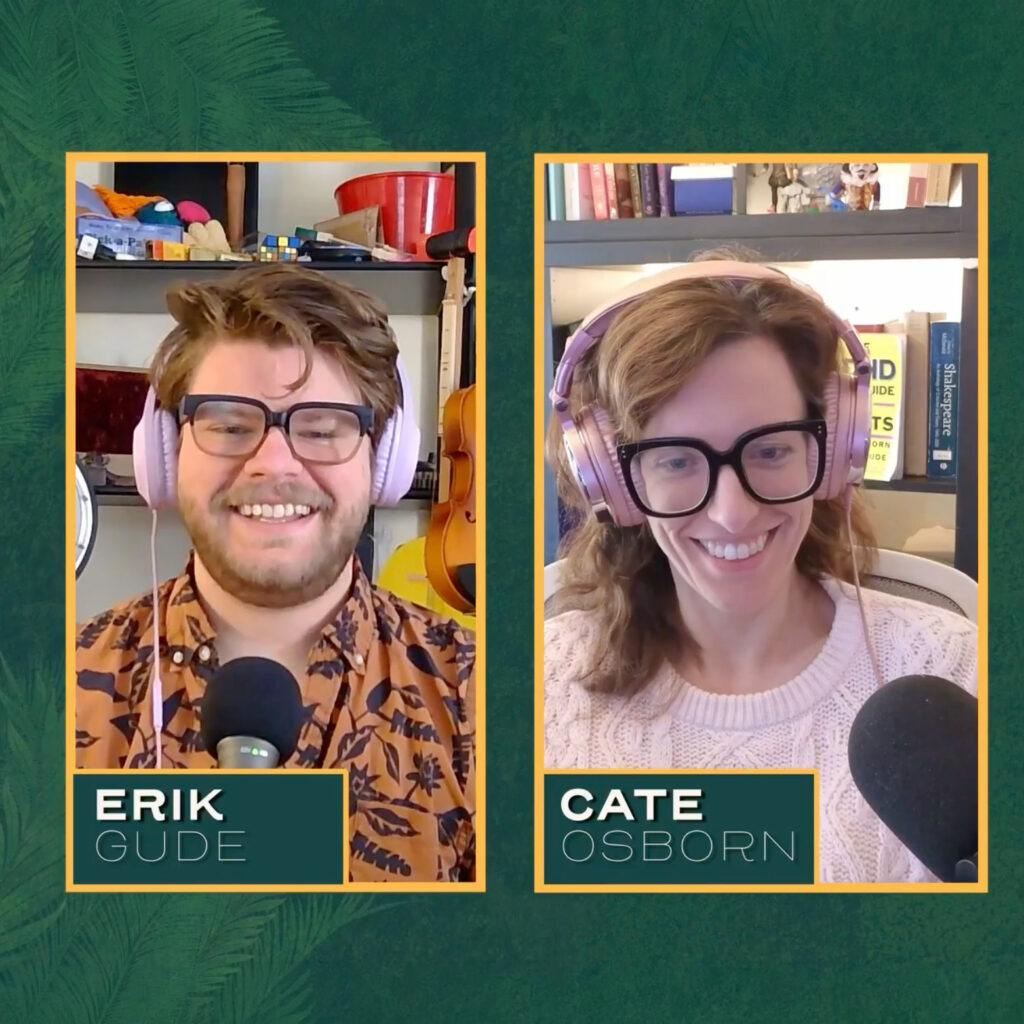
Today’s episode is going to be such a good one. I’m joined by two incredible ADHD educators and advocates, Kate Osborne and Eric good you might know Kate from sorry I missed this on underscore.org or from her work with the intersection of intimacy and neurodiversity, she’s a certified sex educator whose writing has appeared everyone everywhere, from the New York Times to Cosmopolitan. Eric is her co host on Katie and Eric’s infinite quest and ADHD adventure, the podcast that I already mentioned. And he’s also a creator, prop maker and the mind behind the wildly popular ADHD crafting challenge on Tiktok, together, they’ve written a new book called the ADHD Field Guide for adults. I can’t wait to talk about it today. I can’t wait to talk about it. It’s coming out March 3. It is ingeniously structured and designed to be accessible for neurodivergent readers. Katie and Eric not only offer witty, direct and research back advice from two people who’ve been there, but they also are here to say all to all adults with ADHD and listen, this is very important. You’re not a fuck up. Okay, they cover in this book everything from comorbidities and time management to hormones, interoception, intimacy, rejection, sensitivity and creating systems that don’t fall apart the minute your brain does something brainy. Really excited, really excited for you to hear this conversation. Let’s get into it. Eric and Kate, welcome to the show. I’m so glad you’re here. It’s so good to have you. I feel like I’m connecting with old friends.
Cate Osborn 4:50
I know this is crazy. This is you were the first podcast that I was ever on those it started here. So nice to be back. Y’all. Heard it. You heard it.
Kristen Carder 5:01
It started here.
Erik Gude 5:03
I remember the day I was leaving work when Katie and I were first starting about talking or talking about starting the podcast. And I was on the bus home from work, and I was like, Man, if I want to start a podcast about ADHD, I better listen to what’s out there and get it going. And you were literally the first episode of any D, and D or ADHD podcast I ever listened to was you, and that was five years ago, and now it’s now
Kristen Carder 5:24
that’s so fun. And look, look what’s happened since then. So for the listener who might not know you, would you just give us like a kind of Cliff Notes version of your ADHD journey, because I know you have your individual stories, but then what you’ve been able to create together has been incredible.
Cate Osborn 5:45
Yeah, Eric, you go first, well, sure, do you want my whole like, when I was diagnosed?
Kristen Carder 5:51
I mean, sure, I think everybody would be interested in just kind of your your own story, and then we can talk about how you guys came together and what you’ve been able to create since then?
Erik Gude 6:01
Yeah, sure. So I around the age of, I would say, 1113, 1112, 13. I started realizing that I really liked school. I really liked the stuff we talked about in school. I was really interested specifically in, like, science and math. And before then, I was sort of a kid. I was like, school is dumb and parents are lame and all that stuff. And I always figured, you know, I didn’t do well in school, which I never did, just because I didn’t want to. I didn’t care, you know, I was a kid. I was more interested in playing around outside and stuff. So then once that switch sort of got flipped, when I was like, wow, I actually really like learning. I really like listening to the teacher and hearing the stuff they have to say. I’d be really interested in how much better I could get at balancing chemical equations in eighth grade or something, if I did the homework. And so then I tried to, like, lock in. It was like, okay, cool. I like school. That’s interesting. I didn’t expect that. And so then I started really trying. I started really trying to do the reading and trying to pay attention in class and trying to get my homework done. And I still couldn’t, yeah, and that was a really, really shattering moment, especially at that younger age, when I realized, like my inability to sit down and just focus on something because I chose to was always was not what I thought it was. I always figured it was a choice. It was a switch that I could flip I cared. I would switch the focus flip, and I would pay attention and get my work done, but even after I became interested and started wanting to focus, I still couldn’t. Yeah, and that’s a really shattering, shattering moment, I think that is, I don’t want to speak for every ADHD or but I think we all have that sort of moment when we realize that there is something going on that’s outside of our control, and we’re going to have to start learning to live with that, live as that person. So I talked to my parents, I started, you know, getting evaluated for various things. And they said it might be ADHD, which started on a very long process of getting diagnosed and medicated and a whole bunch of other stuff, therapists, psychiatrists, references American healthcare system. It was, it was delightful. And I got diagnosed on November 9. I don’t remember exactly the year, but I was 15, okay, and that changed my life. I got medicated. I started learning to live with this brain of mine. The medication helped a lot, but I mainly it sort of started me on the path of learning to develop methods and skills and acceptance for for what my brain really was, and that by no means, and that by no means was like and everything’s fixed now you’re great. You know, it was a long, long, and still is a long journey. But my life got markedly better once I learned that I had ADHD. I was still never a school guy. I studied classical music and stuff, but once I graduated high school, I went right into the professional world. I became a cook, then I became a baker of sourdough bread, and then covid hit, and then Katie and I met because we were both alone at home with our ADHD. And thank God we both started making content, because that’s how our paths eventually aligned.
Kristen Carder 9:03
Oh, that’s amazing. That’s okay, so we’ll put a pin in that. Now, Kate, tell us your story, and then we’ll circle back to that fateful moment when the two of you met. Yeah.
Cate Osborn 9:15
So, well, what’s very funny is that Eric and I story are basically exactly opposite. I grew up, I was your very classic girl flying under the radar all of the signs and symptoms getting missed because I loved school. I loved school. School was a place where I knew what I was supposed to be doing and how I was supposed to be doing it, and there were rules and there were achievements, and I could, I wrapped all of my self worth and all of my confidence and my ability to get stuff done in school, and so I was very good at school. I was struggling everywhere else. I struggled in relating to my peers. I struggled with, you know, the sort of like points. Central, keeping my room clean. And yes, I would lose my homework, and yes, I would forget that I was supposed to do assignments, and I would get in trouble for talking like you know, Kate is a joy to have in class, but she needs to remember to raise her hand. I was that person. And so I floated through. I skated by just with enthusiasm and passion and being a very, very good writer, and I made it through high school. I made it through college. I made it through two master’s degrees before anybody noticed. And the way that I got diagnosed with ADHD is kind of fun. I had an ovarian torsion. I had an ovarian torsion in 2018 and I almost died. I lost an ovary, and the hormonal shift was so profound that it really set off my latent ADHD symptoms. I you know, I had struggled before. I still struggled with organization. I still struggled with a lot of like burnout and executive functioning issues and that kind of thing. But I got by, and then I had this ovarian torsion, and I had this massive hormonal shift that happened in my body, and I all of a sudden, I I was an actor. I was a performer, and I couldn’t remember my lines. I couldn’t sit down for long enough to learn my lines. And I was terrified. I was I was really and truly terrified, because this was not me like this was not how I worked. This was not who I was. And I really and truly was convinced that I had early onset dementia. And I was like, this, this because i i been discounted over and over for ADHD. I kept hearing, you’re too smart to have ADHD. People with ADHD don’t have master’s degrees. You know, it’s impossible you have ADHD, right? And so I went to a psychiatrist, and I left the day before my 30th birthday with an official ADHD diagnosis. And that kind of set me on this very fast track journey of like a spite fueled vengeance of wanting to do all of the catching up that I felt like I needed to do in order to really understand my brain and what I needed to thrive for the first time. And one of the things that I very quickly realized and I got so interested in was the hormone, the hormones. Why had nobody ever told me that ADHD is dramatically impacted by your hormones? Why had nobody ever talked to me about things like PMDD? Why they never talked to me about the way that executive functioning changes around your hormonal cycle? And the answer is because most medical professionals didn’t know. And so I went back to school. I went back to school. I became a certified sex educator, and I have ADHD with Kristen Carter gets the breaking news that I have just been accepted to a PhD program. And so I’m going to Yeah, and so I’m going to be studying that further and doing more research about neurodivergence and women and ADHD and hormones. And I’m very, very excited, but I just got fascinated in the relationship aspect of it. I got I got fascinated about how ADHD impacts our relationship and our intimacy and our ability to communicate, and how that shows up in our lives. And yeah, and so I started talking about it online, and then it was 2020, and people kept tagging Eric and I in each other’s content. They kept being like, do you know this guy? Like, you guys should know each other. This is you guys should, like, do something together. And then Eric, do you want to tell the story?
Kristen Carder 13:33
Sure, the universe brought you together.
Erik Gude 13:36
Yeah, it did. I know. I think back to that. The video that I first made that like, got me on Tiktok, and that moment of just deciding to make that first video, and all the things that happened from that and I would never have met Kate, I lay awake at night. I’m wondering, what if, but it was August 8 of 2020, you
Kristen Carder 13:55
guys are incredible at remembering dates
Cate Osborn 13:58
like it’s there are screenshots. So it is more of like we thought ahead to save it,
Kristen Carder 14:05
just in case the third time we’ve mentioned, like, a specific date, and I don’t, my brain does not conceptualize that at all. That’s amazing. I think
Erik Gude 14:14
I’m good at dates for the same reason I’m good with names is because I’m terrible with names and dates. So when a date comes up, I go, remember, I like study it in my head at night to remember August 8, but it was August 8. We’d been getting tagged in each other’s videos forever, and Kate messaged me and said, quote, by the laws of ADHD, Tiktok, you and I must do a collab, because collaborations were all the rage, they still are. And so we arranged a phone call, and we called each other, and the first thing I said to Kate ever was, is that notable tiktoker, Katie asaurus? And she said, is that notable Tiktok or Hey? Good? And I was like, Yes. And then we talked for about four hours, and we did not ever bring. Up the collab, it just didn’t come up. We were talking about the universe ADHD and everything, and at the end, we were like, Oh, dude, we people are expecting us to do a collab. We got to figure this out. And we’re like, okay, I’ll call you again tomorrow. So we called each other again the next day, and we talked for five hours, and we did not talk about the collab. And so we’re like, oh, what? I still, I don’t know if we ever actually did, like, an official Katie of source and hey, Google collab, but at some point, I think it was you, Kate. You were on a live, and you brought it up, right?
Cate Osborn 15:31
Yeah, yeah. I was on a live, and I mentioned that Eric and I had been talking, I was just talking to, like, the people who were coming in alive. And I said, Yeah, like, hey, good. And I like, we keep having this like crazy problem where we’re trying to play in this collab, and we’re talking for hours and hours instead. And like, I wish to this day, my greatest regret is that I do not remember who said this, but some random person in the comments that I would give anything to listen to that conversation, like, I would love to be a fly on the wall. And that kind of stuck with me. And so I kind of, like, went to Eric, and I was like, what if we, what if we did a podcast, like, what if we, what if we did record these conversations? And then, and then we did,
Erik Gude 16:14
okay, now you go, and then we did. And we were like, what do we call it? And we eventually arrived at infinite quest. And then I am glad I did in the moment, because I think it saved us a lot of time. I said, Kate, from now until the end of time, you may have top billing, Kate and Eric. It just we said, it both back. And we were like, Eric and Kate, Eric and Kate, Eric and Kate, Kate and Eric, Kate and Eric, Kate and Eric, where we both, we just decided Kate and Eric just sounds better. Yeah, Kate and Eric,
Kristen Carder 16:39
it is, I love it so good. Since then, you have had so much success, both individually and collaboratively and your your most recent brain child is this book that is coming out so soon, so soon. And there’s like author to author, although, like, I just had a huge wave of imposter syndrome,
Erik Gude 17:05
because, like, it’s okay, you’re welcome here. You’re welcome. That’s
Kristen Carder 17:07
fake. Let me just grab the puke bucket real quick.
Erik Gude 17:11
You also have a puke but I thought that was just me.
Kristen Carder 17:14
Oh, I think it’s all of us. But it’s just not easy to write a book, and I’m so impressed, and I actually think that it’s almost more impressive to write it collaboratively. I think that I would really struggle to write with another, with a co author, and and so I just want to say, like, well done, kudos to you. The name is the field guide for why don’t you go ahead and tell us the name? Because I know it’s got field guide in it. I know it’s got adults with ADHD, but why don’t you go ahead and announce the name of your book.
Cate Osborn 17:53
So it’s called the ADHD Field Guide for adults, and it is dropping March 3 from Simon and Schuster. And yeah, we’re really, really excited. And yeah, writing it collaboratively was so interesting, because when I was first approached again, it was, I was on a live, I was literally on a live, and somebody was like, Do you ever write a book? And I was like, Mike, yeah, I guess. I guess I could, maybe I would write a book, I guess. And it happened. It happened that on that live was our incredible literary agent Caroline, who emailed me and was just like, Hey, I heard that maybe you wanted to write a book. Would you be interested? And we started kind of brainstorming back and forth about what that book could look like and what that book might be, and I don’t know. And so at the time, I kind of was in this place where I was realizing that my ADH journey was very unique, right? Like I had the academic success I had, all of you know, I had the like, very quintessential, late diagnosed woman with ADHD experience. But I also knew that there were a lot of people in the ADHD community who struggled with school and who felt outside of those conversations. And I was like, Well, it happens that my co host of Katie and Eric’s infinite quest is the exact same opposite thing as me, and we lived these like very backwards, parallel experiences. And so I said, Well, what if we just wrote the book together? What if we each came at this from our own individual experience? And I’m so glad that we did, because I feel like it really made the book stronger and more welcoming and more inclusive. And we worked. We can talk about this more later, but we worked so hard to make this book representative of not just us, but the ADHD community as a whole. And we brought in guest experts and guest authors. We brought in so many different people and so many different collaborators to really shape a book that is by and for the community. And so, yeah. I’m infinitely proud of it.
Kristen Carder 20:03
So excited. That’s wonderful. What do you what would you say? Kind of sets it apart from another ADHD book. Like, what is it about your book that you’re really excited about and proud of? And like, what is it for the people listening? Like, what is it about the book that you’re like, hey, it’s not like that other book you read,
Cate Osborn 20:29
Eric, is it okay if I answer this one? Yeah, go for it. So it started with the design process. One of, one of the hardest things is we knew going in that people with ADHD struggle to read, some people, and so we wanted to make it incredibly accessible. And so every component of this book, from the design to the layout to the font, the dyslexia friendly font, every facet has been designed with the ADHD community in mind. And then even past that, again, like you know, Eric and I are two white people writing about ADHD, and there are far more experiences than that in the community, and so our book is one of the only books that exists that talks not only about like the bipoc experience from bipoc experts, but we also brought in trans experts and non binary experts to talk about how those identities and those marginalizations impact we also have hundreds and hundreds of quotes from the community. We illustrated it. Not that this matters at all, but this is has become a very popular selling point, is that every illustration has a hidden cat in it somewhere. We wanted to have like little. We wanted it to be fun. And then we also came up with the idea of, I don’t know if you have this Kristen, but I don’t necessarily read linearly. Like, I’ll pick up a book and I’ll flip through it, I’ll be like, well, interesting, right? And so we wanted to welcome readers however they experience books. And so the book is designed after the like, Uncle John’s bathroom readers, where you can kind of open to any page and there’s, like, a fun fact or something that you can learn a skill. You can take away some information that you might not have had before, but you can also flip around. You can read it start to finish. You can read it back to front. There’s a lot of ways of doing it. There’s digressions. There’s strange little easter eggs, actually, Eric, do you want to talk about the easter eggs and the like weird stuff that we added?
Erik Gude 22:19
The weird stuff that we added? Well, I think the our our Illustrator Lucy. Our illustrator. Lucy is a fantastic illustrator. She reminds me a lot of my dad’s illustrations. Was one of the reasons we picked her, and we just kept saying to her when, when she would give us back illustrations like busier, more stuff going on, little stuff to look for. And so that’s sort of where the cats came from. We like an executive dysfunction to sort of like herding cats so cats throughout the book that we are incapable of hurting everywhere. I like a lot. What other easter eggs are you thinking of?
Cate Osborn 22:55
Oh, I was, I mean, there’s just everything like, because we really wanted to make it about who we are. And so, like, I am an academic, and I love history, but I also know that history isn’t always like the most accessible. And so there’s a big section on ad on the history of ADHD and how ADHD was discovered, because I think that understanding that context and sort of placing yourself in history is really important and can be really powerful, sort of taking ownership of neurodivergence. Eric was a chef, and so there’s, like, recipes in the book and that kind of thing as well. And so it’s not just a book about ADHD. It’s not just a book about, you know, the best way to fold your pants, or whatever it is. I like to say, I like to really think of it as it is a celebration of what happens when two people with ADHD kind of set out to teach others about ADHD. And it gets very ADHD, but I think that’s kind of nice. We Yeah, no walls of text.
Erik Gude 23:59
And I also, if I could just add, I also think it doesn’t seek to coddle you. Yeah, I think there’s a lot of coddling that can happen in the in the ADHD community. I think it’s very you always want to say, Hey, it’s okay. You’re all right, you’re you’re fine the way you are. And in a lot of cases, that is totally true. A lot of the things that we ADHD ers feel bad about, I would argue that we shouldn’t feel bad about, yeah, but it also will sit you down and say, Hey, I know it’s hard for you to not interrupt people. You know, that’s a very common ADHD experience, but you still shouldn’t interrupt people, right? You know, it doesn’t shy away from telling the reader that they do have changes that they need to make if they want to live happily as themselves and not offend their friends and family, work and stuff. So I think a lot of times, a lot of advice for ADHD, for me personally, at least, sort of gets lost because I don’t. Trust the person it’s coming from, because I know they want to say what I want to hear. And so when we started writing the book, we sort of made a little pact that we were going to say really what we think about this, what is really the truth? Is the truth of the matter, or what is our honest advice? And look our readers in the eyes and tell them how it is, or how, at least, how we feel it is. And I haven’t really seen a lot of ADHD media that seeks to do that. And I think we were pretty successful. I think we we walk the line of, you know, tough love. We have, actually, we have a mascot for tough love. It is a type of dinosaur. To find out what type of dinosaur, I suppose you’ll have to get the book, read the book, but we tried to skirt the line of, you know, being there with them, meeting them, where they are, having compassion for the reader, but also not being afraid to tell them how it is. And I think we were pretty successful in that.
Kristen Carder 25:53
What I’m hearing you say is that it’s fun, but not infantilizing. Yeah.
Cate Osborn 25:59
Would you say I like that. Yeah, it’s we tried really hard, because for us, personal accountability is really important, and being online creators can often be challenging because the narratives are often built around this infallible idea that you have ADHD, you are perfect, just the way you are, right and you don’t need to change anything. And if your friends really liked you, you would be allowed to interrupt them all the time, and if and if people really understood you, you’d be allowed these behaviors. But I really think that it’s important to hone in on the fact that we do owe other people kindness and compassion, and the same kindness and compassion that we want extended to us. We want to extend to others. And so the book is is very much based in that kind of idea of, how do we take accountability while offering ourselves compassion and kindness and understanding and also offering that same kindness and compassion to others. And so I’m very proud of how kind it is. It’s very kind. Book is a very, I think it’s very, sort of like eye level with the reader, but yeah, we don’t shy away from some of the more challenging topics that sometimes can get sticky in terms of those conversations
Kristen Carder 27:14
regarding those challenging topics. You know, the two of you have such a huge social media presence, and have conversations with ADHD ers out in the wild constantly. And I was excited to talk to you today because my relationships are more parasocial, where I’m like speaking to an audience, but not necessarily having a back and forth conversation. There’s some of that once in a while, but not as much. And of course, people come into my program, but those are kind of like, you know, the people that I attract, like whoever kind of resonates with me and my message, etc. And I was excited to talk to you today, because I feel like with the way that you’re kind of set up. You have the pulse on the ADHD community in a very different way than I do. And I’m just curious like, what do you see as being kind of like the the main topics of conversations in the community right now, I should say to the listening audience, you, you have millions of Tiktok followers, and so like, when I say, like, Oh, you have a large social media presence, like, we’re talking millions, and that relationship is different, like, when, and actually, maybe you can correct me if I’m wrong, but I imagine the relationship is different When that is kind of your primary focus, where it’s focus, where it’s like, there it’s a more conversational relationship, more of a back and forth. And so I’m just curious, like, what do you see that ADHD ers are struggling with in the community at large right now?
Cate Osborn 28:55
For me, it’s two very specific things. I think there is a large faction of the ADHD community who all kind of got their diagnosis around the same time that like 2020 2021 Yeah. And now it is 2026 and there are obviously people who are getting diagnosed every day. And I literally every day get messages from people saying, oh my gosh, I just got diagnosed with ADHD because of your content, you know. And that’s why, content, you know, and that’s wonderful, but I think a lot of us are in the same boat of we are now five years on, and we’ve accepted ADHD as part of our identity, and we understand kind of how ADHD shows up in our own lives. How do we live the best life. How do we live the most fulfilling life? And it’s not necessarily about ADHD anymore. It’s not necessarily about, oh my God, what do you mean? Exactly like, I didn’t even know executive functioning. I didn’t know what that term was. There’s a lot of what do we do next? Like, what is the next thing that we do to integrate that? Understanding of identity, and how does that shape the rest of my life? Moving forward, that’s kind of one half of the conversation, and the other half of the conversation is, I think, just so directly tied to the work that I do, which is I am noticing how much this impacts my relationships, and this impacts my relationships, and this impacts my relationships on a granular Minute to Minute, second to second, day to day, thing. How do I navigate this? Because I do struggle with executive functioning. I do struggle with maybe social cues or communication. How do I navigate this particularly tricky, sticky relational issue, and what is the best way to move forward now that I know how my ADHD is impacting me and how it’s showing up in this relationship, without making excuses, without blaming my ADHD and taking no personal accountability, and that just shows up constantly. The way that ADHD impacts relationships is just, I would say, easily, 90% of everything, and it’s if I may, shill further on understood.org my show, sorry I missed this is entirely focused on relationships. And so, you know, all the letters, all the emails, all the comments that we get are just so based in, wow, this really does impact my ability to relate to other people, including the people that I love. And I just, I still think that is such an overlooked component of
Kristen Carder 31:33
ADHD. I totally agree 100%
Erik Gude 31:37
I think since I think, yeah, around 2020, when covid hit, I think there was, well, not, I think there was a big uptick in people getting diagnosed with ADHD, not provably, but arguably, because people are now alone in their house. You know, they’re they’re now having to sit with themselves. Also, with the rise of short form content and social media, more people are just learning about it in general. But I think with that uptick and with that conversation really blowing up between 2019 to mid to late 2020 there was a huge, huge wave of relief that finally I get to talk about these experiences that I was formally embarrassed about or told I what I shouldn’t talk about if I ever want to get a job or something like that. There was this huge outpouring of relief. It was like a sigh from the community of just, oh my gosh, does anybody else you know, like, I don’t know, forget to flush the toilet every once in a while, and then your spouse comes home and you feel gross, or whatever, whatever it is, there was this, there was this relief that we could talk about those things. And I think that moved into acceptance. A lot of people were starting to accept themselves for who they were, as people with ADHD, and also feeling that they were worthy of acceptance from others, feeling that we as a population of people with ADHD, are allowed acceptance. We’re deserving of acceptance, we’re deserving of accommodation. We’re deserving of patience and compassion and all those things, and that’s awesome. But I think, all in all, as a species, I think we seek balance, and so after that huge outpouring of radical acceptance, I think there’s been a slow, slow shift towards okay. We need to accept ourselves for who we are, because we are who we are, and we should be accepted by other people for who we are, because that’s just a good thing to do. But we are still accountable for our behavior. We are still accountable for the things that we do in the way that we affect other people. So how do we balance radically accepting ourselves for who we are and how our brain works, while also acknowledging that certain behaviors that our brain is want to cause do need to change, and I as an adult have agency over changing my behavior. So I think the conversation, writ large, especially over the past five or six years, has been seeking, well, is not has been, but I think is is heading towards trying to balance acceptance and accountability at the same time. And I think our book try not to keep bringing it back to the book, but I think our book tries to strike that balance. Yeah, there might be an over correction in the coming years. Who knows, right? But I think our book really tries to walk right down the middle. And I’m really heartened to see that the community is willing to hold both of those things as true. Time. It’s a hard thing to do. It is, I think the pendulum impressed
Kristen Carder 34:32
with people. The pendulum often swings from one end to the other right. You either have to fully, fully accept me, just as I am, with no changes, or I’m a piece of trash. I can’t do anything, right? You know? I have to change everything about myself in order to be loved. And it’s like, how can we help that pendulum to kind of swing more in the middle between like, everybody is good and bad at the same time, and we can love both sides of ourselves and of the people. In our lives. Yeah, that acceptance and accountability, I think, is so important.
Erik Gude 35:04
Quick aside, I had a big etymology hyper fixation when I was like 18 and 19, and one of my favorite words is rational, because the the word rational comes from the word ratio, a balance. So to be rational is to seek balance. So I think the book seeks to be rational in that it seeks to balance both acceptance and accountability at the same time. I love that.
Kristen Carder 35:29
I love it. Are there any new, annoying ADHD myths that you’re seeing on the tiktoks? What is popping up that you’re like, Are you effing kidding me? Like, what in the world is going on?
Cate Osborn 35:47
I you know, I don’t know if this counts as a myth, but one of the things that I look at with increasing concern is the rise of chat GPT is my therapist, and how tricky and spicy that conversation gets, because I think to have that conversation, there’s so much acknowledgement that we have to have around the lack of access to quality mental health care and how secondary mental health care is to other types of health care, especially in the American system. And how, you know the insurance is broken and capitalism is very but you must rail it capitalism to begin the conversation. But I don’t know there’s, there’s a lot of comments. There’s a lot of stuff that I’m starting to see about how chat GPT is the best therapist that I’ve ever had, and my neurodivergent brain isn’t built to be in a room with a human. This robot is is much better at at therapizing me. And I worry about that. I worry about that a lot because I never want to invalidate anyone’s experience. But I think when you start looking at kind of like how large language models operate, and the way that chat GPT is built to sort of placate and keep you coming back, I worry that a lot of the information that is getting disseminated around the use of AI as an ADHD support tool, maybe doing more harm than good, and it’s a very difficult and very polarizing conversation, because if you if you say, hey, maybe use caution, there’s immediately 100 comments of people Telling you horror stories of bad therapy experiences, right? And times when therapy has been a letdown, and we have to hold those two things to be true at the same time, we have to acknowledge that not every therapist is good at their job, but I think we do also have to start, maybe more specifically, naming the dangers of of that kind of thing. The other thing, I don’t know, sorry, I’m just going to tag on to my own gone, but I’ve actually been doing having a lot of really interesting conversations about how neurodivergent individuals are more likely to be pulled into more right wing, more violent extremist sort of ideologies because of the way that our support systems and our mental health systems are not supporting the people who are the most vulnerable, and that has been a really eye opening. Sort of field of research is seeing people getting lost, kind of down, like the red pill, manosphere, kind of ideologies, because it is so easy to look at somebody who has been marginalized, who doesn’t feel understood, and say, well, over here, we see you and we welcome you. And how, I think aware and careful parents need to be around the type of ADHD education that their kids are consuming because a lot of it has a lot of bias, and a lot of it is is biased towards harmful and and I guess, like, I don’t want to say, like, violent, but just harmful and and polarizing ideologies, and that’s been really interesting to see that become more prevalent on social media as different organizations have been, like, affecting the algorithms in different ways.
Kristen Carder 39:37
Eric, do you have anything to add to that? I Yeah, yeah.
Erik Gude 39:44
I think they’re a couple of them have been around for a while, and they sort of in terms of ADHD myths, they’ve been around for a while. A couple of ADHD myths have been around for a while, and they sort of swing up and down every once in a while, like a superpower one, yeah, huge, Yeah, huge. Yeah. For the record, I think anybody is allowed to understand their own brain however they would like that is totally, totally valid. So if you want to think of your ADHD as a superpower, totally go for it. Absolutely make a costume, but understand what would that cost you? I was
Cate Osborn 40:19
immediately I was immediately I was gonna be like, what would it look like? That was immediately when I was like, this all over. It’s all over. Interesting.
Erik Gude 40:27
If your logo was to be cutlery, would it be spoons, because sometimes you don’t have the spoons for things. Or would it be a fork because you’re forking off, you’re
Cate Osborn 40:36
like, a fork and a spoon crossed, oh, that’s a good one. Or, like, a pile of spoons with like a fork in like a flag with like the fork have has anyway. We should talk about this
Kristen Carder 40:49
suit up we ride.
Erik Gude 40:51
But so you are allowed to think of your ADHD as a superpower. But also, other people have the right to not think of their ADHD as superpower. And ADHD, at the end of the day, is a develop a debilitating mental disorder that people suffer from. And I don’t just mean suffer in the medical sense, like one suffers from a disease. I mean it causes immense amounts of suffering, or can so be aware that if you’re calling yourself, you know if your ADHD is superpower, you might be rubbing someone the wrong way that being said, You do you. But the ones that bother me the most, the ADHD myths that bother me the most, are the ones that start to breach into borderline medical language. Yes, as of today, as of the date of recording, which is the 12th ADHD does not have different types. It has different presentations. There’s, I know you both know this, but you, dear listener, there’s ADHD predominantly inattentive, ADHD predominantly hyperactive. And if you’re a combo of those two, you’re ADHD combined. Those aren’t different types of ADHD. They’re different ways that ADHD can present. But there appears to be a lot of money in making apps or something. Yeah, that defines specific ADHD quote types. Like, all over the map. Some of them are like, What is your ADHD type? Tiger or Rhino, giraffe, like, platypus, like they’re so, oh, my strange. And everywhere I’ve seen all different types of these things. Some of them sound like, Oh, is that a new study that just came out, is there a new DSM? I didn’t know about, but it’s just some random account trying to sell you some random thing so and
Cate Osborn 42:28
directly ties to the rise of AI, because AI is making it so much easier to just make these apps right and then charge people for them. Just, you know, like, it’s all, it’s all connected,
Erik Gude 42:40
connected now, like, I love a good model. I mean, like a scientific model. You know, we think of light as a wave, even though it’s not literally a wave, it’s a useful model to think about light as a wave. So if, if it’s useful for you to think of your ADHD as Tiger type, I fully allow you, you are allowed to think that I subscribe that that’s fine, but the fact that it sounds so official and so medical, sometimes it really worries me about muddying the waters as we actually learn seriously peer reviewed things about ADHD that it’s going to be hard to discern between what is AI slop and what is actual medical research coming out. That really worries me.
Kristen Carder 43:17
Yeah, we could talk for hours about about that I’m like, trying to restrain myself from going down that rabbit hole, because I do feel like that is so concerning, and there are so many opportunities to be exploited and taken advantage of, and to have your, you know, just your money, but not just your money, like your time, your energy, your effort, like part of your soul, like hijacked in those cases. And that is so concerning.
Erik Gude 43:52
I mean, I think your own understanding of yourself, you know, taking people’s money and time and attention are all terrible, but if you we trust the internet a lot in a certain place. And I think if you’re reaching through someone’s screen and attempting to grab them by the brain and cause them to understand not only the world differently, but to understand themselves in a specious and I frankly, made up way, that’s a really bad thing to do, I would argue, is a cruel thing to do. So shame on any if any of you are listening, shame on you right now. Don’t be medically accurate, please. Thank you.
Kristen Carder 44:34
I have absolutely loved having you. This is so fun. I want to do it every single day, yes, please. I want to do it every day, but tell us where we can find your book, where tell us all the things, where we can find it. How do we get our hands on this book?
Cate Osborn 44:48
Okay, well, it comes out today. This very day it is available at a bookstore near you. I so you can go. To whatever bookstore you love. We love encouraging you to go to locally, independently owned bookstores in your community, because we love little bookstores. You can order it online, wherever you get your books. We have been encouraging people to utilize bookshop.org because it does also donate a small portion of the proceeds back to your community and bookstores in your community, if you don’t have the scratch to buy the ADHD feel guide for adults. We see you. We know how it is. We encourage you to go visit your local library. Sign up for a library card and ask that they request a copy, and they, more than likely will. There is also an audio book version available for those of you who like to listen rather than read. We see you. ADHD, ers, that was a big thing that we really wanted. This is a little bit of a sidebar, but that was one thing that we really, really wanted to do, was have an audiobook version as well. Eric and I have recorded that. There’s some fun Easter eggs in that as well that you can check out and if I may, chill separately for a moment. We are also going on tour. I’m doing a new show called wildly unprepared that is about ADHD and curiosity and getting excited and passionate about stuff. As part of that, we’re also going to be doing book signings and meet and greets across the country. So if you want details on where we’re going to be and when we’re going to be there and how you can come say hi and get tickets and all of that, you can visit katieosaurus.com
Kristen Carder 46:22
and Eric, I know that you’re kind of just in a maybe holding pattern right now. Is that a good way to put it?
Erik Gude 46:29
That is exactly the term I would use. Okay,
Kristen Carder 46:31
I love that, but I do want to say that I don’t peruse the tiktoks very often, but I did hop into the neighborhood this morning, and I went down an Eric good rabbit hole, like I was deep in it. And I am obsessed with you, the instruments that you’re making. It’s so fun.
Erik Gude 46:51
Thank you. Yeah,
Kristen Carder 46:52
thank you very much. So fun. Obsessed. It’s
Erik Gude 46:55
the it’s like the longest running hyper fixation I’ve ever had. The last two years, three years, has just been a whirlwind, like, I’ll blink and there’s a viola in front of me, and it’s like, oh my gosh, when did I do that?
Kristen Carder 47:06
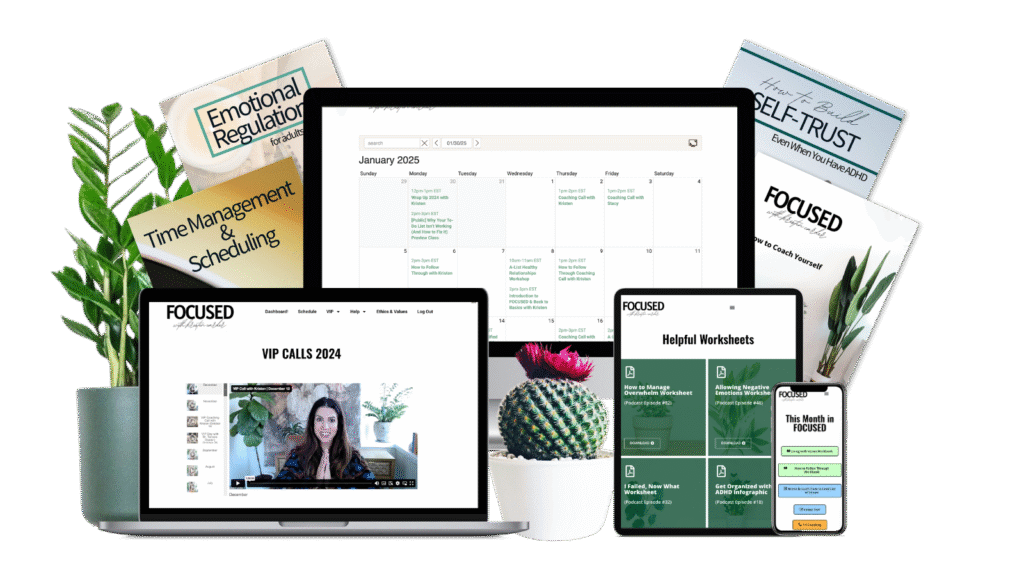
All right, everybody, we are going to make sure we have all of the links in the show notes for you, but make sure book is out today. Go get their book. It’s going to be absolutely incredible. Kate and Eric, thanks so much for being here. I have loved connecting with you. I felt like it was just condo with old friends. I appreciate you being here. Thank you so much for having us. Yeah, thank you so much. Hey, ADH, dear. I see you. I know exactly what it’s like to feel lost, confused, frustrated, and like no one out there really understand the way that your brain works. That’s why I created focused. Focused is my monthly coaching program where I lead you through a step by step process of understanding yourself feeling better and creating the life that you know you’re meant for. You’ll study, be coached, grow and make amazing changes alongside of other educated professional adults with ADHD from all over the world, visit Ihaveadhd.com/focused to learn more.