Kristen Carder
Welcome to the I have ADHD podcast where it’s all about education, encouragement and coaching for adults. With ADHD, I’m your host, Kristen Carter and I have ADHD, let’s chat about the frustrations, humor and challenges of adulting, relationships, working and achieving with this neurodevelopmental disorder, I’ll help you understand your unique brain, unlock your potential and move from point A to point B.
Hey, what’s up? This is Kristen Carter, and you’ve tuned into the I have ADHD podcast. I am medicated, caffeinated, regulated and ready to roll. Hello, hello, get in here. Happy. April. It is finally spring. The birds are chirping, the sun is shining, the grass is green. I mean, everything is becoming right in the world again. And I hope that wherever you are on this globe that you’re just enjoying it, that like April is your month. It’s just so wonderful for you. Today, we’re going to be talking about surviving Saturdays. And I think that this is such a relevant, annoying, obnoxious topic for adults with ADHD, because it seems as though, you know, we can set up so many precautions for ourselves to stay kind of in our lane and doing the right thing during the work week, when we have very structured time, and then time off comes, or the weekend comes and like it, all just falls apart. And that is exactly what we’re talking about today. It’s like the weekend is where ADHD symptoms go to party. It’s like that’s where they go for their Rangers, and we are the victim of that constantly. So we’re going to be talking about that today. I wanted to give you just a very quick update on my book. We have finally landed on a title that I’m not yet at liberty to share with you, but it’s a good one. I am. I am starting to get very excited, like this is happening soon. This is going to be published in October. I am starting to get so excited, so I cannot wait. You will be the first to know when I am at liberty to share the title and when pre orders are ready, and all of that. And I just, I’m so glad that you’ve been walking with me along this journey. I know it has been a saga. It has been a saga. So thank you so much for being here for it. I can’t wait to be done. I can’t wait to just, like, check that off and just be done with it and not worry about it, because we’re still in the middle of it. We are still where we’re in the final round of edits prior to copy editing, which I’m not even really sure what that is. I think that’s like punctuation and stuff right now. We’re just like in the final round of the the actual edits. And I was told that we need to cut down 10,000 words. So that’s what we’re doing right now, which is not easy. 10,000 words, I turned in 86,000 words, and they were like, Oh, thanks. We need you to cut 10,000 I was like, no, okay, so that’s where we’re at with that. And I just want to let you know if you’re new to the podcast, if you’re new to ADHD, if you’re exploring what it means to have ADHD, I created a resource called 10 Things I wish my doctor told me about ADHD, because when I was diagnosed, and when so many of the people that I support were diagnosed, they were told, yep, you have ADHD, here’s a prescription. And not given much information about what does it mean to have ADHD? How does it actually impact my life? What should I expect? What’s the difference between an ADHD symptom and just like my personality or a character flaw? And that’s what this resource goes deeply into. It’s very long, it’s comprehensive. It’s called 10 things. I wish my doctor told me about ADHD, and you can find that at, I have adhd.com/ten, things.
I hope you grab it. It is really, really helpful. It’s, it’s got just so much comprehensive information in it. I went through it about a year ago and, like, beefed it up and really updated it. And so now it’s like, it’s basically like an ebook, not overwhelming, but I think it’s like an ebook. It’s, it’s, it’s a goodie. So go to I have adhd.com/ten, things to grab that. Okay, so why do we look forward to the weekend, all week long, and then completely fall apart when it gets here? Like, why? Why is this like, I wonder if you see yourself in this cycle where it’s like, I can’t, I can’t wait to have time off. I can’t. I’m gonna get so much done. I’m gonna get so much rest. I’m gonna recover. I’m gonna recuperate. And then the weekend comes, or, let’s say, your vacation time, or whatever, like, time of. The day, or, excuse me, of the week or the month that you have off comes and it all goes to hell. It all falls apart. You’re just like, why you wake up with the day off, and there’s so much potential, and you’re so happy, at least, I’ll speak for myself, so happy that there’s no structure. Like, thank God I get a break from, like, having to follow a plan, right? There’s no urgency, there’s no boss. But then by like, 2pm you’re just like, wait, the day is half over. All I’ve done is scrolled. I’m paralyzed on the couch. You start to feel guilty, you start to feel overwhelmed. And then by Sunday night, you don’t feel restored, you don’t feel recuperated, and you’re shame spiraling, and you have, like, the Sunday scaries because you have to start the week the next day. You’re like, No,
I’ve gotten nothing done. I don’t feel rested and restored. I feel worse than I did when I started, because I had this, like, invisible list of shoulds that I was going to accomplish, but never did. And and now I have, like, the anxiety of knowing that my week starts tomorrow. Oh my gosh. And so this is what we’re going to talk about this week. I was, I was chatting with a friend who was recently diagnosed with ADHD, and she told me she had just started medication, and she told me how her doctor recommended that she not take it over the weekend. Her doctor was like, take this stimulant medication, but you don’t have to take it over the weekend. And I was like, Oh my gosh. So she was telling me how, like, she felt great during the week. She was noticing a difference. She was getting more done. But then the weekend came, she didn’t take her medication. And she was like, it was as if my parking break was on, like, I just I couldn’t move. I was stuck. I didn’t get anything done. And I was like, Yes, of course, because ADHD is not the kind of thing that you can just support in one context, but not in other contexts, right? We it needs consistent, constant support. I was told when we started medicating my son, who is inattentive type ADHD, so he gets very spacey and very locked up in his brain when he’s not on his stimulant medication. So what it looks like for him is that he kind of retreats into himself, and he doesn’t really socialize, he doesn’t really talk. It’s as if he’s like in another world. And the doctor was like, Oh, he doesn’t need to take it over the summer. And I was like, like, Hell, he doesn’t need to take it over the summer. This child struggles so much socially because he’s locked up in his brain. And you think that I’m going to take the support away from him during the summer, when he’s the most social, when he’s most able to like get together with friends and ride his bike to the park and go fishing with his friends. You think that I’m going to allow him to be locked up inside the castle of his mind all summer long. Absolutely not, absolutely not. I have so many big feelings on this, and I’m not even to the part in my notes about this, so I’m gonna rant on it again. That was just a little taste of it. Let’s let’s move forward. My weekends have improved quite a bit. So if you listen to a very old episode entitled surviving Saturdays. It’s from 2020, I talk about my evolvement, and like I was kind of in the middle of it at the time. So this is six years ago, and I was just figuring out as a what 38 year old woman who had been diagnosed with ADHD for almost two decades, I was just figuring out that, like, oh, weekends are really hard for me. Oh, I really struggle when there’s no structure. Oh, I wonder if I should be, not less vigilant about my medication on weekends, but actually more vigilant because of the lack of structure. It was like this process. I’ll link, I’ll link this old episode in the show notes if you want to go check it out. You can hear from 2020, version of Kristen Carter. That’s a very different vibe.
But I was just learning these things. I remember saying to my husband on a Saturday, and I did this like a million times, so what are we doing today? And he would be like, I mean, I don’t know what you’re doing. He’s like, I have a plan. And he would, like, lay out his plan. And I would be like, wait, what? Why didn’t you make a plan for me? Like, so, like growing up, and, I mean that very literally, like, intentionally growing up and and having this understanding of how difficult the unstructured time is is really important for us. My gosh, I wanted to read this. One of our focus members posted this in our Slack regarding weekends, and I just thought it was so relatable. She says, I’m all. All over the place on weekends, often it’s all or nothing. I’ll do housework or chores all weekend and then be super tired by the end of the weekend, or more frequently, I tell myself I need a break, and then I just scroll on my phone and buffer all weekend, and then I’m mad at myself for getting nothing done again. Generally, I have a million to do’s in the back of my mind or in some hidden list, and then when it’s time to look at them and make a plan, I’ll get overwhelmed and I’ll shut down and do nothing. I feel like that sums it up absolutely perfectly. So why are weekends so hard? First of all, I think that while we resist structure and we’re so happy, at least, I’ll speak for myself, so happy to not have structure on the weekends. No external structure is actually really difficult for us. It’s really, really difficult. No structure often equals no activation. Really hard to get ourselves moving and going if, if there’s no if there’s no structure, right? So we’re like, oh, I have the whole day free. This is amazing. And we start to, like, create this inner like, list of shoulds or coulds, and we don’t actually get any of it done because there’s no structured time. Which leads me to my next one. There’s often too many options. There’s we, we’ve all carry around the ball and chain of the running list of things that we could or should do, or could and should do, right? We, we carry, we like, drag it along with us, like a ball and chain. The problem is there are so many options when our time is our own. So should I clean out the garage? Should I organize my closet? Should I file my taxes? Should I go to my son’s soccer game? Like what? There’s just so many options. We often struggle with decision paralysis, and it’s like, I don’t have time to get it all done. I don’t know which one to choose, so I’m just not going to choose anything, because time is unstructured, it doesn’t feel like there’s a lot of urgency, and so there’s not a lot of dopamine involved. So again, it’s very hard to get activated. We have so many undefined should, shoulds or coulds, so many things that we should or could do. Again, we’re dragging it along like a ball and chain. We don’t know how to prioritize. We don’t get anything done. And we have a very real and valid need for both downtime like actual rest. We have a real and valid need for actual rest, and then we also have this real and valid need to get things done that keep our lives moving forward, like laundry and groceries and cleaning and whatever the case may be, you have to make the Amazon returns. Like, when do you make that? You do it on Saturday, but like, so you have this list of things that like would be very helpful to get done, and you have, at the same time, a very real and valid need for rest and downtime. And it’s as if those things to like both compete against each other. And then amongst all of that, there’s this overwhelming pressure to use your time. Well, right? Oh, makes me want to puke, like I should. This is my time. I have the whole weekend. It’s my time. I need to use this time well, and that pressure will lead us to shut down more often than not. And then, of course, we have ADHD, so there’s time blindness, the whole day, like you give me a whole day. I don’t, I don’t know what to do with that. We have our toddler brain, like our frontal lobe, does not want to kick in. It wants a break, and so we have this, like toddler brain.
And it’s very interesting, because for most of us, during the week, we’re told what to do. Here is the project you need to work on. Here’s the meeting you need to be at here. Here are the different, you know, KPIs that need to get done, etc, etc, but when it’s your own time, and you’re your own boss of the 48 hour weekend that you have, it’s just like, I don’t know how to organize this. I don’t I don’t really know what to do with it. I don’t want anyone telling me what to do with it. I don’t even want to tell myself what to do with it. But then that gets a little tricky, because then I don’t get anything done, including resting, including like restoration. There are a couple of myths that also make this worse. Myth number one that weekends are for catching up on everything, which is, I think, like, this secret thing that we tell ourselves, like, I’ll get it to it on the weekend, I’ll get it I’ll get to it on the weekend. And then, like, we’ve got so many things that we tell ourselves we’re going to get to on the weekend, it just becomes unrealistic. It leads to this feeling of failure because we didn’t follow through. On this fantasy that we created for ourselves, that we could actually get it all done on the weekend. Myth number two is that, like, every single weekend should be used to be productive and to be restful and to be social and to do all that, like all of the different categories of things to get done, like, I need to be productive and I need to be restful, and it’s just like, it’s it’s too much. And then Myth number three, so I’m going to go back into my rant here is that we don’t actually need to support ourselves on the weekends. I don’t really need to eat. I don’t really need to take my meds. I don’t really need to be vigilant about my hydration. I don’t really need to move my body all of the things that, oh and I don’t really need to sleep right, like weekends are for staying up late, but all of those things are what support our ADHD and minimize our symptoms. Medication minimizes our symptoms, eating well and at regular times minimizes our symptoms, sleeping minimizes our symptoms, and so it doesn’t none of this cures. ADHD, I’m talking about making symptoms less visible because we’re supporting ourselves. And on the weekends, we’re like, I don’t really need it. This is my fun time. I can stay up late. I can sleep in until 12 and like, not eat breakfast, not take my meds. I don’t really need to worry about, like, drinking water. This is the time that I don’t even want to think about moving my body and all of the support that we have in place that really helps us with our ADHD symptoms. We just think that we can just take a break for it. And so many medical professionals also perpetuate this idea by just saying, like, I you don’t need to take your medicine on weekends, or you’ll probably want to take a med break on weekends, which is terrible advice, in my opinion. I’m not a doctor. I’m not a psychiatrist. I understand that. That coming from me, it may be like, Well, how do you know better than a doctor? Let me tell you. First, I’ve read the research. Second, I have ADHD myself, and I’ve lived this for decades. And third, I support 1000s of people with ADHD, and over the last six years, seven years, I’ve seen such a theme of like, doctors telling clients, patients you don’t need to take medication on the weekend, and then patients crashing and burning on the weekend and being like, I guess I’m just a bad person. I guess I’ll like, as if on the weekend you do not need your ADHD to be supported when literally this is your time to be productive in your own space.
During the week,you’re meant to be productive in someone else’s space, right, like for your job and you’re being productive for someone else. But on the weekend, is your time to be productive, even if that productivity is restful, even if it’s going for a hike, even if it’s, you know, doing like going to dinner with friends, that is still productive in that it it produces life in you. It’s productive because it serves a purpose for you personally. So I would argue that it is just as important, if not more important, to be taking your medication on the weekend, because if, if you do not support your ADHD symptoms on the weekend, your ADHD symptoms will come for a party. They will come for a rager and and your weekend will be completely hijacked, and then you’re going to feel like a bad person, as if, as if you’ve done something wrong, when really you were just following, in my opinion, very bad advice. Okay, so why would we remove support from our brain on the days that require the most self direction. I’m going to say that again, because I think it’s very important. Why would we remove support from our brain on the days that require the most self direction? No one’s telling you what to do, and you have this like, big list of things that you want to do. Why would we remove support from ourselves on those days? Okay, so if I can just convince you that the weekend is the time that really is for being supported the most, I think that that would be a huge win for me on this podcast. Like, if I can just convince you that, like, Okay, on the weekend, at the very least, I’m going to take my ADHD symptoms seriously and I’m going to eat, I’m going to take my meds, and I’m going to drink a lot of water, and I’m going to move my body. If those are like, move. Body in any way that I want to so maybe that is a walk outside, a walk on the treadmill, going to a yoga class, going to a dance class with friends. Like it does not matter, going kayaking, going for a bike ride. Just move your body in some way. If you can move your body, eat, drink water, take meds, and I mean, if you can get some extra sleep, you will be set up to have a, Oh, I almost used the word successful, but I don’t love that word, a weekend that that maybe, yeah, that maybe feels like a success, and like, who doesn’t want that? Who doesn’t want that. So for me now, I used to just like, forget to take my medication, not prioritize medication on a weekend. Obviously you can hear in my voice that that is not the case anymore. So for me now, I wake up, I still do my ag, one shake in the morning, I drink water, I take my medication. All of this is non negotiable for me, I implore you to make it non negotiable for you as well. Another thing that I really like to do is think through like, what is one restful or fun activity that I could do so that might be like planning a hike with my sister, or planning to have friends over for pizza, or going to a football game with my family, something that feels like it is connecting and fun. All right, just one thing. So I try to think through what’s one thing this weekend that I could do that would be fun, and then think through my weekend as far as, like, can I block off a little time to dig into the things? Like, into the pile. I have this huge pile on my kitchen counter. I went through it the other day.
It was not fun, but I did it so, like, that was one thing that was like, Okay, I’m gonna, like, the thing that I’m gonna accomplish this weekend, the one thing was going through the pile. But here’s why all of this is so hard. It’s it’s really, really hard to be intentional like that when you are so excited to not have structure. And it’s really hard to give ourselves a plan when you’re when you’ve been planned out all week long, and you’re just like, I don’t want to be structured. I don’t want to have a plan. And so if you can think through and like, maybe question that narrative a little bit, I’m going to make a light plan. It’s not going to be the same as work, but it’s going to give you some parameters so that you do what you want to do. This is all about helping you to do what you want to do. So it’s not like being bossed around at your job, doing things that you don’t feel like are meaningful. This is like, let me give myself the support of a little bit of structure that’s going to help me get done. What I feel like is important to me, and a big piece of this, you know, when I when I read that blurb that was posted in focused slack that was like, sometimes I do get a lot of things done, but then I’m exhausted at the end of the weekend. I think that a lot of us don’t understand how much rest we actually need, and oftentimes when we rest, we feel really guilty, because we’ve connected our productivity to our self worth, and we’ve bought the lie. We believed the lie that we, as Brene Brown says, have to hustle for our worthiness. And so even while we are let’s say we have a week off from our job and we’re at home, or let’s say we have a weekend where we’re at home, even though we do have this time where we technically can be resting. We feel this hum of guilt in the background, like I should be doing something. I should be doing something. Rest often feels really difficult. There’s so much guilt involved. There’s so many shoulds involved. We don’t really like we’re not practiced at it, we don’t really even know what is restful for us. We are so busy during the week and so exhausted that on the weekend, we kind of, instead of like intentionally resting, we’re collapsing or freezing and going into this, like, hypo arousal, functional freeze state that really does not produce actual restorative rest, and we often don’t acknowledge that it does take forethought to rest. We we do actually kind of have to plan that out. And again, I am so sorry to to suggest that we should like be planning our weekends, but But setting a. Side intentional time to just rest without guilt. That is what is so restorative. And the only way we can do that is if we start to question the narrative that we have to be productive or else we’re not okay, right? Like, how many of you have like, sat down to read a book, or laid down to take a nap or sat down to watch a movie, and all you can hear in your brain is like you should be doing something else. You should be getting things done. You should be productive.
We really need to question that narrative. It’s not true. I’m allowed to rest. I don’t have to hustle for my worthiness. I don’t have to be productive in order to just exist as a human. I can. Just the other day, I watched the new Superman movie with my son. It was the best. He’s so little, still like he’s 12, but he’s still like a little kid. We just sat on the couch together and watched the Superman movie, and I was so grateful not to have that chatter in my head anymore, because it used to be so loud, you should be doing something else. And do you know what it stole from me? It stole a lot of fun time with my kids from me, because when I was like enjoying time with my kids, watching a movie with them, playing with them at the park. I constantly had an inner narrative of shoulds. You should be doing something else. You should be more productive. This is not enough. This is not enough. This is not enough. And questioning that narrative and shutting it the heck up is very, very important, because you are allowed to rest. Not only allowed to rest. You actually have to rest in order to be restored, in order to do a good job at your job. One of the things that I highly suggest that you do is make like a dopamine menu for yourself for the weekends, because when I say rest or restoration or play or fun or a hobby, a lot of people don’t even know what that looks like and and they’re kind of like, I don’t know what you mean, like, I don’t even know what I like to do for fun. I don’t even know what feels restful. And for many of us, hyperactive, ADHD, ers, I will put my hand in the air right now. Resting, for me, often doesn’t look like taking a nap, it looks like being active. So I do a lot of active resting, so like gardening, hiking, taking a walk with my husband, like I’m moving in ways that feel restful and restorative to me.
So I encourage you to make like a dopamine menu for yourself. What What would feel fun and enjoyable, make a list of restful, restorative activities that you think would be like enjoyable for you. Yesterday, I was coaching a client and focused and I was coaching her on, like, making a list of things that would be fun for her to do that would be a break from her work because she was overworking. And things that she said were like, walk the dog, go out into the garden, draw, read, take a bath, like those types of things that you can just list for yourself. Here are the things that I actually like to do. Don’t forget that we forget. Don’t forget that we forget what we like. Don’t forget that we forget what’s actually restorative and helpful. Have a visible list for yourself on the weekend and just pick one thing off the menu. Think of it like an hors d’oeuvre platter. Just pop one thing off of there. Oh, this would be fun. Today. The weather is beautiful. I can go for a bike ride. Great. It doesn’t have to be a six hour long excursion. Go for a short, 30 minute bike ride.
That is an amazing way to be restful and restorative and move your body at the same time. It’s incredible. Okay, another thing that I really want to suggest that you do is talk to your partner and your family about this. Hey, I’m I’m like, thinking through how to restructure weekends or time off for myself. What’s one thing that you think we should get done this month? You know, like, is there one project that you want to try to do together this month and talk to friends. Hey, like for me, I try to set up once a month, like outings with my friends, because if I don’t put it on the calendar, it literally does not happen. It just does not happen. And lastly, we really do need to lower the bar, like the ball and chain of the shoulds and coulds that you are carrying around regarding your weekends, you got to, like, untether yourself from that ball and chain. It is not doing you any good. It is a fantasy and not a good one, okay? The reality is. A weekend is only 24 hours. That’s not true. That’s not reality. I said the wrong number. Reality is weekends are 48 hours. That’s not much time. You got Saturday, you got Sunday. And if you’re a parent, a lot of that is centered around driving your kids around sports, games and their activities, and, like, keeping them alive, so that cuts down on your time as well. So I just really, really, really want you to think through, how can I untether myself from this ball and chain of shoulds that I’m carrying around? Can I just archive it? Can I just like, like? I go through my inbox and I click the top button that like selects all of my email. I just archive all like, if I need you, I’ll find you, but I don’t want to see you anymore. That’s what I want you to do with your list of shoulds the kitchen does not have to get painted.
The bathroom mirror does not have to be hung like when you have time when the winds of motivation blow through, you’ll do it, but you don’t have to drag that around with you every single weekend. One thing that I’ve implemented, one small thing that I’ve implemented recently in the last couple years that has been very helpful for my family. So right now, I’m parenting a 1715, and 12 year old, and in the last couple years, I’ve realized that we like it is actually my job to help them get prepared for their week, which is hard because I struggle with getting prepared for my own week. And now you want to give me three children that I also have to help get prepared for their week. So we’ve started implement, implementing something called the Sunday reset. I just named it randomly. And what we do every Sunday afternoon or evening is, I say, don’t forget, today is Sunday reset day, and this is about 30 to 60 minutes that all four of us, and if my husband wants to, he can, but this is mostly me and the boys. All four of us are kind of wrapping up the weekend activities and making sure we’re ready for the next day, for Monday. So I, I like to tell them, like, we don’t want Monday to punch us in the face. We want to be ready for it. So what do we need to do to be prepared? So I make them go into their school stuff, make sure that they have everything, like ready for school. If they have any homework that they forgot, that they had, or any tests that there are coming up that they forgot about, they are able to see it in advance, like
early enough that something can get done. We go through their backpack. I mean, now they’re older, so I’m like, go through your backpack, go through your folder, throw out anything that doesn’t belong. We make sure laundry is done. I make them clean their rooms. This is like, I help them, but it sets them up to start their Monday. And because I care about my kids, and I love my kids so much, and I want them to be successful, I’ve implemented this for them. And then I was like, Kristen, why are you not doing this for you? Don’t you like you? Don’t you like you, don’t you want to implement this for you as well. So now I do it for myself too. It’s terrible. So now for me, it’s I’m ordering groceries, I’m making sure I have clothes to wear, like laundry is done, I’m kind of resetting the kitchen and like, getting ready for the week. It’s not fun, but it is really supportive, and so often it’s so annoying that the least fun things are actually the most supportive things. Why? Why is that the case? The least fun things are are usually the most supportive things like making sure that you’re ready for the week, not super fun, but it’s really, really supportive. And sometimes we do things for ourselves that aren’t fun because we know they’re supportive. Okay, so for me, I like to make sure that I’m ready for the week and make sure my kids are ready for their week too, and it’s not a punishment. It’s not like it. I try to keep it fun every once in a while, like, put on fun music. Like, if I’m feeling really in a good mood, or if a particular child is in a really sour mood, then I try to, like, lighten it up with some fun music. I help them with their rooms, usually, like, the laundry has been getting done over the weekend, and we’re like, folding it and putting it away, and just like, making sure. And again, this is not a long process. This is like 30 minutes at the most. And usually it is like in the afternoon or evening, and we’re just getting ready. We’re just getting ready looking at the week ahead. A basic home reset, ordering groceries, getting laundry put away, and just like setting up our psyche for the next day. Because the Sunday scaries are a thing. They’re a thing for my kids, especially my youngest kid, like, Monday tomorrow. I don’t want it to be Monday, but it’s also a thing for me. I’m like, Oh my gosh, I have to work. I have to go to work. It’s so hard. Even when you love your job, it’s really hard. So if weekends feel hard for you, join the club. Get over here. You’re in the right spot. Okay, your brain struggles. I will talk about my brain, and maybe you relate to it. My brain really resists having so much structure. During the week, I have to go to work, I have to get my job done. I have to take my kids to their activities. It’s like, go, go, go, go, go. By the time the weekend comes, my brain rebels against structure, but without structure,
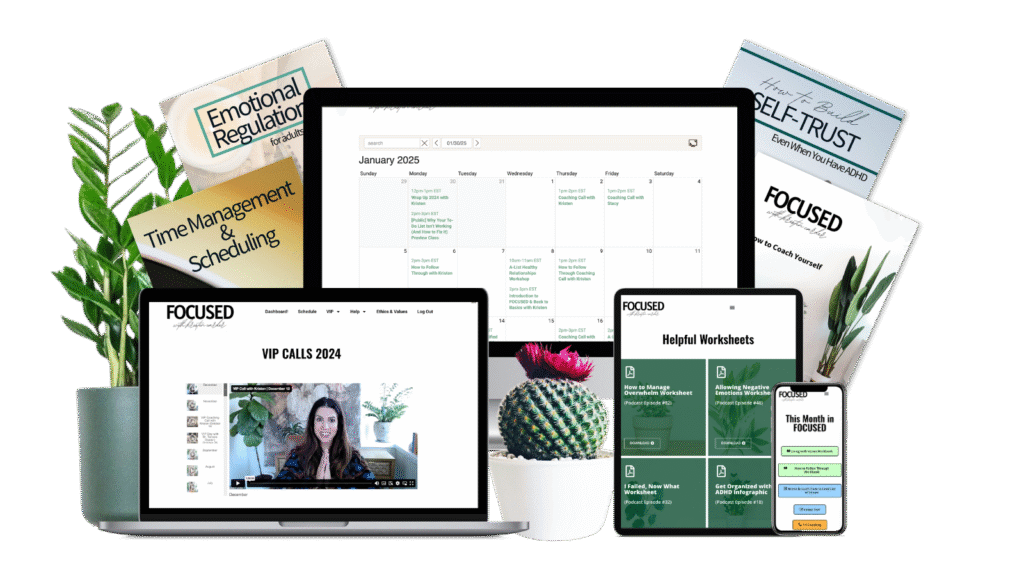
I struggle. I crash and burn. I end up completely overwhelmed and unrested, and that’s no way to live. So adding in some supportive structure that’s like, Hey, this is for you because it’s helping you to do what you want to do. That is what we’re looking for. So I’m not adding in structure as punishment. I’m not adding in structure as like, you have to get all this stuff done and you’re you’re worthless if you’re not productive. No, no, no, I’m adding in some structure to make sure that I have enough support to get the things done that I want to get done. Ooh, that is what we’re looking for on a weekend. Weekends are so hard for people with ADHD because this is where ADHD symptoms go to party for a big party, okay? So make sure you are eating, drinking and taking your meds. If you take them. This is non negotiable on a weekend. Don’t skip it. Don’t skip it. It’s the least you can do for yourself. Think through what’s one restful, restorative activity that I can do? Maybe it’s a hike, a kayak, a swim. I’m listing all the things outside because the weather is turning and I’m like, we get to be outside now. I’m so excited. But for you, maybe you like to like play pickleball or go out to dinner with friends, or meet up and go thrifting or something. Plan one thing that’s going to feel like it’s restful and restorative, and then block off just a little bit of time to get a few things done. Remember that you’re not going to do all the shoulds that’s impossible, but you can knock out a few things probably. You could probably clean out your car if you want to. You could probably return those purchases that you accidentally, impulsively bought and now don’t know what to do with you could probably return those, right? So it’s not everything that needs to get done, but it’s like one or two things that you kind of just want to check off your list and pre decide in advance, when am I going to really rest? When do I have time for a nap? When do I have time for a movie? When do I have time for a snuggle like, when is that going to happen? And make sure that you are allowing some time to reset and get ready for the next week. That is how we have a weekend where ADHD does not completely hijack us and make it so that we just feel like, I can’t believe it’s Monday already. I’m so unrested. I feel so annoyed with myself that I didn’t get anything done. Like, no, no, there is a way out of that. And just because weekends are this like thing that we have to learn doesn’t mean that it’s impossible. It is possible. So play with it. I’m interested to hear from you, like, how it goes for you, what are you currently doing on the weekends? That’s helpful? What is working? What’s not working? What do you want to do differently? That’s a great way to look at it. I’m sure you’re doing some things right now that are working, but what’s not working and what might you want to do differently? Okay, I can’t wait to talk to you next week. I will see you then. Bye, bye. A few years ago, I went looking for help. I wanted to find someone to teach me how to feel better about myself and to help me improve my organization, productivity, time management, emotional regulation, you know, all the things that we adults with ADHD struggle with, I couldn’t find anything. So I researched and I studied and I hired coaches and I figured it out, then I created focused for you. Focused is my monthly coaching membership where I teach educated professional adults how to accept their ADHD brain and hijack their ability to get stuff done. Hundreds of people from all over the world are already benefiting from this program and. Am confident that you will too go to I haeadhd.com/focused for all details you.