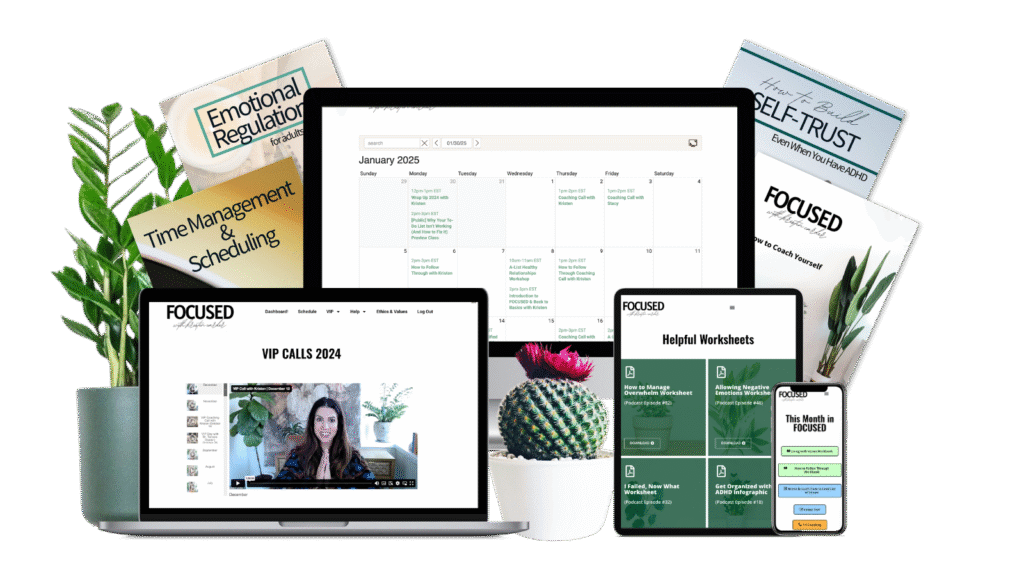


This episode is sponsored by CURE Hydration. All right, I’m going to be real with you. Drinking water is boring. My ADHD brain is like, wait, we have to do this again? Like every day, multiple times. What in the world? And because I’m running from meetings to coaching calls to kid chaos, staying hydrated is not something I’m naturally good at. It’s not something I naturally think about. That’s why I’ve been obsessed with Cure hydration packs lately. Cure is a plant based hydrating electrolyte mix with no added sugar, only 25 calories, and it actually tastes good. The watermelon and berry pomegranate have been on repeat for me. I’m actually like really running low on those flavors, which is so sad. They’re refreshing without being too sweet or artificial. It feels like my water finally has a little bit of personality, which I enjoy. I really do. What I love most is that CURE uses a science backed formula that hydrates as effectively as an IV drip. So when I’m scrambling through my day forgetting my water again, CURE helps me to catch up fast. I throw a few packs in my bag and it makes drinking enough water simple, which for my ADHD brain is basically a miracle. So staying hydrated isn’t just about water. You also need electrolytes. And that’s why I love Cure. It’s clean, tastes great, and it actually works. And bonus, CURE is FSA HSA approved. So you can use those funds to stay hydrated. The smart way for I have ADHD podcast listeners, you can get 20% off your first order@curehydration.com I have ADHD with the code I have ADHD. And if you get a post purchase survey, make sure to tell them that you heard about Cure right here on the podcast. It really does help to support the show. Don’t just drink more water, upgrade it with cure. Welcome to the I have ADHD podcast where it’s all about education, encouragement and coaching for adults with adhd. I’m your host Kristin Carter and I have adhd. Let’s chat about the frustrations, humor and challenges of adulting relationships, working and achieving with this neurodevelopmental disorder. I’ll help you understand your unique brain, unlock your potential and move from point A to point B. Hey, what’s up? This is Kristin Carter and you are listening to the I have ADHD podcast episode number 112. I am medicated, I am caffeinated and I am so ready to roll. I am glad that you press play on this podcast thank you for being here with me today. I do not take it for granted. I don’t take your attention for grant. I don’t take your time for granted. I am so glad that you’re here. I’m grateful that you’re listening. Yay. Let’s go. I can’t wait for you to hear this episode. I’m glad you pressed play. Despite the title of self kindness, I think a lot of us adhders want to roll our eyes, want to scoff, want to just kind of gag at the. At the thought of self kindness. And what I am realizing is that self kindness is one of the catalysts to consistent, sustained growth. And my client, Pete Sibley is here today to talk about all things self kindness. It has been such a joy to walk beside Pete in his journey, and he has made so much progress in his own growth and is now coaching others toward self kindness. You are absolutely going to love this episode. And we talk about things that I think are really relevant, like why is it so much easier to be kind to others than it is to be kind to ourselves? And why does self kindness even matter? And what difference does it make if you’re surrounded by a community of adhders? And do we need to wait until we’ve evolved in order to be kind to ourselves? And so we tackle all of these big questions today. I know. Going to love this episode. Here you go, Pete, welcome. Thanks for being here. Oh, my goodness. Thanks for having me here. I’m so glad you’re here. Would you just take a second and tell us who you are? You are the king of self kindness. Tell us who you are, what you do. Give us the info. Awesome. Well, thank you, my friend. Yeah. I am Pete Sibley, and I go by the label now of self kindness coach, which I love. It actually took a while to put that label or that jacket fully on. Maybe I can explain that in a little bit, but yeah. So now I coach adults into growing and expanding their own inner self kindness. And with that inner growth and expansion, we witness that outer growth and expansion. So. So that’s what I do. I’m a dad. I have two beautiful children. I was just telling you I’ve been. We just celebrated 22 years of marriage, my wife and I. That’s incredible. Yeah. I’m a New England kid that now is living on the central coast in California, and I love to play the banjo. Oh, that was my other life was being a musician. That’s right. You were a professional musician in your former life. Yeah. Yeah. So I have lived the ADHD adult life of having about 20 different jobs in my tenure. Haven’t we all? Isn’t that just par for the course? I feel like it is. Yeah. Yeah. I love it. I am excited to chat with you today for a bunch of reasons. First of all, I just adore you. When you joined our community, man, it’s been a while. I don’t remember how long you’ve been in, but it’s been a minute. You’ve been with us for a while at least. October of last year. Nice, nice, nice. I feel like there was a shift in the dynamic and culture of the group when you joined. There was just some sort of beautiful shift that you brought to our group and it was, you know, it was a big group at the time and it was still like a palpable. Is that the correct word? I’m not sure, but like a noticeable change. And so it’s just been really nice to have you with us and watching your experience of your own self kindness journey has been really inspiring and really just a beautiful thing to watch. Can you tell us a little bit about your journey into self kindness work? Yeah. Oh my goodness. Well, yeah. Thank you for that. That fun. I just want to take a quick step back and say, like, isn’t that interesting how we never really know how kind of living into our experience shows up on the radar of other people. And I see myself like coming into the group and bumbling my way through of just like, you know, Kristen, what’s going on? Help and you know, and crying on most of the times you’re coaching me and, and you know, and just so. But anyway, so that’s. That’s neat to. To hear it from. From your vantage point, but getting into the self kindness. I was thinking about this before coming on and I really feel like, you know, I was just. It hasn’t even been a year since I’ve been living into knowing my diagnosis as adhd. So very recent in my experience. And so, you know, I, like I said, you know, as an adult having lots of different jobs and the inner dialogue was, you know, at times it was very unsupportive and at other. Most of times it was just downright cruel. Yeah. And it was like, Pete, what’s going on? Like, you know, it just had to sense. And I think we talked about it before, but it’s like everybody else has it figured out. Yeah. And I don’t. It was like there was this other game being played out there in the world and I didn’t quite know the rules, even though I was playing in it and at times I was doing well, you know, with the music, you know, that was successful at times and you know, and being a dad and so at times I was doing really great, but it’s like I couldn’t figure out how to sustain it and felt like I would always come back into. But I don’t have it figured out. So like most ADHDers without a diagnosis or without a community that can recognize it and support it, I turn to what most adults do and let’s just numb this out. Let’s numb it out when it starts to show up. And that would be a lot of times just binging something. Like, you know, for me, a lot of times it was movies and you know, there was a time where it was like, I noticed instead of just having like one beer a night, it was. I wanted. I actually wanted a couple of beers a night. Yeah. To kind of take the edge off. And that really scared me because the history in my family there, you know, there is alcohol abuse and there is so. So fortunately for me in my life that it didn’t unfold that way. But what it did do is it turned into an inner dialogue. Yeah. So that’s where the self kindness, you know, it started out of necessity because you realized that you were assaulting yourself all day, every day, that kind of thing. All day, every day. And you know, it was a combination of anxiety and depression and you know, it sounded like, pete, you’ve done. Everybody on the outside is like, you’re doing great. Then why on the inside are you beating the, you know, the crap out of yourself? Right. And so I went on a really pretty deep dive to try to get this because I’m like, I’m a dad and I want to figure this out for my kids because there were starting to be moments of like, you know, that scary thought of like, what’s the point? Why get out of bed today? And you know, I just want to stay here. I just want to curl up. So. Yeah. So starting to find real deal kindness where I could. And I had to keep pulling it in, pulling it in, pulling it in until I found out it’s like it’s going to take me being kind to me. So how does that even work? How does someone who, who is so used to the soundtrack in his mind being, you know, judgmental self loathing, like just, you know, you’re the one that doesn’t have it figured out, you should be able to do this, but you’re not. How do you Go from that soundtrack to one that is much more kind of, Well, I’m going to cry again. I’ll just get a little teary then. I love it, I have to say, you know, and. And we all have our different connection to the unnamable. If it’s God, if it’s spirit, the universe, honestly, it’s. Maybe the best word here is grace. There is an act of grace in my life. Maybe it was planted as, you know, as a child of being supported and loved that way, which I’m grateful for. But a moment in there that. That stands out as maybe a turning point. To start, that was being on a phone call with my uncle. And he and I have always had this really special relationship of where we could just talk and just go so deep. And he, you know, he has a very strong faith. And we had a conversation, and he must have picked up on something. And he said, you know what, Pete? He said, there was a time, and he had three boys at the time, and he said, I would always eat my lunch down by the railroad tracks in Colorado. And he said, one day I noticed that almost without even thinking, I drove onto the train tracks and I stopped my car. And he said, it must have been a minute or two, and all of a sudden, it was like he came out of this fog and he stepped on the gas and he drove over the tracks. And he suddenly, you know, he had this realization of all of the fear and the inner doubt that was running through his mind was playing out in that moment. And so he shared that story with me. And then at the end of our call, he never does this, but he said, pete, can I pray for you? And in that moment, it was like just that ability to feel like you’re seen and that your struggle is real and that your struggle isn’t something to belittle and that all of those things, on some level, I think maybe the reason why this story just came out is like, that’s what your group does. That’s what the focus group does, is gives on some level that you know that, okay, it’s okay to come in. Just, you know, totally. Like, you’ve done all of the ADHD things, and here’s a place where you could come in, and it’s not only accepted, it’s embraced, it’s loved. Like, you get a nice warm bath. You get the towel, the cup of tea, and we sit and we laugh together about just how all the places that our ADHD brain has taken us, and we compare notes. And so. And I think that’s what my uncle was doing with me in that moment is saying like, hey, you know what, Pete? Like, it may not seem like it, but a lot of human beings have a brain that does this. And so that was the beginning for me. And the reason why I landed on kindness. Krista, maybe we talked about this last time is when I was in the midst of it, people would always say, Pete, like, you know, dude, you’re such a nice guy. Like, just, you know, you got to learn how to love yourself. But that would actually trigger me and make me go the other way. I’m like, if I knew how to do it, I would do it. That’s exactly. It’s like, I don’t. I didn’t have Kristen’s group at that time. Like, it was like, if I knew how to do it. And so I think what, you know, to wrap up this story, what came out of that experience with my uncle was that beginning to start a journey that then landed me onto, you know, the main tool that you use in focus. What it points to, is I began to witness and get in touch with information that showed me that my mind is this beautiful thing creation that know that is so into solving the puzzle. Yeah. And that there is actually another part of Pete that is a witness to that and can ask like, hey, you know. Yeah. What’s. What puzzle are you solving there, my friend? Yes. So. So that was the beginning of my journey. And as I started to experience it, I started sharing it with other people and, you know, because I needed something as a little softer in. Instead of, you know, self love with Pete, because that feels so huge. It’s like kindness. People can do kindness. I absolutely adore the fact that you didn’t make the shift, the internal shift on your own. I think so many of us think that we should be able to just do it on our own. And the fact that your uncle held such beautiful space for you and gave you essentially, like, permission to be flawed and permission to be raw and real and honest. And he even mirrored that back to you or reflected it back and said, like, yeah, me too. And. And you had that beautiful exchange, and that’s what sent you on this trajectory that I think is so lovely because that took vulnerability from you at first. Right. To even open up to him. And I think a lot of us are really afraid to practice vulnerability, to say, you know, hey, like, I’m really mean to myself on the inside, you know, or to be raw in that way. But if we. If we can maybe test the waters with somebody that feels safe. There can be this beautiful momentum that builds where you can then start to be more real and more kind and notice so many other things. I just love that it usually takes more than just us. Like it’s usually done in community. Yeah, yeah, yeah. I think there’s. There really is something to that. And perhaps if that’s a tendency with an ADHD mind to. Without maybe being given tools early. Early on. So maybe I’ll. I’ll say that it. It probably includes most adults that, you know, there is this part of us. Yeah. That. That we believe it needs to, like, we need to do it. And maybe it’s. It’s an American thing too, of like this individual. Like, we’re going to get through this, you know, and, you know, we watch people kind of fall by the wayside like, oh, look, this one had a nervous breakdown and like, like this one over here couldn’t hold their job. Like, oh, well, like, I’m still going to totally survival of the fittest. Right? And so, yeah, I just think there is such. There is something really just so beautiful isn’t even the right word of like this whole life adventure. Right. It’s. It’s like when we do land in maybe our true place of power, our truest place of power is seeing that. That like we’re actually held on some level. And from that place, then we can go out and, you know, do all like, you know, and do our. Do the things. Right. Do the things. I love it. See, you know, that’s. That’s where, you know, the coaching that you offer in the group comes across and can really land like, that’s where you can understand this weird idea like, go out and fail. Go out and feel rejected because on this, this, that base of level, you know, the U.S. that’s looking at the U.S. doing the model, like, on that level, we know that we’re what. We’re held. We’re safe, we’re okay. Totally. Why do you think that it’s easier to be nice to other people than it is to be nice to ourselves? I think most people would relate to that and say, like, yeah, like, I’m generally a nice person to most people. I generally am not super judgmental toward most people, but when it comes to myself, I’m kind of a jerk. You know, I love that you just asked that question because a brand new answer just came up that I have never heard in my own. And it was, it was almost like the willingness to give the other a benefit of the doubt, whereas in our own mind it’s like we can’t fool ourselves, we can’t BS our own head. And it’s like the part of us that’s like, if they really knew. Yes. They really knew that about me. Yeah. If they really knew that I, you know, I sneak chocolate. Like if they really knew, I, you know, whatever it is that it could get, you know, much more intense. Right. Yeah. So I think that’s, that plays, plays into it. I totally agree. And I think that one of the most generous self kindness practices that we can offer ourselves is by giving ourselves the benefit of the doubt. Yes. Yeah. Like, if I could have done this, I would have. Right. Instead of you should have done this. I can’t believe it did it. But like, no, no, if I could have, I would have. So clearly there was a disconnect. Clearly there was a problem that like I need to solve or. Yeah, like if I could make this happen, I would. So obviously there’s something that I need to implement. There’s some sort of support or there’s some sort of like troubleshooting that needs to happen. I think that you’re right. We don’t allow ourselves to have the benefit of the doubt. We think you’re just making excuses. You should be able to, you know, you’re a 40 year old person by now, like, you should have it together instead of if I could have gotten it together by now, I would have. So obviously like there’s something that I need. Yeah. Yeah. Well, two things there, Kristen. It’s like, and I think that’s why focus is so important that way. Because holds the space for first of all, for those questions to be totally welcomed. But you know, just when you start into the group or, or you know, we’re talking obviously specific in thinking about focus as ADHD adults here. Yeah. But you know, really my journey, and I believe I would think your journey too is like we want the people to get the help. And so wherever you find that, wherever you come into community that you know, that offers you first that a perspective in that way which, you know, starting to. I had some of the books around but like some of the workbooks that you have of like, oh, isn’t that interesting? Like it’s giving me some new ways to look at stuff and to explore it. And the other thing that happens, I think in a community like focused, where we’re looking at thoughts and cause that way is that we even start to ask the question like, is who I have been so bad after all? Right. You know, the fact that I still haven’t figured out exactly what a deductible means on my insurance. Like, does that make me a bad person? Like, is that going to make me any less of an amazing loving dad? Does that take away from the contribution I can make in the world, like, through being of service and, like, loving on other people? Like. Like, let’s even just start there. Does it? Yeah. Does it. Does that make me a piece of crap because I don’t remember how to do things? This is so good because I’ve had a couple opportunities recently to ask myself that question as well. I think I shared this. I don’t remember if I shared this in focus or on a podcast, but my son was recently diagnosed with adhd and we had an IEP meeting scheduled, like, with the whole team. So it was like the principal and the. The IEP team and the occupational therapist that he sees. And I didn’t show up for the meeting. I didn’t show up. I forgot to put on my calendar. I double booked. I was. I was actually on a focused coaching call, like, coaching. So when I got off of the call, there were like, three phone calls from the school, which, as a parent, like, you’re like, oh, crap, like, what just happened? And, you know, it’s these messages, like, hey, we’re all here waiting for you, like, the IEP team and these, like, five important people in the school. And I just had such a perfect opportunity. Of course, I have the initial PTSD trauma response of like, oh, my God, like, my emotions are crazy. And I’m like, I can’t believe I did this. But it didn’t take me long to be like, okay, where are we at? Who are you? What actually, what. What are the facts of what happened? Okay, you didn’t put on your calendar, you didn’t show up to the meeting. You inconvenience some people. All of those things are true. What does that mean about you as a human, Kristen? What are we going to make this mean? And we have that opportunity over and over and over. What are we going to make this mean about us? Don’t know what a deductible is for my insurance. What am I going to make that mean about me? I just missed an appointment where people, like real people were waiting on me, right? What am I going to make that mean? Those kinds of. The answers that we give to that question. That’s what’s so important, where we decide on purpose. I’m going to make it mean that I’m a human. I’m flawed, I didn’t do it. Right. And I need to. I need to schedule things. And the apple doesn’t fall far from the tree. And when I called the. The IEP guy back, I was like, I mean, I apologize profusely. And I was like, charlie has ADHD and I have adhd, and this is what adult ADHD looks like sometimes. And I’m so sorry. I know, exactly. Shoulder shrug. Like, what are you gonna do? Right? But in. In the past, I would have shame spiraled for days over that. I would have just been so embarrassed. And so. And I have something weird with, like, my kids school where, like, I really want them to think that I’m great. So I just really do. I don’t know why it’s so weird. So, like, and the fact that, like, the principal, the important people would be like, oh, gosh, she’s kind of flaky. That would have really made me shame spiral. But, like, yeah, I am kind of flaky. I’m also like a totally amazing human being. But, yeah, I am a little bit flaky with this stuff. Yeah. Yeah. Oh, my goodness. Yeah. And that’s it. It’s a great. You know, there’s. There’s something in there, though. But it’s like the, you know, you’ve. You coached me on that a bunch. Like, what are you making this mean? And it could be such a sneaky. You know, again, this. This mind that loves to puzzle things together. It’s like, oh, here’s a look. It was like, you know, in the past, our mind could have seen you missing that meeting as like, a corner piece. Like, I just found a corner piece. Here it is. Like, here’s who. Yes, Kristen really is like, boom, going to plug it in and totally negating the fact that, oh, in the moment that you weren’t at your son’s meeting, you were helping change somebody else’s life for the better. I actually didn’t put that together. So that’s funny. So isn’t that funny how our minds do that? And like, the other part of, I think of the importance of this practice in this work and why I get so fired up around, you know, coaching and, you know, I love the coaching that I do around kindness is like when you. When you do that and you talk about no longer being in that shame spiral and spinning out for as long. You know, I feel like when we’re in there, it’s kind of like we’re a little storm cloud, right? And we’re kicking out debris over here, and then we’re barking back at our kids. And then, you know, maybe. How. How are we showing up at work? And. And I’m going to be. I’m. Dude, like, I’m number one in this. Like, just the other night, like, I hadn’t really spent the time to work on my stuff, and I walked in and my son is watching a show on the Kindle. But instead of being the dad, it’s like, hey, buddy, you know, I notice you’re still on your Kindle. And I asked him to get off 10 minutes ago. I did the walk right over, you know, pulled it out of his hands and said, you didn’t earn this and storm out. Like, wow, that was a great, great one, Pete. Well done. I love it. But. But, yeah, so, you know, that is. It’s. It’s the. It’s the how for those of us who are super idealistic, when we read somebody like Gandhi who says, you know, be the change you want to see in the world, I always was like, amazing. Let’s do it, Gandhi. Right? You know, let’s. Let’s be. I’m in. But then I was like, wait, how. Yeah, how do I, like, does that mean I become like Mother Teresa? And does that mean I need, like, wait, no. It’s so much closer. Yeah. It’s like being kind to us when we do those things, right? What are we making it mean? It’s really that simple, but it’s also mind blowing at the same time. Okay, so I think that this brings up such a perfect transition into most of us think, yeah, yeah, yeah. I’ll be kind to myself when I get it together, right? I’ll be kind to myself like when I can finally get a job, or when I can finally get a partner, or when I can finally pay my bills without overdrawing my account, or when I can get out of bed before 9am Like, I don’t deserve kindness now. I need to wait until I’ve changed who I am and then because, like, I think this is another reason why we’re nicer to other people is because we think that they have it more together. So we’re nice to them because we’re like, well, they have it together. And, like, I’ll be kind to them. I don’t have it together. I don’t deserve the kindness. Yeah, tell me about that tension. Because I think that people listening will be like, sure, okay, like you grabbed a Kindle out of your son’s hand, or Kristin missed a meeting, but you don’t know what I’ve done. I can’t be kind to Me would you say to that kind of response? The first reaction is it’s like, you’re right. I don’t know. It’s like we don’t know what we have gone through. And I think that’s what makes it such challenging. Work is like another person can have all the beautiful things and say all the things that resonate with you. But there is the moment where we have to like believe it on some level. Right. We actually, actually have to believe like for your coaching to be most effective for me, I have to actually believe that part of Pete can do what you’re saying. Otherwise it’s just really beautiful and powerful. And then I go back to yeah, but you know, Krista doesn’t really know me. So that’s why it’s this really fascinating journey of our work. Our inner work is so personal and yet it’s so universal like at this, at the same time. Wow, that is so true. So even just opening up to the possibility, like maybe, maybe it’s possible for me to be kind to myself. Maybe I deserve it. Even just like in this state that I’m in right now without making any other changes. Maybe I deserve kindness. Maybe I do deserve grace. Maybe I do deserve warmth and to be held. Maybe that is the first step is opening up to, to like your worthiness of it. Yeah. Like is it, is it possible for that and you know, the work that, you know, the thought model. And we’re all inspired by Brooke Castillo’s work and she shares how she is inspired by work that’s gone before her, including you know, a tool that I really love, which is self inquiry, which is, yeah, you know, letting. It’s like letting the power of these beautiful brains work on our behalf. So it’s like we just, we let it, it’s like we end a thought with a question mark and that can like just sit with that for a moment. Like just yesterday I had the privilege. I’m doing some self kindness training, which is so cool. I’m doing self kindness training now in organizations and so I’m meeting with the staff and you know, and again I just love that idea because imagine organizations where like employees are having self kindness training. And so it’s like you go to the post office and you know, it has its regular transactional thing but like what if the underlying flavor is people that are being kind to themselves as employees? And so, so like everywhere you go you’re not only getting your service but you’re also getting tap into, you know, what is beautiful about human being and Connection. Anyway, that’s a side note. But so. So we were talking about wasting time and, you know, and we were really taking a look at that and questioning, you know, I’m wasting time and just putting a question mark on the end of the. I’m wasting time. Or like, I just wasted, you know, a half hour of my time. Like, question mark. I just wasted a half hour of my time. Did I? No. I was reading the manual and trying to figure something out, and, yeah, it took me 20 minutes longer than I thought it would. But is that really wasting time? And so I think that’s the. That’s what we’re maybe pointing to. If you feel like you’re just so stuck and like, Pete, you have no clue how off I am, that could be just a small invitation. Just one thing. Put a question mark at the end of it. I love that. So speaking of being stuck, how has being kind to yourself allowed you to grow to. I almost used the word blossom. And that might be a word that would be weird to say to a grown man, but I am seeing. What is the word? Evolve, transform. Blossom’s a beautiful blossom. I’m going with blossom. Let’s go with blossom. Feel like you can handle it? Go with blossom. Yeah. And I think, like, the self kindness is just that. It’s like welcoming. I remember Elizabeth Gilbert wrote in her book the Eat, Pray, Love that part of her whole journey took her to a spot at the end where it’s like she mentally saw a table and all the different parts of her were like, walking up to sit back down at the table. And I feel like that’s what the kindness journey is. And maybe I even wrote that in focus one time. It’s like I feel like I’m starting to meet the Pete that it’s kind of like I always wanted to be. And it. Kindness helps me do that in the sense that it looked. It’s like almost the complete opposite of how I thought I was going to get there. It’s like you need to kind of muscle through. I need to kind of chisel out the parts that were working really great about me. And it’s. It’s like, no, it’s actually welcoming. All the parts that for 40, almost 46, 46 years I’ve been saying, you know, out, get out. Yes. And so the self kindness has been like, oh, my gosh. It’s like, I am so sorry that that’s the way I spoke to you. And it doesn’t mean now that that part of Pete has, like, full voice at the table. Right. But it doesn’t. It’s like, you know, you’re safe. How I was saying it to some of my clients at one point. It’s like, you’re safe. Like grab a bubbly. You know, there’s a lounge chair over there. Just sit, hang out. You know, kicked to the curb. And that really comes across in. In the community that you’ve created. So you said something recently about like just. Just even knowing the community is there. Because when I came in, I was like, most people just, you know, hot and ready to go. I’m going to get everything that Kristen’s got. Like, this is it. Plus I was learning about, you know, being an ADHD adult at the time. Yeah. But it cools off. Yeah. And then there are times where I just, I come back in for a week and I do everything and it’s like checking in with old friends and Yeah. I post in the chat line and everybody’s like, pete, you know, and. And I think it’s just. It’s really important. I just see that as a self kindness to me to. To put myself in positions where I could be supported that way. Oh, my goodness. That’s such a beautiful point that I didn’t even think about because I think you are absolutely right. When we accept all of the parts of ourselves and we notice how we ebb and flow and we stop pressuring ourselves to be robots and to be consistent and to. You know, one of the things that I used to tell myself is like, you’re not. You’re not getting like all of the value out of this program. Like, it’s not. You’re not getting what it’s worth. So you should just quit. Right. So I would, I would tell myself, like, because you’re not doing it perfectly, you should just quit because it’s not worth it to pay whatever it is right. For this thing if you’re not taking advantage of it. Full, whatever. And now I allow myself to be in my coaches membership and I ebb and flow and I come in and out and I use it when I need it. When I’m hurting, when I’m broken, when I’m. Or when I’m looking for inspiration or when I know I need, you know, when I need something, I can go there. But the point is not that I listen to every single call or I do every single workbook. It’s just like it’s a support. Support. And if I can accept my own ebb and flow, if I can, then I can treat myself with kindness and say like, yes, this thing is. And not all of us have the privilege to have the money to do that. I mean, I joined, like, three years ago, I think, and I did it before I had the money so that I could take care of myself as I made that journey toward, like, growth. Does that make sense? I don’t know if that makes sense. Yeah, I think it does. And I think that part of maybe the. This culture that. That you’re helping to create is the possibility that, like, there’s. There’s so much room of. Of things getting questioned that are like the quote, unquote norm. That’s the biggest value I believe, in me is like, because that is part of Pete, that in this blossoming is coming back of, like, it’s always wanted to question these norms. And, you know, now here’s a community that’s actually doing that, and it’s okay, and you’ll bring those questions forward. And, you know, that is just so huge. So it, like, it comes back to that moment of getting to experience the vulnerability in my life, and then, you know, just needing to live into that for a period of time to then see that, oh, me doing that is valuable for other people. Yeah. And. Oh, my gosh. And then we. Yeah, so now we. We get to actually find people out there in the world, like a Brooke Castillo or like a Kristen Carter, who are doing. Saying things. And you’re like, hold on. Wait a minute, wait a minute. You just said the opposite of what has been being said, you know, patriarchy or whatever for forever. Right. And you just said the opposite. And you’re still okay. And actually, you’re thriving, and you’re still lovable. You’re still appreciated. Like, you’re still. Oh, well, if that’s possible, maybe there are some things that I have always felt, you know, let me try it out. Let me question. Let me see. And there is such a safety in the permission, the invitation that you put out that it’s like, I think it’s just. That’s. That’s that going back to that part of us that is the unnameable. It’s like we connect to that. We see that, and we trust that. And again, that’s an inner job that gets awakened in us, and I think we just want more of that. We want more. So that’s why we’re. Hopefully, this is the trend as human beings. I mean, it’s what gives me hope. When I read the news cycle, I’m like, yes, I. You know, personally, as a musician, I got to witness that, like, the News does not represent us as people. Yeah. And now we have this, this opportunity, this privilege, it really is a privilege but to seek out communities that are speaking hope into the world, that are speaking a new message. Tell us about the value and the hope that you offer to your clients. So who do you work with? How can people get in touch with you if they’re like really resonating with this and want someone to walk next to them? My understanding is you work one on one. Yeah. Yeah. So if somebody wants to have you guide them through a self kindness journey, who do you work with and how can they get in touch with you? I work with adults, people that I work with. There’s a quality of transition in their life. There is a quality. And I just had some great clients on my bike podcast were talking about this, that they were saying, you know, that actually a lot of the work in people that I’m working with, they have really good lives. Yeah. And it’s, it’s almost as if I see this self kindness is, is a possibility of integrating and continuing to bring that, you know, what’s working in their life and expanding on it. So, so that’s who I’m working with right now. And I’m really finding that trusting that resonance is, is, it’s amazing. It’s beautiful how people come to me, how they find me and then we each journey. Yeah, it is, it’s one on one. And each journey is, is unique and, and it’s universal. Like we’re all doing this, this work and it serves, it serves, Kristen. It serves, it serves. I love it. We’re going to link your info in the show notes, but just tell me real quick, what’s the best way for someone to get in touch with you? My handle on Instagram is self Kindness with Pete and I have a podcast by the same name. How are you, Pete? Sibley.com love. Thank you, thank you, thank you. I’m so, I’m just blessed to call you friend and client. I’m so glad that you are in our group and in my life and I just, I’m excited for people to hear the authenticity and the. Just the care in your voice. I feel like people listening are going to be. Feel so cared for and so I just thank you for providing that. Thanks for making me cry at the end. All the love, my friend. If you’re being treated for your adhd, but you still don’t feel like you’re reaching your potential, you’ve got to join Focused. It’s my monthly coaching membership where I teach you how to tame your wild thoughts and create the life that you’ve always wanted. No matter what season of life you’re in or where you are in the world, World Focused is for you. All materials and call recordings are stored in the site for you to access at your convenience. Go to ihaveadhd. Com Focused for all the info.