

Podcast Episode #152: My Top 10 Takeaways from International (ADHD) Women’s Month

Listen or Watch this episode on:

About This Episode

The last 4 episodes were dedicated to honoring the female ADHD experience. Join me today as I synthesize what I learned this month and show you how you can apply it to your life in tangible ways. So you don’t do that thing where you hear something awesome and then forget about it entirely and never actually do anything with it. Or is that just a me thing?! 

Visit [www.ihaveadhd.com/focused](https://ihaveadhd.com/focused) for more resources

Hang out with me on Instagram: @i.have.adhd.podcast

See Privacy Policy at [https://art19.com/privacy](https://art19.com/privacy) and California Privacy Notice at [https://art19.com/privacy#do-not-sell-my-info](https://art19.com/privacy#do-not-sell-my-info).
Episode Transcript

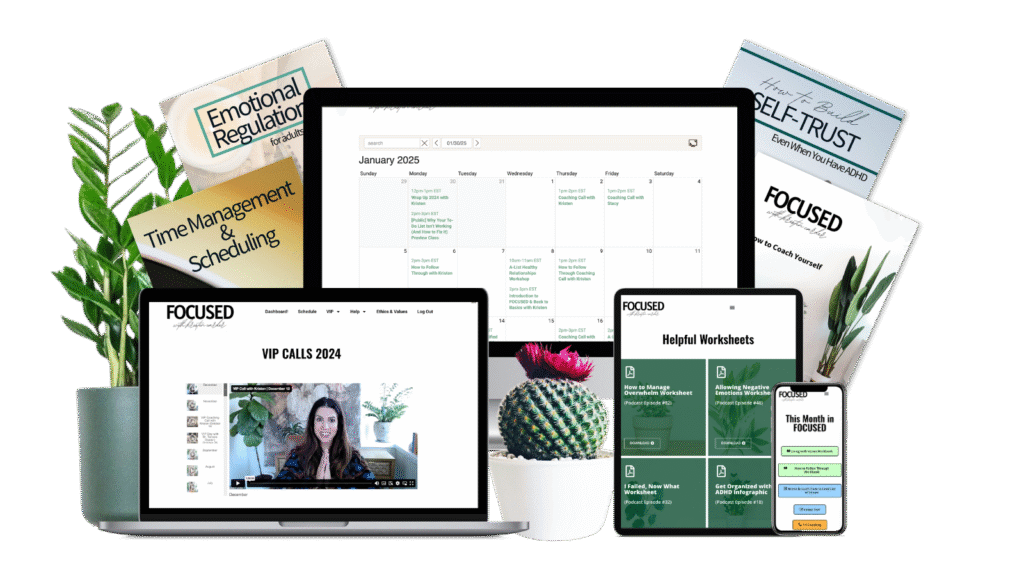
This episode is sponsored by Cure Hydration. You know that moment for me, it’s around like 2 or 3pm when my ADHD brain just decides we’re done for the day. We’re done here. The afternoon slump hits, the lights go off upstairs and suddenly answering an email or doing basically anything feels like climbing a mountain. That’s when I reach for Cure Energy. It’s a clean plant based energy drink mix made with 100 milligrams of natural caffeine and electrolytes so I get the focus and hydration boost I need without jitters, without a crash and without that like I drink battery acid vi that some of the energy drinks have. The peach tea and acai berry flavors are my current go tos. Crisp, refreshing and they don’t taste fake y’. All. They don’t taste fake. I’ll drink one before recording a session or when I need to get help through like that afternoon drag. And honestly I I drink it anytime. My brain just needs to cooperate. What’s wild is that Cure Energy is only 25 calories and has zero added sugar. It actually helps me stay hydrated while giving me energy. Okay, I love coffee, but coffee could never Staying hydrated isn’t just about water. You also need electrolytes. And that’s why I love CUR Cure. It’s clean, it tastes great and it actually works. And remember, Cure is FSA HSA approved which is amazing. You can use that money to pay for cure and for I have ADHD listeners you can get 20% off your first order@curehydration.com I have ADHD with the code I have ADHD. And if you do get a post purchase survey, make sure to tell them that you heard about CURE right here on the podcast. It really helps to support the show. Don’t just drink more, upgrade it right with cure. Save over $200 when you book weekly. Stays with VRBO this winter if you need to work, why not work from a chalet? If you haven’t seen your college besties since, well college. You need a week to fully catch up in a snowy cabin. And if you have to stay in a remote place with your in laws, you should save over $200 a week. That’s the least we can do. So you might as well start digging out the long johns because saving over $200 on a week long snowcation rental is in the cards book now@verbo.com. Welcome to the I have ADHD podcast where it’s all about education, encouragement and coaching for adults with adhd. I’m your host, Kristen Carter, and I have adhd. Let’s chat about the frustrations, humor, and challenges of adulting relationships, working and achieving with this neurodevelopmental disorder. I’ll help you understand your unique brain, unlock your potential, and move from point A to point B. Hey, what’s up? This is Kristen Carter, and you are listening to The I have ADHD podcast, episode number 152. I am medicated, I am caffeinated, and I am ready to roll. Hello, hello, hello. Come on in. Gather round. Today’s episode is gonna be interesting. I have most of it thought through, but I’m a little bit overwhelmed right now, and so we’re just gonna go for it and see where it goes. I am in the middle of moving. We just finished packing up our current house, and I came into the office for a few hours to get some work done, including recording this podcast. In two days, 48 hours, we’ll be living in our new home. My mind is just so full right now. I’m excited about this new beginning, but I’m heavy with some sadness. It’s been a hard week because with so many great things that, you know, I’m looking forward to, we’re also having a lot of really beautiful things that we’re leaving behind. And in this neighborhood, our tiny little house, it was such a blessing to us, and we’ve been so happy and grateful for it. We’ve made so many lovely memories in the last six years. And so I’m just feeling all of the rawness with that today. Like, really raw. And as I was processing all of this last night, I realized that by the time that I was 12 years old, I had moved 13 times, including moving to and from the island of Guam, where I lived for eight years of my childhood. And if you were to take out your Google Maps and type in Guam right now, you’d see that it’s pretty far away from the east coast of the US Where I live right now. It’s like a third of the way around the world, near Japan, the Philippines. So moving there and back was pretty significant. Definitely experiences that my therapist would label as trauma and my parents would call an adventure. I would just say, I don’t know, just my life just seems normal to me. But anyway, I think for the first time ever, I’m truly processing the weight of all of those 13 moves from my childhood, which is, like, a lot. Never really processed it or held space for all of the emotion that came up during those times. So now it’s all coming up and it’s. Yeah, it’s heavy. So it’s so interesting. It feels a little bit wild and unsettling to me because, as you know, I want to move, which, you know, not every time we move. It’s not like we want to move every single time. So I get that. But, like, in this particular time, I actually want to move. I feel so grateful to be able to move. This is something we’ve planned for, we’ve saved for, we’ve put a lot of energy and time into. So the fact that I’m feeling, like, sad and this distinct heaviness, it’s just not something that I expected. I thought it would feel good and exciting the whole time, which is adorable. So, as usual, it’s not the case that I just get to feel really, really good all the time. So that’s where I’m at. It’s kind of like a intense update. But life is good. Just feeling all the feelings, lots of loss right now, even as I look to something really good coming. And I think there’s room for both. And you know, as ADHDers, we have this black and white thinking where we think I either am going to be really happy about it or I’m going to be really, really sad about it. But like, with this move, for me, it’s both really happy and really sad, really excited and really anxious, really grateful and really nervous about, like, the unknowns. So it’s just all the things. One of the things that I have been really working on is allowing myself to feel more than one emotion at the same time. To not be so black and white, to not be all or nothing, but just to allow the fullness of the human experience. I’m not a robot. I can’t go through this just feeling great all the time. I’m also going to feel all the low things too. So I hope that that’s a little encouraging to you. Regardless of what you’re going through right now, I’m sure that you are having to make space for more than one emotion at a time. And yeah, I think that’s just part of being human. So let’s get to today’s episode. March is International Women’s month, and it’s been really fun and enlightening for me to focus all of our episodes on ADHD from the female experience. I am so thankful for my guests for coming on, sharing their expertise with us and their story and just, you know, a little portion of their lives, and I think thought it would be a good use of today’s episode to kind of summarize my takeaways and explore, like, what are the biggest things that I think we should really keep at the forefront of our minds? Now, if you’ve listened to the last four episodes, you probably took away little nuggets here and there that were really meaningful to you, and that is great. But here’s the thing. Do you ever do that thing where you listen to something or you read something and you’re like, oh, that was so good, and then you walk away and you never really integrate it into your life and you kind of forget to think about it again? Am I the only one? Hello? Anyone? So that’s why this episode, I think, is important, because I kind of want to synthesize and summarize and really hone in on my top 10 takeaways from the last four episodes. Four hours of amazing, encouraging, enlightening content regarding the female ADHD experience and really suss out the important takeaways so that we don’t just listen to the episodes and get a little bit of dopamine from, you know, a couple things that we learn and then just move on without really integrating it into our lives. So in an effort to avoid doing that, let’s hone in on some key points I think will be useful for all of us to remember. So here are my top 10 takeaways from International Women’s Month, the last four episode on women with ADHD. All right, takeaway number one. Women are accustomed to being dismissed. Now, I had never really considered this before as a specific reason why women struggle with adhd, but now that I’ve seen it, I can’t unsee it. Many women have been dismissed their whole lives as being too much or overly dramatic or too emotional. And so many of us have been diagnosed late in life because of it. So many smart women haven’t gotten the help that they need and the help that they deserve because their grades were high or they did well in their career. So often women and girls are not taken seriously by their parents, their teachers, or doctors. And this robs us of the diagnosis at a young age, and it robs us of the help that we deserve. And, and, and, and this is a big. And it also grooms us to dismiss ourselves. If you’re someone who’s been dismissed your whole life, you are likely now dismissing yourself a lot because it’s what you’ve been taught to do. One of the ways that we do this is with our inner monologue. We start talking to ourselves in a very invalidating and dismissive way. We don’t take ourselves seriously. We tell ourselves things like this isn’t that hard or just get over it or you’re fine, instead of really advocating for ourselves, believing ourselves when we’re overwhelmed and burnt out and really needing a solution. And I get why we do this, obviously. But my friend, I want you to know that you deserve to be believed, and especially believed by yourself. You deserve to be validated. You deserve real care. And so yes, being dismissed is one of the key things that women with ADHD experience. And this is a true heartache. It’s a tragedy. And yet I want to encourage you to not dismiss yourself. Begin to take yourself very seriously, begin to to validate yourself. Begin to believe yourself. Get the care and the support that you deserve. Top takeaway number two Placing a strong emphasis on traditional gender roles might make things harder for women with adhd. I want you to think about all of the executive functioning required in so called easy. I’m doing air quotes, which is why I pause. Because like whenever I do these motions and I’m like, duh, people are listening to me, not watching me. But in these so called easy household tasks, I want you to ask yourself if you, someone with deficient executive functioning, are the best person for the job. Okay, so I think this is really interesting because traditionally women are in charge of household tasks. Traditionally women in charge of cleaning and cooking and child rearing and all of the things. But I’m curious, are you well equipped to be in charge of all of that? And are you telling yourself that you should be in charge of the cooking and the cleaning and the kids homework and the grocery shopping and all the other household tasks? If you are, I want to invite you to just simply ask yourself why. Just get curious. You don’t need to judge yourself. There’s actually nothing wrong here. I’m not saying it’s wrong at all. I’m just curious why? Is it because you’re working fewer hours outside of the home than your partner? Is it because it’s the way you saw your parents divide labor? Is it because you’re a single mom and there’s literally no one else for you to rely on? Seriously, like, get real with yourself and just do a quick check in. All of you are going to have a different answer to this question and that is fine. There’s no one right answer. But I want you to ask yourself, if I’m in charge of all of the household things, why this might be a great time to get vulnerable with your spouse or your Partner or your roommate or your best friend, whoever. Whoever it is that you’re living with, and tell them what you truly struggle with. Explain ADHD to them. Tell them that, like, seemingly easy tasks are actually quite hard for you. And maybe you could even suggest that you have a conversation about the division of labor. See if they care about being in charge of the cleaning. See if maybe they care about eating a fancy meal. So one of the things that’s really relieved a lot of tension for me is that even though I am in charge of dinner, I hate the fact that I am. But it’s my job. It’s my job because we’ve discussed it and we’ve decided it’s my job, and I don’t love it. I do it with a lot of hesitation. But that is one of my jobs. And so where the discussion has gone after that is, okay, do you care what kind of meal we have? Like, as long as I am putting something on the table, do you care what it is? And it’s been really interesting to navigate this with Greg because I thought that I had to cook a fancy, nice meal with a meat and a veggie and a, you know, like a starch. I don’t know why I said starch. It’s just because my mom used to say that. Like a carb. Carbohydrate, right? Like. And Greg’s like, no, it does not matter. We can have cereal. We can have sandwiches. Like, it literally does not matter. And so the way that I’ve been able to kind of just like, calm down and ease into this role is I just do the basics. We get takeout a lot. We do meal prep packages like, hellofresh. We have sandwiches or cereal or frozen food all the time. And I let myself off the hook for it. So the things within your role that you are in charge of, I want to really encourage you. Can you let yourself off the hook for doing it perfectly? Can you lower the bar a little bit? Can you allow yourself to just do the very basics of it and not go over the top? All right, top takeaway number three. Women hide their symptoms longer, and they stay in the ADHD closet longer. And I hope you don’t mind me using that phrase, the ADHD closet. I think it’s a really great way to describe this. What we do, we mask our symptoms. We hide our true selves, and we stay in the closet. We don’t reveal who we really are. And honestly, I had never considered that women were diagnosed later in life because we actually work harder to hide our symptoms. So this was a big aha moment for me and it breaks my heart a little bit to think of all of us as little girls just trying to fake our way through school or fake our way through social settings. We truly didn’t want anyone to find out that we weren’t perfect. We didn’t want anyone to find out that we were struggling. And we still don’t. So many of you are really doing a lot of work masking your symptoms, right? But that comes with a hefty dose of shame, embarrassment and self judgment because we’re not letting others see the real and authentic version of us. We as women come with good and amazing qualities and we also come with some flaws. Every human does. And the more that we allow ourselves to safely share our flaws, the more that we will be able to shine at our strengths and what we’re good at. And so I want to encourage you to surround yourself with people who are safe to share your flaws with. Surround yourself with people that you can be yourself with. Surround yourself with people where you feel at ease being the fullest version of yourself. And we’re going to talk about this more as we move forward in today’s episode. But I think the fullest version of you comes with strengths and it comes with weaknesses. And so many of us spend a ton of time trying to mask our weaknesses. And instead what I would say is let’s just show people the whole package. That felt weird to say. Is that weird to say? I don’t know if that’s weird to say. Let’s move on. This one was completely mind blowing for me. Top takeaway number four. Estrogen affects our ADHD symptoms a lot. One of the target organs for estrogen is the brain. 20% of the chemicals in the brain, like serotonin and dopamine are the result of estrogen enhancing the release. This is completely mind blowing. So what this means is estrogen allows your brain to process dopamine and serotonin. And when estrogen drops, it can of course affect your mood, your memory, your, your mental state and your neurodevelopmental processes. This is very, very important. This was life changing and mind blowing for me. I never realized that estrogen actually affects my brain, that one of the organs that estrogen targets is the brain. This is huge. If you want more info on this, my episode with Dr. Patricia Quinn a couple episodes ago is where we explore this in detail and it is important and it leads me to my top takeaway number five. ADHD symptoms will fluctuate as estrogen fluctuates. And this can be treated. This is huge. This can be treated. Now it’s treated with more ADHD medication or with hormone replacement therapy. And I don’t know what the right thing is for you. I barely know what the right thing is for me. Okay. But I do have to be honest. I called my gynecologist literally the day after I opened, recorded the conversation with Dr. Patricia Quinn, and I was like, excuse me, we need to talk. We need to talk right now. Because as a 40 year old woman in I guess what is called perimenopause, my estrogen, I know, has been fluctuating. And I know that my mood, my irritability, my ADHD symptoms, my tiredness. What’s the word for that? I don’t know. Energy. There we go. It’s been fluctuating like crazy and it’s been unpredictable. I haven’t been able to get a handle on it. And so literally called my doctor right after recording this conversation. And I was like, I just spoke with an ADHD expert on my podcast. She said that estrogen affects ADHD symptoms and that it can be treated. What are my options? And I encourage you to do the same. If you are noticing that your mood, your irritability, your energy, your ADHD symptoms are fluctuating, it might not be because you’re a terrible person. It might not be because of ADHD in general. It might simply be be because of your estrogen levels. This episode that I’m referencing, the one with Patricia Quinn, was just so enlightening for me. And I have to tell you, we almost didn’t publish the episode because the sound quality was really poor and we couldn’t figure out how to make it better. And I am just so grateful that my team was able to salvage it and do the hard work of getting it to a B minus level. The sound quality still isn’t great, but at least it is out there. And here’s what’s true. And I’ve said this a million times. You know, my. One of my coaches, Brooke Castillo, has said, B minus work can change the world. And this is evidence of that, where I know the quality of the sound isn’t great, and yet we just put it out there because we felt like the content was so important and it’s changed my life and it’s changed other people’s lives. And so I really encourage you to go back and listen to that. Okay, let’s move on to number six. A mother’s primary focus can be creating a safe Haven within our home. It doesn’t have to be having a clean home, having the perfect home, or having perfect kids, or having perfect meals, or being perfectly organized. What I used to do was measure my worth as a mother based on how my house looked, whether or not my meals were eaten by my children, whether or not they had their homework done, how well behaved they were. And let me tell you, this is super frustrating, and it’s really not a fun way to go about your life. And I think Yakini, in our conversation that we had on the ADHD and motherhood episode, she was so helpful to me in just always bringing the conversation back to creating a safe place within your home. As a mom, if that is your primary intention, if that is your primary focus, it’s just, I’m creating a safe place, safe haven. I’m creating a space where my kids feel safe. I’m creating an environment where my kids can be themselves. I’m creating an environment where they know they’re loved and they know they’re secure, and they know that they can talk to me about anything. They know that we can be connected. This is such a fun thing to focus on. My brain says, yes, I want to do that. But when I list out the traits of a mom that I thought I needed to embody or organized, clean, you know, having the right Pinterest meals, being able to keep track of all of the things, my brain gets overwhelmed, it gets resentful, and I don’t enjoy the process. And then what I end up doing is creating an environment within my home that is rigid and is not super fun and is not super safe for my kids. And so I loved this conversation that I had with Yakini because I think that so much of what we can focus on as mamas is just creating a space that feels like a safe haven for our kiddos. And if we can do that, we’re winning. If we can do that, we are winning. Another thing about motherhood, and this leads into top takeaway number seven, is that as moms with adhd, we don’t have to hide our struggles from our kiddos. And to go a step further, letting our kids into our struggle, modeling what it looks like to struggle and get through, it actually builds connection with our kiddos. If I can let my child understand that I’m having a really big, explosive emotion in my body right now, and I have the urge. Urge to yell at him, but I don’t want to yell at him. So I’m going to go off by myself and deal with this emotion and then come back and talk to him. That is a very useful and beautiful thing that I can model in front of my child that he can then learn and do for himself. I think so many of us women are not just masking from our bosses or masking our ADHD symptoms, you know, from our friends, our family. We’re also doing it with our kids. We don’t want to let our kids see a struggle. We think that. I mean, I don’t know what you specifically think, but, like, for me, I will often think, like, they don’t need to know this about me. I don’t want them to feel like they have to take care of me. If they know this about me, they might not respect me. So we have all of these reasons why we build up in our head, why we don’t just let our kids into our process. But honestly, modeling this vulnerability for them is what builds a strong connection with a kiddo. Hey, I’m really struggling today. It actually has nothing to do with you, but this is where I’m at. So I’m going to need a minute or, hey, I’m really sorry that I yelled at you. You don’t deserve to be yelled at. This is all my fault. It’s not your fault. Let me take some responsibility for that. And I really want to do better. Here’s what I’m going to do in order to do better. Connection is everything. A couple years ago, I decided that what I wanted most with my kids was connection. And I realized at the time that I wasn’t living this way. I was living in a way that really was showing, like, what I wanted most from my relationship with my kids was obedience. I wanted to be able to say something and have them obey me. And when I truly saw that and I saw the lack of connection, I began to get to work on, okay, what’s most important here? Connection or obedience? And I’m not saying obedience is not important. It is. But for me personally, I wanted to prioritize connection. And so that has been a long road for my kiddos and I. But just like Yakini said in the episode on motherhood, my goodness, things have changed in my home. It feels different. My kids act different. They share so much more with me now than they ever have before because they feel connected and because they feel safe. Okay, top takeaway number eight. Just like body shame, many ADHD women struggle with brain shame. Now, listen, brain shame is a whole thing, but as Sari Soldin says, only dogs and furniture need to be fixed. And we simply cannot put our lives on hold while we try to get organized or while we try to manage our time better, or while we try to get everything right. So I want to encourage you, stop turning down opportunities. Instead, ask for help. Ask for help with the things that you know you’re going to be weak at. Lean into your strengths. We’ll talk about that soon. But lean into your strengths and ask for help with the things that you know you’re going to be weak at. I loved my conversation with Sari Soldan. I thought it was so powerful, meaningful, helpful, all of the things. And when she spoke about brain shame and how we women shame ourselves over and over and over for just the very normal way that our ADHD brains work, I was like, yes, this is everything. Just like many of us have been conditioned to shame ourselves for how heavy we are or how light we are, or how strong we are, or how weak we are, or however our body may look, we’ve also been conditioned to shame ourselves for the way in which our brains work. And I want to encourage you, please, instead of shaming yourself, start accepting yourself. Instead of telling yourself you’re doing it wrong, which maybe you are doing it wrong, tell yourself you’re just a human. You’re just a human with adhd. And this is a very normal way that a human with ADHD operates. Remember, only dogs and furniture need to be fixed. You do not need to fix anything about your brain in order to move forward. But what you might want to do is set up a plan to support yourself, Set up a plan to support your brain, up, a plan to support any weaknesses that you might have. But it’s not the brain that needs to be fixed. It’s the system. The system in which you’re existing right now might not be working for you. Okay. And so what I would really encourage you to do is top takeaway number nine, focus on setting up an ADHD friendly lifestyle. So many of us are measuring ourselves by what we’re bad at instead of focusing on what we’re good at. If we’re trying to measure our contribution to the world, our self worth, any of the above by what we are bad at, we will always feel undervalued. We will always feel less than, we will always feel inferior. And so many of us women do that and goes back to, wow, could I say it one more time? It goes back to these internalized gender roles and kind of the way that we’ve been groomed to think that we need to be the caretaker of the house. We need to be the one doing all the laundry, we need to be the one cooking dinner. We need to be measuring our self worth as a woman by these things. Instead of deciding what you’re going to measure your self worth on, you are a grown ass woman. You get to decide where your self worth comes from. Like that is something you can just do. You do not have to get your self worth from how organized you are or how well you keep a planner. You can just decide that your self worth comes by the amazing way that you connect with your kids. You can decide that your self worth comes from all of the fun and interesting things about your personality. You can decide that your self worth comes from the fact that you were designed and created and you did not make yourself. You’re here, but you did not make you right. And so no matter where you decide to gain that self worth from, I encourage you not to measure your worth based on what you’re bad at. Cut it out. This is just a decision that we can make as women. I’m no longer going to measure my worth as a human or as a woman by you. Fill in the blank. This is the part where you fill in the blank. Okay. Set up an ADHD friendly lifestyle for yourself. What. Whatever that might mean. I know that I have listeners all over the world, in all different economic circumstances, in all different countries which allow a variety of freedom for women. I understand that. What I want to encourage you to do is to whatever you have the ability to do as far as setting up an ADHD friendly lifestyle for yourself, do that. Okay. In a lot of non American cultures, it is very common to have help within the home. I think that that is incredible. So if you live in a non American culture where having help within the home is just normal, amazing, take advantage of it. If you live in American culture where that’s not necessarily the norm, create that norm for yourself. I encourage you, or whatever it might look like to set up a lifestyle for you that makes sense for your brain and don’t make it mean anything about you other than you are a woman with ADHD and you’re going to spend your time focusing on your strengths rather than wasting your time on your weaknesses. Wow, she’s going for it. You know, in my conversation with Sari, it was so fascinating because both of us were lamenting the fact that women with ADHD spend so much time, effort, energy on the things that they’re bad at. Instead of just letting go of all that crap and focusing on your magic, focusing on the reason why you were put here in the world. Were you put here to do laundry? Were you? I know I wasn’t. I was not put here on this earth to do laundry. And therefore I’m not going to measure myself as a woman based on how well I do the laundry. You know what I’m saying? What were you put here on this earth to do? Was it make dinner? For some of you, maybe, and that’s great. But for most of you, I’m going to guess that your answer to that question was no. Figure out why am I here? Is it to keep an organized calendar? Is that really why I’m here? Or is it to connect with my students or to connect with my family? Or is it to make people laugh? Or is it to write this code for this app that’s going to change the entire world? Like, why were you put here on the planet? Focus on that. Measure yourself by that. Instead of the things that you suck at, just let those things go. Set yourself up as best you can with an ADHD friendly lifestyle. And I know that that is coming from a place of privilege on my part. I totally see it. I get it. But I think that so many of us, no matter where we are in the world, no matter what our economic standard of living is, we can still probably ask for help. It’s probably true of you that you could ask for help. Not saying it’s definitely true, but I’m just saying probably women don’t like to ask for help because we think that it is revealing too much of our weaknesses. I want to offer to you that is actually so empowering to ask for help. Set up an ADHD friendly lifestyle. Get rid of those weaknesses, don’t even care about them, and really focus on capitalizing on your strengths. Lastly, and this ties in to letting go of those weaknesses. Top takeaway number 10. This should be hard and accepting. That does not mean that you’re indifferent or that you’ve resigned to failure. Accepting yourself. Accepting the difficulty of your ADHD means seeing yourself as whole. I absolutely loved this from Sari. She talked so much about seeing ourselves as a whole person. Yes, we have adhd, but we’re not just our ADHD diagnosis. We also have amazing strengths. Yes, we have amazing strengths, but we don’t just have amazing strengths. We also have weaknesses and seeing yourself as a whole person. I am someone who is funny. I’m someone who’s spontaneous. I’m someone who’s intuitive. I’m someone who is really insightful. And I’m someone who’s often late I’m someone who struggles to regulate her emotions. I’m someone who struggles to. To sustain relationships. That is just telling the truth about who I am. It’s seeing myself as a whole person, somebody with strengths and somebody with weaknesses. I’m not going to spend all of my time focusing on my weaknesses. I’m going to spend most of my time enjoying those strengths. But it should be hard to navigate life as an ADHD er, especially as an ADHD female. For sure, we have a brain that works in a way that often holds us back from succeeding easily. Can we succeed 100%? Is the road to success easy? No, not usually. It’s messy and it’s bumpy and it’s hard. But if we can accept that, if we can fill ourselves with love and acceptance for ourselves and see ourselves as a whole, whole person, we will move toward our potential so much faster than if we just wanted to reject ourselves and make up for our weaknesses. We would be spending so much time trying to get better at the things that we suck at rather than enjoying the things that we’re good at. So, my friend, I am so, so proud of you for how far you have come. Even if you don’t even know you have adhd. But you are just exploring this as a possibility. Even if you don’t have an official diagnosis, but you’ve self diagnosed, even if you’ve only been diagnosed in the last month and you’re just kind of coming awake to all of this, I want you to know how proud of you I am. I know that you’ve been struggling since childhood with these ADHD symptoms. I know that you have been held back, that you’ve been masking, that you’ve been hiding yourself in the closet of shame because you have not had a safe place to tell the world who you really are. And if this podcast is the only safe place that you have, then I want you to just know that you are safe here. That this is a place where you are fully seen, you are fully loved, you are fully appreciated for who you are, your strengths, your weaknesses, all of the things that make you you, including your adhd. I see you. I love you. I’m so grateful to my guests from this past month. Thank you to Dr. Patricia Quinn. Thank you to Sari Solden. Thank you to Yakini Pierce and Paula Engebretson and Megan Vigil. Thank you to all of you for bravely paving the way for us as the listener, as the learner, so that we can change the landscape of ADHD and what it looks like for a woman in this world with adhd. I adore you. I can’t wait to talk to you next week. Bye Bye. A few years ago, I went looking for help. I wanted to find someone to teach me how to feel better about myself and to help me improve my organization, productivity, time management, emotional regulation. You know, all the things that we adults with ADHD struggle with. I couldn’t find anything, so I researched and I studied and I hired coaches and I figured it out. Then I created Focused for your. Focused is my monthly coaching membership where I teach educated professional adults how to accept their ADHD brain and hijack their ability to get stuff done. Hundreds of people from all over the world are already benefiting from this program, and I’m confident that you will too. Go to ihaveadhd.com focused for all the details.

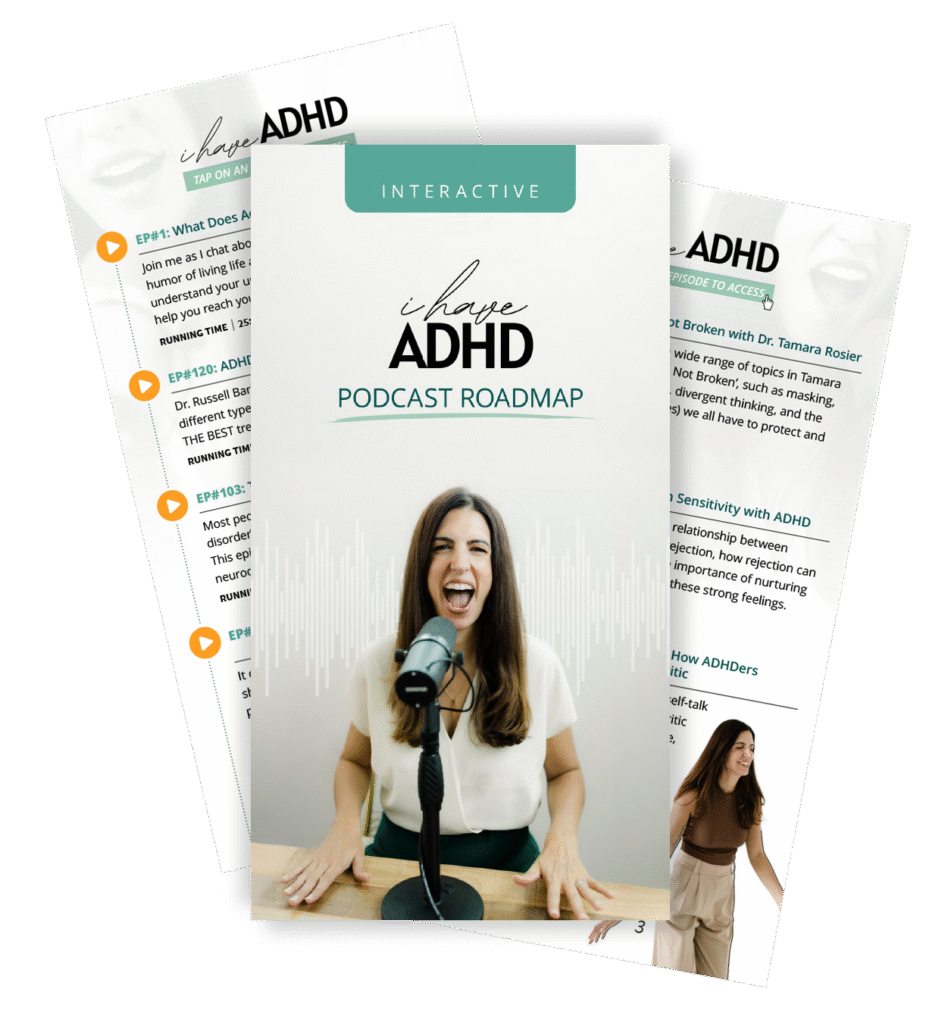
Get The Best of the podcast now with our Podcast Roadmap.

This is a clear and easy podcast roadmap so that you can know for SURE that you’re hearing the very best of the I Have ADHD podcast.

Related Episodes

Kristen Carder

Episode 418: Tired of Feeling Tired? How to Rest When You Have ADHD

Kristen Carder

Episode #416: ADHD and Money: In This Economy?!

Lindsay Gibson

Episode #414 Good Enough Parenting: What NOT to Do (with Dr. Lindsay Gibson)

Stop Struggling Alone.
Start Thriving With FOCUSED.

A proven coaching program designed specifically for adults with ADHD who want to gain clarity, build confidence, and take control of their lives.

Join a community of hundreds of ADHDers

Learning About My Brain...

Changed Everything

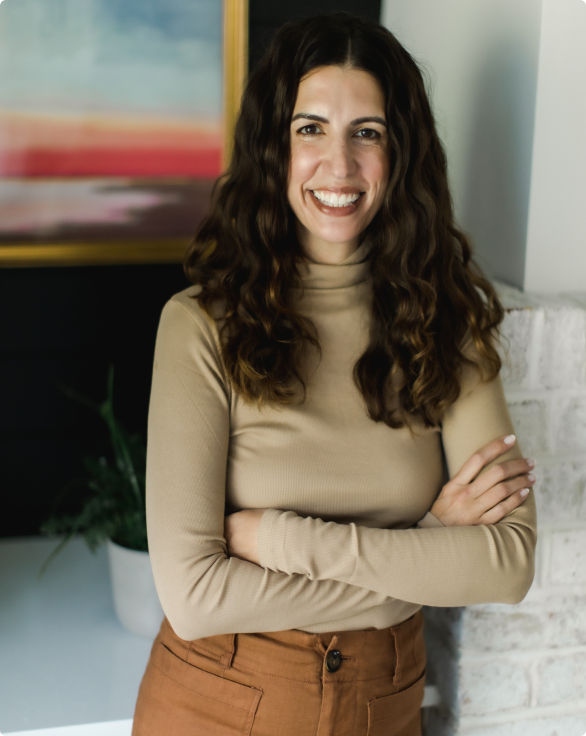
Hi, I’m Kristen Carder—ADHD expert, podcast host, and certified coach who’s been exactly where you are. Diagnosed at 21, I spent years cycling through planners, courses, and systems that never quite worked. Everything changed when I discovered the power of understanding my ADHD brain and the transformative impact of community support.

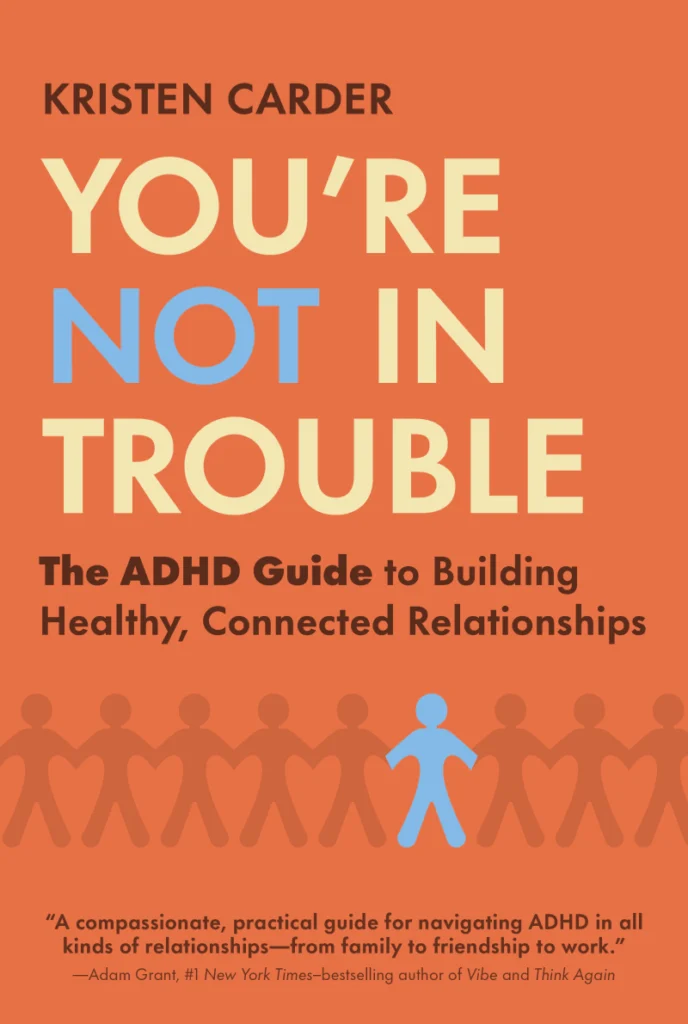
Now, after 15+ years of research and experience, I’ve helped thousands of adults with ADHD thrive. I’m here to show you how understanding your brain can transform your life, just like it did for mine.

ADHD Tips That Actually Make Sense

Follow @i.have.adhd.podcast and join our Instagram community for daily strategies, relatable content, and real talk about ADHD