

Podcast Episode #78: How to Follow Through

Listen or Watch this episode on:

About This Episode

Every adult with ADHD wants to learn how to follow through. This episode includes a 4-step process that you can use to become someone who does what they say they’re going to do. Do you identify as reliable? I do. It’s possible for you, too!

[www.ihaveadhd.com](https://ihaveadhd.com) for more adult ADHD resources.  

See Privacy Policy at [https://art19.com/privacy](https://art19.com/privacy) and California Privacy Notice at [https://art19.com/privacy#do-not-sell-my-info](https://art19.com/privacy#do-not-sell-my-info).

Episode Transcript

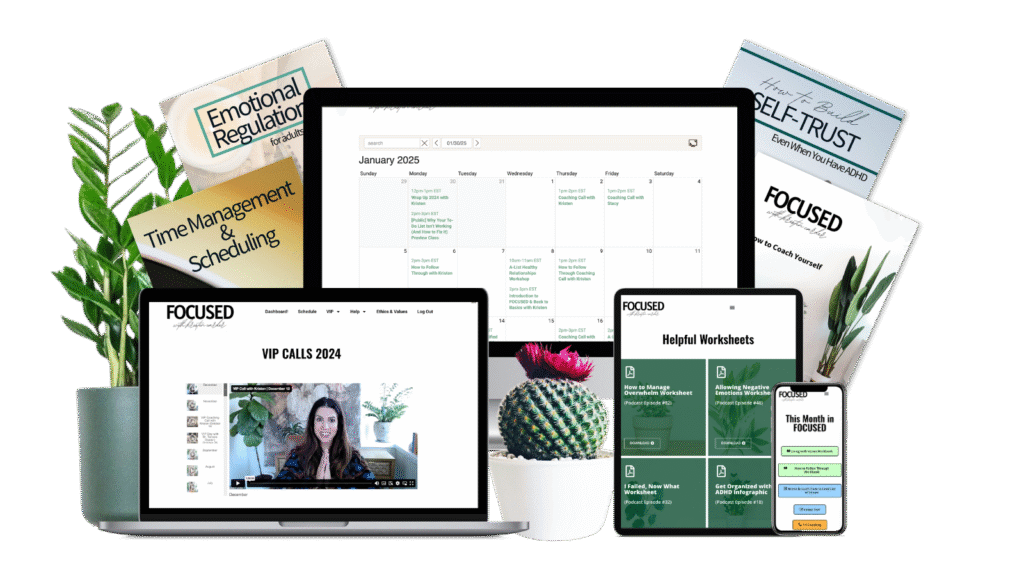
This episode is sponsored by CURE Hydration. You know that moment for me, it’s around like 2 or 3pm when my ADHD brain just decides we’re done for the day. We’re done here. The afternoon slump hits, the lights go off upstairs and suddenly answering an email or doing basically anything feels like climbing a mountain. That’s when I reach for Cure Energy. It’s a clean plant based energy drink mix made with 100 milligrams of natural caffeine and electrolytes so I get the focus and hydration boost I need without jitters, without a crash and without that like I drink battery acid vi that some of the energy drinks have. The peach tea and acai berry flavors are my current go tos. Crisp, refreshing and they don’t taste fake, y’. All. They don’t taste fake. I’ll drink one before recording a session or when I need to get help through like that afternoon drag. And honestly, I. I drink it anytime. My brain just needs to cooperate. What’s wild is that Cure Energy is only 25 calories and has zero added sugar. It actually helps me stay hydrated while giving me energy. Okay, I love coffee, but coffee could never Staying hydrated isn’t just about water. You also need electrolytes. And that’s why I love CUR Cure. It’s clean, it tastes great and it actually works. And remember, Cure is FSA HSA approved, which is amazing. You can use that money to pay for cure and for I have ADHD listeners, you can get 20% off your first order@curehydration.com I have ADHD with the code I have ADHD. And if you do get a post purchase survey, make sure to tell them that you heard about CURE right here on the podcast. It really helps to support the show. Don’t just drink more, upgrade it with cure. Welcome to the I have ADHD Podcast where it’s all about education, encouragement and coaching for adults with adhd. I’m your host Kristen Carter and I have adhd. Let’s chat about the frustrations, humor and challenges of adulting relationships, working and achieving with this neurodevelopmental disorder. I’ll help you understand your unique brain, unlock your potential and move from point A to point B. Hey, what’s up? This is Kristin Carter and you are listening to the I have ADHD podcast, episode number 78. I am medicated, I am caffeinated and I am ready to roll. It is a gorgeous fall day in Pennsylvania. If you’ve never experienced autumn in the northeast of America. It is either absolutely stunning, which it is today. The sky is so blue. The colors of the trees are so vibrant. They are yellow and red and orange and green, and it’s just amazing. So it’s either completely gorgeous or it is dark, rainy, windy, cold, and completely awful. But today is a really fun and gorgeous, gorgeous day, and I am soaking up every second of it. I was just standing in the sunshine, getting my brain prepared to talk to you today. I have a really funny story. At least I think it’s funny. Last Week’s episode number 77 was on memory and how our memories suck. And there were so many, many ironic things that happened with that podcast. Like crazy forgetful things that I did. So first of all, the first crazy, forgetful thing that I did is that when I recorded the raw recording of that your memory sucks podcast, I had a completely crazy brain fart and literally posted the raw recording and scheduled it to be published. I never sent it to my podcast producer. I don’t know what I was thinking. I was just in go mode and I published the raw recording, meaning that like 200 people listened to me. Like tons of silence, tons of just coughing. And me chatting with my producer because I chat with her as if she’s sitting here. I’m like, oh, Karen, I said that completely wrong. You need to cut that. And I posted that, scheduled it, and didn’t notice that I had done it until I literally, like listened to my own podcast the morning that it came out and was like, oh my gosh, Kristen Carter, what in the world? So then I fixed that and that was great, and then sent it to my producer. I posted the correct podcast. By the way. The podcast that was supposed to go up, I think was U 2.0. So I like switched that around, posted the correct podcast, sent the memory podcast to my producer, and then when she got it back to me, I never put. I totally forgot to post it. So it’s just extremely ironic and annoying that for the podcast on memory, I could not remember to do it correctly. Like, what in the world is going on? It just doesn’t matter how much progress you’ve made, how high functioning you become, you’re always going to have adhd. I just want to throw that out there. No matter how many people you’re helping or how much money you’re making or how, like, whatever, like how you can keep things together in general, ADHD does not go away. We still have it for the rest of our lives. And luckily, I’ve done enough work to just think that like, it was hilarious that I did these things. I did not spend time in drama or spinning out. And even the 200 of you who heard that raw footage, I’m sorry, so sorry. I don’t know what you call it when it’s just like raw record. I guess it’s a raw recording, not raw footage. I don’t really know. Anyway, I apologize to you. Hopefully you knew something had gone terribly wrong, which what went terribly wrong was my ADHD memory. That is exactly what went terribly wrong. Ay yi yai. Guys, like, for real. Today we are going to be talking about how to follow through. This is something that I get questions about all the time. I hear from you all the time that you’re frustrated that you just cannot seem to follow through. And there’s so many different ways that we can talk about this and things that go into it. But I have really been spending a ton of time thinking about it and narrowing it down into, I think, a pretty concise formula. And again, not that we’re ever going to be perfect at it, but at least we can process it and think it through very clearly. This is actually what we are going to be spending studying in focused in November of 2020. So if you’re listening in real time, this is what we’re studying in November. We want to become people who follow through. We want to become people who do what they say they are going to do. We want to be people who are reliable. And I’m really looking forward to studying this in depth because everything that we work on in the focus program, it’s totally geared to becoming the people that we want to become and following through on the things that we say we’re going to do. But this month we’re like, doing it very specifically. And I am looking forward to it just like I look forward to every month. I know I say this, like, all the time, but I am having so much fun. Like, I have so much fun with this program. So for those of you who are in it and are listening, I hope you have as much fun fun as I do. Okay, so let’s talk about following through. When you think about yourself, I would love for you to just kind of ask your brain, why haven’t you followed through in the past? What are the reasons that come up for you when you think about, like, yeah, I really don’t follow through or I really, like I said I was gonna do this and I didn’t do it or why. And then something that I think is really interesting. What feelings come up for you when you think of your history of not following through, my guess is there’s some shame, maybe embarrassment, frustration, disappointment, like lots of negative emotions involved, which is normal, like nothing’s gone wrong, totally normal that you would be feeling that. But I do want to offer that if you keep these emotions around, the shame, embarrassment, disappointment, frustration, you’ll never actually be able to evolve into someone who follows through. Because remember, we always take action out of our emotion. Emotion is the gas that fuels our action. So if your emotion is shame, you’re probably going to hide and procrastinate, and if it’s frustration, you’re probably going to give up. If it’s disappointment, you’ll likely spin out like in self judgment or something like that. So none of that’s going to be helpful. None of that’s going to be helpful. So if you are someone that struggles with a lot of negative emotion, I highly encourage you to learn to process that, feel it, and then intentionally create more positive emotion for yourself. I do have a full month’s worth of podcasts on emotions. You can scroll back and find that. I think it’s from, like, April, I’m not sure, but it was a while ago. And I think that’ll be really helpful to you. And I want you to consider that it actually makes sense that you’ve never developed the skill of following through. Or, you know, maybe you follow through on some things, but not as many things as you wish that you did or you would like to. It makes sense, sense that you don’t do what you say you’re going to do. Okay, because you’re an adult with adhd, you haven’t fully learned how to constrain, how to hack your body’s reward system, how to decide ahead of time how to allow the desire to not follow through. You haven’t learned these things yet. You haven’t had specific teaching or specific coaching on this yet. I would assume that I never had. All right, so it makes sense that you’re not an expert at it yet. So no matter where you are on your journey, I just really would invite you to accept the reality of where you are right now, not judge yourself for it, not heap on shame and embarrassment and frustration on top of what you’re already feeling. Okay? The reality of where you are is 100% fine. You’re exactly where you’re supposed to be. You shouldn’t be able to do it better yet. I want to say that again. You shouldn’t be able to do it better yet. And if that, like, makes you maybe A little like, wait, what do you mean? That’s so strange. I want you to, like, pause this and write down the reasons why. Let’s find some evidence for that. Why shouldn’t you be able to be an expert at it yet? There are reasons for it. The reality of where you are is absolutely perfect. That doesn’t mean you don’t want to change and improve. But here’s the thing. Acceptance is a much more useful emotion than shame or disappointment or frustration. So if you can accept where you are right now, if you can, try on that feeling of acceptance like a. Like a sweater. The sweater weather. You know, fall sweater weather. So try on that feeling of acceptance every day, over and over, just like a sweater. If you haven’t seen that SNL skit, you need to go look up sweater weather right now. Maybe not right now, because you have ADHD and you’ll probably get lost on YouTube. So when you’re done with this podcast, go look up that little clip. Okay, wow. Let’s continue. We’re gonna try on acceptance every day, like a sweater. And as you do, sometimes it’s gonna feel really uncomfortable because you’re not used to it. And sometimes it’s gonna feel really cozy and great. All right? But try it on every day, and as you do, you’ll build the skill of following through, because acceptance is a neutral, and I would say even maybe positive emotion, that’s going to generate positive action. Okay. It is possible for you to learn to follow through, but only if you continue to take off shame and put on acceptance. All right, I have so many stories from my past of times that I bailed on people or canceled last minute and made up excuses and memories of deciding to do something one day and then, you know, deciding against it the next. Like, I’m gonna eat salads for a whole week, or I’m gonna read my Bible every day. I’m gonna call my grandpa every single week. I’m gonna post on Instagram every day, like, whatever. So many things that I said I was going to do that I never followed through on, all because I didn’t have anyone helping me or teaching me to learn how to follow through. So you have someone now. That’s me. I am going to help you to walk through this process. Okay? I figured it out. I don’t follow through on anything that I don’t want to follow through on, but everything that I do want to follow through on, I do. Okay? So as usual, it may not be in the way that you expected. It’s totally fine. Let’s go. So the first thing that you’re going to do is you’re going to need to do less. Do less. Okay? Most of you are saying yes to too much. You’re saying yes to things you don’t even want to do, and you’re telling yourself that you’re going to do more than anyone is even humanly capable of doing. All right, listen, constraint is the way out. Now, constraint is something that we talk about all the time on this podcast and for sure, every single month. In focused, we constrain our vision, our relationships, our schedules, the stuff in our home. Like everything. We are minimalists in the sense that we allow our brain to focus only on what is most important. Constraint is a limitation that we put on ourselves on purpose. We put it on ourselves on purpose because we know that we perform at our best level when our brain is focused on the fewest things possible. I’ve talked about this a lot, my friends. Our brain is at its best when we allow it to focus on the fewest things possible. Okay? Because we can only follow through on so much. We can’t say yes to everything and follow through on everything, right? So in order to follow through on what you say you’re going to do, it’s very likely that you’ll need to say yes to yourself and others much less often. You’ll have to say yes to yourself and to others much less often. So I wonder, what do you want to follow through on? What is actually, like, the main priority? If you could just pick one thing or maybe like, a handful of things, what are the things that you really want to follow through on? And, like, what would you need to say no to in order to follow through on those things? Sometimes when we don’t follow through, it’s because we really didn’t want to do the thing in the first place. I would say a lot of times when we don’t follow through, it’s because we don’t want to do the thing, right? So what are the things that you’re currently doing or saying yes to doing that you’re just like, I don’t want to do this. This is not really what I want to do. Here’s the solution to that. It is my favorite word. It is no. Just say no. Like, sometimes we say yes just to avoid the discomfort of saying no in the moment, right? But what happens when we do is we set ourselves up to not follow through because we know for sure that the future versions of us, we’re not going to want to do it. We’re going to want to cancel. So in the moment, us says yes to avoid the discomfort or the conflict that saying no might bring. But then the future version of us is like, why did I say yes to this? I don’t want to do it. Okay, so then what happens is it just perpetuates an identity of not following through. So I have an entire podcast on saying no. Saying no is something that we ADHDers are notoriously bad at. And if this is you, I highly recommend that you go over to that podcast, give it a listen, take notes, and really start to process what it might be like to say no. Saying no is so powerful and wonderful. It is the best. Now sometimes when we don’t follow through, it’s because we’ve set really unrealistic expectations for ourselves. So we pack too much into our days or we don’t take into account like our PMS week, or we plan difficult tasks for when we’re supposed to be like, homeschooling our kids. Like, it’s just unrealistic. So I wonder if that’s something that you fall into. And I would really invite you to stop, just constrain, really become aware of what you’re doing to yourself. Like you’re just again, perpetuating an identity of not following through because you’re not really being thoughtful about your schedule or about your plan or about your decisions. Stop saying yes to so much. Stop saying yes to shiz you don’t even want to do. Stop setting unrealistic expectations for yourself. That’s the first and most important, I think, component to becoming someone who follows through. You have to be very clear on what’s important to you and what’s not important to you. Because if you’re not clear on that, you’re going to be saying yes to all kinds of things that, like, in the long run, you don’t even want to follow through on. Right? Okay. So as you think about following through, it’s important that you understand that your brain and your body were designed with a built in reward system. Okay? So you have a thought, you feel an emotion, a desire in your body, you follow through on that desire and you get a nice little shot of dopamine, which is like delicious, right? We all love that feeling. And every time you answer your body’s desire for that immediate reward and you get that shot of dopamine, it solidifies a neural pathway in your brain. Okay? It’s a desire reward loop. So if you’re the kind of person who does what they want to do whenever they want to do it. It’s likely that your brain is used to instant gratification, right? Your brain is very used to being rewarded or gratified immediately. And when it doesn’t get what it wants right away, it probably throws a whole fit, right? Like straight up, toddler style. So here’s the thing. The desire reward loop, like, you need to really see it, recognize it, understand it, and learn how to either lessen it or break it if you’re gonna follow through on any kind of long term goal. Because what that desire reward loop does is it we make decisions ahead of time and then it gets us off track in the moment. Because in the moment, following through doesn’t feel good. It’s hard, it’s uncomfortable, right? So I want you to think about if it were possible for you to allow the desire, which we’re going to call an urge. Allow the desire to be there, right? So you’re about to start on your schedule and then you have this like, intense urge to change your plan. Like, I don’t want to do this today. This is a bad idea. I should go to this other thing. What would it be like if you could just allow that desire or urge to be there without taking action on it? Right? Like, you just let it be there, but you don’t act on it. Now, this is a skill that I am going to be teaching all of the Focus members this coming month in November, and I am looking forward to that because we really do have to learn how to recognize the urge, allow it to be in our body, and not take action from it. So the urge is just a feeling. It’s an emotion. It’s a vibration in your body just like any other emotion, okay? And if you can allow it to be present without taking action from that urge, you reduce your impulsivity, you increase your ability to follow through. Because when you take action from an urge, you make an impulsive decision. You make a decision for reward in the moment, and then your brain’s like, here’s some dopamine. That was deliciously amazing. But long term, we don’t reach our goals. So we get the dopamine in the moment, but we don’t get the ultimate satisfaction of following through and completing our goals. When you take action from an urge at work, let’s say it usually leads to you, like scrolling Instagram or chatting at the water cooler instead of finishing the report that your boss is expecting. When you take action from an urge at home, it usually leads to eating Oreos or watching Netflix instead Of working or doing your homework or cleaning up or whatever, right? A lot of you have trouble going to bed on time and like, whatever on time is, I have no idea. But a lot of the times it’s because we just have this urge for immediate pleasure. We have this urge, urge to stay up and continue watching TV or doing our work or scrolling on our phones. We have this just urge for the gratification of fun in the moment. But what we don’t get is the satisfaction of a good night’s sleep. Because we’re listening to the urge and we’re taking action from it instead of just allowing the urge to be there, feeling it in our bodies, recognizing it and knowing what it is, and then getting up and going to bed. Right? Taking action from an urge in the moment almost never leads us to completing our goals. It almost never leads us to following through. I say almost never because I feel like you guys will be emailing me, like, well, actually, Kristen, you can take action from an urge and blah, blah, blah. So anyway, I’m gonna put the almost in there just as a little buffer. But honestly, when you have the impulse, the urge, the desire to change your plan, to cancel on something that you said you were going to do, to. I just remember this story so specifically, and I’ve really been processing the shame that I have around it. So I’m going to share it with you now. I remember I was married, but before I had Owen. So it was probably, like, in my mid-20s, and I was still taking voice lessons with my voice teacher in Philadelphia, and I lived here in Reading, and I planned to meet a friend at the King of Prussia Mall. If any of you know it, it’s a lovely little mall. And so I planned to meet a friend before my lesson for lunch or something like that. And so I met her. We had the most amazing conversation. It was the best time. And she was like, do you really have to go to your voice lesson? Why don’t you just stay here at the mall with me? Like, we can walk around, we can shop. And I will never forget, like, I acted on that urge. I had this, like, extreme desire to just continue to be with my friend. We were having the best time, and I made a decision in the moment. I followed the urge, called my voice teacher. It was a really awkward conversation because, like, duh, I was canceling on her like, an hour before our lesson, which is so not great. And it was a really awkward conversation. I hung, like, I hung up the phone, and it didn’t feel good. I acted on the urge. I didn’t really even get the dopamine of that instant gratification because I just knew after acting on it like, that probably was a really dumb idea. And I continued to walk around the mall with my friend and pretend like I was having a good time, all while feeling completely terrible. So for me, this was just like the most perfect example of a time when I had a plan. I had decided ahead of time. I felt an intense urge in the moment, and instead of knowing, like, of course I feel this urge, it’s not a problem. It doesn’t mean I need to take action. I felt as though I needed to take action from this urge, and I did. And then in the long run, it didn’t lead me any closer to my goal as a human or as a singer or as, like, in relationship with my voice teacher. Like, it just wasn’t a great outcome. Taking action from an urge in the moment almost never leads us to follow through, and it never leads us to a great place, right? So since an urge is just an emotion in your body, just like any other, it’s just a sensation. It’s not a problem. I want you to begin to recognize when you’re having an urge. So it’s usually going to happen when you’re faced with something that you don’t want to do, or you’re feeling another emotion and you want to escape it. And so you have the urge to go eat cookies or go scroll Netflix or go on your phone or call a friend, you know, or whatever. Call an ex. Call an ex. That would be like, a really interesting urge, right? Like, you’re lonely. And so in order to avoid the feeling of loneliness, you have a strong, intense urge to call an ex. Like, I want you guys to see that we all experience these kinds of emotions, but they are just emotions. Emotions don’t kill us, they don’t harm us. They’re not a problem. They are part of the human experience. So my advice to you would be to begin to expect and recognize urges. Like, name them out loud. Like, oh, that’s an urge. Like, I see it, I feel it in my body. And really, like, try to locate it. Where is that urge? Where is that sensation in your body? Does it have emotion? Does it have a color? Does it have a texture? Like, allow it to be there with you without taking action from it. See, it’s not a problem at all. Unless we take action from it, then it’s a problem, right? The fact that it’s present in our body is not a problem. That Just means that you’re human. It just means that your brain is working exactly the way it’s supposed to be working, that you have a desire to escape pain. You’re perfect. That’s exactly what’s supposed to be happening. You have a desire for comfort. Perfect. That’s exactly what’s supposed to be happening. Your brain is wired to keep you safe, to keep you cozy, to keep you comfortable, to keep you away from any perceived danger. Now, remember that your brain will think that things like public speaking, following your calendar, making an offer to a potential client, your brain’s gonna think that those things are potentially dangero. Oh, brains are so cute. Right? So that’s why you have fear and then the urge to do something else. I want you to become an urge expert, See it, identify it, and then allow it to be in your body without taking action. Now, if you’re in focus, what we’re going to do is we’re going to create urge jars. And every time we allow an urge, we’re going to take, whether it’s a bead or a coin or an M and M, whatever you decide, we’re going to take a small item and we’re going to put it into our urge jar. You’ll be able to have a visual representation of urges that you did not follow through on. And that’s going to be so fun because as you allow an urge and then add a bead to your urge jar, you’re going to be able to see. See, that was an impulsive moment and I didn’t take action. That was an opportunity for me to not follow through. But I stuck to my plan. That was a time when I experienced discomfort and I allowed it to be in my body without changing or ditching what I originally said I was going to do. So fun. So if you’re not in focus, all you’re going to need to do is get some kind of clear container and then some sort of, like, beads or rocks OR M&MS. OR coins OR even just like, if your container is huge, you can get pine cones or like, something like that where you can. Every time you allow an urge, you can put a visual representation into your urge jar and watch it fill up. And I would highly recommend that you place plan a, like, really fun reward for yourself once you’ve allowed, like, 50 urges. Once your urge jar is full, you can decide how many you want to allow, you know, before you have a reward. But that is so fun because you will become an expert at expecting the urge, noticing it, recognizing it, naming it, allowing it and becoming someone who can just like let it be there in their body and then carry on with the plan. You will become someone who follows through. This is going to be as I say every week, so fun. All right my friends that’s what I have for you today. I hope you have an amazing week. I will see you next time. Hey adhder I see you. I know exactly what it’s like to feel lost, confused, frustrated and like no one out there really understands the way that your brain works. That’s why I created Focused. Focused is my monthly coaching program where I lead you through a step by step process of understanding yourself, feeling better and creating the life that you know you’re to meant meant for. You’ll study, be coached, grow and make amazing changes alongside of other educated professional adults with ADHD from all over the world. Visit ihaveadhd. Com Focused to learn more.

Related Episodes

Kristen Carder

Episode 418: Tired of Feeling Tired? How to Rest When You Have ADHD

Kristen Carder

Episode #416: ADHD and Money: In This Economy?!

Lindsay Gibson

Episode #414 Good Enough Parenting: What NOT to Do (with Dr. Lindsay Gibson)

Stop Struggling Alone.
Start Thriving With FOCUSED.

A proven coaching program designed specifically for adults with ADHD who want to gain clarity, build confidence, and take control of their lives.

Join a community of hundreds of ADHDers

Learning About My Brain...

Changed Everything

Hi, I’m Kristen Carder—ADHD expert, podcast host, and certified coach who’s been exactly where you are. Diagnosed at 21, I spent years cycling through planners, courses, and systems that never quite worked. Everything changed when I discovered the power of understanding my ADHD brain and the transformative impact of community support.

Now, after 15+ years of research and experience, I’ve helped thousands of adults with ADHD thrive. I’m here to show you how understanding your brain can transform your life, just like it did for mine.

ADHD Tips That Actually Make Sense

Follow @i.have.adhd.podcast and join our Instagram community for daily strategies, relatable content, and real talk about ADHD