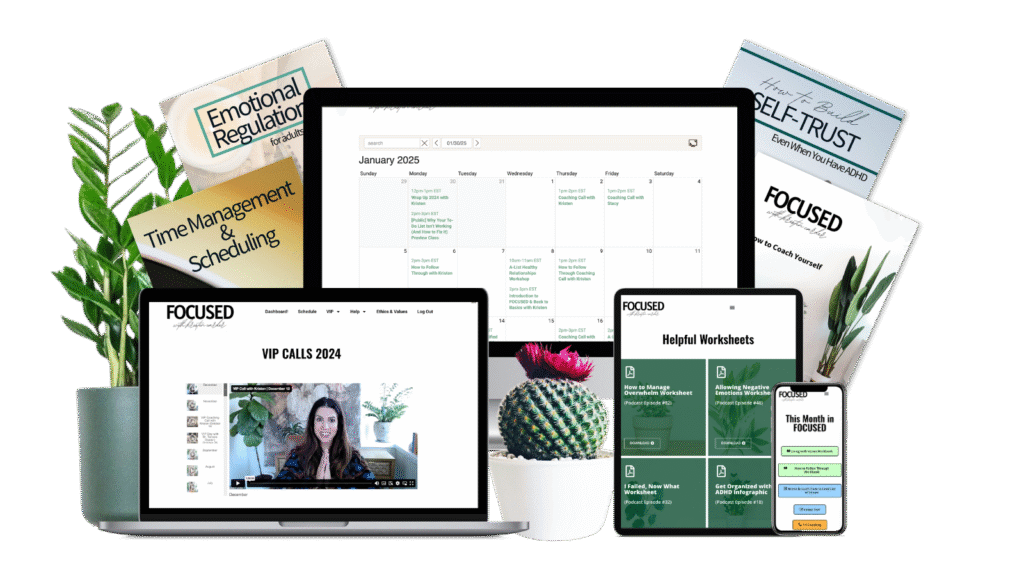


This episode is sponsored by CURE Hydration. All right, I’m going to be real with you. Drinking water is boring. My ADHD brain is like, wait, we have to do this again? Like every day, multiple times. What in the world? And because I’m running from meetings to coaching calls to kid chaos, staying hydrated is not something I’m naturally good at. It’s not something I naturally think about. That’s why I’ve been obsessed with Cure hydration packs lately. CURE is a plant based hydrating electrolyte mix with no added sugar, only 25 calories, and it actually tastes good. The watermelon and berry pomegranate have been on repeat for me. I’m actually like really running low on those flavors, which is so sad. They’re refreshing without being too sweet or artificial. It feels like my water finally has a little bit of personality, which I enjoy. I really do. What I love most is that CURE uses a science backed formula that hydrates as effectively as an IV drip. So when I’m scrambling through my day forgetting my water again, CURE helps me to catch up fast. I throw a few packs in my bag and it makes drinking enough water simple, which for my ADHD brain is basically a miracle. So staying hydrated isn’t just about water. You also need electrolytes. And that’s why I love Cure. It’s clean, tastes great, and it actually works. And bonus, CURE is FSA HSA approved. So you can use those funds to stay hydrated. The smart way for I have ADHD podcast listeners, you can get 20% off your first order@curehydration.com I have ADHD with the code I have ADHD. And if you get a post purchase survey, make sure to tell them that you heard about Cure right here on the podcast. It really does help to support the show. Don’t just drink more water, upgrade it with cure. Welcome to the I have ADHD podcast where it’s all about education, encouragement and coaching for adults with adhd. I’m your host Kristin Carter and I have adhd. Let’s chat about the frustrations, humor and challenges of adulting relationships, working and achieving with this neurodevelopmental disorder. I’ll help you understand your unique brain, unlock your potential and move from point A to point B. Hey, what’s up? This is Kristen Carter and you are listening to The I have ADHD podcast, episode number 80. I am medicated, I am caffeinated and I am 100% ready to roll. Let’s go. So super looking forward to you Hearing from my client and friend Verity Garvey today, the whole reason why I wanted to have her on this podcast is because she is an example of what is possible when you change your mind about yourself. And I think that that is some of our deepest work as humans with ADHD who have lived for so long thinking that we were flawed, that we were broken, that we like the way that we show up in the world is just unacceptable. And I really think that one of the very first steps in any kind of change and improvement in your life needs to be the step of changing your mind about yourself. Because we cannot make changes from a place of judgment and self loathing. They’re not going to be sustainable. So if you have not been able to sustain positive change in your life, I would encourage you to check in with yourself. Are you judging yourself constantly? Because if you’re judging yourself constantly, you’re not going to be able to sustain positive change. It can’t come from a place of hate. We can’t hate ourselves into improvement. We have to love ourselves into improvement. We have to accept ourselves into improvement. And so changing your mind about yourself is one of the very first steps in, in making positive change in your life. And in my experience, over the last year and a half of coaching, nobody has done this more profoundly than my client, Verity Garvey. And I cannot wait for you to hear from her because she drops some, like, nuggets, you guys, some major amazing truth bombs. You are going to get so much value out of it. Remember, the reason why I have my clients on this podcast is so that we can highlight very normal people with ADHD who are making huge changes in their lives. So that for a couple reasons, Number one, you don’t think I’m just a magical unicorn and I’m the only one able to make change. That is not true. I am not a magical unicorn at all. It is available to all of us. And number two, just to be an example of what is possible for all of us with adhd. And so I hope that these episodes, these interviews with people who are making change in their lives, I hope it is so inspiring to you and that, like, you have the thought, if she can do it, I can do it. Because that’s exactly what I want for you, right, to listen to this and to go, hey, if she can do this, I bet I could do this. So, without further ado, here is my interview with my client and friend, Verity Garvey. Hi. Hi. Thank you for doing this. Thank you for asking me to do this. I’M really excited. So when we met, tell everyone kind of about like the space that you were living in and what a typical day looked like and like maybe even just some of the thought loops that you often found yourself stuck in. So the reason I even found you was because I had come to a point in my life that I realized that I was barely functioning. The stress of parenting and the stress of trying to be who I wanted to be. And literally, like the thought loop was every morning waking up and being like, today is going to be a good day. I’m going to make a to do list and I’m going to follow the to do list and I’m going to call people back and I’m not going to be late and I’m going to like, I’m not going to yell at my kids and blah, blah, blah, like this whole long list of like, what I thought it would be to be like the perfect woman and mom and having this really perfectionist, perfectionistic, high, unattainable goal every single morning. And then basically being almost non functional throughout the day, like immediately yelling at my kids, immediately forgetting to eat breakfast, like not getting anywhere on time, like, just like failing so hard every single, single day. And it was so depressing. I was so sad because I just would go to bed every single night and run through the lists of things that I hadn’t accomplished that day. And so it got to a point where I just couldn’t tolerate that anymore. I mean, I really hated myself, but somewhere in myself was a enough compassion to realize that, like, this isn’t the way to live and that I didn’t want that way of life. So I started thinking more about my ADHD and being like, well, actually like, why have I never dealt with this? Why have I never thought about what this means from my life? And so I started diving in to resources and that’s how I found your podcast. And, and then I also started like, I made an appointment to get meds. So yeah, when I, when we first talked that very first time, I was at like the lowest point. There’s probably been only one other time in my life when I was that low and that kind of non functional. But the first time it happened, I was single, I was 19, I was living in England, and I could be extremely depressed and like, it didn’t really affect anyone except for me. Whereas now I have, I’m a mom and a wife and a friend and I have a life and a job and I couldn’t be that depressed. And I didn’t want to be. So it’s crazy to think about that version of you. For me, it’s crazy to think about that. I feel like I know you really well now, and you’re just. You dip into it every now and again. But it’s not you anymore. It’s not me. No, it’s like a very recognizable, like, outside thought. It used to feel like my entire reality. And now when those thoughts come, I can, like, they feel, like, intrusive because they’re. They’re so different from what I’m thinking now. And I actually, like this morning when I was thinking about, like, I was kind of reading through the questions that you sent me ahead of time and some of the previous thoughts about myself, it was really painful to write them down. Like, the things I wrote down, I’ll just kind of read some of them. Self hatred. Always doubting that I was doing the right thing or that I was the right person. Like, even, like, the right wife or the right mother. Believing so strongly that I was a burden to other people and, like, literally caused pain for the people that I love just by existing as, like, myself. I felt completely powerless. And that’s, like, a really significant thing that I remember just feeling like I have no power to change. Like, this is just who I am. I’m someone who has a broken brain. Like, ADHD means that my brain will never work the way that I want it to. I’m stuck in that I will fail every day for the rest of my life because I have adhd and because. And then just like, so victim. Victim mentality minded. Like, I. Oh, because this happened in my life or because this person said something, or because my husband didn’t react the way I want him, or because my child is having a tantrum. Like, looking outside of myself all the time for reasons that I was feeling the way I was feeling and feeling like I had no control over my own brain or my life or anything that happened to me. Yeah. And to write that down this morning was, like, physically painful. Like, I didn’t want to write it down because if I think about how I felt back then, it feels like just a different person. And I just never want to feel that way again. What do you think started the shift in you? Because I think that you lived in that place even after coaching for several months, it was definitely not a quick shift. Do you remember when things started to shift? I think that without knowing it, I started making that shift when I decided to make an appointment to get medication and when I decided to, like, trust you like after that first conversation to trust you and believe you that coaching could work and that, you know, I’ve seen therapists before and it’s been a total fail because I went to people who didn’t understand my brain and so they would give me techniques and methods to improve my life that were all very action based. And so, yeah, making that own shift and I didn’t even realize I was doing that. But yeah, but literally just trusting without much hope, but just being like, I’m going to just believe that this is possible and I’m going to pay money because I believe that I’m worth it. Like even that. Like, and we talked about this the other day, but like that, that moment of like I’m gonna decide to spend like quite a bit of money on myself to, to get this help that I’m not sure is gonna work, but like that the process of investing in myself and in taking control, like that was a start. The, I guess taking control is a good way to think of it. The first step of taking control over my life. Feeling powerless, but being like, I’m going to make these, these small choices to like, and they’re not small, but they felt, you know, small at the time to like get back that, that control or like for the first time gain control. I’ve never really had control over my life. And so what if I started choosing to do things that might help me? That just is mind blowing to me. And it’s so interesting that you say that. I have two thoughts. Number one, this is why it’s important to charge for coaching. Like, this is why it’s important that it’s not free and it’s like better for the client to have to wrestle with the decision of am I going to make this investment in myself or not. Yeah. Thinking back to that first moment of choosing, like really feeling discomfort and I, you know, we had that talk like, oh, there’s no way. That’s so much like I. And even saying like we could financially, we could probably manage it, but like, how could I spend that on myself? And thinking that like I am like, am I being crazy? Like, am I being irresponsible? And that moment when I had to pay ahead of time, like I had to pay thousands of dollars up front to sign up for, for six months of coaching and that like when I did that, like, that’s when the growth really took off. Like before that I could almost just like, like kind of trick myself into thinking, oh, you’re doing the work. But like it’s not that big of a deal. Like, it’s more. It was more like, like there was a ton of value in that. But like, I just really enjoyed talking to you too. So it was kind of an emotional, like not therapy, but like a check in every week and kind of you helped keep me on track. But. But it didn’t feel like. Like I didn’t feel like I had fully made that shift into like committing to myself and so then having to pay like thousands of dollars up front and committing, like literally saying, like, I am doing this extremely uncomfortable thing. Like, I’m parting with money and I don’t have a lot of money. Like. Right. And I’m. I’m so privileged to have been able to, to make that choice. Like, I did have the money to do it, but it’s not like I just have endless amounts. Like, I don’t. We’re not like super wealthy. Like, I don’t. It was a, it was a sacrifice. It was something to justify to myself and then justify to my husband as well. Like, this is worth it. And if we pay this, I promise you to myself, like, I promise myself and I promise you to my husband, like, we are going, we’re gonna see changes. Like, our life is gonna change. I am going because this is a commitment. So that’s when. That’s when the growth started. I totally agree that it escalated like crazy at that point. And it’s just wild. It’s just wild what like making a decision like that will do for you and your results. It’s so crazy. Yeah, I totally didn’t used to fully believe that. That our thoughts were pretty much everything. Like, I used to be like, okay, but there’s like some situations and like, but now I’m. I really believe that. What do you think made the shift for you when you like to really realize that thoughts are everything? Again, just believing you even when I didn’t feel that. So like, I guess that is a way of changing a thought. Like I had a thought like, well, this probably isn’t gonna work. To being like, what if this works? Like, yeah, what if this works? And then like one step after that being like, this is going to work. And so that my, my feeling came from that thought. Yeah. So originally, yeah, it’s just a thought, but my original thought was like, well, maybe I like, I’m not sure if this can work for me. And the feeling that came out of that was like self doubt and kind of like weak hoping, I guess. But. But the feeling that comes from thinking like, this is going to Work? Yeah, like, and the bridge between those two being, like, this might work, like, this could actually work. But yeah, the feeling that comes from this is going to work is empowerment. It’s like, I feel in control. I feel excited about, Like, I feel excited about failing even, because, like, I know that it’s a step, right? Like, if I think this is going to work, I can choose how I think about the situation and I can fail and then reevaluate and think some more thoughts that are going to cause some more feelings that are going to cause more actions that are going to get me to the results that I want. Like, it’s not like we don’t get one chance. Like, we, for the most part get endless chances to not always to, like, reach a specific goal, but to reach, like an overarching life goal. I love that so much. So can you take us back to when you would consider yourself to be, like, non functional and you’re working on changing your mind about, like, maybe I have something to offer the world. Maybe this, maybe there’s more to life than this. Or whatever it was that you were like, what was practicing those thoughts. It’s. It’s like you were having to believe ahead of time, right? Like, without having the evidence they are in front of you, having to believe ahead of time, which is, I think, is what you were referring to earlier when you were just like, I guess I’ll just believe you, Kristin. Like, I guess I’ll just trust you. Change is possible. So what was it like to consider yourself like, okay, my identity right now is I’m non functional. It might be possible that I have something to offer the world and that I can be a different version of myself. What was that transition like for you? Do you remember? I remember, yeah. I think similar to what I said before, I think that, like, making the decision for coaching was a huge part of that. Like, I didn’t have the evidence really, other than what you said in your podcast and what we talked about one to one. But other than that, I think that when you live a life with a brain that works differently to other people’s, like, experiencing life with an ADHD brain, I had very little evidence that I could do the things that I wanted to do, because I think it’s Dr. Russell Barclay who says it’s not a disorder of not knowing, it’s a disorder of knowing and not doing. And that is such a frustrating way to live. And I think probably almost everyone listening to this podcast has adhd. That would make sense. And so, you know, I Think everyone understands that deep frustration of, of kind of, that just like, daily cycle of knowing exactly what you need to do and then feeling the frustration of not doing that. And so I had very little evidence that I could. That I could control my, my actions with my thoughts. You know, there’s this belief that with our type of brain, that we’re kind of this just a victim to the way that our brain doesn’t fit into the standard mold for success or for the way that life should be lived according to everyone else. There’s so much evidence for that, so much evidence to find about how ADHD causes failure in life. We’re gonna end up in jail, we’re gonna be in debt, we’re gonna be on drugs. We’re gonna be, you know, all of the negative labels that get placed on us from forever. Yeah. And so, yeah, I had all the evidence to believe that I was going to remain in this really difficult cycle, but I chose to believe that something else was possible with, like, not very much evidence. Totally. So then what did that look like practically, though? Like, your kids are screaming, your house is a wreck, you hate your life. What did it look like for you to practically, in those moments or after or whatever, like, shift your belief even though your circumstances still the same? ADHD still there, two toddlers still there, Bessie Howe still there. Like, what did that look like practically? So this is like a harder question to answer actually, because I’m still very much working on the practical application. And I used to feel really kind of discouraged that it was taking a long time to see, like, huge, like, actual, like, the way that I act all day long. But if I kind of reframe that thought, it’s not very long to go from where I was to where I am now, just under a year. Like, there’s a massive shift. And so day to day, when I make actual mistakes, like, I don’t want to yell at my kids. So when I yell at my kids, you know, emotional dysregulation is way that my brain functions. So when I do end up doing that, I think about it differently. Before, it was like a total, like, I’m the worst mother ever. I’m. I’m like, totally damaging my kids. Like, everything is awful and this whole day is a failure. Now it’s so much. It happens so much quicker that I can pull, pull myself back. So first of all, it happens less often. So I’m not as emotionally dysregulated as I was just from the daily practice of reminding myself. Like, when it does Happen. This is not who I am. This is a thing that I did. I yelled at my kids and I get down to their level and I like, apologize. And I’ve even talked to them about my brain. Like, not. And I don’t want to make an excuse excuse to them like, oh, like it’s okay for me to yell at you just because my brain. But like, I’ve explained that like people get overwhelmed and overstimulated and over tired and sometimes when we feel that way, we react in the way that I reacted and that I’m really sorry. So I apologize and I. And I recognize in myself that it. Yeah, like I said before, it’s not who I am. It’s just something that came out of a thought that I had that I can change. So, so because I. I make it something that I have power over rather than something that I am a victim of, it changes. And so day to day, I’m. I’m making those mistakes less and less. And then as far as things like a messy house or being late to things or being a bit like scattered, disorganized whatever, I am learning practical tools because again, thinking the thought I have control over this versus I’m a victim of my brain that doesn’t work does allow me to actually have a more organized calendar, make time in my week to think through my days to make sure I’m calling people back. But I will always have adhd. And so there’s a huge self acceptance that has come as well. So I’m looking around my room right now and it’s pretty messy. But like, that doesn’t actually mean anything about me. Like I can be a really good successful in all the ways I want to be good and successful and have a messy room. Totally. And sometimes because I hyper focus sometimes on cleaning, my room looks amazing and I love being in here. And. And so. And before I would be like, I’m a good person now because my room is clean. Yeah. I’m like, I love my room when it’s like this and I’m enjoying being in here right now. But like, it’s not making me a better person. It’s just a clean room. It’s like, not like it’s just a clean room. Doesn’t mean anything. Why did that feel so profound to me? Like, I feel like that’s gonna speak to so many people because we just like you said, we attach our quote unquote failures to who we are as people. Yeah. And if and when we can separate the two and say, like, there’s me as a person, and I’m inherently worthy and valuable. And also my brain works differently. And then there’s like, this stuff outside of me. Like, I screw up boxed macaroni and cheese that has nothing to do with who I am and my value and even what I offer the world. Like podcast listeners don’t care if I screw up the Mac and cheese. Totally fine. Yeah. I think that everyone should do this, but especially people with ADHD or a different kind of neurodivergent brain or experience. We have to reframe success and failure. Yeah. Because we’re taught from the minute we come into this world what success and failure means in this world and in our culture and society. There’s a wall between us and us. Like, we have this, this, this like, thought of success that we, that is so ingrained in us from just society. And just like, being in a school system that assigns grades based on, like, getting the correct number of right answers versus, like, effort or, or like your individual way that your brain or what you’re actually good at, like the way that the world measures success, isn’t it? And like, yeah, we can, we can benefit, like, from, from finding ways to be successful. Like, if we want to make money, then there are some elements of that success that we need to, like, participate in. But as far as self perception goes, the wall that comes between us and, and ourselves when we’re not perfect, as defined by the world is, is massive. And it’s, it breaks us because as, as people with neurodivergent brains, we’re, we’re not going to fit that mold all the time. And so it’s painful. And. But if we redefine what success is and what we offer, it changes a lot. So, like, what if I lose my temper? What if I forget to call someone back? What if I’m late? What if I, like, get fired from my job because I was late every day? Totally. What if, like, what if the worst scenario happens? What does that mean about who I am? Nothing. It means nothing about who you. It changes your experience of life. And there’s work that you can do to like, be a happier person, but that work is not trying to fit into this outside mold. It’s working on your own thoughts. I love it. I feel like maybe the biggest shift on you is just the safety that you have in your own mind with yourself. You’re so much safer now just being you. The, the like, self assault has ended. Yeah. And when it happens, it’s like you notice it. It’s Intrusive. You work on it. Right. But like, feels like painful. I mean, it was always painful, but it’s like, it feels like someone punched me now. Whereas before it’s just this constant level of pain. Yeah. I just love seeing that. That is so different in you. Just like the safety of, like, I can fail. I can be a human and it’s still okay. Yeah. Yeah. I think that in our minds, taking ourselves to that, like, the most scary place, like, what if that happens? Like, what if all the things that I fear that I’m going to mess up on, what if I mess up on that? And that’s a. It’s a hard exercise to do, but it’s something. I forget the conversation we had, but it’s something that you’ve asked me. Like, what if, you know, whatever it is that I’m saying that I’m like, well, I cannot, like, let this happen. That would be totally intolerable. But like, what if it happens? Like, we, you know, that. Not that it’s going to be easy to just be like, it’s not positive thinking. It’s not like, oh, I’m just going to like, think I’m great and I’m going to be great. It’s like, sometimes I’m going to have to like, really deal with the fact that I’m not who I want to be and then take control over that or. Or that I’m going to have to take responsibility. So I think there’s also like this victim mentality that I really had to address in my own life of either feeling a victim to different type of types of abuse or comments or negativity that’s happened in my life or circumstances that have happened, or just a victim of my own brain. Like, we can be a victim one time to a circumstance, but then we can then re. Victimize ourselves every single day by choosing to believe whatever it is that that circumstance brought up or whatever somebody said about us or to us, we can use that. And I found in my own life that it was a protective measure that I put into my way of thinking. So even though it was incredibly painful, it did give me an excuse to not push into, like, scary places. Like, I didn’t have to push myself to succeed. I could just feel sad about the fact that I wasn’t succeeding. I didn’t. I’ve always wanted to start a business and I just like, by. By believing that I could just never do that. I just wasn’t the kind of person who could do that. I was so sad. But. But I also didn’t have to face like the discomfort of putting myself out there and actually doing anything. Like, I could just like exist in this, like sadness, which is, which had become my security, that had become my comfort zone. And so shifting out of that and realizing, like, just because this is like comfortable and sadness can be comfortable, like, just because this is my comfort zone, I don’t like it here. And so I can tolerate discomfort so that I can not be here anymore and I don’t have to be sad anymore. I just am so excited for this because I want to know what you feel like is now possible for you now that you’ve shifted out of victim mentality and you notice when it’s happening now instead of like it just being your state of consciousness. Like you were kind of always stuck in that perpetual mentality. What do you think is possible now? I mean, this is how much I believe that this stuff works. I literally think anything is possible that I decide that I want to do. Right now I am starting a business. Love it. Even just saying that, like, I feel butterflies and I’m tolerating that, like there’s discomfort, but there’s also this excitement. I believe that I’m a kind of person who can start a business, who can manage a business, who can keep a business going and who can like achieve success through that business. I believe that I have something to offer. And what’s so interesting, I was thinking of this before, like when I, when I first started meeting with you, I. So in this podcast I described myself as non functional and that’s how I describe myself to you. Like when we first started meeting. But if you were to look at the actual facts of my life at that time, I had achieved like I, I’m a lactation consultant. That’s my, my current job. And I’m an, an ibclc, which is an internationally board certified lactation consultant, which is the highest level in my career. Like that, that is the highest level that you can get to. Yeah. And I did that with a toddler while I was pregnant. And then with a newborn, I did all of those things. So looking back at that like that, that’s an external measure of success, right? Like, that’s a, the world would say, like, great. And I got straight A’s. Like, we can go, we can go into it. Like we can, we can get all the measures of success. Like I had a 4.0, I was parenting, pregnant then parenting to. I was leading a church with my husband. And then I achieved this certification that is the highest Level, in my mind, I was non functional. So that’s an example of it doesn’t matter. Like the external success does not matter. It’s not going to bring contentment or happiness or even like a self perception of success. So I was functioning at that level. But I described myself as non functional because the way that I felt every day was non functional. The person I wanted to be felt out of reach. And so to me that was non functional. So that’s just kind of an example of like there’s measures of success. It doesn’t matter if you don’t think it. It’s not real. 100%. Yeah. It just doesn’t exist if it’s not a true thought in your mind. And so now that I know that, what I believe I’m capable of is first of all, living as the person that I want to be. And that person that I want to be is who I define. Like, I’m no longer like I used to think when I started coaching, I had this kind of idea of what a perfect wife and woman and mother and whatever roles I had, I had this idea. And, and I realized at some point over coaching, I’m just, I’m still just trying to be this type a neurotypical, like superwoman, super mom, like always put together. It’s like so much about the external. Like, I’m still trying to achieve that. And so the, there was a shift there as well, of like, I am going to define who I want to be. And now I believe that that is enough and I believe that I can actually live that way. So for my whole ADHD life, that feeling of there’s someone inside of me that just cannot get out because I just cannot do what I want to do. Now I believe that I can do exactly what I want to do. And yeah, I take medication to treat my adhd and I get coaching every single week from multiple sources. And I tell people, I tell people in my life. Not like I don’t like going to work. I think you could. I think that would be really valid if you have a job where you feel like you need your co workers and supervisors to know about your adhd. I don’t personally feel that, but I do feel that it helps when I communicate with the people in my life who I really care about. So my family, my close friends, like, I tell them about my brain and then if I’m having a time where like I know something is because of my adhd, before I would just try to make a ton of excuses. And now I Just say, like. And it’s not an excuse, but the reason that this happened is because I struggled this morning. Like, I struggled to get on task. I struggled to get focused. I’m super late. It’s not because I disrespect you. It’s just because, like, I just couldn’t get it together this morning because I have adhd. And the level of excitement, acceptance has freed me up. It doesn’t mean that I’m not who I want to be. So, yeah, I believe that I am and can be whoever I, like, want to be. And it sounds so. Like, even saying that, I’m, like, rolling my eyes at myself because it kind of sounds cheesy, but it’s. It’s true. It’s like, that’s how I feel now. So do you feel like that person that was, like, trapped inside of you is out or, like, still coming out or, like, where are you with that? I’m just really curious to know. Definitely still coming out. But. But then there’s also a different. A different definition now for me. Like, I am the person that I am. Yes. So I know. I guess I. When I say that person is still coming out, like, I no longer believe actually that there’s someone trapped inside of me. Like, I think that, like, that I am exactly who I’m supposed to be. And, like, there was definitely a shift of, like, starting to do the things that I wanted to do and actually, like, do them, but. But then when I don’t do them, I’m still okay. Like, I’m still. That. I’m still the person I am. Like, there’s no. There’s no two verities. There’s, like, me on, like, a really good day, and then there’s me on a not so good day. And that not so good day. I’m still valuable. I’m still, like, totally. Like, I’m supposed to be accidentally taking a nap, right? Like, I’m supposed to be. And that’s something that you taught me that. Like, why is it. Why are your kids supposed to be disobeying you? Like, why are you supposed to be struggling right now? Why is this supposed to be hard? It’s like, well, like, I’m a human. I live in the world. I’m having a human experience just like everyone else. And so with or without adg, like, I’m. I’m just having a human experience. And so I. I now see myself as, like, constantly learning, constantly growing. The failures are just stepping stones forward. And. Yeah. So I don’t know if she’s out or if she’s coming out. I just think it’s. I’m just me now, you know, I love that. I love it. So you. I have. I thought this about you before you said it out loud, but when we were coaching together, your self coaching practice was so transformative for yourself. And I would see you come back to our sessions and you would have been practicing models. You would have been like, thought downloading, noticing thoughts that were really tripping you up. You coached yourself like a boss. And I kept having the thought, Verity would make such a good coach. And I didn’t want to say it out loud. And I have a lot of clients now that are very interested in coaching and they are the ones that coach themselves the most. Right. And so you get. Everybody can benefit from coaching, but then there is that type of personality or that type of human that gets so much transformation for themselves and you just know, like, they would make a great coach. And so for you, I thought that about you quite a bit before you finally came out and said, I think I might want to coach someday. What was that like for you to, like, realize that that was the final shift, I think in. Yeah. Believing that I. I could just create the type of life I wanted. So I feel like coaching is. Is a role. Like, being a coach is something that I have wanted without knowing what the name of it is. Yeah. For so long. And I have functioned like that. Yeah. So I didn’t know how to coach myself before, but in my relationships and even in my current job as a lactation consultant, I spend a lot of time coaching. I did. I didn’t know what I was doing, but, like, that is what I love. That is the way that I love to connect with people I love. So before I would just like, describe it as, like, I love encouraging people. I love to help people see the best in themselves. I love to help people change their minds about themselves. I mean, that’s what this podcast is about. I used to love, like, you know, if I’m working with a mom who’s struggling to feed her baby. Yeah. Yeah. I’m helping her with the actual, like, ways to breastfeed her baby. But I also spend a lot of time just chatting with that mom about, like, like, who she sees herself as a new mom and how struggling with feeding is, like, changing her perception of her, like, success as a new mom. And like, what, like, you know, how she can change those thoughts to, like, even though she’s struggling with feeding, she’s everything her baby needs. And you Know, just like little, just the ways that I connected with people. And so having gone through coaching and then learning the self coaching, like learning the model and learning the process of like listening and observing and changing my own thoughts and then seeing what that means in my life, I’m just obsessed with it now. Like, this is just all, this is what I want to do. And that day that I decided that I was going to do it, I feel like that was like, maybe the final shift in like fully believing in myself of like, I’ve always wanted to start a business. So that was, you know, I had to believe that like, oh, I could actually start a business. Like, I can’t actually be someone who earns money. Like, I can be someone who, I can be someone who charges for my services. So for the, for the longest time, like, I, I’ve done things for free. I, I provide lactation consultant work, like, for free. And I love, like, I love doing it when I’m actually doing it. Like, I love it, I love helping someone that I know for free. But like, I’m so used to just giving away my just value for zero thing. And so even though that feels good and even though I’m happy to do that in the moment, if that was my whole life, it’s draining. It’s very draining to you. And so, yeah, that final shift and like, I am going to start a business. I am going to be an entrepreneur, I am going to be a life coach because I love it and I really believe in the value and, and I’m going to be someone who charges for that value. It’s a value exchange and that’s important. Yes. Like, I’m going to be that person. And so, yeah, now I’m. I guess I’m that person because I’m doing that now. I guess I’m that person. Yes. That was so amazing. I just am really excited for you to walk other people through this journey that you’ve been on. I feel very strongly that we attract people who really resonate with our weaknesses and really resonate with like the past version of ourselves and who see like, what’s possible. Like, you’re the example of what’s possible for someone who completely, completely, like, hated themselves and the experience that they were having in the world and that what’s possible with that is like a shift in thinking and changing your mind about yourself and the world and all of the possibility that’s available to you and then just like acceptance. All of that is just so fun because as much as I personally struggled, I really did not have a similar experience. I did not have this self loathing. I did in bursts, of course, you know, but it wasn’t like my state of mind. I just. I don’t resonate with that. And so to have people hear and relate to that so much, I just think that there are so many people that are going to be impacted and changed by you. Yeah. And what’s really exciting to something you just said right now, like, we attract people who relate to our weaknesses. I can show up, like, as messy as I am, like, as, like, late and whatever. Like, past his wife, like, running in 30 minutes late, dragging to, like, screaming children behind me. And I’m like, hustle, guys. Come on. Like, we gotta go. Like, that’s that I used to hate that about. I used to feel so much shame. But, like, there’s like, multiple women who have been like. Like seeing you come in late and, like, looking like a total disaster. Like, I realize I don’t have to be perfect. Like, I. I can just be myself and that there’s so much power and just being like, yeah, I’m not great at that. Like, I’m not. And like, I’m like, you can also not be great at that. And we’re both still valuable, right? Like, we still, like, still have things to offer. Like, I’m never gonna be like, a timekeep, but I’m gonna teach you how. I’m gonna teach you how to manage your thoughts, to live the life you want. You’re probably still gonna be late. Maybe, like, I still. I still have hope for myself that I’m gonna be on time one day to something, but, like, I’m not so focused on that anymore. And then if I’m late, I’m just reminding myself, like, someone’s probably, like, being encouraged by, like, how awful I look right now. My lateness is super encouraging. That was hysterical inspirational. I love it. So if somebody wants to reach out to you, if they feel like you have been speaking to them and they know that you are the person to help them, where can they find you? Where can somebody get a hold of you to work with you? The best place would be my Instagram. Veritygarvey Life coaching. Thank you for listening today. Thank you for being a part of this, Verity. Thank you for being here. Here. This is really special and I know that it has encouraged so many people. So thank you. Oh, I’m so glad. Thank you for having me. All right, my friend. I hope that that was so inspiring to you. Have an amazing week. I will see you next time. Hey adhder, I see you. I know exactly what it’s like to feel lost, confused, frustrated and like no one out there really understands the way that your brain works. That’s why I created Focused. Focused is my monthly coaching program where I lead you through a step by step process of understanding yourself, feeling better, and creating the life that you know you’re meant for. You’ll study, be coached, grow and make amazing changes alongside of other educated professional adults with ADHD from all over the world. Visit ihaveadhd.com focused to learn more.