

Podcast Episode #93: Pardoning Your Past Self

Listen or Watch this episode on:
adhd

About This Episode

It’s time that you issue a pardon to your past self. Failed a class in college? Pardoned! Forgot to pack your kid’s lunch? Pardoned! Got fired from your dream job? Pardoned! Haven’t been to the dentist in 6 years? Pardoned! In this episode, I talk about the importance of forgiving the misdeeds of your past so that you can create a different kind of future for yourself. 

[www.ihaveadhd.com](https://ihaveadhd.com) for more adult ADHD resources.

[Click here](https://www.instagram.com/i.have.adhd.podcast/) to hang out with me on Instagram.

See Privacy Policy at [https://art19.com/privacy](https://art19.com/privacy) and California Privacy Notice at [https://art19.com/privacy#do-not-sell-my-info](https://art19.com/privacy#do-not-sell-my-info).

Episode Transcript

This episode is sponsored by Cure Hydration. You know that moment for me, it’s around like 2 or 3pm when my ADHD brain just decides, we’re done for the day. We’re done here. The afternoon slump hits, the lights go off upstairs and suddenly answering an email or doing basically anything feels like climbing a mountain. That’s when I reach for Cure Energy. It’s a clean plant based energy drink mix made with 100 milligrams of natural caffeine and electrolytes. So I get the focus and hydration boost I need without jitters, without a crash and without that like I drink battery acid vi that some of the energy drinks have. The peach tea and acai berry flavors are my current go tos. Crisp, refreshing, and they don’t taste fake, y’. All. They don’t taste fake. I’ll drink one before recording a session or when I need to get help through like that afternoon drag. And honestly, I. I drink it anytime. My brain just needs to cooperate. What’s wild is that Cure Energy is only 25 calories and has zero added sugar. It actually helps me stay hydrated while giving me energy. Okay, I love coffee, but coffee could never. Staying hydrated isn’t just about water. You also need electrolytes. And that’s why I love CUR Cure. It’s clean, it tastes great, and it actually works. And remember, Cure is FSA HSA approved, which is amazing. You can use that money to pay for cure and for I have ADHD listeners. You can get 20% off your first order@curehydration.com I have ADHD with the code. I have ADHD. And if you do get a post purchase survey, make sure to tell them that you heard about Cure right here on the podcast. It really helps to support the show. Don’t just drink more, upgrade it with Cure. Guys, thanks for helping me carry my Christmas tree. Zoe, this thing weighs a ton. Drewski, live with your legs, man. Santa. Santa, did you get my letter? He’s talking to you, Bridges. I’m not. Of course he did. Right, Santa, you know my elf Drew Ski here. He handles the nice list. And elf, I’m six’ three. What everyone wants is iPhone 17 and at T mobile, you can get it on them. That center stage front camera is amazing for group selfies. Right, Mrs. Claus? I’m Mrs. Claus much younger sister. And AT T mobile, there’s no trade in needed when you switch, so you can keep your old phone or give it as a gift. And the best part, you can make the switch to T Mobile from your phone in just 15 minutes. Nice. My side of the tree is slipping. Kimber the holidays are better. At T Mobile switch in just 15 minutes and get iPhone 17 on us with no trade in needed. And now T Mobile is available in U.S. cellular stores with sweet or monthly bill credits for well qualified customers plus tax and $35 vice connection charge credits and imbalance due if you pay off earlier. Cancel financing agreement. 256 gigs $830 eligible for it in a new line $100 plus a month plan with auto to count 15 minutes or less per line. Visit t mobile.com. Welcome to the I have ADHD Podcast where it’s all about education, encouragement and coaching for adults with adhd. I’m your host Kristin Carter, and I have adhd. Let’s chat about the frustrations, humor and challenges of adulting relationships with, working and achieving with this neurodevelopmental disorder. I’ll help you understand your unique brain, unlock your potential, and move from point A to point B. Hey, what’s up? This is Kristen Carter and you’re listening to the I have ADHD podcast, episode number 93. I am medicated, I am caffeinated, and I am ready to roll you guys. So close to 100 episodes. Ah, I can’t believe it. It’s so weird. This is going to sound probably really strange, but I’m actually just beginning to identify as a podcaster. I know it might sound crazy because obviously I am a podcaster. I’m on episode 93 of my podcast, but I’m just now stepping into this identity. I have a podcast. I’m a podcaster. I mean, you’re like, duh. But honestly, I never really thought about myself in this way. I mean, I was just a woman with ADHD who wished that there was an ADHD podcast out there that really resonated with her, right? Like, that’s just who I was. And I was talking about this a little the other day in focus because people were just kind of like asking how the journey came to be, how all of this kind of exploded. And you know, over the years I just went looking for ADHD podcasts and I listened to all the podcasts. And of course ADHD podcasts exist and they’re great, but none of them really spoke to me. I didn’t feel like any of the hosts were necessarily my people. They’re great people, they’re lovely, they’re kind, they’re smart, they’re awesome, but they weren’t necessarily my people. You know what Maybe I could do that. And that, I think, is like, the start to any amazing. What am I looking for here? Like, business, I guess, or entrepreneurial venture is like seeing a hole and wanting someone to fill it and then just being like, maybe I could do that. And. And I get emotional sometimes. And by emotional, I mean I have feelings. I don’t cry. You guys know this. I wish I could. This is just a rant right now. I promise. This episode is incredible. You are going to love it. But let me just rant for a minute. So I get emotional when I think about how I was really wanting a podcast that I could relate to. And then, you know, this was before I even had mindset work. I decided maybe I could do that. And then I stepped into that identity. And if I can do something like that, you can too, right? Like, I’m not a unicorn. I’m not magical. I just saw a hole and was like, I wonder if I could do that. I bet I could. And then I just started and I cursed and I cried my way through the first, like, 20 episodes. But we got there, and now we’re almost at 100. Like, wow. Oh, my gosh. So I decided, like, 10 minutes ago that it would be so fun that at a hundred episodes, that I would maybe possibly be the top rated ADHD podcast out there within a hundred episodes. Right? Like, how fun would that be? So I like setting goals for myself. I think it’s fun. I like to put myself out there and practice failing. And so of course I’m going to tell thousands and thousands of people about my goal, because why not? That’s just the kind of person I am. I find it to be really motivating to have that kind of accountability and just, like, knowing that people know, it just. It works for me. It doesn’t work for everybody, but it works for me. And I wonder if you do that too. Anyway, so I’m. I’m within 100 ratings of being the most rated ADHD podcast on itunes. Like, the top rated ADHD podcast. That’s pretty freaking awesome, right? Like, that makes me so excited. So if you’re listening on itunes and you love this podcast and you haven’t rated it yet, would you like. Would you take a second and do that? I. Last week was kind of just being goofy about it, and I. I didn’t even have this goal in mind. I was just being silly, but I was. If you haven’t listened to it, first of all, it’s a great episode. Second of all, I was just joking about how, like, the YouTubers say, and I actually got it wrong. My son was like, no, you said it wrong. So let me say the right thing. What they actually say is, like, subscribe and comment down below. Oh, my gosh. Like, to think that I’m even talking about Mr. Beast and unspeakable and Preston plays on my podcast. It’s so annoying to me, but it’s just like, this is the stage of life that I’m in now. And when I listen back to this, when I’m, like, super old, I’ll just remember the great times I had where I would. Would, like, yell at my kids, being like, turn it down. Because all I can hear are these, like, boys screaming. Okay, anyway, so I just want to let you know, like, when I ask you if you love the podcast, would you rate it? I really, really want you to know that I don’t take you for granted. I really don’t. I don’t take your time for granted. I don’t take your kindness for granted. Especially, I don’t take your attention for granted. I’m so delighted that you would even just listen to the podcast and find value in it. My little baby that I created, that I put out there into the world just because I think thought that maybe there were people like me who were also yearning. It’s the best word I can think of, like, yearning for a podcast that they could relate to and gathering this community of listeners and Focus members. I mean, it’s just been such a joy in my life. So thank you for being a part of that. And I have so many of you reach out to me on Instagram, and you’re like, I listen on Spotify. I’m so sorry I don’t have itunes. It’s totally fine. Like, I. I’m just so thankful that you’re here and that I do have people. Like, there are people like me in the world who just get. Who just get it the way that I get it, who see it the way that I see really helps me to feel less alone. And I just want to honor you and say thank you. So today’s episode, I think, is a doozy. So, like, buckle up, get ready. We’re talking about something so important, and I think this is probably going to be one of those episodes that you listen to over and over, because I keep coming back to this concept over and over. We’re discussing the idea of pardoning your past self. Now, this idea was first brought to me by my client, Malia, who is brilliant and such an amazing asset to our Focus Community and in part two of this series. So this episode is part one. Next week will be part two. You’re going to hear from Malia and I’ll have her share her story and experience with you so that you can get an idea of how this all works out in practical terms. So you know that in my ADHD coaching membership, which is called Focused, we have a community on Slack and Malia posted this last week and it just blew my mind and it gave language to something that I talk about. But she said it so brilliantly and I want to read her post for you. So here’s what Malia said she said with pardons in the news Lately I’ve been issuing them to myself whenever I think about the cringy things I’ve done in the past that I now realize were ADHD moments. So she goes on to list a few I’m going to read them for you. Refusing to let my cousins play my new board game as a kid in parentheses yes, my grievances against myself go back to elementary school and making things weird. Pardoned. Sending my former co workers to a conference to receive an award, a PSA for our college program, but getting the day wrong so they missed it. Pardoned. And all of the other missteps that I dwell on at 3am pardoned. This post Malia, I just want you to know this post has changed my life and it’s given me such fantastic language for something that I think is so important. And I’ve been thinking about it so much and I’ve really been developing it into a concept that I want to talk about and incorporate into my coaching. It’s so important to the ADHD community. Pardoning your past self is the practice of letting yourself off the hook for all of the stupid things that you’ve done in your past, especially the stupid things that you can tie to your ADHD diagnosis. It’s the practice of letting go of the shame that you felt that you’ve needed to hold on to. It’s the conscious releasing of the judgment that you have for the person that you used to be and for the things that you used to do. Now, what I notice is that most of my clients are still holding on to so much judgment that they have against themselves. And listen, this is normal, but let me tell you the truth here. You can’t grow into a new version of yourself while you’re still holding on to the shame and judgment of the things that you did in the past. And by the past I mean elementary school or Yesterday. Like it doesn’t matter. The past is the past. It’s all relative, right? It’s just our thoughts anyway, so whatever. It doesn’t work that way. Like, you can’t grow into the new version of yourself while holding on to the shame from the past. It just, it doesn’t work that way. If you want to make positive change in your life, you have to let go yourself off the hook for the things that you’ve done so that your brain can focus on creating solutions for the future rather than trying to rectify all of your past mistakes. Remember, I’ve said this before. I will keep saying it. You can’t hate yourself into improvement. You can’t judge yourself into positive change. Impossible. Now, I know you’re hearing me right now. Obviously you’re hearing me say these words, but some of you listening, you’re agreeing with me. Like logically and theoretically. But deep down you really don’t believe me. And this is common, right? Because we think that judgment and shame are actually necessary. Our brains think that we actually need to hang on to this judgment and shame. We think that if we let go of the judgment and the shame that we’ll have no motivation for positive change. We think that if we don’t beat ourselves up, then we’ll just stay the same and not take better action and make better choices and do better, right? And my response to this line of thinking is always the same. How’s that working out for you? I mean, is it working? Is the shame and the judgment inspiring you to consistent change or even inconsistent change? Do feel better? Is your performance improving? Is it helping your relationship? Is it serving you? Are you making more money? The answer that I always get when I ask these questions is always no. So, my friend, take some time and really pause, really reflect here. Are shame and judgment useful to you? Are they serving you? Are they helping you to get better results? Now, I’m going to guess that most of you have a few things that just keep coming to mind. Like you lay in bed at night, the lights go off and then the thoughts come. The things that you’ve done wrong that you continually beat yourself up about. And maybe it’s a lie that you told or money that you stole or thank you notes that you didn’t write, right? Or an affair that you had, or work that you said that you did that you didn’t actually do. Maybe it’s a degree that you didn’t finish, or a book that you haven’t yet written, or an argument that you had that you wish you didn’t have something you said impulsively, my friend, it is time to issue yourself a pardon. Now I went to the Googles and I asked them what the definition of pardon is. So the Google say that the definition of pardon, it is the action of forgiving or being forgiven for an error or offense. So what I love about this is it’s an action like, yes, it’s a thought, but it’s also this action. It’s this practice. It is something that we do. It’s not just something that we think, it’s something that we do. And it’s a deliberate choice. Now I want to take this a little bit deeper. So you all know that I’m a Christian, I’m a person of faith. And one of the verses that I used to have on repeat for myself was Romans 8:1. Therefore there’s now no condemnation for those that are in Christ Jesus. And I would say it over and over and over, but here’s the thing. I could think this verse and repeat this verse to myself over and over, but I continued to condemn myself self. So like I it wasn’t translating to actual belief about myself. I continued to berate myself. I continued to judge myself. I didn’t know that just believing God doesn’t judge me. That wasn’t enough, right? I had to stop judging me. And this has been a slow, awkward, clunky, clumsy practice, but it has been a conscious act, a conscious practice. Choosing to pardon myself for my past, especially for my neurodiversity, has been one of the most liberating and freeing exercises that I’ve ever incorporated into my life. And I will also add here that I think if I could trace back my results, which have skyrocketed in the last two years, this is a huge part of it. I no longer judge myself for things that I’ve done in the past or the ways that I used to be. Of course, of course, of course shame still comes up for me. Of course I still have that knee jerk reaction to judge myself. But when I do, I take the conscious action of pardoning myself. Now, I’ve told you several times how I used to lay in bed for years after my wedding and just assault myself. And I actually started when I was thinking through this podcast. I started to list out like all of the grievances that I had against myself, all of the things for my wedding that I, you know, thought went wrong and that I did improperly. And honestly, like, it was just so painful. I decided not to go there because I’ve Already pardoned myself. I don’t need to go and revisit it and drag it all back up as an example for you because it’s still, when I go there and I really think it through, it is still very painful. There is still pain there. The difference is though, I don’t go and visit that pain night after night, right? So for sure there are still things that I would go and change and do differently. But the difference is I’ve pardoned myself and I don’t go revisit that pain. I don’t go beat myself up for the same things over and over. I had to actively practice pardoning myself night after night. So what would happen is I would go to bed, lights would go out, the thoughts would come and I would just lay there and beat myself up until I just couldn’t take it anymore. And then I would fall asleep. And that was just a habit. Like my brain was just in this habit loop. It was a knee jerk reaction, or not even a reaction, but like it was just this automatic thing that would happen every night. And. But when I decided to pardon myself, those thoughts still came back. It was still my habit to think about my wedding, feel all the shame, judge myself, berate myself, and tell myself why I did everything wrong. But then I would actively practice pardoning myself. I forgive myself for that. I forgive myself for that. I’m letting that go. I’m not going to think about this anymore. I. I’m drawing a line in the sand with myself and I’m just not going to go there. And I would literally redirect my brain as if I were redirecting a toddler. Nope, we’re not going there. We’re going to think about this over here. Now. That took weeks. And then it stopped coming up every single night. And then still for months, it would come up once in a while and it was this active practice of pardoning myself. So I don’t want you to think that pardoning your past self is a once and done thing. It is not. Okay, so if you’re like, yeah, I did that, but it didn’t work. The reason why it didn’t work, my friend, is because it’s not a once and done thing. This is part of the work of our lives. This is something that we will do over and over and over. And I still continue to do to this day. I mean, of course, still showing up in ways that I don’t want to. Of course there are still opportunities for me to pardon myself. However, it’s gotten so much easier I like myself so much more now than I ever have. And it is so much easier for me to give myself grace and forgiveness. And that allows me to show up and fail and really put myself out there in ways that I just was incapable of 10 years ago or 15 years ago. Okay, now I do want to add one caveat here, and that is there may be something coming up for you when you go into those shame and judgment spirals. There may be something coming up for you that you actually do want to address, that you do want to make right, that you do want to take action on or apologize for or rectify in some way. So I don’t want you to think that I’m suggesting that you don’t listen to your own intuition or your conscience and not ask for forgiveness or resolve some sort of situation that you do want to resolve. Okay? So if that is the case, then sometimes that shame or guilt can be a guide. It can show you that you’ve crossed a boundary with yourself that goes against your values and that you do want to make right. And if that’s the case, please listen to that. Please take action on that. Please make that right. But for most of us, the things that we beat ourselves up for are not even things that can be quote, unquote, made right. For example, I didn’t do anything wrong at my wedding. I didn’t harm anyone. I didn’t say anything mean to anyone. I just didn’t show up the way I wanted to. It just didn’t go the way I wanted it to. I forgot so many details. I was doing so many things at the last minute. There were just so many things that I wish I could go back and do over. But it’s not because I. I did anything wrong, right? So I was judging myself and shaming myself for years and years and years. But, like, there’s nothing that I could even go back and fix or apologize for. All right, so I do want to make that distinction here. Like, I didn’t wrong anyone when I failed my music theory class. I just didn’t show up as the human that I wanted to. And then I judged myself for that for years and years and years. I didn’t go against any of my core values or my. My ethics when I forgot to send my child in a costume to preschool. But I sure did shame myself, and I sure did judge myself for that. And. And I used that as evidence for why I’m not a good mom and why my kids are not going to be okay and why I shouldn’t be doing the things that I’m doing because I just can’t get it together. And why I shouldn’t be putting my value out into the world as a life coach because I can’t even remember to send my child to school in the costume or like, on the right day. Right. So I do want to make that distinction. If there are things that you want to make right, for sure, do that and use that memory as a guide for. Do I want to take action on this? Is there anything that I want to ask forgiveness for? Is there anything here to be rectified or reconciled or made right? But if the answer to that question is no, then please consider pardoning yourself. Please consider forgiving yourself, choosing to let yourself off the hook for the things that you are consistently judging yourself for. Remember, you cannot hate yourself into improvement. You cannot judge yourself into positive change. It just doesn’t work that way. And if your brain is really resisting this concept, if there’s something that you’re struggling to let go of that you just feel like you need to continue to hang onto, I would encourage you to ask yourself why? What value is it to you that you won’t let it go? How is not pardoning yourself affecting you? Is it helping you to be the person that you want to be? Is it helping you to get the results that you want to get? I love helping adults with ADHD let go of their past selves and step into the people that they were always meant to become. I cannot believe that I get to do this. Thank you for being here. I don’t take it for granted. I do mean that from the bottom of my heart. Thank you for listening. Thank you for being a part of this community. Thank you for being my people. I love serving you. Have an amazing week. I will see you next time. A few years ago, I went looking for help. I wanted to find someone to teach me how to feel better about myself and to help me improve my organization, productivity, time management, emotional regulation, you know, all the things that we adults with ADHD struggle with. I couldn’t find anything, so I researched and I studied and I hired coaches and I figured it out. Then I created Focused for you. Focused is my monthly coaching membership where I teach educated professional adults how to accept their ADHD brain brain and hijack their ability to get stuff done. Hundreds of people from all over the world are already benefiting from this program and I’m confident that you will too. Go to ihaveadhd. Com Focused for all the details.

Related Episodes

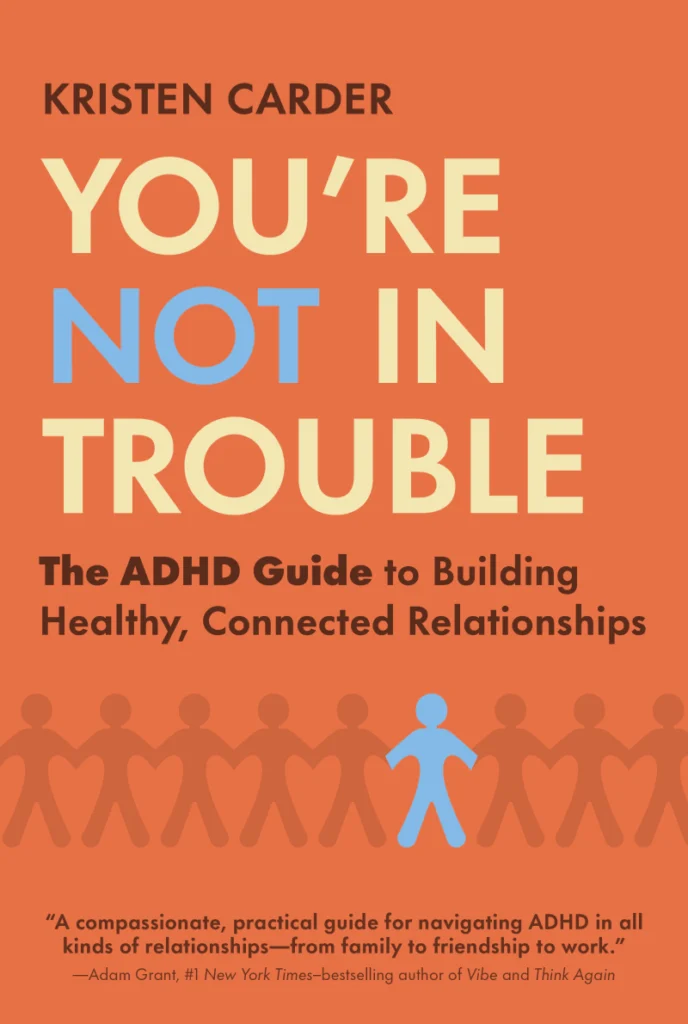
Kristen Carder

Episode 418: Tired of Feeling Tired? How to Rest When You Have ADHD

Kristen Carder

Episode #416: ADHD and Money: In This Economy?!

Lindsay Gibson

Episode #414 Good Enough Parenting: What NOT to Do (with Dr. Lindsay Gibson)

Stop Struggling Alone.
Start Thriving With FOCUSED.

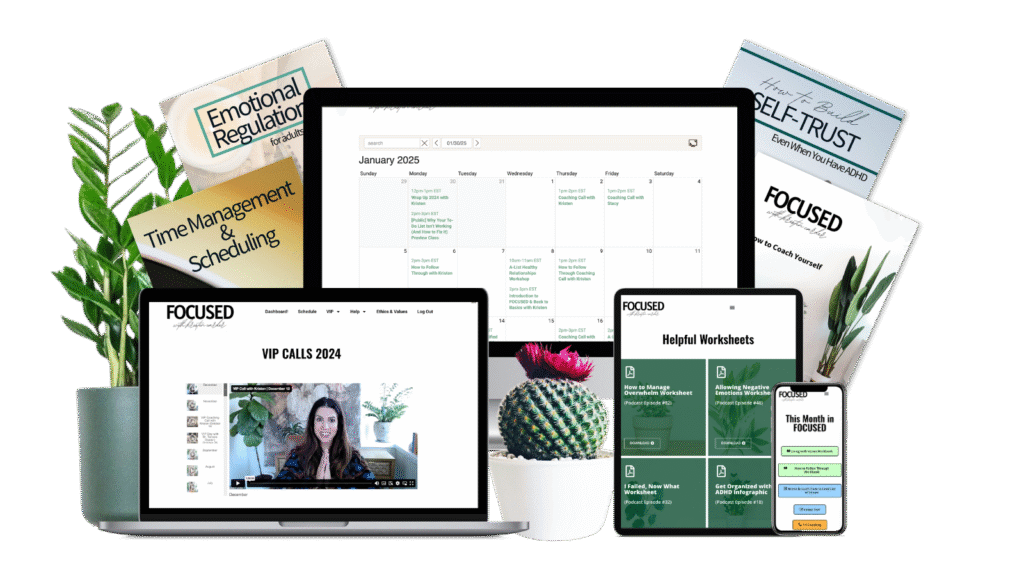
A proven coaching program designed specifically for adults with ADHD who want to gain clarity, build confidence, and take control of their lives.

Join a community of hundreds of ADHDers

Learning About My Brain...

Changed Everything

Hi, I’m Kristen Carder—ADHD expert, podcast host, and certified coach who’s been exactly where you are. Diagnosed at 21, I spent years cycling through planners, courses, and systems that never quite worked. Everything changed when I discovered the power of understanding my ADHD brain and the transformative impact of community support.

Now, after 15+ years of research and experience, I’ve helped thousands of adults with ADHD thrive. I’m here to show you how understanding your brain can transform your life, just like it did for mine.

ADHD Tips That Actually Make Sense

Follow @i.have.adhd.podcast and join our Instagram community for daily strategies, relatable content, and real talk about ADHD