



Kristen Carder 0:05
Welcome to the I have ADHD podcast where it’s all about education, encouragement and coaching for adults. With ADHD, I’m your host, Kristen Carter and I have ADHD, let’s chat about the frustrations, humor and challenges of adulting, relationships, working and achieving with this neurodevelopmental disorder, I’ll help you understand your unique brain, unlock your potential and move from point A to point B. Hey, what’s up? This is Kristin Carter, and you’ve tuned into the I have ADHD podcast, I am medicated, caffeinated, regulated and ready to roll. Happy, happy, happy. Tuesday. Everyone. Welcome in. Come in, come in. Get cozy. Get comfy. It is a blustery fall day in Philly. Today, winter happened like overnight. I don’t know what happened, but it is freezing cold. My guest is from California, so oh my goodness, I apologize for the Philly weather, but we’re going to be talking today about all things tech and ADHD. What is it? What is it like working in tech, having ADHD? I’m here with friend of the focused ADHD program, David wake, and he has been an integral part of our membership for the last three years. I can’t wait for you to hear from him. He trained as a coach and is now coaching adults with ADHD. And his journey over the last couple of years has been one that I have been so honored and privileged to watch. It is just like I said this to Sarah when she was here. And I feel the same way that it’s like kind of Mama Bear energy, like being able to watch someone’s ADHD journey and and and before my very eyes, watch them evolve and grow and develop into someone that is the same, but maybe more of themselves, maybe different than they were before. It is just such an honor. If you love this conversation, don’t forget to like this video. Subscribe to the channel if you’re listening, if you’re an OG listener, listening on Spotify or apple. I love you. Thank you for being here. Please press that Review button. Please press that. What is it? The the rating button? Give that. Give that little pot of five star rating, because your girl needs some dopamine. She needs some dopamine once in a while, and that, like watching those little rating numbers go up like little by little by little, it makes my heart sing. It really, really does. I’m so glad you’re here with me today. You’re not going to waste your time by listening to this episode, I know that this is going to be an hour in which you feel seen. You are seeing yourself reflected in someone else’s story. And I think that that is one of the most valuable parts of these interviews, is being able to see your ADHD, messy, chaotic like roller coaster y self reflected in someone else, and know that you’re not alone. Know that you’re not the only one, know that you’re not the only chaotic brain on the block. So with that, I would like to introduce you to my guest, David wake David is a software engineer. He’s from California, and he is braving the cold in Philly today. He’s been in focus for three years. He is trained as a coach, and is now coaching adults with ADHD. He’s here to share his story with us, David, thanks for making the trip. Thank you. It’s so fun to have you here. I reached out to you, I don’t know, a couple months ago, and was like, You should come on the pod. And what was your like internal reaction when I did that? Like, no, don’t make me do this. But you got on a plane, and you flew into Philly, and you stayed near Rittenhouse Square, which is just I was like, oh, that’s the perfect place to stay. And it’s like 37 degrees out and blustery and windy. How are you faring the colds?
David 4:11
Well, I’d like to thank my wife for making me bring a jacket. I should have brought a scarf and gloves as well, but a
Kristen Carder 4:20
jacket will suffice. A jacket will suffice. Let’s just start with your ADHD story. What has your journey been like? When were you diagnosed with ADHD?
David 4:32
So I was diagnosed in graduate school in 1997 or eight.
Kristen Carder 4:39
That’s pretty impressive, because not many adults were getting diagnosed in that, in that, in the 90s,
David 4:47
looking back, I think I was quite lucky. Yeah, I had so obviously, I came from England originally, then I went to California for graduate school, and I’d had difficulties. Um. Back in England, and I went for help there, and they just told me, you know, pull yourself together. Try harder, the usual stuff. And when I came to California, I had the same issues, yeah. And I, I asked for help there, too. And they took one look at me, and they said, you probably have ADHD?
Kristen Carder 5:22
Love it. That makes me so happy. I’m curious, what were the issues that you were having? Like, take me back to your days in England when you were thinking, I think there’s something going on. I really could use some help. What? What? What symptoms were presenting?
David 5:39
Well, I think I’ve always had symptoms back to when I was a kid, not being able to stand, sit still, talking back to teachers, things like that. But I think when I went to college, obviously the lack of structure makes things a lot harder, and I also had a lot of responsibilities outside academics. I was on a musical scholarship too, so I had to kind of organize a lot of musical activity. So all of that together taxed my executive function skills way beyond breaking point. Yeah, yeah. So yeah, that was when I really saw things start to fall apart a bit.
Kristen Carder 6:23
And what did it look like when things were falling apart like, were you getting bad grades, or were you missing deadlines or disappointing about friends, everything?
David 6:34
Yeah, pretty much, yeah.
Kristen Carder 6:36
And what was it like to hear from the clinician in England who just said, like, you just need to work harder
David 6:45
to be fair. I don’t think it was a clinician. It was just a kind of counselor, okay,
Kristen Carder 6:50
like a school counselor. Or was it through the, yeah,
David 6:52
through the university, okay, um, I mean, it was the kind of thing I’d been told before, so I wasn’t that surprised.
Kristen Carder 7:00
Did you believe it? Were you like, yeah, you’re right. I do just need to get
David 7:04
I guess I had no reason to believe anything else. So, yeah,
Kristen Carder 7:09
I just want to take a minute and, like, feel for all of us who have been told that it’s, like, so crushing to feel to, first of all, have the bravery to say to someone’s face, like a stranger, and probably someone in power right, to say to someone’s face, I need help. I feel like there’s something going on, and then to be told You’re fine, you’re just not trying hard enough. That hurts my heart. It hurts my heart, yeah, yeah. It’s a bummer. What gave you the oomph? For lack of better term, because that’s the only word coming to my head to to reach out again for help when you were in the US.
David 7:57
Well, I needed help. Yeah, I guess I didn’t have anything, right? Any other source of help, right?
Kristen Carder 8:05
Yeah, I needed somebody needs to help me. Yes. Okay, so tell me about your move from England. You came over for school, for grad school, correct? So you were young, yeah.
David 8:20
Looking back, it seems crazy, because I didn’t know a single person in the US. I’d never been there. All I knew of it was TV shows.
Kristen Carder 8:31
Wait, what TV shows were you like? Kind of getting your foundational us stuff.
David 8:39
They had, like the A team.
Kristen Carder 8:43
So are you like, I’m definitely gonna meet Mr. T Yeah, maybe
David 8:47
something like that. That’s awesome.
Kristen Carder 8:49
Okay, so you saw the US on TV shows, but what? What prompted you to be like, I gotta get out of here.
David 8:58
Um, just, just the desperate desire to find something new, yes, the thought that maybe, maybe there is something somewhere, a magic potion, a genie who can transform my life.
Kristen Carder 9:14
Yes, and if it’s gonna be somewhere, it’ll probably be in California,
David 9:19
maybe, I mean, that was just the opportunity that was there with graduate study.
Kristen Carder 9:25
Okay, wow. And what like culturally? What was it like transitioning as a 22 year old kid from England to California?
David 9:39
Well, obviously, it’s not as bad as it probably would be if I was from a non English speaking country. I do remember being disappointed by the lack of pubs, by the lack of what pubs.
Kristen Carder 9:50
Well, if you’d come to the East Coast, I think you would have found more pubs. But yeah, I guess California. Not really known for there
David 10:00
were a few, but, you know, the campus was really big, you had to bike for like, 10 minutes to get anywhere. So it’s not just walking down the street, yeah,
Kristen Carder 10:09
oh, my God, that’s funny. Was it easy to connect with people socially?
David 10:15
Um, it took a while. I think it wasn’t that bad. It wasn’t that hard. I did quite a few activities so I could meet people that way. So were
Kristen Carder 10:25
you doing musical things at Stanford as well, doing a bit, yeah, wow. What is your instrument? Well, I’ve,
David 10:33
I used to play piano. It’s baby organ, and I sing. So I guess the singing is the most kind of, the kind of thing you do in a group.
Kristen Carder 10:45
Yes, yes, yes. The organ freaks me out because you have to use your feet. Yeah, it’s a wild instrument. There’s, there’s all four limbs are going at the same time.
David 10:57
Yeah, it’s been a few decades since I played it, but it’s a good workout.
Kristen Carder 11:02
Yes, that is a wild instrument. Okay, so when you were diagnosed with ADHD, did you go on medication or, like, what? What supports were given to you at the time?
David 11:14
So they did give me some medication. I think it was Ritalin. Okay, I don’t think it had that much of an impact originally, and I just remember kind of I have the diagnosis, it didn’t seem to make a huge difference.
Kristen Carder 11:32
Did you stay on the medication, or did you discard it?
David 11:35
I can’t remember, interesting. I think I did for a little bit, and then it probably fell by the wayside, sure, along with most other things.
Kristen Carder 11:46
So what do you like that was 2219 97 if, if you were to kind of sum up the next couple decades, like, what? What was your ADHD journey through the next couple decades?
David 11:59
Then, yes, so I dropped out of graduate school. Interesting.
Kristen Carder 12:04
I didn’t know this. Yeah, okay, well,
David 12:07
I was supposed to be writing a PhD, so yeah, that wasn’t going to happen. Yeah. I i went into Silicon Valley because that was where I was sure. So I moved into that area, and I think it was a relief to find that I could survive there
Kristen Carder 12:27
in a job. Yeah, so What job did you end up getting?
David 12:31
I worked in software engineering. Okay, and do you feel like that was a good fit for you in some ways, it’s it’s good for having instant feedback.
Kristen Carder 12:42
Can you elaborate on that a little bit Sure?
David 12:46
So when you’re writing software, if it’s set up well, you can test it very quickly. You can see if stuff works. You can fix it if it doesn’t. So you have this constant simulation, constant feedback. Yeah, that I think works quite well.
Kristen Carder 13:06
And then if it’s not set up, well, yes.
David 13:10
Well, that happens quite often. It takes like half an hour to get any feedback, yeah, so that’s when, you know, you start browsing the news or, yeah, social media or something.
Kristen Carder 13:19
That’s when the distractions all come in. Yeah, do you feel like software engineering is a decent fit for someone with ADHD? I don’t mean for you to speak for everybody, but because of that, like kind
David 13:35
of, I think it’s better than a lot of other things. Put it that way, yes, that’s
Kristen Carder 13:39
such a good point. Okay, and so along the way, you found a partner. So you’re married, you have two kids. We don’t really need to go into it, but I am curious, like, how has ADHD kind of affected that area of your life?
David 14:00
I would give anything to be able to go back and know what I know now, before I had children,
Kristen Carder 14:05
yes, like Parent to Parent, I feel that so deeply in my soul, so so deeply. Yeah, when you say what I know now, when did you learn that? Like, what? What do you know now that you wish you had known before?
David 14:25
I think I know more about myself, yeah, about my emotions, the way my mind works, yeah. But also just about how to help other people, yes.
Kristen Carder 14:38
So then supporting your own family, supporting your kids, who may be neurodivergent, supporting just like being able to be there for them in a way that you probably weren’t able to be when they were
David 14:48
little, not as much as I wish I had. Yeah, yeah.
Kristen Carder 14:53
I just, I feel like that’s probably such a common thread throughout all of us in. VHD, parents like, and there’s, I don’t know how to reconcile that. Like, I don’t know how and, I mean, I’m just speaking very personally for myself. I don’t know how to reconcile like, Man, I am a different human than I was 15 years ago. My kids have a completely different parent now than they did 15 years ago. And how do I not carry grief and guilt and shame about that? It’s a daily practice for me to surrender that and let that go, and for me as a person of faith, I’m just, like, constantly just trying to, like, establish, like, reconciliation and feeling like, okay, that that’s not my burden to bear right like that is, it is mine to make right with my kids, which I do every day. You know, try to to make it right, but it’s just, I can’t carry the weight of that. I don’t know if that resonates with you or not, but just it feels like a heavy weight to carry.
David 16:06
Yeah, it does. Yeah.
Kristen Carder 16:09
Okay, okay, okay, not that you are going to be speaking for every single ADHD or in tech, but I don’t think I’ve ever interviewed you know someone in in tech on the pod. And what I love about this podcast is I love to bring different people with ADHD from different walks of life, from different, you know, areas of employment, to just talk about their experience, so that the listener can see themselves represented, right? And and I just, I think that that is a beautiful part of this podcast is helping people to not feel alone, helping people to see themselves represented, you know, in someone else, and be like, Oh my gosh, yes, I feel that way, or I resonate with that. And so I’m just curious if we can talk for a couple minutes about, like, how long have you been in tech? 20 years. A bit more, a bit more, 25 ish years. Yeah, around that Yeah. So I’m curious, like, when you think about an ADHD or in tech for you, what have been like the highs and the lows, what have been the parts where you’re like, Okay, I can see how this part is good, which you already said, like the instant feedback. Tell me about some of the lows. What’s difficult for you in the tech field.
David 17:31
I can think of some occasions when I, especially early on, I took on something and I didn’t fully understand it. I didn’t fully have the resources to do it, yes, but I, I guess I lacked the knowledge or the self confidence to come out and tell people, yeah, so you just dig yourself into a hole.
Kristen Carder 17:54
Is that? Like the fake it till you make it kind of approach like, I’ll figure this out. I’ll just, I’ll just get it done.
David 18:00
Yeah? Something like that. Yeah,
Kristen Carder 18:03
that’s really tough. I think a lot of people in in different fields would resonate with that, because, and actually Matt, when, when Matt was here a couple weeks ago, talking about, like, working at a company that he wasn’t even sure what the company did. He was like, I do marketing for this company, and I’m not even sure what we what the company does as a whole. And I think that, like as ADHD ers, we have this hubris a little bit. And I’m not saying this is you, but like, like, oh yeah, I can figure that out. I can make it work, and then kind of digging ourselves into that hole of like, oh, maybe not, yeah.
David 18:39
I don’t know if it’s hubris, it’s maybe just the only way you know, because things don’t well. Personally, I hardly ever do things the way I’m supposed to, so there’s always a bit of kind of cheating or, yeah, sneaking around,
Kristen Carder 18:59
yeah, working around the system, doing it your own way. Yeah.
David 19:03
So sometimes that works, and sometimes it doesn’t,
Kristen Carder 19:06
yeah, and sometimes I feel like that can really advance you, because you’re being creative, you’re finding new solutions, you’re innovative. And then other times you’re in the hole and you’re like, oh shoot, how do I get out?
David 19:18
Yeah, it took me a very long time to feel confident enough to just say I need help, or I don’t understand this.
Kristen Carder 19:27
Yes, why does it take confidence to admit that we need help?
David 19:35
Because otherwise you’re afraid of being seen as a failure or an imposter?
Kristen Carder 19:41
Oh, I see. It’s very counterintuitive to think we actually need confidence to admit either when we’re wrong or that we don’t know everything or that we need help. It seems like you wouldn’t need confidence for that, but you actually do. You need a measure of like, self trust, self assuredness to say, I cannot know everything and still be good at my job. I cannot know everything and not get fired. Right? Like, I don’t have to know everything. That’s really interesting, not your current job, but in in past employment spots, like, Have you felt like your your team, your boss, has understood you, or have you felt like you need? Have needed to, like, fake it, pretend
David 20:36
to be fair? I don’t think I’ve ever been treated unfairly, but it’s all in my head. Oh say more, just the fear that I if I admit something, you know, people went people will say I shouldn’t be there, yes.
Kristen Carder 20:55
So it’s not necessarily the systems that have put that on you, but just your your own internal like narrative, yeah. How does someone work through that? Have you figured that out?
David 21:14
Yeah, it’s a good question. I think, honestly, I think the work I’ve done in focus has helped quite
Kristen Carder 21:21
a bit. Can you say more about that? Yeah?
David 21:25
Just just feeling more at peace with myself,
Kristen Carder 21:30
so that confidence that you were speaking of, yeah. And so when you’re at peace with yourself, first of all, what does that mean to be at peace with yourself?
David 21:44
Good question. I think it’s being able to view yourself as someone who’s worthy of some degree of respect. Yes, which I think without realizing it, I’d spend my entire life not doing that,
Kristen Carder 22:03
so feeling like you would have to earn respect,
David 22:06
I guess, yeah, but earning respect was not something I ever felt I’d done right,
Kristen Carder 22:13
because maybe you hadn’t reached the level of competence in the certain areas to like gain
David 22:19
it is that what you Maybe not, but I just didn’t feel that I had Yes,
Kristen Carder 22:23
like the internal feeling of it, yes, that’s so good. Have you kind of, like, hacked together any tools or systems that have helped you in the tech field? Or is it mostly internal?
David 22:41
I think it’s a lot internal. It’s very internal, to be honest, the tool that everyone is using in tech now is AI, yep, I don’t think it’s possible to work in tech today, yeah, without using it.
Kristen Carder 23:00
I mean, I could go on a tangent about that, because, like, Should we be concerned that AI is going to take over? Like, should I be scared?
David 23:08
I don’t think so. I think it’s just the newest iteration of the tools. You know, if you go back far enough, people were punching out holes in cards to program computers, right and now we’re asking chat GPT, yes,
Kristen Carder 23:27
you are one of the people that has kind of encouraged me and others in the community to rely on chat GPT as a tool for different things. What are some of the ways that you use chat GBT to support you.
David 23:44
It sounds strange, but often just as a almost a voice to talk to. So what does that look like? Well, just saying, like, I need to do this, I need to do this, and it’ll say, Okay, try this, try this, and just having that interaction can can make everything so different mentally,
Kristen Carder 24:06
that’s so fascinating. So what was the last thing, or a recent thing that you’ve typed in? Like, I need to, I need to do this. I need to do this. Like, what? Give us an example of, like, what types of that’s work or where in any
David 24:20
domain, to be honest, the most recent thing I did was, what should I visit in Philadelphia for three hours after this interview?
Kristen Carder 24:29
I love it. He’s got, you’ve got three hours. We’re in the heart of Philadelphia, one of the most beautiful cities on the planet. And chat GPT told you what?
David 24:42
Liberty Hall, the market, something called LOVE Park? Yes, very nice.
Kristen Carder 24:51
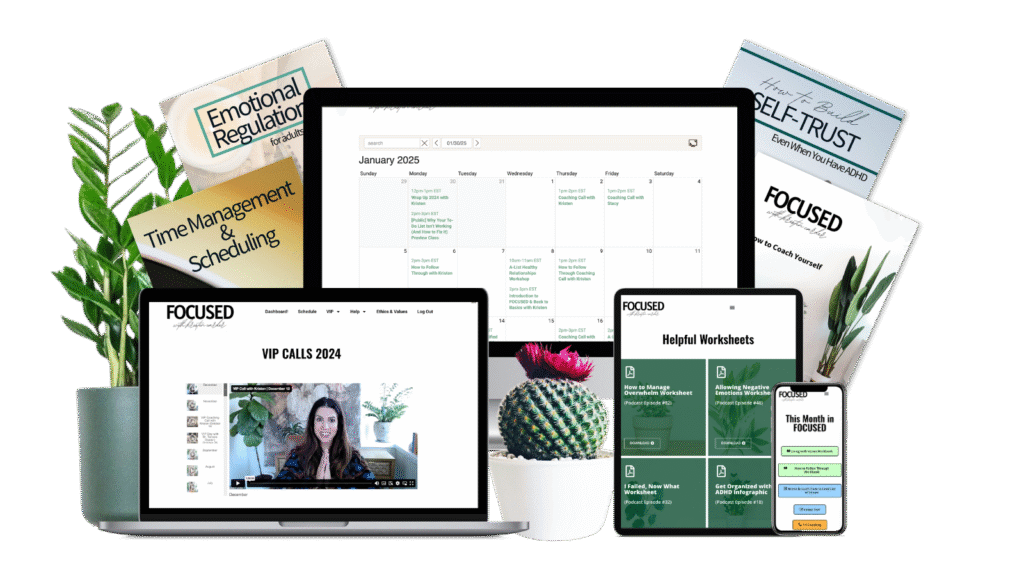
I think you might be disappointed with LOVE Park, because it’s really just a statue in the middle of a very busy intersection, but it’s. Cute photo op, yeah, you should have someone take your picture, and then you should frame it for your wife and give it to her for Christmas. I think I’ll be your chat GPT for that. Make a great Christmas gift. Everyone with ADHD knows what to do to improve their lives. You go to bed at a reasonable time. You wake up early, you make a list. You cross things off the list in order, blah, blah, blah. Like, yeah, we know what to do, but ADHD is not a disorder of not knowing what to do. It’s a disorder of knowing exactly what to do but not being able to get yourself to do it. That’s why I created focused. It’s an ADHD coaching membership for adults with ADHD. I’m a life coach with multiple certifications, and since 2019 I’ve coached over 4000 adults with ADHD from all over the world. I know what it takes to help an adult with ADHD go from Hot Mess express to grounded and thriving. I’ll teach you how to understand your ADHD brain, regulate your emotions and your behavior and accept yourself flaws and all. And with this foundation, we’ll build the skills to improve your life with ADHD. And not only do you get skills and tools and focus, but you’re surrounded by a huge community of adults with ADHD who are also doing the work of self development right alongside of you. Dr Ned Hallowell says healing happens in community, and I have absolutely found this to be true. So if you’re an adult with ADHD who wants to figure out how to be motivated from the inside out and make real, lasting changes in your life, join hundreds of others from around the world in focused go to I have adhd.com/focused to learn more. That’s I have adhd.com/focused to check it out. Are you inattentive or hyperactive? Or combined? Inattentive? You’re inattentive. But yet, we were just chatting off Mike about how you prefer to stand you stand for everything you said earlier that you like had trouble sitting still as a kid. I assume you still have trouble sitting still as an adult
David 27:12
less than before. But yeah, sure, sure, playing right here was challenging
Kristen Carder 27:17
five and a half hours, probably. Yeah, how does your inattentive like, how do you feel? Like, those types of symptoms present for you the setting, or, I don’t know, just like, What is, what does being inattentive mean to you?
David 27:35
I think it just means that I’m very liable to just lose, lose the thread of something. Lose. Lose the thread of a conversation. Sure, like when you and Matt were talking just now, I started kind of zoning off or thinking about what I was going to say in this interview.
Kristen Carder 27:52
Does it show up for you, mostly in social settings?
David 27:55
Um, it can do like, if I’m at a party or a gathering and then everyone else starts talking around me, I have a tendency to just start zoning out.
Kristen Carder 28:07
Yes, that’s so interesting. Because for me, when I get bored in those types of settings, I if it’s in a social gathering, I will instead make myself the center of attention, yeah,
David 28:19
which I think I kind of wish I did that. Really, yeah, really.
Kristen Carder 28:24
I feel like that’s, I’m much more hyperactive, and it’s more like, let me get the dopamine that way, you know, by like, starting a conversation or saying something out of pocket or embarrassing myself in some way, just to kind of like, get that dopamine hit. Which, yeah, I kind of it’s interesting, because I would kind of rather like slink into the into my own mind. I’m curious, as we kind of like wrap up this Convo around tech, can you think of a moment or, like, a project or or maybe something that happens often where your ADHD is a real barrier to you, kind of like succeeding in in that job.
David 29:12
I think anything that involves following instructions, or a long series of instructions, or they tell us, go, go study this
Kristen Carder 29:25
set. Your worst nightmare, not
David 29:27
my worst nightmare, but it’s it’s not pleasant.
Kristen Carder 29:29
Yeah. And then are you the type of person you said earlier that you don’t usually like to do things in the sequence that someone else lays out for you. So are you maybe sometimes missing steps, or, like, skipping over things, having to go back and correct like, is that kind of how it plays out? Yeah, yes, yes, yes.
David 29:49
That’s how I if I reading a book, I will tend to do that, skip ahead, go back. Yes.
Kristen Carder 29:55
When you’re reading, do you feel like you absorb it, or does it kind of like, do. Do you have to, like, pull your attention back and reread the same paragraph over and over? Yeah, quite often. That’s so frustrating, isn’t it? Yes, yes, it is. I know it is okay. So I’m curious, when did you start really learning about your ADHD? Like, when you were diagnosed, were you told anything about what it meant to have ADHD? What was that journey like?
David 30:26
I think I was given like, one sheet of paper or something like that. Okay, sure, read a book which I didn’t read.
Kristen Carder 30:35
Yeah, that was it. Yes, there were no podcasts at that time, 1997 I don’t think did podcasts exist? I don’t think so. No, no, so when did you start really learning about it?
David 30:47
I would say just before I joined focus, I’d actually seen a career coach. She gave me some exercises to do, like, where do you see yourself in 10 years time? Stuff like that. Of course, I didn’t do them. And then she got so sick of me that she she told me, sir, I needed to do something about my ADHD Oh, so I it took me about six months. I found a coach. I actually still see my coach today, an ADHD coach, yes. Oh, cool. So she was really great. And then I think I just got on a roll. I think I decided I wanted more than just, you know, one session a week. So that inspired me to join focus.
Kristen Carder 31:30
And what I love about you in focus, David is that you are on every call. I hope I’m not outing you here because it is so fun, because you are there, like you are really a part, like an integral part. I already said it, but I really did mean it. It bears repeating. You are such a part of the community. So you knew what you needed, and you went and got it. And that is admirable. Like you, you just said I wanted more than once a week, and you went out and found it, and now, I mean, that is just such a fun thing. Okay, so what has it been like for you and focused?
David 32:16
I think the community aspect of focused has been huge. Yeah, it feels like it’s a community where I don’t feel inadequate in the way that I’ve felt pretty much everywhere else. Yeah, yeah. That’s awesome.
Kristen Carder 32:34
Not only are you not inadequate, but you, very early on, began supporting people within the community in a way, just like on your own time, just for free, just adding a lot of value and giving such thoughtful feedback. That I remember, did I reach out to you and say, Hey, have you considered becoming a coach? Did I do that? Or did I not? Because I
David 33:01
you may have done I can’t remember, but I was interested in this anyway.
Kristen Carder 33:06
When did that start to happen for you? I think
David 33:09
almost as soon as I joined, really, and also inspired by my own coach and what I saw in focus, yes, I decided I this has had such a big impact on me. I’d like to do it myself. Yes.
Kristen Carder 33:23
Okay, so before we talk about you doing it yourself, talk to me about the impact that it’s had on you. You’re you’re coaching with your your one on one coach, coaching and focus, like, the coaching that you’ve received, what would you say has changed or like, evolved for you because of that,
David 33:43
it feels like it’s just opened up a whole side of me that I think was kind of frozen.
Kristen Carder 33:51
Ah, say more words about that. That’s beautiful. What was frozen?
David 33:58
I think that the feeling that I had something to contribute to other people. I felt that, I think there was always this feeling that even if I feel like I’m doing well at something, sooner or later, I’ll hit hit a buffer.
Kristen Carder 34:17
Yeah, yeah, sooner or later. Is it? Is it like the feeling that, like the other shoe is going to drop at some point? Yeah, that’s not a fun feeling.
David 34:28
I feel like that happens with music. It happens with academia. And I think it was always to do with my ADHD symptoms, revealing themselves,
Kristen Carder 34:42
yeah, and then, what do you feel like was kind of unlocked, like, was it the potential for for follow through? Is that what it was, did you say I did emotion with that? Like, I didn’t need to do it. I. Huh, Tony, to be doing motions. Was it the potential for follow through, or was it just feeling like maybe there’s hope?
David 35:07
I don’t think it was follow through. Okay? I think it was just feeling that I had something to offer, something I wasn’t just kind of surviving, which I felt I have been for much of my life.
Kristen Carder 35:22
That’s so good. That’s so good. At this point you were in your 40s, late 40s, late 40s, and what perspective has that given you? That’s hard. I know it’s a hard question, even as I was saying it, I was like, gosh, that’s a really hard question. But like, you’re in your late 40s, and finally, you’re feeling like I really have something to offer to other people. Like that must be so freeing for you. Or something like, how would you describe that
David 36:01
it feels like I maybe this is where, maybe, in an ideal world, I could have spent my whole life doing this.
Kristen Carder 36:10
So you decide to become a coach. What was the training like for you? What was that process like?
David 36:18
It was great. I actually did another training before yours, just because I had the opportunity to do it, yeah, to get my feet wet, yeah. So that was good. It got just got me some practice in coaching. And then your training was amazing. And I’m, I guess I just kept going from there, yeah.
Kristen Carder 36:39
And what’s cool is that you have been coaching so many people inside of the focus program. What is that experience like?
David 36:48
It’s great because you get to coach so many people. Yeah, it must be unusual to the sheer number of different people. It’s it’s really good. It gives you a kind of kaleidoscopic vision of ADHD people.
Kristen Carder 37:04
That’s such a great way to put it, because you are talking to people from all over the world and for 30 minutes just hearing their story, offering feedback, offering wisdom, offering offering coaching. What do you see as some of the themes I didn’t prep you for this question, but I’m just curious if anything comes to mind like some of the themes that that are like common threads among people that you coach and focused
David 37:32
strangely, one of the commonest is sleep issues and getting up issues.
Kristen Carder 37:37
Yes, what do you think is behind that? Do you know?
David 37:44
Well, it’s very common that people want to stay up late at night, especially if they haven’t had time to do their maybe do the things they really want to do during the day.
Kristen Carder 37:54
Yeah, yeah, yeah. And then that makes it impossible to sleep, to wake up in the morning. I’m prepping an episode on sleep that will come out in a couple weeks, and for our VIP day, as you know, dr, Sandra koi was with us and did a whole seminar on sleep, and I was just shocked at some of the things that we learned during that seminar. I can’t wait to talk about them on this podcast, a little foreshadowing for you, my friends, what are some of the biggest changes that you have seen in yourself so you’ve named like just having A confidence that wasn’t there before? What about self trust? What has that journey been like for you?
David 38:46
Um, I guess it’s similar to confidence, just believing that I can do something like, come on this podcast, for example,
Kristen Carder 38:59
get on a plane, fly to Philadelphia, arrive on time, have a conversation in front of people, yeah, what were some of the ways that you coached yourself or, like, what? What was some of like, the internal dialog that you used with yourself to get yourself to do this?
David 39:18
I think, well, to be fair, I think a lot of it was external, just talking to other people and hearing that they thought it was a good idea too.
Kristen Carder 39:27
Yes, part of that is also just like receiving people’s feedback. Like you reached out to people that you trust, and you said, Hey, what do you think? And they said, great idea. You should definitely do it. And instead of saying to yourself, oh, they’re just saying that, they don’t really mean it, I like, I probably shouldn’t do it, you allowed yourself to receive that feedback. And I think that that’s one of, like, the primary parts of self trust is, yes, it’s this, like, internal self connection and trust, but it’s all. So leaning on people who are wise and actually receiving their feedback when they when they say, I believe in you. I think you can do this, taking that to heart and truly believing it, because it’s not easy, like we really need other people. So who are the people that spoke into your life about this?
David 40:19
People in my personal life, some other people in focus.
Kristen Carder 40:23
Yes, I love that we always need. And I think that we have this misconception that self trust is I don’t need anyone else. I trust me, so I don’t need anyone else. But I think that is a piece of it, trusting yourself and like, having that internal dialog and connection. But then the other half of it is surrounding yourself with wise people and leaning on them for validation and saying being able to say, like, do you think I can do this? I don’t know if I can. I love it. How has becoming a coach changed the way that you relate to you to yourself? Do you do a lot of self coaching? Yes. Do you use what does that look like for you?
David 41:15
It just it is harder to coach yourself and to coach other people. Yeah. I think that’s a pretty universal experience when I’m in a difficult situation that would be hard for me and has been hard for me in the past, maybe thinking how I would help someone else in a similar situation can end up helping me as well.
Kristen Carder 41:37
How would I coach someone else through this and then using that on yourself, yeah, that’s brilliant. I always think about myself as my most difficult client. I’m like, I don’t want to do anything that you know my coach me tells me to do. I think I know better. I’m very resistant, and so if i That’s a really great way to kind of pull yourself out of the hot seat. How would I help someone else through this? I love that. What has it been like for you? Learning about emotional regulation. I’m going to make an assumption, and you let me know if this is true or not, but I’m going to assume that, like in England, emotions are not really a primary focus of like parenting and raising children. Is that an accurate assumption?
David 42:40
I don’t think it certainly when I was a kid there sure, I don’t think it was not sure if that’s specific to England. I don’t know many countries that that used to do that.
Kristen Carder 42:52
That’s so true. So what was what? What did emotional regulation look like for you, as, let’s say, a child,
David 43:04
I don’t know. I mean, I just had whatever emotion I had, yeah, and ran with it.
Kristen Carder 43:11
And was it? Were you, like, exploding? Were you stuffing the emotions down? Were you yelling and screaming and having meltdowns? Like, what was that like?
David 43:21
That was quite a bit of yelling.
Kristen Carder 43:22
Yeah, me too. And then as you began to learn about emotions, like through coaching and emotional regulation classes and that type of thing, what? What do you feel like you’ve learned?
David 43:41
I think I recognize when, when something is going wrong, something’s going off the rails. Yes, sometimes I would used to get these kind of low points in the day when often say I’d have a meeting and then I had an empty afternoon, yeah, and then sometimes that would feel very empty. And then what would happen? I think I would just, I think I would try to distract myself a lot of the time, totally.
Kristen Carder 44:16
And so when that happens now, what are you able to do with that?
David 44:23
I’m able to try to, I think, talk to myself, to find, to find a place of more warmth.
Kristen Carder 44:33
Yes, warmth is such a nice word. What? What is that like? How would you describe that to someone? What does it mean to find a place of warmth? Is it like acceptance or
David 44:51
like this feeling inside you of literal warmth?
Kristen Carder 44:57
Would you say it’s like the antidote, like the. Opposite of emptiness, yeah, yeah. And what are, what are the things that you say to yourself to find that warmth?
David 45:09
Um, I think if I tell myself that I will take care of my emotions, that helps a lot.
Kristen Carder 45:17
Yeah, it sounds a little bit like a re parenting phrase, like, I’ve got you, you don’t have to, you don’t have to hate this part. I’m going to take care of you. It’s so interesting that, like the empty space, I think a lot of ADHD ers will resonate with that. Like the empty space on a calendar, even like on a Saturday, this deep feeling of, yeah, I don’t like, that feeling of emptiness, I really, really don’t. And to meet that with warmth is just such a kindness.
David 45:56
I remember, before I joined focused, you did an episode about weekends, I think, and that was one of the things that really resonated with me.
Kristen Carder 46:06
Yes, that is something that I really had to be so methodical and cognizant and self aware and self coachy like it. I had to learn how to handle weekends, because the blank space on the calendar, coupled with all of the expectations, I should be cleaning we should do something fun with the kids. We should spend quality time together. I should meal prep for the next week all of like these external expectations that I’m not even sure where they originated from, that I’m not even sure were connected to, like what I wanted in my own values. And figuring out, how am I going to handle this? And, and I said it on that episode, and I’ve said it before, but, you know, saying to Greg, like, okay, what are we doing today? And him being like, I’m not your cruise director. I don’t, I don’t know. Like, I like, these are the things that I’m doing today. If you want to do something like let me know I’m open to it, but I would look to Him to fill that emptiness, that white space, and learning how to do that on my own was so hard. Oh gosh, it was so hard. I’m curious. What’s your favorite part about coaching. Who do you love to coach?
David 47:43
I think I love coaching anyone, but just feeling that I’ve made a real difference, especially emotionally, if someone is feeling very distressed and I can help them, that feels good. Yes.
Kristen Carder 48:00
Do you enjoy what walking people through like a an emotional regulation practice, is that what you’re talking about, like sitting with them in their emotions and helping them navigate that? Sure, yeah, you have such a peaceful energy. Like your vibe is very peaceful, and I can imagine that being in the space with you of coaching and just having you as a sounding board would be very reassuring for a client. I I am sure that that is true. Yeah, that was a compliment. Um, how can people get in touch with you, if, if they want to coach with you.
David 48:42
Um, well, I have my website so you can go there. What is your website, sir. It’s called David wake ADHD coaching. Ah, very imaginative.
Kristen Carder 48:52
I mean, listen, my website is not imaginative either, but sometimes you just gotta make it real, plain and simple for all of the people, David wake ADHD coaching, I absolutely want to recommend you as a coach. I have seen you help and serve so many people within focused the feedback and the thoughtfulness that you bring to your coaching and the questions that you ask, and the warmth is a word that you use, but there is a warmth and a piece that you bring. I’m just so pleased to have you, first of all, as a focus member and someone that’s contributing to the community, but then also someone who’s just out there serving the ADHD broader community at large, I think that there are so many people who need to be served, and I’m just glad that you’re one of the people that are taking up the cause. So thank you for doing that. Thank you. Yeah, this has been so much fun. Listener, I highly recommend that you reach out to day. If that is something that you are feeling pulled to do, don’t forget to like, subscribe, share this episode. We’re so glad that you were with us today. This is just a really it’s a sacred space when we get to talk about ADHD and our journeys, and just like the ways in which we’ve been able to grow and I’m so glad that you were here with us. Please, please join us again next week. We will see you. Then bye, bye. A few years ago, I went looking for help. I wanted to find someone to teach me how to feel better about myself and to help me improve my organization, productivity, time management, emotional regulation, you know, all the things that we adults with ADHD struggle with, I couldn’t find anything. So I researched and I studied and I hired coaches and I figured it out, and then I created focused for you. Focused is my monthly coaching membership where I teach educated professional adults how to accept their ADHD brain and hijack their ability to get stuff done. Hundreds of people from all over the world are already benefiting from this program, and I’m confident that you will too go to Ihaveadhd.com/focused for all details.