



Episode #400: Too Many Ideas, Not Enough Follow-Through? Listen to This

Listen or Watch this episode on:

About This Episode

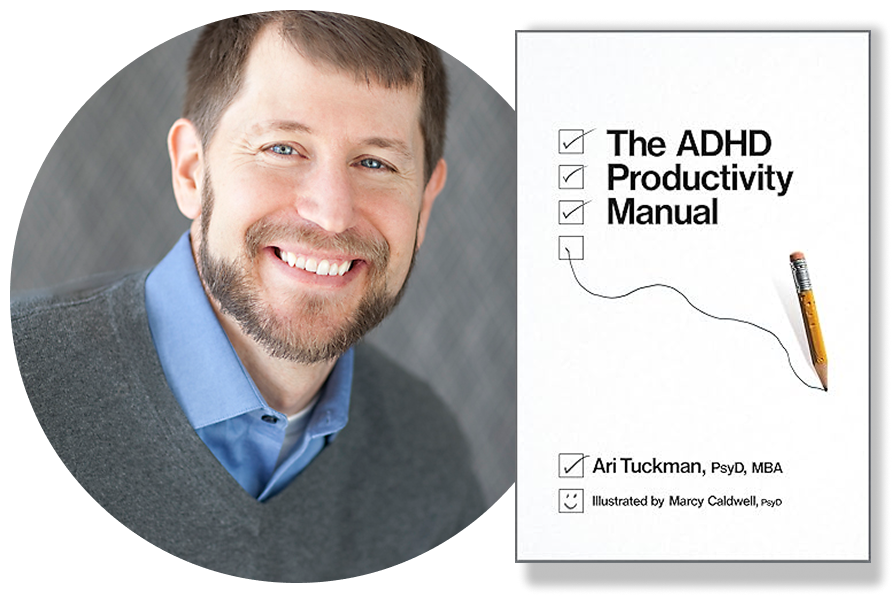
Today I’m joined by my friend Ari Tuckman, psychologist, ADHD thought leader, and author of The ADHD Productivity Manual, for a real, down-to-earth conversation about what it actually looks like to be productive with an ADHD brain.

We kick things off by unpacking Ari’s idea that productivity is a mental game, and why that matters way more than whatever planner or app you’re using. We also call out “fake productivity,” the stuff that feels productive but isn’t actually moving your life forward.

From there, we get into the good stuff: how to choose the right goals when you have a million ideas, how to realistically assess your time without lying to yourself, and what it takes to build a work environment and workflow that actually supports your brain.

We also talk about your relationship with your to-do list, what to do when overwhelm hits, and how to navigate the ambiguity that comes with doing meaningful work.

And maybe most importantly, we zoom out and ask: how productive do you really need to be?

This one is practical, honest, and full of those “oh wow, I’ve never thought about it like that” moments.

Want help with your ADHD? Join FOCUSED!

Have questions for Kristen? Call 1.833.281.2343
Episode Transcript

Kristen Carder 0:00
Welcome to our 400th episode. Dr Ari Tuchman is here to talk about all things productivity, and talk about black and white thinking in terms of productivity. It’s not helpful.

Ari Tuckman 0:13
It isn’t it actually makes it worse.

Kristen Carder 0:15
I’m getting hot talking about it. Hey, what’s up? This is Kristen Carter, and you’ve tuned into the I have ADHD podcast. I am medicated, caffeinated, regulated and ready to roll. Welcome to our 400th episode. I am so pleased to be with you today. I can’t believe this journey has been 400 episodes long. The fact that a hyperactive person with ADHD can persist for 400 episodes, I’m just going to go ahead and take the W on that one. I feel like that is a big, huge win. So thanks for being here with us today. We have the perfect guest for you. Dr Ari Tuchman is here to talk about all things productivity. But before we get there, I want to remind you, if you are beginning your ADHD journey, if you’re curious about ADHD, if you’ve just been diagnosed and you’re like, I have no idea what it means to have ADHD, I have a resource for you on my website called 10 things. I wish my doctor had told me when I was diagnosed with ADHD. You can find that at I have adhd.com/ten things, is very useful. I hope you will go and grab it if you’re interested. And we’re going to get into the meat of the episode. Because you are here because you want to learn about productivity. Every single ADHD or wants to learn about productivity. Let me introduce you to my guest, Dr Ari Tuchman. He is a psychologist, international presenter, author and ADHD thought leader. I have got to interrupt myself here and just say the memory that I always have, which is me lying on my bed in my old house, trying to figure out, is ADHD more than just lack of attention. And the first book that I read was called more attention less deficit, by Ari Tuchman the OG it was like the fact that I now get to sit across from you and have conversations about this just makes my heart so full. I appreciate you being here. Let me continue. Let me continue. He’s given more than 850 presentations and podcast interviews and routinely earns excellent reviews for his ability to make complicated information understandable. I will second that absolutely true. His newest book, The ADHD productivity manual, which is beautifully displayed on our table. Here is an excellent read. And Ari is a popular expert and advocate. He’s been widely quoted in national media such as the New York Times, CNN, Washington Post, Boston Globe. I mean, let’s just name drop all of them. And he serves as an expert advisor for the Institute for challenging disorganization understood.org Insight Timer and Chad’s media team, thanks for being here. Ari, it

Ari Tuckman 3:05
is awesome to be here, especially on your 400th episode. Man, congratulations. You have earned your place in the world of ADHD.

Kristen Carder 3:13
I appreciate that. Thank you. I will receive that and tuck that away for the days where I feel like I’m hanging on by a thread. Thank you so much. And I just the fact that I can send you a text or an email and say, Hey, let’s have a chat. Do you want to come on the podcast? That, to me, just means so much so the fact that you’re here talking about your book, and not just that, but I think I said after the Chad conference, like, oh, Ari is, like, famous, like, I didn’t get it, but you are, and that is just so wonderful. And there’s a good reason for it. You’ve helped a lot of people. So can’t wait to talk today.

Ari Tuckman 3:53
I

know I will always say yes, if you send me a text, I will almost always say yes,

Kristen Carder 3:58
I really do. And it is selfish on my part, because I am right up against my book deadline, and I’m like, I can’t do I’m so I’ve got nothing in the tank, folks, there is nothing in the tank. So I’m like, I need someone smart to come on and talk so that I don’t have to pretend to be smart.

Ari Tuckman 4:19
Yeah, we can just roll. You don’t have to prep or anything.

Kristen Carder 4:21
Yes, let’s do it. So I read your book before it even came out. What a privilege, what a privilege. And yeah, no, sometimes it feels like ADHD books are a dime a dozen. Sometimes it does. But as a person with ADHD herself, who has consumed a shit ton of ADHD content. I really appreciated the way that you wrote the book, the way that is so like, straightforward and easy and there’s space to fill out. Like, how am I actually feeling? What am I actually doing? The chapters are, like, three pages long, yeah, which I. Not say for my own book, I’m in the midst of trying to cut 4000 words.

Ari Tuckman 5:06
Oh, that hurts so much.

Kristen Carder 5:08
It hurts so much. And do you know what’s annoying is that the 4000 extra words are there because my editors kept sending it back and being like, we want more. We want more. We want more.

Ari Tuckman 5:19
Yeah,

Kristen Carder 5:20
and now they’re like, actually, it’s too much. Like, wait a second,

Ari Tuckman 5:23
jerks, is this like, the story of your life?

Kristen Carder 5:26
Yes,

Ari Tuckman 5:27
yeah,

Kristen Carder 5:27
not enough and too much at the same time,

Ari Tuckman 5:30
right? Yeah. Oh, this is great. Give me more. Give me more. Okay, whoa, whoa, whoa, not that much.

Kristen Carder 5:34
Too much. You’ve crossed the line, but I don’t really know where the line is, so I’m always dancing around it. You know? It’s

Ari Tuckman 5:39
because people move the line that’s the problem.

Kristen Carder 5:42
Yeah, the goal posts keep moving. I agree with that, and I think that kind of is very indicative of what it’s like to live as a neurotypical in a neuro excuse me, a neurodivergent person in a neurotypical world is like, where are the goal posts and why are people continuing to move them without my consent or without telling me. So it does feel a little bit wobbly.

Ari Tuckman 6:07
Yeah,

Kristen Carder 6:07
I would say sometimes,

Ari Tuckman 6:08
yeah, yeah. That does feel like a moving target, which is really unsettling.

Kristen Carder 6:13
100%

Ari Tuckman 6:13
Yeah, I

Kristen Carder 6:14
think a lot of people experience that in the workplace too.

Ari Tuckman 6:17
Yeah. Is

Kristen Carder 6:18
that something that you notice with your clients? Because I’m not in corporate. Thank God, I do not belong, yeah, and I knew that from the start. So I’ve never been in corporate. I’ve always been an entrepreneur, but I do wonder if that’s something that people who are in more traditional jobs really feel like the goal posts are constantly moving. I’m just curious if you, if your clients say those types of things. I mean, I think

Ari Tuckman 6:41
it is a thing, right, that, like, goalposts do move sometimes for like, real reasons, you know, business reasons, whatever that means, sometimes just because someone decided, you know, or some other random thing. But I think it can become one of those situations where, if you’re seen as someone who sometimes forgets, who doesn’t hit the details, who shows up late. Then when there’s this disagreement, of like, Wait, I thought it was this, no, I thought it was that, then it’s sort of like, well, who should we blame? I know it’s you.

Kristen Carder 7:12
Yep,

Ari Tuckman 7:12
right? So which is even a thing, like, I’ve seen this with clients, that when I have to call them for something, right? It’s not time for appointment, but I have to call them because I don’t know, I have a question, or I have to move or something. Often the for you know what I’m going to say next.

Kristen Carder 7:30
What did I do wrong? Right?

Ari Tuckman 7:31
Oh, my God, am I missing the appointment?

Kristen Carder 7:33
I forget something,

Ari Tuckman 7:33
right? So I’ll even do a thing where if I have to call someone, I will not call them at like, five minutes after the hour, because that’s when I would call if you’re late, right? So I’m like, Ooh, I don’t want to stress them out, right? I feel like I should text them and say I’m going to call you. Everything’s fine. I need to move, you know, so they’re not because. But I think that that automatic assumption, I think, is telling Right? Like, what is their experience? If there’s a problem, it’s probably me, yeah,

Kristen Carder 8:05
is that nature, or is that nurture? Or is it both?

Ari Tuckman 8:13
I think it is the experience you have given, what your nature is. You know that, like, it’s, it’s that sort of, like, I don’t know what’s like, round up the usual suspects. You know what I mean. So like, it is a thing that, like it, statistically speaking, maybe it is a bit more likely that you know, you are the person who, somehow, you know didn’t get the details right. But that doesn’t mean you are always the person, you know. So, um, but, you know, it can sort of feel that way, or it can feel like you’ve kind of, I don’t know, use up your free passes. So it’s sort of like, again, you know, it’s sort of like, I don’t know, this is like, an incredibly old example, but, you know, a million years ago, when I did my adult ADHD support group through northern Virginia, Chad, I still remember this. This is probably literally 20 years ago. One of the guys in the group was complaining about the fact he and, you know what he said was, like, one of my sisters can show up to a family thing, like, two hours late. Nobody says anything. I’m like, 10 minutes late. And like, everybody’s on my case about it, you know, in like, it does feel unfair in that case. You know, now slightly in his family’s defense, right? He’s always 10 minutes or half an hour late. So, like, I understand why they feel frustrated, but it still doesn’t mean that it’s helpful, right? And it doesn’t really solve their problem, either. So

Kristen Carder 9:47
it’s such an interesting conversation, because when we think about ADHD in relationships, and the experience of someone with ADHD in relationships, and that’s like my focus right now, but my. Special interest in general, it’s like, I know I’ve been a problem. There’s, there’s evidence for that, right? I’ve been inconsistent, I’ve been late, I’ve been maybe emotionally reactive, etc. So I come into this relationship kind of acknowledging I’ve got flaws. I’ve got a lot of flaws. I usually make relationships, or, like, create relationships under that guise of, like, Yeah, I know I’m a problem. And people, I’m speaking, I’m speaking in the first person. But this is kind of in general, the relationship is kind of established with like, Yeah, I know I’m a problem, yeah.

Speaker 1 10:38
And

Kristen Carder 10:39
then the other person agrees. And then we kind of like the rules of the relationship are established. And as my clients begin to build self confidence, self trust, accept their ADHD, accept their brains, they start living into more like, okay, maybe there are things about me that are flaws, but I’m not the problem all the time. I’m not the only problem ever. And what’s interesting is that then the relationship kind of has to be renegotiated,

Ari Tuckman 11:07
yeah,

Kristen Carder 11:08
because the other person is kind of like, Wait, we decided that you’re the problem,

Ari Tuckman 11:11
right?

Kristen Carder 11:12
We may we decided together, and maybe for a decade, we’ve been like, the rules of the relation, relationship have been set up that way, and now you’re saying that maybe you’re not the problem. Like, what do you even mean,

Ari Tuckman 11:24
right? And here’s the implication of you being less of the problem, I guess that means I’m more of it, right? Like, let’s see who else? Oh, there’s nobody else to blame. Oh, crap, I guess then that’s on me, right? Like, there’s a fine there’s a set amount of blame to be dispersed, and if you’re taking on less of it, then it means I need to acknowledge more of it, or I need to look at my part of it. This applies to romantic relationships, but it certainly applies to friendships or friend groups, right? Who’s the queen bee, who’s the servant, or whatever it applies in work settings, like so, yeah, like,

Kristen Carder 12:01
family systems too.

Ari Tuckman 12:02
Yeah, absolutely so. So it is a shift, and it as much as it is, in many ways for the good, it also involves some loss or some sacrifice or some change that other people, to greater or lesser degrees might really resist.

Kristen Carder 12:19
Yeah, it’s a disruption,

Ari Tuckman 12:20
yeah,

Kristen Carder 12:21
of the norm. And what I also noticed, first I noticed it in myself, then I started noticing it in my clients, was that I actually really want to be the problem a lot of the times, because if I am the problem, I can fix me. Sure, I’m used to failing. I’m used to being like, Oh yeah, Chris and blah, blah, I’ll take the blame for it. I’m used to doing that. I’m not used to holding other people accountable. I’m not used to saying, hey, that really hurt me. I’m not used to saying the dishwasher doesn’t need to be loaded this exact way. There are other ways. I’m not used to asserting myself in that way. And if I’m not always the problem, then maybe I will have to, or maybe should. Maybe that’s the implication. And that’s really uncomfy,

Ari Tuckman 13:08
yeah, well, and it is. And, I mean, the thing about it is, like, if you are the problem, it means at least theoretically, you have agency to do something about it, right? And when I see couples, I kind of talk about this as much as you love blaming the other. Then that puts the agency into their hands, and they may choose not to do it. Whereas if you see you have some part in the dynamic, it means you can do some things differently, and maybe then your partner also will. You know, now, the flip side of that, of kind of how you’re framing it is, if you’re the problem, you can address it, but if the other person is a problem, then it’s hard to get them to address it. And it is, but you still have agency there. It’s just a different kind of hard for you, right? The hard is, I am going to be okay with you not being okay, right? That, like, you squirming in the, you know, accountability that is uncomfortable for you, and therefore that becomes uncomfortable for me, right? So, so it’s just a different kind of hard, but, like, that’s okay, you know, you can do it

Kristen Carder 14:15
if it’s hard. Either way, which hard am I going to choose? Which hard is going to lead, ultimately, to, like, a net positive over time. For me, I think that one of the hardest things for my clients and myself is letting adults be uncomfortable and not solving that for them,

Ari Tuckman 14:37
right?

Kristen Carder 14:40
That’s like, like, if you’re uncomfy, I know how to fix it. I can be a chameleon. I can entertain you. I can take the blame for it. I can win you over. I can people please. I have so many tools. You’re

Ari Tuckman 14:52
awesome at it.

Kristen Carder 14:53
Yeah,

Ari Tuckman 14:53
yeah. Well practiced.

Kristen Carder 14:55
Well practiced. But if I say. Like, yeah, it is uncomfortable for me to say this, and I get that, and then that’s it, like, then there’s no

Ari Tuckman 15:07
like

Kristen Carder 15:08
me solving it for you. Then I have to be uncomfortable with your discomfort and my discomfort.

Ari Tuckman 15:14
Yeah, I know it is a different skill, and because you’re so good at the other is you haven’t practiced that skill as much.

Kristen Carder 15:24
How do you help clients practice that skill? Like, what is practically? How do you do that?

Ari Tuckman 15:32
I mean, I think it begins first with the awareness of like, oh, wait, I lean hard on these skills that I’m good at, and they’re easier, and I don’t really do this one. So it’s that awareness. I think it’s also a sense of, like, deservingness, or it’s okay, right? As in, like, I don’t actually have to solve this for the other person, you know, it’s okay for them to hold it themselves. So I think there’s that. And, you know, that’s the sort of theoretical and then in the moment, like boots on the ground here we are right. How do you sort of remind yourself of that? How do you sort of hold in mind, like, why am I doing this? Why is this good for me? Maybe, why is this good for the other person as well? Because it probably is, even though they don’t want it, you know, and really holding on to why this matters, or even if we want to go big picture, like integrity, how do I want to start showing up in a different way, and that it feels uncomfortable and it’s hard, but that doesn’t mean it’s the not the right thing. It doesn’t mean I can’t do it. It doesn’t mean it’s not going to be better on the other side of it, but right now, boy, does it feel big. And, you know, like something I want to run away from,

Kristen Carder 16:49
and something that I know I’ve used my other skills to get out of so many times. So, like, there’s, like, a escape hatch,

Ari Tuckman 16:58
yeah,

Kristen Carder 16:58
if I want it,

Ari Tuckman 16:59
yeah,

Kristen Carder 17:00
oh, I could just use the escape hatch and, like, take responsibility for it, even though it’s not mine.

Ari Tuckman 17:05
Yeah. Bam, done.

Speaker 1 17:06
Yeah.

Kristen Carder 17:08
Oh, that is hard.

Ari Tuckman 17:09
That’s

Kristen Carder 17:09
a big shift.

Ari Tuckman 17:10
But it’s also, I think it’s, it’s important to note that as much as you’re really good at one side and not as good at the other, there’s a lot of people in the world who are really good at the other side of it, and not good enough at, you know, they’re really good at pointing out everybody else’s but not as good at sort of recognizing their part of it. So it’s not necessarily that one is better or worse than the other, but rather that, like, ideally, we can be good at both sides of it.

Speaker 1 17:38
You

Ari Tuckman 17:38
know,

Kristen Carder 17:40
that’s a really good point. Like, strengthen the one side, not necessarily at the expense of the other, is that what you’re saying,

Ari Tuckman 17:48
Yeah, I mean, it’s using it like the right thing at the right times and the right doses, you know. And frankly, most things, there’s probably a bit of both, you know. Like, I could have done this stuff a bit different. You could have done that stuff a bit different. You know, we have history here. People make assumptions, people misunderstand, people just plain disagree. Like, I don’t see it the same way you do, and never will, you know. So, like, I mean, there’s all of this, and it’s messy and whatever, but, you know, I think to the extent that we can both sort of acknowledge our own part and see it, you know, truthfully, and also be able to sort of speak truthfully when it’s the other person’s part, you know, and and respectfully, right? And be able to sort of balance it out somehow.

Kristen Carder 18:35
That’s I love that you brought in the gray area, because my black and white brain is like, either I’m 100% people pleasing or I’m 100% standing, like, in my authority and, you know, blah, blah and, like, no, there’s like, some gray area here, and

Ari Tuckman 18:49
mostly it’s both, yeah, yeah.

Kristen Carder 18:52
Okay, so let’s shift a little bit, actually a lot, and talk about black and white thinking in terms of productivity, I what I see in myself and my clients is that maybe before we start like doing self development work and really unpacking our ADHD story, there is this ideal of productivity.

Ari Tuckman 19:16
Yeah,

Kristen Carder 19:17
productivity looks exactly like this, and a lot of black and white thinking, like, if I’m doing X, Y, Z, I’m not productive. If and I’m doing this over here, I am productive. Can you speak to that a little bit like, what before people kind of interact, let’s say, with your productivity content. What is a typical ADHD or thinking productivity looks like?

Ari Tuckman 19:41
I think it’s that standard, neurotypical sort of cliche, right? I sit down and I just crank out four hours worth of whatever, and it’s always the most important stuff, and I ignore the, you know, emails and the pings on my phone, and I’m just like, grinding away, right? And I don’t know, maybe sometimes. Times, perhaps, but I don’t know. I think if you aspire to something that is completely out of your wheelhouse, it’s really demotivated because, you know, you’re never going to get there, you know. So I think some of it is that that’s on one side of it. I think at the other side is this notion of becoming really productive will be the salvation of my self esteem and place in the world. You know,

Kristen Carder 20:26
that was really important. Yeah? Said, I think a lot of people feel that way,

Ari Tuckman 20:31
right? That if I can really get things done, then I will be deserving of good things, and that is way too much pressure.

Kristen Carder 20:41
Breaks my heart.

Ari Tuckman 20:42
Yeah, yeah. Because, like, I mean, sure, we got to get stuff done, right life, you know, we got to restore order to the chaos of life and whatever. But like, I don’t know, like, it’s too much, right? It’s not helpful at that point. And again, it becomes, it quickly flips over into demotivating, rather than, like, inspiring. So, so I think taking more of a sort of middle ground, sort of a both and right. Sometimes I’m more productive, but sometimes I’m less. Maybe I know why. Maybe I don’t random. I don’t know whatever the clouds are doing, or something, you know, like whatever. But here I am now. What is the next thing that I can do, you know, in a certain amount of, you know, bigger picture of, like, what am I actually doing here? Like, what really does a good life look like to me? And what do I need to do to get a little bit closer to it, right? And sometimes that means aspiring to something bigger, sometimes it means cutting some other things back.

Kristen Carder 21:45
Yeah, that can often be really difficult, I think, because, again, traditionally, when we start this journey, maybe even when we’re in the middle of the journey, we’re thinking that a productive life looks exactly like this. Usually it’s the neurotypical standard. And there’s also this kind of backlog of things that we want to do, these ideas, these things that we’ve kind of made in our mind that are like, if I can just get this done, then I’m going to be happy. And I I talk about it with my clients, like we carry around this ball and chain of this to do list that’s really never gonna get done. But because we have 150 things on that to do list, it slows down just the day to day.

Ari Tuckman 22:34
Yeah,

Kristen Carder 22:34
productivity. Is that something that you see?

Ari Tuckman 22:36
Oh, totally. And, I mean, the thing about it like that massive to do list is it’s not helpful,

Kristen Carder 22:42
right? It’s not helpful.

Ari Tuckman 22:44
It isn’t it actually makes it worse.

Kristen Carder 22:46
I’m getting hot talking about it. It’s not helpful. But people are so and by people, I mean the clients that I love, right? Like these wonderful, smart, educated, ADHD ers really are so attached to,

Ari Tuckman 23:04
yeah,

Kristen Carder 23:05
that that, sorry, that to do list,

Ari Tuckman 23:08
yeah. Well, I think it, I think there’s a double edged sword on it, right? Because, on the one hand, I think there’s, there’s a sort of hope that somehow, some way, someday, they’re going to get to all this stuff, you know. So I think there’s, there’s this grand aspiration, but I think there’s also it’s sort of like to just cross it off, undone becomes like the official like admission of failure, you know, whereas, if it’s still on the list, it’s somehow still in play, in theory, haven’t

Kristen Carder 23:44
failed yet,

Ari Tuckman 23:45
right, right? And, you know, it’s sort of my, I don’t know, my joke from the pandemic is like you were locked in your house for a year if you didn’t clean out your basement, like, seriously, you’re not gonna right? You never had a better chance, right? So,

Kristen Carder 24:01
wise words,

Ari Tuckman 24:02
yeah. So the problem then becomes, every time you look at your to do list, you see all this stuff that just stresses you out and makes you feel defeated, which is a really good reason to stop looking at your to do list, right? Because it just stresses you out, but also the really important things get lost in the shuffle, right? So part of managing a to do list is not only putting things on and, by the way, deciding if it even makes the cut to be written down in the first place, but it also means trimming stuff off, and not only by actually accomplishing it, but also by looking at something and saying, your time has passed. See ya right, not gonna happen. Moving on.

Kristen Carder 24:45
I think that the conversation then leads to like, grieving the fact that you’re just a human and grieving the fact that, like, we’re not living in a fantasy, we’re living in reality, living in fantasy. Fantasy is really, really fun for a while,

Ari Tuckman 25:02
sure,

Kristen Carder 25:03
but when you truly look at like your life, if you have kids, if you have a job, like, whatever your life setup is in this season, and you look at like the 150 things on that list, there is grief around like this is not going to get done like I want. I want to do that. It would be great to get this done. It’s just not gonna happen.

Ari Tuckman 25:25
Yeah, yeah. And there’s something very sort of freeing about that, you know, or it can be, it can also be a sense of guilt and failure, you know. So, um, and I’m not saying that sometimes that guilt and failure is inaccurate, because, like, sometimes it is right where it’s like, yeah, I legit should have done, should have addressed this. I did indeed drop the ball on this.

Kristen Carder 25:50
Now I have a $3,000 bill because of it,

Ari Tuckman 25:53
right? Yeah. So, you know, there could be very much tangible or social impacts about it, but at the risk. I don’t want this to sound too sort of like Cavalier or, you know, Pollyanna, but it’s sort of, is there a lesson learned here? Is there something I need to do? Do I need to make some amends to somebody, you know? Or do I and or do I just need to kind of move on from this, right? That, like beating myself up does not make it doesn’t change the past, and by the way, it probably doesn’t make me more likely to do the next thing you know,

Kristen Carder 26:27
I have this concept that I talk about sometimes, which is, like,

Speaker 1 26:30
archival

Kristen Carder 26:31
when you have your inbox, oh yeah, and it’s just like, you have 750,000 emails that you’re just like, I’m gonna get To this someday. I just love the concept of, like, if it’s important, they’re going to email back, or I can search for it. I’m just going to archive it. Yeah, and I have done that many times, many times where I’m just like, You know what? I can’t just look at this clutter and tell myself, I’ll get to it, I’ll get to it, I’ll get to it. It’s, it’s literally weighing my me down and hampering, hampering,

Ari Tuckman 27:06
yeah,

Kristen Carder 27:07
dampening, I’m not sure, but it’s making me less productive, yeah, in the day to day. So I’m just going to archive it. And I think that that concept can and should be applied to our to do lists as well, where it’s like, I’m going to wake up with a clean slate, and I’m just going to decide today,

Ari Tuckman 27:22
right?

Kristen Carder 27:23
Like, I’m going to archive that, to do list, and I’m going to grieve it, and I’m going to feel the feelings, but I’m going to do it. I’m going to empower myself, to say, No, I’m just going to archive it. And then I’m going to wake up today and I’m going to say, what’s the most important thing for

Ari Tuckman 27:37
today? Yeah,

Kristen Carder 27:38
and that’s going to go on the list, right? Like, what are the two things that have to be done today? To me, that’s a much more freeing way to approach productivity.

Ari Tuckman 27:47
Yeah, and I think that sometimes that needs to be done. I’ve heard it called declaring inbox bankruptcy.

Kristen Carder 27:54
I declare bankruptcy, right? Oh, good.

Ari Tuckman 27:58
Because it’s sort of, it’s the recognition that this isn’t working. Like, I know it would be good for me to address these, but the problem is I won’t, like, I’m not gonna get there. So by clearing the decks, the theory is, it helps you then start fresh and actually then get to the stuff that really matters the most, right? The stuff that’s more current, that’s more urgent, that people are contacting you about but, but, you know, I sort of think about it. When people say, Oh, I can’t cut anything. I have to do all of these things, right? They’re all mandatory. I always think about these situations, you know, usually they’re unfortunate life circumstances, but like

Speaker 1 28:37
you

Ari Tuckman 28:38
have a parent in the hospital, or like you need surgery, or, I don’t know, you break a leg, or one of your kids is sick or right, and the you know, and all of a sudden it’s a lot of stuff on that to do list that you absolutely had to do. Somehow you find a way to not do them, and the world doesn’t end, you know. So let’s not wait for someone to get cancer before we decide that, you know you can tell the school bake sale that you’re not making brownies or whatever, or tell somebody at work like, I can’t handle this project. I need to give it to somebody else, right? So,

Kristen Carder 29:14
good,

Ari Tuckman 29:15
yeah, because otherwise, you know you’re in this impossible situation where you’re always chasing, but you’re not necessarily doing the most important thing, you know so, so when the to do list or the inbox or the whatever grows faster than it shrinks, I always, sort of my first thought is, is this a problem that too much is getting added in, and you need to reduce the flow of emails or inbox or to do list items or whatever, and or is it a problem? Not enough is going out, right? So do we need to somehow help you be more productive, or to focus in, or, like some other thing, right? So, like, we’re going to look at the in and the out and then figure out where we go from there.

Kristen Carder 29:56
Everyone with ADHD knows what to do. It’s. Improve their lives. You go to bed at a reasonable time and you wake up early, make a list, cross the things off the list in order manage your time. Well, yeah, we know what to do, but ADHD is not a disorder of not knowing what to do. It’s a disorder of knowing exactly what to do but not being able to get yourself to do it. That’s why ADHD is so frustrating. We’re smart and we want to succeed, but we can’t get ourselves to do the things that we know we should do in order to make improvements. That’s why I created focused I’m a life coach with multiple certifications, and since 2019 I’ve spent 1000s of hours coaching adults with ADHD, time for me to focus on you. Hello. Welcome to your coaching call. I am going to be coaching you today on relationships. I know what it takes to help an adult with ADHD go from hot mass express to grounded and thriving focused is my monthly coaching membership where we go deep and we get to the root cause of what holds us back. With ADHD, I’ll teach you how to understand your ADHD brain, regulate your emotions and accept yourself flaws and all with this foundation, we build the skills to improve life with ADHD. And not only do you get skills and tools in focus, but you’re surrounded by a huge community of adults with ADHD who are also doing the work of self development right alongside of you. Dr Ned Halliwell says healing happens in community, and I have absolutely found this to be true. As a matter of fact, listen to what actual focus members have to say about being in this program.

Speaker 2 31:42
What can I say about focused, full community of people who have issues similar to you and no one judge you? Focus.

Focused Member 31:48
Just really supported me with my difficulties and asking for help. I’ve been encouraged and cheered on by the community.

Speaker 3 31:53
I really like that you can do as much or as little as you want. It’s it’s not just about the volume of the content. It’s about the quality

Kristen Carder 32:01
focus is how we understand ADHD better.

Focused Member 32:03
I would recommend this to anyone. I would thoroughly recommend focus. I can confidently say that this is one of the best decisions that I have made for myself. So

Kristen Carder 32:11
if you’re an adult with ADHD who wants to figure out how to be motivated from the inside out and make real lasting changes in your life, join hundreds of others from around the world in focused click the link in the episode description to check it out. How do you help people decide what is most important?

Ari Tuckman 32:32
Right? That is a that is a big, hard question, right? Like,

Kristen Carder 32:37
can’t you just answer it and write easy stuff,

Ari Tuckman 32:39
right? So you get out markers, and then you right. So, like, I mean, this is where, like, big values sort of come in, you know, like, really, what is most important to me? How do I want to be in the world? Where do I want to put more energy? What therefore, by process of elimination, gets less energy, right? So, like, really, sort of thinking about being clear about, like, what am I doing here in this stage of my life, you know, which might be different in a later one, or was different in a previous one, but like, these days, really big picture, what am I trying to do? And then from there, sort of coming down to, like, what do I do in the next minute? I’m not going to, in any way say that’s easy, but, you know, but I think that is the deal, right? If you’re not clear on where you’re trying to end up, then everything is important.

Kristen Carder 33:26
The hard thing with that is that, and I was thumbing through your book yesterday in preparation for this conversation, you talk about how hard it is for ADHD ers to conceptualize the future.

Ari Tuckman 33:39
Yeah.

Kristen Carder 33:40
So that presents a pretty big barrier for us.

Ari Tuckman 33:44
It does, it does and that. So some of it is about kind of feeling the future right, and really being clear about, you know, I don’t know the timing of things, especially stuff that has, like, longer time frames, right? There’s also that whole kind of working memory thing of like, can you hold in mind all the different things you know involved? And you know, I think in both cases, having less of it in your head and more of it sort of out here, right? So having it written, writing stuff down, moving things around, making it big, making it colorful, highlighting things you know, or talking it through with other people, whether it’s a spouse or a friend or a coach or a therapist, but like, really, sort of figuring out, like, not just what, but also why, you know, and then from there, trying to sort of piece it together. And I, you know, I suppose, in theory, we do this, you know, at New Year’s, you know, New Year’s Eve, but you know, also at other times, maybe at other times of transition. So like, you know our kid, our last kid, is out of middle school and into high school, or whatever, right these, like life transition times to sort of like, reassess and think about is what I’m doing still working for me, and that’s not necessarily easy, but otherwise we’re just running. On autopilot.

Kristen Carder 35:01
So true. So,

Ari Tuckman 35:02
so, yeah, should there’s a lot life is hard, it turns out,

Kristen Carder 35:05
yeah. And I think that the point should be made that life is hard for everybody. I know that it’s hard in a in a very unique way for people with ADHD, but life is hard for everybody, and I think that we have, at least, I have thought this before, where it’s like, it’s so much easier for everybody else. What I just like everybody else seems to have it figured out, and I don’t. And while there may be a you know, some truth to that, there are things that are easier, maybe for a neurotypical brain, life is still hard for everybody.

Ari Tuckman 35:38
Yeah, yeah.

Kristen Carder 35:39
Nobody gets to escape the human experience,

Ari Tuckman 35:42
right, right? They might have different struggles, sure, you know, but, but, yeah. I mean, life is hard, and again, different stages of life and different things going on. But, you know, I think some of it is, you know, this applies to folks with ADHD. It applies to other people for other reasons, but, you know, really trying to be intentional about the situations you put yourself in, about what you take on, about what you got around you, right? It’s easier to manage the stuff outside than it is to manage our response inside. So, you know, really being intentional about sort of what you let into your in being intentional about what you let into your attention.

Kristen Carder 36:23
Oh, that’s good,

Ari Tuckman 36:24
yeah.

Kristen Carder 36:24
It took me a minute to I had to see the words in my head,

Ari Tuckman 36:28
yeah.

Kristen Carder 36:29
I really like that. Being intentional about what you allow into your attention,

Ari Tuckman 36:35
yeah.

Kristen Carder 36:37
I have been thinking like attention is our most prized commodity,

Ari Tuckman 36:43
yeah,

Kristen Carder 36:44
and I think often we feel like we squander it, but we’re not all bad. And if we can find the thing that matters, we’re like a dog with a bone, like you can’t be stopped. We’re at episode 400 Right? Like, that’s so much of what thriving with ADHD is, I think, is like finding the dopamine that is actually leading you in the direction that you want to go.

Ari Tuckman 37:12
Yeah, yeah. And that, I mean, attention is our most prized commodity. And, you know, there’s all sorts of stuff out there about kind of the whole attention economy, and people are working to get our attention, and not always in kind of clear and ethical ways. So, so, yeah, I mean it however true. This was 20 years ago. I think it’s even more true now of really being sort of, you know, I don’t know, a shepherd of your attention or something, you know, and being clear about, like, what you even let in.

Kristen Carder 37:47
Why do you think it’s so hard for us to have those boundaries and and kind of not be so porous when we’re letting things in? I think it can be really hard for us to say, no, we want to take a ton of opportunities we have major FOMO. Like, everything sounds great and exciting and good, and if so and so asked me to do it, then I should probably do it. But like, what do you see additionally? Or, like, how can we mitigate that?

Ari Tuckman 38:17
I mean, I think the whole poorest thing is, things that are interesting are hard to say no to, right? And especially we’re talking about online content, it is very intentionally made as interesting and compelling as possible

Kristen Carder 38:30
and addictive.

Ari Tuckman 38:31
Yes, I mean, it is like they’re absolutely, really smart people who spend all day doing the tiny tweaks that keep people slightly more engaged. So, like, we are fighting against the experts on this and that, you know, kind of back to what you said before about kind of feeling the future. You know, like folks with ADHD are not as attuned to the future all this stuff that’s interesting is interesting right now.

Kristen Carder 38:58
Yeah,

Ari Tuckman 38:58
right, but it’s not necessarily good for us later. So like it is, it’s that battle between the present and the future that we all face as humans. But with ADHD, the present is a little bit more of a thumb on the scale right. You tip a bit more towards whatever right now is going to feel better, whether it’s clicking some flashy stupid thing on line that’s turns out to be much less interesting than it was supposed to be, or even back to what we’re saying before. Of like, letting that other person off the hook, right? Of like, sitting in the tension of that moment and being like, Okay, I give first, right? So, like, so the present is going to pull harder, which means it’s that much more important to really sort of focus on the future, to try to feel the future consequence, to put yourself into that future moment and to remind yourself of the bigger picture and why it matters.

Kristen Carder 39:54
Is that, like a meditative exercise that you help people with, or like, How does someone. Practically do that,

Ari Tuckman 40:01
yeah?

Kristen Carder 40:01
Like, if I, if it’s me, like, how do I do that? If I, if I’m not good at feeling the future, if I’m only concerned, like, kind of led by the end of my nose, you know, what’s right in front of me? How do you help someone kind of expand that even into just like, the next hour or like tonight or tomorrow?

Ari Tuckman 40:24
Yeah, I think it’s a matter of, you know, I keep using the word intentional, right? So it is that. But let’s also be honest, just being intentional is not enough, right? Anyone who’s tried to diet has realized just being intentional

Kristen Carder 40:38
great intentions

Ari Tuckman 40:39
only takes you so far, so, you know, but still, like, it is really being intentional. It’s about kind of being honest with yourself, about, like, I need to just not do this. So after I put the kids to bed, I cannot pick up my phone, you know. Because if I do, I know what happens, you know. So some of it is about that, you know, medication can really help with some of this. Really making an effort to do this stuff to take more care of yourself. So, like, this is a boring thing nobody wants. But, like, sleep, diet, exercise, right, generally, taking care of yourself. Because if you’re running on fumes, like, we just have less resistance and less willpower, you know, so really being intentional about that stuff. And, you know, I don’t know, it’s just, it’s all the it’s those million little things that make a difference.

Kristen Carder 41:32
I agree with that. I remember when I was just first starting the podcast, and it was so hard for me to sit and record. And I was dealing with ADHD, but I was also dealing with, like, a lot of fear and like, what are people gonna think? And it was just really, really, really hard. I purchased what I lovingly termed a phone jail,

Ari Tuckman 41:53
yes,

Kristen Carder 41:54
and it was this, I think, I mean, this is, in my opinion, horrifying, but I think it was designed for people to, like, keep donuts in, like, keep themselves away from food, which I just I have lots of thoughts and feelings about that, but I used it as a phone jail. And so it was this like contraption where I put it in, I could set the timer for two hours, and there’s literally no way to access Yeah, without this was before, you know, apps that would block your screen time. We’ve come so far, right? We’ve come so far. But I would lock my phone so like I wasn’t I wouldn’t say I was thriving, but I was making small decisions that I knew would be supportive of what I wanted. I knew I wanted to record.

Ari Tuckman 42:43
Yeah,

Kristen Carder 42:44
I knew my phone was not just a distraction, but an escape from the discomfort of what I was making myself do,

Ari Tuckman 42:51
yeah,

Kristen Carder 42:51
and I would just put it into jail, and literally would not be able to get in without a chainsaw.

Ari Tuckman 42:58
Yeah,

Kristen Carder 42:58
unless you know, until the timer goes up,

Ari Tuckman 43:00
right? So the thing about it is, like, again, this is very intentional on your part, right? There’s a recognition, if this is available, I’m gonna go there instead of doing the other thing, at least more often than I would like.

Speaker 1 43:13
And

Ari Tuckman 43:13
whether it’s phones or donuts or, you know, alcohol or whatever, right? So, like, that was very wise on your part. You knew yourself well enough to know this is trouble, right? The fact that this device exists at all means you’re not the only person in the world who struggles.

Kristen Carder 43:30
Probably still available on Amazon,

Ari Tuckman 43:32
and now there are actual phone cases. Oh,

Kristen Carder 43:35
interesting.

Ari Tuckman 43:35
Literally like that. You put your phone in and it locks it away for a certain amount of time. So there’s those, there’s physical devices, there’s, as you said, there’s apps and stuff. The thing about it, none of these things have the word ADHD in the Amazon description or in the title, right? So this is human number one. But the thing about it is using these phone limiters, whether it’s a physical box or a software is my least effective intervention, right? I the batting average I have on how often I suggest to the clients and how often they use it. It is terrible, right? Nobody wants to use them, right? Because they want to use their phones. But the thing of it is like the way that I approach it, obviously, I’m not telling people what to do, because it’s your life, your choice. But if you are telling me, I keep struggling with too much time on my phone or I’m not, I’m staying up too late, and then I’m tired and you’re not then using the interventions that are going to be helpful, it makes me wonder, right then we’re going to have a discussion about, is this really your goal because it seems like it isn’t, or there’s something else getting in the way. Maybe we need to figure that out, right? But it’s sort of like people don’t like the idea of these limitations, even though they know it’s good for them, so you were doing better than the vast majority of people I talked to on that one

Kristen Carder 44:59
that’s. So true, because there is this element of like, No, I’m in charge here. I get to do what I want,

Ari Tuckman 45:05
yeah, and

Kristen Carder 45:06
don’t tell me what to do,

Ari Tuckman 45:07
yeah,

Kristen Carder 45:07
which is like, Yes, same. But also, if I have something that I want, like, what do I want more? I guess that’s the question, right?

Ari Tuckman 45:17
Yeah. And, I mean, the thing of it is, if you’re doing it for somebody else, right? So you’re a teenager, your parents are making you lock your phone, or if your spouse is, you know, getting on your case, you’re like, Fine, I’ll put my phone right? Clearly, that’s not a good setup. But you know, when it’s, you know, us ourselves doing it, it’s, it’s the present me versus the future me, right? Present me wants to screw around on my phone. Future Me will wish I hadn’t done that, right? So, so like that that again, it’s that present versus future. And am I going to do this stuff now that possibly is less fun but is better for me later, or am I going to do this stuff that’s more fun now, even if later, I pay a price and like, obviously we’re not. I don’t think nobody’s espousing you should be 100% productive, 100% sometimes it’s nice to just mindlessly scroll something stupid or watch some fun dumb show, just because we can let our brain coast a little bit totally. But that’s different. Like, I’m deciding this is what I’m doing, versus later saying, like, damn it, I wish I had, you know, earlier done this other thing.

Kristen Carder 46:25
I just lost three hours, and I didn’t even realize that the time went by, right?

Ari Tuckman 46:29
So I think the way that and this kind of really became clear to me as I was writing the book, is, it’s really about regret, right? Meaning, you yourself in a later moment, will you regret the thing that you did? Right? So sometimes the example I give is, if I go to a concert and I get home late, but it was a good show, I don’t regret it, like I’m tired tomorrow, but like, that was totally worth it. I would definitely do it again. Love that band, right? But you know, if you stay up watching some dumb show that you could totally just watch tomorrow wasn’t really that good, right? Then you’re tired, but it didn’t feel worth it, and that’s where the regret comes from.

Kristen Carder 47:09
Like, reruns of the office again,

Ari Tuckman 47:11
right?

Kristen Carder 47:12
Kept me up until 2am again.

Ari Tuckman 47:14
Yeah, love the office.

Kristen Carder 47:15
Feels like regret,

Ari Tuckman 47:16
but you could have watched those episodes the next day, and

Kristen Carder 47:19
you’ve already seen them,

Ari Tuckman 47:20
right, right, exactly.

Kristen Carder 47:22
Do you think that like trying to connect to that regret is a good way to feel into the future? Like, what is it gonna feel like if I don’t do this?

Ari Tuckman 47:36
I think it’s half of a good it’s now, it’s 40% of a good way, and that’ll give you the right, right? So simply avoiding a negative, it is motivating, but it’s not the best motivator,

Speaker 1 47:51
right? And

Ari Tuckman 47:52
part of the problem with avoiding negatives is we’ll only do enough to avoid the negative, and then that’s it, right? But like, removal of negatives is like, I don’t know. I’ve never seen an inspirational poster with a kitten hanging off a branch that said, just don’t get in trouble, right? Like that would not sell. Well, rather, what are the positives you’re getting? Right? And I think that this is, and this is another thing that really came clear in writing the book, is it’s about making your life better, right? What makes your life bigger, more interesting, more meaningful? Like? What does a good life feel like? Let’s get more of that, rather than simply dodging bullets and not getting found out.

Kristen Carder 48:35
And that is such a good question when we even circle back to the to do list. 150 things on that list. How many of these things are actually going to move the needle of my life in the direction of where I want to go? And how many of these things are things that I’ve just along the way seen someone else do? So I’m like, oh, I should probably do that too. Or I’m like, sitting in my kitchen, I’m like, you know, it’d be great if this kitchen was green,

Ari Tuckman 49:02
right? And

Kristen Carder 49:02
then all of a sudden it goes on the list, not because it’s gonna change anything about my life, necessarily, but it’s like, now I’ve just decided that this is something that I have and like, I’ve literally done this. So this is a real life example where it’s like, now the only thing I can think about is like, my kitchen should be green, but really, that’s not moving the needle in any direction, other than distracting me from the real world and like the work of my life. Yeah, so asking yourself that question about the to do list and then crossing things off that don’t meet that criteria,

Ari Tuckman 49:34
yeah, that the kitchen being green is interesting, but it’s not necessarily useful.

Kristen Carder 49:39
Yes, yeah, yes, that’s so good. And then what, what happens is, I, I decide that I want it to be green on a whim, and then I use that to beat myself up for like, three years,

Ari Tuckman 49:52
yeah, where

Kristen Carder 49:52
it’s just like, Man, I freaking said I was gonna paint this kitchen. And I never did. I never do what I say I’m gonna do, right? And, you know, I just. Now I’m unsatisfied with whatever the color is right now, even though it’s a perfectly fine color, and I just use that to weigh me down, which I think is what so many of us do with our list.

Ari Tuckman 50:10
Yeah. And I think you know, what’s sort of interesting about that is that if you’re never getting to it, of like we’re never painting the kitchen. Maybe it’s because it was it never really made the cut. It was a nice idea, and maybe it was a pretty good idea, but it wasn’t a good enough idea that you’re like, Honey, get the tarp. I’m going to Home Depot, right? So, like, you know, but that’s the stuff that hangs on us, right? It’s too good to cut it loose, but it’s not good enough to actually get done, right? So I feel like these are the things that maybe you put over here on another list, not your active, working list. You know,

Kristen Carder 50:50
I call that the idea parking lot.

Ari Tuckman 50:52
Ooh, yeah,

Speaker 1 50:53
I’m

Kristen Carder 50:53
just gonna park it.

Ari Tuckman 50:54
Yeah,

Kristen Carder 50:54
it’s not I’m not burying it, I’m not burning it, I’m not killing it. But I have a parking lot for those ideas that are like, this a great idea. If I someday,

Ari Tuckman 51:06
right?

Kristen Carder 51:06
If this gets done someday, that would be really nice. Yeah. And I feel like that’s a nice in between I found for clients who are not ready to kill the idea. It’s like, my baby, you know, like, don’t make me, don’t make me get rid of it. It’s like, okay, can we just park it in this parking lot over here, so it’s not on your everyday or every weekend, you know, list where it’s just like, oh, it’s the weekend again. Should I paint the kitchen? Let’s just put it on this idea parking lot situation. Yeah,

Ari Tuckman 51:35
and it’s a great way, because it feels then it’s like, it’s okay. It doesn’t feel like this big loss,

Kristen Carder 51:40
right?

Ari Tuckman 51:40
Yeah,

it

Kristen Carder 51:42
never gets done.

Ari Tuckman 51:43
Oh no, and

Kristen Carder 51:43
it’s totally fine,

Ari Tuckman 51:44
right?

Kristen Carder 51:45
It’s totally, totally, totally fine. I one thing that I think, that we don’t think about is, what will this cost me if I actually do it

Ari Tuckman 51:56
right?

Kristen Carder 51:56
Right? Like, okay, I want the kitchen to be green. Do I want to wipe down all the walls, type it with painters tape, go find the right color, go back to the store. 700 times spend the 20 hours painting, probably then get paint on the floor. Have to like, Am I willing to actually pay the cost for it? And sometimes that is a good way to, like, get the things off our list. Like, how, what will this actually cost me?

Ari Tuckman 52:23
Yeah,

Kristen Carder 52:23
and am I willing to pay that price?

Ari Tuckman 52:25
Yeah, yeah. And that’s a good way to sort of convince yourself that it isn’t worth it. But it’s also like the reason why it isn’t getting done is because of all that 100%

Kristen Carder 52:34
and it makes sense,

Ari Tuckman 52:36
right?

Kristen Carder 52:36
Like, no wonder why I haven’t done it,

Ari Tuckman 52:38
right?

Kristen Carder 52:39
Yeah?

Ari Tuckman 52:40
So kind of being able to be okay with that, but I think, you know, I mean, the other thing is, you want to have more ideas than time, right? It’s kind of like if you’re bored with nothing to do, then it’s because you don’t have enough interesting ideas, right? So you, you want to be someone with lots of interesting ideas, and that way, only the best ones make the cut.

Kristen Carder 52:57
Yes, I love that. Okay, so once we have decided that something is important, we’re kind of feeling into the future, we’re like, yes, this matters. This is going to move the needle forward. It’s worth paying the price for it. How do we actually do

Speaker 1 53:13
it?

Ari Tuckman 53:15
So let’s take this painting the kitchen example that actually is worth it for some reasons, whatever. Right? So I think some of it is really then being intentional about, like, if this is a thing I’ve decided to do, when am I actually doing it, like in real life, like looking at the schedule, when is this actually going to happen, and if I am going to do it, what then isn’t happening, you know? So some of it is really being intentional about that, which might also help you decide, actually, at least for now, this ain’t a thing that’s going to happen so, you know, but whatever. But let’s say you do decide that it is, I think also then in terms of getting started, you know, like beginning to do this stuff, like, beginning to sort of touch the things of like, let me at least go down into the basement and I’m gonna get all the painting stuff. I’m at least gonna bring it up here. Or I’m just gonna look to see, like, do we have what we need? Yeah, exactly. Or let me just measure up and get a ballpark of the square footage so I can begin to think about how many cans we’re going to need, right? Just like any of those small first steps to begin to put some things in motion, to begin to make it a little bit more real, right, so that there’s like some momentum that builds so it doesn’t feel like this big, insurmountable task

Kristen Carder 54:36
that’s really, really good. How do we then take those first steps? So the paint stuff is up. It’s now all over the kitchen. The kids are walking around it Sure. The spouse is like, Okay, other things come up. More important than painting, obviously,

Ari Tuckman 54:58
sure

Kristen Carder 54:59
every. Pretty much everything else is that’s okay. There’s then this, like, kind of, I know people have described as, like, the wall of awful,

Ari Tuckman 55:10
yeah,

Kristen Carder 55:10
of like, now I’ve, like, there is nothing else for me to do other than do it,

Ari Tuckman 55:16
yeah, yeah.

Kristen Carder 55:17
That’s not really fun,

Ari Tuckman 55:19
right?

Kristen Carder 55:20
And the doing of it is not really that fun, right? My back’s gonna hurt and I’m gonna make a mess and blah, blah, blah,

Ari Tuckman 55:27
yeah.

Kristen Carder 55:27
How do we kind of get over that hurdle?

Ari Tuckman 55:32
So I think it, I mean, some of it might be like, what can you do to make this more fun, right? So is there,

Kristen Carder 55:39
should there be alcohol involved. Maybe

Ari Tuckman 55:41
depends how well you paint,

Kristen Carder 55:43
right?

Ari Tuckman 55:44
Maybe you find an awesome podcast listen to

Kristen Carder 55:46
that’s Hello, right? That idea, honey.

Ari Tuckman 55:49
I’m learning so many things. I’m becoming a better person, really, by doing this. So if you could take all the kids to soccer today, that would be great. I know it’s raining, but still

Kristen Carder 55:59
love it.

Ari Tuckman 55:59
Yeah, so, but yeah, like, maybe that’s part of it, right? How do I make this less awful? Or is there something kind of, like, is there something that is hard to sort of mentally get yourself over? As in, like, maybe painting is not a great example, but something where it’s like, harder, and you’re like, I don’t know if I know how to do this right, or I’m worried I’m going to do it badly, or, you know, any of the other stuff that kind of jams on the brakes on or makes a bigger hump to get over. So what do I need to figure out? What do I need to decide, who can I call in, you know, so, like, I don’t know what color of green, so, and I don’t want to spend all the time and then hate it. So, okay, so who can I talk to? Or could I try a couple swatches? Or do I have a friend who’s got great taste, or she knows what I like, so let me ask her, or I can bounce it off, or whatever, you know, but what are the, what are the humps that are getting in the way, and how do you get yourself what? What do you need to do specifically to get yourself over that?

Kristen Carder 57:00
I really love the question, how can I make this more fun? I think it applies to

Ari Tuckman 57:05
lots of things,

Kristen Carder 57:06
every moment of the day. How and alcohol should not be involved,

Ari Tuckman 57:10
right? How would painting, not beforehand,

Kristen Carder 57:13
not with most things, right? Right, right? That should not be the solution. I don’t think. But what? What can I do? Who Can I include? What? Who can I, like, collaborate with, yeah, like, music, podcasts, cookies, I mean, like, what is it that’s going to just get give that little bit of dopamine that will make this more palatable for me? Yeah,

Ari Tuckman 57:37
because the less willpower it takes to muscle your way through, muscle to start muscle to the end. Like the less willpower it takes, the more likely you are to start it, to get further along, to finish it. You know, it’s sort of like when I talk to clients about getting in the gym more or working out more. If you hate it, you’re not going to do it right. If it’s boring, if it’s frustrating, if it’s annoying that you need to wait for machines or like you’re just stacking the deck against you, right? And if it’s hard enough to make it happen, don’t make it harder. And don’t beat yourself up that other people just somehow make it happen, you know? But rather, how do I make this somehow more enjoyable, somehow easier, less friction, whatever it is, so you’re more likely to actually show up and then do the thing.

Kristen Carder 58:27
I think that goes back to, like, accepting yourself, understanding your brain, and knowing that you don’t have to look like a neurotypical robot.

Ari Tuckman 58:36
Yeah,

Kristen Carder 58:37
so like, exercise can look 100 different ways. It doesn’t even have to be in a gym. I just, I, like, made a declaration probably 10 years ago where I was like, I’m never going to a gym. Like, I my husband goes all the time. He also follows an app. I’ve already said this, like, listeners already know this, but like, he follows an app that just tells him what to do, and he does

Ari Tuckman 59:02
it. Yeah,

Kristen Carder 59:03
the app is like, do this. And he’s like, Okay,

Ari Tuckman 59:06
right?

Kristen Carder 59:07
I could never. I couldn’t. I would never. To me, that’s the dumbest thing I’ve ever heard. Like, what if it tells you an exercise that you’re like, you don’t want to do in

Ari Tuckman 59:19
that bad knees, I can’t do that.

Kristen Carder 59:21
I would never and he just like do to do, follows it, you know, step by step, by himself, nobody, no accountability. He just goes and he does it and just like, okay for me exercise. And I know this is like a dumb example, but I think it applies to most things in life. I because I know me. I know exercise needs to be outside. It needs to be in nature. It needs to be fun. It needs to be create. I need to be like on a hike with a weighted vet. It just it’s not gonna look like me in a gym following an app. And that’s okay. And I think I mean, you said this an hour ago, just. Understanding that it doesn’t have to look like everybody else. Yeah. I think can just flip the switch enough for us where we say, okay, even this project at work, like, what is it? What if it doesn’t have to look like all of my colleagues was, what if my process doesn’t have to be exactly the same? What does it look like for me to get this done? I think can change everything,

Ari Tuckman 1:00:21
yeah, yeah. So, I mean, figure out what is the easiest of the possible ways to do it,

Kristen Carder 1:00:26
yeah. And

Ari Tuckman 1:00:27
it might be that you need to explain it to some other people, right? Especially we’re talking about

Kristen Carder 1:00:31
work. Sure,

Ari Tuckman 1:00:31
you know that, like, I know my way is a little different, but you know, that’s fine. I’m still going to get to the end, right? And I think to not be too self conscious about it, because if you explain it in a very like apologetic, I know it’s weird, please don’t judge me way. Then people get weird and probably judgmental, you know? Whereas,

Kristen Carder 1:00:51
if that works,

Ari Tuckman 1:00:52
yeah, I know. Whereas if you’re just matter of fact, you’re like, Well, for me, this is really the best way to do it. So, you know, the important thing is the end result. So here’s how I’m going to do it. Great.

Kristen Carder 1:01:04
Yeah? I love the idea of taking the path of least, least resistance. And I think that so often we don’t afford ourselves that luxury,

Ari Tuckman 1:01:14
yeah,

Kristen Carder 1:01:15
because, again, we have this notion that, like, there is the one right way, and obviously I don’t know the right way, but, like, somebody does, and I should probably do it their way, yeah. Like, if it’s possible to just take the path of least resistance and let your ADHD creativity kind of take over, if that is possible within the like, boundaries of your work environment or whatever you’re doing, I think that that sets us up for magic, because then we can be so productive.

Ari Tuckman 1:01:42
And it might be a thing that where you can do that, you do it, yeah,

Kristen Carder 1:01:46
and then

Ari Tuckman 1:01:47
there’s other places where you can’t, you just got to do the standard, boring way. And that’s fine, like we all have that parts of our day, but you will have more willpower, more mental bandwidth, more energy to grind it out the hard way on some things, on

Kristen Carder 1:02:01
the things that you have to

Ari Tuckman 1:02:03
write, if you give yourself a little bit of permission to do the other stuff in other ways,

Kristen Carder 1:02:07
such a good point, like letting your capacity kind of ebb and flow, and really spending that energy where you have to and then giving yourself ease, where you where you can just chill.

Ari Tuckman 1:02:19
Yeah,

Kristen Carder 1:02:20
yeah. I could talk to you forever, but we’re at the hour mark. Time flies. Time flies. Thank you so much. Tell us about your book and where we can find it. Where should we buy it?

Ari Tuckman 1:02:31
So ADHD, productivity manual. It’s available all over the place. It’s available, you know, obviously paper ebook, also it’s available as an audio book, which I recorded right here in this studio, which is awesome. So, so, yeah, I mean, get it in whatever way works best for you, and if you get it in paper, mark it up like crazy,

Kristen Carder 1:02:53
space in there to fill in answers. It’s very like, I wouldn’t say it’s a workbook, but it has, there are aspects of it that have a workbook feel, which I love, yeah,

Ari Tuckman 1:03:03
because, I mean, books are interesting, but you want to actually change your life, so, right, you know. So there’s that. But even if you get it in ebook or audio book, on my website, Dr Ari tuckman.com there’s a PDF of all of those places to fill stuff in, which you can also do if you get it on paper, you don’t want to, like, you know, scribble up in your book, or let other people find it, or something. So,so,yeah, so, yeah. So, like, do the work, right? Like, mess it up. Dog ear it, do whatever, yell at it, you know, do the things that will make it the most beneficial to your real life.

Kristen Carder 1:03:37
So, good. Highly recommend everybody go buy it. Thank you for being here. Appreciate you. It

Ari Tuckman 1:03:41
is always fun to hang out with you like I said, I will, I should say not. I said, almost always say yes. I will always say yes. So yeah, it is great to be here with you on this one.


Take the first step in gaining control of your life

This totally free printable includes a psychologist-approved list of symptoms that adults with ADHD commonly experience. This could give you the answers you’ve been begging for your entire life.

Related Episodes

Kristen Carder

Episode #408: I Surveyed Over 2,100 Adults with ADHD—Here’s What Broke My Heart

Kristen Carder

Episode #406: No Meds, No Shame. Here’s How I’d Support My ADHD Without an Rx

Jenna Free

Episode #404: There’s No Rush: Getting Out of Fight-or-Flight with Jenna Free

Stop Struggling Alone.
Start Thriving With FOCUSED.

A proven coaching program designed specifically for adults with ADHD who want to gain clarity, build confidence, and take control of their lives.

Join a community of hundreds of ADHDers

Learning About My Brain...

Changed Everything

Hi, I’m Kristen Carder—ADHD expert, podcast host, and certified coach who’s been exactly where you are. Diagnosed at 21, I spent years cycling through planners, courses, and systems that never quite worked. Everything changed when I discovered the power of understanding my ADHD brain and the transformative impact of community support.

Now, after 15+ years of research and experience, I’ve helped thousands of adults with ADHD thrive. I’m here to show you how understanding your brain can transform your life, just like it did for mine.

ADHD Tips That Actually Make Sense

Follow @i.have.adhd.podcast and join our Instagram community for daily strategies, relatable content, and real talk about ADHD