



Kristen Carder 0:05
Welcome to the I have ADHD podcast where it’s all about education, encouragement and coaching for adults. With ADHD, I’m your host, Kristen Carter and I have ADHD, let’s chat about the frustrations, humor and challenges of adulting, relationships, working and achieving with this neurodevelopmental disorder, I’ll help you understand your unique brain, unlock your potential and move from point A to point B. Hey, what’s up? This is Kristin Carter, and you’ve tuned into the I have ADHD podcast. I am medicated, caffeinated, regulated and ready to roll.
Welcome. Welcome. On in. Get in here. Get in here. We are talking all about what the before and after of rejection sensitivity looks like. I’m realizing in the episodes that I’ve done on rejection sensitivity, I haven’t really explicitly presented you with a clear before and after, and I want to do that today, because I am 100% unequivocally convinced that people with ADHD can heal from rejection, sensitivity, struggles. I’m not messing around, I’m not joking. I’m not pulling your leg. I know that, I know that, I know that, I know that we can make improvements in this area of our lives. And since this is such a distressing aspect of ADHD, I think it’s really important that we talk about it. Today, I had the best drive to Philly today. It was it’s like an hour to get from my house in the reading suburbs to Manayunk, Philadelphia, it’s 11 degrees Fahrenheit, 11 minus 11 Celsius. I did the little calculation on my computer, 11 Fahrenheit minus 11 Celsius. It’s so freaking cold, is what I’m trying to say. It is we are in winter, like squarely in winter, and I’m not loving it, but I do like a crisp day. I do like when the sun is shining. I do like when I know exactly how to dress like 11 degrees. There’s no guessing. There’s no questioning. It. Spring and fall for me, are really difficult, because it’s like, you have to wear all of these layers, and you’re constantly cold and then hot, and then cold in the and then hot today, a day like today, very cut and dry, very clear cut. We know exactly how we dress in we’re gonna be cold. And I gotta tell you, the the walk from my car on the streets of Manayunk to the studio here is like, I am freezing, but I am warm in my heart, because today ADHD or we’re gonna be talking about something that’s just so important to me. It moves me.
It’s it’s the kind of thing that I just don’t think we talk about enough in our ADHD community. And I understand why? Because, when you’re diagnosed with ADHD, and when you’re just kind of waking up to the symptoms and the diagnosis, you’re you’re just trying to plug the holes that are leaking, does that make sense? So like for the first year or two, you’re kind of in triage mode. You have to figure out how to hold a job. You have to figure out how to get to work on time. You have to figure out how to not anger your spouse or your kids or your your partner, whatever, every single moment of every single day because of the symptoms that you’re presenting. So I understand if we think about our lives as like a ship and the holes that we have to plug so that the ship doesn’t sink.
There’s a lot, right? So when we are first waking up to the diagnosis, when we’re first understanding ADHD, when we’re first kind of getting a handle on all of this, we’re there’s so many things that we have to play we have to work on our time management. We have to work on our productivity. We have to work on not losing things. And just like the very basic, functional things. How do I feed myself? How do I get myself to sleep? How do I, like evolve into a functional adult? I understand that. I get it, but because I’ve been doing this work for a long time, and we’ve talked about all of those different things, I am hyper focused right now on the topic of rejection sensitivity, because even though it is something that we all struggle with, it’s something that we know that is just like such a distressing issue for us. It’s not necessarily the squeakiest wheel when we get diagnosed, because usually what happens at the point of diagnosis is that our lives are falling apart. There are so many things that need to be triaged and worked on and fixed before we can kind of unpick the layer, like finally get to the layer of rejection sensitivity. Because if you think about your life as like this completely knotted ball of yarn in in utter disarray. Yeah, and, you know, the the point of diagnosis is one strand that we’re pulling out smoothly and then becoming medicated is like another thing that we’re kind of unraveling and then realizing, Oh, I’m completely timeline. That’s something I need to work on, and I need to be able to to manage my time better. And that’s like another strand that we’re pulling and we’re just kind of untangling this mess. I understand that, like rejection, sensitivity, is not something we really get to until we’re kind of like in the middle of the ball of yarn, right? And that makes sense, because there are other things that are, I’m wanting to say, life threatening, and I think that’s true. There are other things in our lives that feel more threatening to us, because if I can’t hold a job, if I can’t put food on my table, if I can’t negotiate how to be productive throughout my day, if I can’t find anything that I’m looking for, if I can’t remember the basic things in my life, those are all things that need to be triaged first, and I get that, but right now I am completely, like tunnel visioned on this concept of rejection, and the opposite of rejection, which is connection.
And because I am so obsessed with it, it’s actually what we’re going to be studying next in focused. So for those of you don’t know, I am an ADHD coach. I have multiple certifications, including a trauma informed coaching certification. And in my program called focused, we occasionally study topics like for the entire month, and the next topic that we are going to study is rejection sensitivity, and we’re going to be unpacking this, we’re going to be pulling it apart, and we’re going to be healing in community. It is just so important that this is something that we take the time and the effort and the energy to spend our time on, because rejection sensitivity is such a distressing part of our ADHD experience, it it can ruin our ability to be in connected relationships with other people. So because of that, I am planning a webinar for you. I’m planning a webinar on January 8 at 12pm Eastern, and you can go to, I have adhd.com/rejection, to sign up for it. Do it now while we’re while we’re hanging out here, you can multitask, because I know you’re already multitasking, so just add this to the list of things that you’re doing while you’re listening to this episode.
I always say, like I picture you while you’re listening to this episode, cleaning, doing your laundry, going for a run on your treadmill, which I just purchased, a treadmill. I am so so so excited. Why did it take me 44 years to finally break down and purchase a treadmill? I think if we’re going to answer that question, the reason is because I really wanted to be someone who was willing to go outside. But again, if we could circle back to 11 degrees Fahrenheit, it’s 11 degrees out. So what I was doing is I was trying to force myself to go outside, to get into nature, which I know is really, really good for me, but then that makes the resistance to exercise even greater. So there’s the resistance of the transition, the having to get dressed, the, you know, the change of costume. There’s so many costume changes throughout a day that that, to me, is like overwhelming, like how many times we have to change costumes throughout that first I’m in like, my pajama costume, then I’m in my like, laying around the house costume, then I’m in my work costume, then I’m in my workout so many costumes anyway. So the barrier to entry for me with exercise was just getting too massive. And I was realizing that I was I was really resisting, obviously, going out into the weather, even though I had the gear, even though I had the snow pants, even though I had the booze, all the blow on, I got all the stuff, but I just like, it’s too cold, and the wind, the sensory experience of the wind against my face, was just like, I am all done with this. So I finally, finally, finally broke down, bought a treadmill. I’m so happy I’ve only used it twice, because I’ve only had it a couple days, but I’ve got to tell you, it was it’s such it just lowers the bar. It just lowers the resistance. It just makes it so much easier. Instead of gearing up for whatever Pennsylvania East Coast weather is happening outside, I just go downstairs in my basement, just, you know, like the white suburban mom that I am, and just run on the freaking treadmill anyway. Correction, she’s not running, folks, she’s there is no running happening. Walking. We are walking anyway.
Where was I? We are. I’m hosting a webinar on January 8 at 12pm Eastern. It’s all about rejection sensitivity. It’s called rejection sensitivity. 101 understanding it, soothing it, healing it. And you can sign up at I have adhd.com/rejection, today, what I’m going to do is share a very real before and after of my own life. And I don’t want to get too dramatic, I actually rewrote this podcast episode because the first version, the first iteration of my notes, was like me baring my soul and sharing all of my childhood stories, which was a little too vulnerable for me. I, like, almost cried yesterday and was like, You know what? I think this is a little too much. A lot of that is in my upcoming book, which is different for me to, like, write it on a page and then just like, pretend I didn’t write it and throw it out there into the world, rather than sitting here with you face to face, or, like, metaphorically, face to face, like, I know some of you are just listening, which I love my OG listeners, what’s up? How are you love you? But it’s a lot more vulnerable for me to, like, actually speak my pain and my stories than to just kind of like, write it in the book and tuck it away and then just be like, I don’t remember writing it. So anyway, I modified the episode because it was a little too vulnerable for me, and it was starting to feel like danger, Kristen, danger, danger.
So instead of bearing all of my stories, I’m going to tell you a pretty simple before and after of what is possible when you get begin healing from rejection, sensitivity. I’m going to use my marriage as an example, because that’s a much safer example than my abusive childhood. Okay, so moving on. We’re going to start today, though, with talking about like, why rejection sensitivity even shows up in adulthood, and I’m going to take you through kind of a path of what it looks like before you’ve done any work on rejection sensitivity, and then it what, what it might look like after really doing some self development work in the area of of rejection sensitivity. And again, I know that this is not usually the first thing that we work on when we learn that we have ADHD because, like, if you, if you think about the ship, and you think about like all of the holes and all of the water leaking out of the ship and the ship like literally sinking in the ocean, the holes that we’re plugging first are the holes of, you know, being productive and managing your time and figuring out how to feed yourself and figuring out how to sleep and figuring out how to not make so many impulsive purchases so that your your credit card debt is skyrocketing Right? Like those are the holes that we’re plugging first. But then we get to this really huge gaping hole of why am I interpreting every single interaction through the lens of rejection, sensitivity, and why am I experiencing my relationships like I am walking on eggshells? And so we’re going to talk about today moving from walking on eggshells to walking in self trust. What does that transition look like, and is it even possible for someone who has ADHD to kind of leave behind the walking on eggshells and instead begin to walk in self trust and spoiler alert, yeah, it is it is possible. So that’s the spoiler. There’s your first spoiler of the episode. I’m just going to go ahead and tell you it is possible. We can make amazing, incredible changes in this area. So we’re going to talk about rejection sensitivity a little bit. I’m just going to go into it very lightly here. But again, remember, I’m hosting the webinar on January 8. You can go to Ihaveadhd.com/rejection, to sign up.
I’m going to give a lot more information there. And also, if you’re listening to this a year or two after the fact, if you do go to that website, I have ADHD slash rejection, we will have the replay there for you. So whether it doesn’t matter if you’re listening in real time, we will have the replay for you there. Okay, so rejection, sensitivity, let’s define it. It’s a deeply distressing emotional response to real or perceived rejection, the emotional response is the same. The emotional response is deeply distressing, meaning you are spiraling you are freaking out, you are panicking. Your body is literally feeling extremely unsafe. Maybe this is even like trauma response territory. Your heart is beating, your stomach is all tight in knots. You are completely distracted by whatever interaction maybe happened that you are perceiving that perhaps you may have been rejected. So the emotional response. Response is the same, whether or not the rejection is real or perceived. That’s important for us to note, because the emotional response is what matters. Okay, it’s painful, it’s distracting. It gets you off your game. It makes you so that you’re not productive. It makes it so that you’re not able to connect in this relationship. But it doesn’t really matter if the rejection was an actual rejection, like somebody said they didn’t like you, or you weren’t invited to something that everybody else was invited to, or you were fired, or someone broke up with you. That those are real rejections, and those do happen. But for somebody who struggles with rejection sensitivity, which is essentially the entire population of adults with ADHD, we can also have that same emotional response when the rejection is perceived, when we suspect that maybe somebody is mad at us, when we suspect that, like our boss puts a meeting on the calendar and we’re like, oh my gosh, am I getting fired? Or someone takes a little bit longer to text us back, and we’re like, they’re mad at me. What did I do?
And you start, you start freaking out and and running the entire relationship through your mind, what did I say last time we met? What? What have I done wrong? So it doesn’t matter if the rejection is real or perceived, the emotional experience is the same. Now this is the normal, natural outworking of what happens when your nervous system, when you you as a person, have experienced criticism, unpredictability or relational instability, over and over and over and over and over and over and over, experiences of criticism, unpredictability or relational instability, not to mention actual, real rejections. There’s a lot of research to show that people with ADHD as children are rejected far more often than their peers, and there’s also a lot of research, and I will link this in the show notes. I have this whole article, and I wanted to get into it today, but it’s just, it’s so robust and comprehensive that I just, I felt like it would get us off track. But it’s an entire study that shows that children who experience rejection and corrections, like obsessive corrections from their parents, develop rejection sensitivity. Now this is not about the art. The research itself is not specifically about people with ADHD. It’s just about people. So anyone who experiences repeated criticism, corrections, rejection from their parents as a child is going to develop rejection sensitivity as an adult. Now, what do we know about kids with ADHD? They’re difficult to parent. They usually have parents who are ADHD but are undiagnosed. There’s a lot of chaos in the families, usually there is a flavor of dysfunction once in a while, or I would actually venture to say, almost always in the families and kiddos with ADHD receive much more corrective feedback than their neurotypical peers. Obviously, neurodivergent kids are harder to parent than typical kids, and we can have compassion for our caregivers in that right, like I have compassion and I can understand why it happened, but it doesn’t take away the fact that it did happen, right? So two things can be true. I can understand why it happened. I can understand why I received a lot of critical feedback. I can understand what my parents were going through and their lack of resources, their own mental health struggles. I can have compassion for all of that, and I can tell the truth. And the truth is I received a whole lot more criticism and rejection than my neurotypical peers.
Okay, when this happens to someone with ADHD, and if you’re feeling a big feeling right now, like, I just want to take a second and like, maybe we need to take a breath together, because I just jumped right in. I’ve got so much content today, I didn’t want to waste any time, and I know I just jumped right in. We’re 18 minutes in, and like, we’re hitting it hard. So if you need just a breath and like, maybe some regulation, if you want to co regulate here with me and hear me say, like, Hey, you’re safe with me in this moment. There’s not a tiger chasing you. It might feel like there is. And even though some of these things are painful to discuss, this is the pathway to healing, like we’re talking about the before and after. We’re talking about going from walking on eggshells to walking in self trust. This is the pathway grief is one of the bridges from moving from walking on eggshells to walking in self trust. Grief a. Out the truth of what it was like for you growing up. There’s grief there, and I get it, and I’m here with you to co regulate and say like, Hey, you’re good, you’re safe. You can have this conversation with me, and you don’t need to, or if you want to take a break, you absolutely can. But just know that, like, there is hope on the other side of this, there is goodness on the other side of this, there is peace and emotional regulation on the other side of this.
Okay, so what happens when a child, and we’re talking about ADHD kiddos? So what happens when kiddos with ADHD are receiving, like so much more corrective feedback, which is a really nice way to say criticism. Corrective feedback is a great neutral, very clinical, flat way to say criticism, all right, like when you receive so much more criticism and so much more rejection. As a kid, your brain becomes vigilant, hyper vigilant, right? So now we know that the way that we show up in the world is just like not accepted, and we know that the way that we show up in the world is going to get us in trouble. It’s going to get us sitting in the hallway. It’s going to get us getting a phone call home from our school. It’s going to get us in trouble at home. It’s going to get us in time out, or worse, it’s going to get us losing privileges. It’s going to get us all of this punishment. Now we’re we are scanning for all of that, all of the time, and so now I’m hyper vigilant, and I’m scared in my relationships, right? So if you resonate with the idea, like, okay, yes, I can. I can have compassion for my caregivers. I can give credit where credit is due. Some of you had parents that were really, honestly doing their best. They were learning, they were growing. They were evolving as people. They were taking care of their own mental health. But of course, they just they’re not perfect people. Obviously, none of us were raised by perfect people, and none of us are perfect people raising our own little humans, right? But if you experience, if you resonate with the experience of like walking on eggshells as a kid, if you were constantly scanning your parents mood, or you never really knew which version of your parents that you were going to get. If you didn’t feel emotionally safe or accepted in your own home or in your school, in your community, you’re very likely struggling with rejection sensitivity today, not because you’re too sensitive or you’re dramatic or you’re making a mountain out of a mole hill, as was said to me over and over and over, but because your nervous system did exactly what it needed to do to survive, which was become hyper vigilant and constantly on the lookout for threat.
So now what happens so like, that’s kind of like the foundation of it right now, what happens is that we often misread ambiguous signals as rejection. Often now we’re walking on eggshells in relationships that don’t really warrant it. We are perceiving rejection where rejection isn’t actually there, not because we’re dramatic, but because we’re trying to figure out, am I safe? What do I need to do to be safe? Is the way that I’m showing up, okay? Am I going to be accepted, or am I going to be on the outside, rejected again, and ADHD obviously adds gasoline to this fire, because as an adult with ADHD, you you are symptomatic, you are a little impulsive. You interrupt people. You are acting, sometimes in ways that are not culturally or socially accepted, right? And maybe at work, you have more mistakes than your co workers, or you have this heightened emotional intensity that might be perceived as, like, whoa, like chill, right? And and so all of this leads us to having, like, a much faster threat detection and so many of us, without realizing it, are walking on eggshell patterns. We brought that old pattern of walking on eggshells into our job, into our friendships, into our relationship with our kids, into our relationship with our partners. So I just want to pause, like, do you resonate with that? Does that feel true for you? Does that feel like your experience like, oh my gosh, yes.
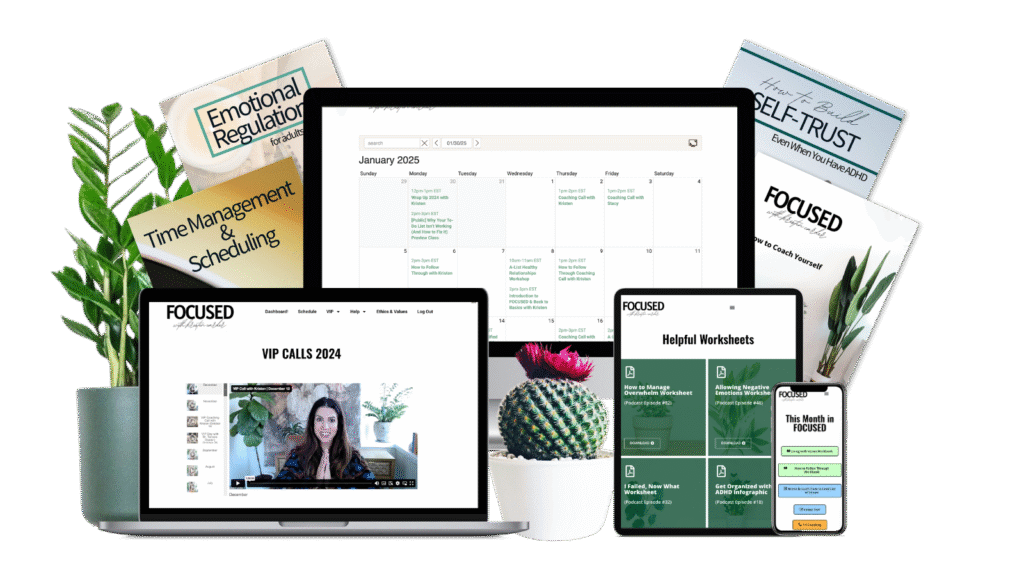
Like, I am doing this work of figuring out my ADHD, if you’re listening to this podcast, that’s my assumption about you, that wherever you are on your journey. Journey. You’re doing this work of figuring out your ADHD, and you’re you’re making some improvements. Maybe you’ve gone for a diagnosis, maybe you’re trying to figure out treatment. Maybe you’re farther down the road and you’re like, I’m I’m medicated. I’ve gotten some coaching, I’ve gone to therapy a little bit. I’m still walking on eggshells. I still don’t feel grounded and I don’t feel comfortable in my own skin. I feel like every interaction that I have, I’m having to, like, rethink it in my brain and relive it and work out like, did I say the right thing? Was I being stupid? What are they going to think of me? Etc, etc, etc. Everyone with ADHD knows what to do to improve their lives. You go to bed at a reasonable time, you wake up early, you make a list, you cross things off the list in order, blah, blah, blah, like, yeah, we know what to do, but ADHD is not a disorder of not knowing what to do. It’s a disorder of knowing exactly what to do, but not being able to get yourself to do it. That’s why I created focused. It’s an ADHD coaching membership for adults with ADHD, I’m a life coach with multiple certifications, and since 2019 I’ve coached over 4000 adults with ADHD from all over the world. I know what it takes to help an adult with ADHD go from Hot Mess express to grounded and thriving. I’ll teach you how to understand your ADHD brain, regulate your emotions and your behavior and accept yourself, flaws and all.
And with this foundation, we’ll build the skills to improve your life with ADHD. And not only do you get skills and tools and focus, but you’re surrounded by a huge community of adults with ADHD who are also doing the work of self development right alongside of you. Dr Ned Hallowell says healing happens in community, and I have absolutely found this to be true. So if you’re an adult with ADHD who wants to figure out how to be motivated from the inside out and make real lasting changes in your life, join hundreds of others from around the world in focused go to I have adhd.com/focused to learn more. That’s I have adhd.com/focused to check it out. Okay, so I’m going to tell you kind of like the before of me doing this rejection sensitivity work. Now you know that I’ve been diagnosed for over 20 years. I’ve been on this ADHD journey for a long time, but it’s only in the last five years that I’ve really done the work of improving my rejection sensitivity. And it kind of took this turning point, which I will discuss with you. It took this turning point of realizing I had been plugging all of the other holes in the ship. Right the ship was no longer sinking. I had worked on my productivity. I had worked on keeping a job. I had worked on keeping money in my bank account. I had worked on my impulses. I had worked on my working memory. I had set up all of this scaffolding.
There were so many ADHD things that I had done to support myself, and yet, all of my relationships felt terrible. I’m not joking when I say all of my relationships felt terrible. I feel like I’m a nice person, and yet, when I interacted with people, I beat myself up so much, you’re so annoying. You talk too much, you’re interrupting What is wrong with you. They don’t like you. I was constantly creating rejection scenarios in my mind. Though, sometimes I was actually being rejected, but more often than not, I was just being extremely hyper vigilant in relationships that were actually safe. So case in point in my marriage, before I really understood rejection sensitivity, I walked on eggshells in that relationship, Greg and I have been married 21 years, and for most of that time, I was walking on eggshells and like, Greg could be in a just a perfectly normal mood, but he wasn’t overly friendly, he wasn’t warm and fuzzy, he wasn’t like, super just like, what’s up? I love you. You’re amazing. And I would instantly spin into I did something wrong. He’s mad at me. He’s pulling away from me. I did something to annoy him, right?
So he was just existing as a normal human, and I was interpreting him existing as him rejecting me. My body reacted like something terrible was happening, even when nothing was wrong. Now, sometimes things were wrong and we addressed it, but 90% of the time, nothing was wrong. And yet I’m working through all of these different scenarios of like, okay, I did something wrong. What could I have done? Was it the last thing I said to him, is he mad that the dishes aren’t done? Is he mad that I left this on the counter? Is he mad? Like one. Is he mad about and my husband, if you’ve seen him on the podcast, or listen to him on the podcast, He’s so calm, he’s emotionally steady. He’s not perfect, obviously, right? But he’s not volatile. He’s not chaotic, he’s not explosive. He doesn’t get mad about much. So what I learned is that my reactions, my rejection scenarios, my hyper vigilance, my walking on eggshells, actually had very little to do with him, which is so annoying because in a partnership, you always want to be able to blame the other person. Am I right?
Like, I always want to have him to blame. He he’s mad at me because I did something innocuous, so he’s the reason right. But actually, it had nothing to do with him, and everything to do with me. I was viewing him and his just like being there on the couch is like, literally just sitting there. I would look at that and be like, something’s wrong. I was I was looking at him through the lens of my own rejection, sensitivity, my system, my nervous system, my body, my heart, my gut, my soul, my like, the rate of my heartbeat interpreted everything, every neutral signal as danger, and I reacted from fear constantly, not from grounded presence in my own house, I was walking on eggshells, and it created a lot of conflict. This is the part that I’m embarrassed to tell you. My rejection sensitivity actually created a lot of conflict in in our relationship, because imagine this from him, his perspective. He’s just existing. He’s just sitting on the couch. He’s just like, out in the garage tinkering. He’s he doesn’t really tinker. Why did I even say that? That’s just like, that’s such, like, a stereotypical thing to say about a man. What would he be out in the garage doing, like, sorting his hockey gear.
That’s what he would be doing. Like, if he’s in the garage, he’s going to be organizing it, or cleaning up, or, like, sorting through his hockey gear and organizing it and, like, cleaning it and that kind of a thing. It’s adorable. Or he’d be downstairs, like, sharpening his skates, or he’d be out in the yard, and I’m like, Are you mad at me? Is something wrong? Did I do something more than once? I I mean, and when I say more than once, I mean, like, 100 times at least, I would ask him, like, is everything okay? And he would be like, yes. And then I’d be like, Are you sure is something wrong? And then he would start to get angry at me, because I am just like, creating this conflict that doesn’t exist. So he would start to respond with, you know, if I’m like, Are you mad? He’s like, No. I’m like, Are you sure? And he’s like, Well, I’m starting to get mad now. I’m starting to get mad because you’re constantly asking me if I’m mad. Like, it’s starting to get annoying. I’m starting to get mad about it, which is, like, totally and completely fair, and I just couldn’t figure out, like, what is going on? I’m plugging the holes of the ship. I’m doing a much better job at life thing with ADHD, at functioning, at adulting. I’m like, I’m ex. I was starting to excel in my career, I was starting to finally, like, make money that was putting food on the table. I was starting to finally, like, self actualize in so many other ways, and in this area, I was like an eight year old little girl, totally scared to exist in my own home. I just wonder if that is relatable to you, and when I say that I’m just giving you space to make connections, because I’ve talked to 1000s of people with ADHD, I know that’s relatable. I know it’s relatable like in your own home, which you perceive logically, okay? I know I’m safe, I know I’m not in trouble. I know this this space is an accepting space, and yet I just always feel like somebody’s mad at me. I always feel like I’m gonna get in trouble. I always feel like this person is going to be displeased with me, and what that will mean for me is rejection, isolation and abandonment. Rejection, isolation and abandonment. That’s what I’m scared of. So when I look at him and I’m like, Oh, he didn’t make eye contact with me when I walked in the room, like, literally, this is what my brain and body. Are scanning for he didn’t make eye contact with me and look at me with adoring eyes as I walked into the room. He must be mad at me. Meanwhile, he’s just existing. He’s like, can I just exist here without this expectation that I’m always having to take care of you? Oh, my goodness, the fights that this caused.
Okay, so this like at some point recently. And when I say recently, I mean in the last five ish years, I realized like, Okay, I’ve built this stable life. Finally, it took me until almost 40 to do it, but I did it, and yet my nervous system is still existing in hyper vigilance. And when I say nervous system, I mean like the way that I feel and experience myself and other people internally. That’s that’s how I’m going to explain nervous system. So just like how I feel in my own body and my experience of my inner world and interacting with other people, okay, so I built a stable life, but my nervous system was living in hyper vigilance and instability and chaos and concern and Danger, danger, danger. I wasn’t walking on eggshells because my marriage was unsafe. I was walking on eggshells because my body had never been taught another way to be in a relationship. I just had never been. I’d never been taught another way to exist inside of a relationship. Because our formative years are what build the script, the blueprint for how we interpret all relationships moving forward, our formative relationships are what build the lens, the glasses that we wear as we look at all of our relationships, right? And my formative years, not great, not great, filled with a lot of criticism, a lot of rejection, a lot of emotional abandonment and isolation. Okay, so that was my lens and my body, even though I was now, you know, plucked from that instability and moved over here into this stable relationship that was, you know, relatively safe and whatever, it was fine. It was fine, not perfect, but fine, even though I was now existing in a relationship that was fine, not perfect, but like overall, pretty fine. I was still so afraid of rejection, abandonment, isolation, so here’s what I had to do to change the pattern. I went to therapy, not for this reason necessarily, but in my therapy experience, I spent four years in the therapy chair, and I’m back in it today. So lucky me, I had to figure out why I was so hyper vigilant that was really important to me. Our narrative, our understanding of our childhood, is really important. And there are people that are like, Oh my gosh, we always just have to, like, go back to childhood. We always have to blame the barons. Not about blaming anybody. It’s about understanding the building blocks of your own internal experience.
This is not about blame. We can have love and compassion and deep respect and honor for the people who raised us and we can tell the truth about the building blocks that formed who we are today, right? Another huge thing was I got coached up. Getting coached for me by a trauma informed coach was huge, because what that does is it builds a safe relationship. It outlines for yourself, like the container of safety. And I could bring real life, day to day scenarios to my coach for validation and understanding and looking through the lens of rejection sensitivity. So I was able to say, like it, what’s going on here? What’s going on like, am I being rejected? Is this a rejection scenario? Should I feel safe? I don’t feel safe. I could co regulate with my coach. That’s a big part of all of this is CO regulating with a safe nervous system, with someone who’s not going to reject you, with someone who’s not going to isolate you, with somebody who’s not going to abandon you. CO regulating these relationships. And this is why we’re doing this work in focused in January, because these wounds are created in relationship, and that’s okay, that’s just that is just the way of it.
That’s just true. But the wounds are bound up and healed and soothed and and like scarred over in a good way, also in relationships. So that’s so important. We can’t do rejection, sensitivity, work alone. Hear me reading a book or listening to a podcast. It’s a great start. Right? But it is not going to lead you to a pathway of healing, because it has to be created, this rejection, sensitivity, wound has to be healed in relationship. It is just the like the way it works. I wish we could just take a pill and listen, there are pills that will help you to dole your emotional experience. And for some people, that’s extremely, extremely helpful and necessary, especially as you’re building the emotional tools. And like I had somebody explain it to me once, as like the medication that helps with this type of deeply distressing emotional experience is kind of like armor. You’re putting your armor on, but you still have to do the work of healing, right? So some of us might need that additional armor, of like a beta blocker, if I’m being honest, like some of us might need that emotional additional armor so that we can do the work, but the actual healing of the root cause, rather than just putting a band aid on it and listen. Band aids are important sometimes, but if we want to get to heal the root issue, we have to do that in relationship with others. A big part of this is learning the difference logically, like really logically, learning the difference between what does a safe relationship look like versus what does an unsafe relationship look like, and the hitting my mic again because I get so passionate. The reason why this is important is because if we don’t know the difference between what’s actually safe and what’s unsafe. Just Logically, if we can’t see the difference between what’s safe and what’s unsafe, then we’re just going to perceive everything as being unsafe, right? This is unsafe. This is unsafe. This is unsafe. If we if we can have though a list of what actually does make a relationship safe. And this is what I did in my marriage. I took the list of what a safe relationship looks like. And I logically looked at my marriage with that list, and I was like, this is actually a safe relationship.
Okay? So now the issue is not the relationship itself. The issue is how I’m feeling in the relationship, right? This podcast is sponsored by ag one listen. It’s December, which means my life looks like a snow globe that someone has shaken way too aggressively. And I wonder, if you relate to that. We’ve got the holiday concerts, all of the kids events, parties, travel, family trying to remember which kid needs what for, like Secret Santa, and the days at school where they have to wear the different things like it’s too much, and my routines are out the window. They’re on vacation without me. So if you’re anything like me, the first thing to go when life gets busy is nutrition, and suddenly I’m like, Did I eat a vegetable today? Have I even had any water? Am I just running on peppermint mochas and adrenaline. That’s where ag one saves me every single year. And you know, they’ve been sponsoring this podcast for years. It’s because they’re my consistency anchor when the rest of my routine is, well, we can call it festive, but really it’s just crazy. I love ag one because it is so easy, and especially when I’m traveling, I can throw it in my suitcase, which I just did last week when I was in Kansas City. It’s so easy to pack and take along with you. I’m always mixing it up right when I wake up. And it’s super, super simple. It’s one small thing that helps me feel proactive instead of reactive.
Like, yeah, I did do something good for my body today that feels good to me, someone with ADHD, anything that reduces decision fatigue, gets a gold star from me. Gold Star from Kristen Carter. And this is easy, one scoop in water, shake it up. All done, not 47 bottles, and trying to remember when I last took what it’s just one daily ritual that helps me feel good, even when everything else is absolutely chaotic. Here’s the best part. In December. AG, one has their best offer ever when you head to drink. AG, one.com/i have ADHD, you’ll get the welcome kit, a morning person hat, which I know it’s ironic and hilarious, a bottle of vitamin d3, k2 an A g1, flavor sampler, and you’ll get to try their new sleep supplement, a G Z for free, which has been a game changer for my nightly routine. That’s drink a G one.com/i have ADHD for $126 free gifts for new subscribers. And I have to say, one of the things you’ll get in the welcome kit is this, like metal canister and metal scoop. And I have been using the same one for years. It’s one. Really high quality. Every time I finish a you know, package of ag one, I’ll throw it in the dishwasher. It’s clean and ready for the next package. And I absolutely love it. I know that’s a random thing to talk about, but like, the quality of the canister reflects, I think, the quality of the product. I’ve been using it for years. I absolutely love it, so don’t forget to head to drink. AG, one.com/i
have ADHD for $126 in free gifts for new subscribers. You’re definitely going to want to check it out. Some of you, though, like parenthetical statement here, really are in unsafe relationships. And so some of that does need to be tweaked, and that is the next thing that I did was I did start to pluck people out of my life, which sounds harsh, but I began to remove people from my life who I could see were unsafe, who I could see were constantly defensive, not willing to own up to their own mistakes, always looking to me as being the problem, not trustworthy, not loyal, not just like not safe relationships. Okay, so those people I did prune out of my life because safety became paramount for me, I and when I say safety, I don’t mean physical safety. Yes, of course, that needs to be front and center. And like, if you are not physically safe, that is the first thing to remedy. But for me, I was physically safe, but often felt very emotionally unsafe and I needed, and this is part of what we’re going to do in our work. In Focus is having a guide for what is actually safe versus unsafe. And can I look at a relationship logically and assess, okay, this is actually an unsafe relationship. I need to create some boundaries or distance, or this actually is generally not a perfect but a fairly safe relationship.
I need to then, like, rethink how I’m experiencing the relationship. Okay, so I say this all the time to my focused members, but like some of you, do need new people, some of you do need a pruning of your relationships so that you can make sure that you are surrounded by safety I did go through in the last five years since starting this life, a great pruning. That’s another podcast for another day. Okay, so what can the after look like? What can the app what can the after look like? Here’s the thing, I am not rejection proof. You know that about me, I just talked about how I was experiencing a lot of rejection scenarios in my like leading up to the Chad conference. That was a couple episodes ago, I talked about what that was like for me, going to the Chad conference, experiencing all of these rejection scenarios, getting a ton of headaches, jaw pain, fear, bracing for impact. You heard all of that from me. So obviously, I’m not rejection proof, but Your Honor, I would like to make the case. I would like to present to the jury that I still went to the conference. I still engaged in relationships there, even though I was very scared, I was bracing for impact, I supported myself enough to be able to do the thing that I wanted to do. That’s what I want for you, too. I can’t promise that you can rejection proof your life. That’s not a thing we live in a real world. Rejection is going to be a part of it, but I can promise that if you begin to build this skill set, you will be able to understand how to support yourself so that you can still participate in relationships as the person that you want to be, instead of ghosting people, instead of going into the cave, instead of cutting off everyone in your life because you’re afraid of rejection, you can experience the rejection scenarios and support yourself enough to engage in what you want to engage with. So now I experience my relationship with Greg very differently in some ways. And here’s what I mean, I understand that I am wired to be hyper vigilant.
I understand that what I really want from him, and I’m going to be honest, what I really want for him is every time I enter a room, he looks at me with adoring eyes. He tells me, hi, it’s so good to see. You. You’re beautiful. I love you. That’s what I want. Okay, I’m telling you the truth. This is what I want. Is that a fair expectation of a dude who’s just like living his life in his own home? No, it’s not okay. So I don’t put that expectation on him. Instead, when he is quiet or stressed or doesn’t look up at me from the couch with adoring eyes the way that I want him to, I still feel that old part of me wake up, the part that panics, the part that says, Is he mad at me? I She’s there. I feel her okay. But now, instead of being like, oh my gosh, are you mad at me? Did I do something? Or saying, Kristen, you’re being stupid. Like, stop it. Shut it down. Shut it down. Shut it down. I just noticed that part of me and I like, am so gentle with her. Like, Oh, you’re scared right now because he didn’t look up from his phone, or he didn’t look up from the dishes, or he didn’t look up from the laundry that he was folding. That made you scared, and that makes sense, honey, given your history, that makes sense.
So I just want to normalize that for you, that, like the tiniest things can be triggering. We don’t need to react to it immediately. We can just be like, Okay. This makes sense. It makes sense that your little like eight year old inside of you, who truly wasn’t safe in her own home at eight years old, but now is safe at 44 it’s okay that that little is showing up. Okay, it’s okay. She’s here. So the first thing that I do is I just recognize the unsettled feeling that comes up, oh, you’re feeling unsettled. It’s okay. And then I acknowledge to myself my desire for constant reassurance without making it Greg’s job. Oh, without making it his job. So I had to learn. And I wonder, if you resonate with this, I am a bottomless pit. I want constant reassurance over and over and over and over and over, there is never enough. You could never give me enough reassurance to fill the void in my belly. Okay? There’s just not enough reassurance in the world. I am a bottomless pit. No amount of external soothing can fill the void that comes from the old rejection wounds. It’s just not it’s never going to be enough, okay? And it’s not fair for me to expect my partner to meet that need for me 100% of the time, it’s just not it’s just not fair. Okay, so what I do for myself is I’m like, Oh, I’m a little I’m feeling a little unsettled. I need a little reassurance. Listen, you haven’t done anything wrong. You’re good. You’re good. I give myself the reassurance that I crave, okay, and I lean on an emotional regulation tool. Again, I’m going to teach this in the in the webinar. If you go to I have adhd.com/rejection, you can sign up for that webinar. But I lean on a very simple emotional regulation tool called rain, which is I recognize what I’m feeling. It stands for R A I N recognize, allow, investigate, nurture. So I recognize what I’m feeling. I allow the emotion to be there. I investigate what’s going on, what what’s going on here, and then I nurture myself with compassion, and this helps me to understand the panic, understand like the spiral, and allow it to move through my body in 30 seconds, rather than moving me to action. Are you okay? Are you mad at me? Are we good? Did I do something that’s the action that I don’t want to take right now.
If I go through all of these steps, if I go through all of these steps, if I if I notice what’s going on, if I acknowledge my desire, like, Okay, you just you’re looking for reassurance, and I can offer that to you. Let’s take some time to emotionally regulate. You’re good. You’re safe. Everything is good, if, after all of that, and notice that’s all on me, that’s all internally, that’s me working with me, if I notice, if I do all of that, and I’m still kind of like, uneasy, I can’t really regulate. I’m just like, I am worried. It’s then and only then that I ask for reassurance, and I do. I this is part of being in a relationship, right? I can ask for reassurance. It’s normal to still need reassurance. It’s but what’s important here is that it’s not the first step. It’s not the go to, right? It’s not like. A default setting. It’s first. I’m going to work with myself and soothe myself, and I’m going to honor the part of me that’s a little bit scared and that’s feeling hyper vigilant and like she’s in danger and she’s in trouble. I’m going to honor all of that. So it’s not my first step, but there is a conscious choice sometimes to just do a check in. Hey, I just need a little reassurance here, and I’ll put it on me. I need a little reassurance here.
Are we good? Can you just give me a hug and tell me that we’re good so I don’t apologize for it and I don’t make it his fault. I noticed that you didn’t look at me with adoring eyes, which is something that I’ve asked you to do, so you did something wrong. So like, I’m not putting it on him. I’m just owning Hey, I’m just feeling a little uneasy. Are we good? Can I just have a hug real quick? I’m feeling a little unsettled. Can you just reassure me that we’re good, right? So then that gives the friend, the partner, the parent, a very clear picture of what you need. And all he needs to say is like, yeah, babe, we’re good. No one’s mad at you. That’s what he started saying to me. Nobody’s mad at you. I love you, and nobody’s mad at you. It’s like the nicest thing that somebody could ever say just to a rejection, sensitive person. I love you, and nobody’s mad at you. Thank you so much. I appreciate you, and then I just walk away, right? Huge, huge, huge. So I just want you to think through for yourself, like what would be possible for you if you really committed to healing your rejection sensitivity and again, you’re not going to become rejection proof. It’s not that you’re never going to feel this hyper vigilance or sensitivity to rejection. But what would it mean for you if you could make progress in this area, if you knew how to support yourself, if you could be scared and do it anyway, kind of like with the Chad conference, right? Like I’m scared. I’m afraid they’re gonna hate me and reject me. But I didn’t cancel my flight. I instead gave myself a shit ton of support and went anyway and had a great time. By the way, highly recommend. Okay, in these cases, you start understanding what you need, and you start to be able to give yourself what you need.
You stop treating safe people like they’re dangerous. You stop reacting to perceived rejection. You gain the flexibility to pause before spiraling your relationships. You start to see them through the lens of safety. And when you you can logically say this relationship has a history of being unsafe. So I’m going to set some boundaries and create some distance. But these relationships over here are safe and so I can lean into these relationships, and I can be more stable and more honest and less dramatic in these relationships over here, you begin trusting yourself, you begin understanding your own experience of your own body, and not being like I don’t know why I’m freaking out. I don’t know why I’m reacting this way. I don’t know why I’m so like you can just begin to trust yourself. I know exactly why this is happening. How grounded, how authoritative does that feel to you? I know exactly why this is happening, and it’s not because I’m screwed up. It’s not because, you know, oh, it’s just an ADHD thing. No, it’s not. It’s it’s not. I know exactly why this is happening. I understand the building blocks of my foundation. I understand that I’m constantly walking on eggshells, and I am working to heal that. And so we start living from grounded adulthood, feeling firm in our own bodies, and not not believing the story that we are just one mistake away from getting in trouble. I’m done with that. Adults don’t get in trouble. Hear me, adults don’t get in trouble, that kids get in trouble. Adults don’t get in trouble. Stop living like someone who’s about to get in trouble. That is my goal.
That is my mission for the ADHD community in 2026 that we stop perceiving that we are constantly going to be getting in trouble. Ah, again, healing your rejection sensitivity wounds. It doesn’t make you bulletproof. It doesn’t make you rejection proof, but it does make you discerning. It helps you to tell the difference between actual rejection and perceived rejection. It gives you the. The armor to understand that someone else’s experience of their own world is not reflective of your own personal safety. It’s life giving okay. What I want for us, what I want for us is to be able to navigate the world. And yes, we’re like plugging the holes, and we’re working on all these different things, and it sucks to have to do this work, but this is just another invitation for you for growth and healing, and this will change the way that you feel in your own body and the way that you are able to be in connection with other people. We are lonely. We’re lonely, we’re craving connection, but rejection sensitivity is it’s a huge barrier to connection. It’s a huge barrier to connection, right? I would love for you to join me for the webinar. If you’re listening in real time, it’s in what two weeks. I would love, love, love for you to join me. Actually, I think it’s in a week. I have no idea. Time is not a thing for me. I don’t know why I’m pretending that it is. Anyway, check your calendar, but it’s January 8, at 12 Eastern. You can go to I have adhd.com/rejection, to sign up for it, and just know that we’re going to, like, be going into this in much more depth. It’s rejection, sensitivity, one on one, understanding it, soothing it, healing it. I hope to see you there, and you can go to I have adhd.com/rejection, to sign up. This episode has been heavy. I am feeling feeling so like, if you want to just like, take a big breath. What I want to offer you is hope you can make progress in this area. You can become someone who goes from walking on eggshells to walking in self. Trust. It is absolutely possible for you. I believe it with all of my heart.
All right, I’ll see you next week. Bye.
A few years ago, I went looking for help. I wanted to find someone to teach me how to feel better about myself and to help me improve my organization, productivity, time management, emotional regulation, you know, all the things that we adults with ADHD struggle with, I couldn’t find anything. So I researched and I studied and I hired coaches and I figured it out, and then I created focused for you. Focused is my monthly coaching membership where I teach educated professional adults how to accept their ADHD brain and hijack their ability to get stuff done. Hundreds of people from all over the world are already benefiting from this program, and I’m confident that you will too go to Ihaveadhd.com/focused, for all details.