



Episode #414 Good Enough Parenting: What NOT to Do (with Dr. Lindsay Gibson)

Listen or Watch this episode on:
Lindsay Gibson

About This Episode

What if raising emotionally healthy kids has less to do with perfect parenting and more to do with emotional maturity?

In this powerful conversation, I sit down with psychologist and bestselling author Lindsay C. Gibson to discuss her newest book, How to Raise an Emotionally Mature Child.

We explore what emotional maturity actually looks like, how to respond with empathy when your child seems irrational, and specifically what NOT to do as a parent.

Dr. Gibson shares practical wisdom for navigating parenting challenges at every stage—including the often-complicated teen years—and explains how parents can break generational patterns without carrying the impossible burden of getting it right all the time.

Whether you’re raising young children, parenting teens, or healing from your own childhood experiences, this conversation offers a compassionate roadmap toward deeper connection, resilience, and emotional health.

Want help with your ADHD? Join FOCUSED!

Have questions for Kristen? Call 1.833.281.2343
Episode Transcript

Kristen Carder 0:04
Welcome to the I Have ADHD podcast, where it’s all about education, encouragement, and coaching for adults with ADHD. I’m your host, Kristin Carter, and I have ADHD. Let’s chat about the frustrations, humor, and challenges of adulting relationships working and achieving with this neurodevelopmental disorder. I’ll help you understand your unique brain, unlock your potential, and move from point A to point B. Hey, what’s up? This is Kristen Carter, and you’ve tuned into the I Have ADHD podcast. I’m medicated, caffeinated, regulated, and ready to roll. Get in here. We’ve got a lot to talk about today. How are you, my ADHD friend? I am so glad that you pressed play on this podcast. You will not be disappointed, I assure you.

One of my personal heroes is here today, Dr. Lindsay Gibson. She is the author of the book Adult Children of Emotionally Immature Parents, which had such a huge impact on my life years ago when I read it, and she was actually a guest on the podcast three years ago. That’s episode 201 if you want to go listen to it. That was before I started on YouTube, so it’s audio only, but it’s episode 201 We had an amazing conversation about emotionally immature parents. What does it look like? What do we do if we feel like we might have emotionally immature parents? How do we make sure we’re not emotionally immature parents? The whole thing, it was a great conversation. And she is back today to speak with us about her new book, How to Raise an emotionally mature child, which I mean, don’t we all want that? Isn’t that what we all want, to be able to raise a child who is emotionally mature? I know I do. I know I do. I’m working really hard, and I know you are too. That’s why you press play on this podcast, because you’re working hard at this as well. I am so grateful to Lindsay for just all of her work and the way that she has impacted the conversation around parenting and family estrangement. You may have seen her on the Oprah Winfrey Show, is it called The Oprah Winfrey Show? I’m not sure if it’s the Oprah Winfrey podcast, but you may have seen her in a large conversation with Oprah recently, and what I like to say is you may have seen her on Oprah, but you heard her here first, because she was here in 2023 Let me read her bio, because it’s impressive. And then we’re going to get into the conversation that I have with Lindsay, and we’re going to talk all about her new book, Raising: How to Raise an Emotionally Mature Child. So, let me tell you a little bit about Lindsay. She’s a New York Times best-selling author, speaker, and clinical psychologist with over 30 years of psychotherapy experience. Her best-selling book, Adult Children of Emotionally Immature Parents, has sold, get ready for this 1.5 million copies, and has been translated into 38 languages. It was such an impactful book for me, and I know that all of her books, which, regardless of whichever one you pick up, will be impactful to you too. Please enjoy this conversation that I have with Lindsay Gibson. Lindsay, thank you so much for being here. I am so glad to have you back on the podcast. I’m thrilled, thrilled.

Dr. Lindsay Gibson 3:33
Well, thank you. It’s a thrill for me to be back. I enjoyed it so much last time, Kristen. I’m happy to be here today.

Kristen Carder 3:40
That’s amazing. So much has happened in your professional career since I last spoke with you. So we were just looking, it was March of 2023 and since then your book has sold a million and a half copies. You’ve been featured on huge shows like The Oprah Show, what has that journey been like for you? I can imagine it’s been fun.

Dr. Lindsay Gibson 4:11
It has been fun. It’s been, it’s been a little like Christmas morning over and over again, because I, you know, I never set out with the expectation of exactly where the book would get to in terms of its popularity, so and the book was a slow burn, I mean it came out in 2015 and you know in 2024 that’s that’s when some of these bigger interviews happened, so you know, it took its time, it grew its roots, and we found our audience, but it’s, it’s been really, I would say it’s been really satisfying to me to think that people are getting. The access to the idea of how important emotional maturity is, and also the thought that maybe people are feeling a little less crazy having the concept that people walking around looking like grown-ups may actually not be emotionally mature inside, and that causes all kinds of difficulties for other people, because that’s where emotionally immature people work their stuff out, is on other people. So to me, it’s just been like a dream come true that the book has gotten out there, and people are learning about this stuff.

Kristen Carder 5:40
Yes, I have found the principles that you spoke about way back when, in the first book, you know, adult children of emotional immature parents. And then your second book after that was recovering from emotional immature parents. Is that what it was? Yes, that was excellent as well, and in my own life I found it to be extremely helpful, both in reflecting on my family of origin, but also just like the type of parent that I do and don’t want to be, that’s been really, really helpful, and it’s interesting to have watched the conversation evolve over the last three years since we spoke last. I don’t think there were as many people on social media talking about, you know, emotionally immature parents, family estrangement, all of that, and now it’s like, well, maybe it’s just like my version, my side of TikTok, my side of Instagram, where I see a lot of it, but do you feel like it’s just become so much more pervasive in our cultural conversation?

Dr. Lindsay Gibson 6:53
I really do think that, I mean, that was talk about a dream come true, because my thought was there has been no language for this, people have been experiencing emotional immaturity and other people for eons, I mean, you know, probably forever, but we have either pathologized it by, you know, bringing out our DSM five or whatever it might be this year, and giving them a clinical diagnosis, you know, which is kind of throwing them under the bus and saying, you know, there’s something major wrong with them, or we sort of dismiss it as, oh, you know, that’s how it is, Daddy has a bad temper, or mom’s having a bad day, or something, but people did not have that concept that emotionally maybe they had not grown up all the way, and I was just, you know, lucky that in my early clinical training in my master’s program before I even went back to get my doctorate, that they concentrated on emotional development and how to do psychological evaluations that pinpointed really where people had stopped in their emotional development, you know, their impulse control, their empathy, their ability to think of other people’s rights, you know, that kind of thing. I was trained in that, and yet that, that was a very kind of, it was his own special world of sort of more psychodynamic or psychoanalytic theory, but it applies to real life, and so it’s delightful that now people have these words that are not, you know, clinical diagnoses, and I hope they’re not seen as pejorative, but they can be understood as descriptive, and it explains more about what’s really going on with them.

Kristen Carder 9:04
Absolutely, you know, I was just thinking it might be helpful for the listening audience who has not read your book and not listened to our first conversation. Would you walk us through some characteristics of an emotionally immature person, or perhaps the differences between what does emotional maturity look like versus emotional immaturity.

Dr. Lindsay Gibson 9:30
Yeah, sure, it’s.. it’s an interesting.. they’re interesting counterpoints to each other. I mean, first of all, the emotionally immature person, if you think of a like a three or a four year old, especially a four year old, because a four year old has some language and they appear to be like little people who can think and who can talk, and so there’s a. Tendency for all of us to expect more of four year olds than four year olds can really muster emotionally, so there’s an egocentrism about emotionally underdeveloped or immature people, they just can’t and don’t think about what’s going on inside other people, which means that their empathy is usually very poor. It’s not that they don’t have any empathy, but it’s that if they get the least bit stressed or there’s something that’s going not their way, so that they’re a little unhappy or little fearful about a situation or they’re feeling stressed, they become extremely self preoccupied and also very emotionally reactive, because everything is taken as a personal affront and they have to be the most important person in the relationship, that’s their position, and they need other people to provide their emotional stability, to keep them soothed, to keep, keep them calm, and they need other people to beef up their self-esteem, to, in effect, say, yes, you’re right, and you, you really are the center of the world. We’re all going to help prop you up that way. They have trouble with emotional intimacy. They don’t do deep stuff. They tend to stay on the surface, and they can get very uptight when their child, even you know, their adult child comes to them and wants to talk about something substantive, something about the relationship, because that’s too, too intimate, it’s too close, it pings on their insecurities too strongly, and they will tend to back up and keep things at a very superficial level. So, when you’re thinking about emotional maturity, in contrast to that, you’ve got a person who can think of other people, a person who is, you know, self-aware, has a good sense of self, but they can also imagine what goes on in the inner world of other people, and they’re able to really not just tolerate but enjoy and seek emotionally intimate interchanges with other people, where people share what’s really going on inside them with other people, and finally the emotionally mature person has no, no problem really accepting reality on its own terms. The emotionally immature person makes up reality as they go along, so it doesn’t bother them to say I never said that or you never told me that, and you’re thinking I told you that last week. What are you talking about? But the emotionally mature person would remember, because they have a consistent sense of self, they would remember that you’d had that discussion, and they would accept the reality of that and deal with it from there, but just like a four year old, the emotionally immature person really thinks reality is something that they get to manufacture as they go along.

Kristen Carder 13:35
Everything you’re saying, I think people listening are going to be like, yes, I know someone like that, that’s my cousin, that’s my dad, that’s my sister, that’s my husband. Maybe my question is, How does an emotionally immature person develop into someone who is emotionally mature? Is there hope for someone who is creating their own reality is is not even really understanding what other people are going through, who is more concerned with self-soothing and keeping themselves calm than having a true connection with others. How it may be, and maybe somebody’s recognizing it in themselves, because you know, my listenership is adults with ADHD, and we have a lot of issues with emotional dysregulation, and ADHD is a neurodevelopmental disorder, which means our development has been shaky, shaky, and so I think a lot of us are emotionally immature, and everyone listening wants to get better. That’s why they’re listening to a podcast like this. How does someone evolve and become more emotionally mature?

Dr. Lindsay Gibson 14:52
So people that fear that they’re being emotionally immature at times. Sometimes, really, just have to remember that emotional maturity is a continuum. It goes from relative emotional immaturity to relative emotional maturity, and all day long we are moving back and forth on that continuum. If we are well-resourced, things are going our way. Our schedule is, you know, copacetic. Nothing’s getting in our way, you know. We have a higher level of emotional maturity. We just do, because we can stay integrated inside our feelings, and our thoughts can work together well. But if you put us under stress, or if we’re sick, or if we’re tired, all of us are going to start losing that internal integration, because it’s going to be too effortful, too energy consuming, and we’re going to start to move toward being and acting more egocentric. We will have less reserves for empathy for other people. We’ll get impatient, we’ll have a harder time containing our emotions, and we’ll stop thinking about what’s going on with other people so much, because we’re up to our eyeballs and our own problems, so keep in mind that it’s not like once you’re emotionally mature that you stay there all the time. You can have a kind of a set point where you mostly stay at a certain level of emotional maturity, but there are always going to be times when we’re doing things that we regret. Okay, just because we’re human beings. So, for the person who may be noticing characteristics in themselves that I’ve identified as emotionally immature, well, that’s what they are. They’re their behaviors, their characteristics that pop up sometimes, but if you become self-reflective at all, if you begin to ask yourself, was that cool that I said that, or maybe, maybe I caused part of the problem here, or they have a good point, maybe I should think about that. Anything that’s reflective or self-reflective, you are automatically complexifying your mind, and you are growing as a result of that self-reflection, because that kind of internal integration and wholeness that is a function of these parts of your mind sort of checking in with each other and reflecting on each other, and it makes your mind kind of knit together in a way that all parts of you are talking to each other, and that’s what I mean by integration. You become a fully integrated, formed self that is self-aware, and then, therefore, can be aware of other people’s inner worlds and their feelings too. So, part of the reason why I wrote the book on how to raise an emotionally mature child is that it’s kind of a, it’s like a backdoor way of parents entering their own emotional maturity. If I had written the book called How to Be an Emotionally Mature Parent, I think people would, you know, flee in terror because it’s like, oh my god, that’s too big a job, I can’t do that, I can’t turn myself into the perfect parent, you know, and nobody would want to, but if you’re trying to raise an emotionally mature child, the things that you do and the attitudes that you hold will automatically make you more emotionally mature indirectly, so you know, sometimes it, I think, it happens that our children end up maturing us because we love them so much. Yeah, and we want the best for them, and so it’s a very high incentive to do that self-reflection, and to, you know, examine our own responses to see if we, you know, maybe need to do something different, that is our child causing us to engage in more self-maturing behaviors.

Kristen Carder 19:32
Lindsay, you’re very sneaky, you know that, right? Because I was reading your book, and I was thinking, how, like, what if the parent is emotionally immature? How could they do these things? And you just answered that question, they can’t. That’s why I said these are the things to do. So, like, figure out how to do them. You will mature as you are trying to implement these practices with your child. That was. Is I mean, so brilliant of you to do it that way, because I agree. I think how to be an emotionally immature parent would feel way too daunting, but when, when someone sees a title, how to raise a emotionally mature child, they’re like, oh yeah, I want to do that, I want to learn how to do, I want my, I want my child to be emotionally mature. Let me, let me help them with that, and that, but really, it’s a, it’s a book about parenting behaviors, like things you need to do in yourself in order to help your child.

Dr. Lindsay Gibson 20:35
Yeah, I mean, I call them mindsets, their attitudes, their mindsets, it’s not do this behavior when your child does that behavior, it’s try to see them in a certain way, try to approach them in a certain way, which, incidentally, will be emotionally mature, but if you know that that’s what you’re headed for, it’s a whole lot easier to try to practice that.

Kristen Carder 21:03
Wow, I’m, I’m in awe. Is this the book that you wish some estranged parents would read, or maybe would have read prior to the rupture, the extreme rupture in relationships with their kids,

Dr. Lindsay Gibson 21:21
I would love it if estranged parents wanted to read the book to maybe understand why it’s so important to have empathy for your child. How critical it is to try to make sure that you don’t make them feel lonely or unloved or misunderstood. I think that would be wonderful. Unfortunately, what can happen is that the parent who has become estranged from their child, because the adult child has chosen not to maintain contact with them oftentimes it’s because that parent has not seen how important these things, like putting yourself in the other person’s shoes, or not always having to be right, or to be the authority, they haven’t seen how that can undermine a close relationship with one’s child, because they don’t want to be a pushover, they want to be in their parent role. They think it’s important to be the authority, and it would be very hard for them to try to adopt some of these more empathic and collaborative types of parenting techniques, because it wouldn’t feel to them like they were doing their job, but what I try to do in the book is to help people understand that our goals are all the same, we all want to raise, you know, a decent person who can think of other people, who can be motivated to find good work, who can handle their emotions in a way that they can engage in good relationships, good lasting relationships, and have a meaningful life. I mean, that’s that’s where we all want it to end up for our children. It’s just that if you don’t understand some of the effects of certain behaviors on a child, then it becomes very hard for you to get there as a parent.

Kristen Carder 23:41
You speak about authoritarian style of parenting, and how when you demand loyalty and compliance from your child in their childhood in adolescence and adulthood, it can really break down the relationship, because the relationship then begins to crumble. There’s not that camaraderie, that kind of back and forth or empathetic relationship. And I just, I found that to be so poignant in what you wrote.

Dr. Lindsay Gibson 24:15
It is poignant, it really is, because you know, the child’s developmental challenge changes at each stage, and that’s why in the book I go from newborns to adults. It’s

Kristen Carder 24:30
so good. I loved it, was like, babe, it was, it was so great, because it walks you, listener, go buy the book, it walks you through each developmental stage of the child, like I was like consuming the one on teenagers, as I was like, ‘help me, Lindsey, with my kids, but then even you talk about the relationship with, like, adult children as well, and it’s just.. it’s so helpful,

Dr. Lindsay Gibson 24:58
yeah, and. So if you don’t know child development and what is what the child is working on at any given stage or phase, then I mean, I don’t know how parents do it, I mean, because it changes so much, so if you let’s say that you are raising an elementary school child, and then they hit adolescence, they go into their teen years, they’re now in high school, and suddenly the relationship has changed from maybe from something that’s closer, the child is more dependent on you, you’re still their hero, you know, you’re the one that that they want to be like, you can do no wrong, and suddenly they have begun to question everything, and they are not in any way receptive to how you see things and what you think they should be doing, and if you take that personally, which of course we all do, because we’re human beings, but the more I should say you take that personally, the harder it is to back up and realize that this child is trying to develop their individuality now, and now it’s up to them to, you know, experiment with different identities, and to, you know, think about who they want to be as a, as a separate adult from you later on, and again, if you can have that tendency to go toward reflectivity, like, gee, I wonder why you know this situation devolved into, you know, us yelling at each other. If you have curiosity about that, you have like the royal road out of the problem, because that curiosity that you have, that reflective reflectiveness about what happened between you is your way to go back in with your child to say, honey, yesterday when we got upset with each other, would you be willing to talk with me about what happened, because I’ve been trying to figure it out, and I would love to hear what that was like for you. Would you be willing to give me 15 minutes, and we can sit down, and you can just tell me what it was like for you? Because I’m confused, I’m not sure what happened. That is an invitation to learn about your child’s inner world, and they will interpret that as being loved, they will interpret that as being connected with you, and they will feel like you want to understand them, and all, and those three things you know, feeling understood, feeling loved, and not feeling lonely, feeling connected, that’s what gives them that security that they will need in order to find their independent identity, and you know, to keep that basic good relationship with you going while they do it, they just can’t be all snuggly about

Kristen Carder 28:18
it, I think that that is one of the hardest parts of parenting for me, and also when I reflect on my family of origin, what was hardest for them was not taking things personally, and as kids grow and detach and differentiate, that is my work as a mom, is like, do not take anything personally, like that is my mantra to myself on the daily, and my, I’m, I feel like I’m a brand new parent right now, because I’ve been parenting, you know, babies done, toddlers done, kids, elementary school kids done, teenagers. Yeah, I’ve done teenagers for a couple years now, but now I have an emerging adult, and so I feel like a brand new parent again, as just like a wobbly, shaky, unsteady brand new. I’m new to the game, and that to me is the biggest thing. Is don’t take it personally. They’re supposed to differentiate, they’re supposed to detach, they’re supposed to do their own thing, be with other people, go their own separate, like that’s what’s supposed to happen. And what I notice, like across the board, in within emotional immature people, is everything is personal. Everything is a personal attack. Everything is like, why are you doing this to me? What about me? Don’t you know? Like, don’t you understand how I feel? And it’s like kids can’t develop in that environment. Environment,

Dr. Lindsay Gibson 30:02
yes, and of course you know, of course, the person that has issues with emotional maturity is going to have that reaction. I mean, we all know, you know, we’re all like Russian nesting dolls, we all know that there’s that little part of us in there that is saying exactly the same thing. I don’t care how mature you are, you know. Overall, there’s that little part in there that, that has no choice but to take it personally, because it’s like our inner child who is saying, you know, doesn’t anybody care about what this is like for me. We can hear that voice in there, and our, you know, our mission really is to hear that voice, love it, understand it, soothe it, and then do the more emotionally mature response, which is, let me try to understand this situation from their point of view too, so that maybe we can reach some kind of at least understanding of where we’re both coming from, even if we’re not going to agree, but we can keep a connected sort of collaborative spirit going if we are curious about how we each see something differently, and then, of course, you know, sometimes parents are going to have to step in and say, you know, as your parent, my job is to protect you, and I don’t feel like this is a safe situation. So, you know, I, I, I’m, you know, glad that you told me how you feel about it. I understand your position, but I don’t think I can let you do that.

Kristen Carder 31:43
Yep, that’s so good. You talk a lot about empathy in your book, and it’s beautiful and great, and we discuss empathy on this podcast a lot. But my question for you is, How can us parents, how can we parents who maybe struggle with emotional immaturity at times, as everyone does. How can we extend empathy to our kids when logically we are, our assessment is they’re being unreasonable. They’re so unreasonable that that seems to be a really big barrier to empathy, is like our own assessment of whether or not the child is being reasonable, and I think we do that with other adults too, but we don’t need to go there, but I know we do it with kids.

Dr. Lindsay Gibson 32:32
You are so right, I mean that that is exactly where we all go, and I want to kind of give a an insight into why that is okay, why we jump on that. It’s because when we hit a snag with somebody, it makes us feel insecure, we lose a sense of efficacy and power, we feel like we’re not, you know, sort of winning the day, and we start sliding back into a kind of a threatened or an uncertain space within ourselves, which does not feel good, and then you know what happens, we start to activate our left hemisphere language thinking logic brain as a defense against the feelings of hurt or confusion, loneliness that we might be feeling in the more emotional centers of our brain, on which tend to be more on the right side of the brain, so we, we end up moving into a kind of a hunter mentality, where we’re looking for reasons, we’re looking for, you know, why they should do something that we say, or we’re looking at the at the whys of why we can’t let them do certain things. We get very focused and very set on the outcome. That’s what I why I call it the hunter mind, because you know the object is to catch the rabbit or whatever and bring dinner home. It’s we get very focused on that, so we think that we’re being very reasonable when we’re in that mode, and we expect the child to come back and sort of agree with us that, you know, we need to deal with this reasonably, but to them this doesn’t feel like reason. It feels like we are after them with our solution, and we’re trying to make them agree with us. What’s really called for is kind of counterintuitive, which is if we get really focused on the outcome that you. Want to have happen with your kid, you stop being curious about what’s going on inside them. You stop being creative about maybe there’s more than you know one way to solve this situation, and you stop working with them because you’re so convinced now that there’s only one way to catch the rabbit, and that’s your way, and they need to stop being so unreasonable and let you have your way, and then everything will be fine. So, to maintain our curiosity and our desire to understand, at least understand it from their point of view, we’re really in much better shape in terms of finding a solution that will stick, you know, something that they ultimately, even if they don’t completely buy into it, at least they’re, you know, they’re they’ve kind of been included in the, in the decision making, which, you know, for all of us makes us want to cooperate more.

Kristen Carder 36:02
Yes, it’s so good. I loved the section of your book where you walked through 12 behaviors to avoid, and sometimes, and I think you may have even written this. Sometimes it’s easier to look at what I shouldn’t do

Dr. Lindsay Gibson 36:20
than

Kristen Carder 36:21
to have a prescription for all of the things I have to do, right? Like, sometimes it just feels easier to have the, like, don’t do this list. Would you walk us through a couple of those, like the ones that you feel like are the most? They don’t have to be the most important, but some of your favorites from that list, because I found that section of your book to be really helpful.

Dr. Lindsay Gibson 36:45
I’m so, I’m so glad I really am, because I remember when my son was growing up, and he was a very active toddler and preschooler, and, and I had grown up in a family where, you know you just didn’t tolerate that kind of behavior, that’s all. And I was trying to do it differently, and I had no role models, so I was, you know, hanging out at Barnes and Noble or Borders, just, you know, scarfing up parenting books. Okay, because, and what I wanted to know is, like, just tell me what not to do. I don’t have the bandwidth to absorb, you know, all the good attitudes that you’re throwing my way. Just tell me what not to do. Okay, so for instance, there’s a thing in there that I have about no hitting. Well, I decided with my son that I wasn’t going to hit him. Now, the problem was I didn’t know what else I was going to do, because I had never seen that. I didn’t know what to do. Yep, so I.. so then I had to figure out what to do instead, and that was a very steep and painful learning curve for me, because I, in effect, tied my own hands and said I’m not going to hit him, you know, whatever he does at two or three years old, I don’t know what else to do, but I’m going to read like crazy to try to, you know, figure that out,

Kristen Carder 38:20
God bless you, that’s amazing,

Dr. Lindsay Gibson 38:23
and, and over time it was like I say, it was a really steep learning curve, that’s that’s hard to, that’s hard to do, so hard to resist an impulse that you’ve been taught or model, yeah, yeah, so what happened was I developed some other things to do that you know worked for me, that was that were consistent with my personality, and you know, and we moved on, and you know things worked out just fine, but the no hitting has to do with it seems effective because it often stops the behavior mid mid track. Okay, so it looks like it’s being very effective. However, what you are doing is you’re using a form of coercion, humiliation. I mean, all you have to do is think about how you would feel if you made a mistake at work, or you did something that your partner didn’t like, and they hauled off and spanked you, or they slapped you, or they smacked the back of your head, or whatever. You know how that would feel. You would feel devastated. It’s so shaming. Okay. so the no hitting rule is part of putting a box around what you won’t do, and there’s a great book that’s called In the Box by David Epstein. Now, but the importance of putting limitations on yourself in order to almost force yourself to become more creative and a better problem solver, because you have narrowed the parameters. So, with these 12 items, that’s what I’m doing. I’m giving you a box, and the point is, yes, you will not know what else to do, because these are habits that we’ve learned, but if you resist them, you are going to have to become creative, and you won’t like that. Nobody likes to be creative, you know, when you have

Kristen Carder 40:36
to, it’s like,

Dr. Lindsay Gibson 40:37
oh no, so the no, the no hitting is yes, you, it will appear to be effective because your kid will stop because they’ll be shocked, but that’s not a method that you can continue to use when they’re 1416, 18, and it may result in, you know, a cost to the relationship that could affect their willingness to come back and see you when they’re 25 that may not, but it may. So we have to think about that. Another one that I particularly like is don’t let punishment be your first form of guidance, like a lot of people I think feel that we as the adults, are sort of waiting around for the child to make a mistake or do the wrong thing, and then we’re going to swoop in, punish them for it, and they’ll learn proper behavior. It would be like if you were, if you were a surgeon in training, and they, you know, wait for you to cut the artery, and then they come in and punish you for it. No, you get lots of repetitive training. You get told about the arteries, you get told about what could happen over and over and over again. And we’re in the same business as parents, because it’s, you know, a lot of times it’s that serious, a kind of a learning curve that we’re trying to give them. So, by giving the guidance, you know, we, you can’t do that, because.. and let me explain to you what would happen if you got in the habit of doing this, or what do you think it would be like if everybody just, you know, went in and shoplifted stuff, or lied to their parents, or, you know, what kind of world do you think we would have? How would you like to write me a little story about what the world would be like if everybody lied? I mean, you can do things where you can work with them about giving them guidance about the direction that you want them to move in, and then I think the last one would be to not invalidate their experience, no matter what it

Kristen Carder 42:52
is. That’s a hard one.

Dr. Lindsay Gibson 42:53
It’s a really hard one, because it goes back to that reasonable thing. Yeah, it’s like there’s no reason for you to be feeling this strongly about something that’s unrealistic. I don’t know why you’re so upset by that. That wasn’t, that wasn’t something that they meant to do. I mean, you may have any kind of response to that person, your child’s feelings that gives the message you did not have a valid reaction to that. Now that sticks that child with an insoluble dilemma. I don’t have the right kinds of reactions. I don’t feel things or think things in the right way. There’s something the matter with me, because my adored parent is telling me that what I’m feeling is not true or it’s not right. So somehow I have to be trying to change my involuntary responses to situations, and you cannot do that. You can’t just decide not to feel something or to feel something else instead. So, if you just pause and validate your child’s feelings and listen to their thoughts, listening to their listen to their reasons or their worries, I mean, it could be the monster under the bed, which is, you know, absurd, but to them, yes, at that stage of life, their imaginations are just coming online, and monsters are absolutely a possibility. Nobody has exactly proven to them that they don’t exist for real, so if we can learn to just let them have their responses and be curious about it with them, and then you can talk, you know, later if they want to about, you know, how they feel and whether or not you think it’s. You know, maybe there might be other explanations for it, or you know, that kind of thing, but to help them understand that whatever you feel, however you respond, is your feeling, and it’s completely normal. I want to understand it, so you know, let’s talk about it. That gives that person a sense of trust in their own self

Kristen Carder 45:28
and trust in you as the parent, too. Wouldn’t you say, like, I can come here and be understood? I can come here and be heard.

Dr. Lindsay Gibson 45:36
Oh my goodness, yes, that’s so well put. I mean, I can come here and be understood. If you know, you could open my book and just have that one sentence. Here’s what we’re shooting for. I want your kid to feel I can come here and be understood.

Kristen Carder 45:58
Oh, that’s so beautiful. What are you hopeful about with how the conversation around emotional maturity, estrangement, just like the cultural conversation happening right now, that at least on my side of Instagram is very loud, and your involvement in that, and really trying to help people understand what maturity looks like, and how reconciliation might happen, and now with your new book, just, you know, helping this generation of parents raising kids that in a way that hopefully will maintain connection for decades and decades and decades and decades, what are you hopeful? What do you see? What’s like the vision that you have of like the future here in this kind of relational context?

Dr. Lindsay Gibson 46:55
Yeah, it’s really changing, the paradigm is really changing, and nobody’s ready for it. Anybody who is in the position of being a parent at this age is not ready for what’s happening right now, because I think that as a group the kids that are coming along now are growing up in a society, or different societies, I mean, this is all over the world, but there is the idea out there that people have human rights, that people are equal, that people should not be mistreated. I mean, this, this idea is in, I think the collective unconscious at this point, and so when parents are hoping, or maybe they’re not even conscious of hoping, maybe it’s just they’re expecting, they’re expecting that their child will kind of fall into line with the role expectations that they grew up with, that that they should get to say and do certain things as parents, because you know, simply put, they are the parents. If they have that expectation, then children who are growing up now are just there’s they’re doing so much, it’s so tiring. There’s so much stimulation that they’re facing. There’s so much uncertainty in the work world and, and the social world these days. They really don’t have the energy to try to interact with a person, a parent who is being rigid about what they expect from their, from their, from their child. It’s just, it’s not working anymore. So, what I hope is that if people read the book, and that, and, and they know a few things not to do, and they work on the kind of attitudes and mindsets toward their children, like their inner world is real, just as real inside as you and I are, that they are psychologically present, they’re real little individuals with their own personalities, and we have to take that into account, that if they can do that, they will be pretty much on on the road, they’ll be on the highway toward a relationship that in adulthood you can have a friendship between equals. Now it’s not like any other friendship, because one is the parent and one is the adult child, but it’s conducted with the same set of rules that we treat each other well, we think of others’ feelings, we don’t assume. Know that we are the authority, we treat others with courtesy, we allow others to have their boundaries, and we’re sensitive to that. If we do that, we’re going to be okay with them. We just can’t pretend that our role as parents is going to carry us past all these encounters that will demand it will demand us to treat our kids like their cherished friends.

Kristen Carder 50:31
Yes. Oh, from your lips to God’s ears. I hope and pray that that is also what we see, and I agree with you. The tides have turned, that ship has sailed, where it’s like I’m the parent, so I get to do what I want, and so we’ve got to figure out how to navigate relationships in a way that treat our kids with the respect that they deserve, and that we deserved as kids, and maybe didn’t get, you know, just because that was the cultural norm, and I just want to say, thank you so much for your work, and for your contribution, and just even selfishly, like for how it’s impacted my life, and the ripple effect that that is having on my kids, and someday my grandkids. I just, I appreciate you so much.

Dr. Lindsay Gibson 51:21
Oh, thank you so much, Kristen. I appreciate you and the work that you’re doing to get all these ideas out there and to help people feel less alone with the struggles that they’re making toward becoming the kind of people that they want to be and that they can be proud of.

Kristen Carder 51:39
Yeah, thanks for being here, Lindsay.

Dr. Lindsay Gibson 51:42
Oh, thank you for having me.

Kristen Carder 51:44
A few years ago, I went looking for help. I wanted to find someone to teach me how to feel better about myself and to help me improve my organization, productivity, time management, emotional regulation, you know, all the things that we adults with ADHD struggle with. I couldn’t find anything, so I researched, and I studied, and I hired coaches, and I figured it out. Then I created Focused for You. Focused is my monthly coaching membership, where I teach educated professional adults how to accept their ADHD brain and hijack their ability to get stuff done. Hundreds of people from all over the world are already benefiting from this program, and I’m confident that you will too. Go to Ihaveadhd.com/focused for all the details.

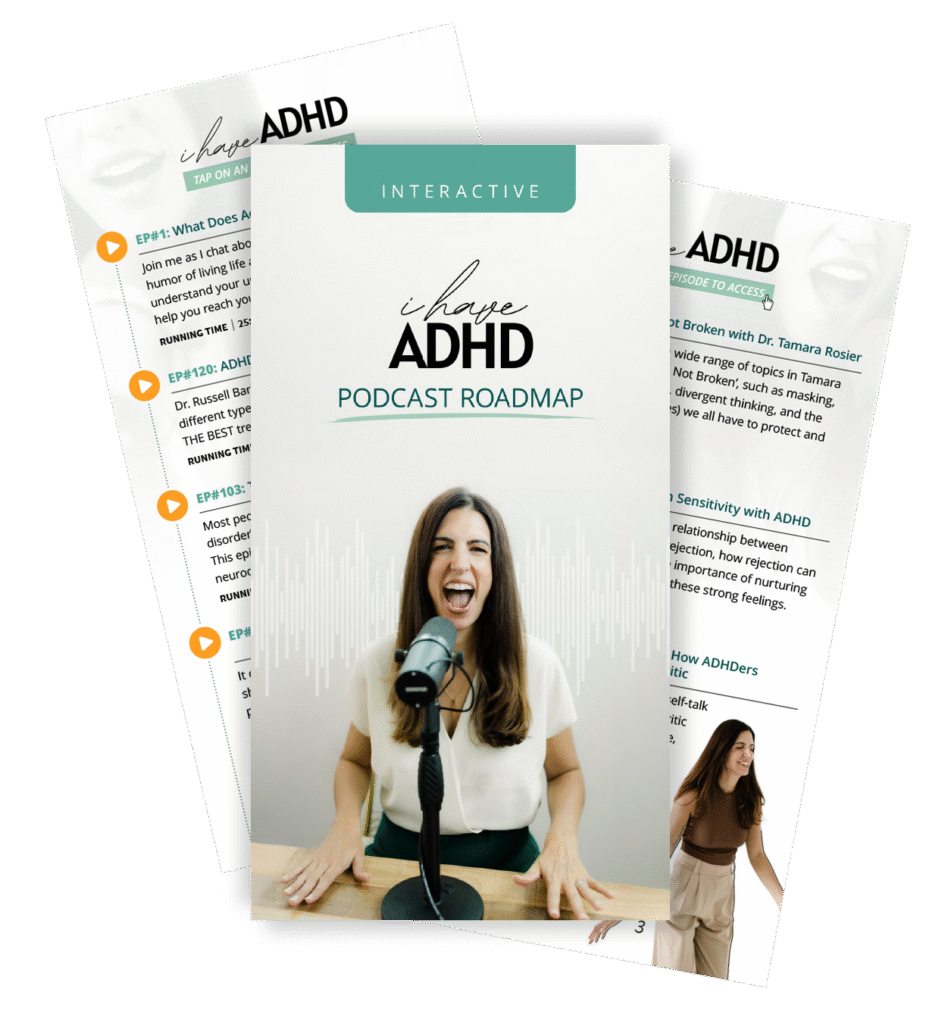
Get The Best of the podcast now with our Podcast Roadmap.

This is a clear and easy podcast roadmap so that you can know for SURE that you’re hearing the very best of the I Have ADHD podcast.

Related Episodes

Dr. Russell Ramsay

Episode #412: How ADHD Steals Your Self-Trust and How to Get It Back with Dr. Russell Ramsay

Kristen Carder

Episode #410: The Exhaustion, The Book, and The People Who Are Mad at Me

Kristen Carder

Episode #408: I Surveyed Over 2,100 Adults with ADHD—Here’s What Broke My Heart

Stop Struggling Alone.
Start Thriving With FOCUSED.

A proven coaching program designed specifically for adults with ADHD who want to gain clarity, build confidence, and take control of their lives.

Join a community of hundreds of ADHDers

Learning About My Brain...

Changed Everything

Hi, I’m Kristen Carder—ADHD expert, podcast host, and certified coach who’s been exactly where you are. Diagnosed at 21, I spent years cycling through planners, courses, and systems that never quite worked. Everything changed when I discovered the power of understanding my ADHD brain and the transformative impact of community support.

Now, after 15+ years of research and experience, I’ve helped thousands of adults with ADHD thrive. I’m here to show you how understanding your brain can transform your life, just like it did for mine.

ADHD Tips That Actually Make Sense

Follow @i.have.adhd.podcast and join our Instagram community for daily strategies, relatable content, and real talk about ADHD