


Episode #424: The Best Episode I Never Planned (An ADHD Pivot)

Listen or Watch this episode on:
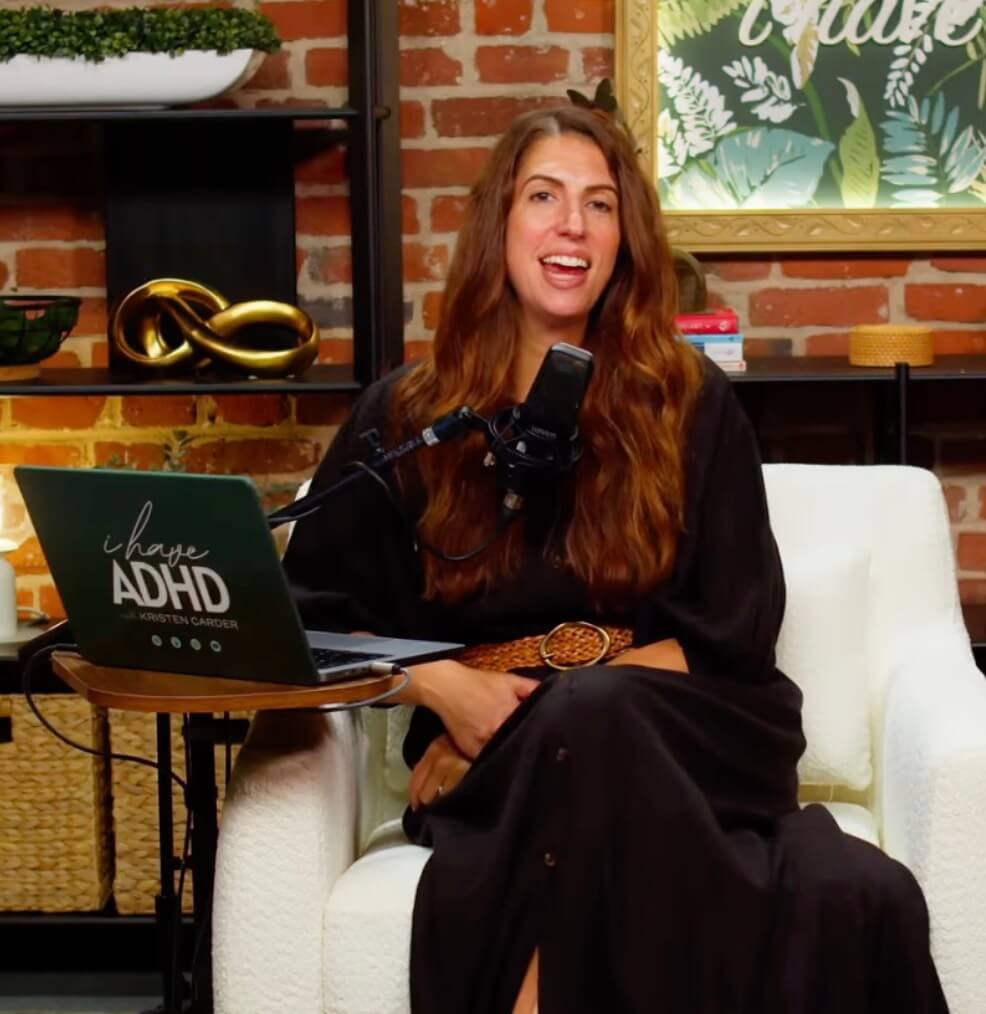
Kristen in the studio

About This Episode

Well… this episode wasn’t the one I planned. My guest was a no-show, so we pivoted! Instead, I pulled a few listener voicemails and answered your questions live—and honestly, I loved how it turned out.

We talk about what to do when you’re stuck in an emotional spiral and can’t seem to move forward, how to navigate a relationship when your partner refuses ADHD treatment, and why finding the motivation to clean can feel nearly impossible (and what actually helps).

If you’ve ever felt emotionally overwhelmed, frustrated in your relationships, or completely frozen by everyday tasks, this episode is for you.

Thanks for calling in. Keep those voicemails coming! Call 833.281.2343 and leave me a message.

Watch this episode on YouTube

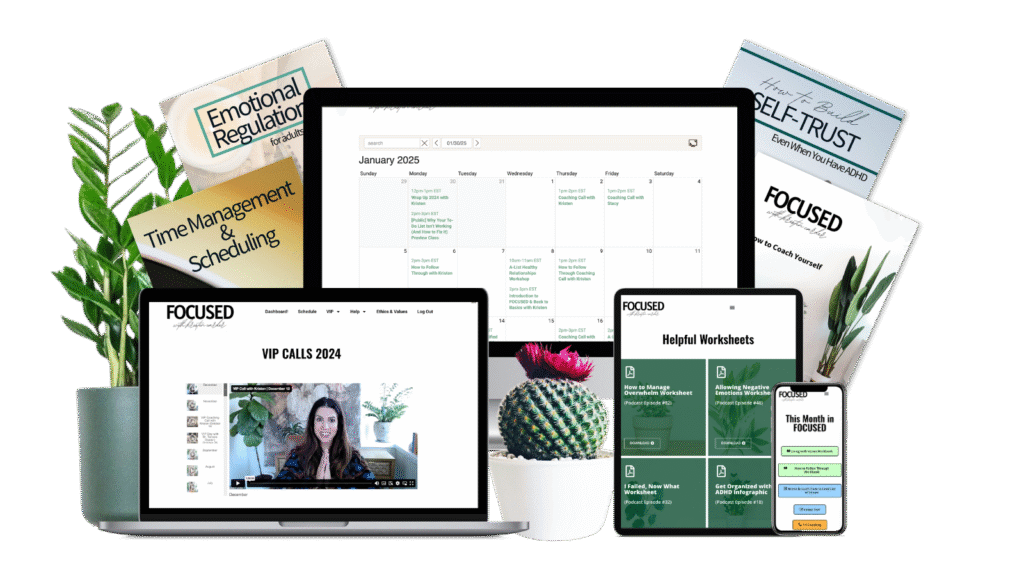
Want help with your ADHD? Join FOCUSED!

Have questions for Kristen? Call 1.833.281.2343
Episode Transcript

Kristen Carder 0:00
Y’all, this episode is a pivot. So, what we’re doing today is we’re going to hear some voicemails. We’re going to discuss two really profound questions from listeners. Hey, what’s up? This is Kristen Carter, and you’re listening to the I Have ADHD podcast. I am medicated, caffeinated, surprisingly regulated, and ready to roll, y’all. This episode is a pivot. We were just scrambling, scrambling, and I’m calm. I’m cool. I’m collected. Everything’s fine. It’s gonna be a great episode today. Here’s what happened: I showed up prepared to interview a guest, and the guest was a no-show, y’all. The guest was a no-show. This is the first time that this has happened to me in many, many, many years of podcasting, and that’s okay. That happens sometimes. Listen, we’re all a no show sometimes, so no shame, no blame, no problem to to the guest, to the missing guest. But it did mean that I had already paid for studio time and already planned to have a podcast coming out. So what we gonna do? We’re pivoting. We’re pivoting, and I did a little deep breathing. I did a little co-regulation here with my producer, and we’re gonna be fine. So what we’re doing today is we’re gonna hear some voicemails because I did not realize that we haven’t done voicemails in a long time. It’s a great way for me to bring your questions front and center and get your questions answered, I just realized I have no idea what our voicemail number is. So at some point during this episode, I’m going to find it. I’m going to say it, but we’ll put it up here, right here for you on the screen right now because I don’t have it prepared, because I have nothing prepared, because I was going to interview someone. It’d be like that sometimes, you know. But this is show business, baby. We are just going to keep rolling. It’s no problem at all. And listen, have I no showdown people before? Probably. Is it? Is it the end of the world? No. Is it a very human mistake? Yes. So we can all send some some love and some good vibes out there to all of the ADHDers across the globe that are dealing with no shows right now, because it happens. It does happen, and it’s not a problem. So here’s what we’re going to do today. We’re going to discuss two really profound questions from listeners, and I just love it when you call in. I love it. I love hearing your voices because you are listening to me constantly. But I love hearing from you, and so I have this whole file that my team has for me where all of the voicemails go in. Love listening to them. I love hearing your your voice, your tone. Like some of you are really like excited. Others of you are more pensive. Some of you, I can really hear the emotion in your voices, and I just love that it reminds me that there are real humans out there listening to this podcast. If you could see where I’m sitting right now, I’m sitting in a beautiful room. But then what I’m looking at is like a screen and some curtains, and I can only see like my producer’s legs can’t even see his face. It’s just like I sometimes it doesn’t feel like I’m talking to real humans. Okay, that’s what I’m trying to say, and I always try to get there and remind myself. But your voicemails really do remind me that there are real humans listening, and that warms my heart. It makes me so happy. If you do want to to tell me that you’re listening, I would love for you to leave an Apple podcast review or a comment on YouTube or something like that-that really does help me to see, like, hey, there are real people out there. Now, I of course see the numbers, like the podcast listens, the downloads, but you are so much more than a number. You’re a human. You’re an actual human in the world, somewhere across the globe, living with ADHD, and your voicemails, your reviews, your ratings, your comments-all of that reminds me that there are really true humans out there listening. And so, I just want to say thank you, love you. Okay, so we’re today we’re going to hear from Julian and Brian.

Kristen Carder 4:40
We’ll start with Julian. What’s so fun, and you’ll hear this at the end of his question, which is pretty long. But hang in there, hang in there. He’s he’s entertaining. It’s a great question. It’s a good time for you to hear from someone other than me. But what’s so fun about his part of his question is that he does. Tell us that he is married to Kendall Damaschek, and if you will remember from episode 354, I interviewed Kendall about her experience as an adult with PDA, pathological demand avoidance, and that was such a good episode. She came in, we sat around the table, we had the best time hanging out. I remember saying to Kendall and Casey. I was also interviewing Casey Ehrlich that day as well. Just like how much fun we had together, and how I wished we lived close and we could be best friends. I feel that way so often with the the guests that I have come in. I’m just like, ah, I wish you lived here, and we could be friends. But anyway, he’s married to Kendall, and so we are going to go ahead and hear from Julian. Here we go.

Caller 5:50
Hi, Kristen. My name is Julian. I am in my late 30s. I was diagnosed with ADHD about five years ago, so very much as an adult, and so it’s been an interesting few years kind of learning about ADHD and how to go about my life with ADHD. So I have a question for you that I think is related to emotional regulations. What to do in situations where things go wrong? So I might spend 20 minutes looking for my phone. The first five minutes, I find I’m fine. The next 15 minutes, I’m just kind of spiral into this kind of well of anger and frustration and maybe depression, just generally negative feelings. But what I’ve found is that, especially compared to other people in my life, it’s really hard for me to get myself out of that negative space. Right. So I drive to work, but then I’m still cranky and pissed off at work and just kind of having a negative topic and a bad day. Right. Just because of my phone, my keys, and I found that this even happens if I’m, you know, if I have an emotional conversation, it might take me an entire day to get out of that emotional space, and it seems like it just takes me much longer than other people. And so I’m wondering if you have any advice for kind of how to pull out of those situations, right? Or even when the problem’s been solved, why is it that I still feel those emotions so strongly, and they really dig in? And then, how can I kind of get myself out of that? I hadn’t heard of your podcast or really explored the ADHD podcast space very much until Kendall and Casey were on your show, and then I just loved the conversations that you had with them, and really enjoyed kind of both the the subject matter that you got into, and just kind of the way you talked to them, and the like camaraderie that the three of you had. And so I just really wanted to thank you for your podcast because it’s been probably the best resource that I found in the last few years for getting actual advice on what to do about ADHD and kind of the coaching tips, just listening to your podcast, working through your archive of interviews, re-listening to a lot of the episodes about stuff with pertinence-we’ve been so helpful. And so I really just wanted to thank you for all the work that you do,

Kristen Carder 7:54
Julian. I am so glad that you called in. I just want to thank you so much for your kind words and and just for being so open and honest. It is always useful and helpful to the whole community when we are honest with each other, when we’re willing to share our stories, when we’re willing to put ourselves out there because we learn so much from each other and because we have this real just very visceral feeling of I’m not the only one. Oh, I’m not the only one who, when something bad happens, I struggle for 24 hours to get my body back into equilibrium. Maybe there’s nothing inherently wrong with me because if Julian also struggles with this, then maybe I’m not broken. Maybe there’s not something seriously wrong with me. Maybe this is just like something that is quote unquote normal in the ADHD experience or in the neurodivergent experience. So thank you, thank you for calling in, and I I loved interviewing Kendall. I loved it. Kendall and Casey were so sweet. Like I said, listener, if you haven’t checked out episode 354, definitely go and listen to that. But let me let me get to your question, Julian. I I do want to just validate that once our body experiences an extreme emotion; it can be very difficult to recalibrate and to get back into a neutral space. So, just that’s normal. It’s not fun. I wish it was different, but it is very normal. But here are a couple things that I noticed that might be helpful when you were when you were describing the situation that often happens, like you lose your phone or you lose your keys or whatever the case may be. Maybe you no show on someone, like our sweet guest did today. Maybe you no show on someone. You’re just like, oh my gosh, I can’t believe I did this. What often happens is. We have the initial event, and and it brings us pain, right? So, like, I lost my keys. That brings me pain. But in addition to that, we add on a lot of suffering to ourselves by beating ourselves up. Now, I have a whole chapter in my new book on self compassion, it’s called a soft place to land, and in that chapter, I literally share a story where I lost my keys. So, like twins, same. We are there’s no difference here, and the and the event of losing the keys made me late, and that was a a problem, right? But what you described as the spiral-that is actually the most painful, most harmful part of the event that happens, because in that self-attack spiral, we cause so much damage. We cause so much damage internally to ourselves. So what I would start with is interrupting that spiral and really drawing a line in the sand with yourself, where you say, “I’m no longer going to attack myself when I mess up. Yes, it’s going to be inconvenient. Yes, I’m going to have to deal with it. Yes, I’m. I’m going to feel terrible. Like those are things that I’m not going to change. But what I am going to change is I refuse to attack myself any longer. I’m not going to do that. And so when I add on shame, judgment, self-blame, disdain, contempt for myself-I create like multiple additional layers of suffering, multiple additional layers of self-harm, multiple additional layers of rupture in the relationship that I have with myself, and so part of the reason why you’re struggling to kind of pull yourself out once the problem has been solved, like okay, I found my keys, I found my phone, like the problem has been solved technically, but what what needs to happen then is repair for the rupture that has been created, and we don’t often talk about repair with ourselves, repair in the relationship that we have with ourselves. So, what is needed here is a hefty dose of self-compassion. I lost my keys. This feels terrible. I hate it so much. But this is a very human experience, and I’m not gonna beat myself up for it. This feels bad enough. I’m not gonna create additional suffering. This is a human experience. Every human loses their keys, and I have ADHD, so my propensity to do something like this is heightened. Okay, the likelihood of this happening much, much, much higher.

Kristen Carder 13:09
So because of that, I’m going to treat myself with compassion. I’m going to treat myself, maybe not even with kindness, because for some of us, kindness is like too far. Like if if I’m so used to hating myself, shaming myself, treating myself with contempt or disdain, self kindness is probably too far of a leap. But how about I just don’t treat myself with harm and hate? What if I just talk to myself in a neutral way, you lost your keys. This sucks. This is going to disrupt the day. This is hard. This happened, right? So that’s so much more neutral than I can’t believe you did this. You’re an adult man, Julian. What is wrong with you? You lost your keys again. What the fuck? What are you doing? What what what is going on with you? Right? Do you hear the difference? Like big difference in the way that we talk to ourselves. So I would just say that yes, it’s going to feel terrible, and yes, that emotion may stick around. But if you can interrupt that part where you’re inflicting harm, where you’re inflicting additional suffering, that will cut the emotional weight in half. I bet. I mean, I think that’s my prediction. It’s still going to feel terrible, but it’s not going to last as long. It’s not going to feel as heavy because the self harm isn’t a part of the story. So that’s thing number one. The second thing I will say is there may just need to be some acceptance. Like this was really hard, and now I’m in an emotion. State that’s not super fun. Instead of just trying to move on, like okay, I found my keys and I got to go to work. Let’s go, right? Like that’s what we usually okay. I finally found my phone. Okay, let me get back to what I needed to do. Like there, if we can add in some acceptance there with okay, that was really hard, and now I’m probably going to feel a type of way for a little while. So now, what do I want to do about that? If I can have some acceptance there, rather than just trying to move on, if I can have some acceptance where it’s like, okay, typically my pattern is that this affects me for a little while, so I need to kind of plan to be pretty gentle with myself and buffer my day so that I can get done what needs to get done, like the the bare minimum. Like I okay, I need to keep my job. I need to do the bare minimum, but I’m not going to overdo it. I’m not going to expect too much from myself. I’m actually going to expect less from myself today because that was really really hard. When we accept that this is a part of our story, we can actually add in a lot of nurture and care. But prior to that acceptance, we just want to move on, get over it, get over it, Julian. You lost your phone. You found it. Get over it, right? So we don’t think about the emotional impact. We don’t. We don’t pull our neurodivergence into our like view and say like, okay, this is now going to be a part of my story for the day. So how do I want to handle myself? What can I take off my plate to give myself a little bit of space? What co-regulation do I need to add in here? Who who can like give me a little bit of support? So when we have that acceptance, we can give ourselves a lot of nurture and care and support. And then the last thing that I will say is, for me, and this actually happened to me yesterday, literally yesterday. I had a little argument, little time with my son, one of my kids yesterday, prior to going to work, and it triggered your girl. Like I was triggered. I was so angry when I got to work, and I had to just accept, girl. You are triggered. We can’t. There’s nothing is going to get done until you figure out how to soothe this. Until we figure out how to re-regulate. And so for me, I needed a change of state. I needed to like get out into nature.

Kristen Carder 17:51
I had to do something different with my body to kind of like shake it all off to like get it out of me. And also for me, the issue wasn’t quite resolved, so it was like, can we distract ourselves a little bit so that we can get some work done, so that when we get home we can repair the rupture that happened? And so I just want to normalize, like this isn’t just you, but identifying it and and recognizing, okay, I am hella activated. I need to do something to take care of myself. I can’t just bulldoze my way through this. It’s not going to work. So, what do I need in order to change my state? Maybe that will be like some exercise, a change of scenery, getting out into nature, co-regulation with somebody else, change of temperature-like cold water on the face, cold water on the hands, stepping into a sauna-something that’s going to completely change your state can really help to kind of like. I’m literally, if you’re just listening, I’m like literally doing the motions of like shaking it off of you, like getting, clearing the clutter, the emotional clutter, and like moving on. But those those would be my three pieces of wisdom for you, my friend, and maybe even four. Maybe number one is this is normal. I’m sorry that this is your reality, but it is. And samezies twins. I am the same. This happens to me as well. So like we are very much alike, and that this is why it’s so important to have a community where it’s just like okay, I’m not the only one. So that’s number one. Number two, really decide not to inflict harm on yourself in the midst of it. That’s going to have to be what we call an internal boundary. No one else is going to police that for you because so much of that is internal. So this is an internal. Boundary where you’re saying, I’m not going to self harm. I’m not going to berate myself. I’m not going to treat myself with judgment and contempt. At the very least, I’m going to be neutral with myself. As I practice that, maybe I will even be kind and compassionate and supportive. Like maybe I could get there, which would be amazing. But at the very least, I’m just not going to treat myself with hatred. Number three, you’re really going to accept. Okay, this event happened; it caused me emotional pain, and I have to like see it for what it is. I can’t just get over it. I can’t just snap my fingers and be done with it. I have to accept that, like, okay, this is my Tuesday now. This is a part of it. So, what do I need? how How can I support myself? And then, lastly, trying to change your state once you’ve kind of like accepted everything. All right, now how can I just change my body temperature, my body like my heart rate, something, my my view, my surroundings. I need to a change of state to try to distract myself to move on. But gosh, this is so relatable. I’m so glad you called in because this is so difficult, and I will say that, like most of the time, it’s not the initial event that causes the most harm. It’s not the losing of the keys. Like, yes, that was inconvenient. Yes, that that caused you to be late. Okay, but if you could just move on, that would be fine. What what causes the most harm is the spiral, the self harm, the getting stuck in the emotions, and so if we can reduce that, that will give you a lot of relief next time, the time after. This is just a practice. This is something that we’re going to have to practice over and over. The good news is you’re going to have a lot of opportunity to practice it, good news, bad news. Everyone with ADHD knows what to do to improve their lives. You go to bed at a reasonable time and you wake up early. Make a list, cross the things off the list in order, manage your time well. Yeah, we know what to do, but ADHD is not a disorder of not knowing what to do.

Kristen Carder 22:22
It’s a disorder of knowing exactly what to do, but not being able to get yourself to do it. That’s why ADHD is so frustrating. We’re smart and we want to succeed, but we can’t get ourselves to do the things that we know we should do in order to make improvements. That’s why I created Focused. I’m a life coach with multiple certifications, and since 2019, I’ve spent 1000s of hours coaching adults with ADHD. Time for me to focus on you. Hello, welcome to your coaching call. I am going to be coaching you today on relationships. I know what it takes to help an adult with ADHD go from hot mess expressed to grounded and thriving. Focused is my monthly coaching membership, where we go deep and we get to the root cause of what holds us back with ADHD. I’ll teach you how to understand your ADHD brain, regulate your emotions, and accept yourself, flaws and all. With this foundation, we build the skills to improve life with ADHD. And not only do you get skills and tools in focus, but you’re surrounded by a huge community of adults with ADHD who are also doing the work of self-development right alongside of you. Dr. Ned Halliwell says healing happens in community, and I have absolutely found this to be true. As a matter of fact, listen to what actual Focus members have to say about being in this program.

Speaker 3 23:49
What can I say about Focus, full community of people who have issues similar to you, and no one judge you?

Speaker 1 23:55
Focus just really supported me with my difficulties and asking for help. I’ve been encouraged and cheered on by the community.

Speaker 2 24:00
I really like that you can do as much or as little as you want. It’s it’s not just about the volume of the content; it’s about the quality. Focus has helped me understand ADHD better. I would recommend this for anyone. I would thoroughly recommend Focus. I can confidently say that this is one of the best decisions that I have made for myself.

Kristen Carder 24:18
So if you’re an adult with ADHD who wants to figure out how to be motivated from the inside out and make real, lasting changes in your life? Join hundreds of others from around the world in focused. Click the link in the episode description to check it out. All right, next we’re going to hear from Brian.

Caller 24:39
Hello, my name is B Johnson. I am calling for my wife, my stepdaughter, my son, my my in-laws. They have symptoms of ADHD, and it’s kind of affecting our marriage to a point I wanted to divorce because. I don’t know how to help them. I don’t know what to do to make the best make the situation better. I have asked them, you know, to get checked out, and I think my stepdaughter got checked out for ADD and ODD, and she’s not she she has medication, but she’s not taking it, and my wife don’t think there’s nothing wrong with her. And every time I bring the information up, I am being told that I’m bipolar or something’s wrong with me. I did get tested for that depression because I guess the situation is very alarming to me and was giving me depression because I want to help my wife, I want to help my stepdaughter, I want to help my son, and I want to help her family as well, but I’m only one person, and getting closer to the Lord, where I’m changing things in my life, and I can see that my wife is drinking more. She’s hanging out with family. She’s having impulse behavior. She’s a people pleaser. She’s she has this thing called what I looked up is called codependency, where she’s saying yes to a lot of different people, and I guess we’re making her happy. And then we’re not good at saving money because she’s a spender. We’re not good at love making because it’s like I got to perform to to have love, make love with her father. I got to do this and do this and do that and spend and spend and spend, and it’s passing. I’m seeing things that they’re doing for us, they don’t clean. They’re not organized. They’re not responsible, and there’s no boundaries with with her daughter or family. And it’s to the point that’s just kind of roomy as a as a man and as a husband. I just want to ask this for advice.

Kristen Carder 26:40
Oh my friend, this sounds so hard, and I’m really, really, really feeling so much. I’m feeling the pain coming through. I’m feeling so much compassion for you. I’m really sorry. I’m really sorry that you’re struggling with it. I I want to say a couple things. I really hope I can be helpful. I’m so glad that you called in. It’s it’s not a small thing that you are willing to be vulnerable and just share what’s going on and ask for help. That’s huge. That’s really really huge. Um, what I notice, and I wish you were sitting in front of me and we were having a conversation because I’d like to hear whether or not this resonates with you. But what I hear coming through is a feeling of powerlessness. Just like I, I am looking around at my family and I’m seeing the things that are happening and I feel like I don’t have control, and and I keep trying to help people, and nobody wants to like utilize the help that’s there. And what I’m hearing, Brian, is is a feeling of powerlessness. So I wonder if that resonates. I wish I could chat with you about it, but I do wonder if that resonates with you. And what I will say to that is that for me personally, the feeling of powerlessness is really activating. It’s really uncomfortable. I would go so far as to say, for me, it’s a huge trigger when I feel powerless, and I wonder if that’s the same for you. But the advice that I would give initially is to really think about where you do have power. What can you change? And I think the answer is you. You you’re the only thing that you have power over, right? And that’s annoying, right? Because we want to be able to snap our fingers, or to say the right thing, or just to explain it just a little bit differently, and then maybe someone else will do the thing that needs to happen. Maybe someone else will change. Maybe someone else will do the thing. Right? I want that for my life. I know you probably want that for your life. Like, just tell me how to explain it differently, or just tell me like what to say, or just tell me. But truly, what I am hearing is this is an invitation for you to take care of you, because it doesn’t sound like anyone else wants to be taken care of, and that’s hard. I’m not saying don’t keep trying. I’m not saying don’t speak truth. I’m not saying don’t you know whatever. I’m not saying change anything. What I am saying is, what support do you have? What supports are you getting? I would highly, highly, highly recommend that you somehow figure out how to engage with a therapist or a coach, trauma-informed coach or both, someone that can support you, because you’re living in a situation right now. What you’ve described is a lot of people are struggling. And you keep throwing out life rafts to people. Hey, let’s go get that ADHD checked out. Hey, you have medication. How about we take it? Hey, I think maybe you have some symptoms. Can we go get that checked? And nobody wants to take those life rafts. No, nobody’s reaching out for them. You keep throwing them out, and nobody’s taking them. And that, and then you’re watching people sink, right? And you’re being affected by it in your own life. So I just want to say to you, you deserve support. You’re trying to support everybody else, and they’re not wanting it. So my my plea to you is, find a therapist to work with, find a coach to work with, find a mentor to work with, because you’re going to need to be pretty strong in the next couple weeks and months and years as you decide what you will and will not tolerate from other people, that’s really hard. What boundaries for you are going to be appropriate? What what are you going to tolerate from the other people in your life? And I don’t want you to do that alone, Brian. I I want you to reach out for support.

Kristen Carder 31:19
I want you to lean on people who are farther down the road, who are professional, who are like apart from the situation, who who are neutral parties that can give you advice and support, because you’re in a hard place. You’re in a really really tough place. It sounds like you’re starting to do some personal growth. You’re starting to even like listen to this podcast and and and reach out and wanting more information, wanting more emotional and mental health in your family, and that’s just not something that we can force on the people in our lives. Unfortunately, unfortunately, because if they would just listen to you, if they would just listen to me, I think everybody would be in a much better place. But they don’t listen. So what do we do when they don’t listen? We say, “Okay, I want to be helpful, but you’re not taking any of my advice. So I need to focus here on me. I need to focus on building up my own support system. I need to focus on my own mental health, my own emotional well-being, and my own boundaries of what I am and am not willing to tolerate. Because that’s a tricky question. What am I willing to tolerate from the people in my life? What am I willing to tolerate from my spouse? What am I willing to tolerate from my kids? And I don’t want you to have to answer that question alone. So, I just want to give you encouragement and say that I’m just so proud of you for the work that you are doing, and I really wish that we could control the people in our lives. Please believe me when I say, oh, how I wish we could control people in our lives, but we can’t. So then, what do we do? We focus inward and we say, okay, I’m going to become emotionally healthy. I’m going to become. You said you’re connecting to your relationship with the Lord. I’m going to become spiritually healthy. I’m going to become mentally healthy, and I’m going to begin to decide what I will and will not allow. I’m going to focus inward on me. I’m still going to be kind and respectful and helpful, but I’m not going to hang my emotions on what other people do, because other people are unpredictable. They don’t listen. They’re not following doctors’ advice. I can’t put my emotional well-being in their hands, and so I just really encourage you to get some support that can look like therapy, coaching, group coaching. You’re welcome to join Focused. I would love to have you. It might also look like free resources on YouTube. Continuing to listen to this podcast, reading books on emotional health. One of the books you mentioned, spirituality. One of the books that I really enjoyed when I was first starting my journey was called Emotionally Healthy Spirituality. That was a really helpful book to me, so maybe that will be helpful to you. But truly, I I want to encourage you to get a ton of support so that you can have clarity as you move forward in these relationships. I am sending you so much support and so much love, and maybe you can circle back and let me know how it works out. All right, thank you, Brian. I appreciate you so much. And actually, we have we have some time for a third call, so we are going to. Hear from a third person, and she gonna talk about messes. And I, I just know you all want me to solve that problem for you, Kristen. Teach me how not to be messy. Okay, well let’s let’s hear from her, and then we’ll chat about it. Here we go.

Caller 35:19
Hey, Kristen, it’s me again. I I thought something else I want to say. I I have I do good at once I get started. But how do you get yourself motivated to like clean your room? I well, we all know we’re not good at cleaning. I mean, face it, I I have stacks of, as you say, doom piles in my room. I just can’t get myself to get organized and put stuff away. I mean, I got piles and piles of stuff. Let me face it. I’m not good at vacuuming my room. I’m not good at putting clothes away in my room. I mean, it’s picked up enough where I can live in my room, but it’s just not. I can’t get started on it. How can I get myself motivated to get stuff done? I look forward to hearing from you. And hi, Slack. Have a good one. Thanks, guys.

Kristen Carder 36:09
I just love this so much because I I feel like everyone listening is like, yes, let’s solve this problem. How do I get motivated to clean? And here’s the thing: you’re not gonna like my answer. I’m so sorry. Please don’t hate me. But like, why can’t it just be messy? If you don’t care, and you’re not motivated, and you said it’s clean enough for you to live in, why can’t it just be messy? This is the part. Like if I were sitting face to face with you, this is literally what I would say. What’s the problem with it being messy? And my guess, I’m putting words in your mouth because I totally wish we were we were sitting having a chat, but we’re not. I’m putting words in your mouth because these are things that I’ve heard from clients and things that I’ve said to myself. Well, I don’t want it to be messy. Well, why don’t you want it to be messy? Well, it just shouldn’t be messy. Well, why shouldn’t it be messy? Who cares? And then usually we unravel a thread of good people are tidy, and bad people are messy. There’s some like hidden morality behind clutter. If I was a good person, then I would have a clean room. But since I don’t have a clean room, I’m a bad person, and I just I really want you to sit With that, why is that like what we were taught when we were little? Like cleanliness is next to godliness, and you know your your room is a reflection of who you really are on the inside. That’s not no, it’s not your room. It’s just stuff. Who cares? And this might actually help you to become more motivated if you can very clearly connect to why do you care? Because let me tell you, I would just cross it off my list. If your room is messy, you hate cleaning, you’re not good at cleaning, and it’s tidy enough for you to live in it. Don’t sweat it. Let it be messy. Who cares? Is that moral whether or not your room is tidy? It’s not. It’s 100% not moral. So you can fully live a wonderful, productive, great, beautiful, expansive life and have a messy bedroom. Who cares? Let it be messy. Now, this might prompt you. You might feel like, “Whoa, Kristen, no, I want it to be clean because, and that’s where the motivation comes. If you truly have a values-aligned reason for cleaning it. So maybe it’s I’m just making stuff up. Maybe it’s like my grandkids come over on the weekends, and I want them to be able to sleep in sleeping bags on the floor in my room, and and us have this like cozy, sweet grandma sleepover. That is like a beautiful reason to be like okay now I have a values aligned reason to clean, and I have a deadline and I have some motivation behind it. But if it’s just like my my room’s messy, I should clean it. Get out of here, nah, just leave it. It’s great. Your room is perfect just the way it is. If you’re like, I’m looking for this specific sweater and I can’t find it, and I really want to find this sweater because it belonged to my mom and it means a lot to me, and my room. Is too messy for me to find this sweater. Great, now you have a values-aligned reason to clean it up. If you say I grew up in a lot of chaos and I just don’t feel rested and regulated unless I’m living in a clean space, great. Now you have a values-aligned reason to clean. But if there are just piles, and you’re able to live there and you’re fine, don’t don’t waste your time cleaning. Go do something fun. Is that terrible advice? I don’t really care because our clutter is not moral. It does not matter. It doesn’t make you a good person or a bad person. It’s not good people have clean homes and bad people have messy homes. No, you can be a great person living a full, meaningful life with a very messy home. Who cares? But that’s the question. Who cares? And if you say I care, then I want to know why. Tell me why you care, and give me a good reason.

Kristen Carder 41:15
And it’s not me that you need to give the reason to. It’s yourself. Give yourself a good reason. Why do I actually care about this? What is this actually connected to that’s going to give my life meaning? Because if it doesn’t give your life meaning, listen, we are allergic to doing stupid stuff. ADHD, neurodivergent people, we are allergic to doing stuff just because, just because society says so, just because the teacher says so, just because my like we’re allergic to it, it’s not going to work. So what you need is a very clear values-aligned motivation for cleaning it up. And if you don’t have that, then just embrace it. This is how my room is. I’m good with it. I’m happy. This is my life. This is my room. And do you know what this messy room affords me? It affords me time to do the things that I actually care about. I mean, this is a dumb example, but I never make my bed. Never, never, never, never will I waste my time making my bed ever. I just don’t care, and the people who say like the way you do one thing is the way you do everything, absolute BS. I do not believe that at all, because I spend my energy doing things that matter. Now, is my room messy? Sometimes again, it gets messy. I have like a corner that I’m just like, oh gosh. But I will tell you that for me, I grew up in a lot of clutter and a lot of chaos, and so when I moved out of that environment, I’ve always been tidier just because that was my area of control. But that’s values aligned for me. That’s my reason. That that feels very connected to myself and to what matters to me. But like, there are things that I just like. Who cares? So you got to answer that question, my dear. Why does it matter? And if the only reason that you can come up with is like because it should, nah, not good enough. Just let it be messy. If the only reason you can come up with is because good people have clean rooms, not true. There’s a lot of really bad people out there that probably have clean rooms, right? It’s just like it’s not a moral issue. So getting to the heart behind, and this applies to anything that we want to do in our lives, getting to the heart behind how is this connected to my values, and if it’s not, I’m just gonna cross it off my list. I’m gonna give myself grace, and this is not something I’m gonna choose to care about. I hope that was helpful. I hope I don’t get hate mail from that one. But if I do, I can handle it. I can handle it. All right. Well, thanks for pivoting with me today. I’m so grateful to hear from you, listeners, with the voicemails. I do have the number for you. We found it. It’s 833-281-2343. So if you want me to answer your questions on the show, you can call 833-281-2343. I would love to hear from you, and I will see you next week. Bye bye.


Pre-Order Today

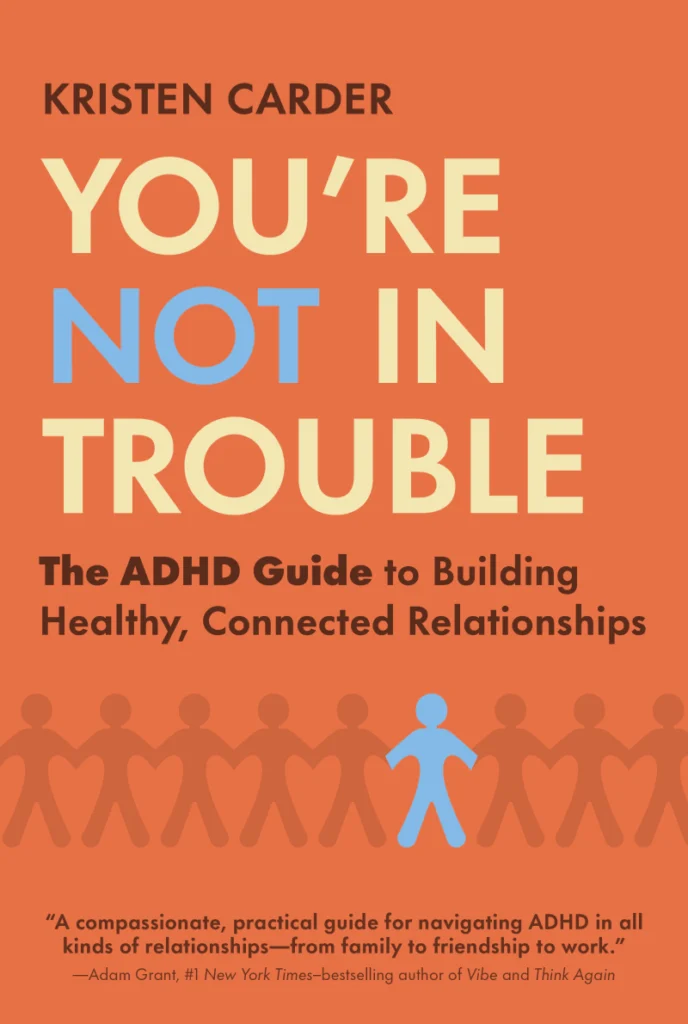
You're Not in Trouble

The ADHD Guide to Building Healthy, Connected Relationships

An empowering self-coaching guide to help ADHDers understand, repair, and build healthy relationships — with friends, romantic partners, family, and at work — from the creator of the I Have ADHD podcast.

Take the first step in gaining control of your life

This totally free printable includes a psychologist-approved list of symptoms that adults with ADHD commonly experience. This could give you the answers you’ve been begging for your entire life.

Related Episodes

Kristen and her new book

Episode #422: You’re Not In Trouble | Book Launch Party!!

Kristen Carder

Episode #420: I Cured My ADHD Revenge Bedtime Procrastination. Here’s Exactly How.

Kristen Carder

Episode 418: Tired of Feeling Tired? How to Rest When You Have ADHD

Stop Struggling Alone.
Start Thriving With FOCUSED.

A proven coaching program designed specifically for adults with ADHD who want to gain clarity, build confidence, and take control of their lives.

Join a community of hundreds of ADHDers

Learning About My Brain...

Changed Everything

Hi, I’m Kristen Carder—ADHD expert, podcast host, and certified coach who’s been exactly where you are. Diagnosed at 21, I spent years cycling through planners, courses, and systems that never quite worked. Everything changed when I discovered the power of understanding my ADHD brain and the transformative impact of community support.

Now, after 15+ years of research and experience, I’ve helped thousands of adults with ADHD thrive. I’m here to show you how understanding your brain can transform your life, just like it did for mine.

ADHD Tips That Actually Make Sense

Follow @i.have.adhd.podcast and join our Instagram community for daily strategies, relatable content, and real talk about ADHD

Pre-Order Today

You're Not in Trouble

“This book belongs in the hands of every adult with ADHD and the people who love them.”
–Dr. Ned Hallowell, NYT best-selling author of Driven to Distraction