


Kristen Carder 0:05
Welcome to the I Have ADHD podcast, where it’s all about education, encouragement, and coaching for adults with ADHD. I’m your host, Kristen Carter, and I Have ADHD. Let’s chat about the frustrations, humor, and challenges of adulting relationships, working, and achieving with this neurodevelopmental disorder. I’ll help you understand your unique brain, unlock your potential, and move from point A to point B.
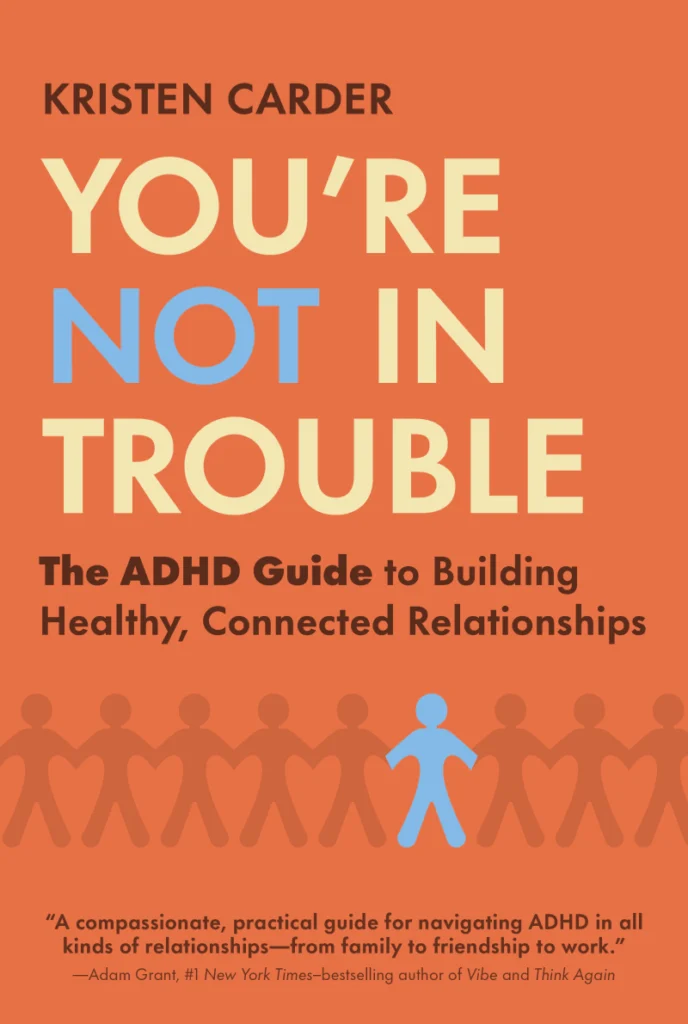
Hey, what’s up? This is Kristen Carter, and you’ve tuned into the I Have ADHD podcast. I am medicated, caffeinated, regulated, and so ready to roll. Get in here! Hello, hello. How are you? I hope that you are having the best day ever. What are you doing? What are you using this podcast as a body double before you doing laundry? You in the car with your kids? What’s going on? What What are you up to? You unloading that dishwasher. I know that you’re doing something because no person with ADHD is just sitting around listening to a podcast. I know you are multitasking. Whenever I’m listening to a podcast, I am getting the shit done, and I know that you are too. So I’m so glad that you press play on this podcast. I am so glad that we are hanging out together while you are doing all of the things. Maybe you’re taking the dog for a walk. Maybe that’s what you’re doing. Maybe you’re kayaking down a river, which is actually what I’m doing tomorrow. Which is why I brought that up. I’m going kayaking tomorrow. I’m so excited. I am so enjoying the summer, and I’m like so sad that it’s already August. I know we shouldn’t even speak of it. I know we should not even speak of it, but like, guys, it’s August already. What in the world? What in the world? Okay, the good news is, though, the good news is is that I’ve got her. I’ve got our book in my hands. I’m so pleased. I put an audio podcast out there about the book, but this is the first time that she’s been to the studio with me. I think she looks pretty good. She’s gonna be sitting right up there on the shelf, right, right up there on the shelf. You’re not in trouble. The ADHD guide to building healthy, connected relationships. And what I’m excited to tell you about today is that we have a pre-order incentive running right now. If you would like a signed copy, if you would like a couple of adorable, really cute stickers to put on your laptop or your water bottle or your mirror or your car or wherever you want to put a sticker, they’re so okay. I don’t want to call them cute because no man is going to order stickers that are cute. So I’m not really sure what word to use that is that’s not feminine because they’re not feminine looking stickers, but they’re so cute, guys. I love them so much. If you would like a signed book plate and some stickers, you can head to ihaveadhd.com/notintroubel. That is our page for the book. You’re going to find info about the book, but also you can order a signed copy. It’s essentially I’m going to send you a book plate, and a book plate is what all the cool kids use to sign books. So it’s like I’m going to sign you a sticker, and then you’re going to place your sticker in your copy when you receive it, it’s I I didn’t know what a book plate was until I started this process, but that’s how all the cool kids sign books. So I will send you immediate gratification, immediate gratification. And what’s cute about this is that my son Charlie and I are going to do this together. I he had a hard time finding a summer job, and so I was like, well, I’ll pay you to help me send out like fun gifts to people who order the book. So Charlie and I will be working together in our living room to send you a personalized handwritten love letter from me, plus some really not feminine but adorable, cute stickers. I’ll put a if you’re watching on YouTube. I’ll put a little example of the stickers up here on the on the screen so that you can get a vibe.
Kristen Carder 4:10
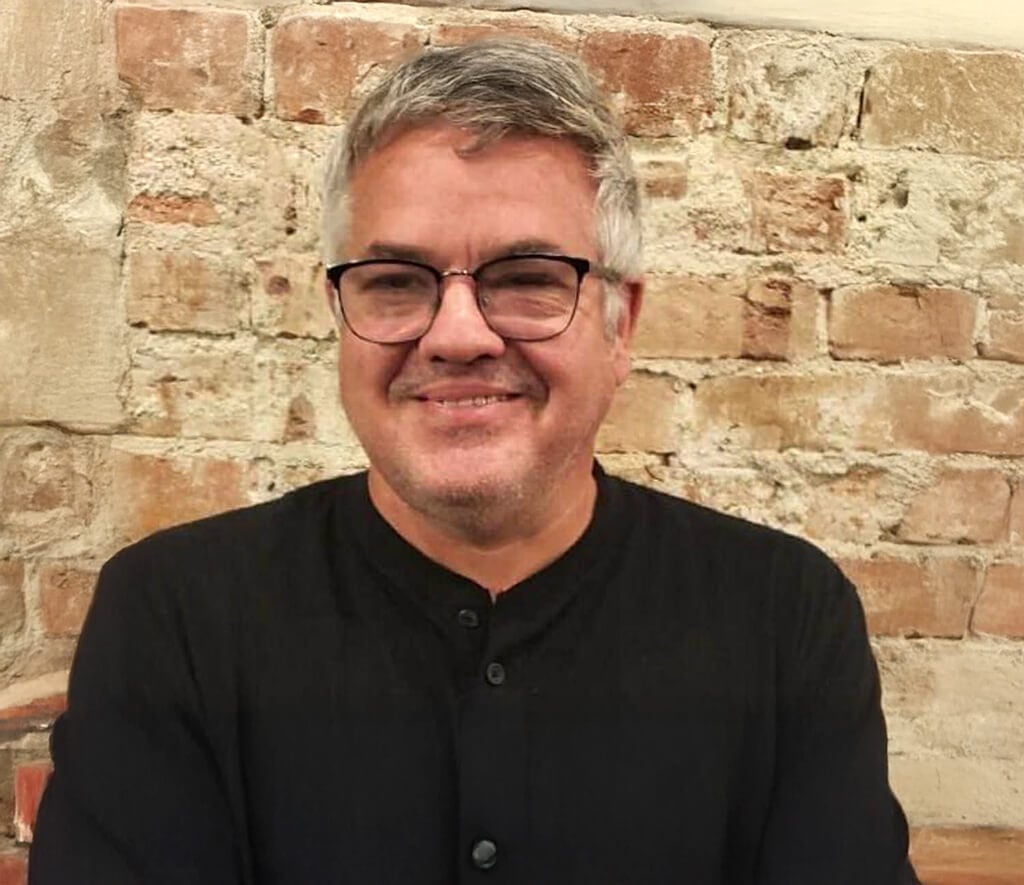
So that you can get the vibe because, like you know, you you need to know if you if you find it cute or not. But anyway, head to ihaveadhd.com/notintrouble to get a signed bookplate and some amazing stickers. I am so excited to get this book in your hands, and I understand. I understand that no ADHD has the capacity to like think two months ahead and pre-order something that’s coming in October, which is why I’m sending you immediate gratification today when you pre-order. Okay, let me get into the guests that we have today because we’ve never had a conversation like this before. I’m really excited when I got the email from Kevin’s team that was like, “Hey, this is an award-winning journalist, and he wants to talk about the almond.” And ADHD, I was like, yes, absolutely yes. As someone who lives 30 minutes away from Amish communities, who’s been like interacting with Amish throughout, like Amish men built my home. Like I’m obsessed, and to have a conversation about Amish and ADHD, I think is so fun. And so that’s what we’re talking about on the podcast today. Let me tell you a little bit about my guest, Kevin Williams is an award-winning journalist, author, and storyteller who is a reporter for CNBC, the New York Times, and other outlets. Williams was nominated. Listen to this for a Pulitzer Prize. Excuse me for his work with the Washington Post. He’s also the founder of Amish365.com, one of the web’s leading resources on Amish life and culture, reaching millions of readers each year. Kevin has spent his career chasing unusual stories from the hidden worlds of the Amish communities to to the business trends shaping everyday life. He’s the author of Not So Simple, which is his book out right now. We’re going to talk about it today, a memoir of his adventures among Amish, Mennonites, Shakers, and other plain communities. Living with ADHD, Kevin has learned to channel curiosity into a career built on asking questions. Hello, yes, perfect. Following rabbit trails and finding stories that others overlook. Kevin’s ADHD wreaked havoc on his career. We’ll talk about that as well, but also unleashed incredible creativity. He lives in Ohio with his two daughters. I hope you love this conversation. Help me welcome my guest, Kevin. Kevin, thank you so much for being here. I have never had a conversation about the plain community, Amish communities on this podcast. I’ve also never spoken to a journalist before, and I know we’re going to get into your career and your story and how journalism is such a neurodivergent, friendly career. So I cannot wait to chat with you. Thank you for being here.
Kevin Williams 7:01
Thank you for having me.
Kristen Carder 7:03
Yeah. So tell us about. Let’s start here. Let’s start with your ADHD journey. Kind of a roller coaster, maybe. But like, where? When were you diagnosed? How have you seen ADHD kind of play out in your life? What What’s that like for you?
Kevin Williams 7:19
It’s It’s taken a long time for me to sort of come to terms with that diagnosis and the term, but I mean, you can go back to my childhood, and I remember being in elementary school. I was the kid with the messiest desk, and there would be a teacher that we had that would go around and pick up the messy kids’ desks, physically pick them up and dump them on the floor, and say, “You have to clean them off. No, but she never did it to me. I was able to like, even though my desk was the messiest, I was able to sort of finesse my way through school. I don’t want to say with charm and good, but I was able to sort of charisma my way through school and get and fly under the radar of that. And maybe that wasn’t such a good thing, because maybe some intervention earlier on would have saved me some grief. I don’t know, but when when I became an adult, age 1819, I was having some, I was just having some problems with focus. I was getting into journalism, and I was just, and I was having problems with studying in college, staying focused. So I went to a psychologist who was very adamant that I had undiagnosed ADHD. I didn’t really want to hear it. I didn’t want to hear it, but then I that began a process of going back to therapists again over and over over the year years to who told me the exact same thing. I didn’t want to hear it. Eventually, I was like, okay. Can I ask you
Kristen Carder 8:50
why you didn’t want to hear it? What What about hearing you have undiagnosed ADHD was difficult for you or like hard to accept?
Kevin Williams 8:58
I don’t know. I you know, there was a different time. There was it was 2030 years ago. I just I didn’t want that to define me. I didn’t want that to you know nothing wrong with me. I’m fine. I said that was my attitude. I don’t. I don’t. You know why isn’t the person who’s you know an absolute grumpy temper tantrum person. Why aren’t they getting diagnosed with something? Well, maybe they were, and I, you know, I, I just
Kristen Carder 9:25
right.
Kevin Williams 9:25
It was all the wrong reasons. It was just hard-headed youth. As I got older, I mellowed towards my acceptance of that, and I tried, you know, every medication out there and behavioral things and clinical trials.
Kristen Carder 9:41
Yeah, and now your go-to is you can show the camera. Coca-Cola. Oh yes, yeah.
Kevin Williams 9:48
Well, but see, I’ve been self-medicating myself with my Coca-Cola before I had the diagnosis. You know, I was I started drinking that 100%
Kevin Williams 9:57
Yeah,
Kristen Carder 9:58
100%
Kevin Williams 9:59
I need my. Caffeine cold, coffee.
Kristen Carder 10:03
Yes.
Kevin Williams 10:04
Yeah. I was just saying, I found all sorts of ways to self-medicate, whether I knew I was doing that or not. The coke, running, visiting the Amish.
Kristen Carder 10:14
Yeah. Yes. So your interest in the Amish started at a very young age, and it was kind of the catalyst that got you into journalism. Am I am I correct in that?
Kevin Williams 10:28
That’s correct. Yeah, yeah. I I started writing about the Amish, but I was interested in journalism too. So I I found a way to fuse those two interests, and I you know it’s I tell about it in my book, but I had this. I was editor of a syndicated column that was written by an Amish woman, and at its peak, it was in over 100 newspapers. And having that editorship allowed me to really explore Amish communities, opportunities to explore Amish communities from Maine, literally from Maine to Montana. So I’ve seen the whole breadth of of the Amish, but in the process, I was also helping myself. I just didn’t know it by going into these simple situations.
Kristen Carder 11:10
I’m really curious to have a discussion about neurodivergence among the Amish because, as someone who, um, I am in Reading, Pennsylvania. It’s about 30 minutes from Lancaster, where there’s a huge Amish population and a big like cultural draw there, where where people come and they they visit the Amish and they do all sorts of touristy things, and I’ve seen discussions around like, well, ADHD doesn’t exist among the Amish, or autism doesn’t exist among the Amish, and I’m always very skeptical about that because is it that it doesn’t exist, or is it that they’re not seeking diagnoses? Is it that it doesn’t exist, or their lifestyle is more conducive to a neurodivergent brain. So I’m curious about your thoughts on that. What what have you seen with all of the time that you’ve spent with the plain community?
Kevin Williams 12:11
Would they necessarily think something is wrong to take somebody in to get checked? And that’s the issue, not only with neurodivergence but with physical ailments, I’ve seen. Yeah, I’ve literally seen Amish kids with jaundice, you know, yellow skin, and not being, you know, okay. There’s nothing. There are either two attitudes. There’s either lack of information to diagnose on self-diagnose on the part of an Amish parent, or a deep belief in God’s will. This is just the way you know. This is the way things are going to happen. So there’s there’s a lot of just not diagnosing going on. Not true that Amish don’t get vaccinated, and that’s that’s a a incorrect information that gets put out there a lot.
Kristen Carder 13:00
Oh, interesting.
Kevin Williams 13:01
Because some people, you know, connect those, but so the Amish do often get vaccinated. I mean, there’s some that do not, but there are no theological restrictions against that. But the other thing you hit upon, which was the environmental. I mean, I think that’s why I was drawn to the Amish in many ways because there is A calming, especially if you’re in our world. There’s a calming balm associated with their lifestyle, and I believe that if you are neurodivergent, you’re ADHD, and you have a chance to work with your hands all day, making cabinets, working in the garden, hitching your horse outdoors. I mean, nature helps me. That’s that can be a balm for me. It can be a balm set.
Kristen Carder 13:53
What was it like for you as someone with ADHD to be in that environment? And like, did you notice yourself being calmed? Did you notice your nervous system kind of like just getting more regulated because of those like the exposure to nature, the exposure to what’s the word I’m looking for? Like the routine and the mundane, but also just like very predictable routine of
Kevin Williams 14:25
it. I didn’t make that connection until many, many years of visiting Amish communities. But I believe you’re correct. I think I think that’s part of the a big part of why I was drawn to the Amish communities. You know, my brain is racing, racing, racing. You know, you see my ADHD test through the years; they’re off the charts and whatever. So it it doesn’t surprise me that I can’t. I I was looking for something to ground me, and I think the Amish did that. I think they. I think. I think I think the Amish converged with my journalism. I think there was genuine journalism going on there that I thought, oh, this would be a great thing, and it turned out to be in many ways. But I also think there was a personal medication going on, self-medication, visiting the Amish communities. It is calming. I mean, if you have a chance to spend time with Amish families and unplug and slow down. It’s powerful.
Kristen Carder 15:28
Yeah, let’s talk about that unplugging. So there, what is the what what is common for Amish communities? Is it that they are not using electricity? I think it probably differs from community to community. So there’s no cell phone, no social media, no electricity. Like, what what did you find to be the most common form of quote unquote unplugging between the communities?
Kevin Williams 15:57
Well, first of all, you are correct. There’s a wide variation among the Amish, on one one end of the spectrum, you have what are called the Schwarzenberger Amish, which are the most conservative, no indoor plumbing, no electricity. And on the other end, you have what are actually called the Electric Amish. They have indoor electricity. They still use horse and buggy, but you have a wide variation.
Kristen Carder 16:18
Okay,
Kevin Williams 16:19
but even among the electric Amish, you’re not going to see a laptop plugged in. Now, social media is causing, and smartphones are causing real tension in the communities because some are like we can’t compete with the rest of the world because the Amish are very much capitalists. You know, we can’t compete if we don’t have some of these tools. Yeah, so you. you’re seeing a divergence, but the way of unplug oh the way of unplugging. I mean, if you if you go to an Amish home, there’s a family dinner when nobody’s looking at their phone. I mean, it’s I know that sounds bad to be shocked about that, but you know everybody’s just sitting there passing the food, talking about their day. There’s no there’s no electronic interferences of any sort, not just phones, but TV or anything like that. And there’s this real sense of community that I think our world lacks because they’re not distracted by electronics.
Kristen Carder 17:21
Yeah, and how do you see that kind of impacting maybe neurodivergence among the Amish, or even like for yourself? How did you notice the impact of that for yourself, the community, the fewer distractions, the more social aspect of it
Kevin Williams 17:44
with the Amish. This is only anecdotal. This is just from my observances over the years in community. But if you have a young child who has a lot of energy and seems to really need to work with her hands and and goes from one task to the next, I think the Amish parents are pretty good about diagnosing without diagnosing, like okay, you know, little Levi needs to work with wood in his hands and and stuff like that, and they’ll put him to work, or you know, he needs to milk the cows and collect the eggs. There, there’s this really good routine building, and when you’re not having, when it’s not a connected routine, you don’t have outdoor information, outside information, when you pumped in all the time through a you know handheld device, when it’s just nature around you and it’s routine and it’s physical, I do think, in my opinion, that that is a mitigating factor in ADHD. That it that it can reduce the symptoms of ADHD.
Kristen Carder 18:40
Yeah, yeah. Symptoms or maybe like impact of it, right? Maybe where it’s like it’s not impacting you because you’re not being forced to sit inside and be quiet, you know, eight hours a day, or you’re not forced to participate in in things that are just not meant for your brain,
Kevin Williams 19:01
yeah, and that’s well. That’s why journalism for me. That’s why when I get you know called into a breaking news situation, yeah, it’s not forcing me to sit you know for all day and do something my brain obviously is not designed for. So news does it for me. Lack of connectivity does it. And nature does it does it for many of the Amish, a very different stimuli, but the same result.
Kristen Carder 19:24
Yeah. Talk about your your job now with like with breaking news, working for CNN and other news outlets. Like what? That just to me sounds like the most self medicating career ever, where you’re just flooded with adrenaline. Am I kind of blowing it out of proportion, or is that accurate?
Kevin Williams 19:51
No, it it it does flood with adrenaline. I mean, like yeah, especially when I do my New York Times work. Because they’re the epitome of journal of journalism. There, there’s some big stories that I’ve been a part of, and you’re looking at the competition because there’s so many news outlets out there that you’re competing with. So I love that too. Trying to be first with a scoop, trying to do it fast. It’s
Kristen Carder 20:18
yeah,
Kevin Williams 20:19
it’s a huge adrenaline rush. When it’s over though when the story is over and I’m just done that’s a real adjustment because it’s like oh no it’s over with what do I you know what do I do now that that can be like a
Kristen Carder 20:33
letdown
Kevin Williams 20:34
yes yeah
Kristen Carder 20:35
yeah yeah
Kevin Williams 20:36
yeah but and then how much
Kristen Carder 20:38
time for you personally like what’s typical between the big stories, the big scoops, the big adrenaline rushes? Is it, is it hours? Is it days? Is it weeks?
Kevin Williams 20:51
It it just depends on the news cycle because I’m based in the Midwest and I I work for the Times on a freelance basis. If I sort of split time to do CNBC work and New York Times work? If if there’s a big story around here, like oh, there was a Springfield, Ohio was in the news a lot during the we won’t get political, but during the last presidential campaign, I was in Springfield like every day for weeks, and that was just constant adrenaline rushing around, but I mean, I’ve covered shootings, mass shootings, you know, where I’m literally rolling out of bed at two in the morning to go, you know, cover things. It
Kristen Carder 21:32
wow. So it it
Kevin Williams 21:33
depends on the news cycle. It can sometimes I’ll go months where there’s nothing happening around here. Other times it is nonstop.
Kristen Carder 21:40
And what do you do? What do you do to like cope when it is months in between? Is that when we write a book?
Kevin Williams 21:49
That’s when we write a book. That’s when I, you know, work on the Amish, the website that I’ve got, which is sort of a repository of information that I’ve gathered over the years. CNBC is all is always there for me, and I can make CNBC into an adrenaline rush. It’s not we don’t do breaking news in quite the same way as the the times, but you know, there’s still good stories, and I can I can make an adrenaline rush out of it because those are continual; those still aren’t dependent on the news cycle as much.
Kristen Carder 22:20
Yeah,
Kevin Williams 22:21
so I’ve designed a really neurodivergent friendly career.
Kristen Carder 22:24
I was just going to say that, and I’m always really interested in chatting about neurodivergent friendly careers because so often we think that there’s like one particular pathway that we have to follow, and just anecdotally, my my son is now entering the workforce, and he’s extremely neurodivergent. And he’s like, I am not going to sit behind a desk. I’m not going to stare at a computer all day. So he’s going into emergency medical services. And never in my life had I thought about EMS paramedics as being such a neurodivergent-friendly career, but it absolutely is, and so that’s really piqued my interest in like, oh, I wonder what else is out there. Because as an entrepreneur, I am always like, I guess ADHDers are just-we’re all just entrepreneurs, or we kind of get like stuck in the corporate pipeline. But there’s actually a ton of other great careers like EMS, like journalism, and I just I love that you brought this into our conversation because I’ve never talked about journalism as a great option for people who are neurodivergent.
Kevin Williams 23:35
Yeah, it can be, especially the breaking news stuff. If you if you’re an adrenaline junkie, you know you wait for the next one, and you get your fix, and and yeah,
Kristen Carder 23:45
kind of chasing that high constantly.
Kevin Williams 23:48
Yes, yeah, and it’s like I can be very thorough and very detail oriented for the 12 hours that the story lasts, and I’m
Kristen Carder 23:56
not.
Kevin Williams 23:56
Yeah, I can I can do that.
Kristen Carder 24:00
Yeah, I love that about about us ADHDers is that it’s not that we’re never detail oriented, it’s not that we are never thorough, it’s not that we never complete something. I I think what it is maybe like in the corporate environment is that like that’s expected in a robotic nature, over and over and over, with things that we just really don’t care about most of the time. Whereas for something like journalism or EMS or entrepreneurship, it’s kind of like a short stint where that’s required, where we have to like give it our all, be super focused, hyper focused, so to speak, be really thorough, complete it, and then we can have that letdown, that lull, that that recovery time in between, and then we ramp it up again.
Kevin Williams 24:50
Yeah, yeah. And for me, it’s it’s it’s polar opposites because I get the journalism adrenaline junkie fix, but then I get the Amish fix, which is a completely. It’s weird. It’s completely different medication. Yes, but it is even to this day. So many years later, visiting Amish communities will have the same calming effect on me. I was just in an Amish community like a few days ago that I’d never been to before, and just the exploring and the discovery and the the disconnectedness. It’s calming. It’s great.
Kristen Carder 25:22
Yeah, I’m curious if there have been any takeaways from Amish culture or lifestyle that you’ve incorporated into your own life as a calming, grounding, you know, self medicating or self preservation aspect for you. A
Kevin Williams 25:43
lot of people want to do that. I get a lot of mail from people who want to join the Amish. Who? Well, that’s a whole. That’s a whole different topic. But you’re talking about just taking elements of their life and incorporating it into the into your life.
Kristen Carder 25:59
Yeah, I’m. I’m just curious if you’ve done that at all, or if it’s kind of like this aspect where you like you you go and do it for a time, and then you come back and you are living your your typical life.
Kevin Williams 26:12
It’s what you just said. It’s like I go in there, I fill my bucket and have my my Amish for a while. It’s calming, and then I go back to my life, which is very incompatible with Amish life. There just isn’t a lot I can bring in. It’s kind of like with the Amish, you’re either all in, or you’re not. And yes, I mean, like I, I no, see, I haven’t even done it. I’ve got like I would love to have a big garden because the Amish gardens are central to Amish existence, and they are a calming center of the Amish household where everybody goes and they work together and they get their hands dirty. I don’t have a garden. I don’t, you know, I. It’s hard. It really is hard to find elements of their life to incorporate into your own because they’re very incompatible. If you want to join, that’s another. That’s another matter, but then you have to give up everything.
Kristen Carder 27:03
Then, yeah, then then that is a complete life shift. I went through what I call a crunchy phase of my life, and by that I mean trying to cook with very simple ingredients, cloth diapering my kids, home births, like very, very. I don’t know if crunchy is like the PC term these days, but that’s what I refer to it as. Gardens, and I will just say that it is so hard to try to have one foot in both worlds, so hard, you know. So I was driving to Amish country to buy, you know, organic ingredients and wheat berries to make flour, to make my bread, and like all of the different aspects of it. I was privileged to be a pretty much stay-at-home parent at the time, so I was able to have the time and space for that. But it is it is a completely different world, completely different.
Kevin Williams 28:10
And for me, it wasn’t.
Kristen Carder 28:12
Go ahead. What did you say?
Kevin Williams 28:14
No, I just said part of me wanted into that.
Kristen Carder 28:16
Yes, the simplicity, the slowness of it, and and I think a lot of times we can kind of have this like fantasy of it, like oh, it’s easier, it’s more simple, but a lot of it is harder. It’s not not easier. They’re choosing a harder path, you know, like washing out your child’s cloth diapers is not really that glamorous at all, right? But there is some sort of there. There’s something to be said about being connected to nature, connected to simplicity, connected to our ancestors’ way of doing things that I found very soothing for a couple years until I had my third child, and then I was like, “I’m done.
Kevin Williams 29:08
Yeah,
Kristen Carder 29:08
I literally opted out. I was like, “I can’t do this anymore.
Kevin Williams 29:12
It’s hard. I mean, we, my kids, we did the cloth diapering and the the the home birth. Yes.
Kristen Carder 29:21
Oh my gosh.
Kevin Williams 29:22
With an Amish midwife.
Kristen Carder 29:24
Yes. It
Kevin Williams 29:24
was. It was all very. But it’s just you said it very well. It’s very difficult to have one foot in each, and I tried. I think for me, I tried with my career, and I’m still trying to this day because part of my career is really Amish. There’s still that part of it, but then I I think I was just the journalism part developed because I needed both.
Kristen Carder 29:49
Yes, that’s so true. So tell us about your book. I I was telling you I read. I think I got through. Like pretty much half of it yesterday, and I I enjoyed it so much. Such an easy read, so ADHD friendly, so interesting. I can see why you’re so successful because your writing is fabulous, which you already know, and you’ve been highly awarded for it. But yeah, tell tell our tell our listeners about your book.
Kevin Williams 30:24
The book walks walks the reader through this whole journey, this whole parallel, you know, three parallel journeys: the Amish and the journalism. But then you have the ADHD, which looms over the entire book. Whether I’m specifically addressing it or not, it’s there. It’s it’s you know I do talk about the ADHD and all the things I tried, but I mean there were so many some some of the bookers just my stories from different communities that I visited, but then there are other stories like the time Hollywood came calling. You may have not gotten to that part yet, where they wanted me in a reality TV show, an Amish themed reality TV show, and that was that was getting to be a point in my life where I was like, I got to do something. You know the licensing wasn’t working out. The licensing of products, and I was like, this could be something that works. And they wanted me to become Amish, become Amish, quote unquote, for the show, where I live with an Amish family, and you know, churn the butter and milk the cows and and hitch up the buggies, and that was going to be the focus of the show. Well, the Hollywood reality TV machine is is brutal, and I got sucked into it. And I tell that story, and and then it didn’t work out. You can see me on video. I would not make a compelling TV. You know, I just.
Kristen Carder 32:00
Oh come on!
Kevin Williams 32:01
No, it wouldn’t have worked, and it didn’t work. There were all sorts of things like, but I was close. I mean, I actually, I had a Hollywood agent, and the the agent was like, Evan, I’ve been in this business for 20 years, and I’ve never seen anything move this quickly because we were we were getting close, but the whole book is full of things where I got so close, and I never quite made it, except for my journalism, the Amish stuff-it never came together.
Kristen Carder 32:24
Yeah, yeah. So you can find not so simple wherever you order your books. Go find it now, Kevin. Thank you so much for being here. This was a great combo, something that we’ve never talked about before. I really appreciate it.
Kevin Williams 32:42
Thank you. I enjoyed it. Thank you very much. A
Kristen Carder 32:46
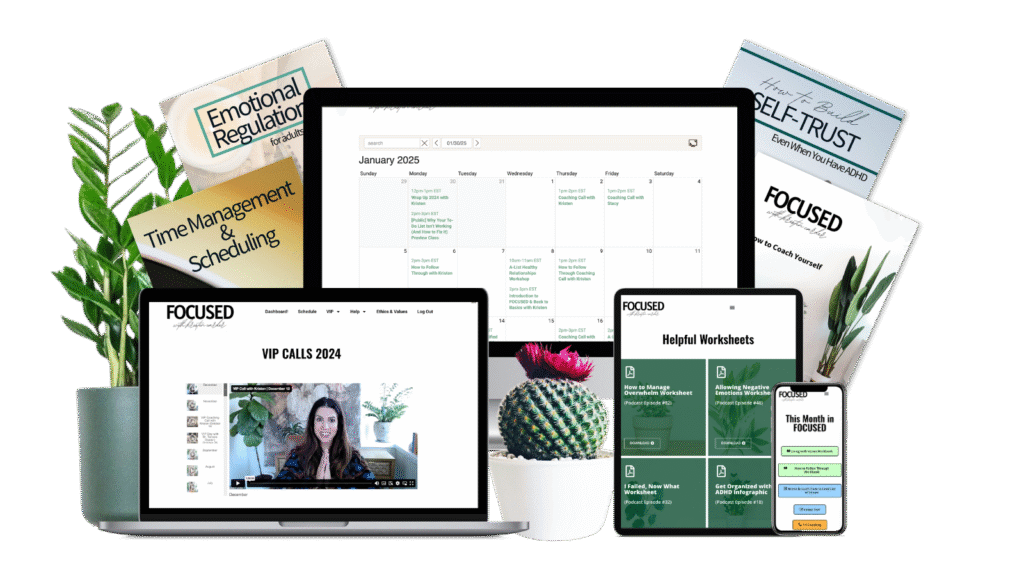
few years ago, I went looking for help. I wanted to find someone to teach me how to feel better about myself and to help me improve my organization, productivity, time management, emotional regulation-you know, all the things that we adults with ADHD struggle with. I couldn’t find anything, so I researched and I studied and I hired coaches and I figured it out. And then I created Focused for You. Focused is my monthly coaching membership where I teach educated professional adults how to accept their ADHD brain and hijack their ability to get stuff done. Hundreds of people from all over the world are already benefiting from this program, and I’m confident that you will too. Go to ihaveadhd.com/focused for all details.