Kristen Carder 0:05
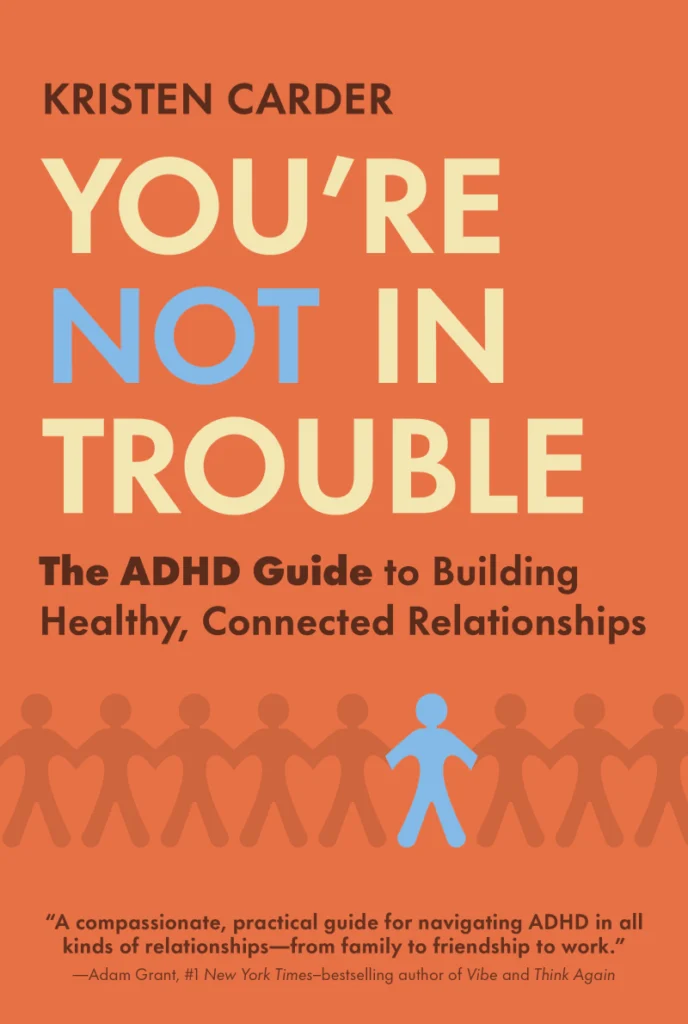
Welcome to the I Have ADHD podcast, where it’s all about education, encouragement, and coaching for adults with ADHD. I’m your host, Kristen Carter, and I Have ADHD. Let’s chat about the frustrations, humor, and challenges of adulting, relationships, working, and achieving with this neurodevelopmental disorder. I’ll help you understand your unique brain, unlock your potential, and move from point A to point B. Hello, hello, hey, Hey, what’s up? This is Kristen Carter, and you’ve tuned in to the I Have EDG podcast. I am medicated, caffeinated, regulated, and ready to roll, y’all. I had to go home and get my medication because I totally forgot to take it this morning. I haven’t done that in a long time. I’ve actually been like so good at remembering to take my ADHD medication, and this morning on the way to work, I was like, “Oh shoot, I forgot it, and I was already in motion. I had to record a podcast with a neuroscientist unmedicated this morning. I usually record two episodes in one day so that I don’t have to record podcasts every single week. And my goodness, I had to record a podcast with a neuroscientist this morning, unmedicated. Y’all, your girl was struggling. You better believe that right after that podcast, I made my way home. I ran home, grabbed those meds immediately because my goodness, I was so what’s the word fuzzy. Now today is a big day. Today is a big day. I am so glad that you press play on this podcast. If you are a first time listener, welcome in. Welcome in. This is going to be a great show. But if you are a long time listener, I have a big announcement. Today is the UK release day for my book. You’re not in trouble. UK release day. UK release day. I can’t believe it. I can’t believe it, y’all. This is a very very big deal. Now I sound excited, and I I sound very peppy and very happy. But today’s episode is going to take you on a journey of how difficult it is to succeed, how difficult it is to have your work out there in the world, how much I actually want to self sabotage and hide and run away and go into the cave and ignore everyone and everything and avoid my entire life and cry. Like that’s actually what what I want to do. You might imagine that accomplishing a big goal would feel so great! Oh my gosh, it’s what I’ve always wanted to do. I accomplished my big goal. Actually, it feels pretty terrible, and that’s what we’re talking about today. Before we do that, I want to show you the difference for those of you who are watching on video. I’m going to grab the books that are right behind me. I didn’t know this, but the UK edition and the US edition of the books are just a tiny bit different. Isn’t that interesting? There’s a size difference. There’s a tiny bit of color difference. I’m just very fascinated by this as a first time published author. I didn’t know that that was a thing, but apparently they do things just a slightly differently in the UK than they do in the US. So this is the US version, and this is the UK version. They are both beautiful. They are both beautiful. Oh, that’s interesting. Reasons ADHD coaching says, oh, that looks like one looks like autumn and one looks like summer. I love that. That’s so great. I’m going to put them back on my shelf so that you have to stare at them the whole time if you are watching this on video. Aren’t they so beautiful? I’m very, very happy to be already getting pictures from UK friends who are getting the book in their hands and sending me pictures and saying, “I’ve got it! It’s here! I got a couple emails. I got a couple DMs. I got a couple Slack messages just from my friends in the UK, and by friends I mean all of you, all of you in the UK. I just appreciate you so much. And this is a big month. Are you sick of hearing about it yet? This is the very human part.
Kristen Carder 4:59
Of going through this process is that it actually feels so disgustingly vulnerable to be self-promoting all of the time, and it truly is my job to keep my book in front of you to say, “Hey, this is a great book. You should buy it. Blah blah blah. Like that’s my job. That’s what I get paid to do. But it’s hard. I kind of wish that I was selling like insurance or that I was a landscaper. Like to have to be putting your own work out there in the world. You know, like your heart and your soul so much more personal and vulnerable than like, hey, let me sell you a swimming pool. I wish that I sold swimming pools, but instead, I’m selling my deepest, darkest secrets in the form of a book. It’s so hard. So if I look tired, if I sound tired, it’s because I am tired. This has been such an interesting process for me, and I’m going to take you through that journey today because I know that we all want to do something in the world. I know that you might not want to write a book, you might not want to be a coach like that. That’s my calling. It’s probably not your calling, or maybe it is. But I’m just saying. Like I know that everybody is different, but there is this piece of all of us that feels like we’re called to do something with our lives because I believe you are, and yet it is so difficult. It is so hard for humans in general, but I do think, especially ADHD humans, to be willing to put themselves out there, to be willing to be seen, to not only tolerate the discomfort of doing the hard thing, because that’s one thing, right? Like writing the book was a hard thing, but I wrote the book in my pajamas at my dining room table. There was no visibility at that time, so while that was a difficult process, it wasn’t a process in which I needed to be seen. I was literally munching on Nerds gummy clusters in my cozy Earth pajamas, sitting in the comfort of my dining room. That’s where I wrote the whole book, right? And so, the difference between the discomfort and the hard work of doing the damn thing is different from the discomfort of then putting the damn thing out into the world, and that’s what we’re going to talk about today. What? Why is it so hard to be seen? Why is it so hard to be successful? Like to tolerate success? Why do I want to sabotage myself so badly? And I am telling you, I do. I want to. I want to sabotage all of it. I I want to just like f it up, like mess it up, so that I can run and hide and say, “Oh, that didn’t work out. Whoops, sorry. Okay, and then I don’t have to be held accountable. I don’t have to be seen. I don’t have to be judged. I don’t have to be perceived by 1000s and 1000s of 1000s of people. Do you know what I’m saying? Like, is this? I just I feel like this must resonate because I can’t be the only one. I can’t be the only one who’s like, yeah, I’d actually fail. I’d I’d actually rather fail. Could I please just fail? Because I know how to do failure. I’m going to do it with ADHD. I’ve done failure over and over and over. I know how to do failure. I know how to come back from failure. I know what failure feels like. I can predict everything about failure. I have a roadmap for failure. What I don’t have a roadmap for success. I don’t have a roadmap for what is it like when your work gets put out into the world and it’s celebrated. I don’t have a roadmap for that. What is the roadmap for Adam Grant read my book and liked it and endorsed it? What in the actual heck is going on? What is the roadmap for my hero, Dr. Lindsey Gibson, who wrote the book “Adult Children of Emotionally Immature Parents, who changed my life through her work? You’ll never feel disempowered or confused in your relationships again. What am I supposed to do with that? What is the roadmap for that?
Kristen Carder 9:45
It actually feels terrible. So that’s what we’re going to talk about today. That is what we are going to talk about. You would think that achieving the big thing would make me feel confident and proud. And excited and secure, it doesn’t at all. It really doesn’t. In fact, in fact, my husband came to me, and this was like two weeks ago. He came to me and he said, “I’m having our friends over in your honor because you deserve to be celebrated with your book. And do you know what I did? I started to fight. I was just like, “Wait, what? What are you? What are you talking about? I didn’t know. How could you do this without asking me? Like, these are our very best friends, like my two very close friends and my sister. People that I know love me. People that I am so safe with. I know I am safe with, and yet I started to fight. Greg, how could you? How could you celebrate me? How could you order food and schedule people to come over? And like, what am I even supposed to do? I want to run and hide, and these are the people that are like the very, very most closest to me. So, what we’re talking about today is the incredible discomfort that comes with our accomplishments, and why we are so prone to self sabotage, because I like if you think about the little dinner party that we’re having tomorrow. In light of self sabotage, my husband planned something really nice with people I love who I know love me, my very closest, safest relationships. And what did I want to do? I I tried to sabotage it. I started to fight about it. I was like, “No, we’re not doing this. I don’t. I don’t know if I want this. Why are you doing this? What am I supposed to do when people come over? How am I supposed to act? What a What is it supposed to be like? I do not. I want to go to someone else’s party, but I don’t want someone to come to my party. Oh my! I could vomit right now just talking about it. It’s happening. I repaired that fracture with my husband. I literally had a therapy appointment about this yesterday, and my therapist called this a restorative experience. I wrote it down on a sticky note. If you’re in the room, you can see it right now. I wrote it down on a sticky note. This party is going to be a restorative experience. Fine, fine. But why is it that I wanted to sabotage it? Well, because it’s uncomfortable. It’s uncomfortable to be seen, and the discomfort that is caused by that the vulnerability, the fear, the cognitive dissonance of this is not my normal makes my sweet little ADHD brain freak out. And what does it do when it freaks out? It says we got to get us back to normal. Our normal is not being seen. Our normal is hiding. Our normal is as little vulnerability as possible. That is our normal. And so when we put ourselves out there and everything feels so unsteady and so unlike what our brains are used to, we self sabotage, 100% And I wonder how you see this in your own life. Can you think about times in your life where you’ve accomplished something, or you’ve gotten a great promotion at work, or maybe you’ve started dating someone that was really so much healthier than anyone you’ve ever been with prior to that, or maybe it was like you met a friend and they were honest and real and authentic, and all of the sudden you notice that you start to sabotage it. You start to you start fights. You start not showing up at the office. You start not doing your work very well because the position that you are in is so uncomfortable. It’s so abnormal. It’s so not like what you would normally have to experience. And so your brain is dealing with all of this cognitive dissonance, and it’s saying we need to get back to our baseline. We need to get back to where we’re used to being, we need to get back to that set point that we’re so used to. So, why does hiding feel safer?
Kristen Carder 14:29
Why does hiding and maybe even failure or like being stuck feel safer than achieving and accomplishing and success? So much of this goes to if I don’t try to do something, then I don’t have to be accountable for it flopping. When I when I don’t try, when I don’t give it my effort, then I don’t have to feel badly if it doesn’t. Go well because I didn’t even try. It wasn’t even something I wanted, quote unquote, right? And so I, I think so often, myself included, we hide behind. I’m not even going to try. I’m not even going to go for it because if I do, I might fail, and that’s not going to be fun. And also, if I do, I might succeed, which means I would need to be seen. I might be perceived in a different way. Oh, you think you’re so smart? Oh, you think you’re so good? Oh, you think you’re too big for your britches, as my parent would say, right? And so we have this thing in us. It’s like stay small, don’t ruffle any feathers, don’t call too much attention to yourself. Yes, I mean for me, absolutely yes. When you do try and you put yourself out there, then you have to confront reality. You have to confront the reality of what people actually think, how they actually feel about you, whether or not they actually care about your work. My job this month, like I said, has been so annoying, and part of my job has been this is like per the publisher, Kristen. You need to be reaching out to people in their DMs, and you need to say, “Hey, I would love to send you an advance copy of my book is that something you would like? And at first, I was like, “Great, I’m happy to do that, because I thought naively everyone would read the DM. They would be like, “Oh my gosh, this is so exciting! Yes, of course, I would love an advance copy of your book. But instead, that’s not been the response. Now, a couple people have been like, “Yes, awesome, thanks. Here’s my address, but others have not read the DM. Others have seen it and ignored it. Some people have said, “I haven’t heard from you in six months, and now you’re reaching out to me about this. What’s that about? Oh my gosh! Oh my goodness! So facing this is not for the weak, and let me tell you, I feel weak. I don’t want to do it. I feel scared. I cannot handle it. I don’t want to do it. And yet here we are. So how do we get ourselves to move from this place of I don’t want to be seen, I don’t want anybody to know what I’m doing, I don’t want anybody to see my work, to the part where it’s like I’m willing to do it and I’m willing to tolerate the discomfort, and a lot of that is I’m willing to have compassion for myself no matter what happens. I’m willing to be nice to me, no matter what happens. Y’all in the chat are like, wait a second, I didn’t get a DM from you, Kristen. You’re so cute. I love you so much. Where’s my DM, Kristen? I would have said yes. Thank you. That’s so nice. I’ll be sending all of you DMs after this because the people with the bigger accounts, the people who I think would we have a lot of audience overlap and like their audience would really benefit from my work, they don’t give a flying f, right? Yes, thank you so much, Heather. Heather says they haven’t heard from you in six months because you were writing a book. I know. Thank you for that. I really had to work so hard with my own self compassion, specifically with that particular person, because that was really hard to hear. Because yes, I do ghost people, and I didn’t realize that I had like left her unread, and and I feel badly about that. I don’t want to gloss over the impact of that. And yet, I do have ADHD, and I was writing a book, and I am a nice person.
Kristen Carder 18:53
I am a nice person, and that’s part of what I am trying to lean on in this process, and what I want to offer to you, are you a good person or a bad person? Because for me, I’m like you know what I think I’m a pretty good person, and I’m not perfect, and I don’t interact with everyone perfectly. But on the whole, I’m trying to do the right thing, and it doesn’t always look pretty, but it it is, you know, it is something that I’m trying to do, and so I can offer myself compassion in this. This is so much of what this episode is going to be about: is how do we give ourselves compassion in these hard moments? Because what we would often do to ourselves is when you accomplish something, when you get that promotion and then you start freaking out, or when you get that great relationship and then you start freaking out, so often what we do is say, “This is what you wanted. What is your problem? Why are you acting this way? Why are you being so weird? Literally, you’ve been working for this your whole life. Why? Why are you?” Being such a weirdo about this, right? But I know exactly why I’m being a weirdo about it, and this is why I’m like living my life out loud in front of you in real time, right now, telling you all of my deepest, darkest vulnerabilities because I want you to know that you are allowed to be kind to yourself in the midst of this struggle, and I don’t know how to communicate that other than to live it out for you and bring you along for the journey. Oh my goodness, hiding feels so much safer than being seen. Success brings attention, expectations, criticism, and responsibility. Have any of you had that experience where you have gotten a promotion or you have gotten a new job, and it was what you worked for, it was what you were like always wanting, but then for some reason, you were also freaking out about it. I don’t know if I can do it. I don’t know if I’m going to do a good job. I am afraid that I’m going to f it all up, and then everyone will find out who I really am. Imposter syndrome. That experience of I don’t know if I deserve this success. I don’t know how to live into this success, and so I’m just going to inadvertently, secretively sabotage this success, so that I do not have to deal with the vulnerability of it. Ooh, I’m feeling. I am preaching to me. This episode is for me. I hope it’s for you too. But I absolutely know this episode is for me. So much of this is related to our ADHD rejection sensitivity. So, like it’s imposter syndrome. It’s the cognitive dissonance of being successful and not knowing if we deserve it, not knowing how to handle it, not having a nervous system that is acclimated to that success yet, but also when you are visible, whether it’s you’ve published a book or you’ve gotten a new job or you are announcing an engagement or whatever the case may be, there’s so much opportunity for rejection. There’s so much opportunity for rejection. There’s so much opportunity for people to not think that you deserve it. For people to not like your work. For people to criticize what you’re doing. And one of the reasons why we stay small in our lives as ADHDers is because we do not want to have to deal with the potential rejection that comes with being seen. And again, if we can really understand that and know that about ourselves, that like this is hard, and I can give myself compassion here. This is hard, and I can emotionally regulate. This is hard, and I can take care of myself really, really well. Then we can give ourselves enough support to navigate the difficulty of what is happening. When we withhold compassion from ourselves, and when we say, “What’s wrong with you? Get it together. This is what you’ve always wanted. I don’t know what the big deal is. You’re being so weird and annoying. When we do that, we withhold the support that we need that will actually buffer us through this difficult time.
Kristen Carder 23:45
The bubble wrap that we need to wrap ourselves in is self compassion. That self compassion then leads us to having enough support. So this morning, when I forgot my medication and I had to do this podcast interview with this brainiac neuroscientist. His episode is going to come out next week. It’s so, so, so good, and I think I did an okay job on the episode. But if I were not a compassionate person to myself, I would have said, “You effed it up. You forgot your medication. You don’t have time to go home. I’m sorry. You’re just gonna have to, you’re just gonna have to deal with it. Then I wouldn’t have given my med myself the medication that I needed to record this podcast, right? And so further sabotaging myself. But instead, hey, let’s go take care of you. Let’s run home real quick. Let’s get the meds that you need. Let’s also stop at Chipotle on the way in. You don’t need to pack a peanut butter and honey sandwich today. You get to eat Chipotle, and I got a beautiful bowl, chicken asada bowl, delicious, delicious, with a side of guano. I mean, I really did give myself so much comfort and care because this is so hard. What are you going through right now that is really hard? In what areas of your life are you having to be seen and feel vulnerable? And how can you give yourself compassion and support in that? How can you give yourself compassion and grace and support, honey? What do you need if you don’t have that like kind inner voice? You can just borrow mine. It’s totally fine. You can borrow my kind, compassionate voice. All right, let’s just talk very quickly about self sabotage. Do do y’all notice self sabotage in your lives? Do you notice how you have this set point of what your comfort level is, and anytime you kind of veer off of that set point, your body, your nervous system completely freaks out. So we see this a lot. With money is a great example. It’s very common for people to have the same amount of money all of the time, and even if, let’s say, you get a big tax return or you come into an inheritance, a lot of times we just kind of get rid of it accidentally, not even realizing, not even realizing that we’re getting rid of the money because we’re uncomfortable with actually having money because we’ve never practiced having money. This is also very similar to anybody who’s been on a weight loss journey. We have this like comfort level of our weight, and when our body kind of veers off of it, so maybe we like lose 20 pounds. It is actually an identity shift to be in a different body, to wear different clothes, to be noticed in a different way, or to have people say, “Oh my goodness, blah blah, whatever annoying comments people make about your body, right? And so, inadvertently, a lot of times we can just go back to our comfort level, to what we’re used to being. Another way that this shows up is just with our like work, right? And we’re used to being at a certain level in our work, and maybe we do get the opportunity for promotion, but we either say no thank you, or we do take the opportunity, but then we accidentally sabotage the opportunity because we just want to go back to that baseline of what’s comfortable. Am I the only one? For any of you who are entrepreneurs who feel like you need to be showing up on social media, this I think is a really great conversation around like putting yourself out there on social media and the nervous system regulation that it takes to be seen and to have your work out there in the world-it’s-it’s all the same. We have our baseline comfort level, and then anything that veers off of that is so incredibly uncomfortable, disorienting, and it it takes us out of our homeostasis. It takes us out of who we think we are. It takes us out of our identity. I’m actually like unlocking some things in my own brain right now because I am having to step into the identity of published author. This is brand new for me.
Kristen Carder 28:42
So as I’m talking to you, I’m unlocking things in my own brain. Oh, Kristen, this is an identity shift. Now your work is going to be published in the world for all to read for the end of time. This book will outlive me, which is scary, scary, and there’s a lot of Kristen Carter in this book. There’s a lot of my stories. There’s a lot of my vulnerabilities. My parents are going to read this book, probably, or not. I’m not sure, but it will be available to them to read. Like those kinds of vulnerabilities are not for the weak, and so my body wants to sabotage all of this. Do you know how tempted I was to not even record this podcast today? Do you know the brain chatter in my brain was like, just go home, just take a nap. You don’t even need to record. You don’t need need to do your work. You don’t need to be seen. You don’t need to talk about your book. You don’t need to tell anyone that it’s UK release day. Just go hide. The brain chatter was so effing loud. I cannot even communicate to you how loud it was. Don’t bother record the. You’re tired. You deserve a break. You can do it another time or not do it at all. It was a Herculean effort to press record today. A Herculean effort, and I’m saying this not because I want you to think I’m amazing. I’m not. I’m saying this because I want to normalize what you go through in your day. I want to normalize how hard it is for you to do the damn thing, whatever the damn thing is for you in your life. I want to normalize the brain chatter of stay small, don’t be seen, hide. It’s just so much better to hide. Just, just be quiet. Don’t tell anybody about your work or your accomplishments. You might be met with people who say, “Oh, I haven’t, I haven’t heard from you in six months. Now you want to talk to me about this? Yeah, you might. You might, and you can hold yourself in that. You can hold yourself with compassion in that. You can be kind to yourself in that. You can show up for you in that. You can, you can, you absolutely can. What I want to offer to you is: don’t let yourself restore the homeostasis of stuckness. Don’t let yourself restore the homeostasis of not moving forward. That’s what our brain and body wants to do. I’m used to staying stuck. I’m used to not accomplishing much. I’m used to not being seen. I’m used to not making progress on my goals. So let me just restore that homeostasis. I’m going to restore the system that I’m so used to being in. And so I’m going to, you know, take a nap, and I’m going to hide, and I’m going to just let myself not do it. Don’t let yourself restore that homeostasis. Instead, either way, it’s painful. How about we just tolerate the pain and the discomfort of being seen, of growth, of the cognitive dissonance of changing your identity. Either way, it’s hard. It’s hard to ignore your goals and lay on the couch. That’s hard. You know that that is hard. Yes, because we’ve all done that. That is not fun, but it’s also hard to do the work and to be seen, two versions of hard. One version gets you closer to your goal. One version keeps you stuck. They’re both hard. It’s like choose your poison, right? I’ve said this before, maybe 7000 times, but I do want to reiterate that building self trust happens in the process of doing the thing. Self trust does not come when you’ve done it perfectly. Self trust and self confidence and the groundedness in your identity doesn’t come at the pinnacle of your success. Believe me, today is release day in the UK. Hundreds of people in the UK are receiving my book into their hands. I believe me, self trust and success do not come at the pinnacle. They don’t. That self trust and that groundedness, that confidence, comes throughout the process. It comes throughout the process. I hope that in six months, I just have a good chuckle about how hard this process was for me. But I am in the midst of it.
Kristen Carder 33:54
I’m in the midst. I’m in the trenches. Is anyone else in the trenches? I am in the trenches, it is so hard. Now, am I going to continue to persevere? Yes. Am I going to continue to offer myself compassion? Yes. Give myself grace? Yes. All of that. Allow myself as much comfort as possible while I am in this wobbly place of changing my identity. Yes, I’m going to do all of that, but also is this not? It’s not easy. Yes, this person says the river of misery. Exactly, exactly, Tamara. That’s so funny. You are not going to feel emotionally safe every second of pursuing something meaningful, and I want to remind you that that does not mean it is not the right path. So often we start out on a pathway. Maybe you get a new job. Maybe you start dating a healthy partner. Maybe you are. Pursuing a financial goal, or you’re on a health journey, or whatever. So often we start on that path, and then we start to feel vulnerable and afraid and emotionally dysregulated, and we’re like, “Oh, this must mean that I’m doing the wrong thing. This must mean that I’m on the wrong path. This must mean that this journey is not for me, and I will say no, no, no, no, no. Get over here. The journey is going to feel so emotionally unsteady and unsafe. That is part of it. Nothing has gone wrong. Thank you for that. Yes, nothing has gone wrong. This is actually what it feels like to do the thing, to do the damn thing. I want you to remind yourself of that. Like, what are you? What are you doing right now that is feeling very hard? What are like? Pop it into the chat if you’re here in the room. What are you doing right now that is feeling wobbly. That it’s feel you’re feeling insecure. You’re just you’re just not sure. You’re just like oh, this is so hard. What is it that you are doing? Because I want to remind you that this is just how it feels to do the thing. We always have this fantasy of like when I get there, I’m gonna feel great when I get there. I’m gonna feel amazing, and I am so sorry to be the bearer of bad news. But no, you’re not. No, you’re not. You’re not gonna feel great. It doesn’t feel great to get there. It feels weird and unsteady. It’s still the right thing. I’m still glad I wrote a book. I’m still glad that you’re going to read it. I’m still glad that I recorded the audio book and I sat in that audio booth and read it with my whole soul. I’m so glad, but it doesn’t feel good. Doesn’t feel good. So, if it doesn’t feel good, do you still want it? Is it still the right thing for you? We’re in church today. All right, here’s a couple questions for you to reflect on about the damn thing that you’re doing. What are you afraid will happen if you keep doing the thing? If you keep going toward that goal? If you keep making progress? What are you afraid might happen, and what is that fear protecting you from? For me, for example, with the fight that I started with Greg, he was like, “I’m having people over in your honor, and I was like, “Like hell you are! No, you’re not. How dare you love me? How dare you celebrate me? What was I protecting myself from? Vulnerability, being the center of attention. It’s so interesting because I love being the center of attention here with you. You’re you’re you’re you’re listening to this podcast, and I am the center of attention. But that feels so much safer to me than having my closest friends come and celebrate my accomplishments. Gosh, what am I trying to protect myself from? For me, it’s being seen, it’s vulnerability, it’s potential humiliation or rejection. That’s my answer. I’m curious what yours is. How can I support myself through the discomfort instead of demanding that I stop feeling it, for me, supporting myself through the discomfort means honoring the discomfort. Honey, it makes sense that you feel this way. Honey, this makes sense. What do we need? How are we going to take care of you? We’re not going to stop.
Kristen Carder 39:20
We’re not going to stop. But how can we better take care of you? What support do you need? What temper tantrum do you need to throw with your husband? Which I did, throw a little temper tantrum. Wrote a book on relationships. Threw a temper tantrum with my husband about celebrating the book. I mean the irony, the effing irony. Wrote a whole book on relationships through a temper tension with my husband. How dare you celebrate this book I wrote on relationships? I’m going to start a fight about it. What in the world, Kristen Carter? How can I support myself through? The discomfort instead of demanding that I stop feeling it. So, what support did I need? I needed to be able to tell the truth. I needed to talk to my therapist. I really needed to talk to my therapist, and I needed her to say, “Your husband loves you. You need to chill. It makes sense that you’re feeling this way, but this is a restorative experience. Again, I’m going to reference this sticky note a million times. A restorative experience. Last question: What is one small values-aligned action that I can take, even though I feel fill in the blank for me, it’s vulnerable, gross, and like I want to run away and hide. Literally, want to get in the cave right now. Would love to close the laptop, stop the recording, run into the cave, never to be seen again, never to be seen again. But that is not my calling. That is not why I was put here on this planet. I was put here on this planet to show the world what it is like to make small incremental steps with ADHD. Gosh, it’s so hard. I’m sweating so much. Speaking of like why I’m put here on the planet, I have spent years teaching people with ADHD that they’re allowed to be imperfect. The only way that I know how to do that is to allow myself to be imperfect in front of you to show you my imperfections, to live that out in real life, to just be like here I am, and I’m not perfect, and it was just not-it’s not that pretty, but I’m doing it. I’m doing the dang thing, and you can too because we are allowed to be human, and we are allowed to be humans with ADHD. We’re allowed to. I’m having to practice my own work on myself, which is-it’s so annoying. It’s so-it’s so annoying. It’s kind of like being a parent, and like as a parent, it’s very easy to have this attitude of like do as I say, not as I do, but then the the kids know and they’re just like, Mom, you’re not you’re not being real. Like, why would I do this if you’re not going to do it? And I feel in my work that it’s like, how can I encourage you to do something that I am not willing to do. I encourage you to go for your goals. I encourage you to be vulnerable, right? Like I just. But how am I to encourage you to do that without being willing to do it myself? I encourage you to keep going despite your imperfections. To be kind to yourself, even when you know you are not perfect. I know that that is available to you. Why? Because I am literally walking that road right now. Good Lord. The last thing that I want to say here, and then I’m going to read an excerpt from the book that I think is really applicable. You know, it’s really hard for us to celebrate our accomplishments, and I don’t know if it’s because, you know, our accomplishments are so hard fought; they’re they’re so hard won. They’re so hard to actually get to, and we have a lot of brain chatter about like. I mean, sure, you did it, but you could have done it faster. You could have done it better. You could have done it more efficiently. And so we really struggle to just sit with like, I did the thing, and I’m just gonna sit for a second in front of you and say, “I did the thing. Feels really gross to say that, and it feels like you’ve got to be sick of me by now. But truly, I’m gonna sit with, “I did the thing. I wrote a book.
Kristen Carder 44:20
It’s a really good book. I think it’s going to change everyone’s. I think that is going to be life changing for people who read and engage with it. I really do. It’s all of the things that have changed my life and improved my relationships, and it’s my entire brain on healthy relationships dumped into the pages of how many pages? 269 pages. And so I’m going to sit with my accomplishment and say, I did the thing. And I encourage you. And if you want to pop it into the chat, if you’re here in the room. What are you proud of for yourself? What can you celebrate for yourself? Like, let me read that. Let me let me celebrate something for you. Let’s do it together. It doesn’t have to be just me sitting with my accomplishment. We are a community of ADHDers. We are. are together in this journey. My evolvement, your evolvement-it’s all connected. I would not have evolved without you, without a community here, without people who were listening to the podcast, without people who were reaching out saying, “I want to, I want to be coached by you. Will you coach me? And then me being like, “Oh, go get trained as a coach. Like my evolvement is so heavily because of you and your being here and your participation in this podcast. Some of you in the focus coaching program, some of you on Instagram, like all of the different ways that we’ve interacted. I just am so grateful to you. So grateful to you. I thought it would be fun to read for you a portion of the book. If you’re listening on Apple, if you’re listening on Spotify, have you pressed the rating button? Have you pressed that five star rating button? Because the Apple gods and the Spotify gods-they care about that. I don’t make the rules. It’s not my fault. I’m gonna read some of your wins here, and I hope that everyone just feels so encouraged by people accomplishing the things, doing the damn thing-it’s so so important and amazing. Claire says, “I took a shower today, small but mighty win. That is such a huge feat sometimes to actually do that thing. Ah, so good. Reese says, “I stepped up and took the job that I was scared of, but I asked for some terms to help. That’s beautiful. Congratulations, stepping up and taking the job that you’re scared of. That is beautiful. I help my daughter eat and equip therapy. Oh my gosh, my son went through therapy and equip. That is not a small thing. That is not a small thing. Amazing, amazing, amazing work. I pursued a career in jewelry and am doing way better than I ever thought possible. It is scary. Yes. Oh my gosh! Because success is so scary. Doing well is so scary. I get it. I get it. That’s so good. Oh, you’re so cute, Ricky. That’s funny. Ricky says, “Hey, algorithm. Kristen is the best. Okay, it’s funny. Aww, Heather says, “Kristen, I wouldn’t have my diagnosis without you. I am so grateful for you. I’m grateful for you too. I’m so glad you’re here. Sean says, “I did the thing. I’m leaving my marriage to take care of myself, sweetheart. I’m proud of you. That’s so hard. That is such a hard thing to do. I’m sorry that it had to come to that, but well done, well done. You’re adequate because of me. Oh my god! Again, that’s just a small example of like this is why I live my life out in front of y’all because I went through a really difficult time with my son. A really difficult time, and I really was wanting to keep his anonymity, but also knew that I needed to share because I knew there were people out there that were probably struggling and needed to hear. And I wish someone had told me about Arfid. I wish someone had told me about neurodivergence and how people with neurodivergencies can really struggle to eat. I wish someone had told me. So I’m so glad. I’m so glad that you were able to get help. So glad. Okay, I’m going to read about self compassion. I’m going to start on page 66. Why do we resist self-compassion? Why? We talked a lot about self-compassion in this episode.
Kristen Carder 49:31
We talked a lot about the fact that being seen is so uncomfortable, and oftentimes we make it worse by heaping shame onto it, what is wrong with you? Why can’t this is what you wanted? Why are you being weird? Why are you afraid? Why are you? Yeah, we do that all of the time, and it’s not nice. But so often we resist self compassion, and here is what I think about that. Most of us struggle. With the idea of self-compassion, because we fundamentally misunderstand what it means, you might believe that being compassionate toward yourself is just a fancy way of giving up. That if you stop criticizing yourself, you’ll lose motivation to change. How many of you think that? If I don’t criticize myself, am I even going to do anything? Deep down, many of us have internalized the idea that self hatred is necessary for self improvement. We think that being hard on ourselves is what keeps us moving forward. And sure, we can get ourselves to change once in a while if we shame ourselves enough. But this leads to the familiar burnout cycle that so many of us unwittingly participate in, beat myself up incessantly for not doing the thing, do the thing, and then do nothing, cancel everything and hide because I’m exhausted, and then repeat. This is not how real sustainable change works. Self-compassion is a practice of offering yourself tolerance and understanding in the midst of being human and imperfect, and using that as fuel for change in place of self-hatred. The research is clear on this point, and I’ve cited the research because I’m a professional. Self-compassion does not weaken motivation; it strengthens it. Some of us resist self-compassion because we think that it’s avoiding accountability, but that is far from the truth. Self-compassion is not refusing to acknowledge your weaknesses, giving up, avoiding responsibility for your actions. These things are not self-compassion. They’re unhealthy ways to avoid really recognizing yourself for who you are. You can acknowledge yourself for who you are and still be kind to yourself. Self-compassion is acknowledging your flaws without excessive judgment, allowing yourself to receive support and help from others, recognizing the reality of both your strengths and weaknesses, and believing that you deserve kindness now. As you skim the list of what self-compassion is, it may feel far-fetched. You might have grown up in an environment where self-compassion wasn’t offered freely, where kind words were only spoken when you were quiet, compliant, or productive, our survey showed that nearly 85% of aged years grew up feeling worried about judgment and punishment when they tried to be themselves in their own homes. Even higher numbers reported that they felt misunderstood by their families. Self-compassion is nearly impossible to establish as a child if you’re constantly walking on eggshells, but here is a gentle reminder from Chapter Three: Attunement, co-regulation, and unconditional love are paramount to building a child’s relational world, including their relationship with themselves. If you spent your life trying to earn love by fixing yourself, it makes sense that self-compassion feels threatening or just plain wrong, but just because it hasn’t been modeled for you doesn’t mean that you can’t learn it now. Self-compassion is a skill, a practice, a line in the sand that you draw for yourself, a muscle that you can build over time. When you begin to relate to yourself with more acceptance, it becomes much easier than to extend that grace to others, my dears. I am going to go now and practice all of the self compassion in the world because I am doing a hard thing, and today might not be book release day for you. That’s okay. You’re still a human in the world doing the hard things, and you deserve self compassion as well. So let’s just make an agreement that we are all going to practice this together, at least today, that this is something that we are going to do. Yes, I’m so glad that you listen to this podcast today. Thank you so much, those of you who are here live on YouTube, those of you who press play on Apple, Spotify, or wherever you listen to your podcasts. I adore you. I appreciate you. Have the best day. I will see you next week. Bye bye. A few years ago, I went looking for help.
Kristen Carder 54:31
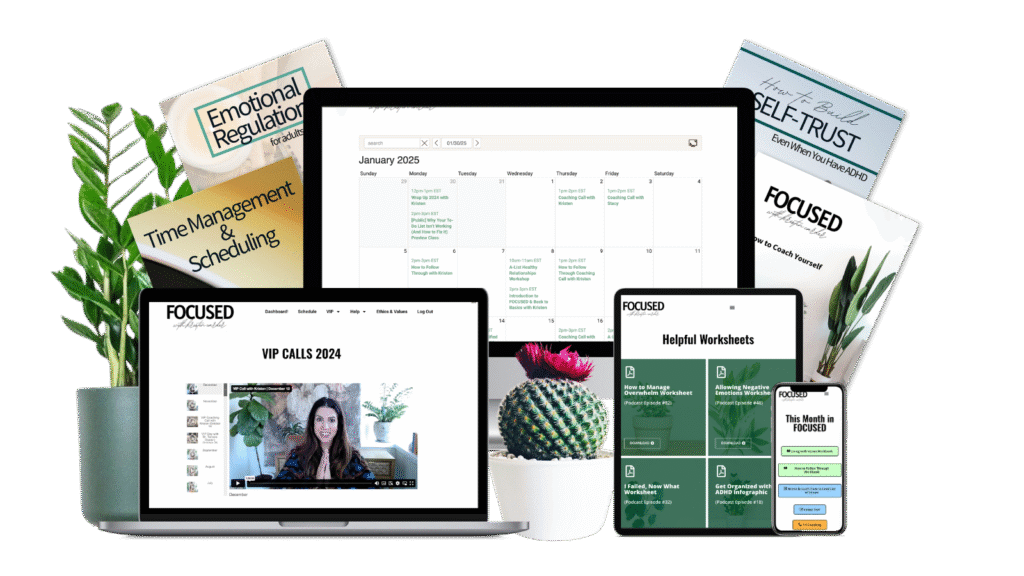
I wanted to find someone to teach me how to feel better about myself and to help me improve my organization, productivity, time management, emotional regulation. You know all the things that we adults with ADHD struggle with. I couldn’t find anything, so I researched and I studied and I hired coaches and I figured it out. And then I created Focused for You. Focused is my monthly coaching membership where I teach educated professional adults how to accept their ADHD. Brain and hijack their ability to get stuff done. Hundreds of people from all over the world are already benefiting from this program, and I’m confident that you will too. Go to ihaveadhd.com/focused for all details.