Kristen Carder 0:20
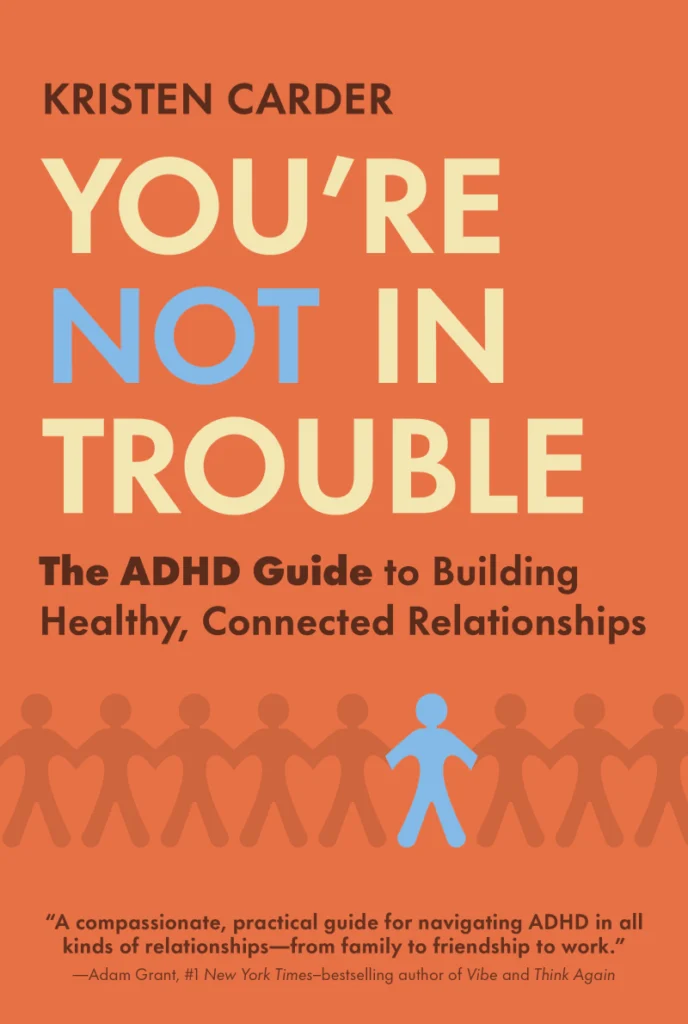
Hey, what is up? What is up? Welcome, welcome. This is Kristen Carter, and you’ve tuned into the I Have ADHD podcast. I am medicated, caffeinated, regulated, and ready to roll. We are live. We are recording this podcast live. I’m so excited that we’re doing this every once in a while. If you usually listen on audio, but do you want to be able to tune in for the live podcast? All you need to do is get on my email list, and we send out an email blast just at the random times that I go live, and we just say Kristen is going live now. So hop on my email list. You can go to ihaveadhd.com, sign up for the 10 things freebie. That’s a really easy way to do it. Then you’ll be put on the email list, and you will get notifications. Another great way is to turn on your YouTube notifications. You’ll be alerted when I go live. I am doing this more often for a couple of reasons. Number one, I think it’s so fun to hang out in person. This is what we do all day, every day inside of Focus. I mean, actually, I wish all day, every day was a coaching call, but we have lots of coaching calls and community time within Focus, and it’s so freaking fun. We have the best time being together in community live, and so I thought it would be fun to do it on the podcast as well. And in addition to that, it is the extra dopamine hit that your girl needs to be able to function and and do it. I’m looking at myself here. I’m like adjusting my t-shirt. Let’s make it cute, shall we? I’m wearing my Eagles T-shirt. Go birds! We are two and zero right now. And great news, Zach Ertz just got signed onto the practice team. So good to have Zach Ertz back in Philly. For those that know, you really know. But this is such a dopamine hit for me to know that there are people here. I see the chat going. I’m obsessed. Thank you. You’re saying I look adorable. I appreciate that because it is-it’s a little bit different to know that you are watching me while I am doing this. I’m so excited. If you are seeing this with your eyes and not just listening with your ears, you see this little guy sitting right next to me, guess what? Guess what? My real book is here with us right now. Look how beautiful she is, and I am so excited. The book comes out in when does the book come out? The book comes out in October, and of course, you can pre-order if or if you’re listening to this after the fact, you can go ahead and order it wherever you buy your books, you can get the regular like beautiful hard copy, the ebook or the audio book, which I recorded here in this beautiful studio. We are actually re-recording a couple parts of the audio book today, and then it is completely done. But I want to show you my very favorite part, guys. Get ready. You know how when you have ADHD and you have a hardcover book, what is the first thing that we are going to do with a hardcover book that comes with a jacket? I will take you. I will give you five seconds to think about it. What is the first thing that we do? Oh yeah, yeah. We take the jacket off because it’s really annoying to have a jacket, right? But look how beautiful she is because we have a rose gold embossed title right there. Oh my goodness, isn’t she absolutely gorgeous? You’re not in trouble, Kristen Carter. Nice and big right here. She’s so pretty. So for those of you listening on audio, the book itself, like without the jacket on, is like this beautiful periwinkle blue, and then the words, the title is embossed. It is embossed in rose gold, and it’s so pretty. I’m just so excited to show you guys that the it is just wild. I feel like you know that part of The Lion King where Simba-it’s like the very beginning-and sorry, Mufasa is like holding up Simba to the whole world, like circle of life. It’s so exciting. Here she is. It’s her. I don’t know where should we put it.
Kristen Carder 4:44
I’m just gonna actually set it down here. I’m super, super pumped and really looking forward to getting it in your hands. It’s so great to know that it is done. I can’t make any more. Well, after today, after recording some. The some of the edits for the audio recording, and then I am done, guys. I am done, done, doney, done, done. I am the doneest of the done, and I’m so, so, so happy about that. So you can grab your copy of “You’re Not in Trouble” wherever you buy your books, wherever you like to buy your books. Amazon, of course, is available to you. But if you like bookshop or if you have a local bookstore, go ahead and grab it. It is out for your enjoyment. Okay, today we are talking about traumatic invalidation. Oh, that was quite the segue. That was a very, Very, what is the word? Abrupt. Very abrupt segue. We’re talking about not being believed, and I wonder if you have had the experience in your life. I say I wonder, but like I know, I already know, but I’m just going to put it to you. I wonder if you have had the experience of not being believed about your diagnosis. There are so many reasons why this happens, and there’s so much to say about it. I’m actually really interested for those of you who are in the room. If you would like to share some of your experiences and your stories. Maybe we will have time at the end to read some of those. But I want to know what is it like for you when someone questions your diagnosis, because this is something that happens to us neurodivergent folks over and over and over, especially for those of you who were diagnosed later in life. Now, I had the absolute pleasure of being diagnosed at age 21, which is like so young for a female. Most females are diagnosed. The median age of diagnosis for females is 38. So that’s like, yeah, now almost middle age, but I had the glorious experience of being diagnosed at 21, and still, and still, experienced so much invalidation throughout my life because when your symptoms are looked at as character flaws. When your symptoms are looked at as just like these annoyances and things that you should just work harder on, it becomes so painful to interact with people. And I learned this concept of traumatic invalidation just very recently, and then I had an experience with an extended family member, and I can’t wait to tell you about it. Can’t wait to tell you about it because I think she illustrated for me exactly the experience of it. So here’s how it went. A couple weeks ago, I was with extended family, and someone who was like extended extended family was there. It’s very nice, very very nice Midwest nice person, so great. But she said to me, she knows I work in the in the ADHD field, and she said to me, Hey, I have a question for you. I want to pick your brain, and whenever someone says like, “I want to pick your brain, literally run, literally run and hide. But I was like, “Sure, what’s up? And she said, “My stepson was recently diagnosed with autism, and I don’t really know if I believe it. And I was like, okay, tell me more. And she said, well, you know, like he’s-I’ve been in his life for the last 10 years, and I know that there’s like something there, but I just don’t know if I believe that he’s autistic. And I was like, okay, tell me more. And she said, she said, well, he went for a diagnosis, and he told us about the diagnosis, and I just don’t know what to say to him because I don’t think that I really see autism. I was like, okay. So I started to ask some questions. The main questions that I asked were: Did he did he actually like go to a psychologist or like a mental health practitioner? Like, was he seen by an expert? She said, yes, he was. I said, “Okay, did he have a comprehensive evaluation? She said, “Well, it was several hours long, and I was like, “Okay, it was several hours long.
Kristen Carder 9:48
And I said to her, “He probably filled out a ton of like questionnaires and all of that stuff prior to it. And she was like, “Okay, that makes sense. And then, then. I asked her this. I said, “Does he resonate with the diagnosis? Like, does he feel like the diagnosis of autism explains his experience? And she said, “Yes. Yeah, yeah. He does feel that way. I was like, “Okay. And then I asked this question. I said, “How old is he? And I’m thinking that he’s like truly like 20. She said, “He’s 37. I was like, “I said to her, I said, ‘Oh, so he’s a grown man. So he’s a grown man, and she said, “Yeah, he’s a grown man. I said, “So a grown man went to a licensed mental health practitioner, sat through hours of diagnostic testing, received a diagnosis that he resonates with, and you don’t believe him? Like what? What? Okay, she’s a very nice person, but literally, what? She was like, “Yeah, that that’s what I’m saying. And I said, “That’s a problem. That’s a problem. I said, I said, it’s not your job to decide whether or not his diagnosis is accurate. It’s not your job. Your job is to support him. Your job is to believe him. Your job is to validate his experience. We had a beautiful conversation. It was not contentious at all, but this illustrated for me it was just like such a perfect picture of what so many of us go through-the audacity Of our friends and our family and our coworkers or whoever it may be, the audacity that people have to deny something that has been not only diagnosed by a licensed mental health practitioner, but also is something that you resonate with, and you feel like yes, this matches my experience. This is a good explanation for what’s going on with me. The audacity that people have. So we’re going to talk about that today. We’re going to talk about that audacity that, like the we’re going to say Gen Pop, the Gen Pop has with just feeling as though they have the right to decide whether or not a diagnosis is legitimate and what does that do to us? What does that do to us when we are on the receiving end of it? What does it do to a person when their lived experience is consistently invalidated and not believed? I am so curious whether this is something that you experience in your own life. Whether this is something that you just feel like, my gosh! Like I feel like I have to convince everyone that I am dealing with an actual mental health condition. I feel like not only am I struggling with ADHD or autism or whatever the case may be? In addition to that struggle, I’m also put in this position where I am expected to defend it. Like I have to defend, like I have to go into court and like defend this diagnosis so that someone else will receive it and validate it, and look at my experience as being true, as being real, as being understandable or accepted. Why is it that we? Why? Why is it that we are put in the position to defend this constantly? So, we’re talking about validation today, and we’re going to talk about it. Yes, in this context of not being believed for our diagnoses, which is like so tough. Whether you’re ADHD or autistic or both ADHD, but in addition to that, so many of us grew up in families that were highly dysfunctional, that were not places where we were understood and accepted, and so there’s this like peace working against us, where not only is. It’s not in a vacuum that we’re having to defend the diagnosis. It’s not an isolated incident. It is coming after years and years and years of not being understood, of not being accepted, of not being believed, and so we have this like chronic wound. I think I’m just going to throw it out there. As someone who, for the last seven years, has worked exclusively with adults with ADHD and has seen 1000s of people come through my coaching program and has talked to millions, actually, of you on the podcast and on YouTube, I anecdotally recognize this as a core wound for those of us who have ADHD.
Kristen Carder 15:48
The core wound of being constantly, I will say, chronically invalidated. So let’s talk about validation. What is validation? And if this person doesn’t agree or believe that her stepson is autistic, is that her right? Is it her right? And what does she do with that? Okay, so validation in itself, like in a relationship, is the act of recognizing, accepting, and affirming that the other person’s feelings, thoughts, and experiences are real, and they make sense, even if you don’t agree with them. So, because I grew up in a family where I was chronically invalidated, it actually took me a while to learn the skill of validation for the people around me because I thought that in order to validate someone, I had to agree with them. And if I was validating you, I was saying yes. I totally agree. I’m on the same page. I see it exactly the way you see it, but that’s not what validation is. Validation is saying, from this other person’s perspective, I can fully see how this makes sense. If I were in their shoes, I would probably be feeling the same way. I get it. This makes sense. Do I agree with it? Maybe, maybe not. It’s actually irrelevant. It’s affirming that their experience, their feelings, their thoughts are real. Okay, you’re having a real experience, and I can see how this makes sense. Listen, um, it’s not that hard. Once you learn the skill, it’s not that hard. But you wouldn’t know it. You wouldn’t know it coming from some of the families that we come from. I’m curious if I could just like pull the chat. Was your family a family that was good at validating, that was good at understanding and accepting your experience, your perspective, your view. Is that something? Is that where you’re just like, yes? I grew up in this great family, and they always made me feel seen and understood. And I totally like, even if they didn’t agree with me, I still felt like I was accepted and and understood. Y’all are saying, “Does that family even exist? Is that even a thing? Is that even a thing? We do have one in the chat that’s amazing. The chat is scrolling, and it’s like, “No, no, no, absolutely not, not now, not then, still not. I do appreciate that there is someone that’s saying, “Yeah, me. I had that family. I know I’m really lucky. Ah, yeah. And this person saying, “I never felt accepted or understood, and I still don’t. And I do believe, and this is one of the reasons why I wrote the book, and it’s really like the foundation of the whole book. You are not in trouble. Is so many of us. I would say 95% of us come from relationships where we were chronically invalidated, chronically misunderstood, chronically not accepted. So validation. This is a skill that we need to learn, and we need to expect and dare I say demand from the people around us. Validation is the act of recognizing, accepting, and affirming that the person in front of you, the person you’re in a relationship with, your partner, your friend, your kid, that their thoughts, experiences, and pardon me, thoughts, experiences, and feelings are real, and they make sense. They make sense, even if you don’t agree. Okay, I can see from your perspective. Yep, that makes sense. That makes sense. I spent the first years, first 10 years. Parenting my children, I have three boys, and I spent the first 10 years invalidating them. 100% just I raised them exactly the way that I was raised, pretty much exactly, and that was I chronically invalidated my kids when they were little. And so, what do I do now? I like am working so hard to repair that, and I try to validate their experiences over and over, their feelings, what they’re going through, their reactions, their perceptions. It doesn’t mean I’m saying yes, that’s exactly right. It’s saying hey, I get it. That makes sense. I can see why you feel that way. Totally, totally, totally. Okay, what I believe that so many of us have experienced is called traumatic invalidation. I saw this on a reel recently, and then I did a deep dive because I was like, “Oh my gosh! This right here, traumatic invalidation, is the lived experience of a neurodivergent person.
Kristen Carder 21:08
Certainly, my people with ADHD, absolutely traumatic invalidation. Let me read the definition to you. So, it’s a concept prominently discussed and treated at the Boston Child Study Center. Okay, and traumatic invalidation occurs when an individual’s environment repeatedly or intensely communicates that their emotional reactions, experiences, or personal characteristics are unreasonable, unwelcome, or unacceptable. I’m going to read it again. It’s so important. Traumatic invalidation occurs when an individual’s environment repeatedly or intensely communicates that their emotional reactions, experiences, or personal characteristics are unreasonable, unwelcome, or unacceptable. I think the key word here is repeatedly. Repeatedly, you are repeatedly told implicitly or explicitly that your reaction, your experience, your characteristics, who you are as a person and a person with ADHD, it’s just not right. It’s not right. It’s unreasonable. No, that’s not right. You’re viewing it wrong. You’re doing it wrong. You are wrong. The it continues from the Boston Child Study Center. This continues. Invalidation can be especially traumatic. This is important when it comes from a significant person, group, or authority that the individual relies upon to meet their needs. So, what is this saying? It’s especially invalidating, especially traumatic when it comes from your caregivers, from your teachers, from your coaches, from the people, the authorities in your life who basically raised you, yeah, from your mother, from your siblings, from whoever whoever it is, right? So it’s especially traumatic when it comes from a significant person, group, or authority that the individual relies upon to meet their needs. Traumatic invalidation threatens an individual’s understanding and acceptance of their own emotional experiences, and often, hear me, turn the volume up, and often leads to a state of pervasive Insecurity. Hello, does anyone listening feel like they live in a state of pervasive insecurity? Perhaps, perhaps. And why might that be? Is it because you do everything wrong? Is it because you’re just bad at? Is it because you’re just like a terrible person? No, no. Most of the time, it’s because you grew up in an environment that was chronically invalidating, and not only are we experiencing that in childhood, most of us. I know I’m painting with a broad brush, but I also surveyed 2,165 adults with ADHD who reported to me that they did not feel seen in childhood, they did not feel heard in childhood, they did not feel accepted in their own homes. Over 90. percent reported that. So yes, I am speaking anecdotally as a coach who has coached 1000s of people, but also we have the data to back it up. We have the data to back it up. People outside of my ADHD world who. Out this survey that said yes, that’s me. I wasn’t understood. I wasn’t seen. I I did not feel like I could be myself in my own home without fear of punishment, without fear of correction and rejection. Constantly, constantly. My goodness. Okay, so, so, chronic, traumatic invalidation. What does it do to us? Makes it so that we’re persistently insecure. It leads to a state of pervasive Insecurity, my goodness! And then not only do we have that open, gaping wound from the way that we grew up, and then we go out into the world and we meet these adults who look at us and they say, “I don’t really think you have ADHD. Doesn’t seem like you have ADHD. Doesn’t everybody do that? Doesn’t everybody struggle with that? I don’t know really what the big deal is. Really know why you have a diagnosis of ADHD. I mean, I struggle to remember stuff. So like, what are you complaining about? My gosh, we’re having to feel like we’re put in a position to defend our diagnosis, where this really lovely, well-meaning-I do believe that she’s a well-meaning stepmom-saying, I mean, I don’t really see autism, and I’m like I don’t don’t really believe that he’s autistic. I said to her face, “Well, you should, you should. And this is what I want for you. I want you to have the confidence. I want you to feel empowered after listening to this podcast. To look someone in the face and say it’s actually not your job to decide whether or not I’m ADHD. That’s not your job. It’s actually already been diagnosed. I’ve already gone through the steps, and not only that, but I resonate with this diagnosis.
Kristen Carder 27:21
I feel like it explains my experience, so it’s actually not up for debate. That’s where I want to get to at the end of this podcast. I want to give you actual words that you can say face to face to the person and say, “Actually, this is not up for debate. And we can say that, like I wasn’t angry with her, I wasn’t dysregulated. We were just having a conversation. I was really sweet about it, and I was like, “Oh, you should believe him. Yeah, it’s not your job to decide whether or not his diagnosis is accurate. That’s actually the mental health clinician’s job. Like, so factual. It’s not actually your job. That’s the that’s the mental health practitioner’s job to decide, and they did their job. They they diagnosed him. So yeah, that’s not your job. All right, let’s talk a little bit more about traumatic invalidation because, again, I do think that it relates to our diagnosis of ADHD, but I also think that it is so pervasive just in our general experience as humans with ADHD. So invalidation occurs for all humans. Like no human gets to live in the world without occasionally being invalidated, that’s just part of being a human. When does it become traumatic? When does it become chronic? When does it become this open, gaping wound that now every time it happens, it hurts so much. It’s just compounded every single time. Every time that I experience in validation, it’s just compounded over and over and over. I just had a thought, and I’m going to say it. If you are here, hit that like button, hit the subscribe button. If you’re listening on Apple Podcasts, click that five star rating. For some reason, like a bunch of Apple Podcast ratings disappeared. Help me get them back, guys. If you are in the, if you are enjoying this, if you’re live in the room, or if you’re listening to the replay or watching the replay on YouTube, hit the like button, hit the subscribe button. What that does is it feeds it out to more people with ADHD. It’s not for my own ego, although I will say it is a massive dopamine hit, and I check it every single day to see if you’ve done it. But what it does is it tells the algorithm gods that this is valuable content. So go ahead, hit it, hit that button. Okay, thank you. I appreciate you. All right, validation occurs for all humans. It just it happens. How cute was it that I just asked for validation? I’m like, do you like this? Can you please press the like button? But I don’t mind. I’m just gonna ask for it straight up. Can you validate me? Can you validate this podcast? Can you hit that button, subscribe, and say like, yes, I like it. Okay. Anyway, invalidation occurs for all humans, but when does it become traumatic? Jess says validated. Thank you. Love you, Jess. Appreciate you. When does when does invalidation become traumatic? So here are the four ingredients, according to what is the name again? According to the Boston Child Study Center, I don’t know why that’s not staying in my brain, but it’s not. So here are the four ingredients that make invalidation traumatic. Number one, frequency. If it is if it is happening chronically, if there is a pattern of it, if it is just like over and over and over, and I want you to think about like, is this me? Have I experienced invalidation very frequently throughout my life? So that’s number one. Here are the four ingredients of traumatic invalidation. Number one, frequency. Number two, there is an element of rejection attached. So I’m invalidating you, and I’m kind of rejecting who you are or how you act, and I’m not accepting you. I’m saying like, no, your behavior is annoying. This your if you would just try harder, you would get it right. I don’t believe you that you just forgot, and because of that, I’m angry and I’m rejecting you. And there’s disconnection. Okay, disconnection. Number one frequency. Number two, rejection. Number three, there’s also in addition to that frequent invalidation, the absence of positive, affectionate strengths-based communication. So it’s not being balanced out. It’s not being balanced with positive, affectionate strengths-based communication. So there’s a lot of punishments, and it’s more of like a transactional relationships.
Kristen Carder 32:28
Transactional relationship. How many of you feel like in your family of origin you grew up in an environment that was very transactional when you are doing the right thing, you are receiving praise and love, or at least just the absence of punishment. But when you are symptomatic of your ADHD, maybe you’re a little bouncy, maybe you’re a little just kind of all over the place. You are exhibiting symptoms of ADHD and or just being a human, there is like loss of affection, loss of connection, and so it becomes this transactional relationship. I have to perform and people please and put on a show for you and just be like so great. In order for you to give me what I need to meet my needs, to show me love, to give me affection, I know so many sad faces in the comments. Oh, gets me. Okay, so frequency rejection is number two. Absence of positive, affectionate, strength-based communication, number three, and then number four. When does invalidation become traumatic? When it happens with important relationships. When it’s happening from your parents. When it’s happening from your teachers. Right now. When it’s happening from your partner, when it’s happening from your boss, okay, and it’s just this is when it becomes so wounding. This is when it just becomes something where it’s just like I can’t escape it. This is the world that I live in. It’s the world of traumatic invalidation. What we we want, what every human wants and deserves, and deserves, is to be seen and heard and understood, even with our flaws, even with our humanity, even with our ADHD, even with whatever else we bring to the table, we want to feel seen and heard and understood, and we deserve to be believed. But instead of that, what we hear so often is. You’re not trying. You’re not trying hard enough. You’re never going to change. Well, you remember what matters to you. You just don’t seem to remember what doesn’t matter to you. Everyone procrastinates. You’re too sensitive. You’re overreacting. You can focus when you want to. How many of you, as kids, heard that? Well, you can you can focus when you want to. Well, ah, it’s so frustrating. As if we have control over. As if that is not the essence of ADHD to be able to focus when it is something novel, new, and exciting. Of course, of course, I can. And here’s the one that gets me. This is like a an old wound for me. You have so much potential. You just tried harder. You would reach your potential. What’s so difficult about this? The common denominator is the explanation for your own behavior, which is like, yeah, I’m struggling with ADHD. I’m I’m really under supported. I need help. I’m not okay. The explanation for your own behavior can’t be true. I have a better explanation. That’s how I felt with this very dear, wonderful woman, extended, extended, extended family member that I spoke to a couple weeks ago. Was like, she was like, “Yeah, I see something, but I don’t think it’s autism. And and what she was saying was, his explanation for his own behavior can’t possibly be true. I have a better explanation. I know better. I know better than a grown adult. And and what I think a lot of you hear from maybe partners or maybe have heard from parents is like, I know your intentions. You don’t know your intentions. You think your intentions are good. You think you are trying. You think you didn’t mean to forget. You think that you are doing the best you can. But I, your that’s not true. I actually know your intentions, and I think your intentions are bad. Right? It’s just like, oh my goodness, I can’t. I cannot. I literally cannot with all of it. Okay, I’m losing my place here. So, what happens to us after years of traumatic invalidation? What I really appreciate from the Boston Childhood Study again. I can’t remember, and I’m not going to scroll up in my notes. But what I appreciate about that is that it said that it leads to pervasive insecurity, and my goodness, that matches my own experience, and I would add to it a massive lack of self trust.
Kristen Carder 38:06
I think this is one of the main reasons why people with ADHD lack self trust is because we never experienced persistent, chronic validation. We never experienced that acceptance and warmth. And yes, your experience makes sense. And yes, I see why you would feel that way. And yes, I accept you for who you are, even when you’re being too loud, even when you’re being too wild at the dinner table. I still accept you. We need to help with your behavior, but I still accept you. I still love you. I’m still offering my connection to you. And so, what we struggle with is self trust. And so, we start outsourcing our own knowing. Of course, we do. My gosh, I’m getting fired up. Of course, we do because we were never allowed to have our own knowing in the first place, we were never allowed to have it in the first place. We were never given the luxury of just knowing in the first place, right? So now it’s like, well, maybe I am lazy. Maybe I am dramatic. Maybe I don’t remember correctly. Maybe I am using ADHD as an excuse. Maybe the evaluation was wrong. I mean, how many of you? I’m very curious. I’m not sure how many people are in the room, but I am curious how many of you experience questioning your own diagnosis, where you’re just like, I don’t even like. Is my diagnosis accurate? Am I really ADHD? And imagine this extended family member who was just recently diagnosed with autism. And then going to his family and saying, “Hey, I was diagnosed with autism, and they’re like, “That doesn’t sound right. How long is he going to question his diagnosis? Yeah, a lot of you in the chat are saying yes. Oh, somebody says never. Jess says never. I love that for you, but I think a lot of us do, especially because it’s not received by the people that we tell, right? So then it’s like, well, maybe everyone else is right and I’m wrong. Because even after a diagnosis, someone can say, “Well, I don’t see, I don’t see it. And especially in an ADHD family of undiagnosed ADHDers, it’s like well, that’s just how everyone is. That’s just how we all are. That’s just how people act. And it’s like, no, y’all are undiagnosed. Y’all have ADHD, and you don’t know it, you know. But like, it just becomes the family norm. I’m struggling with this right now. I’m going to do a side quest and just be very vulnerable and say that I’m struggling with this right now because one of my kids, the one child that is not diagnosed with anything because he’s never been evaluated, is starting to exhibit some behaviors, and I’m just like, I think he’s fine, and my other two kids are like, he’s clearly got something, and I’m just like he fits in great here. So I will just own my part that I also struggle with this as well. This is a common human thing, but we all need to be very careful that we’re not just excusing things and saying like, “Oh, everybody’s like that. It’s nobody like no. Sometimes people really are struggling, so I am trying to be very cognizant of whether or not he is struggling. It’s okay to be silly in our neurodivergent family. Like you’re welcome here, that is for sure. But is he struggling out in the real world, so I have my spidey senses up, and I am I am on it. Don’t worry, I am on it. Okay, um, all right. Where was I? Yes, someone else after the diagnosis says I don’t see it, and suddenly you’re back on trial. I think that is the part of the wound of chronic traumatic invalidation is that you always feel like you are on trial, like you have to prove to the judge and the jury that your experience is real. And I, this was so pervasive in my family of origin, and my sister tells stories about how, like, when she had a feeling, she always felt she was made to like make a case for it. Like a parent would say, “Well, that doesn’t make sense. Tell me four reasons why you’re feeling that way, and so she would have to literally build a case for her experience being real and to be believed.
Kristen Carder 43:07
I mean, if that does not illustrate traumatic invalidation, I don’t know what does. Okay, so what are we going to do about it? What are we going to do about it? Part of what we need to do is make sure that we are working on our current relationships. We can’t change what happened to us in the past. We can go to therapy. We can get trauma-informed coaching. Yes, all of that is so good. We can work through and really be able to own our past, and even just having a name for it, like oh, traumatic invalidation. That makes sense. That was my lived experience. That can be really helpful, and I hope that you can like grab onto that if you resonate with it, and if that feels very true To you, okay, but now you’re 20 or 30 or 40 or 50 or 60 or 70, and you’re in the midst of relationships. You’re likely not living at home with your family of origin. Maybe some of you are, but the majority of you probably aren’t. So now, what do you do? And I want to offer to you that you deserve to be believed. You deserve to be validated. You deserve to be in relationship with people who accept your version of your own experience. Let me say that again. You deserve to be in relationship with people who accept your version of your experience. I’m not saying you’re right about everything, but are you allowed to be right about your experience? Are you allowed? To be right about your version of what you are going through. If not, I’ve said it before, and I will say it again. What am I going to say? You know what I’m going to say. Some of you need new people. Some of you need new people. If you are in relationships where you are still being invalidated over and over and over and over again, you might need some new people. Okay, and I have a resource for you. I don’t even care that this is a shameless plug because this is my podcast and this is my book, baby. I am telling you, you’re not in trouble. The ADHD Guide to Building Healthy Connected Relationships is the solution to finding new people, to knowing what you deserve, to knowing what safety feels like, to knowing what it feels like to be validated. Now, I learned the term chronic. I mean, excuse me, traumatic invalidation after already finishing the book, so that specific term is not in here. However, so many others are, and you will, you will learn and grow and be able to build healthy, connected relationships with the people that you’re in relationship with now, or with new people, I’m going to leave her here. She can’t sit here with me because she’s my friend. For those of you listening, it’s just the book I just gave her. I just I like to personify her. She’s my friend. Okay, so some of you, I encourage you to take stock. Am I in relationships right now, where I am being validated enough, maybe not 100% of the time, probably not 100% of the time, but is there a balance, and do I feel believed? Okay. The next thing I will say, so you’re going to need, you might be like a deep, deep well that needs more validation than the average person. Why is that? It’s because you’re coming into it with a void. Do you ever feel like you need more validation than the average person? Because I will raise my hand and say I do. I went through a very intense couple years where I needed to request validation constantly, I requested it. Well, my therapist gave it freely, and my coach gave it freely, and they taught me how to ask for it from the people that I was in relationship with because I was so depleted. And so, if you feel like I just feel like a bottomless pit, like I can’t fill this validation void. I want you to know that’s pretty normal for those of us who grew up like this, and it’s not always going to be like that. But yes, you’re going to need lots and lots of validation from safe people. In addition to that, I want you to please stop putting up your lived experience for a vote. Stop it. Stop it.
Kristen Carder 48:07
Okay, you. It’s not up for discussion. It’s not up for a vote. So if I could have the luxury of meeting this man, grown man, this 37-year-old grown man who was diagnosed with autism, and if I had the luxury, the privilege of meeting him and talking to him, and he said to me, “Hey, my family’s not like really believing my diagnosis, I would say it’s not up for discussion. It’s not up for a vote. You don’t, you don’t need anyone else to agree with a diagnosis from a mental health clinician, okay, you don’t need to convince your mom, your stepmom, Aunt Linda, nobody. You don’t have to present the neuropsych report to the jury at Thanksgiving. That’s not a thing. Smacking my leg now is not a thing. Okay, validation from others is important, and our safest people will give it to us freely. But with people who are like a little bit less safe, this is not going to be a thing. Okay, and I want you to understand that if you are diagnosed with ADHD, the clinician who diagnosed you believes you have ADHD, and that is enough. That is enough. Okay, so that alone is so important. And understanding, like, hey, this actually isn’t up for discussion. I’m not here to get your approval on my diagnosis. I’m not here to get your approval on my experience. I’m actually just sharing my world with you, and so if you want to be nice about it, great. But if you don’t, we can just talk about the weather. We’ll just talk about the weather because I’m not going to, I’m not going to put this vol. In front of you, and have it up for debate. It’s so important to learn who is safe to offer validation. Who is like really good at it? I’m curious. Like, I know there’s a lot of people here. Do you have someone in your life? Like, name them. Is it your parent? Is it your partner? Is it your friend? Like who in your life is so good about just affirming your own experience and just being like, yeah, gosh, that makes sense. I totally get it. We need to be able to do this like intake of who is safe enough? Who is who’s in my life that is good at validating? Because those are the people that I’m going to tell stuff to. Those are the people that I’m going to share my information with. Those are the people that I’m going to take my vulnerability and my lived experience too, and everyone else are going to talk about the weather with everyone else. We can talk about the birds, and by birds I mean the Philadelphia Eagles. We can talk about the NFL. We could talk about, you know, I don’t even know. Nothing else is coming to mind. That’s it. That’s all we can talk about. We can talk about the birds, and we can talk about the weather. But that’s it, because I’m not bringing my vulnerability to people who are not willing to validate me. When we were kids, we didn’t have a choice. We didn’t have a choice. We were just surrounded by who we were surrounded by. That was just we were born into this certain family. We went to this certain school. We played this certain sport. We did not have a choice, but you are fully grown. You are fully grown, and you do have a choice now. Who do you want to surround yourself with? Who is around you that could support you? Do you have a therapist, a coach, a supportive community. If you don’t come and join Focused, we have the best time, and we are the nicest people, and we are constantly validating each other. Why? Because we believe each other. That’s it. It’s that simple. Because we don’t think that we’re the authority on someone else’s experience because we know what it’s like to be safe and welcoming and warm, open.
Kristen Carder 52:29
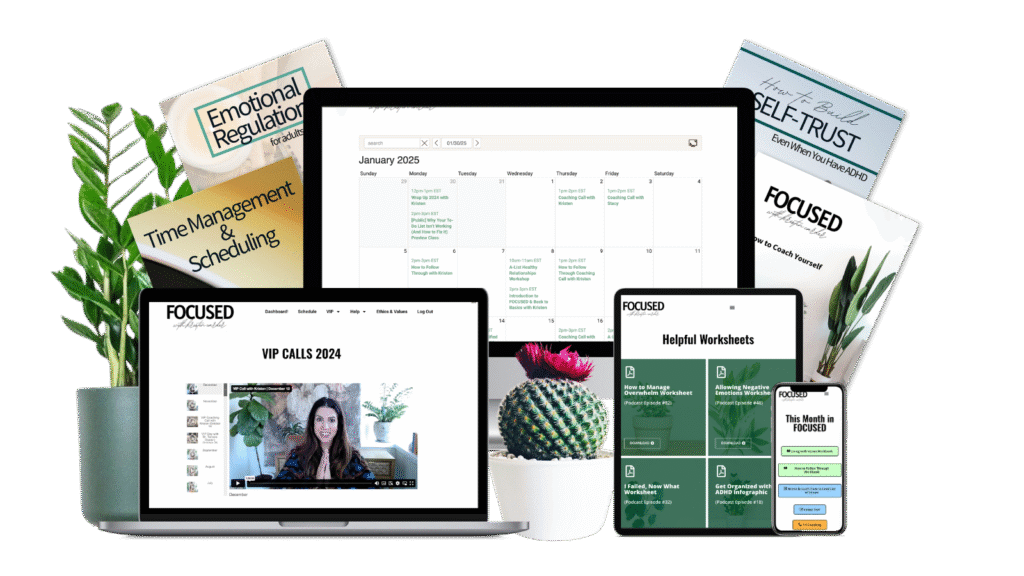
If you want to join us, go to ihaveadhd.com/focused to learn more. I have loved every second of today. I’m so glad that so many of you were able to be here with me. Thank you so much. Thank you for being here. Don’t forget to smash that like button, that subscribe button, that follow button, that rating button, blah blah blah, all the things, so that the algorithm gods smile upon us. Have the best week. I will see you next time. Bye
bye.