Kristen Carder 0:05
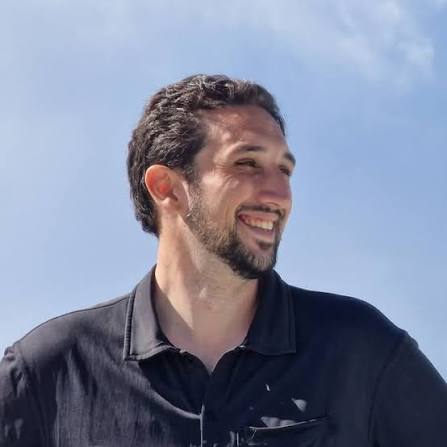
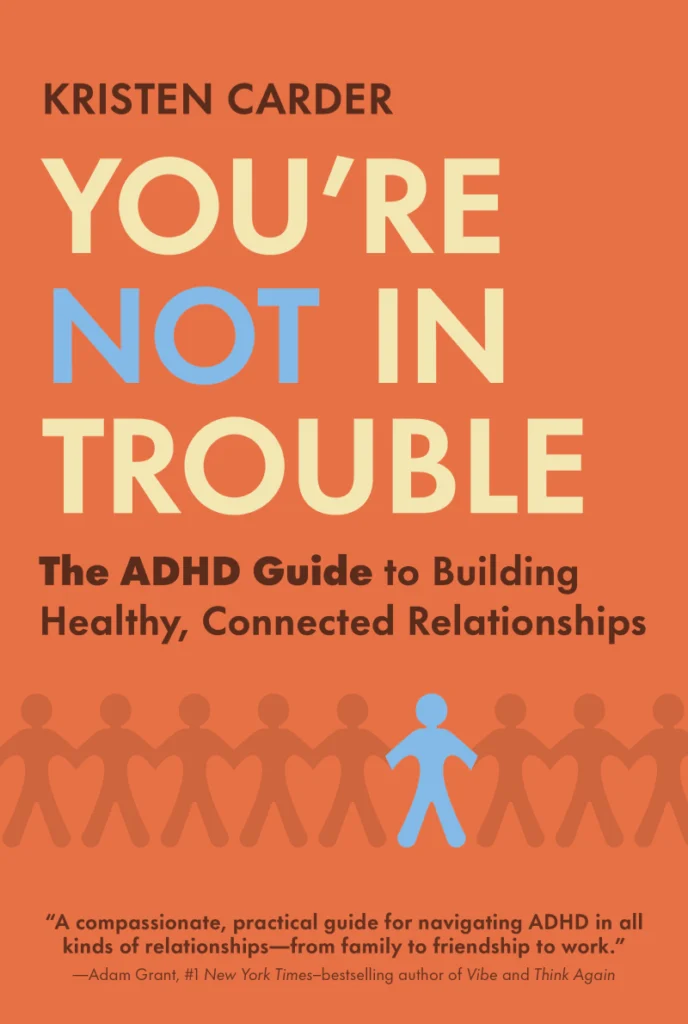
Welcome to the I Have ADHD podcast, where it’s all about education, encouragement, and coaching for adults with ADHD. I’m your host, Kristen Carter, and I Have ADHD. Let’s chat about the frustrations, humor, and challenges of adulting, relationships, working, and achieving with this neurodevelopmental disorder. I’ll help you understand your unique brain, unlock your potential, and move from point A to point B. Hey, what’s up? This is Kristen Carter, and you’ve tuned in to the I Have ADHD podcast, I have a confession to make. I am not medicated today. So while I would normally say I am medicated, caffeinated, regulated, and ready to roll, that would be a lie because your girl is not medicated today. I I don’t even know what to say. I’m exhausted. We’re in the middle of all of the things, and it just didn’t happen for me this morning. I am caffeinated, I am regulated, and I am ready to roll. I am so glad that you are here with me today. Welcome on in, get cozy, get comfy. Don’t forget a snack, some water. We’ve got some great, great, great content for you today, but if you’ve pressed play on this podcast, you are in for a treat because I have an announcement for you. You’re not in trouble. My book, my book, baby, the ADHD guide to building healthy, connected relationships is finally here, and I, I can’t believe I I finally get to say those words. It’s out in the world. It is ready for you. I have poured my heart and soul into this book, and it’s everything that I wish that I had 10 years ago when I was navigating relationships and feeling so unsteady, feeling like a tiny, tiny little baby in all of my adult relationships. I was a 35-year-old woman feeling like a child in my relationships, and just wishing that I had a resource. And I ended up in therapy and coaching and all the things instead. But I took everything that I learned and I put it into this book for you. I wrote this book for those of us who grew up just feeling like we were always doing something wrong, always disappointing someone, always in trouble, and then carried that dynamic into our adult relationships. And how do we get ourselves out of that really uncomfortable and I would even add unnecessary dynamic? That is what this book is about. Your Not in Trouble is now available wherever you buy your books. If if it sounds delicious and delightful to you, go grab it. If it doesn’t, it’s all good. You’re gonna love this episode either way. But go grab You’re Not in Trouble wherever you buy books. Thank you so much for being here. Thank you to those of you who have already pre-ordered, I know that it is so hard for someone with ADHD to pre-order a book because it’s like, what’s in it for me? Where is my immediate gratification? And I know more than 1000 of you have already pre-ordered it, and I just appreciate you so much. So it should be showing up on your doorstep today. So celebrate with me. It is the big, big day! I am so pleased. In addition to having my book out today to welcome my guest, I saw a reel of his on Instagram at least six months ago, and immediately was like, “I need to speak to this man. He is brilliant, and I have questions.” And you know that your girl gets a little bit like a dog with a bone. Like I just, I got some questions. I need them answered, and I can’t wait to get them answered today. So let me introduce my wonderful guest. His name is Ludovico Santamor de Chanez. He is a doctor of cognitive neurosciences. He was diagnosed with ADHD at 28, which we are going to talk about, I can’t wait to get his story. And he set out to better understand ADHD and neurodivergence in general. Shortly after his PhD, he published the ADHD Users Manual. Today, he works at NeuroBridge as head of research, where he uses behavioral neurosciences, linguistics, and his knowledge on ADHD to make life better for neurodivergent people in the workplace. We are going to have the most nerdy conversation today. I cannot wait, Ludovico. Thank you for being here.
Ludovico Santamor de Chanez 4:35
Thank you so much. Thank you so much for having me. It’s a pleasure. It’s an honor. And congratulations on your book! I know how hard it is to to write it and to get it out and to face yourself with possible criticism and so on. It’s really brutal, but it’s it’s a massive, massive achievement.
Kristen Carder 4:55
Thank you. You’re right. It is brutal. Brutal is such a great word for it. Because I want to cry, I want to go away and hide and cry. But at the same time, it’s like holding so many different emotions at one time, right? Like I’m proud of my work. I know it’s going to help so many people. And also, I have ADHD. I suffer from rejection sensitivity. I don’t ever want to disappoint anyone or be criticized. And I’m really going to have to put on my big girl pants, as we say in America. I don’t know if that’s a saying in Spain, but in America we say I need to put on my big girl pants, and I just need to to take it on the chin because I’m ready, and I’m so ready for the world to read it. But that is not the point of this episode. The point of this episode is you. So, Ludovico, I would love to hear your story. I can’t wait to talk about trauma and genetics and all of the nerdy ADHD things. But the first thing I want to know is, what was your ADHD journey like?
Ludovico Santamor de Chanez 5:52
It was, I think, like a lot of people diagnosed later in life, not very fun. Yeah, I got diagnosed when I was 28. I was in the middle of my thesis, in the middle of COVID, and in the middle of a massive burnout, I might add, not the first
Kristen Carder 6:08
one,
Ludovico Santamor de Chanez 6:08
which is probably an experience that a lot of people with ADHD have had to have like several burnouts in a row. But the the reality is that my ADHD story is also not my story. It’s actually my wife’s story. We started living together. I had a course on ADHD during my masters, and at some point, I started seeing her all the signs of ADHD. And she’s also struggled with mental health for all of her life. So a lot of therapists, you know, did all of the work and never really had an answer for it, and suddenly was like, I think, I think it might be this. I think this might be the answer to what you’ve been looking for, and so she got diagnosed, and it was indeed ADHD, very expectedly. So the doctor was like, Yeah, this is quite obvious. So it’s weird that she didn’t get diagnosed before. And after a while, after her her diagnosis, six months down the line, one day she looks at me and she’s like, “You know, you’re ADHD as well, right?” And I’m like, “Nah, I’m I’m just very distracted. You know, I’m I don’t have an attention problem. I’m just chronically distracted, but that’s not the same thing.” So I was very deep in denial, and she she said to me, “You know what? Just go see a doctor, and if it’s not that, I’ll let it go. But if it’s that, then you might have an answer. So begrudgingly, I go to the doctor, and she was absolutely right.
Kristen Carder 7:30
It’s so funny to me that you clocked it in her before you clocked it in yourself. Isn’t that so interesting that we do that as humans? Is like it’s so much easier for us to see things in other people often than it is for us to see them in ourselves.
Ludovico Santamor de Chanez 7:49
I mean, the the reason is probably because so first of all, she has a much more severe form of ADHD than I do. I have a moderate full well intermediate. She has severe form of ADHD, so that that was the first reason. The second reason is that we both overcompensated for our ADHD through through anxiety, through a lot of compensatory mechanisms, and also through high intelligence. So we didn’t have the classic show signs in school like you know bad marks or whatever. Like I aced most of my tests because I just had to pay attention 20 minutes and I was fine. Like I did understand the course, and then I just went and drew. I was also lucky enough to live in in countries and to be in schools where teachers let me be as long as I paid a minimum of attention. But I was the very disruptive thing in class. That that I’m very guilty of. But I didn’t have the classic signs of ADHD, which is why it was not detected before. And whenever we study ADHD in school and neuroscience, even med school, there’s a very big focus on how it shows up in kids. So I didn’t I didn’t recognize it in myself because I knew my life, right? I knew how I was as a kid, and I just had the signs on one hand, you know, the diagnostic symptoms on one hand, and my life on the other. Was like, well, this doesn’t really match because I I didn’t struggle in school really, but then when we lived together, the signs in in her seemed obvious to me, but also I didn’t have the bias of of my whole life before that,
Kristen Carder 9:23
fascinating. The
Ludovico Santamor de Chanez 9:24
other fascinating part is that she’s she has a more hyperactive ADHD, which is more recognizable, and have a more inattentive one, which tends to get missed a lot more. So there was also that other bias.
Kristen Carder 9:36
That makes so much sense because hyperactive ADHD does seem to be so much more obvious and prominent, and just like in your face, whereas the inattentive type, it it really does take a a very good clinician and or somebody with a lot of self awareness to be able to diagnose. It seems. It seems.
Ludovico Santamor de Chanez 10:00
It it appears so, yeah. Obviously, it appears so. But so I think this is why. But I mean, we we both got diagnosed at 28. We’re both late diagnosed, so even even though to me it her seemed more obvious, it still wasn’t recognized before. So you know.
Kristen Carder 10:16
And do you have like a before and after feeling of like prior to being diagnosed, and then after being diagnosed, was there a big change in your perception of yourself, or even in just like how you decided to treat your ADHD, and whether or not that was helpful to you?
Ludovico Santamor de Chanez 10:35
Oh yeah, definitely. I mean, this is something that I often say: there is a massive identity shift in whoever gets angry, especially late with ADHD, because there’s there a reinterpretation of our whole life before and a reinterpretation of the whole life, the whole future as we see it or as we want to see it. Because I I’ve gone more or less from anxiety to anxiety, from burnout to burnout, and I used to say when I was in my bachelor’s, I was like, well, I’m stressed now, of course. But when I’m I’m going to be in the masters, it’s going to be a lot easier. Then I got in the masters. Was like, well, you know, I’m stressed now. But when I’ll I’ll be in my PhD, I’ll be fine. That was my PhD. Was like, well, I mean, my PhD now. But when I’ll do a postdoc, then I’ll be fine because there’s no diploma at the end. And I’ve realized that was a pattern, and when I I had my diagnosis, it was a little voice inside my head that went like, “There is no after, like this is it. This is this is how your brain works, and there is no after where it gets magically better because something finishes.” It’s I suddenly was confronted with the fact that I had to decide how to live my life now, and that there was not going to be a moment where that was going to get better for me, because the reality is it wasn’t easy and it was not going well because I was trying to function in a way that was never adapted to my brain. So I think the diagnosis really broke that illusion for me. I was like, okay, this is something that you need to address now. There’s no after. Then there’s the whole identity shift. Of course, there was a lot of anger. The whole part where it was like, well, I could have suffered a whole lot less if I had known before. I could have struggled a whole lot less. I could have had a better life if I just had medication earlier, even though I was really good in school, it’s just to to get to that level I had to study way harder than anyone else. And I was like, maybe if I had medication earlier, I could have just studied normally. I could have maybe enjoyed my youth a little bit instead of spending it in books, instead of going out with friends, you know. So there, there was a whole grief of the life that was had, and I needed now to do a lot of work to understand where I was going, how I was going. It was also the moment where I realized that I could not keep going in academia because I would have sacrificed my health if I say, so there was a whole grief about that because I wanted to be a researcher ever since I was a kid. Like this is a lifelong dream. It was something me is I was like, well, it’s either you keep going there, but you’ll be in a bad shape in five to 10 years, or you choose another road, but you have to give up on what you worked so hard to achieve up until now, so it was really difficult, and I think the ADHD diagnosis kind of makes all of that appear and forces us to confront all of these questions, to confront all of the things that we have just held on to up until that moment, and there is that deep realization that something needs to change and that we need to try another way. So this is how it was for me, and I always say that my grief lasted two to three years. And during those two to three years, I had to learn to live with my ADHD, to adapt my work, my environment, my house, my living space, my relationships, all of that to my brain because it just can’t work if I’m the one who constantly tries to adapt to the world. And ever since, you know, I’ve had also the the big crusade moment. I was like, well, I’m not going to adapt to anyone anymore. I want everyone to adapt to me now. You know, I think I think we all go through that point a little bit.
Ludovico Santamor de Chanez 14:15
You know, some people more, some people less. But I’ve had that, and eventually I’ve come to realize that there’s there’s definitely a middle ground, and there are some things on which I will not compromise today. But I also realize that I’m also the one having ADHD. Very few people have it. You know, we’re we’re one in 20 people, so it’s it’s still not very many people. So to some degree, I still will have to adapt to the world. Just I don’t have to adapt to the world in a way that is harmful to myself, and this I think was a big learning curve.
Kristen Carder 14:47
That’s so beautiful. I’m very curious if you don’t mind sharing. You said there were certain things that you are not willing to compromise on when it comes to adapting or your own ADHD. Do you have a couple of those that you wouldn’t mind sharing with us? What are the things that you’re like? Yeah, this is not something that I’m going to be compromising on. One
Ludovico Santamor de Chanez 15:08
of those is, for example, at work. I know that I can’t be micromanaged. It’s just not going to work. I hit burnout in two weeks if that happens, and it’s it’s not only for me. I think I’ve had a work where my manager has tried to micromanage me, and I’ve just had a very open conversation with him. Was like, this is just not going to work because I will try very hard for two weeks, and then this is not going to work, and then I will crash, and inevitably I will try to avoid work in every possible manner. So this is not going to work for both of us. We need to find a solution, but this is something that I’ve tried it. I know where it leads, and I am not willing to go down that road ever again. I I would rather try and make money selling books, or or on social media, or even even working, you know, as a waiter or anything, rather than being micromanaged again. Like this is this is not up for debate. It’s not negotiable. Another non-negotiable for me is having a work that is more than one hour of commute. I get overwhelmed. I get burned out. There’s so many people in the metro that I need two hours to just calm down. And at the end of the day, after those two hours, I need to eat and go to bed. I just don’t have time or energy for a life. It’s absolutely not something that I’m willing to compromise on. But there are also a lot of other things that I found that okay, this is more negotiable than what I thought. But some of those things just remain a hard no or a hard yes. It’s kind of also going back to live in in Paris, for example, that was absolutely a non-negotiable. Too many clouds, no sun. It was depressing as hell. Not going back there.
Kristen Carder 16:49
That’s so fascinating, and I absolutely love this because obviously we are neurodivergent living in a world that was built by and for neurotypical people, obviously, and yet, it is okay to have agency and authority, and know yourself well enough to say these are the things that I absolutely will not compromise on. I need to live somewhere where the sun shines. Like that is something that you can control. You’re an adult. You’re allowed to choose where you live, right? I know I need to make money. That part is non-negotiable. I need to eat. I need a place to live. The part that is negotiable is I’m not going to be in a job where I’m micromanaged. That’s not. That’s not how I’m going to live, right? I know I need to go to work, but I’m not going to be having a commute that is an hour long like that. I love, love, love that, and I just for the listener, I think it’s so important to think through what are the things that you should compromise on because you are a human in a human world with other humans, and like there are compromises that we need to make, but then what are the things that you can stand in your autonomy and your agency and your own personal authority on, and say, okay, these are my non-negotiables. There’s not a ton of them, but I do have a few that I’m just not going to compromise on. I really appreciate you sharing that. Okay, so let’s get into the nerdy stuff because I am so excited to have this conversation with you. I want to start out by asking you if you could help us understand the genes that are associated with ADHD, and what does it mean that ADHD is polygenic?
Ludovico Santamor de Chanez 18:30
So ADHD being polygenic means there’s a lot of different genes that control basically the the behavior outputs that ADHD is. So you might have genes that code for dopamine receptors, or dopamine transporters, or enzymes changing L-dopa to dopamine. You know, there’s the cascades that exist within the proteins and the neurotransmitters inside the brain are so big that any any problem at any of the steps creating, for example, dopamine or expressing it from one neuron to another, or recapturing it, might create ADHD symptoms. So two people might have two very different genetics and still have the same behavior, which is also called phenotypic convergence.
Kristen Carder 19:14
Can you say that word again?
Ludovico Santamor de Chanez 19:16
Phenotypic convergence. So it is when a behavior or a phenotype, so something that is in the appearance of the body or in how we behave, comes from different origins, but that all leads to the same place. This is what also polygenic means. It means that it’s a combination of different genetic factors that will lead to an outcome, and not just one gene, one outcome.
Kristen Carder 19:42
So first of all, I pronounced it incorrectly. I said polygenic, and I think both are right. Oh, interesting! I love it when I’m still right. Okay, great. I’ll take it. This is why some of the people who say that ADHD isn’t real or ADHD. Is maybe just caused by trauma or ADHD? Like there is not a gene associated with ADHD. The answer is sure. There’s not one gene associated with ADHD. There are multiple genes with multiple. Like how would we say this in layman’s terms? Multiple genes with multiple ability to impact human behavior, and therefore we can’t just test for a singular gene.
Ludovico Santamor de Chanez 20:27
I mean, there isn’t a singular gene. Eye color, for example, comes from two different genes. Well, even three. But this means that if there is a mutation on only one of them, your eye color is not necessarily going to change. But if you have mutations on several of them, then you will start seeing some changes in your eye color. It’s a bit the same also for you know hair texture, hair color, and all of the all of those things. These are usually things that are controlled by multiple genes, not only one. And but for ADHD is a bit of the same. It’s not one gene, but the vast majority of human traits, to be honest, are polygenic. There, for example, obesity, the propensity of one person to overeat or to be very hungry, that is also mostly polygenic. There’s like 2% of people who have monogenic cases of being very hungry, like one mutation of one gene that has a massive repercussion. But most people who are always hungry or who on the other side have no appetites at all, this is because of the combination of multiple genetic factors. Most traits are like this, and evolutionarily speaking, it also makes sense because if all it takes is one mutation on one gene to break a whole system, it’s not a very efficient system. So, so we need to have different weights and different things being combined together to kind of compensate one another. Because if I have 80 genes now coding, for for example, for my dopamine system, there is one that during a transcription gets messed up, then all of the other 79 can be like, well, it doesn’t matter if that doesn’t work perfectly because there are other mechanisms in the body and in the brain to make sure that whatever needs to happen happens. In ADHD, that means that we start having, you know, we have 80 genes all kind of supervising the same thing, but we start having 20 or 25 or 30 that have mutations. So now it becomes a lot harder for the others to compensate. And this is what we mean by saying ADHD is polygenic. But this is also the case for a lot of other conditions like autism, like bipolar disorder. It’s really a vast majority of cases, and anyone saying it’s not genetic because there’s not only one gene is just kind of waving their hand and canceling out most of the human traits, even physical ones, from existence. So it doesn’t seem very smart to me as a move because it’s just not how biology works.
Kristen Carder 22:57
That’s so helpful to me because there is a lot of conversation out there, as we know. There are so many conversations happening right now that are diminishing the efficacy of ADHD, the heritability of ADHD, the fact that ADHD is a real neurodevelopmental condition, and it does seem very dismissive to just say, well, there’s not one gene, so I’m just going to pass it on. It’s oversimplistic in a way that might appeal to the masses, but doesn’t seem very scientific at all.
Ludovico Santamor de Chanez 23:33
No, it’s not. I mean, science it’s it’s massively complicated. When I started doing my bachelor’s, we found out that you know one gene was not actually one gene. Inside one gene, you have what we call introns and exons, and actually you have seven to 10 parts of one gene that can code for different proteins. And as a function of how you combine them, it creates different things. And then there is up and down regulation of genes. Like it is massively complicated. Anyone oversimplifying genetics, frankly, simply doesn’t know what they’re talking about. It
Kristen Carder 24:06
does make for a good Instagram reel. A lot of clickbaits. A lot of you know. A lot of people who want to dismiss the diagnosis, jumping on the bandwagon. So I do see how it makes for good TV, so to speak. But it really does diminish the complexity of ADHD, and it diminishes, in my opinion, just how yeah complex it is, and how much it impacts us, and how much we need to take it more seriously rather than just the waving of the hand like ah, it’s not big deal.
Ludovico Santamor de Chanez 24:41
Absolutely, I mean, we we do need to take it more seriously in general. It is it is also a clinical diagnosis. Like it is something that has been studied, that is known within the medical system, that has clinical definitions. I think that whoever wants to wave their hand and dismiss that ADHD is a real thing, I. I don’t think it’s people who are interested in the truth. To be honest, I think it’s it’s an excuse that people give themselves to try and dismiss something because they’re maybe afraid of it or they do not really wish to understand it. This is my view. The other thing that I might add as well, interestingly, is that for for a long, long time I’ve been a fervent defenser of you know ADHD is genetic, therefore it’s real. First of all, it doesn’t have to be genetic to be real. Something can be real without having, you know, birth origin or whatever. This is the case for a lot of mental health conditions, for example, like ODD, a positional defined disorder that a lot of people with ADHD have. By the way, this is something that is mostly acquired from the environment, and we are going to talk about it in in the next segment. I am sure, because you mentioned you wanted to talk about trauma. Yeah, but there are some things that are required, but it doesn’t make them less real.
Kristen Carder 25:52
That’s so good.
Ludovico Santamor de Chanez 25:54
Any anyone who breaks their arm when they go skiing or when they’re skateboarding or just because you fell on the streets, you clearly broke your arm. You weren’t born like that. It’s not genetic, but it’s still something that happened, and it’s still something that is very real. So, regardless of the origin, I think that when someone is suffering, regardless of the reason or the origin, my view is that if there are solutions for it, then we give them the solution, and it’s just really as simple as that.
Kristen Carder 26:21
Why do you think that it would be inconvenient for people to believe that ADHD is real? Why are so many people wanting to dismiss it? Why are so many people looking for evidence wherever they can find it, for quote unquote experts, whoever will say it that this is not a real thing, that ADHD never existed years ago, and this is just because of the way that our society is set up, and it’s our school systems, and it’s just our world is not built for kids today, et cetera, et cetera. Why is that something that people really do want to latch onto? Why? Why is it inconvenient for people to believe that ADHD is a real condition?
Ludovico Santamor de Chanez 27:06
Most people are afraid of change. They’re afraid of things changing, and we live today in a society that values very much money and productivity. And the moment we start to admit that there is a quite large chunk of the population that is not able to be proactive in the same way as everyone else, we start to admit that there is something within the system that needs to change. That is a very scary idea for a lot of people, because people again are usually afraid of change, and and me and you were were no different. Usually, we have things we’re used to things working a certain way, and when we don’t know how those things could change, any change feels scary. I think people are afraid of admitting that ADHD is real because, first of all, it changes from what they might have been used to. If when they were young themselves, no one talked about it. Then it’s something that is new, so they don’t know what this is, and so they’re they’re afraid of it. Some people just do not want to see it, but they are reluctant to the idea because admitting that something like this exists equates sometimes to admit that they either they haven’t been good parents because they haven’t sought the answers, and I’ve met a lot of parents who are so against admitting that ADHD is a thing because they’re like, because if I admit it, that means that I haven’t done my job as a parent, and it’s it’s a terrible thing to admit to oneself. And it’s also kind of ironic that by not admitting, you are, you know, becoming the thing that you don’t want to become, which is absolutely tragic to me. The other part is because admitting that people need help might mean that we need to change how our society works, and it also confronts us with our own powerlessness in front of something that has worked so flawlessly in appearance for so many years, and that we have no apparent control over. Because if you speak to people in the United States, but also in Europe or everywhere else in the world, there are very few people who think that they actually have power over how society functions, over how elections unfold, over who controls the world, over how wealth is distributed. So, me admitting that something isn’t working in the world, and that a lot of people need help and that they’re not getting it is also me looking in the mirror and seeing my own powerlessness to change things. And this is also a very tragic idea to a lot of people. I also think that there are a lot of people who simply do not care about anyone else than themselves. Then, like this is the case. But in my experience, it’s a minority of individuals. Most people refuse ADHD, refuse anything novel because they’re. Afraid of this change, or because they’re afraid of and everything else that it means.
Kristen Carder 30:05
Yes, I just am like cheering and clapping in the background, trying not to interrupt you, but literally like doing jumping jacks over here because yes, yes, yes, hell yes, 1000 times yes. And what I see most is when ADHD is disrupting a system, especially a family system, as you mentioned. So, you know, the family system wants homeostasis; it wants to like act the way it has always acted. A lot of our family systems revolve around one or two people as the sun, and we are all kind of compliant and making sure that those people are happy. And then enter the ADHD child who is allergic to inauthenticity, who will not fake it, who will not conform, and who simply cannot function as a robot to please the system, and then the system gets very disrupted, and the parent, the grandparent, the aunt, the uncle is just like you need to control your kid because the kid is disrupting the system, and there’s something wrong, which is why so many of us ADHD individuals are scapegoated within our families, because we then become the identified patient, the bad guy. There’s something wrong with you. You’re not compliant with the system, and instead of them being willing to adjust their perspective and say, “Oh, maybe I have not been providing what this child needs. Maybe I need to adjust how I interact and how I support and how I care. They instead say, “This isn’t real. You’re being dramatic. You’re overly sensitive. You need to just get it together. Be more productive. Make a list.” Da da da da da da. And it’s just like it disrupts everything within the system.
Ludovico Santamor de Chanez 31:55
Absolutely. This is interestingly something that enters in my in my current line of research, which is about you know energetic states, how how stress is created in the study of systems. So a human can be a system, but also as you said, a family system can be a system. And it’s interesting because in in recent research, it’s been shown that what systems tend to do is that they try to get to a level of stability, every system tends towards the lower energetic level and the ones at which it can be maintained with the least amount of effort from the system itself. And the goal of the system is to preserve itself, and that is true for every system. So that means that if we have a system whose goal is that, and we have one element that tries to disrupt the system. The natural reaction of said system is to try and preserve itself, and thus to exclude the person, the element, or the thing that is preventing the system from stabilizing itself. But this is true for humans as well, right? When we are out in the world, and we are confronted with an uncomfortable idea. That idea risks to disrupt our own internal system. Therefore, it’s easy for us to kind of dismiss it and push it out, because otherwise, that would cause a disruption in our internal system that needs to be stable. This is true for countries. It’s true for companies. It’s true for people. But this is this is what it is. And this is said in a very descriptive way. And along the way, unfortunately, there’s a lot of people who get hurt. So I’m not saying this to kind of justify how dysfunctional family systems
Kristen Carder 33:30
work because they are still very dysfunctional. And this is also the other interesting thing that we’re observing: is that dysfunctional systems can still be stable. So they are stable and dysfunctional, and they are destructive. But they are destructive in a way that is so slow that is almost imperceptible. In that, to the individuals forming the system, it feels better than spending a lot of resources and energy to try and change, because change takes energy, and thus it’s scary. Yes, God, it’s so good. I’m so, so glad we’re having this conversation. I’m just thinking through, you know, all of the systems that I have been a part of as a human being. So that would be my family system, which is highly, highly dysfunctional. My religious system. So I grew up in fundamentalism, highly dysfunctional and a system that does not want to be disrupted. Then there’s the school system you need to fit inside of the little boxes, and there’s like the corporate work system. And it is even just if you think about like a boss not wanting to believe an ADHD employee that they need accommodations, that they need help. Well, that disrupts the system. That’s not how we do things around here. So, if you just want to think about listener, all of the different systems in which you exist, and how your beautiful neurodivergent brain really has disrupted that system, and then we take. On this identity of there’s something wrong with me. I guess I’m the problem because I’m not able, literally not able to fit into the system. Even like the system of politics and the the cultural society. It’s just like we look around and we say this doesn’t make sense. I don’t fit in here, and we start to disrupt things, and then we get labeled the problem. And so many of us have taken on that identity. And I hope and pray that the work that you are doing, that the work that I am doing, gives people who have a neurodivergent brain the empowerment to say, maybe it’s not me that’s the problem here. Maybe it’s the system. Maybe it’s the people around me who are unwilling to see the ADHD and how it needs to be accommodated. And yes, I will also make concessions myself, obviously within the systems. But like you said earlier, there are certain things that are non-negotiable, and I’m just not going to conform to these systems at my own expense.
Speaker 1 36:03
Absolutely,
Ludovico Santamor de Chanez 36:04
that also means sometimes not entering certain environments, but that is also absolutely fine. Like the the world is wide and varied, and even if we refuse to enter in some environments, there are I guaranteed like there are going to be other environments that will open up to us. It’s just like every transition, like every change, it will take time, it will take energy, it will take resources. So before making a change, whoever’s listening to this, make sure that you just have enough resources before leaping, because otherwise that could create a situation of potential danger where you’re forced to get back to the previous environment, but with even less energy than you had before, so just make make sure to you know take your time with this. Do it one step at a time, but change is definitely very very possible.
Kristen Carder 36:50
What do you say, or what is your response to someone who says, “Well, ADHD is new. I didn’t ADHD wasn’t a thing when I was a kid. I love your laugh. I wish the listener could see you. You are laughing, and I love that. Such a big smile. It’s so so sweet. And I’m just curious, as a neuroscientist, what is your response to that? Because that is something that people say about ADHD, about autism, about all of these types of neurodivergences. It’s like, well, that wasn’t a thing like OCD wasn’t a thing when I was a kid ADHD wasn’t a thing when I was a kid like this is all new it’s it’s just popping up everywhere now it’s just a trend it’s just a Lotobico it’s just a ADHD is just a trend
Ludovico Santamor de Chanez 37:35
yeah so there’s so many responses to this the first one is obviously a laugh because ADHD is new. Absolutely not. I had a very interesting chat a couple of years ago with Dr. Oscar Lau, who works as at the Evolutionary Institute of Genomics of Barcelona, and who has led a study on the on the genetics of ADHD and has found that the genetic markers of ADHD were present in remains that we found from 50,000 years ago. So I would say it’s it’s safe to say that ADHD is definitely not new. We have in across history a lot of depictions of ADHD. One of the very popular videos that I did is the one about one paper saying that Leonardo da Vinci might might have been ADHD, and this is not to say every person with ADHD is a polymath or will be Leonardo da Vinci. But when when we read his work, when we read his life, and even what he said about himself or what others said about him, it was always he’s always distracted. He can’t finish a project for the life of him. He’s the only painter in his you know, one of his contemporary with Raphael and Michelangelo and all that. He’s the only one who has been contracted by the Vatican that has never managed to finish a painting for them, even though he was there for three years. He had a reputation for being unreliable. At some point, there was the Duke of Milan that has started putting him under contract because he didn’t want to finish whatever he was commissioned to do. The Last Supper, which is one of his most famous paintings, he was saying, “Well, I can’t finish it because I can’t find anyone who looks enough like Judas.” So he just left it three years without touching it because he was like, “Well, I don’t have the appropriate model just yet, so I’m just you know living it on the side, and in the meantime, he was doing a ton of other stuff. When he did his all work on anatomy, it was only because he was guided by a mentor. When his mentor died from the play, suddenly he just left it all. It was like, well, this is another thing that I cannot finish. At the end of his life, he said that he felt he had failed God, so in his own words was very religious. But he felt he had failed God because he was given a gift that he was never able to use to its fullest. Because he felt that he’s never finished a project in his life, and today we see the work that he’s accomplished. We see all the different. Things that he touched, which is I may add a very ADHD thing to do, to just do 700 different things at the same time. But the reality of of this man’s life is that he’s always felt like he was something short of greatness because he couldn’t just bring himself to finish anything because he was getting distracted every five seconds, and this is also what everyone around him was saying. He lived in poverty because he couldn’t finish commissions. I mean, relatable, you know, relatable, and he lived in in you know in the 1400s. So it’s definitely definitely not new. I mean, we have accounts of ADHD. The first official description of ADHD dates from I think the 1775, and it was from a German doctor. So yeah, definitely not something new. The second part of the answer it’s more social, a bit like the one before, right? Before we lived in villages, we lived in a in a more disconnected world, in a more physical and real world as well. Because we went out, we walked, we talked to people. Today, most of our lives happens in front of a screen, and it’s something that, first of all, is absolutely not ADHD friendly. Yeah.
Ludovico Santamor de Chanez 41:14
But second of all, it’s also we are being increasingly asked to work in a uniform manner, as I was saying before, there’s this drive to productivity all the time that requires people to become more and more uniform and to give more and more of themselves, and this means that inevitably there are going to be a lot of people that just can’t follow that rhythm because this is not how humans have evolved to be in the past 200,000 years. We’ve we’ve been out in the wilderness. We’ve been in the fields. We’ve been walking. A medieval peasant walked on average 50 kilometers per day. Today we feel happy if we do 4000 steps.
Kristen Carder 41:57
Yeah.
Ludovico Santamor de Chanez 41:57
So so life has changed so much that ADHD before may also have been overcompensated by the fact that we ate a lot more, you know, vegetables and meat and and organic things. It might have been overcompensated because whoever had too much exploratory behavior maybe got eaten by a wolf instead of living to tell the tale, which is also you know survivorship bias definitely, but there’s also a part of society becoming increasingly uniform in a way that every single difference feels like it becomes disproportionately evident to everybody, just because the the norm has become much narrower. In the olden days, we’d have villages where people were weird. You know, they had their quirks. There was the grandfather that had absolutely all of the train models and knew everything about train, and the other person who had 17 different hobbies. But you know, they were just quirky, but they were also part of the village, which is another interesting thing: is that difference within a closed system is less frowned upon than within an open system like we have today, because the the belonging to a village or to a group was more important than a quirk. So they were still marginalized people, of course, but it was, let’s say, probably less visible than it is today because the necessity to conform was less present. So that was a freaky long answer to a very simple question.
Kristen Carder 43:38
I loved every second of it. I loved every every second of it. The TLDR summary is ADHD is not new, y’all. It’s not it’s not new. The last discussion that I want to have, and the one that I’m just so excited to pick your brain about, so to speak. Yes, ADHD is highly heritable and has strong genetic evidence, but I am very curious about the role of early relational trauma. And as someone who grew up in dysfunction, I’ve coached 1000s of people with ADHD and have never met someone. Not that they don’t exist, but I’ve never met someone with ADHD who has told me I grew up feeling understood. I grew up feeling supported. I grew up learning how to regulate my emotions, and I thought, okay, maybe this is just the type of person that I’m attracting into my orbit. You know, because like attracts like, and maybe these are just kind of my people that I’m attracting into my orbit, and prior to writing the book, I really wanted to find out: is this just a Kristen Carter thing and like Kristen Carter’s people, or is this more widespread across the board? So I worked with a professor to develop a research survey, and we. Surveyed 2165 adults with ADHD about a bunch of relational issues, but the one that I was most interested in, and the one that I want to talk to you about, is the early childhood experiences growing up as someone with ADHD. Only 3% reported that their parents helped them to regulate their emotions. 3%. I’m one
Ludovico Santamor de Chanez 45:22
of them. Yeah, same. I’m lucky enough to have parents that have helped me regulate my emotions. I’ve grown up surrounded by a lot of love. My my earlier memory of anything traumatic was when I was eight or nine, and was actually from school, not from
Kristen Carder 45:40
home,
Ludovico Santamor de Chanez 45:42
but what is your question?
Kristen Carder 45:44
Okay, so my question is: So many adults with ADHD describe childhoods marked with emotional neglect and criticism, unpredictable caregivers, rejection and bullying at home and school, lack of emotional safety, et cetera, et cetera. So we know, yes, ADHD has a genetic component, but also early relational experiences can shape the developing brain and systems like attention and emotional regulation, et cetera, et cetera. So, how do we know when we’re identifying ADHD that at least in some cases the neurological consequence of growing up in an unsafe environment is not also present. Like, how how do we differentiate? And the thing that I will add to that, I know this is a really long like preface and question, but there is just so much to say because I don’t want to just say like, well, isn’t ADHD caused by trauma? Like, it’s it’s deeper than that. And I will say that so many adults that I speak with now never actually identified their childhoods as being like relationally unsafe until they were well into adulthood, probably after their ADHD diagnosis. In many cases, so when clinicians are asking about early childhood experiences, like, “Oh, my family was fine. It was it was totally fine. A lot of us are not reporting these like deeper relational wounds in a clinical environment, and so like, how do we differentiate knowing yes, ADHD travels in families; it’s heritable, but trauma also travels in in families, and and like dysfunction also travels in families. So how is ADHD not caused by trauma? Maybe is the question. Like, can we have that conversation?
Ludovico Santamor de Chanez 47:28
Absolutely. There are several answers to this. Like, the first one and the simpler one is that we have done twin studies. So, twin studies they are the the big norm for identifying whether something is genetic or not. The way in which they function is like we take fraternal twins, which share only 50% of you know their their genetic components, and identical twins, which share 100% of their genetic components. And twins live in the same environment. They grow up in the same house. They grow up in the same culture, so if ADHD was due genetic components, we would expect identical twins to have more similar forms of ADHD than fraternal twins.
Kristen Carder 48:11
Yes.
Ludovico Santamor de Chanez 48:12
Instead, if ADHD was due to trauma or to the environment or to the family dysfunction, then we would expect both identical twins and fraternal twins to have the same rate of ADHD. And what we’re finding is that fraternal twins have massively different forms of ADHD. If they have ADHD, sometimes one has it, the other doesn’t. Whereas identical twins almost always have the same form. And this leads us to understand that ADHD well is mostly genetic because the only difference between these two cases is the genetic identity of people, and that is it. So this is the first part of the answer. The second part is that if ADHD were stemming from trauma, we would expect a lot more people to have ADHD because whenever I speak to people, whether it’s it’s corporate, whether it’s people who are very obviously not ADHD, a lot of people have freaking horrible childhoods. A lot of people have emotional abuse. A lot of people didn’t have support or love growing up, and I would like to say that if that were the case, generations like Generation X, or even our grandparents, maybe who fought in the war, especially in Europe, for example, they would be a lot more ADHD than people our age, because supposedly they grew up with abuse, they grew up with drugs, with war, with neglect of such massive proportions that if that were the case, we would expect these populations to showcase ADHD symptoms a lot more than people today. And even today, if we go to war zones, then if if ADHD was caused from trauma, we would expect everyone in a war zone to have ADHD symptoms. And and this is. Not what we see. It’s just not what we observe. So this is how we can say safely ADHD is not caused by trauma. Whatever we do observe, though, is that people who have ADHD tend to have more trauma. First of all, we have emotional dysregulation. We have rejection sensitivity. So what counts probably as trauma for someone with ADHD, emotionally speaking, might be a lower threshold as for someone without ADHD. ADHD runs in families, so whenever I’m a child with ADHD, I make a lot of noise and I become very overwhelming. My parent, who also had ADHD and has a low tolerance for overwhelm, might snap a lot more easily. And so this is this is also how the cycle may continue. What I find is that ADHD and and complex trauma are often correlated. They often come together, but it is likely that trauma develops because ADHD is there rather than the other way around. This being said, it is also true that yes, trauma does alter brain structures to an extent, which means that being traumatized and having complex PTSD definitely doesn’t help with ADHD.
Kristen Carder 51:07
Right, like it
Ludovico Santamor de Chanez 51:09
definitely doesn’t help.
Kristen Carder 51:10
Sure,
Ludovico Santamor de Chanez 51:11
but also lack of sleep doesn’t help with ADHD. So what we find is that people who have trauma and ADHD tend to have more severe symptoms than people with ADHD without trauma, and this is also what has been shown in some recent studies, which is super interesting. This is the answer to all of these questions.
Kristen Carder 51:29
So, it’s so good for me to hear because for me, and this is just like me being vulnerable with you here and with the 1000s of listeners, I tend to gravitate toward the experience of trauma, the experience of dysfunction, the experience of neglect and emotional abuse, and and just be like, this has got to be impacting my ADHD. And when I look at my family system, and I have a parent with ADHD, and I have two sisters, both of them diagnosed with ADHD, one of them also diagnosed with autism. It’s easy for me to look at my own little cluster of family system, my own little world, and say, “See, it’s trauma. We’re we’re just all traumatized.” But it’s so important for me to continue to hear experts like you say, “Sure, that could be your experience, but that does not mean that all ADHD is caused by trauma, or that every single person with ADHD is traumatized.
Ludovico Santamor de Chanez 52:31
Yeah, and the thing is, also two things can be true at the same time, right? You can have a lot of people with ADHD who are also traumatized. It doesn’t mean that one causes the other, which is which is often where a lot of people kind of bridge things together without looking a bit deeper at what the data says. Yes,
Kristen Carder 52:50
yes. Which is why we then also gravitate toward creators sometimes who are painting with a broad brush, saying very oversimplistic things like, “There’s no one gene for ADHD. That means it’s caused by trauma, and it’s just like, oh well, that kind of makes sense with my experience. Rather than looking at the research as a whole and speaking to experts too, because sometimes we can look at research as lay people and read it incorrectly and make conclusions, draw conclusions from the research, not really knowing what the research study even like looked at what the protocols were, et cetera, et cetera. So it’s so important that we’re having this conversation. I so appreciate you,
Ludovico Santamor de Chanez 53:29
but it’s also a difficult topic because like I’ve I’ve got a PhD in neuroscience. I’ve read probably more than 1000 papers on ADHD, so I have a very broad view of it. But it also took me two and a half to three years to read that amount of papers, and whoever is looking at a reel on Instagram the last one minute, yes, you know it’s it’s just not the same amount of time that goes into it as well. So I also am very conscious that I cannot ask to everyone to just go complete a master’s in neuroscience and then read three years worth of papers, like it’s it’s maybe a bit much, but I think this is also why it’s so important for people like you to be doing this podcast to bring back the new ones in a way that people can understand it without necessarily needing to have that level of expertise, but also we without it being as simple as one minute Instagram reel.
Kristen Carder 54:20
Yes, it’s so good. You mentioned rejection sensitivity, and I just want to get your expert opinion on this. In your opinion, is rejection sensitive dysphoria a genetic component of ADHD, or is rejection sensitivity just a normal response to an ADHDer’s life of repeated rejection.
Ludovico Santamor de Chanez 54:50
In great ADHD fashion, I’ll do a tangent and I’ll go back to the initial point. I mentioned earlier ODD, opposition-defined disorder. You might be familiar. Also with PDA persistent demand avoidance. Both of these things are not necessarily genetic; they are environmentally driven. So after getting criticism for something enough times, one develops an opposition to doing things, and they just say no. They become argumentative or vengeful, or they just avoid the tasks altogether, which is what demand avoidance is, because it’s it’s a learned response after seeing that whatever we try to do gives a negative feedback. Therefore, we become resistant to investing resources in something that doesn’t give anything back. It’s the same mechanism of burnout, which is also a learned response. It’s not genetic. Rejection sensitivity, I would say, is probably an in between. We probably, as people with ADHD, have a higher likelihood of experience rejection sensitivity because we have emotional dysregulation. We have difficulties. We have very strong, very powerful emotions that just consume our whole being. And whenever we have them, you know, this is at least for me personally how I experience it. But I have the emotion. I’m like, this is never going to go away. I’m going to feel this emotion until the rest of my life, and then after five minutes, it’s gone. But in the moment, it feels overwhelming. It feels so big, and it feels impossible to regulate. Which is also what a lot of researchers on ADHD have observed and have been saying. So when we experience rejection, that rejection emotion will be stronger because of genetic components of ADHD. Like it comes with the package.
Kristen Carder 56:28
Yes,
Ludovico Santamor de Chanez 56:29
but there is also an environmental component, which, like ODD, like PDA, when we have enough reinforcement of the fact that whenever we invest into a relationship, we have rejection, or we have negative feedback. Eventually, we become over sensitive to that rejection whenever we try to invest resources again. And so, I would say that it’s it’s probably a bit of both. I’ve experienced that during my life, my my rejection sensitivity has gone up and down as a function of my life phase as a function of who my friends were, and as a function of a lot of things. I’m in a place right now where I’m secure enough in my relationships. Where having rejection, I almost do not feel it anymore, which is crazy to say. You know, speaking from the person that I was three, four years ago, where I would observe any single word, any single emotion, any single behavior that someone had as a possible predictor of being rejected in the future. Like that was definitely a traumatic hyper vigilance that I’ve I’ve managed to work with. So I would say that RSD is definitely a little bit of
Kristen Carder 57:36
both.
Ludovico Santamor de Chanez 57:36
Medication helps also reducing my RSD. Like when I’m taking my meds, I feel things a bit less. Like it’s not a miracle, of course, but it does help. But this is this is what I would say about RSD. It’s probably something in the middle that is complex, but some of it definitely comes as the package with ADHD because of the emotional component.
Kristen Carder 57:56
A very nuanced answer. I try. I appreciate it. I appreciate it. I could have this conversation. I appreciate it. I could have this conversation for hours and hours. I just want to thank you so much for your time, Ludovico. It has been such a privilege, an honor. Like I am just really grateful to you, and I would love for you to tell our listeners about your book and where they can find your work.
Ludovico Santamor de Chanez 58:17
So my book is the ADHD Users Manual, and it’s called this way because it was like when we’re born, everyone seems to already know where they’re going. There’s like a guidebook to be normal, so to speak. But no one gives you a manual on how to live with ADHD. So when I was diagnosed, and after a few years of research, was like, well, you know what? I want to to write something that everyone who gets newly diagnosed with ADHD, they just have everything in there, from the basics to the science to how to deal with it in our day to day. Basically, all of the information that I’ve gathered over the years, and that I really wish someone had told me about before. You know, including comorbidities and all of that, because with ADHD, seldom comes alone. It usually has a bunch of friends visiting us as well. Yeah, you can find my book on most online stores. I’m self-published, and otherwise, you can follow me on Brain Curiosities. And I regularly post articles on Psychology Today. And right now, I’m also working more on stress in general. So if you’re interested in that, you know, feel free to reach out.
Kristen Carder 59:20
Love it! Thank you so much. Appreciate you.
Ludovico Santamor de Chanez 59:23
Thank you very much. Thank you for inviting me. This has been a wonderful conversation. A
Kristen Carder 59:27
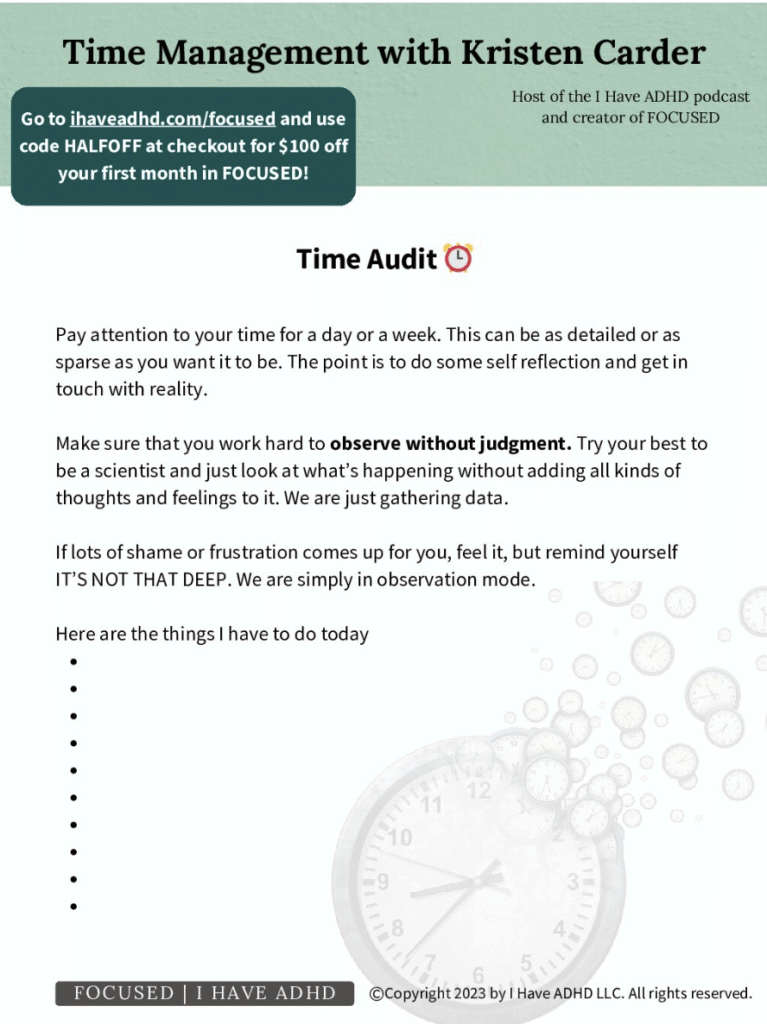
few years ago, I went looking for help. I wanted to find someone to teach me how to feel better about myself and to help me improve my organization, productivity, time management, emotional regulation. You know all the things that we adults with ADHD struggle with. I couldn’t find anything, so I researched and I studied and I hired coaches and I figured it out. And then I created Focused for You. Focused is my monthly coaching membership where I teach educated professional adults how to accept their ADHD brain and hide. Their ability to get stuff done. Hundreds of people from all over the world are already benefiting from this program, and I’m confident that you will too. Go to ihaveadhd.com/focus for all the details.