Kristen Carder 0:03
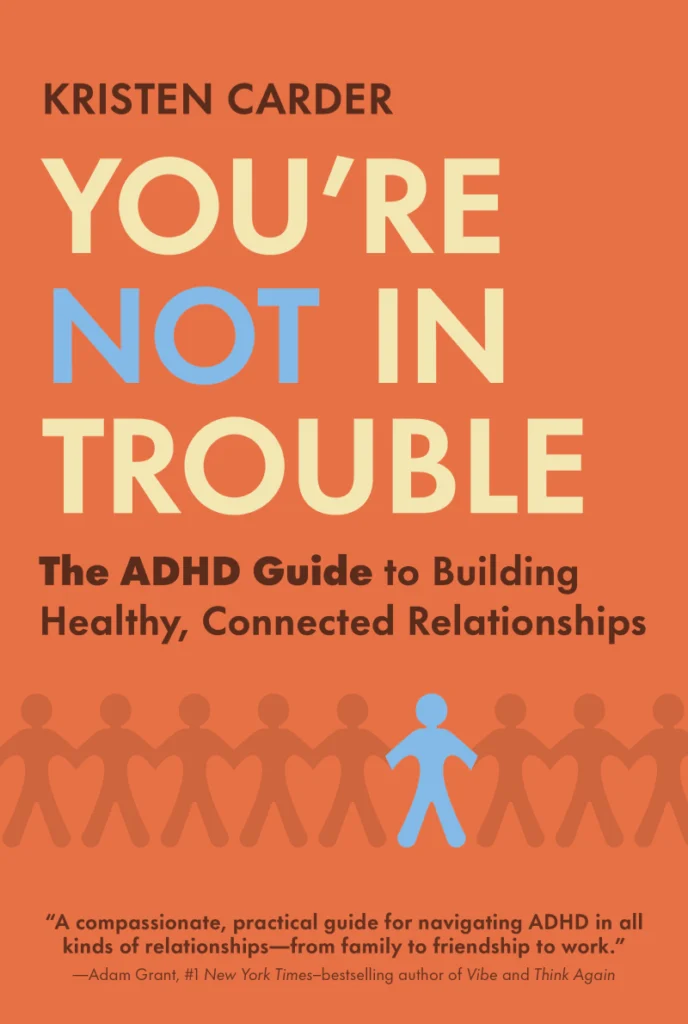
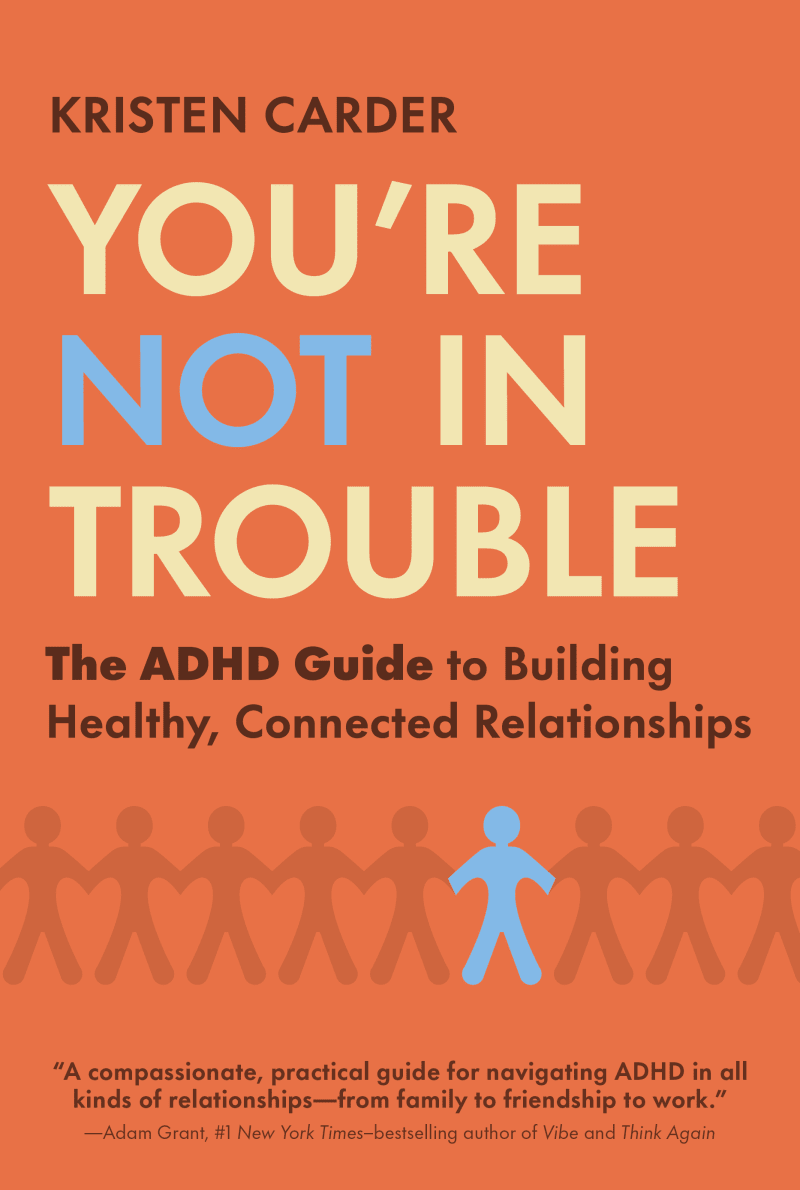
What’s up? Hello! Oh my gosh! I’m just gonna give us just a minute. I’m just gonna give us a minute to get started here, what’s ah? Come in, come in. All right, I see you. I love it. I am excited to be doing live podcast recordings. It is so much better for me, and I hope you love it. It is so much better for me to have the ability to just come on here and chat with you face to face rather than just talking into my microphone and pretending that you’re listening to me. So I am so freaking glad that you’re here. If you’re in the chat, say hi. Let me know where you’re from. I absolutely love it, and I’m just gonna go. I’m just gonna get started just the way that I would if if I were recording all by my lonesome. I’m just so glad that I’m not. I do so much better with people around me, and there are people around me. I’m obsessed. I love it. So let’s get started. Hey, what’s up? This is Kristen Carter, and you’ve tuned into the I Have ADHD podcast. I am medicated, caffeinated, regulated, and ready to roll. Get in here, get in here. How are you? Thank you so much for listening to this podcast. I’m obsessed with the community that we are creating here for the neurodivergence of the world, the adults with ADHD who are just kind of out there being like, “Hello, like, where is the help for me? And I am so glad to be a part of that. If you are new to ADHD, or you are just trying to figure out ADHD, what does it even mean to have ADHD? Like, what in the world is happening? Like, I, I was diagnosed, but nobody told me what it really means to have ADHD. Doctors usually assess you, hand you a prescription, and then send you on your way. And I’m curious if that was your experience because it certainly was mine. And part of the work that I do on this podcast, and I’ve been recording since late 2018, early 2019. Part of the work that I do here is educating people about adult ADHD. What does it mean to have ADHD, and how does it impact the areas of my life? And what areas of my life does it even impact? If that’s you, if you’re just like new to the ADHD space and wanting to learn, I have a resource for you. It’s the 10 things that I wish my doctor told me when I was diagnosed with ADHD, and you can find that at ihaveadhd.com/tenings. It’s like a an ebook. It’s small, but it is mighty. It is jam packed with information about ADHD and the different areas of your life that ADHD impacts. So again, that’s ihaveadhd.com/10 things. Today I am gonna get super real with you, like the realest. And here is where I’m at. My book comes out next month. It’s sitting behind me on the shelf. If you’re watching this on YouTube, you can see it there. It’s called “You’re Not in Trouble: The ADHD Guide to Building Healthy Connected Relationships. It is being published by DK, which is a division of Penguin Random House. I am so excited to get it into your hands, and and it’s a little scary to be someone who has written a book and to share a lot of my own personal stories and experiences and heart and soul in this book. I am writing it from the perspective of someone with ADHD, so I put a lot of myself in the book. Yes, it is very well researched. Yes, I am writing it from my expertise of someone who has worked with people who have ADHD for years and years. However, however, there’s a lot of Kristen Carter in this book, and do you know what I’m scared of? I’m scared that people are going to like. Do you ever have that feeling like you’re going to find me out? You’re going to just like know about me, and that is a scary feeling. I am telling you, the the desire to run and hide in the cave is strong, and so I thought today what would be really fun on this podcast is to go ahead and cancel myself ahead of time. Let’s just do it.
Kristen Carder 5:16
Like I, I think that we all have this fear, or maybe it’s just me. You can let me know. Is it? Is it just me? I think we all have this fear of like, gosh, what if I get canceled? What if the real me gets exposed and people get mad, and then there’s this like huge smear campaign, and then there’s all of these reels about like Kristen Carter, blah blah blah blah blah. So I was like, you know what? This is such a defense mechanism, and I don’t care. Like I’m owning it 110% I am just putting it out there immediately. Here’s what you’re getting with Kristen Carter. Here the five like up front before you’ve even ordered the book, here here are the five reasons to cancel me right away. Like, if you want to cancel me, let’s just do it. Let’s just do it. Do you know what the Enneagram is? I used to be like so into the Enneagram, and I am an Enneagram eight, which is like a challenger, and that is like welling up in me as this book process is going through. Like, let me just put it all out there. Yes, very scary feeling. They’ll find out who the real me is exactly, Kirsten. I’m loving the chat. It’s flying by as I’m recording, but that’s totally fine. I’m obsessed with it. Let me put it on live chat. Okay, so as the book comes out, here’s what you need to know. First of all, the book is called “You’re Not in Trouble. You can pre-order it now from Amazon or Barnes and Noble or wherever you get your podcast. It’s going to come out in October. “You’re Not in Trouble. Make sure you use the correct “Your Y O U apostrophe R E like you are not in trouble. You’re not in trouble. It is going to change the world, but your girl is a little bit feeling vulnerable, and so I’m just going to turn the volume up on the vulnerability, and I’m going to tell you the five reasons to cancel me prior to the book coming out, number one, are you ready? I can’t wait to get your reactions here. This is stuff that I have not said. Most of this is stuff that I’ve not said on the podcast. Number one, here’s the first reason. Ready? I wear a nicotine patch every day. I wear a nicotine patch every single day. I did a deep dive about a year and a half ago on nicotine, and there is some research out there on how it helps people with autism. How it is nicotine itself is obviously a stimulant. It can be addictive. It can be addictive, but what I found is it’s like addictive the way that coffee is addictive. Do you know what I’m saying? Like I drink a cup of coffee every day, and if I don’t drink it one day, then I do get a headache. So technically, I’m addicted to coffee, but I don’t go around thinking about coffee all day, every day, and like more coffee, more coffee, more coffee, more. Do you know what I’m saying? Like I don’t. So, in my opinion, in my experience, it’s addictive in the way that coffee is addictive. Okay, so here’s why I wear a nicotine patch. It is a natural stimulant, and at the start of the book writing process, I really knew that I needed something more than the non-stimulant that I was on, and I went to my psychiatrist and I went to my family doctor, and it was proving to be quite difficult to get access to a stimulant medication. Quite difficult because I did not want to give up my non-stimulant, and so what I was asking was, I’m taking a non-stimulant. I would also like to be on a stimulant. Can you make that happen for me? And in general, they said no. What they wanted to do was get me reassessed for ADHD, and I’ve already been through two assessments. And I was like, I’m not going through another assessment. I’m just not going to do it. I’m not going to do it. I do not consent. And so, in my deep dive of like what else could I use, I found that nicotine patches provide a steady stream of stimulant throughout the day, and so I use about five milligrams.
Kristen Carder 9:42
I started with a very like I would cut the patch and like make it very small, and then I increased it a little bit. And for me, five milligrams is a great amount, and I I got it right there on the shoulder every day. I am not saying that you should do this. I. Not recommending it. I am not. I’m not recommending it. However, I will say that it’s important that people with ADHD do kind of experiment with their environment, routines, medication, caffeine, exercise, stimulants, sometimes unconventional tools, in a in an attempt to function better and do the things that you want to do. Okay. Oh, someone in the chat is saying I’ve heard great things about using nicotine patches, but it can take a little while to find the right dose. For me, I started very small, increased little by little, just like one milligram every single week, and I found that seven milligrams was a little bit too much. That’s the size of like the smallest patch. Seven milligrams was a little too much for me. Five milligrams is about perfect. I’ve noticed an increase in my ability to focus. I have. I don’t find myself like jonesing for it, like anything like that, it’s just this random thing that I’m just like okay. So I put it on when I like after I take a shower in the morning, and then I have a reminder on my phone every night at 7p.m. to take it off. So I wear it for about 12 hours a day, and when I take it off, I don’t experience any withdrawal. I’m not like I need like it’s nothing like that. I just take it off, and then the next morning I put it back on. Works for me. First reason to cancel me. Here’s the second reason. Second reason to cancel Kristen Carter before her book comes out. Some of you know this, but not everyone does. I am unapologetically a Christian person, my Christian faith matters very deeply to me, and it does shape how I think about love and humanity and forgiveness and justice and power and relationships. I hope that my faith and my desire to be a Christian person has woven itself throughout the contents of this podcast that you’ve been listening to for years. Maybe it’s also embedded in the fabric of the book, although it is not an overtly Christian book. But I will say that I have had a lot of issues with the way that spiritual abuse has been used to manipulate people, including myself, over the years. And so, even as someone who has stayed tethered to the church and tethered to Christianity and tethered to God, I also want to be someone who is calling out spiritual abuse and oppression. And for some of you, you may hear that and say, “Well, those two things don’t go together, but I absolutely do think they do. For example, who here has watched the death of the pastor’s wife documentary? Oh my goodness, absolutely horrific! And it is that type of manipulation and abuse that I want to be a a voice for in the Christian community, and there is a very small part of my book where I talk about how if you come from a family that is religious, or if religion is kind of like maybe your family isn’t religious, but it’s like religion is embedded into kind of the fabric of your culture. You may hear things like honor your father and mother, turn the other cheek, forgive and forget, like those types of things, which absolutely have been weaponized to keep people compliant and to make it so that victims don’t speak up, so that people don’t step into their power and their autonomy, so that children don’t differentiate from their parents, which I think is extremely abusive. And so I want to be a voice for the powerless. I really do, and my faith is a big, big reason for that. A big reason for that. Being a Christian does not mean that I automatically defend Christian institutions, and I am actually a pastor’s wife. I don’t know if you knew that, but I am. I’m a pastor’s wife, and to be going to a church where equality is prioritized is so important to me. And so I hope that I represent that well here.
Kristen Carder 14:59
But it probably is a reason why some might want to cancel Kristen Carter. Let’s find. Let’s find out together. I’m not really sure. Okay, number three. Number three. Are you ready? This one is actually maybe the most spicy. This one is actually maybe the most spicy, and I’m actually interested. There’s a bunch of people here live, and I’m interested to hear your take. I was homeschooled from preschool to seventh grade, and I actually don’t love the idea of homeschooling. For me, it was a tool of educational neglect. For me, it was a tool of isolation. For me, it was a tool of indoctrination. And while I fully understand that there are some people out there who do it really, really well, I think in general, homeschooling needs to be regulated. Like homeschooling can be a playground for abuse and neglect and oversight and just not taking care of kids the way that they need to be taken care of now. I know that the argument on the other side is, well, schools may not be that much better. However, I will say that my experience with public school has been positive. My experience with my kids in public school has been very positive. I love public school. I think it’s absolutely amazing. And as someone who was homeschooled and hated being homeschooled and asked to go to school constantly, I want to go to school. I want to go to school. And the answer was always no, no, no, no, no. I really feel for for kids who do not have the community experience of public school. I understand. I’m like getting hot and sweaty because I am sure there are people listening who are like homeschooling is great for my kids, and like my kid did not thrive in school. And of course there are exceptions to the rule, but also can we please have just a little bit of oversight? I know that in Pennsylvania now you do have to meet with someone and like show them what you’ve done with your child, which I think is great. But in general, there are many states that don’t have that, and that really allow for parents to just do whatever. Did you hear about the? This is a tangent. Did you hear about the House of Horrors in Ohio? What is that place where the 16 children were just like there, and nobody knew about them, and never went to school, and there was never any oversight. Like that’s what I’m talking about. Needs to be like we we need a system in place. We need a system in place for for homeschooled kids. Now, again, I know there are ways to do it well. I was actually just watching a reel, and I think it’s so valid. I’m going to play it for you. I was just watching this the other day, and I was like, “This dad makes so many good points. So I am going to play something from the other perspective, here I’m going to turn up my phone and hopefully you can hear it. Five
Speaker 1 18:44
weird reasons why our children don’t go to school, and no, it’s not because we hate teachers and think school is evil. So let’s start with number one, which is travel. Our children do not have to ask a teacher for permission to actually live their life. We literally just flew our oldest daughter Ava back to Ohio to make it to her friend’s birthday party. That is a memory that we didn’t want to have to schedule around somebody else’s calendar. Number two, time they can get eight hours of schoolwork done and two to three focused hours. Then they have time to learn what they actually care about, work on their passions, be creative, and overall just be children. Number three, we actually like our kids. I mean, we love them too, obviously, but we genuinely enjoy their company. We didn’t have children just to hand them off all day and then see them when everybody else is tired at the end of the day. Number four, habits. We get to shape the habits that they are building every day, how they handle their emotions, how they solve their problems, how they talk to people, and how they treat each other. And it’s not because we think every single adult is bad, but because those things actually matter to us. And last but not least, we get to learn with our kids. Our kids ask us questions that makes us think. We get to see what they love, what they struggle. And who they are becoming in real time, and at the end of the day, this is not us saying that every family has to do it this exact way. This is just what made sense for ours, and I just wanted to share it with you. Probably just,
Kristen Carder 20:13
I really like that guy. He’s a great follow. It’s Devin the One. If you want to look him up, look him up, Devin the One. And listen, great guy. Obviously, it sounds like he’s doing a great job with his kids. Not everyone does. Not everyone does. I totally agree. Great, great comment in the chat. The book “Educated” is a really good example of educational neglect. I only got through about a quarter of the book, and it was so triggering to me because my story was not exactly the same. Hers is more severe than mine, but but it it absolutely was quite triggering. So I couldn’t finish the book. But that’s my little rant about homeschooling, and I’m curious what your thoughts are. I know that there are people out there doing it well, but that is, in my opinion, in my experience, the exception, not the rule. And I was an example of obvious educational neglect when I went to school in seventh grade. I floundered. It was so, so, so hard to transition. It was so hard to like be a person and figure out how to transition and how to assimilate into the school environment and how to like how do I actually do homework? How do I take tests? How do I do? It was just so so difficult for me, and I was undiagnosed ADHD, of course, because it was the ’90s. It was the ’90s. Okay, reason number four to cancel Kristen Carter. I’m saving the biggest one for the last because I’m sweating thinking about talking about it, but I am going to talk about it. Okay, number four, number four. I’m at the point of my journey with ADHD research, ADHD education, learning about education about ADHD and trauma, I am at the point of my journey where I am truly starting to wonder: Is my particular version of ADHD caused by trauma? Question mark. I really do wonder. I really, really do wonder. I am starting to believe for me that my particular-I’m not saying everyone’s, but I am saying mine. I think my ADHD is actually most likely, like CPTSD. Do you know what CPTSD is? Complex post-traumatic stress disorder from growing up in a highly dysfunctional, highly invalidating, highly un. emotionally, psychologically unsafe environment. I believe that really changed my brain, and I think I I will never be able to prove it, but from the research that I have done and how it has impacted me. I am start really starting to wonder: Is my ADHD actually caused by trauma? Now, I will still continue to medicate myself. I have found that medication has been so helpful, and I will never stop taking medication. I absolutely love it. It is so helpful to me. Medication actually allowed me to sit in the therapist chair for four years and unpack that trauma. Prior to being medicated, I would have never had the capacity for that. Does that make sense? But for me, when I look at my history, when I look at my family tree, when I look at the generations upon generations of dysfunction and abuse, I truly believe that it is quite possible that my ADHD is trauma related, and I’m curious what you think about that? Because my goodness, the way that trauma impacts the brain is very similar to the way that ADHD presents in the brain. So trauma impacts the frontal lobe. It impacts your executive functions. It impacts. Your ability to handle emotions, handle rejection, handle relationships, and I know ADHD does too. But the overlap is so interesting to me. Whenever somebody asks me about that, I always say I have more questions than I do answers. I don’t have any answers, but I have so many questions, and I really wish that there was more research on this because when I surveyed 2165 adults with ADHD, the responses to the prompts were so similar to my own experience, meaning, meaning. So many people did not grow up feeling understood. So many people did not grow up with consistent validation. So many people did not grow up with the with emotional regulation being taught to them. As a matter of fact, only 3% of survey responders reported that their parents taught them how to regulate their emotions. 3% of 2165. That is wild, and so it’s very interesting to think.
Kristen Carder 26:26
Okay, is that because perhaps the parents also had untreated ADHD? They were also emotionally dysregulated. It’s just kind of all overlapping. ADHD travels in families. It’s highly heritable, right? But trauma also travels in families, and I just really want the academics to be looking into this. I am not an academic. I’m not. This is not my area of expertise. But I want people to research this. I want more research On trauma and those with ADHD who have been diagnosed, what their childhoods were actually like. Because when I was diagnosed with ADHD, you know they they are supposed to take a trauma history, but I did not have awareness of my own experiences. I actually didn’t know that my childhood was traumatic until I sat across from my therapist. I started at age 38, and I just started talking about my life and telling stories. And I, her face would do this. She would like, and I, and then I would say, “Wait, what? What’s wrong? Is that not normal? Is that is that not? And she would say, “No, that’s not normal. I would say, “Oh, I because when it’s your childhood, most of the time you just think it’s it’s just like what everybody else, just normal. This is just normal, and so a lot of times I would suspect. I’m just talking like allegedly. When we go in for diagnoses and they ask about their childhoods, do you have any trauma in your childhood? You’re just like, no, I’m good. I don’t have any trauma in my childhood. Not understanding that chronic invalidation is traumatic. Not understanding that for a highly sensitive person, not being taught how to regulate your emotions can be traumatic. That not being understood and seen and attuned to is traumatic. Children need three things. This is right there in the book. Children need three things from their parents. They need attunement, which is I see you, I know you, I’m connected to you right here in this moment. My attention is on you. They need emotional co-regulation. I’m here with you in this moment. You’re not alone. I can help you get through this this difficult experience, and they need unconditional love. What does unconditional love mean? Unconditional love expressed through acceptance. You’re good. I love you. You don’t have to perform a certain way in order for me to love you. You don’t have to put on a show for me and be perfect in order to stay connected to me, right? And so, when a child does not get those three things in their childhood consistently enough, it does not have to be perfect. Does not have to be perfect, but consistently enough, consistently enough, when a child does not get that secure base, that’s traumatic. That’s going to change your brain. So I just, oh gosh, I have so many questions about this. People have mixed feelings about Gabor Mate, but I like that he says in relation to like, is it ADHD? Is it trauma? A lot of times, I’ve heard him say, “Nature loads the gun, and nurture pulls the trigger. Nature loads the gun, nurture pulls the trigger, meaning you may be genetically predisposed to having ADHD, and then the environment in which you were raised also matters. I saw a famous psychiatrist on a podcast recently Say that ADHD is not caused by trauma, and it was just like a very blanket statement. No, ADHD is not caused by trauma. And when the interviewer pressed her, she said, “We don’t want people thinking it was something like this. I’m going to summarize, but it was something to the effect of, ‘We don’t want people thinking that ADHD is caused by trauma because then parents will think it’s their fault. Parents will think it’s their fault, and I just thought either it is or it isn’t. But we don’t decide based on how we think people are going to react, right? That’s not what we. I’m not a scientist, but I would guess that that’s not how we do science, right? The essence of what she was saying was like, if parents think, if parents are told like ADHD is caused by trauma, then no parent is going to bring their kid in for a diagnosis because then the parent will essentially be blamed. And I’m okay.
Kristen Carder 31:57
I just I’m just gonna leave that let that linger a little bit because I just don’t think that’s a great reason to say that ADHD is not caused by trauma. Either it is or it isn’t, but but the reason is not well. We don’t want anybody to feel bad about it, so we can’t say that it is. That’s just not, in my opinion, how we’re going to do it. I don’t think it’s anybody’s fault. There is no blame to be assigned. However, however, how you treat your kids matters. Your kids matter. It matters. Yeah. Imagine if we said that about any other condition. Imagine, imagine. I don’t want to tell them that their kid’s depressed because they might think it’s their fault. I don’t want to tell them that their kid has anxiety because, listen, as a parent, I have three kids. They are 1816, and 12. A lot of it does fall back onto me. Like as a parent, it is my job to accept responsibility for the impact of the environment that I create for my kids, and that is hard. Yeah, as a parent, that is hard. Like a kind of a big burden to bear. That’s called being a parent. It’s called parenting. You know what I’m saying? Like that’s just what it is. It’s not about making me feel good. It’s about making sure that my my kids have a safe environment to grow up in. So all of that being said, I have no answers. I only have questions, but I do question it, and I will not stop taking medication because medication, my God, it has changed my life. Like, raise your hand in the air and wait like you just don’t care if medication has changed your life, because for me it really, really has, and I get accused of being a like an advocate for big pharma, which is hilarious on social media all the time when I talk about how I am just obsessed with my ADHD medication. I love it. I’m so grateful for it. Thank God for it. Thank God for it because it it has totally totally changed my life. Do I get money from big pharma? No, your girl does not get big pharma money, nor would she take it. Nor would she take it. So just because I think that trauma did impact my own ADHD symptoms, does not mean that I’m like, well, that means I’m not going to take medication. No, I’m still going to medicate every single day. No, I don’t say what medication I’m. That’s true. If you haven’t found the right med yet, someone in the chat saying I haven’t found the right meds yet. Yeah, that’s a tough journey, and what sucks is that the only way to find the right med is to take and and see what it’s like and see how it makes you feel. And really discouraging because it can feel like you’re a guinea pig experiment, but I would just give yourself a lot of grace and a lot of time, and say it’s okay for this journey to take a year or two, because once you figure out if there is a medication that works well for you, once you figure that out, it will change your life. It’ll change your whole, whole, whole, whole life. Somebody is asking, “Do you assume that highly sensitive people are secretly all ADHD? Not necessarily, but I think that most people with ADHD are highly sensitive. That’s just my own thought. That is not backed up by research. That is not backed up by research. Okay, last thing. Are you ready for it? It’s scandalous. Scandalous. Here we go. Here’s the fifth reason to cancel me before the book comes out. Let’s just lay it out all out there on the table. I wrote a book about relationships. It’s called “You’re Not in Trouble. I’ve already mentioned it a couple times. It’s really good book. It’s all about helping people have healthy, connected relationships. Healthy, connected relationships. I wrote a book about relationships, and I haven’t spoken to my parents in over three years. I’ve never said that out loud on the podcast, ever, but I’m saying it now. I wrote a book on relationships, and I don’t have a relationship with my own parents, and I don’t think that disqualifies me from writing a book on relationships.
Kristen Carder 37:07
I think it actually shows that I’ve come by this work very honestly, that I didn’t enter this world with a lot of relational privilege, that I’ve had to claw my way to being able to be someone who can create healthy and connected relationships. That’s who I am. I see the irony of writing a book on relationships and having let go of some very very important relationships, however, sometimes the healthiest move in a relationship is to let go of it if it is dysfunctional, if it is consistently harmful. It if if it is costing your more than just your peace, because all relationships are costly, right? Like all relationships are costly. But if it is costing you over and over again your ability to have self trust and regulation, and your own autonomy-it’s really important to be able to say, you know what, this is not for me. Someone in the chat said, “The only thing toxic in your life should be the song by Britney Spears. So I, it is such an interesting journey, and um, it’s an interesting road to walk because, um, I want nothing more than for ADHDers to have healthy and connected relationships with all of the people who are important to them, but sometimes that is not available to us. Sometimes we try and we try and we try and we try and we tweak and we ask and we we beg and we try to like change the relationship to fit us, and it just doesn’t. And then what do you do? What do you do then? Are you willing to? Well, let me just speak from my own perspective. I was not willing to give up my family, my job, my sanity, in order to maintain these relationships that were harming me. I just had to make a choice, and it was the hardest choice I have ever made. I don’t know if anyone relates to this. I would love to hear from you if you do. I know that there is a. Lot going around on social media about like therapists are telling people to estrange from their parents, and that’s just has never been my experience. Or there’s there’s a trend, a quote unquote trend of adult children estranging from their parents. I also don’t think it’s a trend. It is something that has happened for millennia, but now it’s just being talked about very openly on social media, very, very, very openly. And I just wonder if you relate, like, if something maybe it’s not with your parents, but if you have, maybe you have been, you’ve had to go through a divorce or a friendship breakup, or something really difficult with a boss at work, or maybe your parents estranged from you. Parents have been estranging from their kids long before kids started estranging from their parents, but that’s just a whole nother rant that I could go on. Yes, this person says I was disowned for seven years exactly, but I think we all know what it’s like to lose relationships that are really important to us. And I hope, I hope, and pray that this podcast, that the book, that the community is a a place for you to feel seen, is a place for you to get healing, is a place for you to get some validation from what you’ve been through and from the things that you the road that you have had to walk. This is not an easy road to walk. Some of you have parents that did their very best, and you have great relationships with them, and that is awesome. That’s so wonderful. You are so truly, truly blessed. Some of you have parents that didn’t do their best. They just didn’t. That they knew better, but they didn’t do better. That’s so tough. Some of you have parents that did their best, but it just wasn’t enough. That’s also valid. That’s also valid. It’s just really an interesting time to be alive. It’s an interesting time of life, and and I just want to give you some encouragement that whatever relational turmoil you might be going through, that there are healthy relationships out there for you. They take time, they take effort, and they take being truthful, being honest, being vulnerable, just like I’m being vulnerable with you here today. Although this is very one-sided, I get that I’m just talking at you.
Kristen Carder 42:48
But I just want you to know that healthy relationships are absolutely possible. I cannot wait to get the book in your hands. So those are the five reasons that you might want to cancel me before the book comes out. We’re just getting ahead of it. We’re just like putting it all out there. We’re just making that we’re being as honest and vulnerable as possible because my whole story, lots of Kristen Carter coming out with the book. I saw this in the chat, and so I do want to address it, guys. I have I have news. I have news. The news is. Let me paint a picture for you. Let me paint a picture for you. This morning I woke up, and after waking up, I checked my email, and I got an email from Amazon, and the email from Amazon said your order has been delayed. Now I am waiting for a couple things to be delivered today, and I was like, oh shoot, because we’re leaving on a trip tomorrow to Indiana to visit family, and I was like, oh no, my order is delayed. Like the tie that I need for my son for the service is not going to get here. I was like so sad. So I opened the email. My my order is going to be delayed. Guess what it said? You’re not in trouble. Is going to be delayed, and I was like, excuse me, what? Excuse me, what? It was actually the book. So I reached out to my agent right away. I sent her this a screenshot, and I was like, “What’s going on? Turns out the printing press, I guess, I guess that’s what it’s called, for Penguin Random House is backlogged. Yes, that’s how I found out. Isn’t that awful? The printing company-I don’t even know what to call it-is backlogged, and so they haven’t been able to print all of the copies yet. Which means that it triggered. This like delay, the publisher didn’t know. The my editors didn’t know. My agent, nobody knew. Nobody knew. So it’s coming out. I’m not exactly sure when. It looks like it’s going to be a little bit later in October. Can you believe that’s the email I woke up to this morning? Your shipment is going to be delayed, and I was like, “Wait, my actual book date, publish date, has changed? I know. I just found out like the rest of you, so I apologize to anyone who has pre-ordered already and was counting down the days like I was. There was like 21 days left, and I was so excited. And yeah, it’s going to be a little bit longer, but it is more time for us to get excited and for me to adjust. It’s more time for me to adjust and get ready for it. I just cannot wait for you to get it. Yeah, no one was in the loop except for Amazon. That’s exactly, it’s exactly right. It’s so funny. More time for me to tell people about it. I love it. Thank you so much. It would be so fun to get on a bestseller list. The only way to do that is to get a buttload of pre-orders. It would be so cool, so fun. You can go to Amazon or Barnes and Noble or Bookshop or Audible or wherever you get your books. It’s available on ebook, ebook, hard copy, or audiobook. And it’s called “You’re Not in Trouble. And I would love for you to pre-order. But if you don’t, it’s totally fine too. You’ll get it eventually. You’ll get it eventually. Everyone’s gonna read it eventually. I trust us. I know my people. I know my people. I know how we roll. I know how we roll. It’s no problem at all. Listen, if you are feeling really supported right now, I just want to say I’m so glad you’re here. I’m so glad you press play on this podcast. I’m so glad you’re listening. I really hope that I can be just like your ADHD bestie while you’re going about your business, while you’re driving in your car, you’re taking your kids to practice, you are maybe walking the dog, or you’re loading your dishwasher, whatever the case may be. I absolutely love it. Please make sure to like, subscribe, press that Apple ratings button.
Kristen Carder 47:26
All of the things is really really helps the show. It helps get it in front of other ADHDers, and that’s what we need. We need more good information. Now I know that this particular episode was very self-serving, and it was all about me. It’s not always like that, you guys. I promise you, it is not always like that. I don’t always have episodes that are all about Kristen Carter. Most of the time, they’re about you and about things that are going to be very helpful to you. So I cannot wait to talk to you next week. Next week we’re going to talk about boundaries and limits and all of the good things. I cannot wait for you to hear that. And have an amazing day. Thanks for being here. Bye bye.