Kristen Carder
Welcome to the I Have ADHD podcast, where it’s all about education, encouragement, and coaching for adults with ADHD. I’m your host, Kristen Carter, and I Have ADHD. Let’s chat about the frustrations, humor, and challenges of adulting, relationships, working, and achieving with this neurodevelopmental disorder. I’ll help you understand your unique brain, unlock your potential, and move from point A to point B.
Hey, what’s up? This is Kristen Carter, and you’ve tuned in to the I Have ADHD podcast. I am medicated, caffeinated, regulated, and ready to roll, and I hope you are too. Let’s go medicated, caffeinated, regulated, and ready to roll. Are you? Are are you like? I hope I really hope that you are. So, if you’re not, what do you need? What do you need to make sure that you are so ready to roll with me right now? Because I know you’re not just like sitting on your couch listening to this. I am positive that you are multitasking. You’re out for a run. You’re walking the dog. You’re driving in your car. What else are you doing? You’re pretending to work at your job, while listening, I know that I am your body double right now. As you are doing all of the things, I just want to say, hey, I’m so glad you’re here. I’m so glad that you press play on this podcast. I’m so glad to know that I am not the only one working to. I almost said solve for my ADHD, and maybe that’s not the best language for it, but like working to heal, working to develop myself, working to evolve as a human with ADHD. It is not for the weak. It is not for the weak. This is so hard, but I am proud of you for the work that you’re doing, and part of that work I know is you pressing play on this podcast. This class is all about building enough trust with ourselves so that when we set rules, which is kind of what a boundary is, right? When we set limits, rules, intentions with ourselves, we can truly honor them because we trust that we have our own best interest in mind. So this class is a bridge from you can’t tell me what to do, get out of here. You’re not the boss of me, which is a lot of times our internal dialog when it comes to boundaries. Building a bridge from that to, I trust you that you have my best interest in mind, and even though it doesn’t feel good, I’m gonna do the thing. I’m gonna honor this intention because I know that it protects the life that I want, and that is the theme. If you listened to the last episode, or maybe you didn’t catch that yet, but you’re like here for this episode. The whole point of internal boundaries are protecting the life that you want, protecting the direction that you want to go in, making sure that the guardrails are set properly so that you can move in the direction that I just talked about the self development, the evolution, the growing, the changing, the becoming the person that you want to be, and having the life that you want to have. I just hope that you get so much out of this episode. Again, this is a focus class that I’m sharing with you. I’m sharing it for two reasons. Number one, it was life changing for my members, and I don’t want to gatekeep. I want to give it to you.
And number two, I’m taking time off from work, and so I’m not going to record a whole podcast. I’m just here recording the intro, and then I’m going to go stare at the wall for seven days because I need it. I’m literally going to stare at the wall. I have been writing a book. I have been leading my coaching program. I have been parenting three children. I have been trying to be a real human in the world. And let me tell you, I am tired. I’m tired, and one of the ways that I take care of myself so that I can trust myself. One of the ways that I honor my own limits is that I I give myself time to rest because I deserve it. And guess what? So do you. So do you. So in this week’s episode, you’re getting a life changing class. I hope that you love it. Listen, if you’re just like starting your journey with ADHD and you’re kind of like, oh, like internal boundaries is kind of a topic that’s like like a little heady for me. Like I might not be there yet because I just need to like manage my time, work on my productivity, and even figure out what ADHD is all about. That’s no problem at all. I actually have a free resource for you called “The 10 Things I Wish I Knew When I Was Diagnosed with ADHD. It’s the 10 things that I wish my doctor told me when I was diagnosed with ADHD. And guess what? They told me, they told me you have ADHD, go pick up your prescription. That’s all the info I got. I don’t know about you, but that’s the info that I got, and then it was on me. The burden was on me to figure out what does having ADHD mean. How does this actually impact my life? What parts of me are like just fundamentally flawed, and what parts of my like quirks and idiosyncracies are actually ADHD related? And how do I tell the difference between the two, and how do I take care of my ADHD symptoms so that I can just like be fully myself? So go to ihavedhd.com/tenthings to grab that freebie. And if you are someone who’s like, no, I already know all the things, but you’re not getting my emails, which are going to give you all of my freebies, all of the book resources, all of the focus discounts, all of those kinds of things, and you just want to hop on the email list. That’s a great way to do it. Go to ihavedhd.com/10 things to grab that free resource. The 10 things that I wish my doctor told me when I had ADHD. It’s more like a like a small ebook. It’s definitely not just like a one pager. So, just so you know, it is comprehensive, and you’re going to get a lot out of it. Okay, let’s get into today’s episode.
This is internal boundaries part two. I hope that it changes your life. I’m curious if you did listen to part one, or if you were in the room for part one, how have you been processing and thinking about internal boundaries since then? So internal boundaries. While you’re answering that, while you’re thinking about it, while you’re popping that into the chat, I just want to do a little review. Internal boundaries are the rules that we set for ourselves to protect the life that we want. Internal boundaries are the rules that we set for ourselves that protect the life that we want. Okay, and I just want to really hone in on the fact that internal boundaries are a form of protection. You have a life that you want to live, and it’s based on your idea of that is based on your own internal values, the things that are important to you, the dreams that you have about like what it means to live a good life, the the gifts that have been given to you, you know, just that that make you who you are, and so we all have this kind of like picture, whether we have it at the forefront of our minds or not, of the type of life that we want, and the internal boundaries that we have are what protect that. It they’re the guardrails. Think about guardrails. You’re like driving on the road. The guardrails are there to to keep you in your lane toward your destination to make sure that the life that you want is protected. Yes, you with me? Okay. The problem is that so many of us were raised in homes where boundaries were used as coercion, control, manipulation, they were used as a way to dominate us. Would you agree? I know I’m speaking from my experience, but I also know that in the first class, many of you said yes. The boundaries in my home were used to dominate, control, and coerce me to show up the way someone else wanted me to. So here’s what happens psychologically with that: is that we think when I get out of here, I’m not doing any of this, and nobody is going to be able to control me. And listen, that’s valid. That’s so valid. The problem happens when we personally are trying to quote unquote control ourselves so that we like move in the direction that we want to go, so we set an internal boundary or a reasonable limit, and we say, for example, and this is the this is a very easy example of like, I want to go to bed at 11 p.m. because I know that protects the life that I want. I want to be able to sleep. I know that sleep is good for me. I know that my brain functions better with sleep, and so I say, okay, we’re going to bed at 11, and then what happens? It happens to me. It happens to you. I know it. You’re like, don’t tell me what to do. You can’t tell me what to do. You’re not the boss of me, and we rebel against ourselves. But what? So interesting about that is that that’s like old leftover rebellion, wouldn’t you say? Wouldn’t you say? That’s old leftover rebellion, rebelling against unreasonable limits and rules that our parents set for us because I said so. Yeah, you have to do it because I said so, because I’m the boss and it’s my way or the highway. So do what I tell you to do and don’t question it. And of course, of course, we have resistance and rebellion toward that. Okay, so the question here is: We we already did a whole class on internal boundaries. Today’s class is going to really focus on how do I become someone whose own boundaries feel safe enough to follow? How do I become someone whose own boundaries feel safe enough to follow. How can I build self trust between me and me? Self trust between me and me, so that I can set a limit that says, “Hey, you need to be in bed by 10, and I can trust myself to say, “You know what? That doesn’t sound very fun, but I believe you. I believe I trust you that this is the right thing. So even though it’s not really that fun, I’m going to do it because I trust you. Helma says I’ve never seen anything in your work about eating disorders or binge eating and so on, and I believe that my issues with that stem from the same root. This is my time. This is my control. Same as sleep and procrastination. Would you agree? Yeah, I would agree. I’m not an expert on eating disorders. However, I struggled with disordered eating and the boundary with that, like rebelling against the boundary, 100% 100% So it’s not that we don’t know that we need boundaries. We do, but our nervous systems experience our own authority as if it’s someone else’s control. I’m going to repeat that: when we set a limit with ourselves, a reasonable boundary limit. Hey, let’s use it in terms of eating. We’re not going to eat past feeling full. Once we hit that full feeling, whatever that means for us, we’re going to stop boundary. What our nervous systems often do is experience our own authority as someone else’s control, and so we need to figure out how do I develop safety in my relationship with me? How do I develop a safe enough relationship with myself that I can actually trust this boundary that I’m setting with myself, so that I’m not rebelling against it as if it is someone else trying to control me?
I know it’s a lot, and this is just my intro. What we need to make sure we’re doing is coming from a place of self trust and like self support. I don’t set a boundary with myself because I hate me. I don’t set a boundary with myself because I think I’m bad or lazy or unreasonable. I set a boundary with myself because I like myself, and I want to make sure I’m protecting the life that I desire. So I desire to wake up tomorrow and feel refreshed-ish. I don’t know if any woman in her 40s wakes up feeling refreshed, but refreshed-ish. I want to wake up and be like, okay, I can do this. I can tackle this day. Okay, another boundary that I set with myself is that I really don’t drink anymore. Every once in a while, I will, but like in general, I’m not drinking. I’m not using this as emotional regulation, I’m not. It’s not a habit anymore. I’m not reaching for two glasses of wine every night. No one told me I had to do that. That’s an internal boundary to protect the life that I want, because the life that I want does not include headaches or hangovers or brain fog. Does that make sense? So we need to get clear on what is the life that you want. What is the life that you want, and do your boundaries actually protect that, or are you trying to like control some aspect of yourself that you think is broken, or because you think you should? Let me tell you that should boundaries are boundaries. We gotta stitch that on a pillow. I am so sorry that just came to my mind. I’m so embarrassed that I said that, but it is the truth. So let me just say it again. Even though, yeah, I don’t have a boundary with cursing. Whatever, Elise says that’s the title for your next book. Should. Boundaries are boundaries. They’re not going to work. They’re not coming from a place of self trust and self support. They’re just not. They’re coming from a place of control. Even when I’m thinking about my kids and setting boundaries with my kids, like for example, they shouldn’t have so much screen time, or they shouldn’t whatever. Even those ones are really hard to defend, and they’re really hard to hold because they’re should boundaries are boundaries. Because when boundaries feel like punishment, we rebel. But if we can help our boundaries to feel like protection, if we can help our boundaries to feel like protection, then we can cooperate with ourselves toward protecting the life that we want. Yeah, it’s so good. So obviously, when we’re first starting like this work, or maybe even prior to starting work and focused, we set a lot of boundaries because we think I’m lazy, or I have no discipline, or like I need to set these rules for myself because other people are doing this, and so I should too, right? And those aren’t going to work.
Those types of boundaries aren’t going to work, okay? Because we’ve learned authority equals control, rules equal shame, expectations equal conditional love, and boundaries in our past often have meant that someone else wins. Someone else wins. My mom gets what she wants, or my boss gets what they want, but I don’t win in this scenario. But if we we really need to like work on our internal perspective around the internal boundaries that I set for myself are protective in order to help me win. Drinking two glasses of wine every night, waking up four times in the middle of the night, waking up with brain fog in the morning, and feeling foggy and hungover is not winning. It’s not winning staying up until three a.m. because I’m not willing to be self supportive and tuck myself in, even though I don’t feel like it, and then getting four hours of sleep and feeling like I really can’t handle my day is not winning. So the internal boundaries that we set for ourselves are really like they have to be coming from a place of I want to help you win, and when we set the boundaries, and then we feel that resistance. There needs to be an internal conversation. Okay, what’s going on here? Hey, I’m setting this limit for you because I know what’s best for you. I know that this is going to help you. Can you trust me with this? Can you trust me with this? Are you willing to give this a shot? Because I truly do have your best interest in mind. My son, my middle guy, lost his privilege for his phone and computer because he did not honor a very important boundary. And last night, when I went to bed, I said to him, “How can I help you honor the boundary of not having access to your computer. How can I help you honor that? And he said, “You should probably take my keyboard. And I was like, “Great, pop it into my room. That is a great example externally where two people are collaborating to help one person honor a boundary, hey, how can I help you honor the boundary of no computer time tonight? Hmm, you should probably take my keyboard. Okay, great, no prob, no shame, no blame. Just a back and forth convo about honoring the boundary. If you can internalize that, hey, how can I help you honor the boundary of going to bed before 12 a.m. If you can have that conversation with you, you and you. Hey, how can I help you honor that? Okay, what I’m going to need in order to honor that boundary is I’m going to need some alone time built into the evening. I’m going to need maybe a screen time limit, maybe a reminder, and maybe to use my partner as a body double when they go to bed. I’ll go to bed. Great, let’s do that. Do you hear what I’m saying there? The internal conversation between you and you needs to be really built on self trust and self support. How does that feel for you? Internal boundaries take self-discipline. I think they take self-collaboration. I don’t like the idea of self-discipline because I think we all struggle with it. I think it’s more about collaboration and support because I’m not good with discipline. I would never. I would never. Self-identify as someone who is disciplined, but I am really collaborative with myself. What do I need? What do I need here? A big theme in the first class from the beginning of July was our boundaries are about honoring our needs, and we often struggle to connect to our needs and identify our needs, it can be really hard because needs feel really vulnerable.
Because our needs maybe were neglected in our childhood, and now we actually neglect ourselves. There’s a lot of self neglect. I shouldn’t need anything. I shouldn’t need any help with this? You know, if someone that you trust asks you to do something reasonable, how do you respond to it? It’s really interesting how we’re more willing, often, to honor someone else’s requests than we are willing to honor our own requests, and I just wonder if you find that to be true. I think a lot of that stems from: is our inner voice nice to us? Are we kind and compassionate and considerate and supportive, or is our inner voice a jerk, a critic, really disrespectful to us, and so a lot of this will stem back to how do we actually talk to ourselves? What is the conversation truly like with ourselves? So, if you notice, like, no, my inner voice is a critic, then I would really encourage you to revisit the self concept and how to quiet the inner critic course, because in that course we really dive into like why is our inner voice so mean and how can we solve that? Because if your inner voice is mean to you, why would you ever honor one of their boundaries? Do you see how connected it is? If your inner voice is mean to you, you’re not going to honor its boundaries, and so maybe the starting point for you need maybe you need to back up a little bit and say, “Actually, need to fix the inner voice first. I actually need to like learn how to be nicer to myself first, because I’m not going to listen to him. I’m not going to listen to her. She spends all day being mean to me, and then she says, “Go to bed at 10. Yeah, right. Get out of here. Get out of here. I’m not listening to you. You’re not the boss of me, Trish says. “Breaking promises that no one knows about to myself is easy. Yeah, I here’s the thing: I make very, very, very, very few promises to myself, and I would encourage you to do the same. Very few, but I do set some reasonable limits with myself, but I’m not the kind of person that’s making promises to herself. When a promise comes up in my brain, like “Oh my gosh, I will, I will work out three times a week every week, the reasonable adult person in my brain comes in and says, “Honey, no, you’re not going to. But we can really work toward that. But it’s very unlikely that you’re going to work out three times a week every week. But what you can do is give it a go and then restart and restart and restart and be willing to get back on the horse 100,000 times. Yeah, we talked about perfectionism a lot in the first class, and I wonder how many of you are setting some unreasonable perfectionistic internal boundaries for yourself. Can you like take some inventory and think through how many of your internal boundaries are actually quite perfectionistic and unreasonable? Yeah, cut it out. Stop it. You you need to really start clocking. I think this is actually quite perfectionistic. It’s not going to be helpful. Erica says, “But I should be able to do all the things, and I will say, Erica, that is a lie from the pit of hell. No, you should not be able to do all the things. You should not be able to do all the things because why? Because you are human, and humans can’t do all the things, you’re not a robot. I think it should be reasonable to get my work done, exercise every day, and go to bed on time. I disagree. That’s not reasonable. Yep. And then we so easily give up because we didn’t do everything perfectly. Exactly. Getting back on track when I break one of the boundaries is hard. Let’s talk about that. Let’s talk about that. When I break a boundary with myself, an internal boundary, I think we miss a very key piece. What what usually happens for you? Let’s start here. Let’s do some self reflection. What usually happens for you when you break an internal boundary? When you. Notice, oh, I said I I said I’m going to do this and I didn’t. What happens in your brain and body? Guilt and shame. I feel like I gave up. Guilt and shame. The whole thing gets thrown into the trash. Feel disappointed in myself. Anxiety. I’m mean to myself. Makes me so sad. So here’s what needs to happen. Here’s what needs to happen. There needs to be a process of repair. Do you know what repair is?
There needs to be a process of repairing with yourself. Let’s put it in relational terms. If I yell at my child, which is something that I don’t want to do, but but if I yell at my child, I cause a rupture in the relationship, and I can go ahead and spiral and self judge and feel guilt and shame. But does that help me to repair the relationship with my child. No, what helps me repair is to acknowledge what happened, take responsibility for it, offer an apology, give them space to kind of recover. Hey, I yelled at you earlier, I was really unkind, and you didn’t deserve it. I’m really sorry. I’m so so sorry. You did not deserve that, and I I want to acknowledge and take responsibility for that. That was on me. Yes, you did X Y Z. That should not matter. It’s my job as your parent to be regulated. I’m the grown up here, and I’m really sorry about that. So I didn’t do my job, and I just want you to know that I’m sorry about that. Is there anything you need to hear from me to make it better? Is there anything I can do to help you feel more connected, or do you just need some time? You need some time. Okay, that’s fine. I’ll check back in with you tomorrow about it. You see, you see how we can do that. Okay, now imagine doing that with ourselves. Hey, you didn’t honor that boundary that we set. What’s up with that? Yeah, you didn’t want to. You felt controlled. I get it. I get it. These boundaries are set to protect us and the life that we want. So I know that you feel guilty and you feel shame. That’s not really necessary. Let’s just get back on the horse, because what we really want is to protect where we’re going. What we really want is to have those guardrails up so that we keep going in the direction that we want to go. But we’re okay. You don’t need to shame yourself or guilt yourself. I got you. We can stay connected here, and I know exactly why you didn’t honor that boundary. I get it. You were dysregulated. You were feeling controlled. That makes sense. Also, I didn’t spend time checking in with you to see what you needed. So, how are we going to reset so that we can make sure we do this the way we want to? You see how we can talk to ourselves. Have you ever considered it? Have you ever thought about it? Have you ever repaired the relationship with yourself, or you just mean to you? You just like guilting and shaming and judging yourself. Yes, compassion and understanding. It’s no wonder you overate with all of the stress in your life right now. Plus, I didn’t really give you any other options. We didn’t have a conversation about any other options, so you used the tool that was in your tool balance, and I need to work harder at providing other tools for you.
Amy says, “This feels like I’m enabling myself. Interesting, interesting. If you think about it in the relationship that you have, Amy, do you have kids? Yes. So if you think about it with the relationship that you have with your kids, where you say, ‘Hey, I see why you cross the boundary. It makes sense that you did. It’s not okay. We’re going to fix that, but I can understand why you did. Is that enabling your kid, or is that providing understanding and compassion? Jojo says, “I can’t keep calm enough to do this, yeah. That for you, Jojo, maybe the emotional regulation course would be one that you would want to dabble in, because there is a huge level of emotional regulation that is necessary here, so that we can hop out of the shame spiral and into self compassion. Does that make sense? Yeah. Oh, I love this! Felicity says if you take the judgment off of the word enable, yes, that’s exactly what you’re doing. You’re enabling yourself to succeed by taking a look at what went wrong, so that you can support yourself better next time. Obsessed with that. You are enabling yourself. You’re enabling yourself to succeed, you’re enabling yourself to receive support. You’re enabling yourself to have compassion. Sure, you’re enabling yourself. Yeah. Yes, it needs to be okay for me to break my internal boundaries sometimes. Otherwise, it’s too painful. Here’s the thing, and I’m using kids as an example because it’s just a very easy example. I know you don’t all have kids, but you know kids, you know people with kids, you’ve interacted with kids. So it’s a lot. It’s just an easy example for us. Do we expect kids to follow boundaries? No, they suck at it. They’re not good at it, right? And when we expect them to show up perfectly and follow boundaries perfectly, that’s when we get into a lot of trouble and we get really upset and angry and dysregulated because they know the rules and they should follow the rules. It’s like no, it’s their job not to follow the rules. They’re kids, right? It’s the same with you. If you expect yourself to do it perfectly, you’re going to get real upset. But what if you just expect yourself to be a human? I know you’re tired. It makes sense that you cross that boundary. I know you’re really dysregulated. This totally makes sense. This is not like a once and done thing, and maybe that’s our problem. You have one opportunity to get it right, and if you don’t, you’re screwed. No, this is like a daily practice with ourselves: self-compassion, support, understanding, doing it wrong, figuring it out. Okay, I thought I needed X, Y, Z to make this work. Nope. Apparently, that wasn’t enough. So, what else do I need? What else do I need to make it work? I thought what I needed. So, for example, who was it that was saying she’s struggling with overeating? Oh, Helma. Okay, thank you. She’s like me. Okay, I thought it would be enough to portion out my plate and eat at the dining room table. That wasn’t enough because I just then walked over to the pantry and ate more. So, okay, that’s important information. I can see now that that’s not quite enough support. I need more support. Do I need more substantive food, like more protein and fat in the meal? Do I need to eat and then go for a walk and like distract myself and think about something else? Do I need to make sure that I’m eating with people so that I can co-regulate with them? What is it? What is it that I need in order to make this successful because I thought it was X Y Z, but it turns out that’s not quite enough. Do you see how we can like adjust? Do you see that when we’re not locked into a perfectionistic, shame-based standard, we can actually take stock of what we’re doing and assess? Okay, is this is this working? Is this good enough? It’s so important that we really make sure that we’re not trying to restrict ourselves. Internal boundary is not-they’re not about restriction; they’re about protection. Hey, I like you, and I know that overeating-it doesn’t make you feel good. It’s not healthy for you, and it’s not the best coping mechanism for you. You need coping mechanisms clearly, and I see that. But this is not the best one for you.
So I want to protect you, and we’re going to grab other tools to help us here. We’re going to learn emotional regulation. We’re going to make sure that we have safe people in our lives that we can co-regulate with. We’re going to make sure that we set up our meal times around nutrition and enjoyment and loving the food that we’re eating and not restricting ourselves to terrible food, and then we’re binging later. Right? It’s about self-respect. Yeah, I’m not sure what your name is because you’re just listed as Zoom user, but they’re saying telling myself that I’m just making excuses sucks. Yes, if you grew up in a shame-based family, it’s very likely that what you’re hearing me say, if you try to say it to yourself, your brain is going to be like you’re just making excuses, you’re just enabling yourself, you’re just trying to get away With it, that’s so mean. I just want to. Can we just like pause and say that’s really mean? It’s not true. We’re not making excuses. We’re seeing reality. That do you know what that is? That’s like saying you’re just using your ADHD as an excuse. So you can just like get away with being bad at stuff, and you know that’s not issue is not an excuse, but it is an explanation, and it is a very clear indicator of support that we need, and that’s exactly what it’s like with these internal boundaries As well, my brain keeps telling me that everyone else can do all of the things. So why can’t I do all of the things? I know it’s not true, but it still feels true. Yeah, it’s a lie. That’s a lie, and I’m really sorry that that that is what that’s feeling like for you. When when our brains try to tell us what other people are doing, get out of here with that. We don’t know nothing about anybody else. We don’t. We don’t know. Here’s here’s something that I can sometimes judge myself with. My husband is so good at getting back on the horse with working out. Does that expression translate globally? I’m not sure, but like restarting. So he’ll work out really consistently, and then he’ll have like an injury, or we’ll be busy, or he’ll get sick. He’s so good at restarting. He’s he is like objectively. I’ve seen him do it over and over without shame, without judgment. He just restarts, and so sometimes I can really judge myself for that. He’s so good at restarting. Why can’t you just do it? I was like, well, I have a lot of childhood trauma. That’s why. That’s my answer for that particular thing. That’s why I am in the process of redefining my boundary with food. I was a grazer as a kid, huge texture, chase, and desire to eat problems sounds like arson if you haven’t googled that. Up until the point time my mother literally forced me to get me to eat, I went from oh yes yes yes, I went from thin and energetic to large. That’s really interesting, Eric. I had a similar experience where it was like finish everything on your plate, finish everything on your plate, and then it like tipped me into like overeating and binging. And I read somewhere I don’t think there is scientific data on this because I did try to look it up. But I read somewhere that those of us who are undernurtured often use food as a nurturer. This is just an aside for those of you who are relating to that. Every boundary protects something valuable. Bedtime protects your health and tomorrow. Meals protect your health and your nervous system. Working hours protect you from burnout. Exercise protects your health and your energy. Limited alcohol protects your peace. Budgeting protects your future freedom, or saying no to impulse purchases, or whatever the case may be, protects your future freedom. Phone limits protect your attention. Let’s fill in the blank of this sentence. My boundary around blank. You you write it out. Whatever it is that’s coming to mind. Some of you have said bedtime.
Some of you have said food. Some of you have said working hours. Whatever the case may be, my boundary around blank protects blank. What does it protect? My personal boundary around my sleep protects my energy and my ability to work. My boundary around not skipping meals-that’s a that’s a major boundary that I’ve implemented with myself recently. My boundary around not skipping meals protects myself from headaches and getting hangry and dysregulated. My boundary around alcohol protects the way that I feel and my energy. My boundary around not yelling at my kids protects the relationships that are most important to me. Now you go. My boundary around blank protects blank. Oh, I love these examples. Thank you for sharing. My boundary around sleep protects my mood and ability to show up for the day. My boundary about not binging at night protects my self love and respect, and me being a good role model for my kids’ eating habits. My boundary around social media protects my productivity and feeling proud of myself. My boundary around office gossip protects my peace and integrity. I’m obsessed with that one. My boundary around not smoking or vaping protects my health, my mood, and my self-respect. My boundary around phone time protects me from ignoring my needs and my desires. It protects my time to build the life that I want, and it protects my body from the. Pain of curling into phone posture. I’m obsessed. My boundary of practicing daily protects my connection to my inner artist and musician, and my sense of purpose beyond just performing for others. My boundary around doing anything much besides reading mysteries and playing Killer Sudoku protects my recovery from grief and burnout. Goosebumps, everyone! I agree. Dee, these are so good. Do you? Can you feel it? Can you feel it? This is not about control. This is not about coercion. This is not about dominance. This is not something that we must rebel against. This is self-supportive, self-trusting, self-protective. My boundary around overspending protects my mental well-being and my future self. It’s so good. So if you’re constantly ignoring your own boundaries, it’s so important that you begin to connect to why is this boundary here? Is it a should slash boundary, or is it truly connected to my values? And what is it protecting? What is this boundary protecting? Is it truly protecting the life that I want. If not, then forget about it. It doesn’t matter. It doesn’t matter.
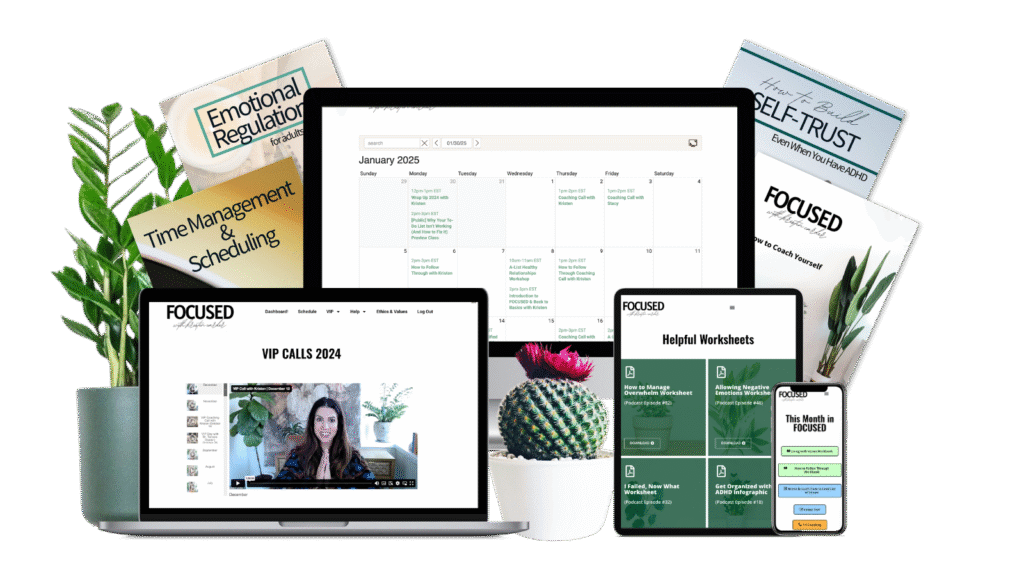
Sometimes I set boundaries with my kids. This happened more when they were little, where my husband would be like, “I don’t understand the point of this boundary, and I would be like, “I don’t know. I just feel like it should be this way. And he’s like, “I kind of think that it’s like not necessary. And then we would just readjust because it was a boundary because it was a should boundary, and you’re allowed to do that with you too. I think this is actually a boundary. I just get rid of it. Let me let me focus more on something that’s actually self-supportive, self-protective of the life that I want, of the life that I deserve, and not focus so much on the shoulds, yeah. Jess says I’ve taken so many screenshots of everyone’s examples. Thank you. We’ll be writing these down on sticky notes and putting them up around my home. Yeah, this is so good. I want to just reread the sentence that I said at the beginning because I think it was really powerful. This is not about authority necessarily. It’s about how do I become someone whose own boundaries feel safe enough to follow. How do I become someone whose own boundaries feel safe enough to follow? So good, obsessed. Okay, let’s continue the conversation in Slack. I cannot wait. I will talk to you soon. See you. A few years ago, I went looking for help. I wanted to find someone to teach me how to feel better about myself and to help me improve my organization, productivity, time management, emotional regulation. You know all the things that we adults with ADHD struggle with. I couldn’t find anything, so I researched and I studied and I hired coaches and I figured it out. And then I created Focused for You. Focused is my monthly coaching membership where I teach educated professional adults how to accept their ADHD brain and hijack their ability to get stuff done. Hundreds of people from all over the world are already benefiting from this program, and I’m confident that you will too. Go to ihavedhd.com/focused for all details.